




Top 15 Most Common Insects in Tamanrasset
Insects, with their myriad forms and varied habitats, are truly captivating. In the fascinating region of Tamanrasset, geographical variances contribute to a unique insect diversity. These critters play pivotal roles in the ecosystem, from being pests to aids in pollination. The 'Top 15 most common insects in Tamanrasset' list explores this interplay between environment and insect inhabitants, making the awe-inspiring world of insects accessible to all!

Most Common Insects
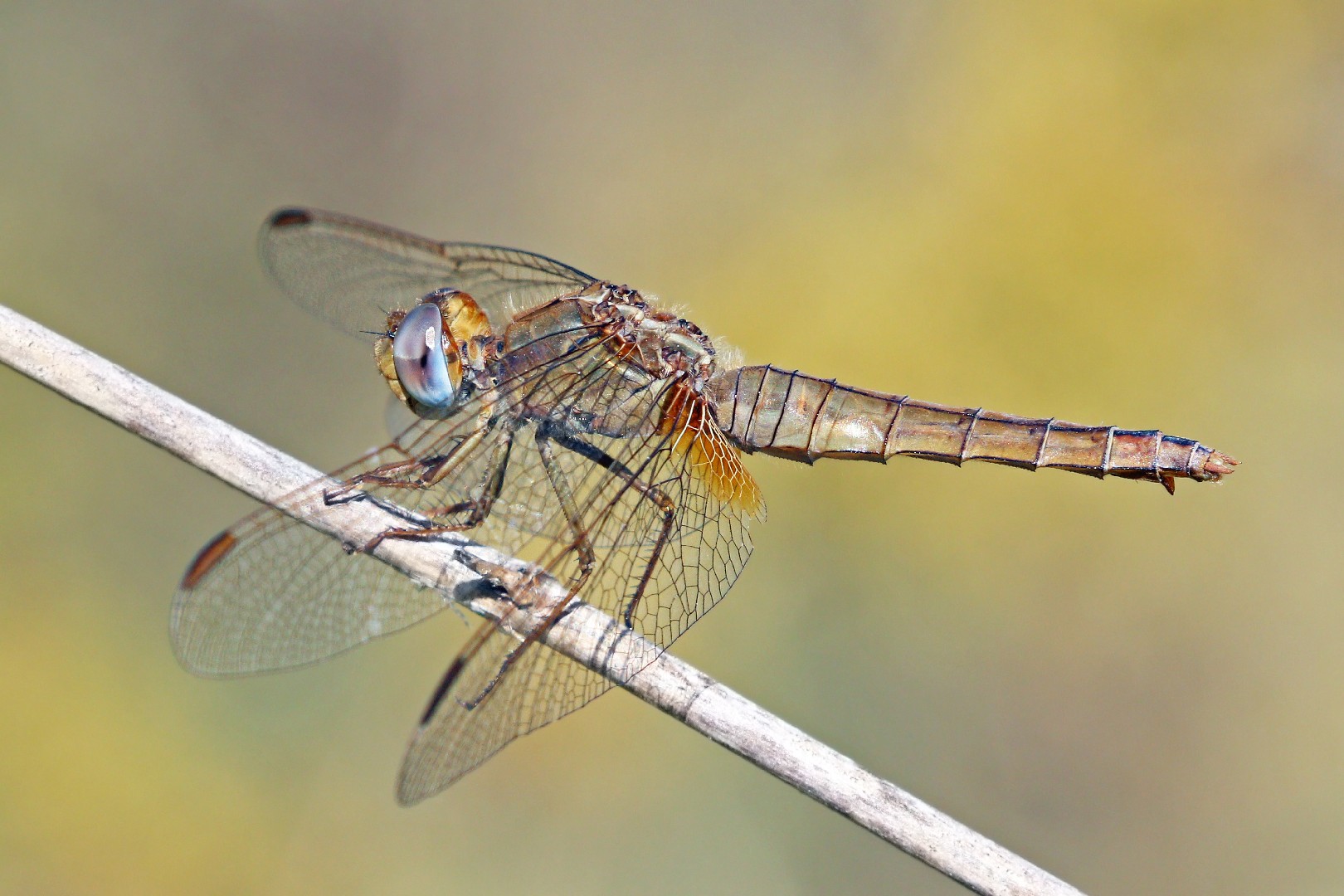
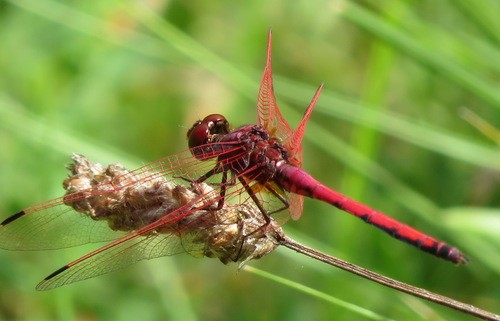
1. Scarlet dragonfly
Crocothemis erythraea can reach a length of 3.5 - 4.5 cm. These dragonflies haves a flattened and rather broad abdomen. The adult male scarlet dragonfly has a bright scarlet red, widened abdomen, with small amber patches at the bases of the hindwings. Also the veins on the leading edges of the wings are red. Females and immatures are yellow-brown and have a conspicuous pale stripe along the top of the thorax. 
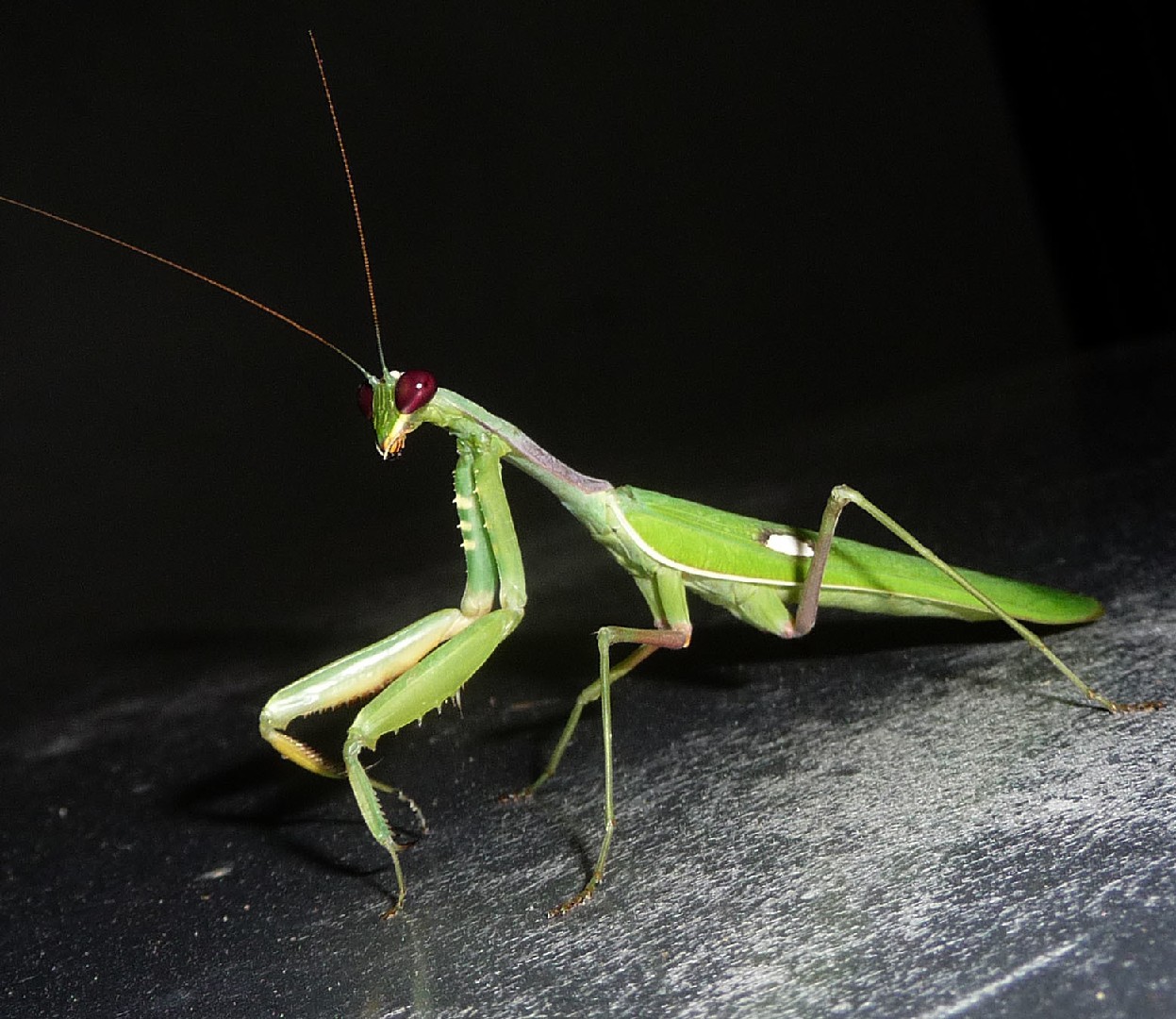
2. Giant african mantis
The giant african mantis (Sphodromantis viridis) shares its common name with five other mantids, which brings up its secondary name: the Bush mantis. These mantids are widely kept as a pet, which is a good conversation starter. While you may associate them with the color green, they are also dark brown.
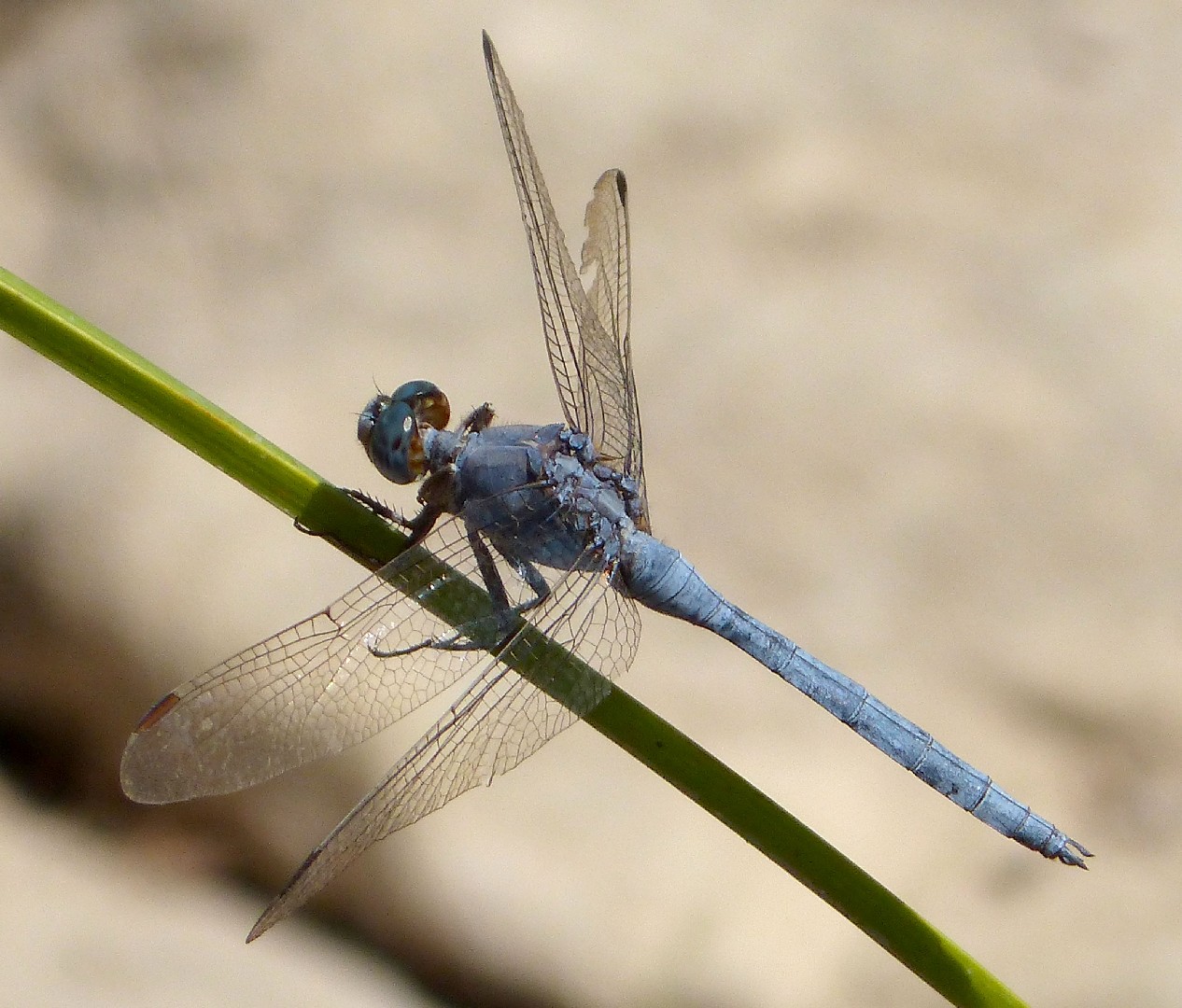
3. Epaulet skimmer
The bodies of adult males are blue, and those of young and females are yellow and brown.
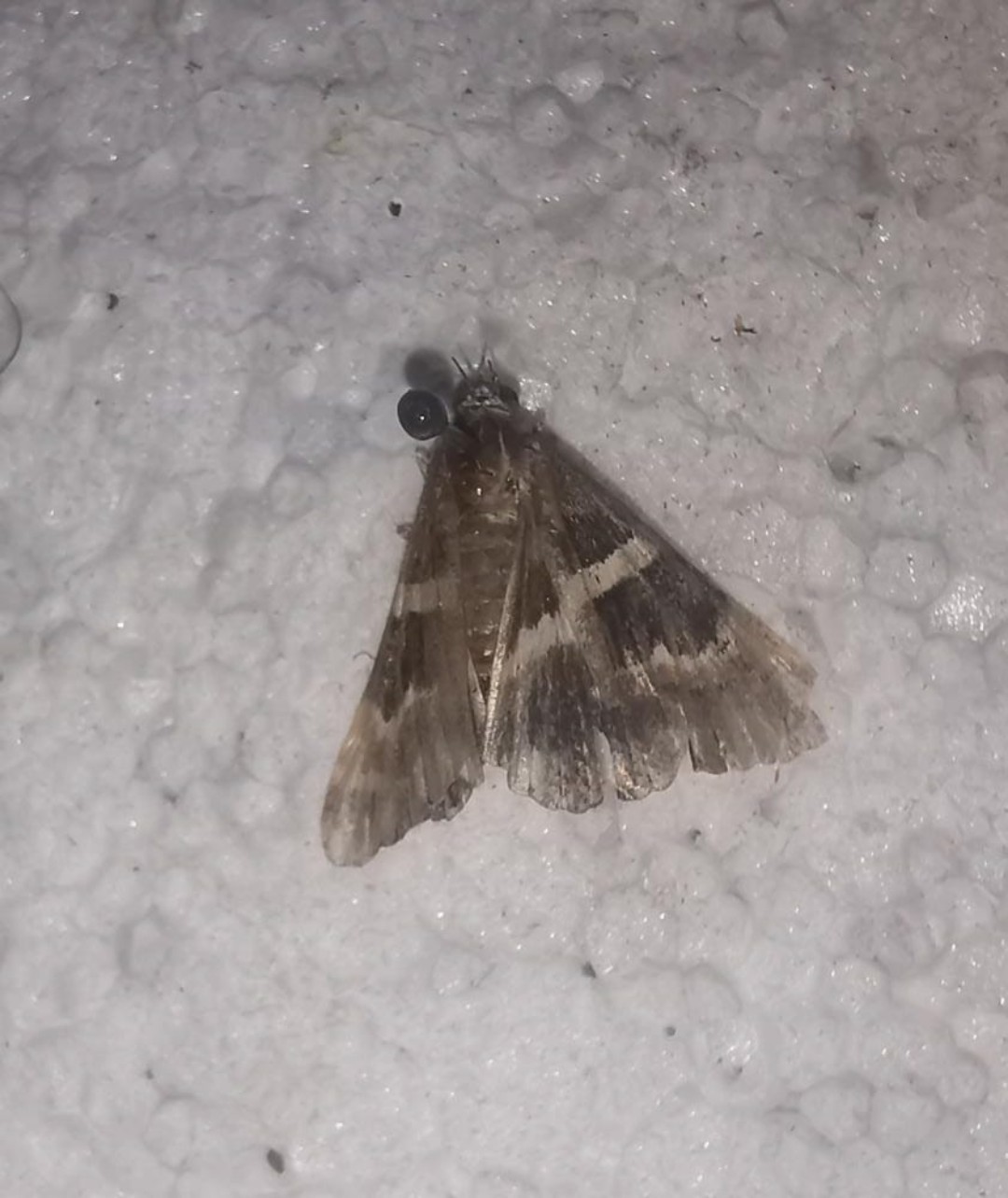
4. Geometrician
Forewing: basal two-thirds black brown, with basal patch, costal streak, and reniform stigma fuscous grey; crossed at middle by a pale ochreous band oblique from subcostal and widening downwards, its outer half yellowish; limited externally by a biconcave ochreous band, narrower below, followed below vein 6 by a broad brown band, on the outer edge of which are three or four irregular black patches, and above and beyond it on costa a black blotch, sharply angled externally on vein 6, these black marks forming the inner edge of a diffuse submarginal pale line; terminal area shaded with brown and fuscous, with a short black apical streak and a diffuse dark cloud below the middle; fringe grey with white base, altogether whitish round apex: hindwing olive fuscous, becoming blackish towards termen; a white band from costa at one-third to anal angle, and a round white submarginal spot in submedian fold; fringe brightly white, but grey between veins 2 and 4; the form stupida H.-Sch. (?spec. dist.) from Salonica, Macedonia, has the bands marked with yellow only at inner margin, indicated merely by two straight dark streaks: the outer band more strongly bent inwards to costa; the white band of hindwing not straight but forming two curves; in the ab. attenuata ab. nov. [Warren] the white band is merely a narrow line from cell to inner margin.
5. Swift Woodlouse
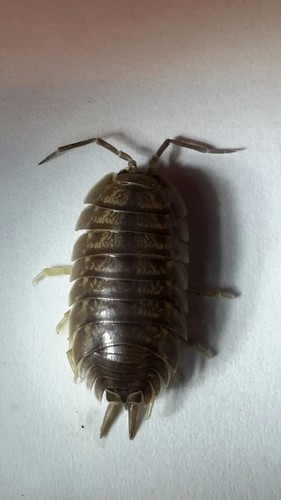
The swift Woodlouse (Porcellio laevis) has the unusual distinction of being called the dairy cow isopod due to their tendency to hang around "urban dairy farms." In the 20th century, dairy farms were kept in urban locations to enable to delivery of fresh milk, creating the perfect habitat for these isopods. It gets the name swift Woodlouse from the quick bursts of speed it has when intimidated.
6. Painted lady
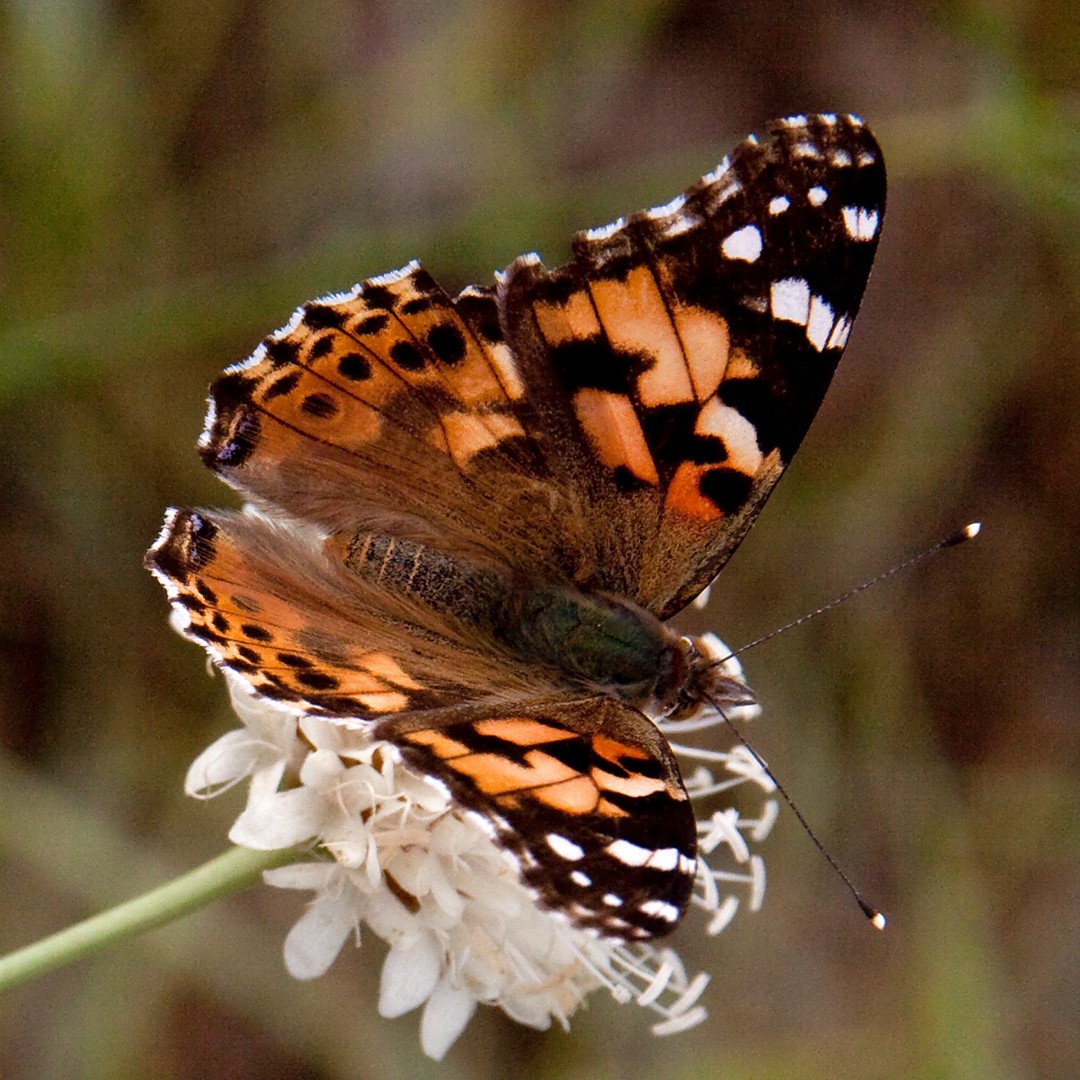
The painted lady is a migratory butterfly that spends part of the year in Northern Africa and then migrates to Europe during the warmer months. Although the adults feed on nectar from flowers, the larvae feed on the leaves of nettles and thistles.
7. Plain tiger butterfly
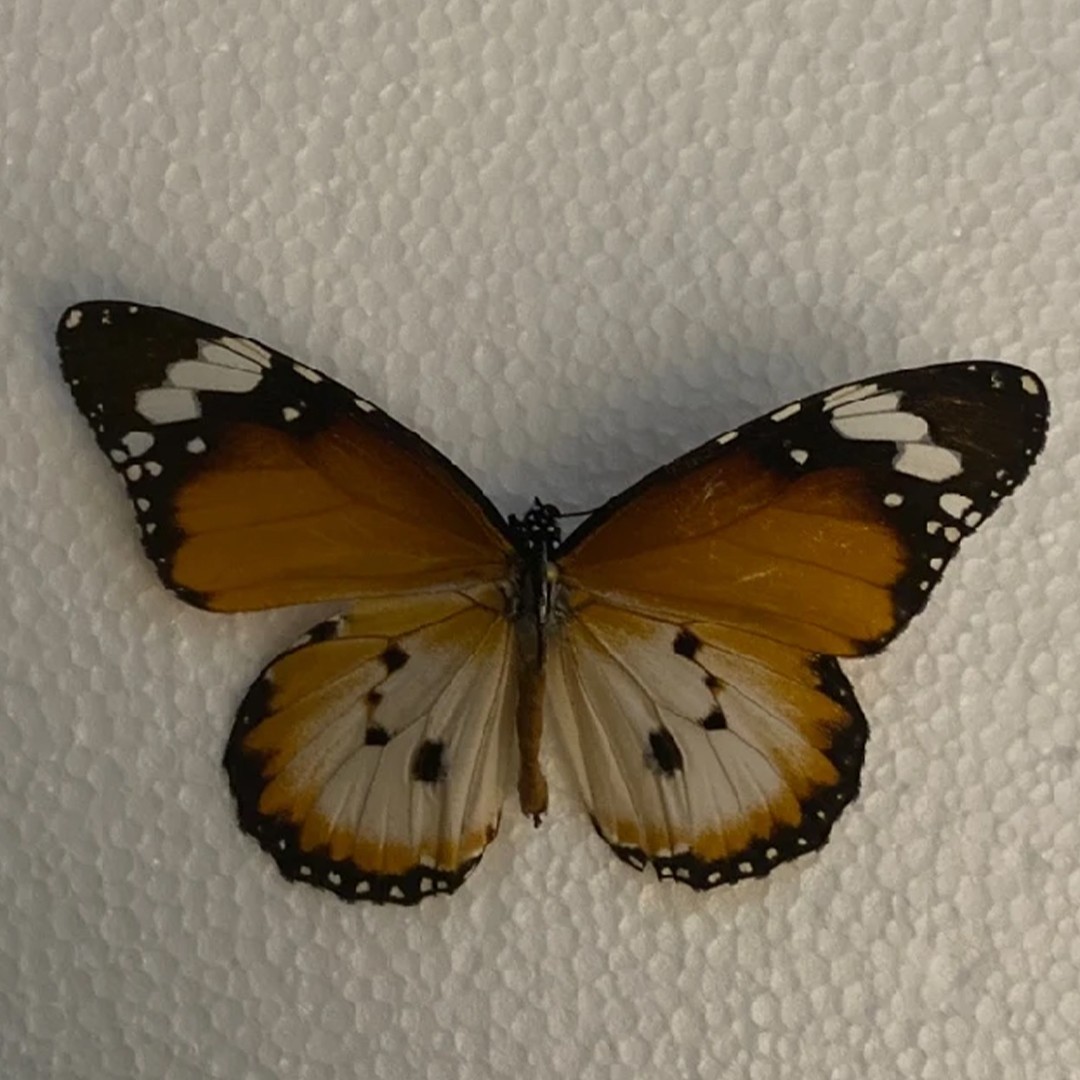
D. chrysippus is a medium-sized butterfly with a wingspan of about 7–8 cm (2.8–3.1 in). The body is black with many white spots. The wings are orange, the upperside brighter and richer than the underside. The apical half of the forewing is black with a white band. The hindwing has three black spots in the center. The wings are bordered in black and outlined with semicircular white spots. This species exhibits slight sexual dimorphism, as the Male has large scent glands on his hindwings, which the female lacks. They appear as a large black spot with a white centre if viewed from the underside D. chrysippus is a polymorphic species, so the exact coloring and patterning vary within and between populations. It is similar in appearance to the Indian fritillary (Argynnis hyperbius), which may coexist with it.
8. Tropical tent-web spider
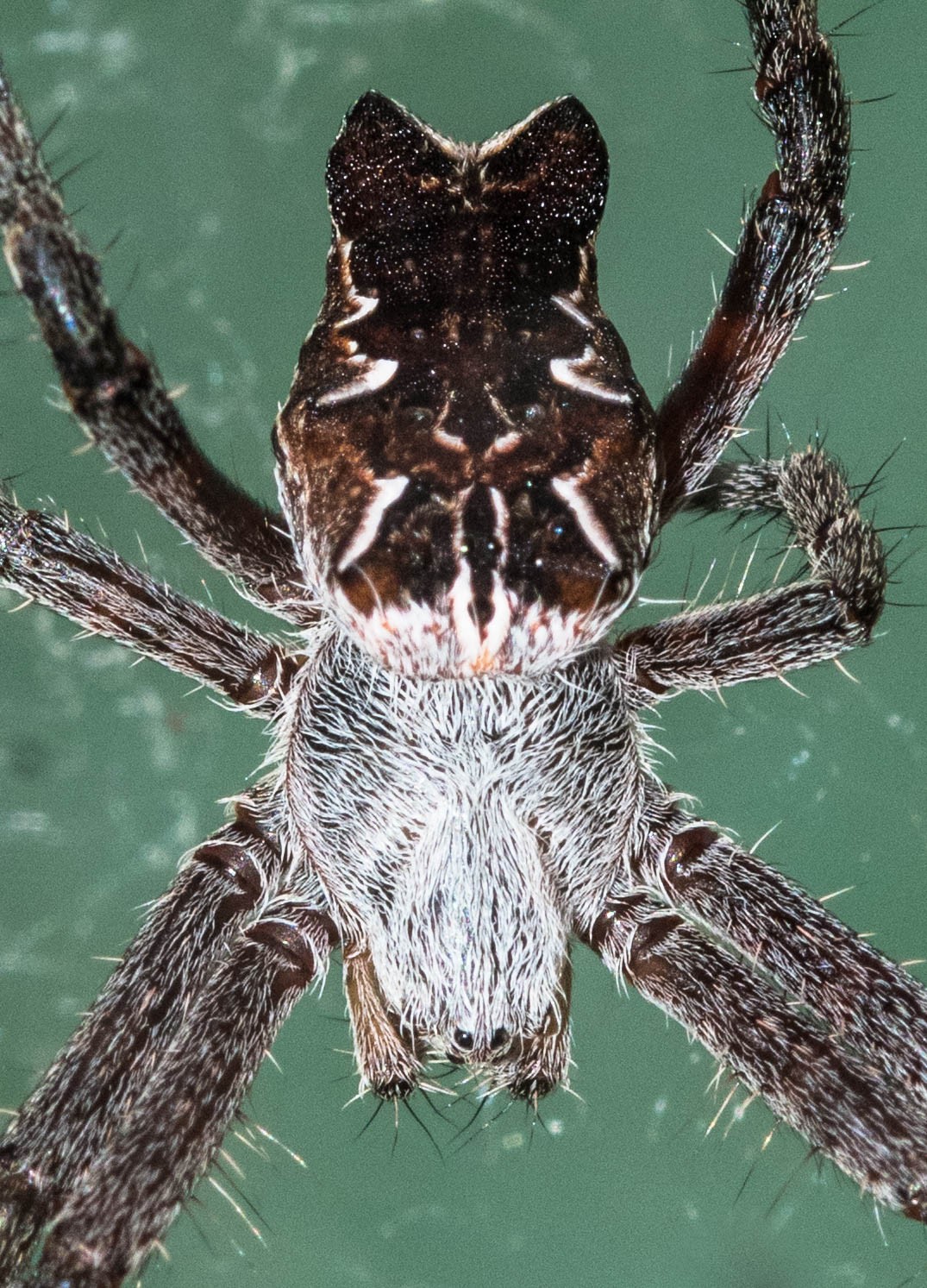
The tropical tent-web spider (Cyrtophora citricola) is a spider that is known to participate in communal cooperation. Other spiders in its vicinity can build their webs into each other, providing greater mating access and defense against predators. They are strikingly beautiful spiders that have much color variance from black and white to brown. Females tend to resemble a dead leaf.
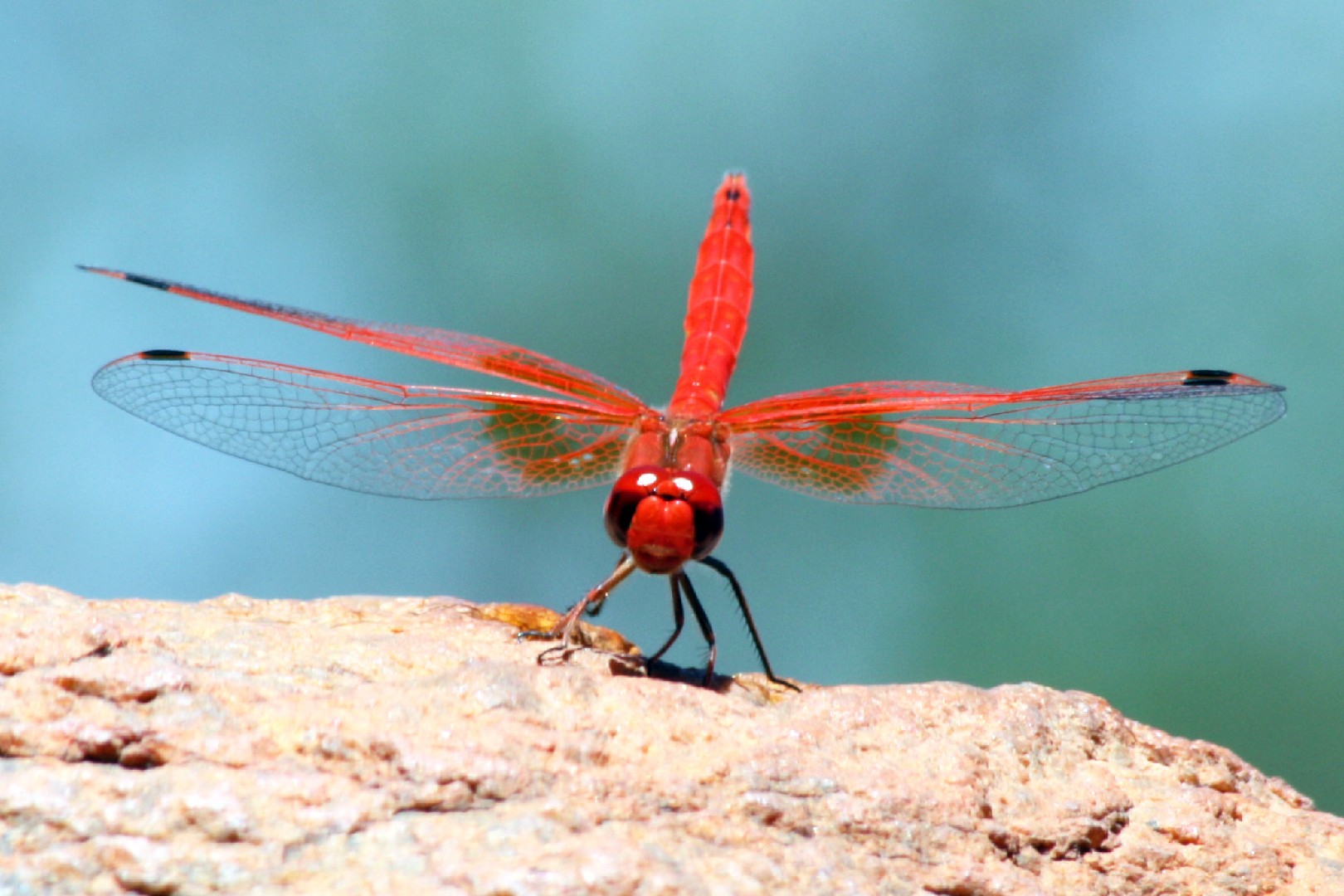
9. Kirby's dropwing
The spotted sun pointer (Trithemis kirbyi) is a dragonfly species from the family of the dragonflies (Libellulidae). Two subspecies are described. The nominate subspecies occurs in India and Sri Lanka, while the insufficiently defined taxon Trithemis kirbyi ardens occurs in the rest of the distribution area, which mainly includes Africa.
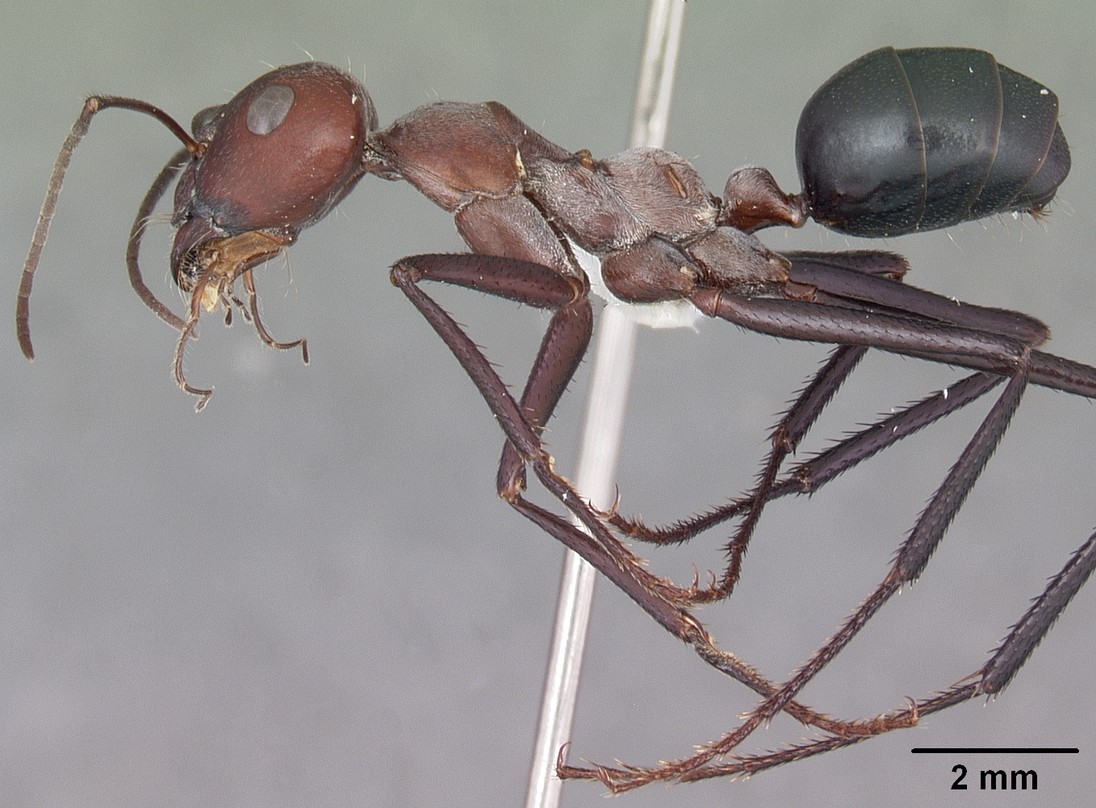
10. Nodal desert ant
More