




Top 19 Most Common Insects in Paranaiba
Insects, with their distinct features and varied habitats, contribute significantly to the ecological balance of Paranaiba. The regional diversity in Paranaiba provides a rich environment that can breed a myriad of insects, revealing a unique biodiversity. Our forthcoming list will reveal the most prevalent species, the '19 most common insects', emphasizing the critical balance between pests and beneficial species in shaping Paranaiba's ecosystems.

Most Common Insects
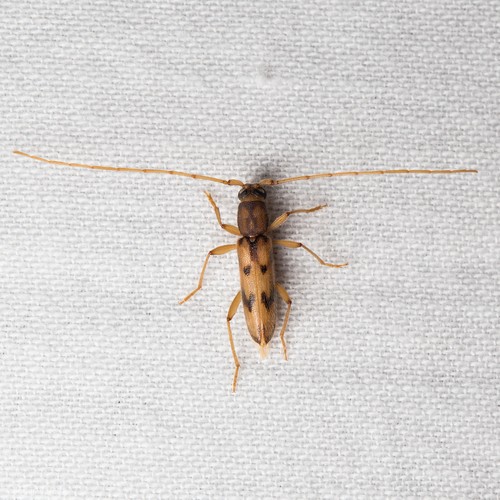
1. Achryson surinamum
Achryson surinamum is a beetle species from the boktorren family (Cerambycidae). The scientific name of the species was first validly published in 1767 by Linnaeus.
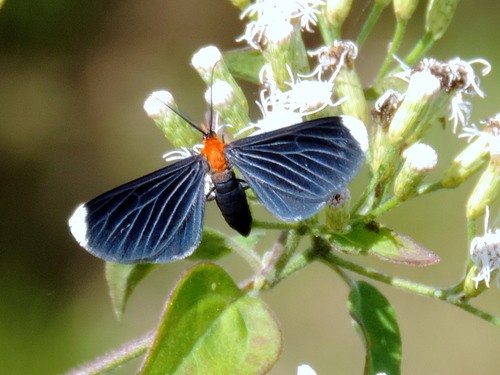
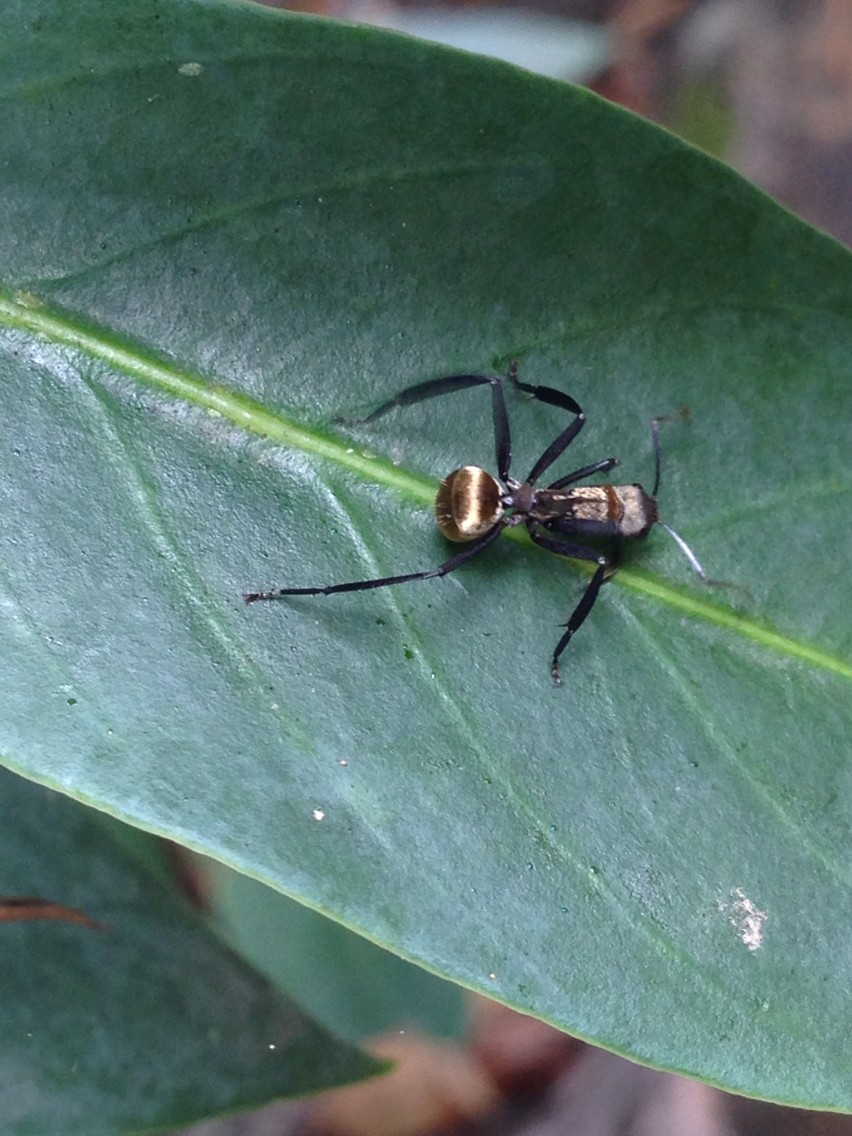
2. White-tipped black
The wingspan is about 3.5 cm. 
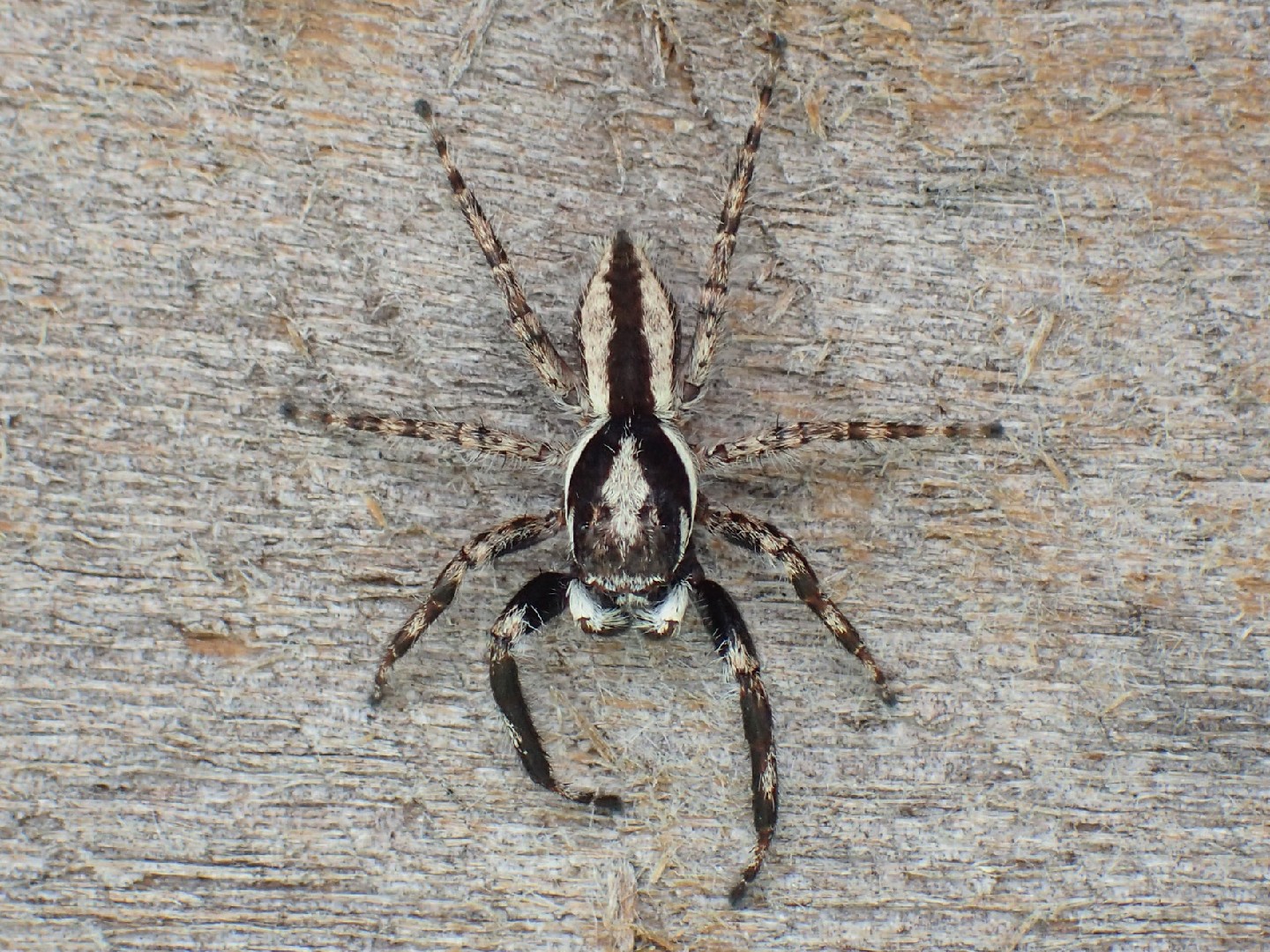
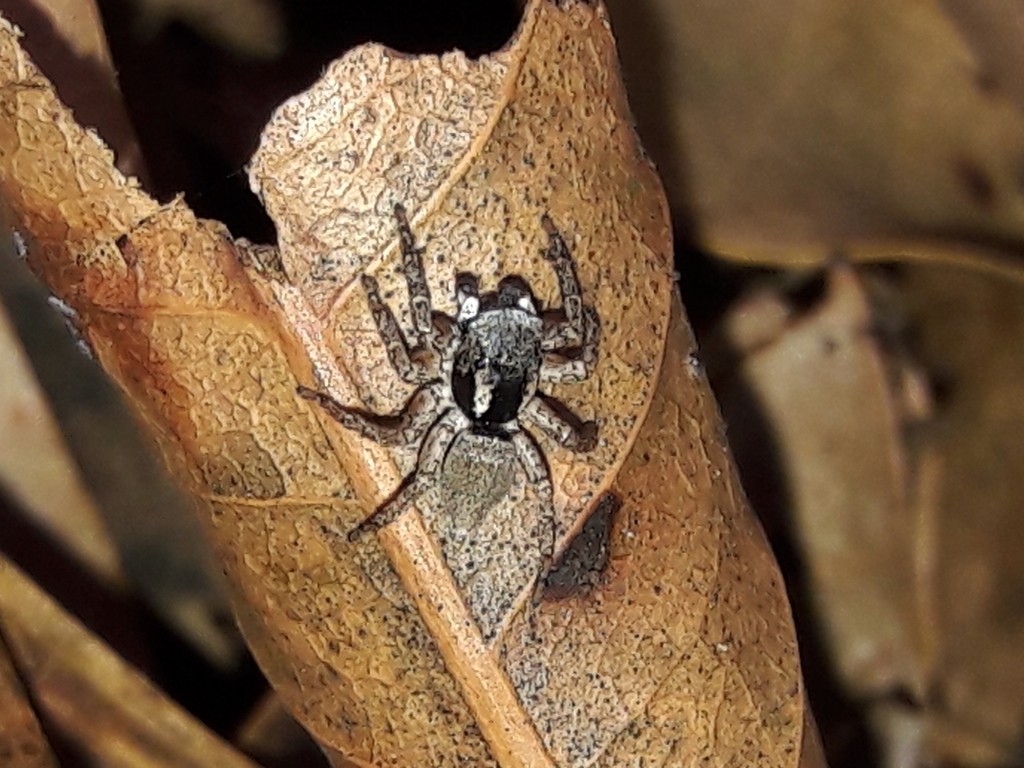
3. Gray wall jumper
The female gray wall jumper lays her eggs in cracks or other hidden areas. The young and mature spiders feed on flies, making them useful residents in a household. They do not make webs, but carefully hunt and jump on their prey.
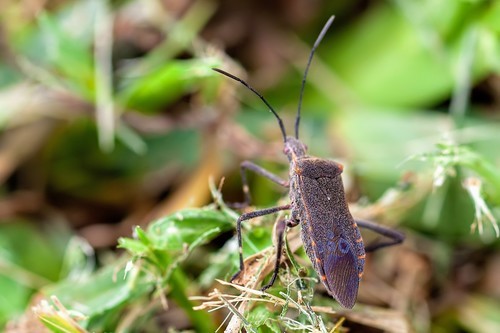
4. Phthiacnemia picta
The Phthiacnemia picta is a leaf-footed bug species, meaning it has long back legs, along with long antennae. This adult is mostly dark-colored, but as a nymph, it's mostly orange with only small patches of black on it. It is totally a pest in the orchard. It sucks the sap from leaves, stems, blossoms, and fruit. When a lot happens to lead the uneven ripening and deformation.
5. Silver argiope
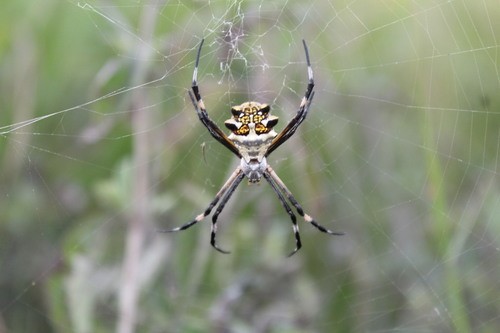
The silver argiope (Argiope argentata) often creates unique zigzag patterns on its webs. It's usually found in warm, dry areas, especially on cacti and aloe vera plants. The females are much larger than males. They can bite and cause irritation to the skin, but the damage won't be life-threatening.
6. Tersa sphinx
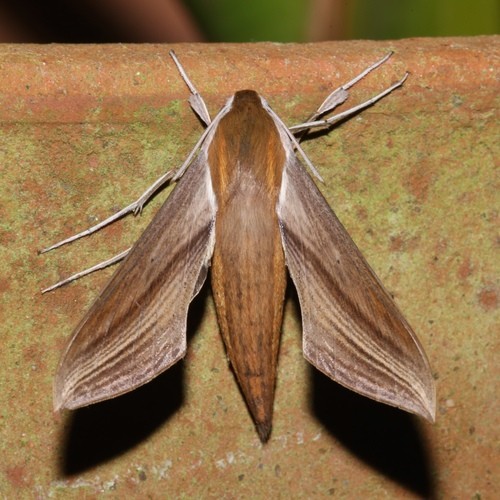
The tersa sphinx (Xylophanes tersa) has stiff wings that make it resemble a small bird. The adults might seem intimidating because their abdomen comes to a sharp point, but they have no stinger and are harmless to humans. The larvae are typically a bright green color or brown color with eye-spots, much different than the dull brown color of the adults.
7. Ello sphinx
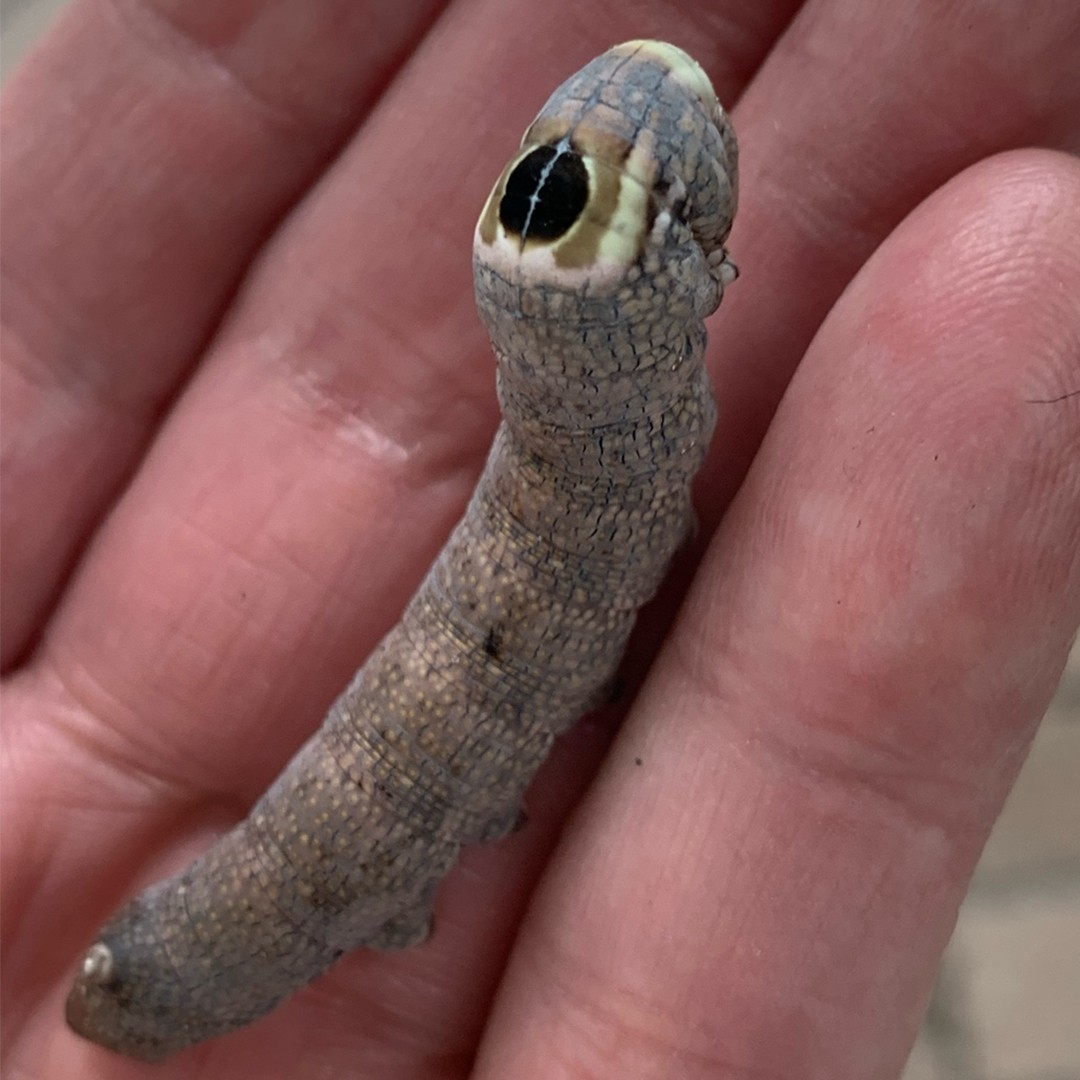
Erinnyis ello, the ello sphinx, is a moth of the family Sphingidae. The species was first described by Carl Linnaeus in his 1758 10th edition of Systema Naturae. It is distributed from Argentina through Central America to the United States as far north as Nevada. The wingspan is 75–85 mm. The abdomen has gray and black bands. The forewing upperside of the female is pale gray with a few dark dots near the outer margin, while the forewing upperside of the male is dark gray and brown with a black band running from the base to the tip. In both sexes, the hindwing upperside is orange with a wide black border. Adults are on wing year-round in the tropics and southern Florida. Adults feed on the nectar of flowers, including common soapwort (Saponaria officinalis) and Chinese violet (Asystasia gangetica). The larva feeds on a variety of host plants, including papaya (Carica papaya) in the family Caricaceae; poinsettia (Euphorbia pulcherrima), Mexican jumping bean (Sebastiania pavoniana), Cnidoscolus urens, and cassava (Manihot esculenta) in the Euphorbiaceae; guavas (Psidium spp.) in the Myrtaceae; and saffron plum (Sideroxylon celastrinum) in the Sapotaceae. The ello sphinx can be parasitized by the braconid wasp Microplitis figueresi.
8. White peacock
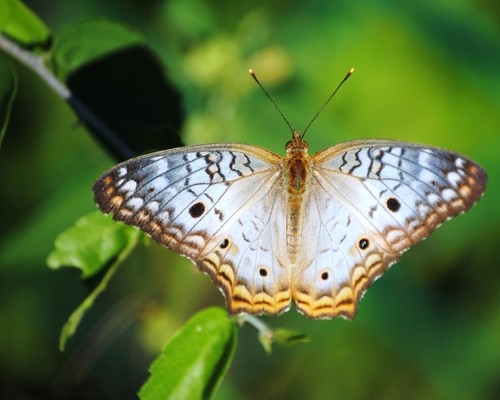
The wingspan of the moths is 51 to 70 millimeters. The basic color is whitish. On the forewings there is a black, circular spot near the inner angle. At the front edge, two to three oblong, yellow-brown spots stand out. The Submarginalregion is also yellow-brown colored and crossed by dark lines. On the hind wings are two more small, black, circular spots near the tawny and dark-colored submarginal region. A short tail is more or less strong. The wing underside shows similar drawing elements as the top, but these are paler and weaker pronounced.
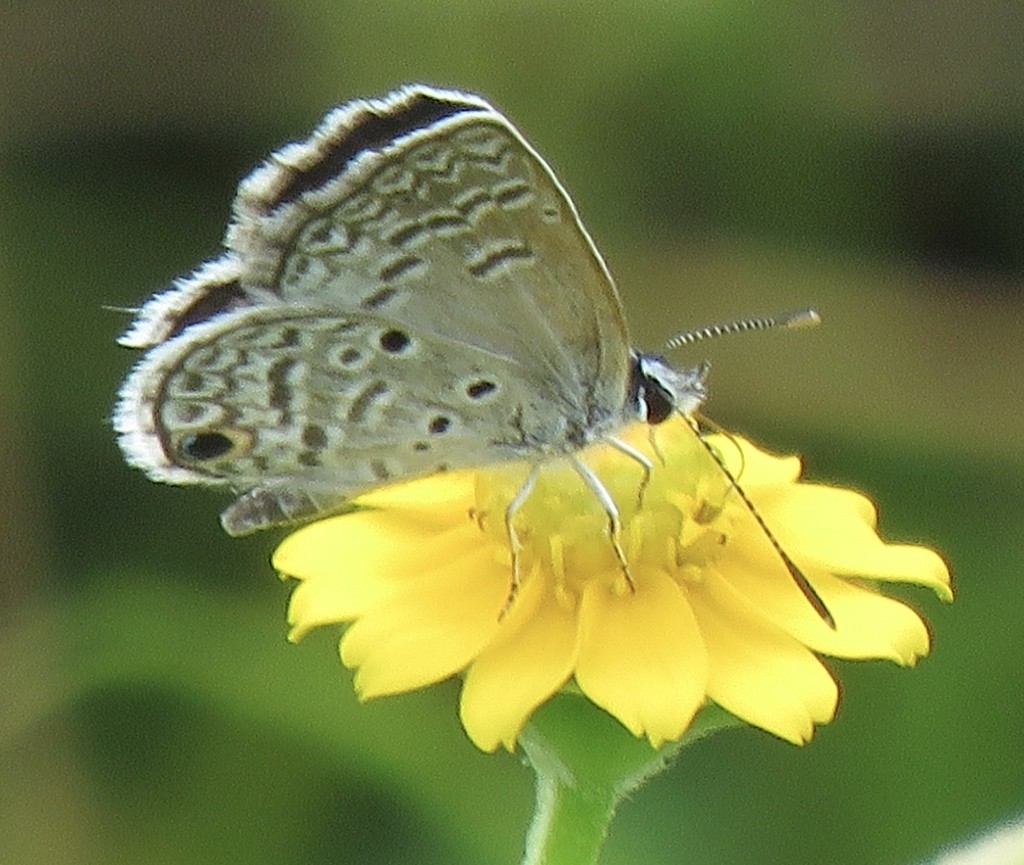
9. Hanno blue
Hemiargus hanno, the hanno blue is a butterfly in the family Lycaenidae. It is found in Suriname, Brazil, Colombia and on Cuba, the Netherlands Antilles, Puerto Rico and Hispaniola.
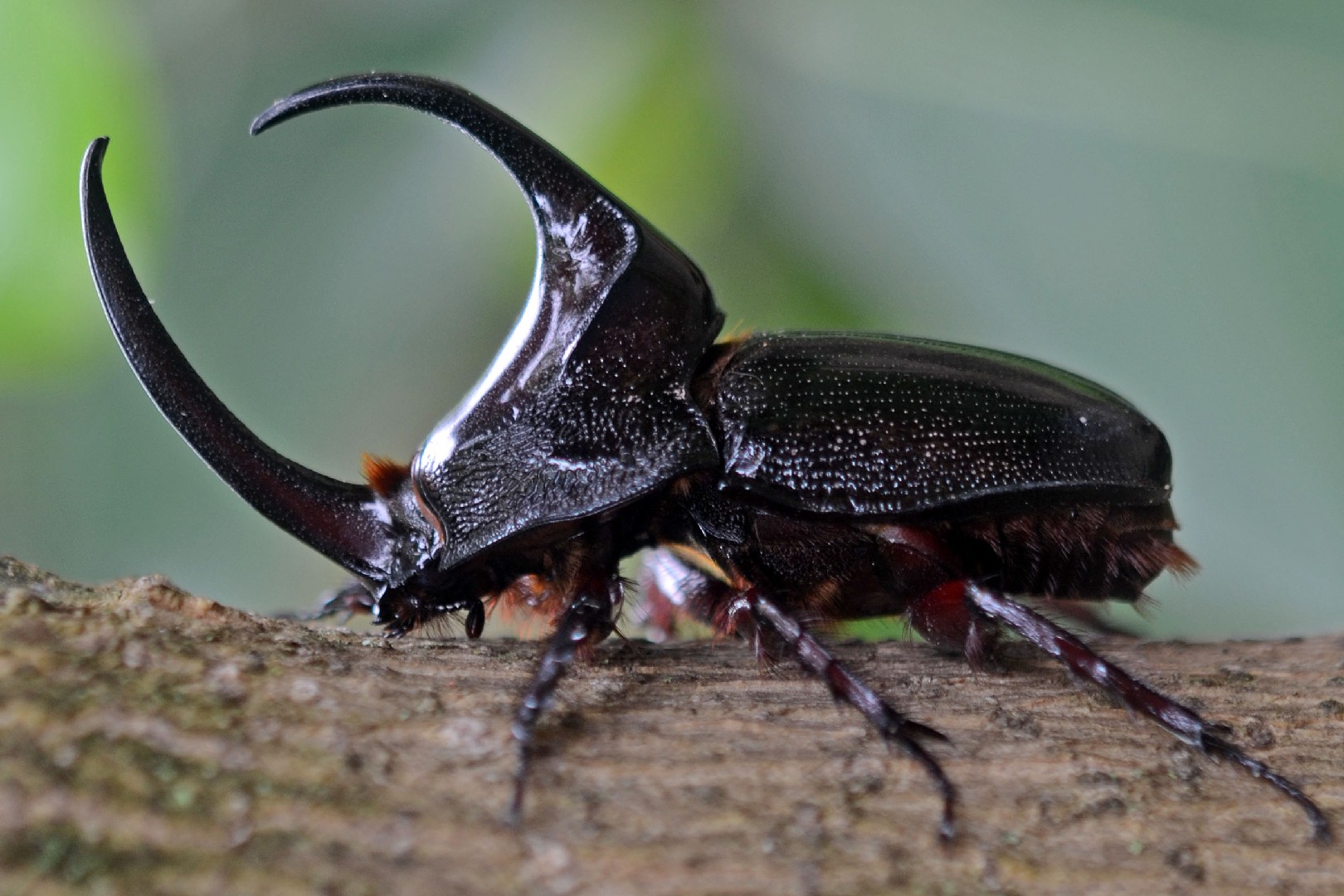
10. Enema pan
E. pan looks like a fairly large insect. The males are the most striking individuals and present a showy thoracic horn and an equally showy cephalic horn while the females present a small cephalic horn. It is generally a stocky and robust body with a color that varies between black and dark brown.

More







