




Top 11 Most Common Insects in Cabo Verde
Insects, diverse and captivating, carry a significant role in Cabo Verde's ecosystem from pests to pollinators. The state's majestic variety of terrain, from verdant lowlands to craggy highlands, incubates a unique insect diversity. They are an integral presence in Cabo Verde, serving as both a beckon of natural health and a barometer of environmental stability. Stay tuned as we unveil the top 11 most common insects that make Cabo Verde their home.

Most Common Insects
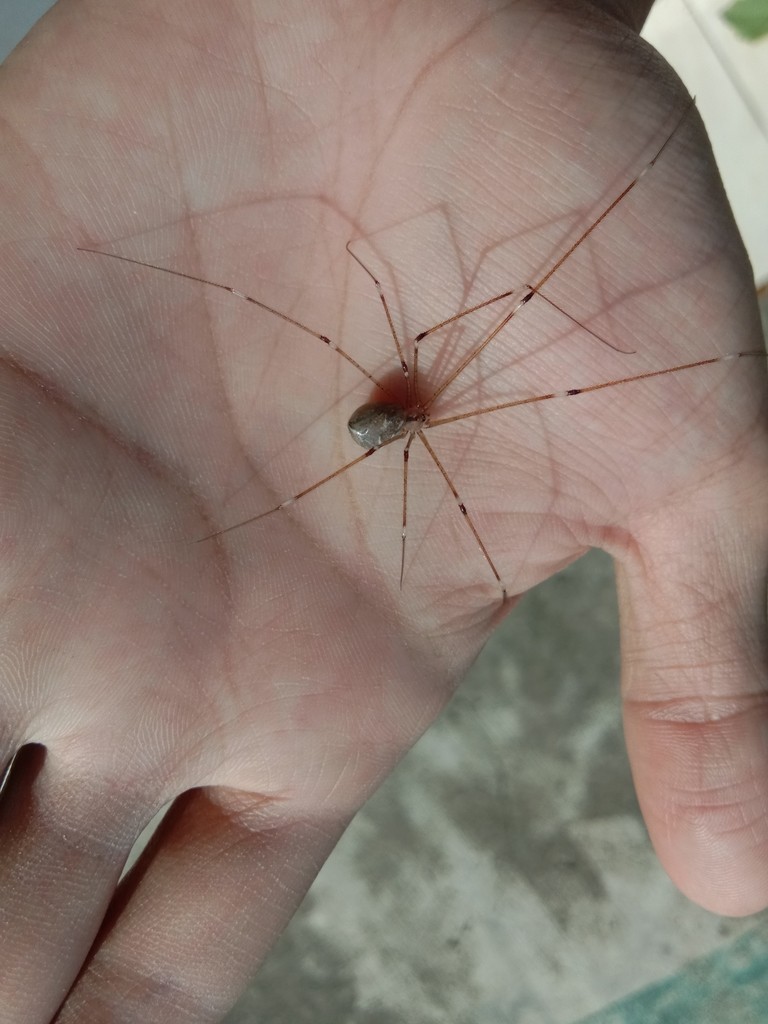
1. Short-bodied cellar spider
Physocyclus globosus, sometimes known as the short-bodied cellar spider is a species of spider belonging to the family Pholcidae. This is a cosmopolitan species, found in caves and buildings throughout the warmer parts of the world. 
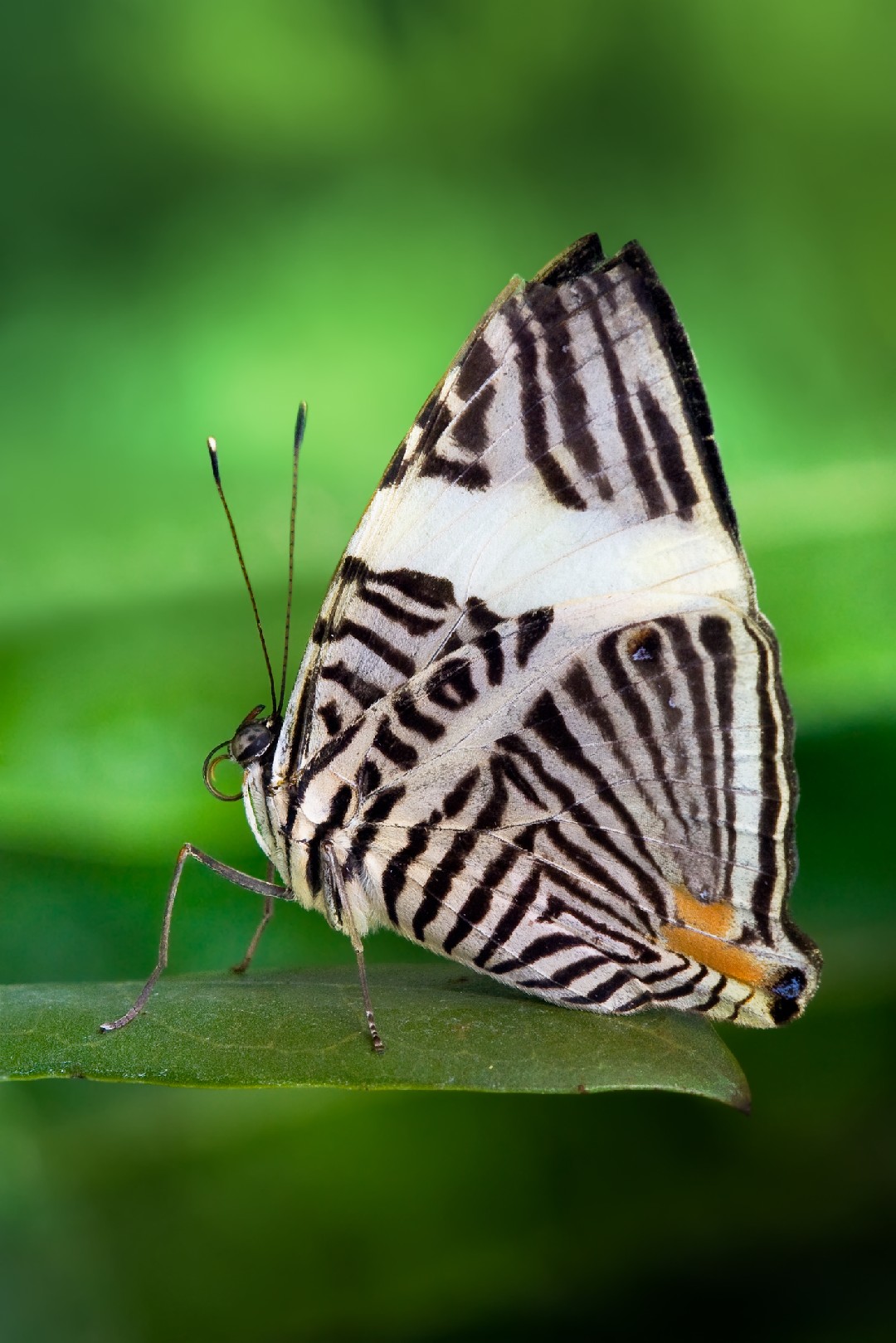
2. Dirce beauty
The length of the forewings is about 3.5 cm.
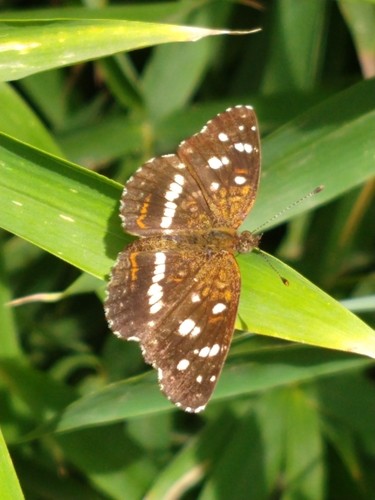
3. Ortilia ithra
Ortilia ithra is a butterfly from the Nymphalidae family. The scientific name of the species was first validly published in 1871 by William Forsell Kirby.
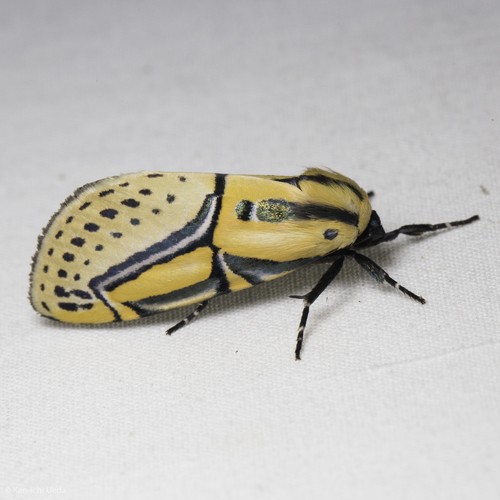
4. Hieroglyphic moth
Diphthera festiva is a butterfly from the spider owls family (Erebidae). The scientific name of the species was first validly published in 1775 by Fabricius.
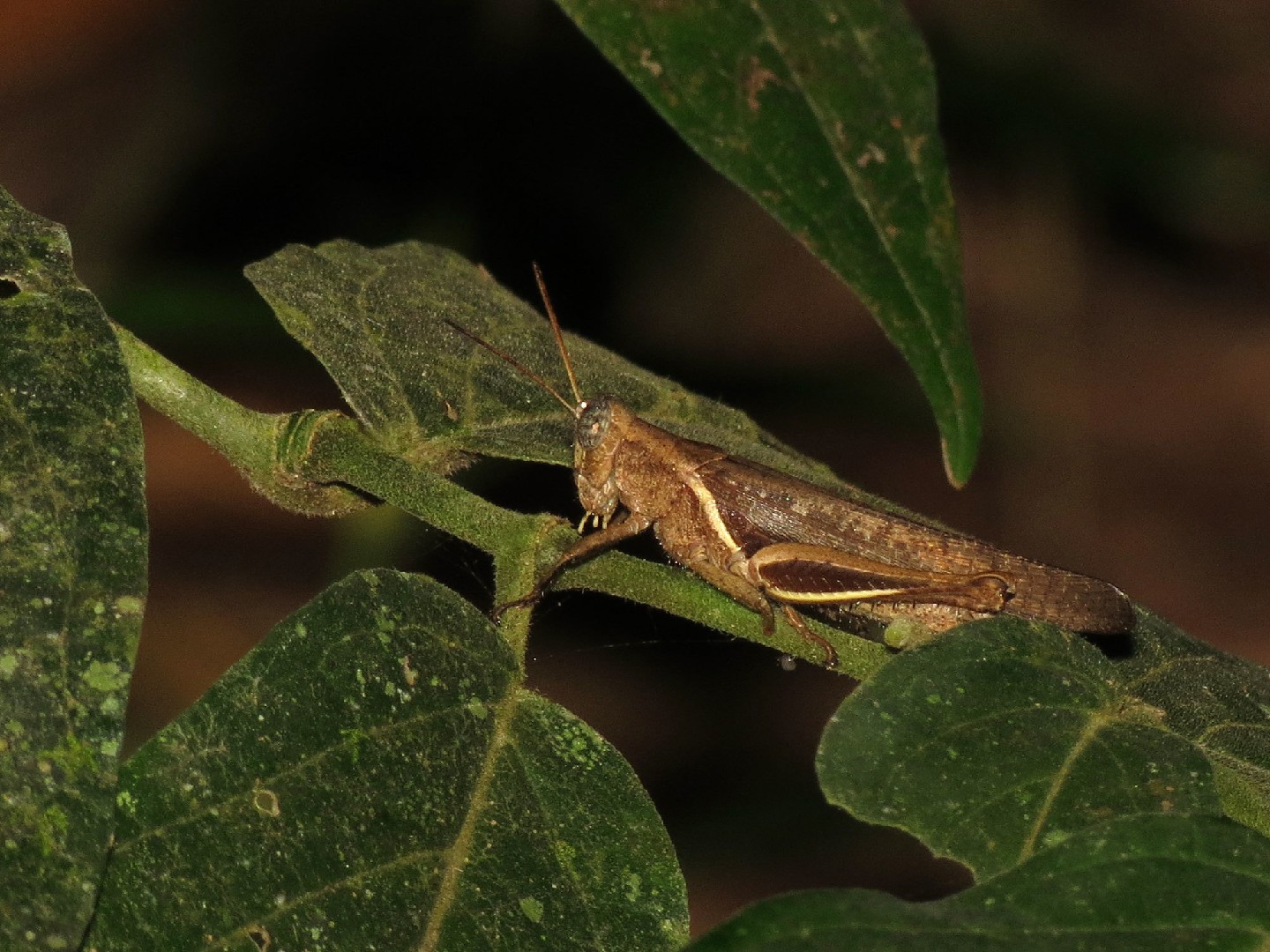
5. Abracris flavolineata
Abracris flavolineata is a right-winged insect from the family locusts (Acrididae). The scientific name of this species was first validly published in 1773 by De Geer.
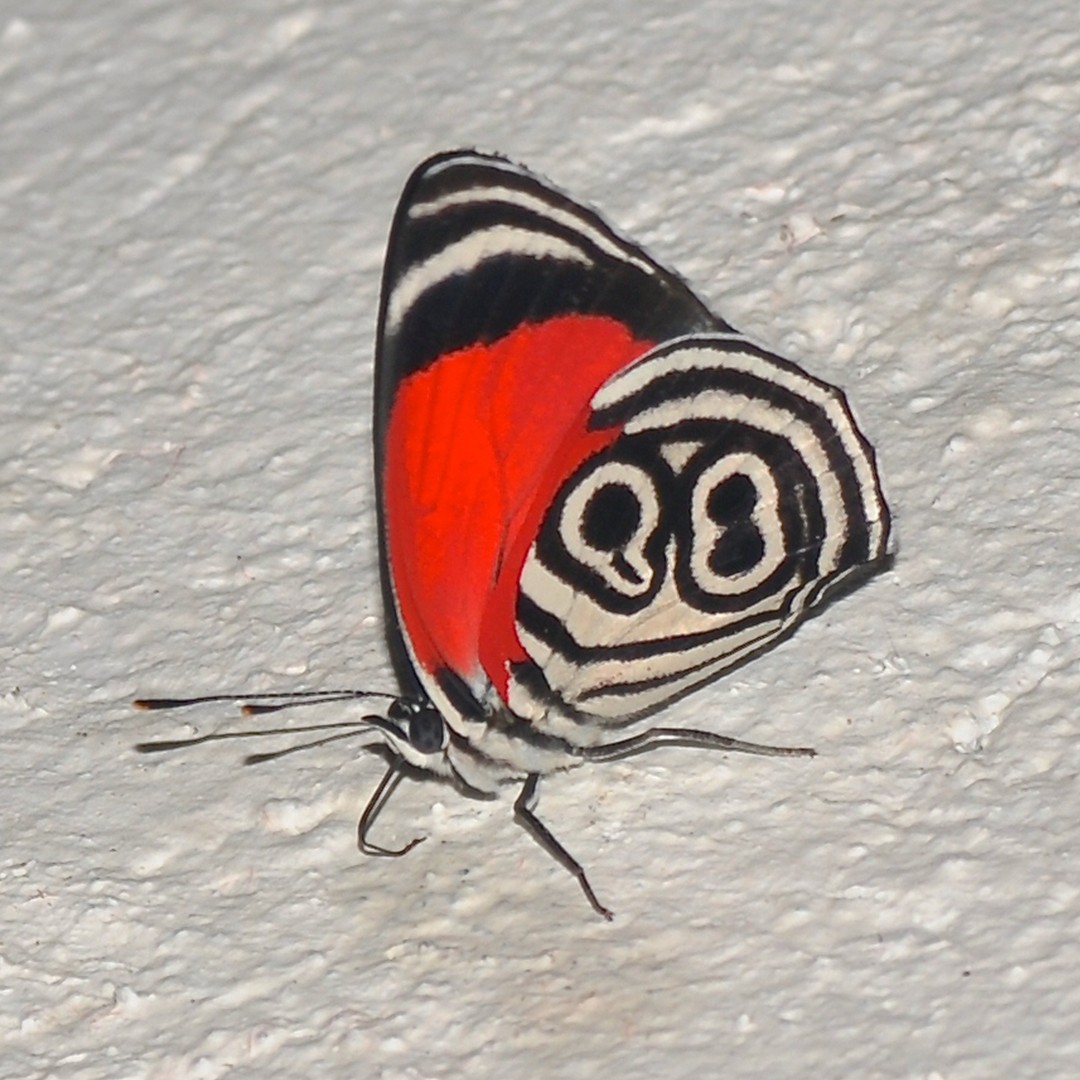
6. Cramer's eighty-eight
The wingspan is about 3 - 4 cm. Adults are black with a blue band on each wing. The underside is red and white with black stripes that look like an outlined number "89" or "98".
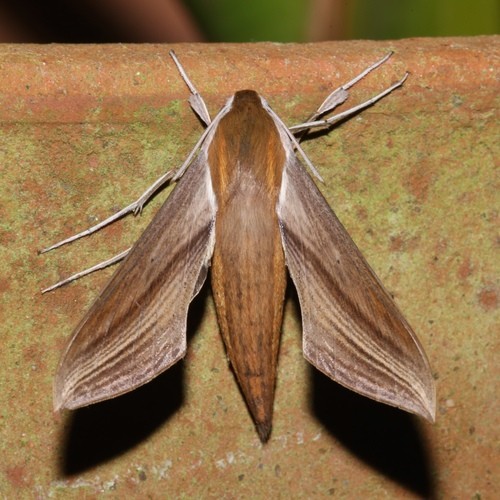
7. Tersa sphinx
The tersa sphinx (Xylophanes tersa) has stiff wings that make it resemble a small bird. The adults might seem intimidating because their abdomen comes to a sharp point, but they have no stinger and are harmless to humans. The larvae are typically a bright green color or brown color with eye-spots, much different than the dull brown color of the adults.
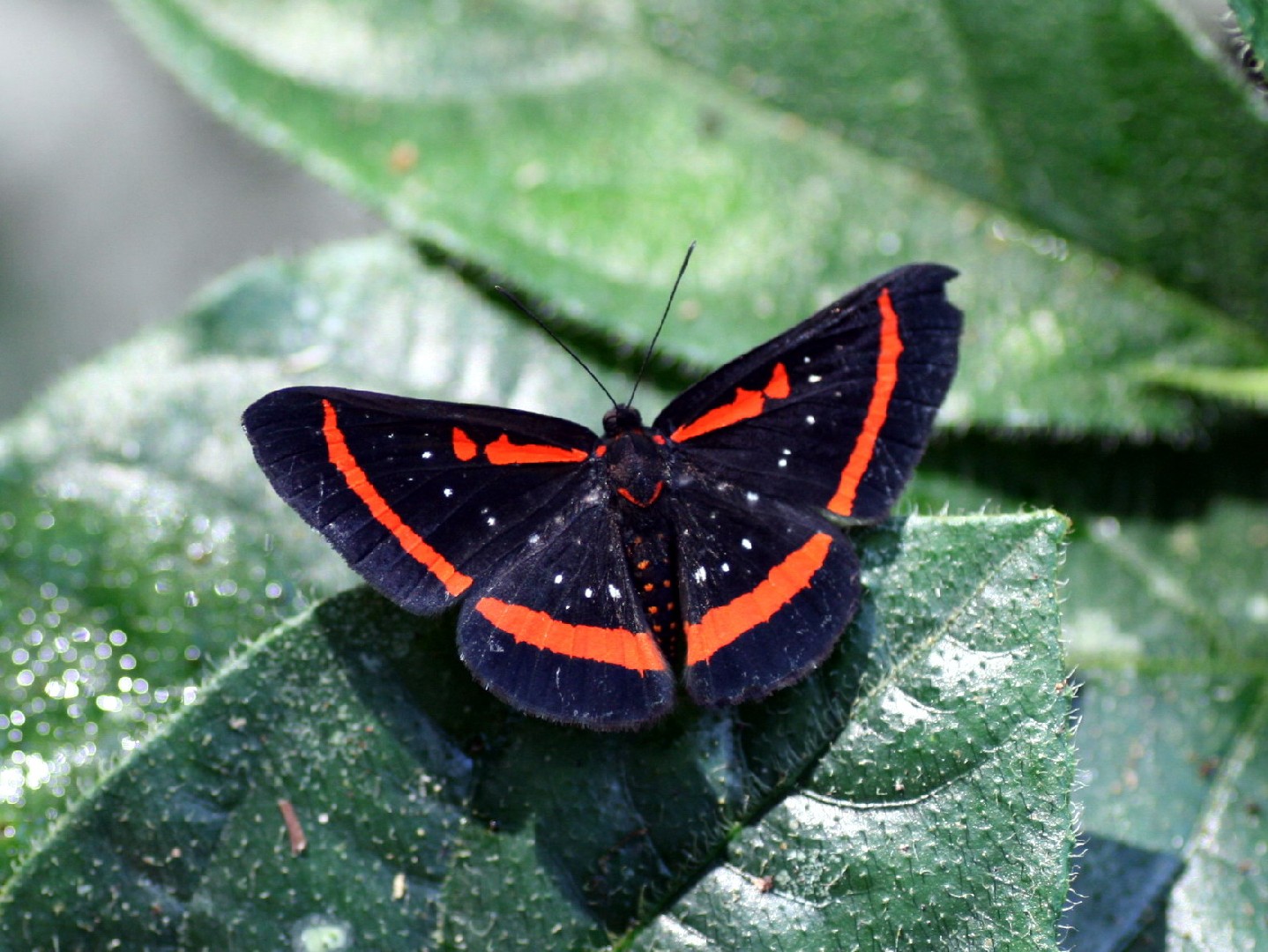
8. Meneria metalmark
Amarynthis meneria was described by Cramer in 1776.
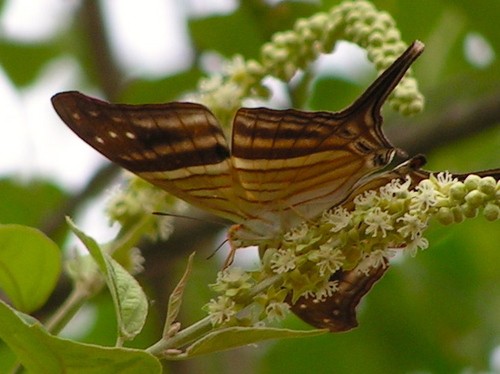
9. Many-banded daggerwing
Marpesia chiron, the many-banded daggerwing, is a species of daggerwings, map butterflies in the family Nymphalidae. It is found in Central America, North America, and South America. The MONA or Hodges number for Marpesia chiron is 4549.
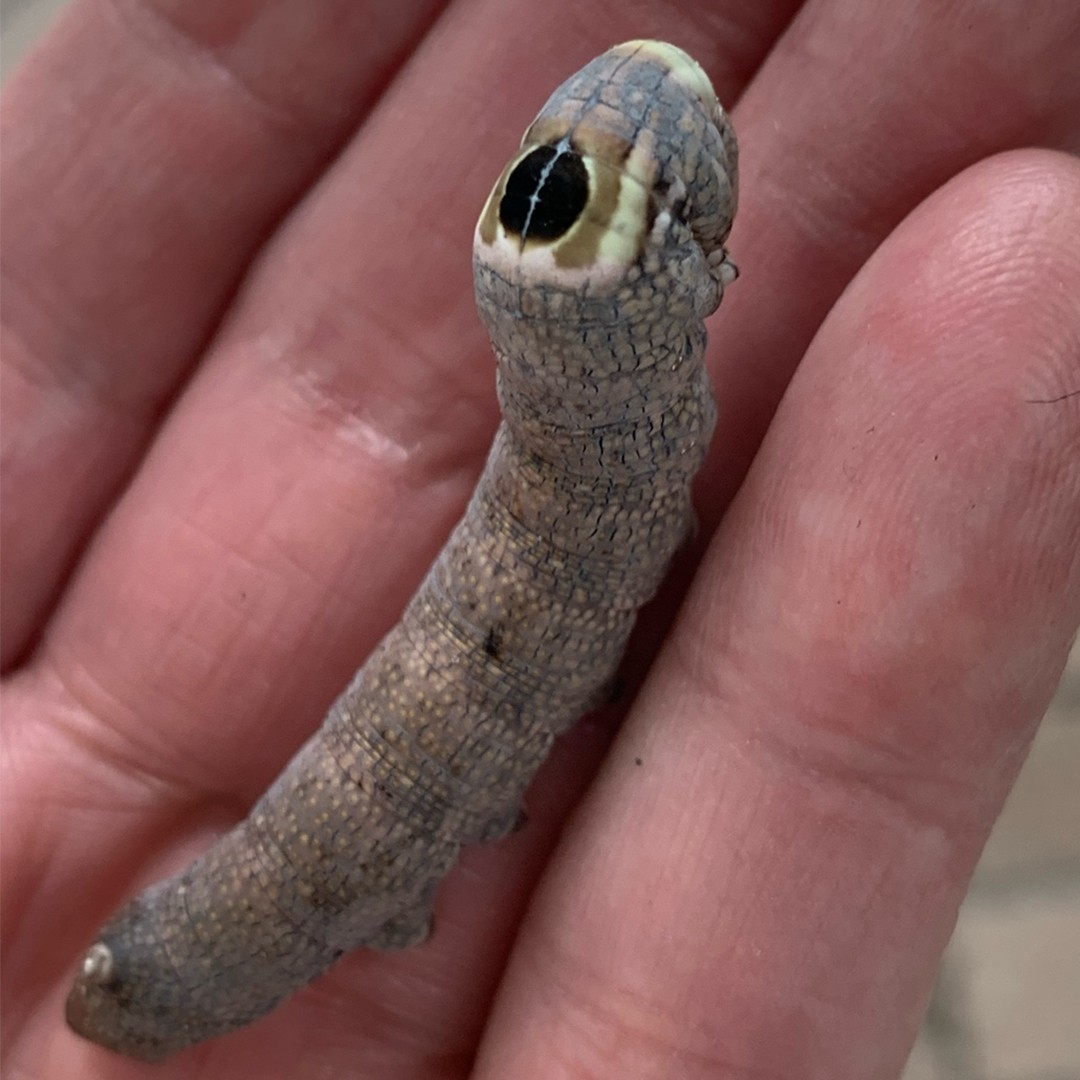
10. Ello sphinx
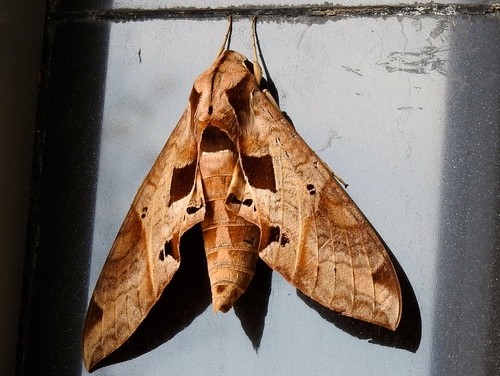
Erinnyis ello, the ello sphinx, is a moth of the family Sphingidae. The species was first described by Carl Linnaeus in his 1758 10th edition of Systema Naturae. It is distributed from Argentina through Central America to the United States as far north as Nevada. The wingspan is 75–85 mm. The abdomen has gray and black bands. The forewing upperside of the female is pale gray with a few dark dots near the outer margin, while the forewing upperside of the male is dark gray and brown with a black band running from the base to the tip. In both sexes, the hindwing upperside is orange with a wide black border. Adults are on wing year-round in the tropics and southern Florida. Adults feed on the nectar of flowers, including common soapwort (Saponaria officinalis) and Chinese violet (Asystasia gangetica). The larva feeds on a variety of host plants, including papaya (Carica papaya) in the family Caricaceae; poinsettia (Euphorbia pulcherrima), Mexican jumping bean (Sebastiania pavoniana), Cnidoscolus urens, and cassava (Manihot esculenta) in the Euphorbiaceae; guavas (Psidium spp.) in the Myrtaceae; and saffron plum (Sideroxylon celastrinum) in the Sapotaceae. The ello sphinx can be parasitized by the braconid wasp Microplitis figueresi.
More







