




Top 12 Most Common Insects in Cameroon
Insects, unmistakably recognizable by their six-legged form, play a variety of roles in Cameroon's diverse ecosystems. From coastal areas to lush rainforests, each geographic distinction molds the insect population uniquely. Interactions among nature, human activities, and climatic variations foster 12 prevalent insect species in Cameroon. These fellows can dance both as pests or beneficial partners, thereby affirming the crucial interplay between insect kind and their environment.

Most Common Insects

1. Citrus swallowtail
Papilio demodocus , also known under the English name Citrus Swallowtail ("Citrus Swallowtail"), is a butterfly from the family of the knight butterflies (Papilionidae).
2. Plain tiger butterfly
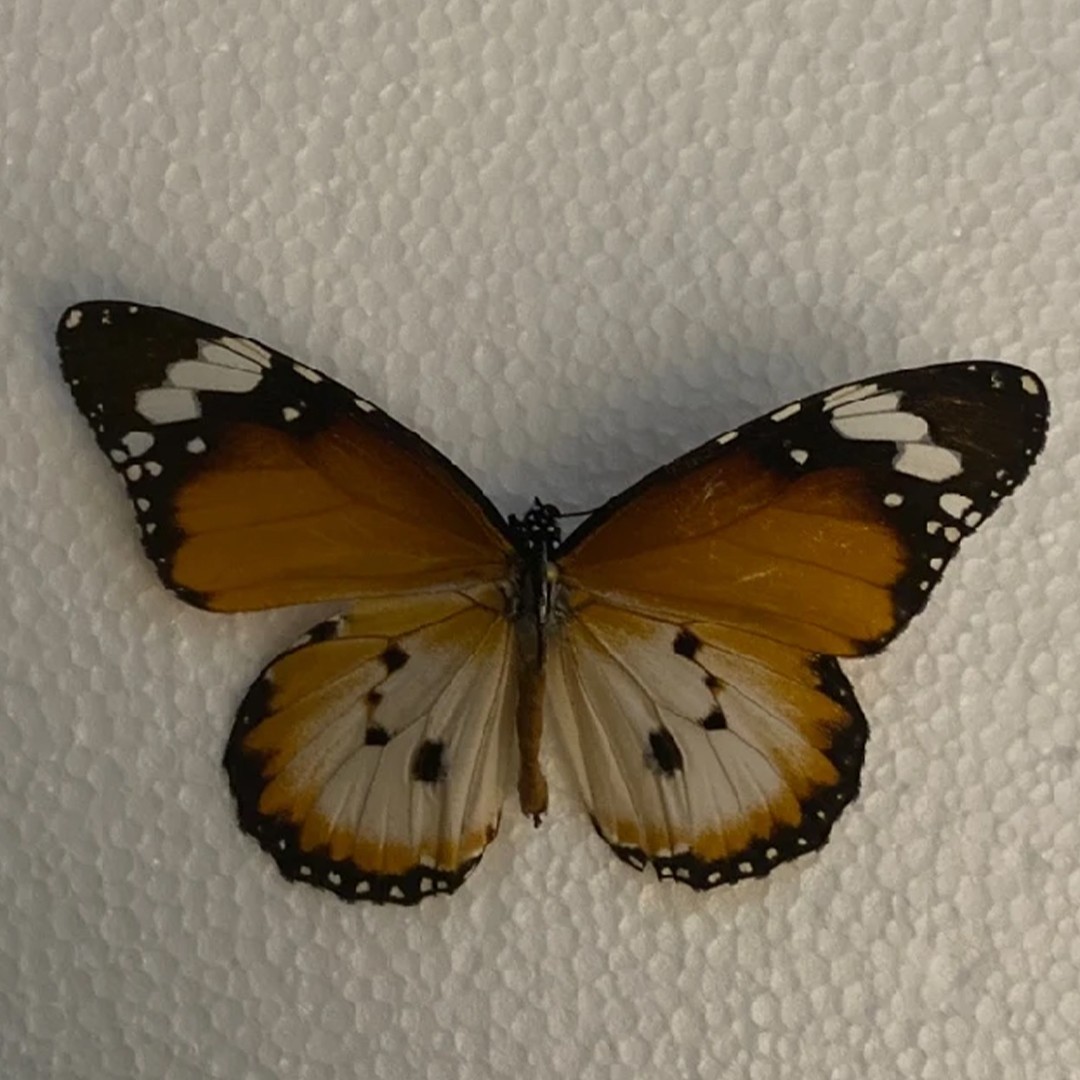
D. chrysippus is a medium-sized butterfly with a wingspan of about 7–8 cm (2.8–3.1 in). The body is black with many white spots. The wings are orange, the upperside brighter and richer than the underside. The apical half of the forewing is black with a white band. The hindwing has three black spots in the center. The wings are bordered in black and outlined with semicircular white spots. This species exhibits slight sexual dimorphism, as the Male has large scent glands on his hindwings, which the female lacks. They appear as a large black spot with a white centre if viewed from the underside D. chrysippus is a polymorphic species, so the exact coloring and patterning vary within and between populations. It is similar in appearance to the Indian fritillary (Argynnis hyperbius), which may coexist with it. 
3. Cabbage tree emperor moth
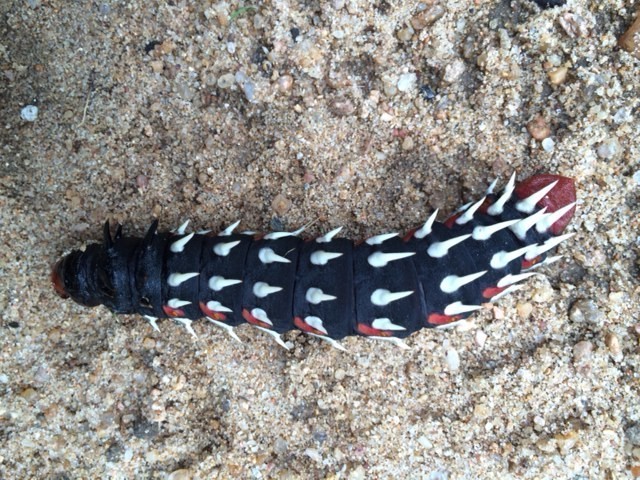
Larva: Final instar about 7 cm in length and about 1.5 cm in diameter. "Ground colour deep velvety black; each somite, from 4th to 12th, bearing eight white/yellow tubercular processes, two subdorsally, two laterally, and four (in two rows) on each side subspiracularly. The 2nd somite bears four black processes, two subdorsally and two laterally. The 3rd somite bears 4 black processes, as in the 2nd, and two small yellow processes on each side, in line with the subspiracular processes on the other somites. Spiracles red; those on the 4th to 11th somites being surrounded by an irregularly shaped red area. Head and legs concolorous with body".
4. Western honey bee
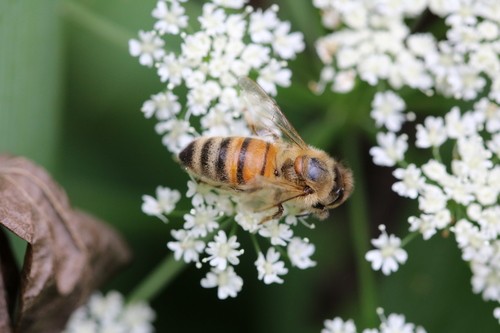
Western honey bee(Apis mellifera) is the most common species of honeybee in the world. Among the first domesticated insects, its cultural and economic impact on humanity has been vast and far-reaching, providing honey, wax and its services as a pollinator. Western honey bee faces challenges worldwide, such as colony collapse disorder, and populations are thought to be decreasing.
5. Common evening brown
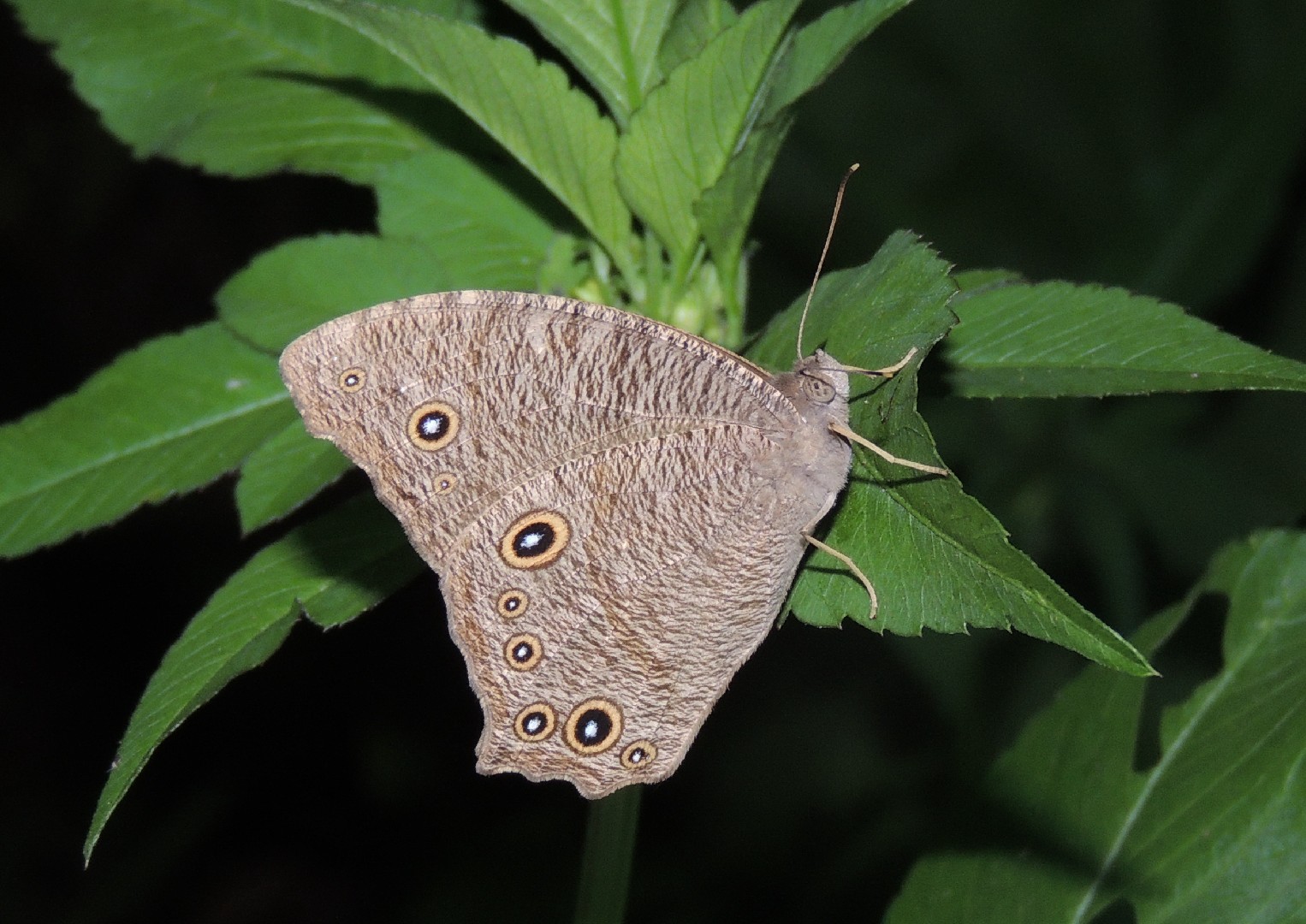
The common evening brown (Melanitis leda) changes its appearance based on the season. During wet seasons, it has a pale brown underside and a dark brown top. Then, during dry seasons, it often has more distinguished bands or spots. It uses these neutral colors to help it blend into leaves and trees. It usually only flies during the evening, resting during daylight.

6. Blue pansy
The wingspan is 4 - 5 cm. The upper surface of the forewings is black with white markings towards the apex. The upper surface of the hindwings is black with white markings on the outer edge, and a characteristic large metallic-blue spot. This blue spot is smaller and more a dull purple in females. The underside of the forewings is brown with white markings corresponding to those on the upper surface. The under surface of the hindwings is almost uniform brown.
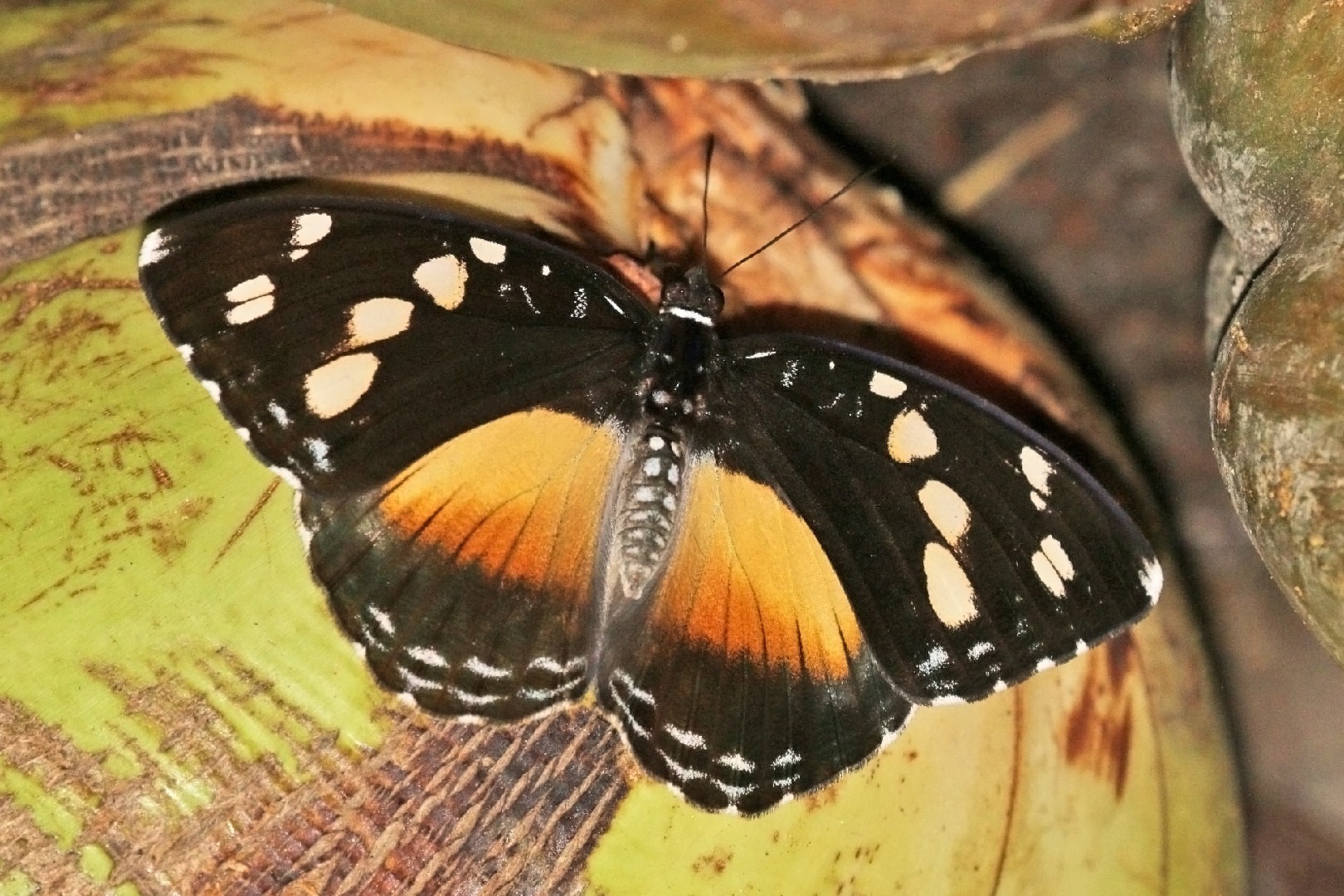
7. Forest glade nymph
The wingspan is 4.5 - 6 cm.
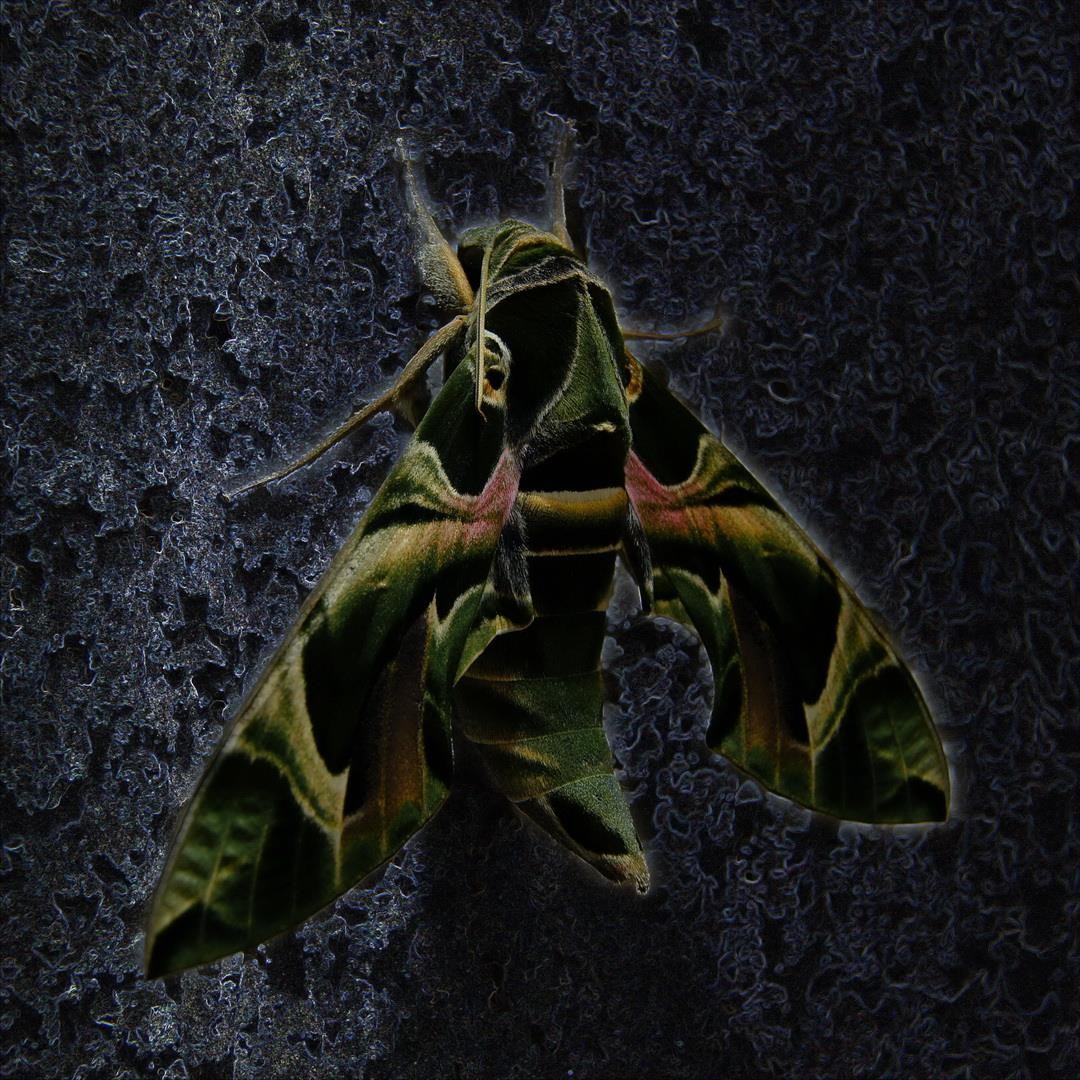
8. Oleander hawk-moth
Daphnis nerii, the oleander hawk-moth or army green moth, is a moth of the family Sphingidae. It was described by Carl Linnaeus in his 1758 10th edition of Systema Naturae.
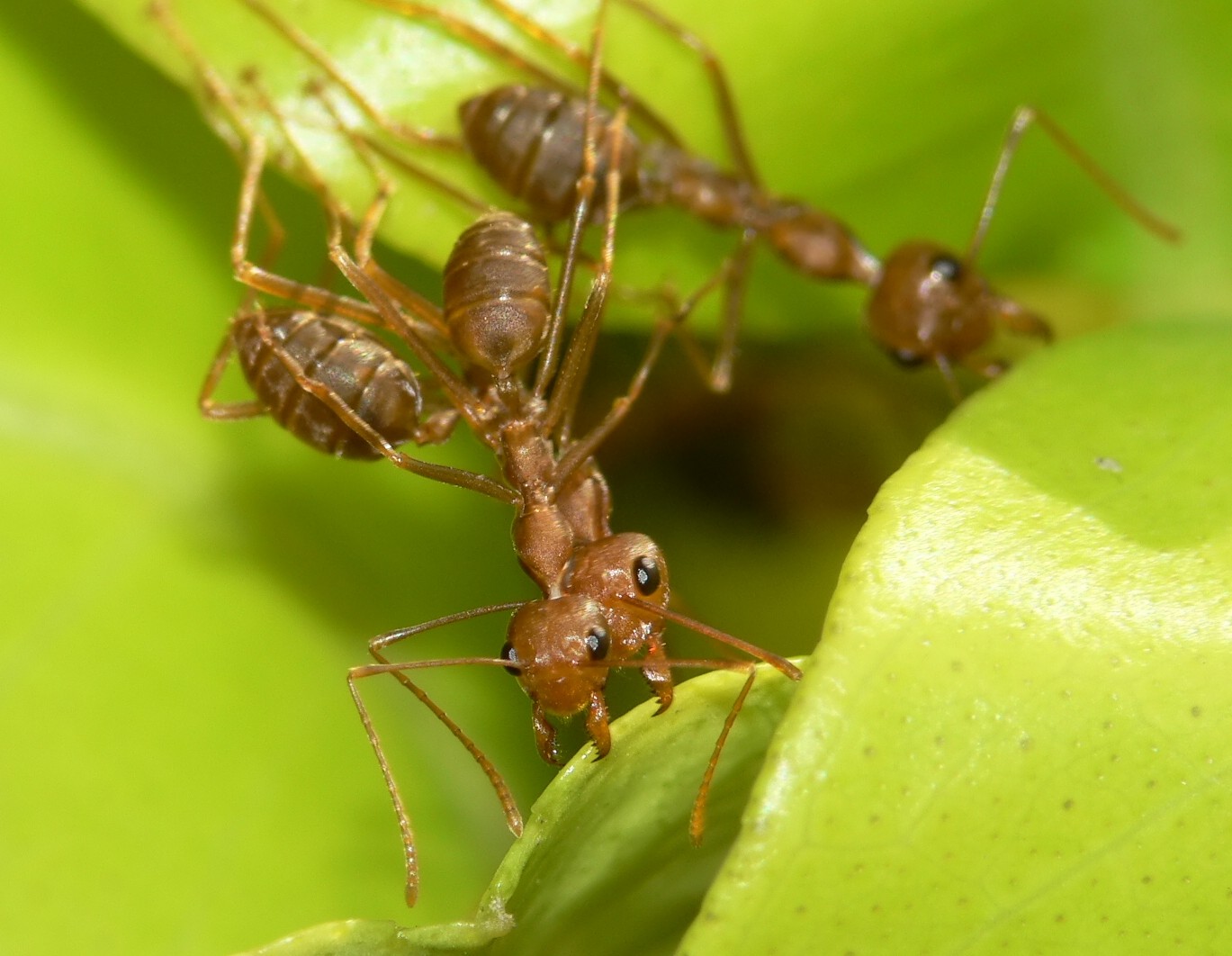
9. Weaver ant
The worker is a fairly large ant with a length of 6 mm. The antennae have twelve segments, the first segment exceeding in length the second and third combined. The clypeus, at the front of the head, is large and convex and overhangs the outer edge of the mouthparts. The large mandibles have long triangular teeth which cross over one another when the ant is at rest. This ant ranges in colour from orangeish-brown to dark brown; the thorax is clad in fine pubescence while the abdomen is covered with short erect hairs. The tip of the abdomen has glands that produce pheromones. The feet have suction pads which enables these ants to cling to surfaces with a firm grip.

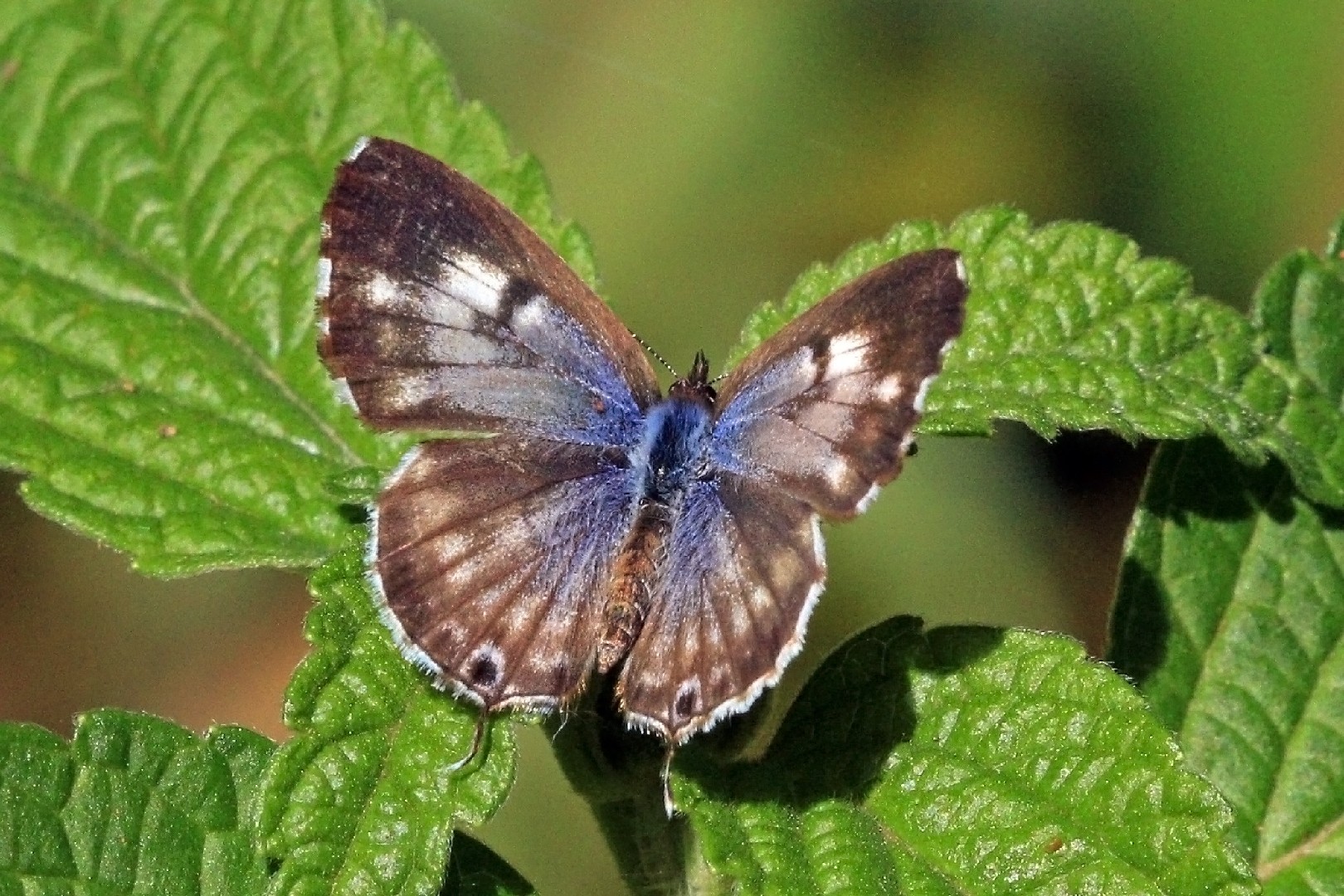
10. Dark grass blue
The wingspan is 1.8 - 2.5 cm for males and 2 - 2.5 cm for females.
More







