




Top 16 Most Common Insects in Chongqing
Insects, with their varied shapes, sizes, and functions, are a vital part of the ecosystem in Chongqing. This region’s diverse geography, from towering mountains to verdant valleys, contributes to a rich insect diversity. Insects in Chongqing, both pests and beneficial, play crucial roles, reflecting the intertwining relationships in nature. Join us as we explore the 16 most commonly found insects in this vibrant state.

Most Common Insects
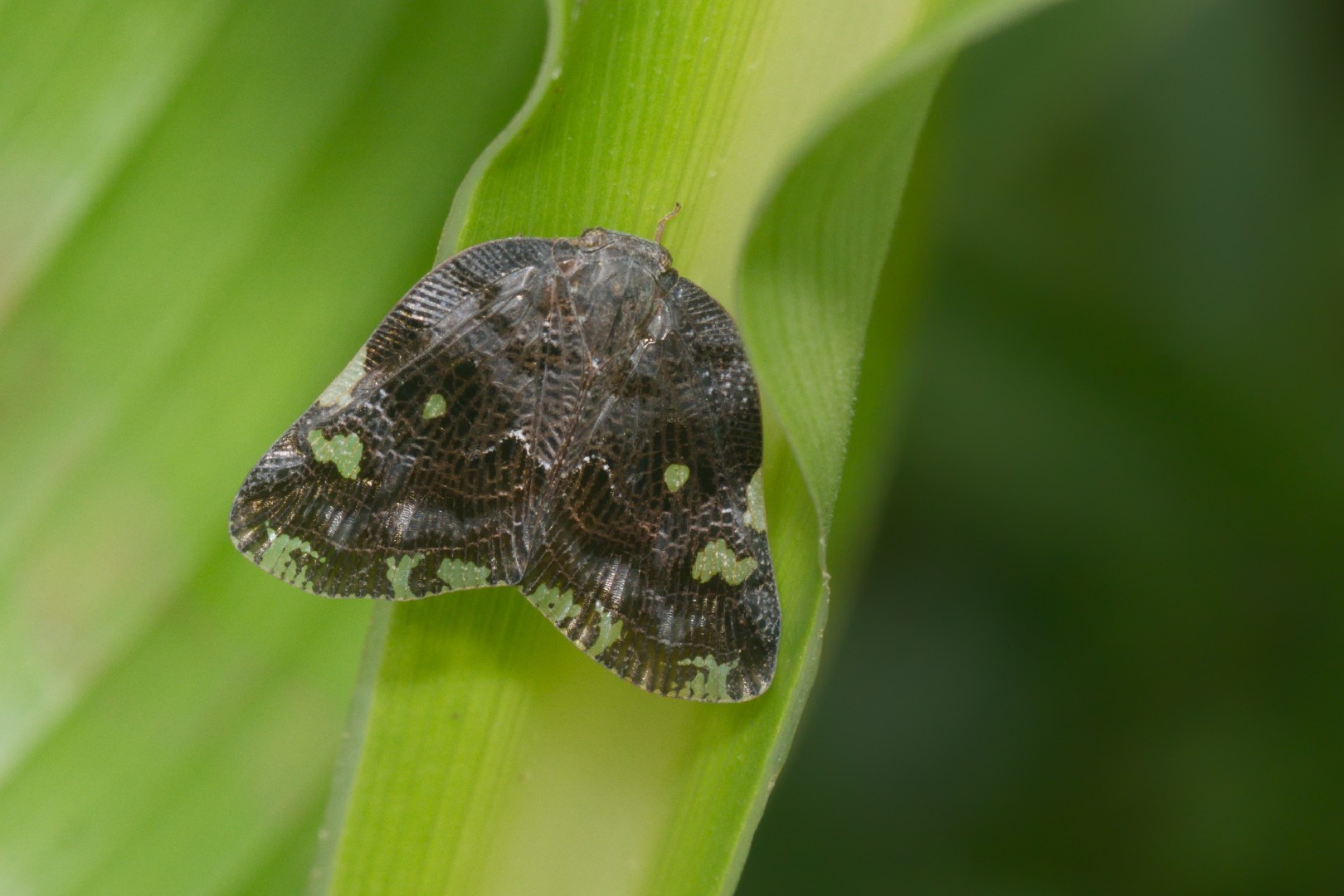
1. Black planthopper
Ricania speculum can reach a length of about 8 mm, with a wingspan of about 1.5 cm. These planthoppers have dark brown wings with central wavy horizontal bands and irregular transparent patches of different sizes. The precostal area of the forewings shows dense transverse veinlets and the costal margin is distinctly convex near the base. In males the tip of the abdomen is pointed, while in females is rounded. The final instar nymphs are white with dark brown markings and waxy secretions on the abdomen. 
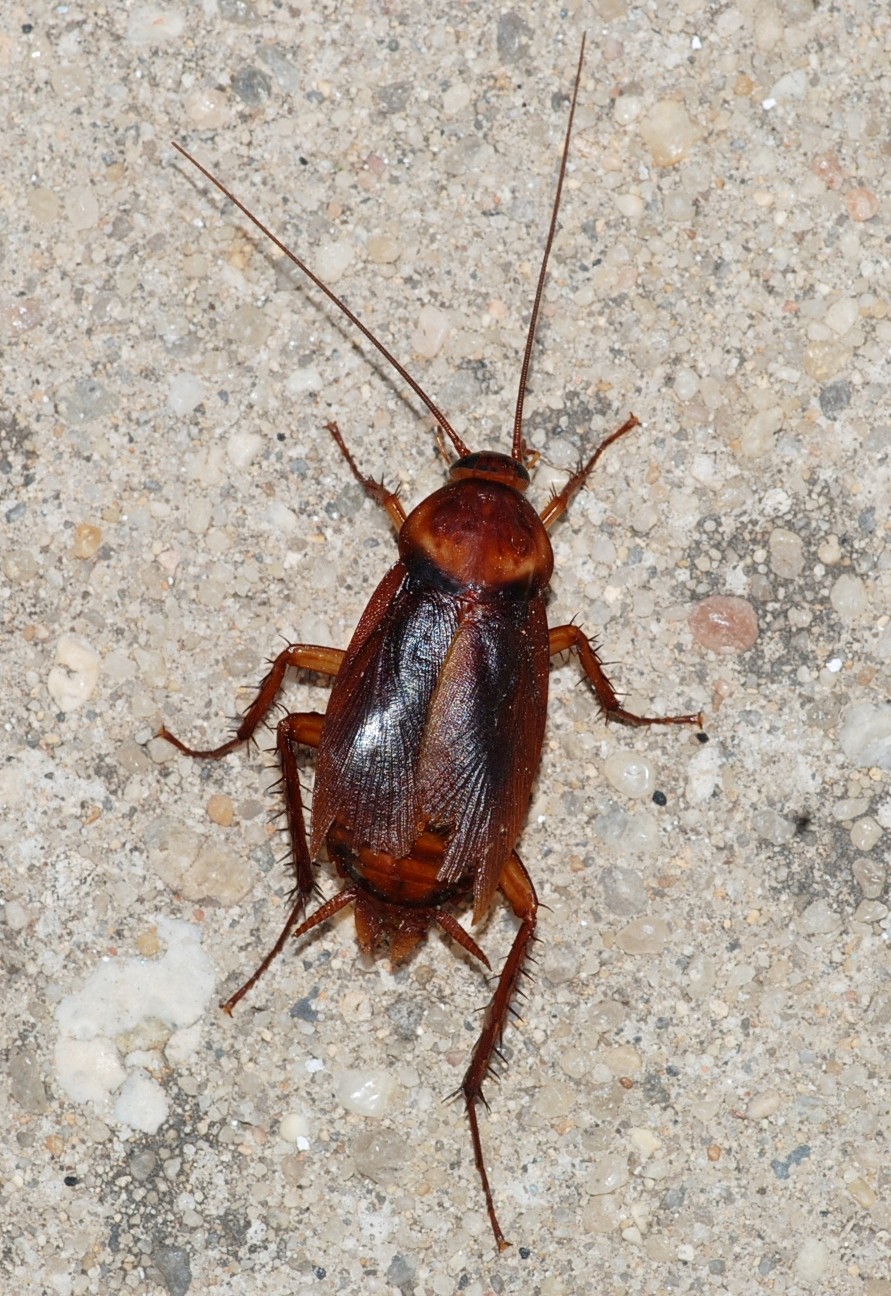
2. American cockroach
Despite its name, american cockroach (Periplaneta americana) is not native to the Americas but rather to Africa and the Middle East, from which it arrived as a result of human commercial patterns. Notably quick and rather resilient, this species is capable of limb regeneration. It requires a certain level of moisture to thrive, and it will avoid drier areas unless it has access to the required level of water.
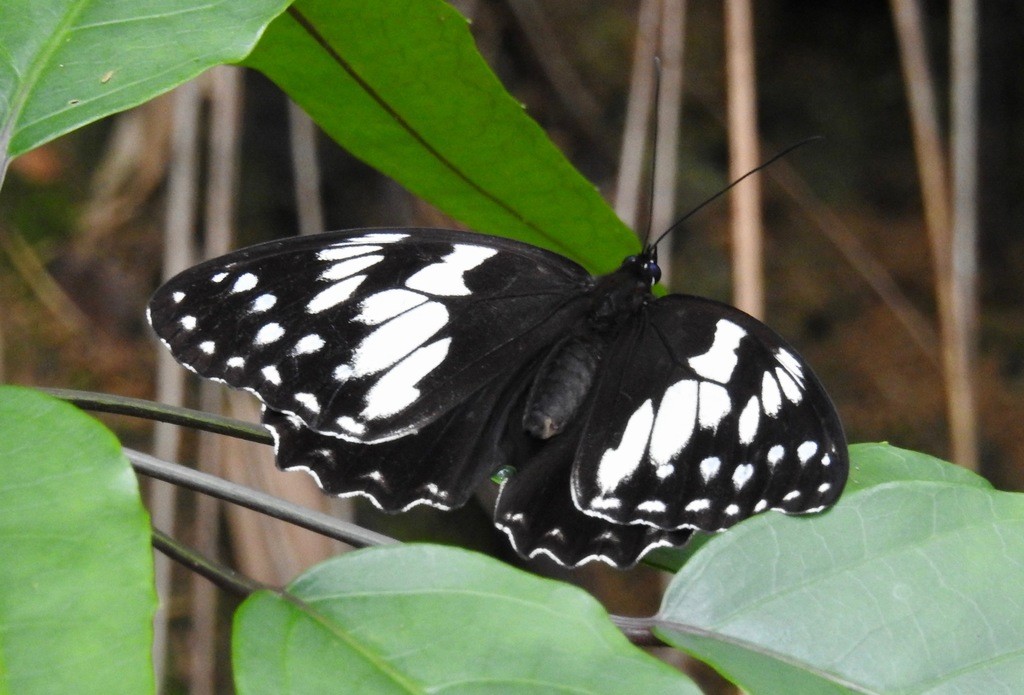
3. Penthema adelma
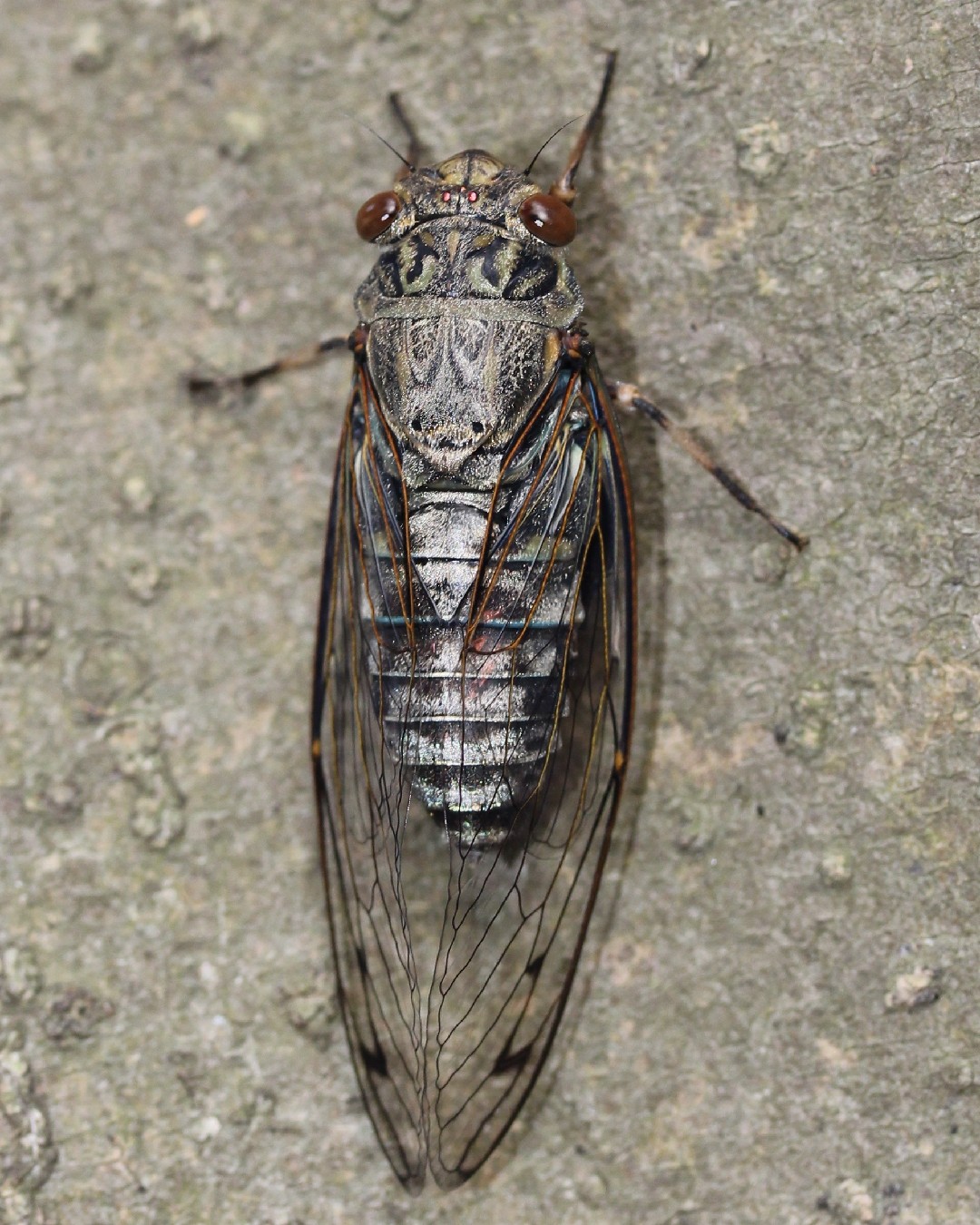
4. Walker's cicada
Male Meimuna opalifera grow to a size of about 42 to 46 mm, while females reach a size of about 40 to 44 mm.
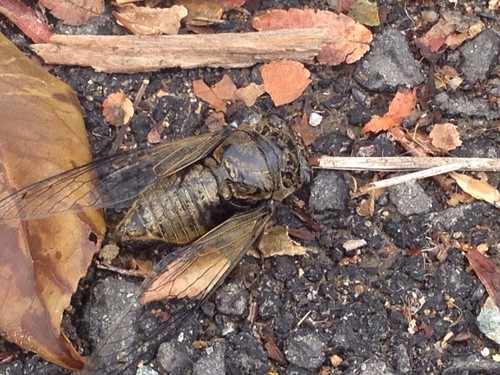
5. Cryptotympana atrata
The Cryptotympana atrata is a dark cicada with an unusual feature. Many people to this day use the shredded skin that they expel to treat various skin issues, which is an aspect of ancient medicine. Otherwise, this cicada can be identified by seeing its mostly black bodies with orange accents.
6. Southern sullied sailer
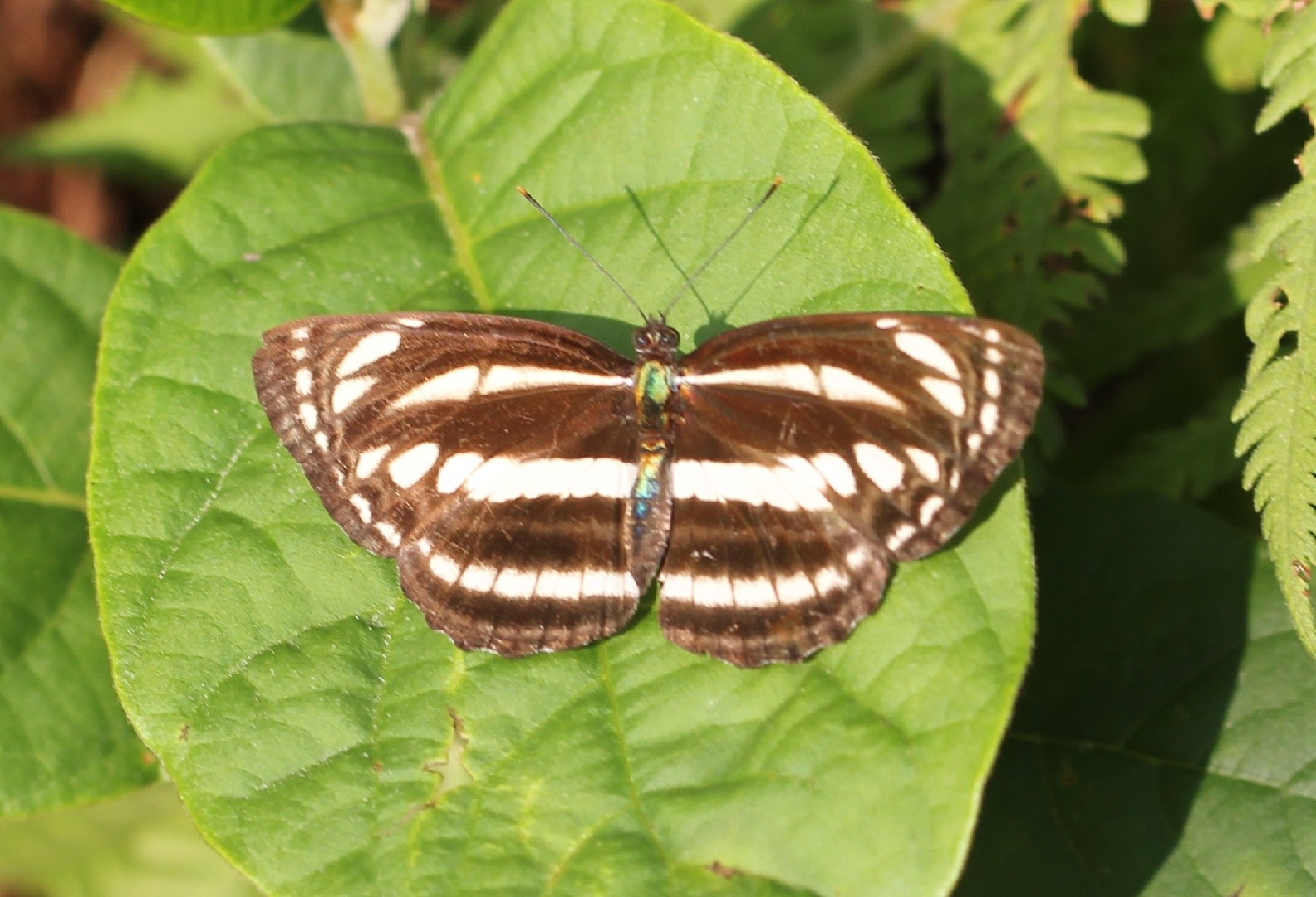
Upper side, ground colour rich ferruginous-red, the basal area slightly tinged with olivescent yellowish-ferruginous. Cilia alternately black and white. Forewing with three black slender bars crossing the cell, and three similar bars below the cell between the basal interspaces of the middle and lower medians; beyond the cell is a large outwardly-oblique pure bluish-white more or less triangulate spot followed by a transverse discal macular band, broadest in the dry-season brood, composed of a series of large broad pure bluish-white spots proceeding from the costa to the posterior margin, of which the upper five are subapical and disposed obliquely outward, the third and fourth being ovate, the upper two very slender and divided by the second subcostal branch, the fifth much the smallest; the next four are disposed somewhat obliquely inward and are much larger, the sixth (or upper) triangularly ovate, the seventh longest and bluntly ovate or somewhat quadrate, the eighth quadrate with its outer edge indented, and the lowest narrow; all these white spots are bordered with black, which colour broadly extends from the cell along the costa and thence decreases hindward; beyond is an outer marginal broad lunularly inner-edged, or occasionally dentate, black waved band, which is traversed by two contiguous slender grey sinuous marginal lines. Hindwing with three black slender bars crossing the cell, and a small spot between the basal interspaces of the veins above the cell; a transverse medial discal broad pure bluish-white macular black-bordered band terminating at the submedian, its inner edge somewhat regular and its outer edge scalloped ; followed by an outer discal row of black ill-shaped cordate spots, which are more or less obsolescent posteriorly, or occasionally entirely absent, a similar submarginal row of smaller dentate spots, and then a contiguous narrow waved black marginal band traversed by two slender grey sinuous lines. Underside. Basal area bluish or olive-grey, the outer discal area and the apical veins of forewing bright red; discocellular spot on forewing and transverse discal macular band, as above, bluish-white or greyish-white and black bordered; basal bars black, with the interspace between the middle cell bars and of those below the cell on the forewing bright red; marginal markings as above, except that the marginal sinuous fines are violet-grey, and the inner line broadly encompassing the submarginal black spots on the hindwing. Body above red; palpi above black, beneath greenish-white; body beneath and legs bluish-grey; antennae black, tip reddish beneath; eyes bronzy-brown.

7. Scarlet skimmer
The species is on the IUCN Red List as not endangered, year of assessment 2009.
8. Asian swallowtail
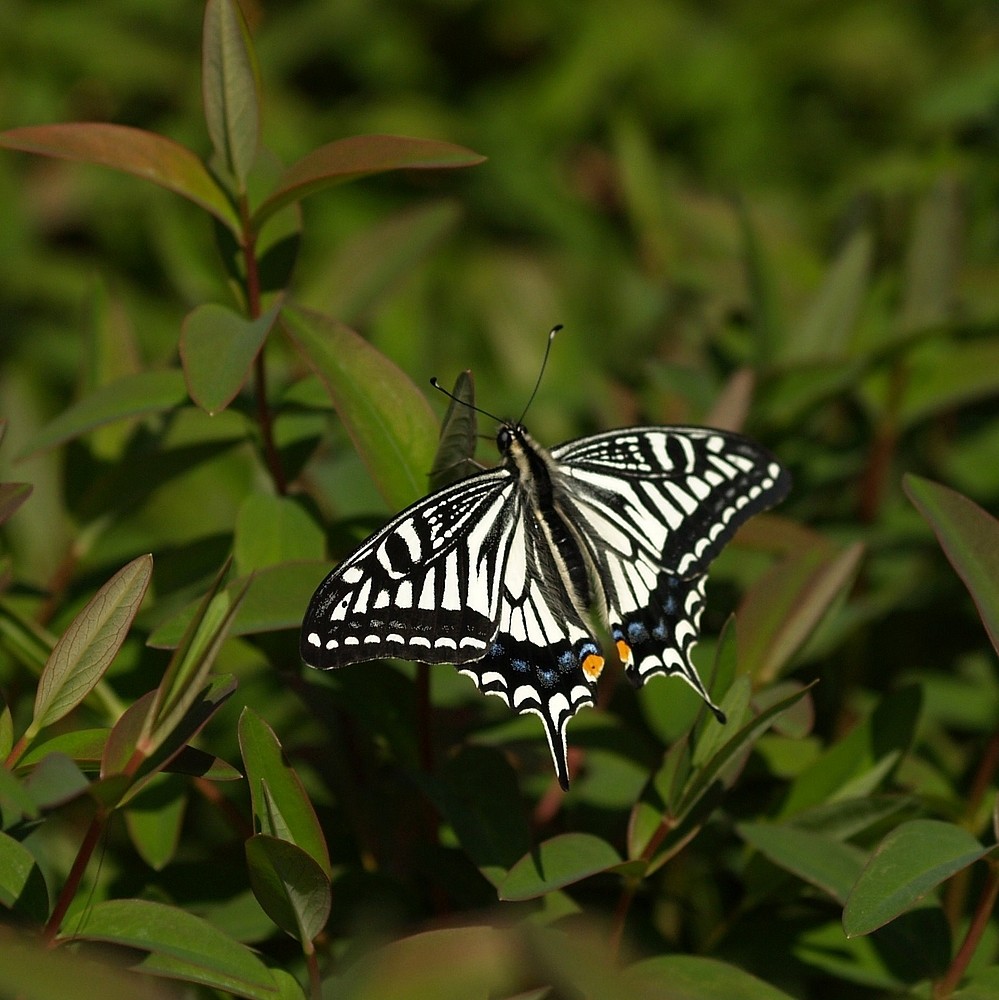
The asian swallowtail (Papilio xuthus) is a beautiful yellow and black butterfly that is pretty common. Regardless, they try and mix it up by having multiple mates during their lifetime. This habit gives them a greater chance of genetic diversity. They want to ensure their kids grow up in a good neighborhood, so they keep an eye out for habitat and food quality when looking for a place to lay their eggs.
9. Indian fritillary
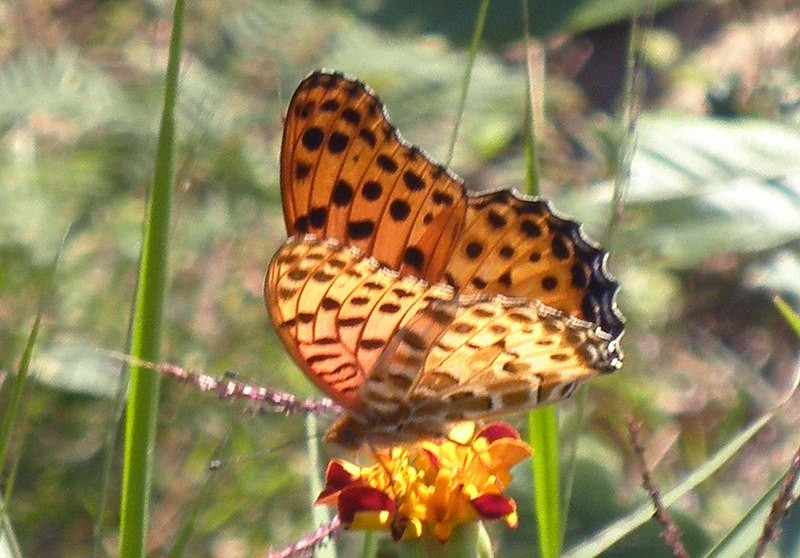
Male: Upperside: forewing rich orange yellow, hindwing paler yellow, with the following black markings: Forewing: cell with a basal short transverse streak, a medial broad oval loop, its outer margin sinuous; a broad transverse streak beyond cell not reaching the median nervure; a broad streak along the discocellulars; a zigzag discal series of large spots, angulated outwardly in interspace 4, inwardly in interspace 2, a minute spot at base of interspace 1; a somewhat diffuse large postdiscal spot below the costa in interspace 6; a postdiscal sinuous series of round spots, those in interspaces 1 and 4 very small; an inner complete subterminal sinuous series of round spots; an outer subterminal line, widening on the veins, and a terminal slender line. Hindwing: a basal, transverse, obscure narrow mark in cell, another above it in interspace 7, a transverse lunule across the middle of the cell; a small spot outwardly bordering the lower discocellular; a discal series of transverse spots from interspaces 1 to 7, sinuous posteriorly; a postdiscal series of five spots in interspaces 2 to 6; a subterminal series of somewhat lunular spots; finally, a narrow band on term en traversed posteriorly by a series of blue, anteriorly by a series of ochraceous lunules. Underside forewing pale terracotta red, shading into ochraceous towards the apex, the apex broadly suffused with that colour; markings as on the upperside, with the following exceptions: subcostal spot in interspace 6, upper two spots of postdiscal series, upper four spots of the inner subterminal series, and the anterior portions of the outer subterminal and of the terminal line olivaceous brown; the upper two postdiscal spots centred with white, with a white spot on each side; the upper four spots of the sub terminal series connate (united), forming a short curved band. Hindwing variegated with ochraceous, olivaceous-brown and silvery-white markings, the last for the most part narrowly margined on the outer side by short black lines; the veins prominently pale ochraceous; the medial silvery markings form a well-marked sinuous discal series, followed by a curved postdiscal series of five olivaceous round spots; each spot and the olivaceous-brown quadrate patch near base of cell with a minute white central spot; a slender black subterminal line widening at the veins, as on the forewing, followed by an ochraceous narrow lunular band and an outer slender black anteciliary line; the subterminal black line margined on the inner side by a series of: slender white lunules, bordered inwardly by a series of broad olivaceous-brown markings in the interspaces. Antennae brown above, ochraceous red beneath; head, thorax and abdomen olivascent tawny; beneath, palpi, thorax and abdomen pale ochraceous. Female similar. Differs from the male as follows: Upperside: apical half of forewing from about the middle of the costa obliquely to just above the tornus black, inwardly suffused with purple, crossed by a broad white band from costa to the subterminal series of black spots; four preapical white spots, the upper three bordering on each side and above a very obscure ocellus scarcely visible on the black background, an inner and an outer subterminal transverse series of slender white lunules. Underside: forewing markings similar to those on the upperside, but the apex of the wing beyond the white oblique band ochraceous green. Hindwing as in the male, but the markings slightly broader. Antennae, head, thorax and abdomen as in the male, the abdomen paler beneath. Wingspan: 80–98 mm (3.1–3.9 in). Var. taprobana, Moore, is a slightly darker race from Ceylon, with markings similar in both sexes to those of hyperbius. Moore, however, states that taprobana is an intermediate between the south Indian form (castetsi) and typical hyperbius specimens from Ceylon that do not differ from upper India, Assam, and Burmese specimens, except in the very slightly darker ground colour on the upperside. Race castetsi, Oberthur: The females of this remarkable form seem to be locally dimorphic. Male closely resembles the male of hyperbius but differs as follows: Upperside: ground colour a richer brighter shade of orange yellow; black markings similar but distinctly smaller, of a deeper black: subterminal transverse series of slender lunules traversing the terminal black margin on the hindwing of the same shade of orange yellow as the ground colour, not blue on the posterior half of the wing. Underside: the olivaceous brown at apex of forewing and variegating the hindwing more of a greenish golden tint. A sex-mark of specialized raised scales along middle of vein 1 on the upperside of the forewing very prominent. Female Nilgiri form: resembles the female of typical hyperbius differs as follows: Upperside: ground colour pale golden yellow; basal half of both forewings and hindwings shaded with metallic green in the forewing; in some specimens this tint is slightly olivaceous; black markings and the white oblique band on the apical area of the forewing as in hyperbius, but proportionately smaller, the purplish-blue shading along inner margin of the white band much less conspicuous, as is also the bluish tint; on the white preapical spots and subterminal markings on the forewing and on the posterior half of the subterminal line of limules on the hindwing. Underside as in hyperbius but the ground colour on the forewing a paler shade of terracotta red; the olivaceous brown variegating the hindwing of a distinctly greener tint. Female typical form as described from Trichinopoly. Similar to the male differs as follows: Upperside: ground colour pale golden yellow; basal half of the wings suffused with dark olivaceous green; black markings as in the male but larger; on the forewing the spots of the subterminal series very large, coalescent or nearly coalescent with one another and with the dentate spots on the veins in the inner terminal line; the upper two spots also of the postdiscal series very large and coalescent, the upper of the two joining on above and below to the inner postdiscal lunate spot in interspace 6, thus enclosing a prominent lunule of the ground colour. Underside as in the male but paler.
10. Angled red forester
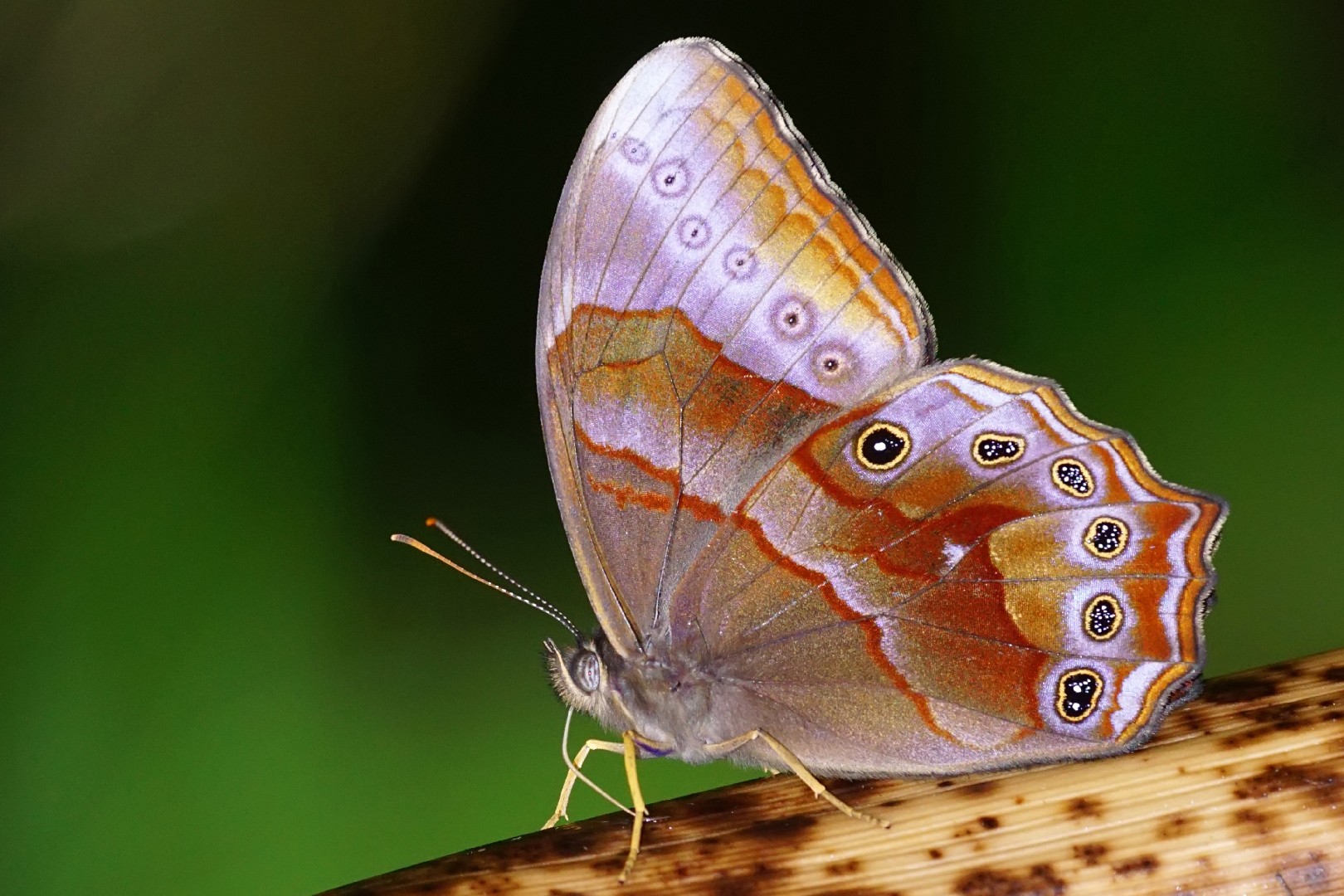
Lethe chandica is a butterfly from the subfamily Satyrinae of the Nymphalidae family. The scientific name of the species was first validly published in 1857 by Frederic Moore.
More







