




Top 16 Most Common Insects in Congo (Kinshasa)
Insects, nature's tiniest laborers, teem in diverse habitats across Congo (Kinshasa), from rainforests to savannas. Congo (Kinshasa)'s geographical variance deeply impacts insect diversity, with 16 most common types influenced by climate, geographical features, and human interplay. Recognizing the bond between our environment and these species—both beneficial and pestiferous—offers a unique perspective on Congo (Kinshasa)'s ecological tapestry.

Most Common Insects
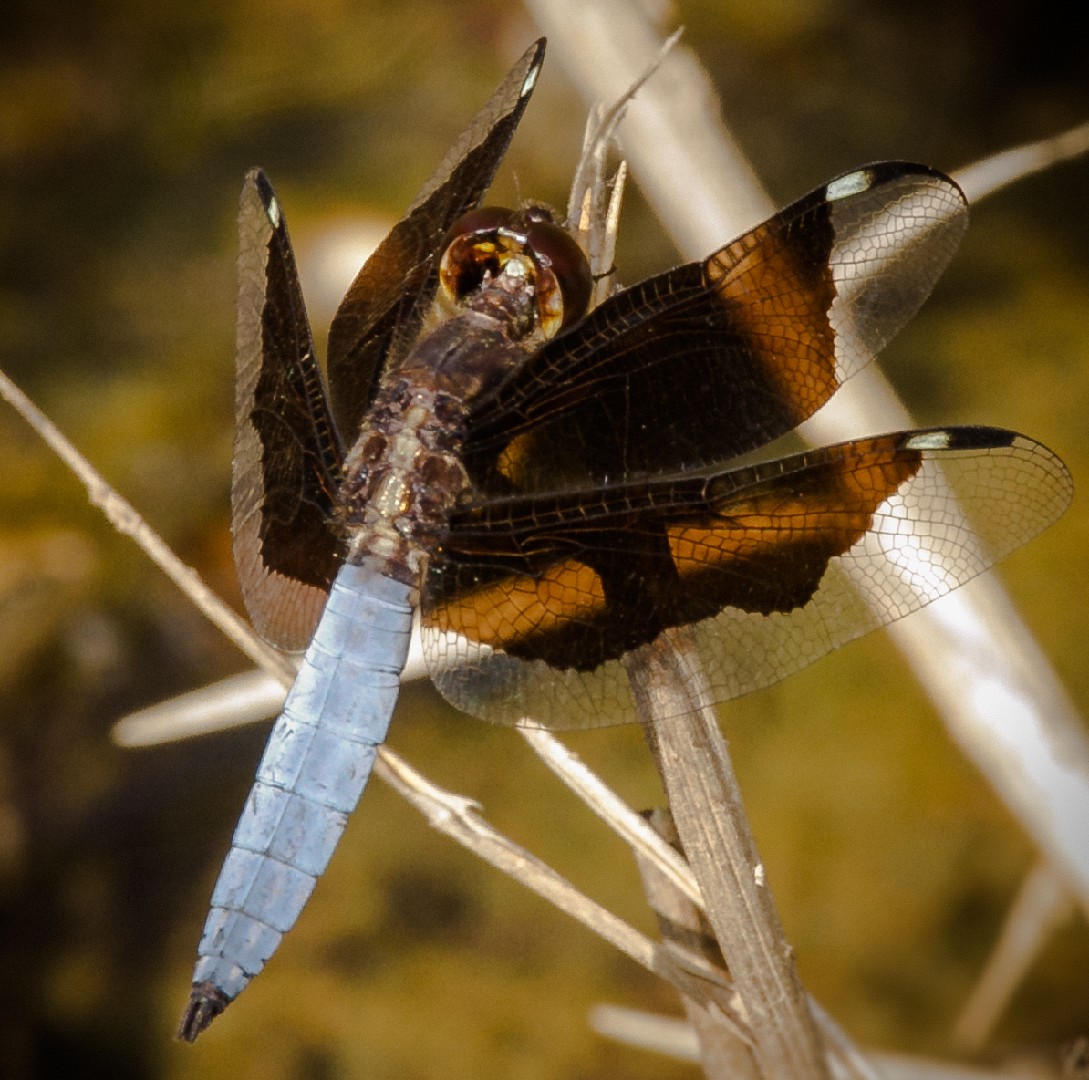
1. Lucia widow
The species is on the IUCN Red List as not endangered, year of assessment 2009.
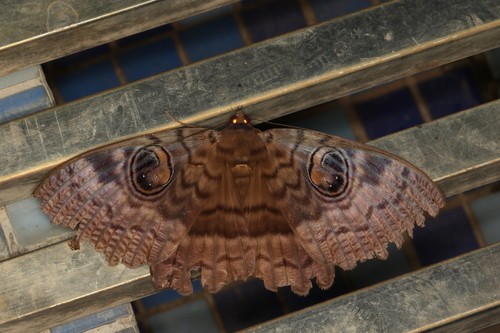
2. Walker's owl
Erebus walkeri is a moth of the family Erebidae. It is found in Angola, the Comoros, the Democratic Republic of Congo, Ghana, Kenya, La Réunion, Madagascar, Malawi, Mauritius, Mozambique, Nigeria, Rwanda, the Seychelles, South Africa (KwaZulu-Natal), São Tomé & Principe, Tanzania, Gambia, Uganda, Zambia and Zimbabwe. 
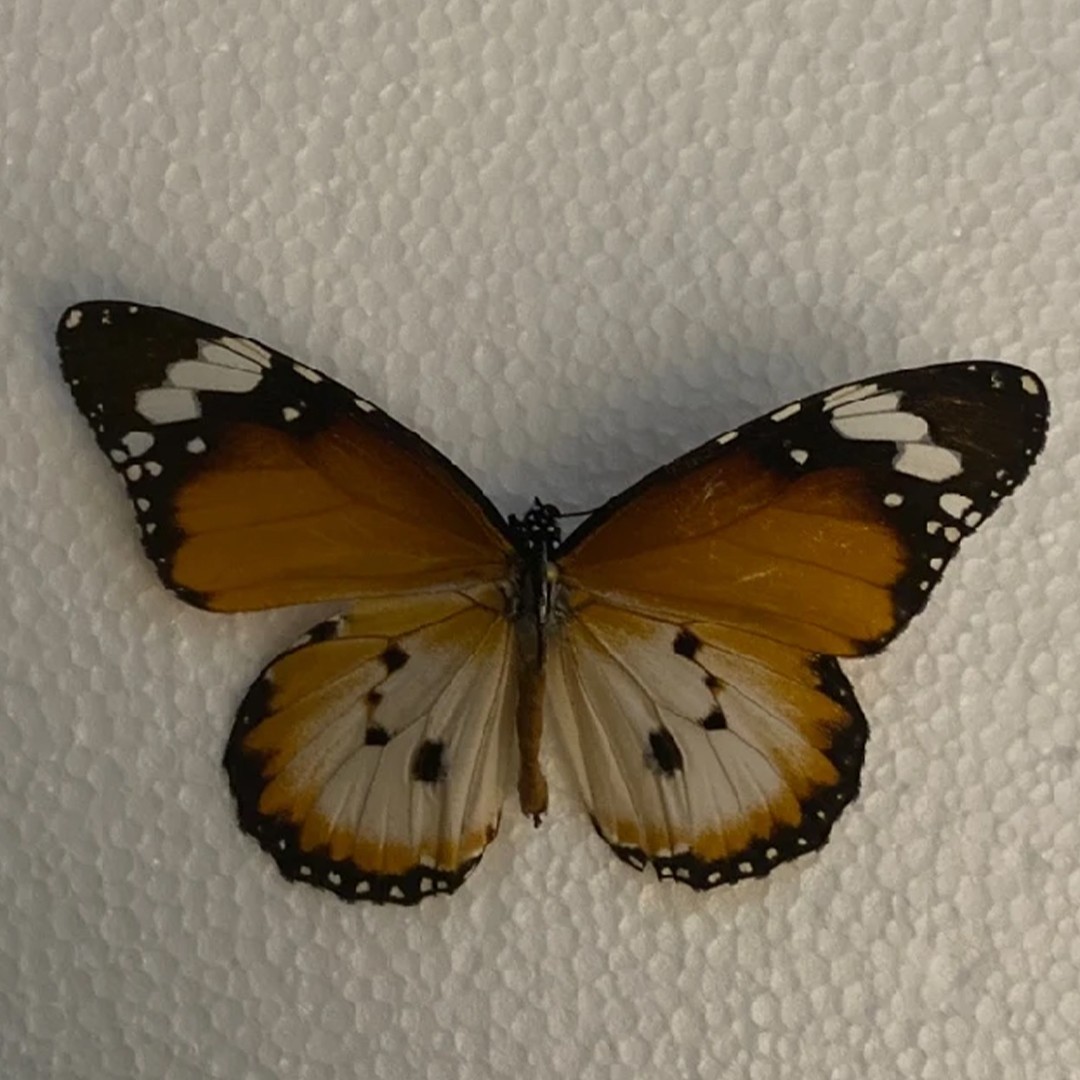
3. Plain tiger butterfly
D. chrysippus is a medium-sized butterfly with a wingspan of about 7–8 cm (2.8–3.1 in). The body is black with many white spots. The wings are orange, the upperside brighter and richer than the underside. The apical half of the forewing is black with a white band. The hindwing has three black spots in the center. The wings are bordered in black and outlined with semicircular white spots. This species exhibits slight sexual dimorphism, as the Male has large scent glands on his hindwings, which the female lacks. They appear as a large black spot with a white centre if viewed from the underside D. chrysippus is a polymorphic species, so the exact coloring and patterning vary within and between populations. It is similar in appearance to the Indian fritillary (Argynnis hyperbius), which may coexist with it.
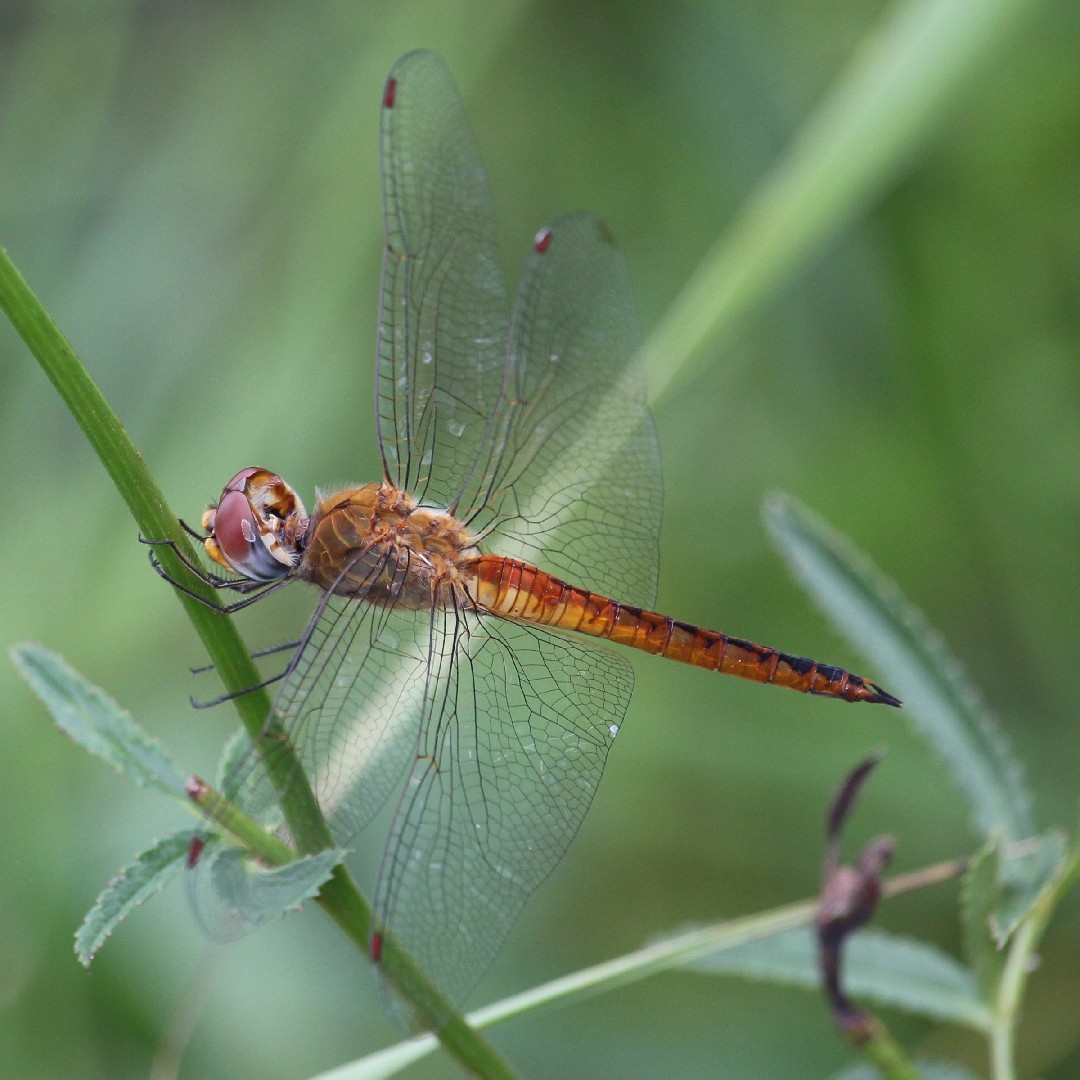
4. Wandering glider
The wandering glider (Pantala flavescens) is a yellow dragonfly that migrates long distances. It's easily recognized by its elegant flight pattern, where it seems to glide across the sky effortlessly, even when it's windy outside. It often lands near still water, which includes ponds and puddles.
5. Blue basker
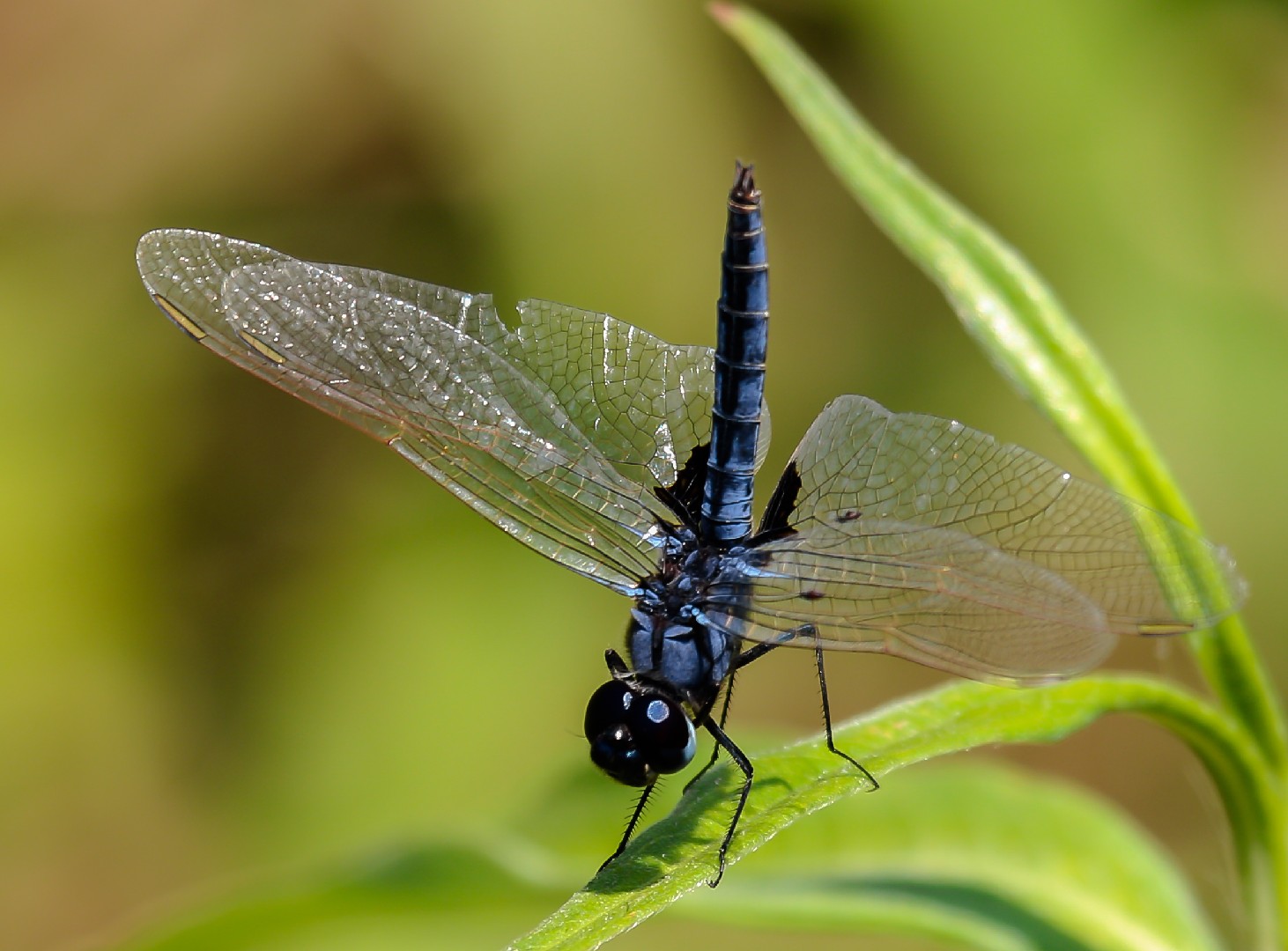
The species is on the IUCN Red List as not endangered, assessment year 2008.

6. Citrus swallowtail
Papilio demodocus , also known under the English name Citrus Swallowtail ("Citrus Swallowtail"), is a butterfly from the family of the knight butterflies (Papilionidae).
7. Red-veined dropwing
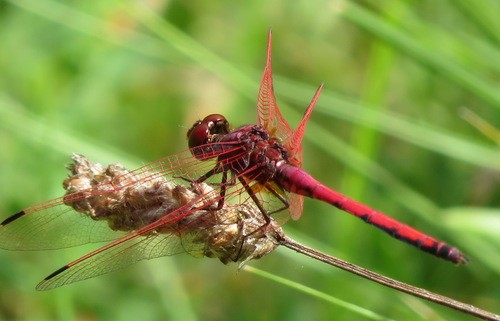
The face of the mature male is deep red, the vertex and top of the frons having a purple sheen. The eyes are deep red and the labium deep yellow with a dark brown stripe in the centre. The synthorax is red with black stripes; mature males often have a purple bloom on the upper thorax.The wings have bright red veins and orange makings at their bases. The pterostigmas are 2.5 - 2.5 mm long and dark brown. The slender abdomen is bright red; S6-S8 have black wedges on each side; S9 and S10 are black. Females have similar markings, but the abdomen and face are yellow to yellowish brown. The sides of the synthorax are pale yellow-brown, as are the lower sides of S1-S3.

8. Danaid eggfly
The danaid eggfly (Hypolimnas misippus) is a unique butterfly where females tend to have a strong advantage. Males are identified by being blackish with white spots. Females exhibit polymorphism, or the ability to have multiple forms. This means that they can resemble males in some cases, but also resemble toxic butterflies like the Monarch butterfly.
9. Forest glade nymph
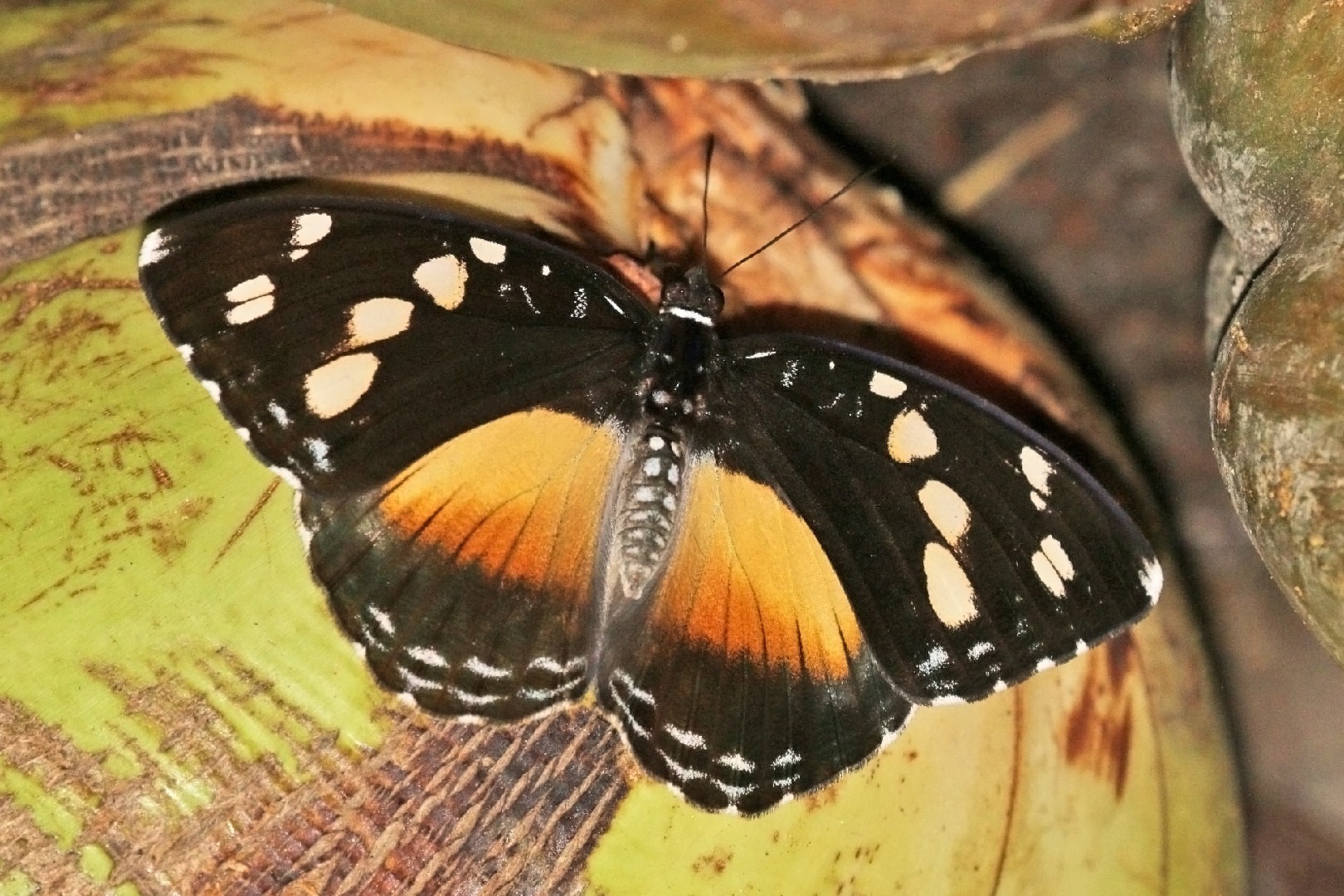
The wingspan is 4.5 - 6 cm.
10. Common citril
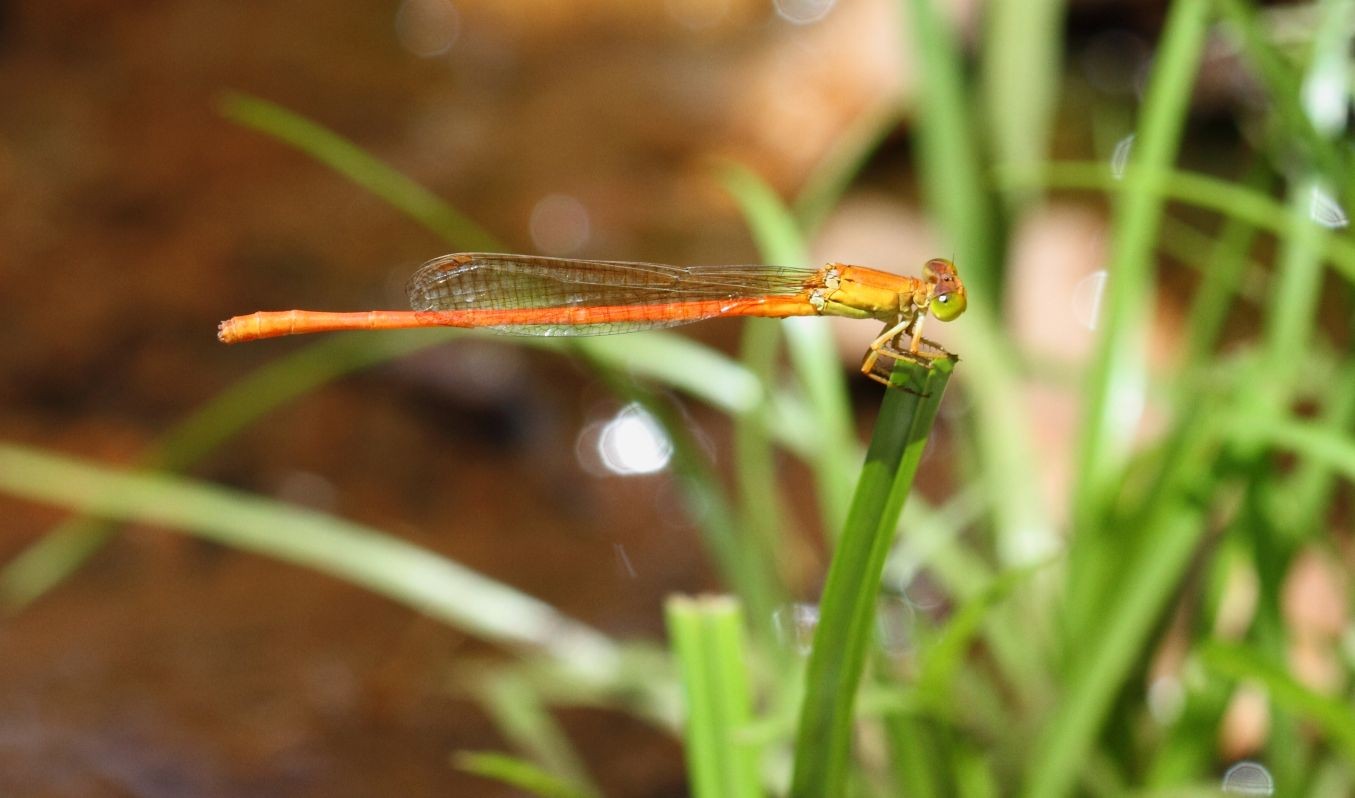
Its natural habitats are rivers, intermittent rivers, marsh lands, shrub-dominated wetlands, swamps, freshwater lakes, intermittent freshwater lakes, freshwater marshes, intermittent freshwater marshes, and freshwater springs.

More







