




Top 20 Most Common Insects in Grenoble
Welcome to the fascinating world of insects in Grenoble! From the alpine meadows to the Rhône Valley, unique environments contribute to an astounding array of colorful insects. These small creatures play vital roles in our ecosystem, acting as pollinators, pest controllers, and food for other species. In this list, we will introduce you to 20 of the most common, yet special, insects that call Grenoble their home.

Most Common Insects
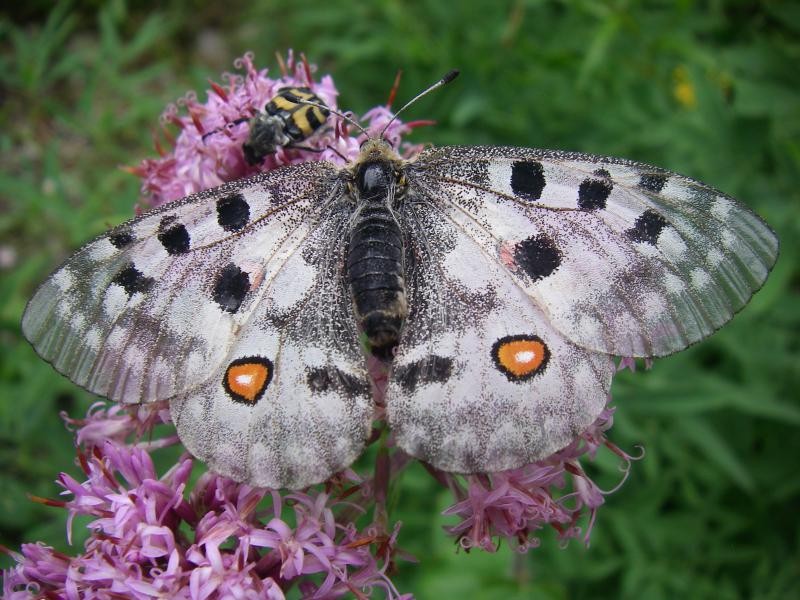
1. Apollo
Parnassius apollo has a wingspan of 6 - 9 cm in males, of 7 - 9 cm in females. The apollo butterfly shows a great deal of individual variation in the appearance, with an evident colour polymorphism. These very very large, beautiful and conspicuous white butterflies are decorated with five large black eyespots on the forewing and two bright red or sometimes orange eyespots on the hindwing. These striking red eyespots can vary in size and form depending on the location of the apollo butterfly, and the bright red colour often fades in the sun, causing the eyespots of older individuals to appear more orange. The wings are shiny, with slightly transparent edges, and some individuals are darker (sphragismelanistic); a general phenomenon common in many butterflies. The caterpillars of this species are velvety black with orange-red spots along the sides. 
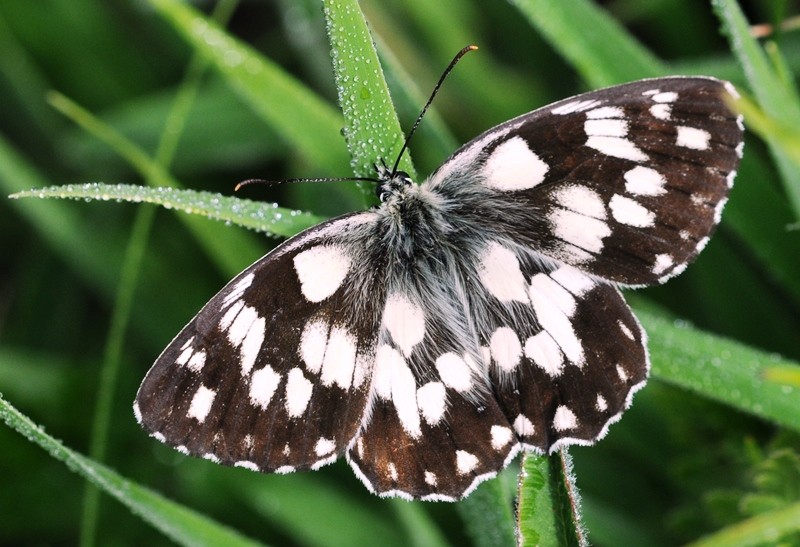
2. Marbled white
Melanargia galathea has a wingspan of 1.8–2.2 in. In these medium-sized butterflies the upper side of the wings is decorated with white and gray-black or dark brown markings, but it is always gray-black or dark brown checkered in the basal and distal areas. The underside is similar to the upper side but the drawings is light gray or light brown. On the underside of the hindwings is present a row of gray eye spots. The males and the females are quite similar, except that some females may have a yellowish nuance on the underside of the wings. The larvae are a lime-green colour, with a dark green line running down the middle of their back. The caterpillars are about 3 cm long. They are green or yellow with some lighter and darker narrow longitudinal lines. The head is always light brown.
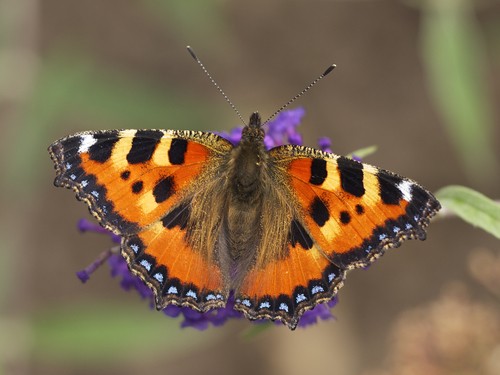
3. Small tortoiseshell
Small and colorful, small tortoiseshell (Aglais urticae) is the national butterfly of Denmark. However, it is capable of surviving anywhere the common nettle leaf may be found, which the larvae of this species depend on. Once among the most common butterflies in Europe and temperate Asia, this species is experiencing rapid declines for reasons still being investigated.
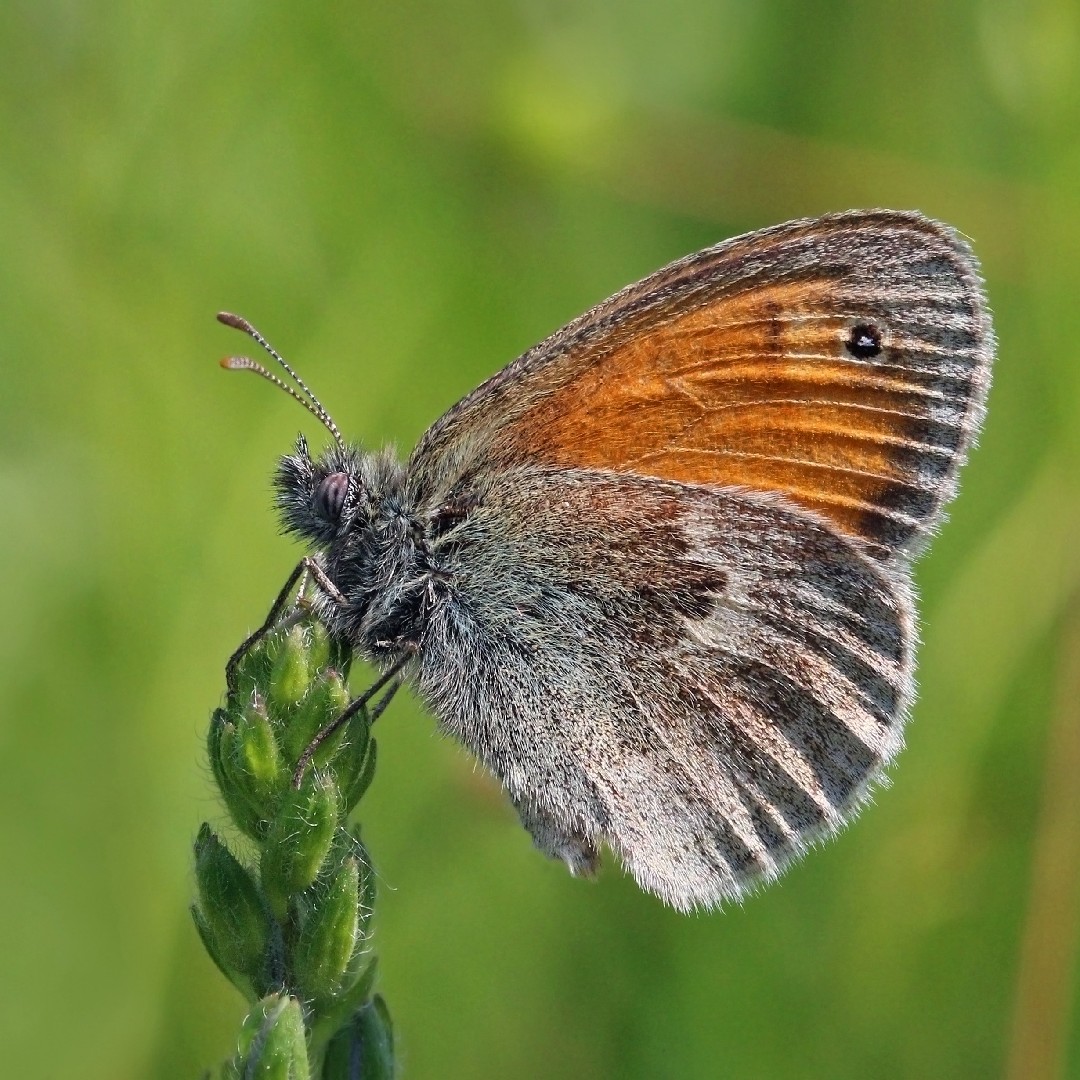
4. Small heath
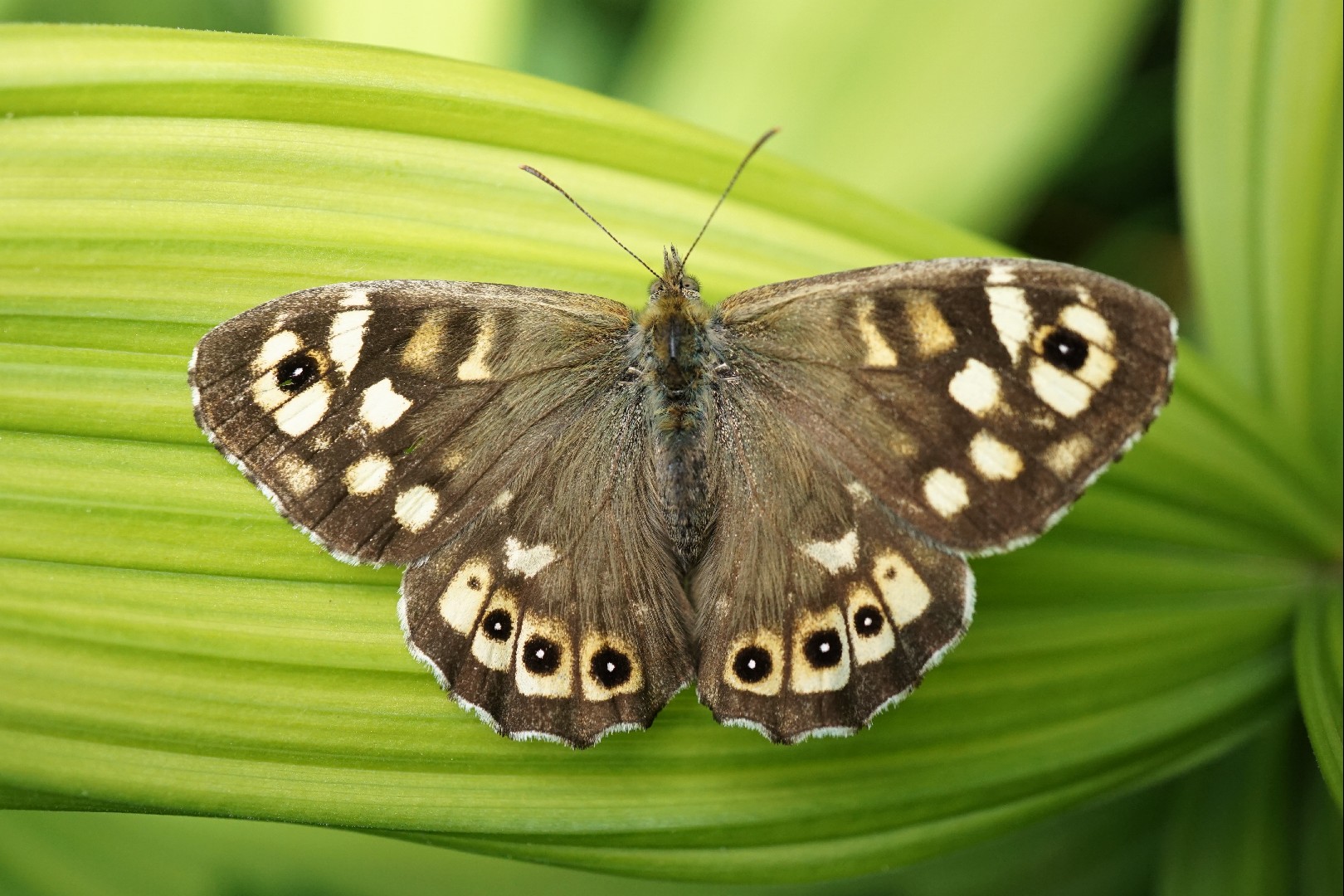
It rests with closed wings when not in flight.
5. Meadow brown
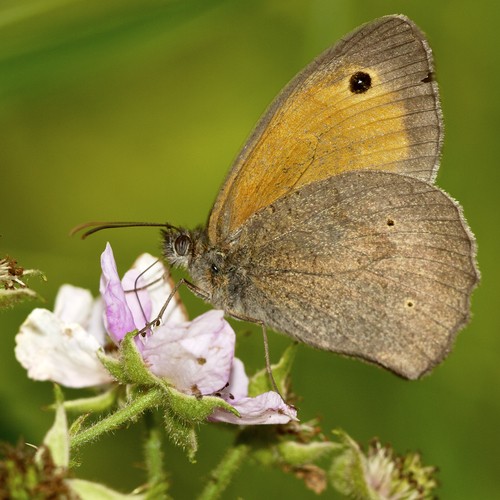
The meadow brown (Maniola jurtina) is similar to the Gatekeeper in the way that it rests with its wings open due to the "eye spots" on either end of its wings that ward off predators. While the color is a deep brown, the caterpillar form is a beautiful bright green with little, white hairs and a dark line leading down its back.
6. Black-veined white
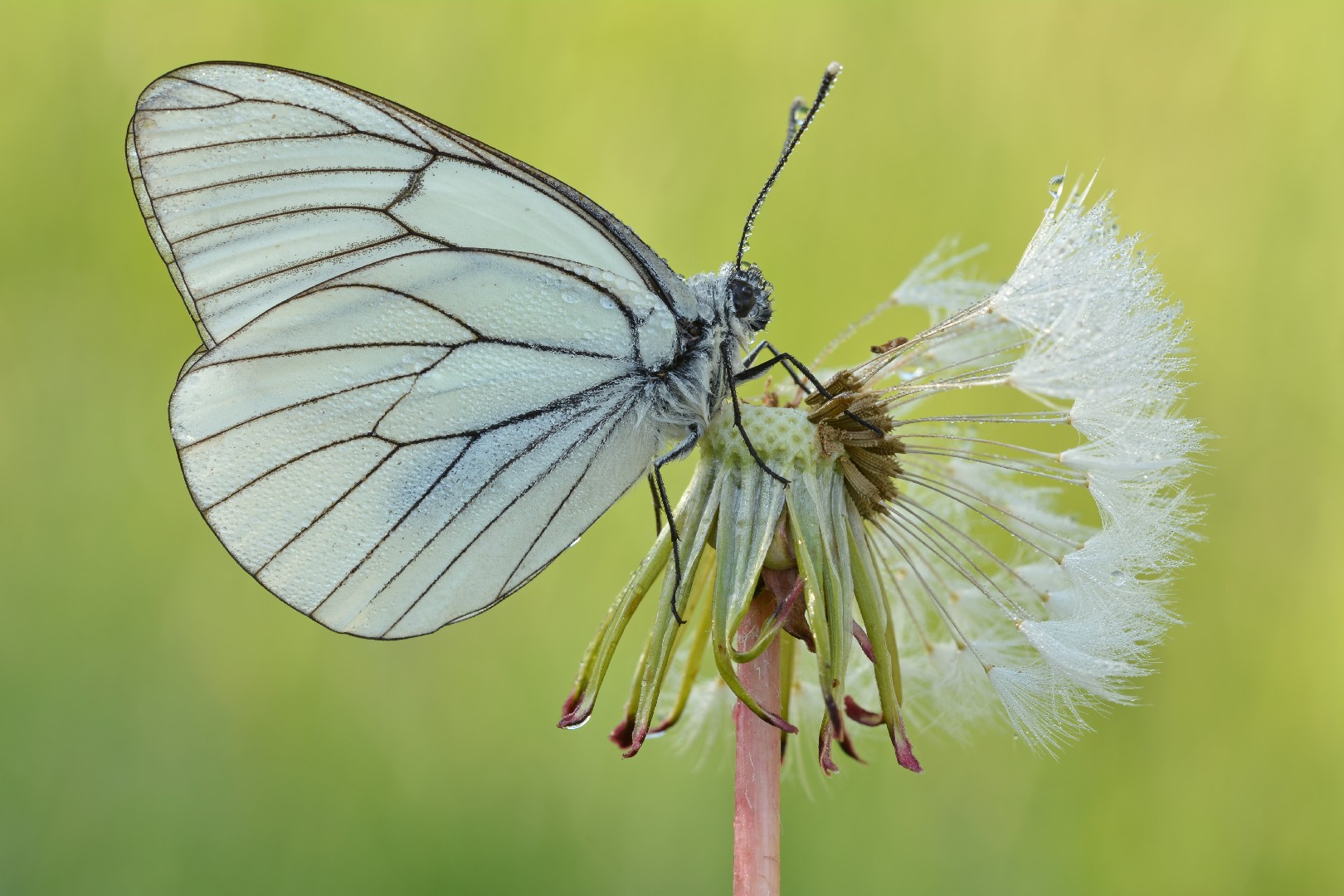
The black-veined white has a wingspan of 5 - 7 cm. Females are commonly larger than males. The upperside of both forewings and hindwings is a translucent white boldly veined with black. The underside is similar in the male but the female has brown veining. Moreover, the female loses most of her scales by rubbing her wings together, resulting almost-transparent. This butterfly can be distinguished from other members of white butterflies of the genus Pieris by its distinctive veined wings. The eggs are yellow at first, darkening with age. The caterpillars are greenish grey with transverse banding. The pupa is creamy white, marked with black, attached by a silken girdle to a twig.
7. Silver-washed fritillary
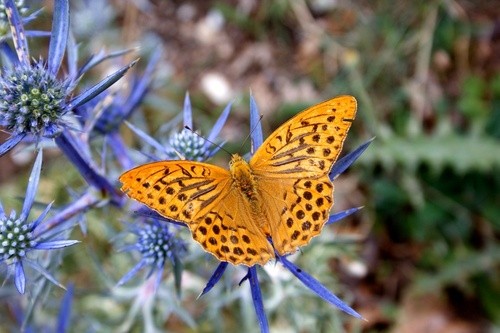
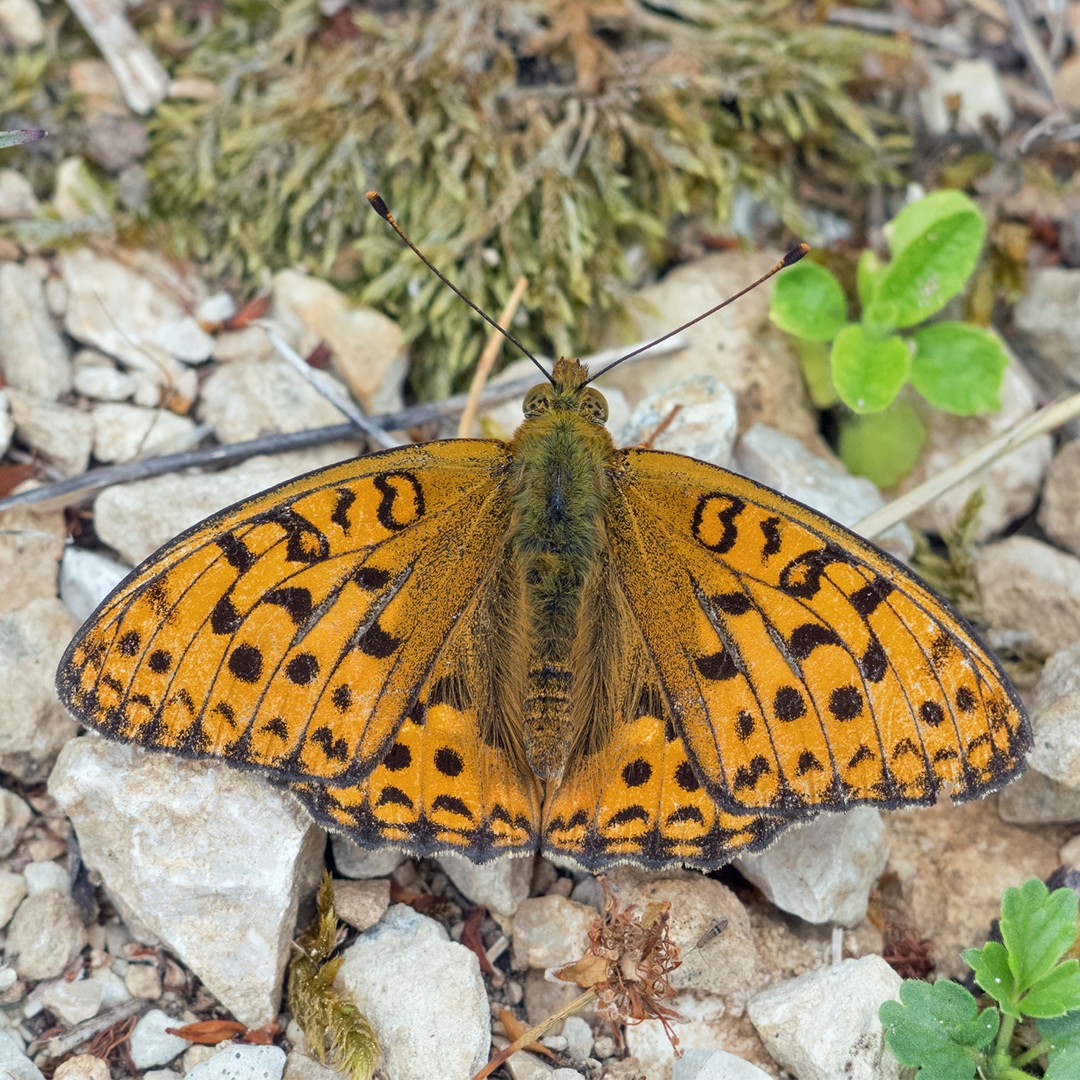
The silver-washed fritillary (Argynnis paphia) is a beautiful, orange butterfly that is covered in black spots. It earns the "silver-washed" portion of its name through silver streaks you can find running along with it. It produces a scent using "scales" that allows it to distinguish itself when females are trying to locate it.
8. Red admiral
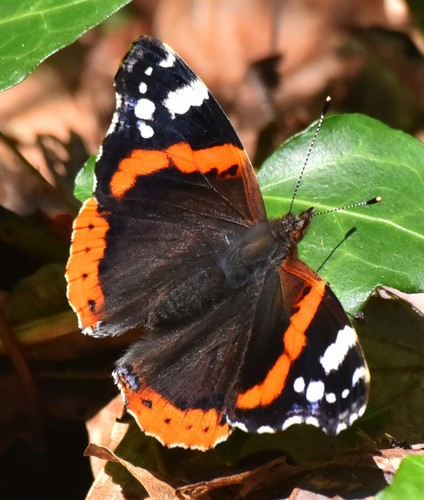
Red admiral (Vanessa atalanta) is a visually striking species of butterfly. Unusually territorial, males will compete for choice areas, and females will only mate with males that maintain their own territories. This butterfly is known for being particularly patient with human interactions, even to the point of perching on clothing or flesh.
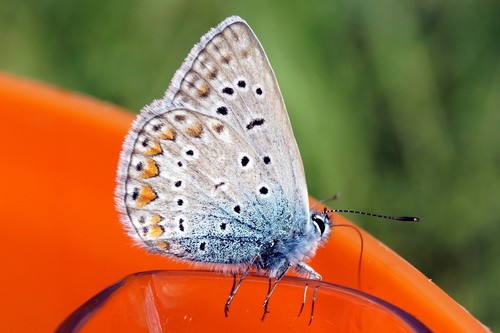
9. Common blue butterfly
Despite its common name, only male specimens of common blue butterfly (Polyommatus icarus) can accurately be described as blue; the females are predominately gray-brown, with only a dusting of blue and a scattering of orange spots. The adults live for only three weeks before dying.
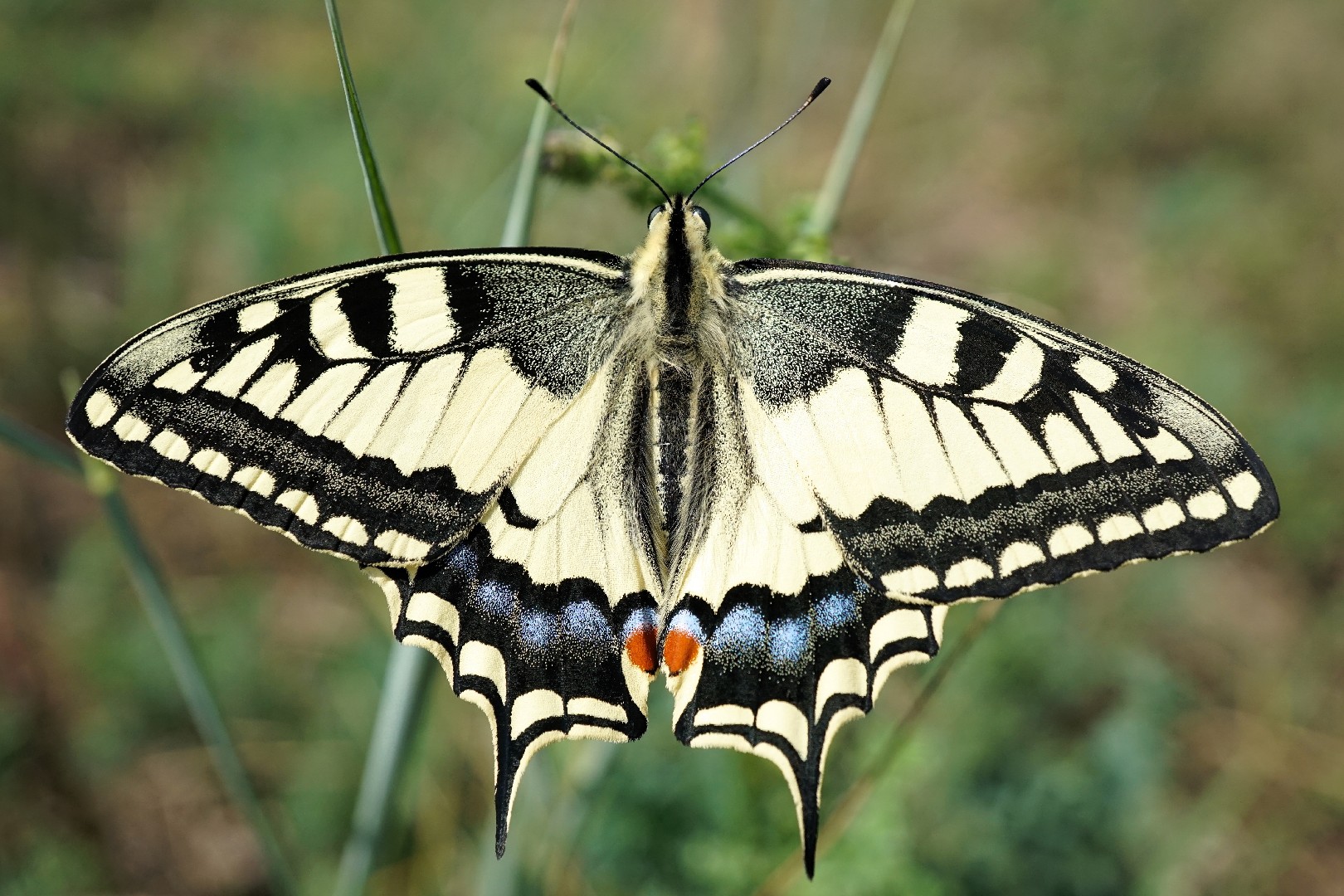
10. Old World swallowtail
The old World swallowtail (Papilio machaon) is commonly just called the "swallowtail," giving it the added title of "old world" to distinguish it and remind us that it comes from the "old world" (Asia, Africa, Europe). The upper side of them is a beautiful combination of pure white with black striping, the underside being a brownish version of the same thing. There is blue and two red dots on its back side.

More







