




Top 20 Most Common Insects in Tours
Insects, with their myriad shapes, sizes, and colors, find a varied habitat in Tours, shaped by the region's unique geography. A key part of the ecosystem, they perform essential roles from pollination to pest control. As we reveal the 20 most common insects in Tours, it's intriguing to note how varied landscapes foster insect diversity, each contributing to the delicate balance of nature.

Most Common Insects
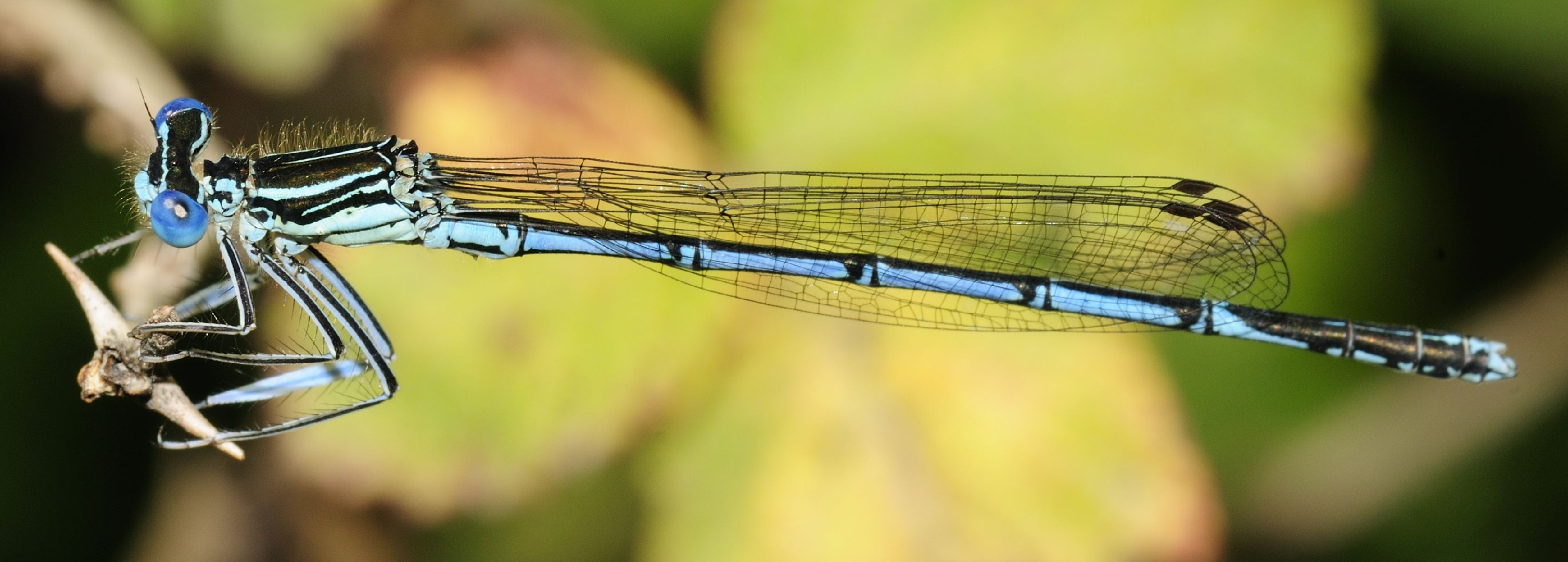
1. White-legged damselfly
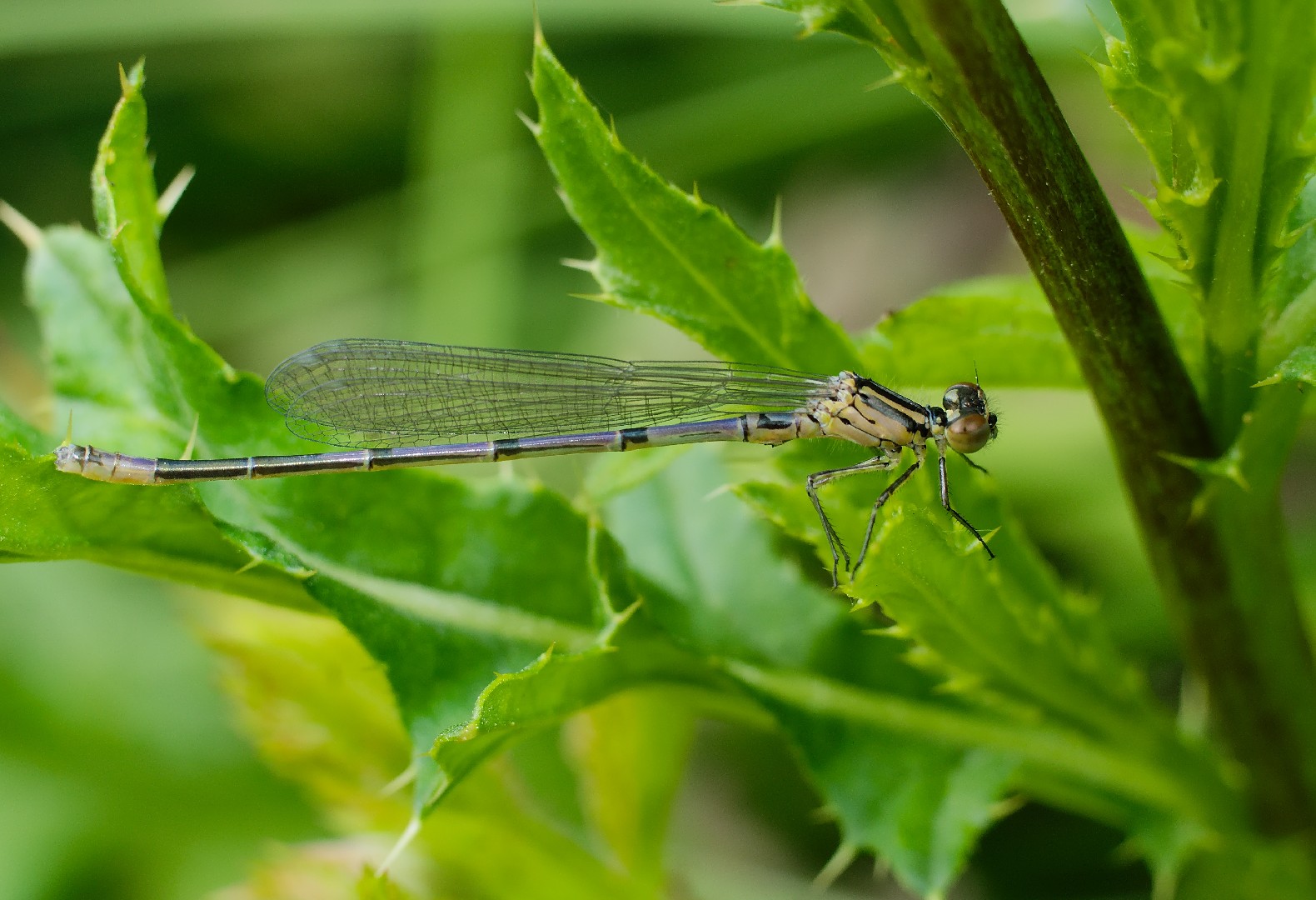
The white-legged damselfly or blue featherleg (Platycnemis pennipes) is a damselfly of slow-flowing, muddy waters. It occurs from the Atlantic to Siberia and is often abundant throughout its range. 
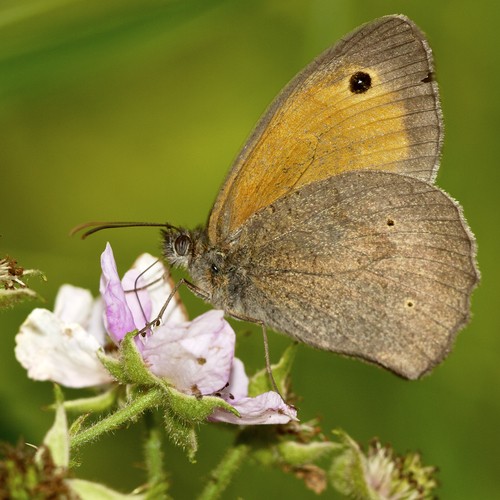
2. Meadow brown
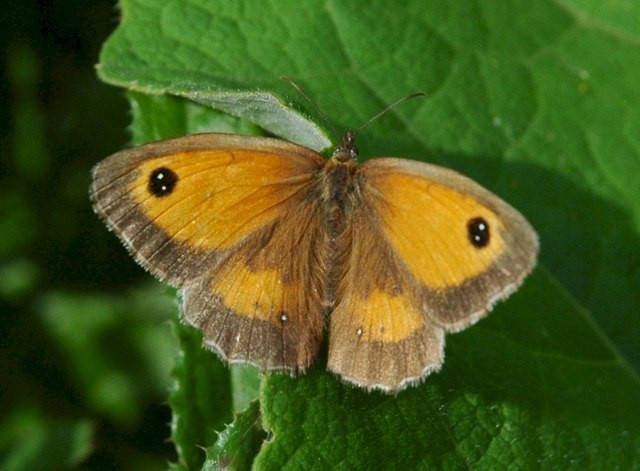
The meadow brown (Maniola jurtina) is similar to the Gatekeeper in the way that it rests with its wings open due to the "eye spots" on either end of its wings that ward off predators. While the color is a deep brown, the caterpillar form is a beautiful bright green with little, white hairs and a dark line leading down its back.
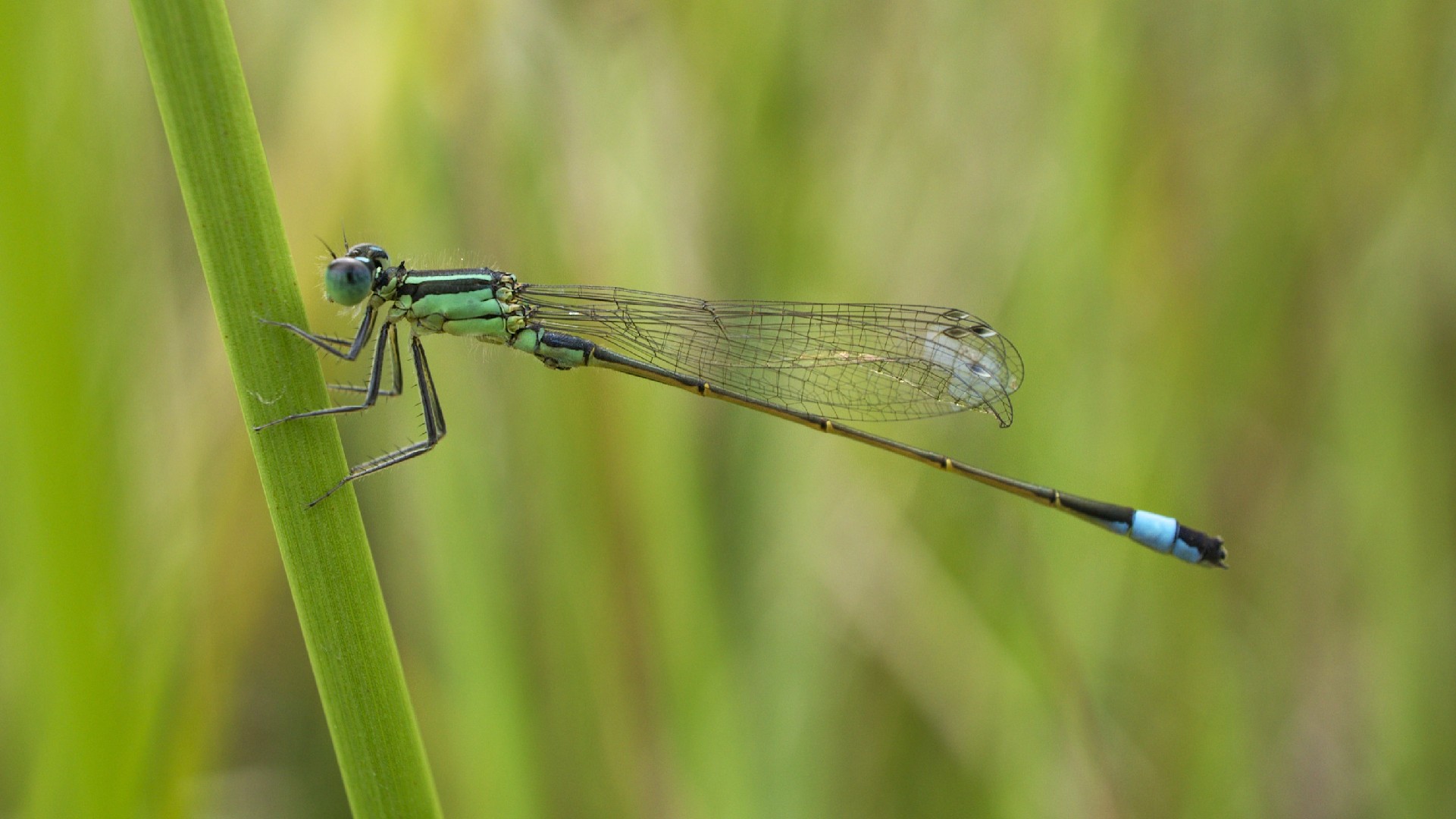
3. Blue-tailed damselfly
Ischnura elegans can reach a body length of 2.5 - 3.5 cm and a wingspan of about 3.5 cm. Hindwings reach alength of 1.4 - 2 cm. Adult male blue-tailed damselflies have a head and thorax patterned with blue and black. There is a bi-coloured pterostigma on the front wings. Eyes are blue. They have a largely black abdomen with very narrow pale markings where each segment joins the next. Segment eight, however, is entirely pale blue. At rest, the wings of most damselfly species are held back together, unlike dragonflies, which rest with their wings out flat. The thorax of juvenile males has a green tinge. Female blue-tailed Damselflies come in a variety of colour forms.Juveniles may be salmon pink, form rufescens; violet, form violacea and a pale green form. The colour darkens as the damselfly ages. Mature females may be blue like the male, form typica; olive green thorax and brown spot, form infuscans or pale brown thorax and brown spot, form infusca-obseleta.
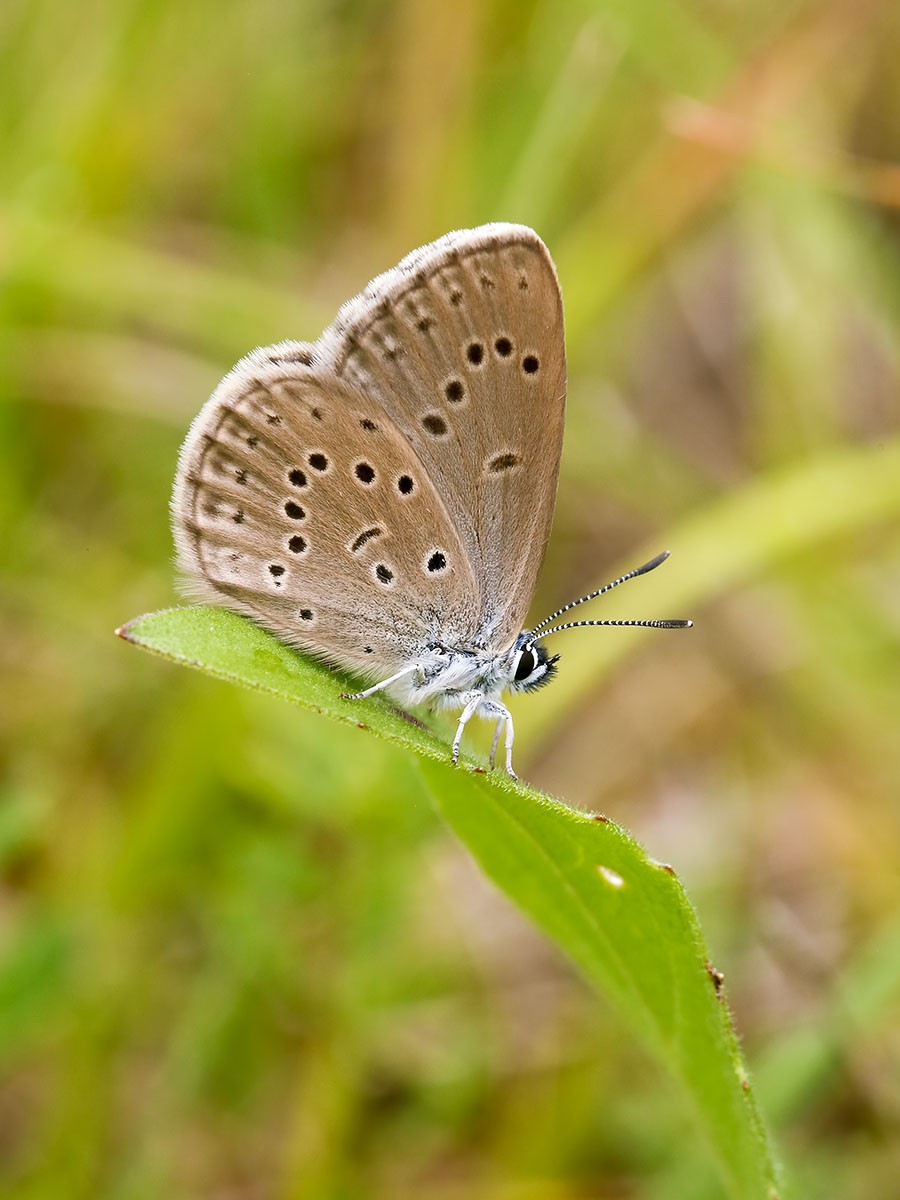
4. Alcon Blue
L. alcon Schiff. (= areas Esp., euphemus Godt.) (83 a). Large, the male above deep blue, but without brilliant gloss. The female black-brown, dusted with dark blue in the basal area. The dark violet-grey underside has numerous ocelli. L. alcon is easily distinguished from the following species (coeligena, euphemus, arcas, arion, arionides ...) by the male bearing on the blue disc of the forewing no other black spots but the discocellular lunule. Central Europe and North Asia, from the coast of the North Sea (Hamburg, Bremen, Belgium) to the Mediterranean, and from France to the Altai, Dauria and Tibet, ab. nigra Wheel, has the males strongly darkened, the females being quite black above. In ab. cecinae Hormuz. the ocelli of the underside are absent or strongly reduced. In ab. pallidior Schultz the margin is grey instead of black. — marginepunctata Gillm. has a row of black dots before the margin, almost parallel with it; found by Hafner at Loitsch and other places in Carniolia.— In the form rebeli Hirschke the blue of the upperside is more brilliant and more extended, the dark margin being reduced, in the female only the apical area black; Styria. — monticola Stgr. (83 a) has a narrow black margin like rebeli, but the blue is very deep and dark, so dull as in true alcon; from the Alps of Switzerland and the Caucasus. — Egg white, finely reticulated, laid on the flowers of the food-plant (Gentiana pneumonanthe). The larva generally does not break through the shell on the upperside, so that the holes of empty eggs are not easily noticed. At first grey, later on reddish brown with dark dorsal line and dark head. The butterflies occur on damp meadows where Gentiana grows; they are plentiful in such places, sometimes even in abundance, from the end of May into July, in the North not before the end of June.

5. Banded demoiselle
This is a large damselfly with a total length of up to 1.9 in and a hindwing length of up to 1.4 in. Male and female are variable in color and pattern. The male has translucent wings which each have a broad, dark iridescent blue-black spot (or band) across the outer part. On immature dragonflies the spot is dark brown. The body can be a metallic blue or bluish green or a combination of both colours, depending on the time of year and location. The dark wing patch of the male starts at the nodus (the slight dip midway down the upper edge of the wing) but can reach up to the wing-tip in southern races.
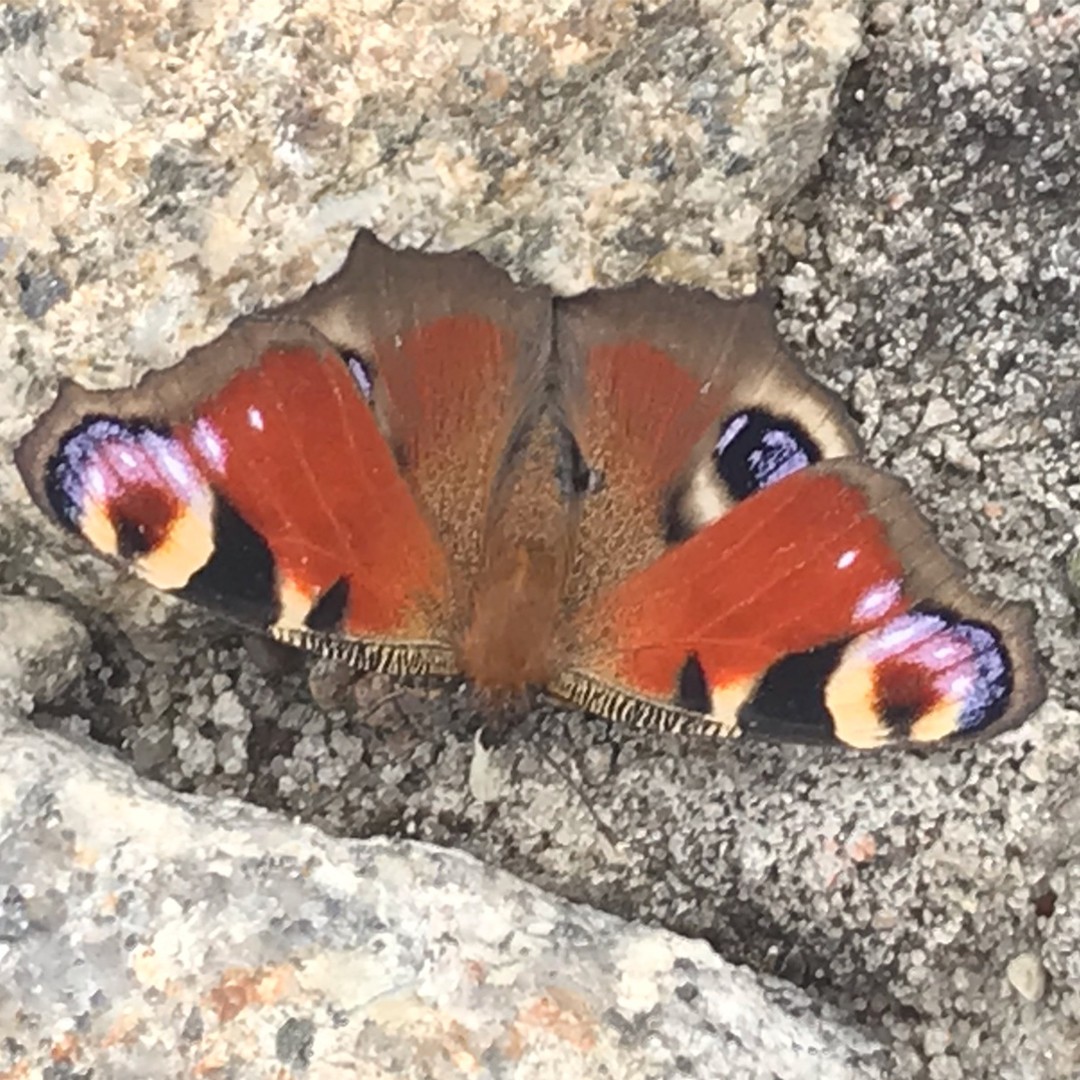
6. European peacock
European peacock (Aglais io) is a colorful butterfly that resides in temperate Asia and Europe – hence its common name. Its prominent eyespots deter would-be predators, who mistake them for the eyes of a bigger, more dangerous species. In recent years, this species appears to be expanding its range into previously uncolonized territory.
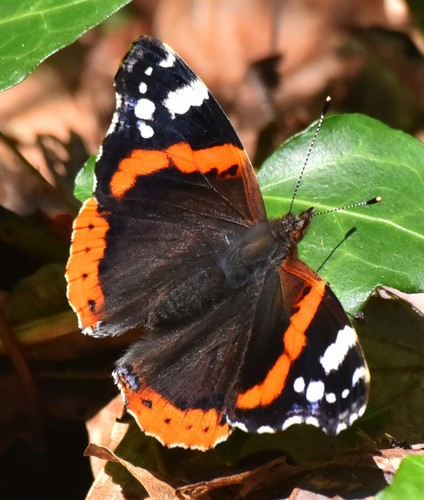
7. Red admiral
Red admiral (Vanessa atalanta) is a visually striking species of butterfly. Unusually territorial, males will compete for choice areas, and females will only mate with males that maintain their own territories. This butterfly is known for being particularly patient with human interactions, even to the point of perching on clothing or flesh.
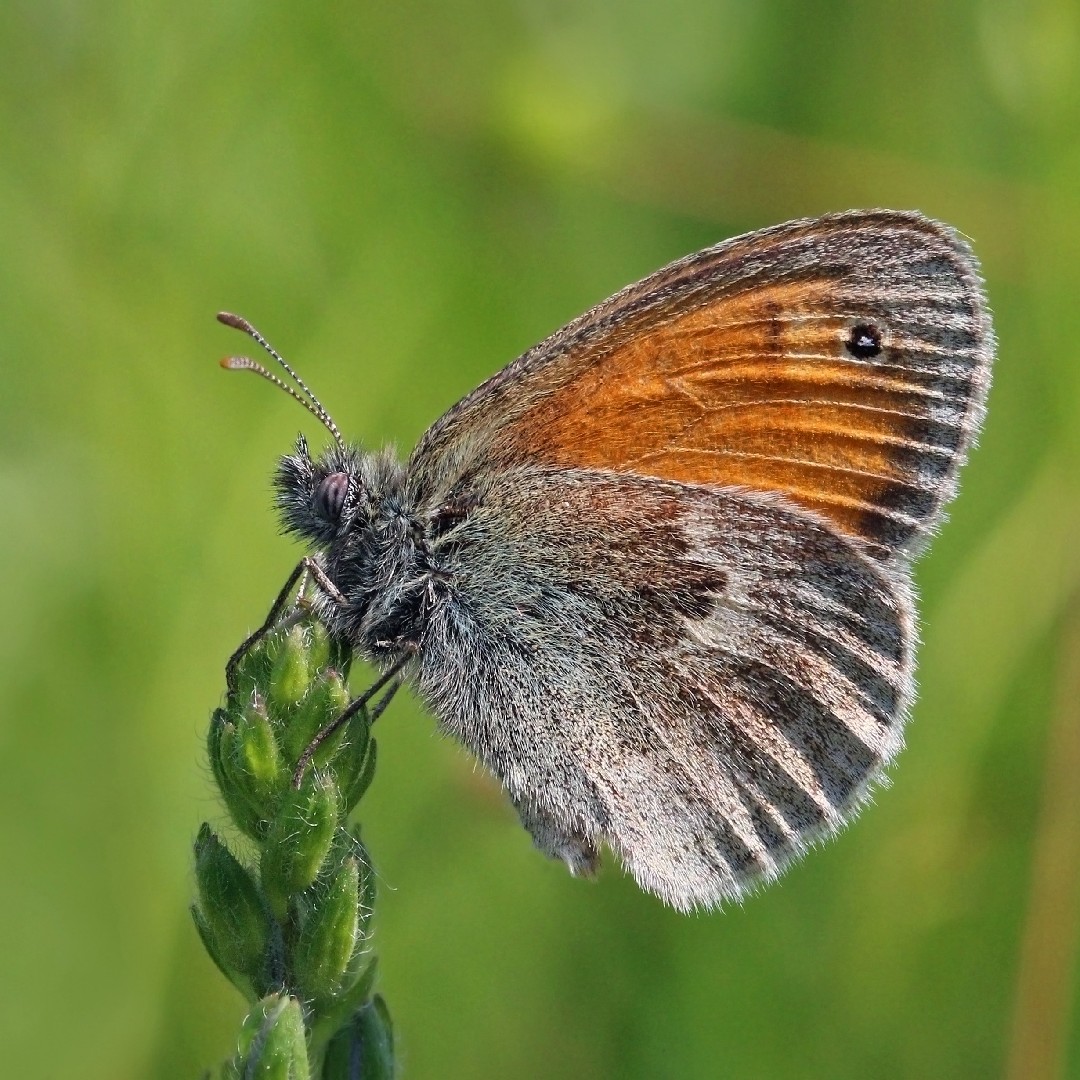
8. Small heath
It rests with closed wings when not in flight.
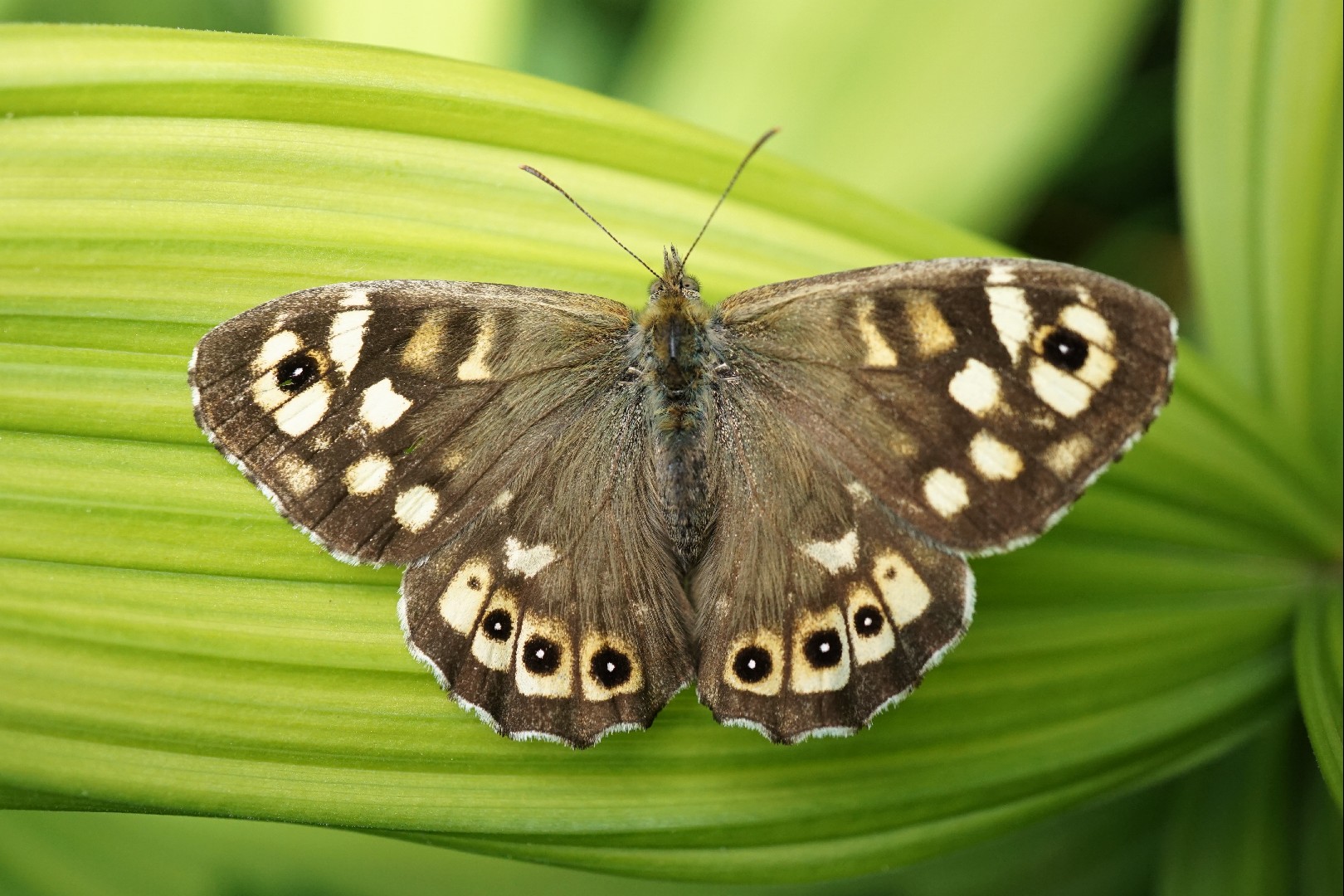
9. Speckled wood
The speckled wood (Pararge aegeria) prefers to live in damp, dark woodlands. Unlike other butterflies, it's more active in shadier habitats rather than sunny ones. Males often fight over a perch, spiraling up to the treetops until they determine a winner. These perches are where the males find passing females.
10. Black-tailed skimmer
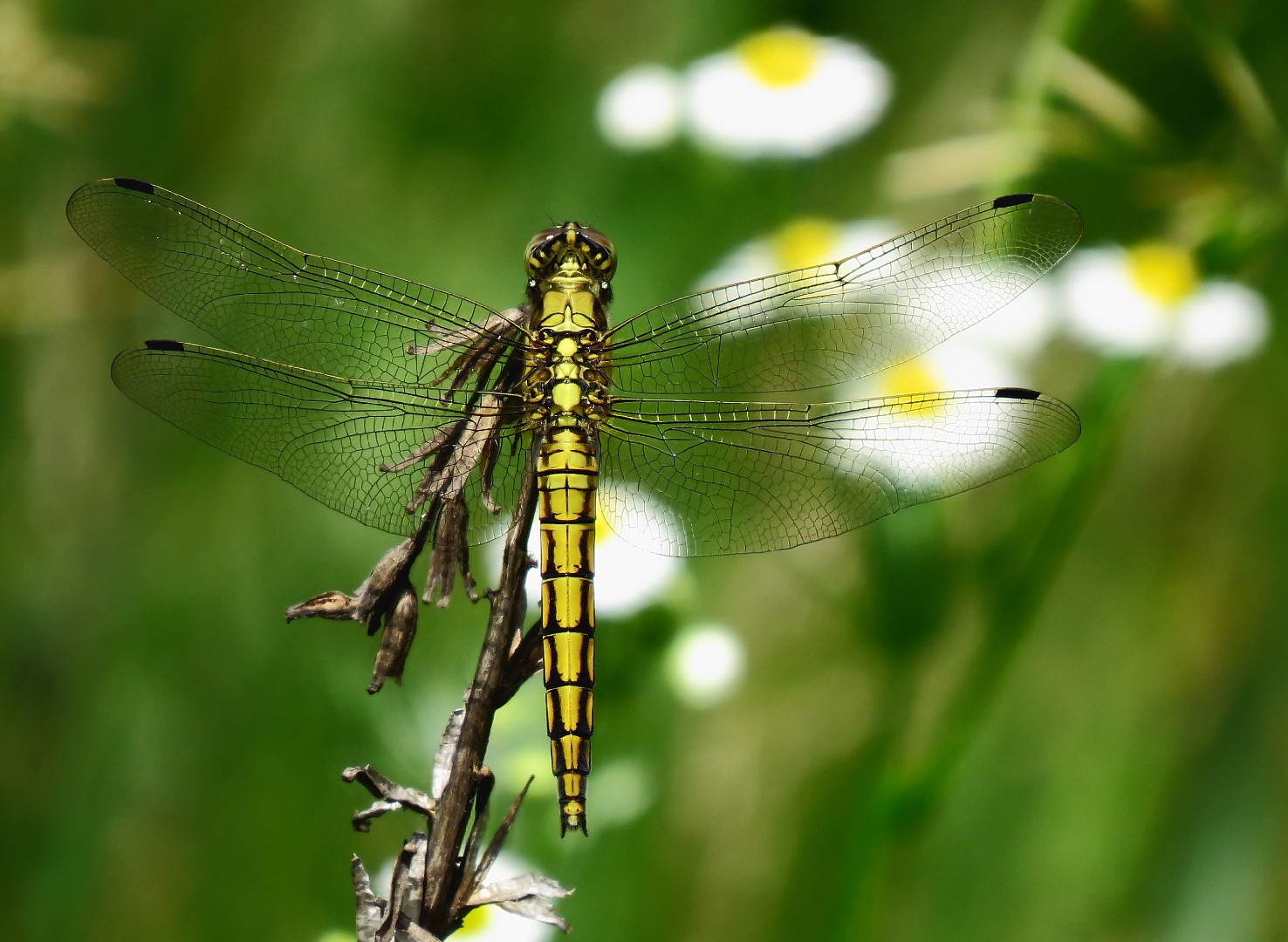
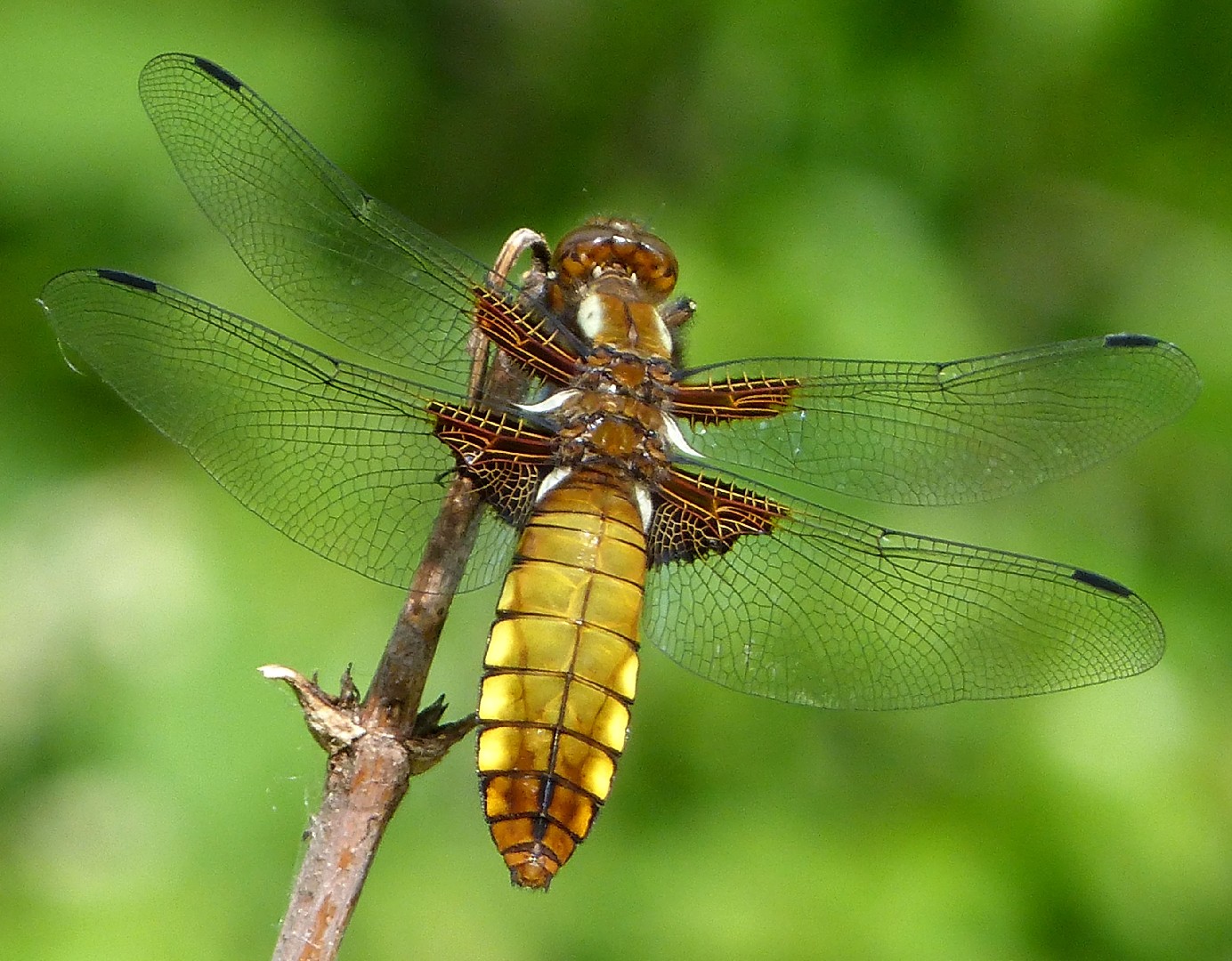
It is a fairly large dragonfly (the length of 4.5 - 5 cm, 3 - 3.5 cm abdomen, rear wing 3.5 - 4 cm.) with relatively broad, flattened abdomen, but not as broad as to chaser species. With age, adult males develop extensive blue pruinescence on their abdomen, offset by yellow lateral patches. The middle lobe of the pronotum is large and notched in the middle. The chest is yellow or yellowish-brown. The base of the hind wings do not show a dark opaque spots. The pterostigma is dark brown or black. On the front wings pterostigma 2 - 3 mm long. Anal appendages are black. The females and immature males are a deep yellow color, with wavy black lines dorsally on their abdomen. Males and females have the costal vein (the leading edge of the wing) yellow or black.

More







