




Top 20 Most Common Insects in Chhattisgarh
Insects, with their distinctive features and varied habitats, play a pivotal role in Chhattisgarh's ecological balance. The region's geographical diversity deeply influences insect life; with unique dilemmas, opportunities, and insect profiles emerging in different areas. Both pests and beneficial insects, indeed all insects, significantly contribute to shaping Chhattisgarh's environment. Our list of the top 20 most common insects offers a fascinating exploration of this vibrant, miniature world.

Most Common Insects
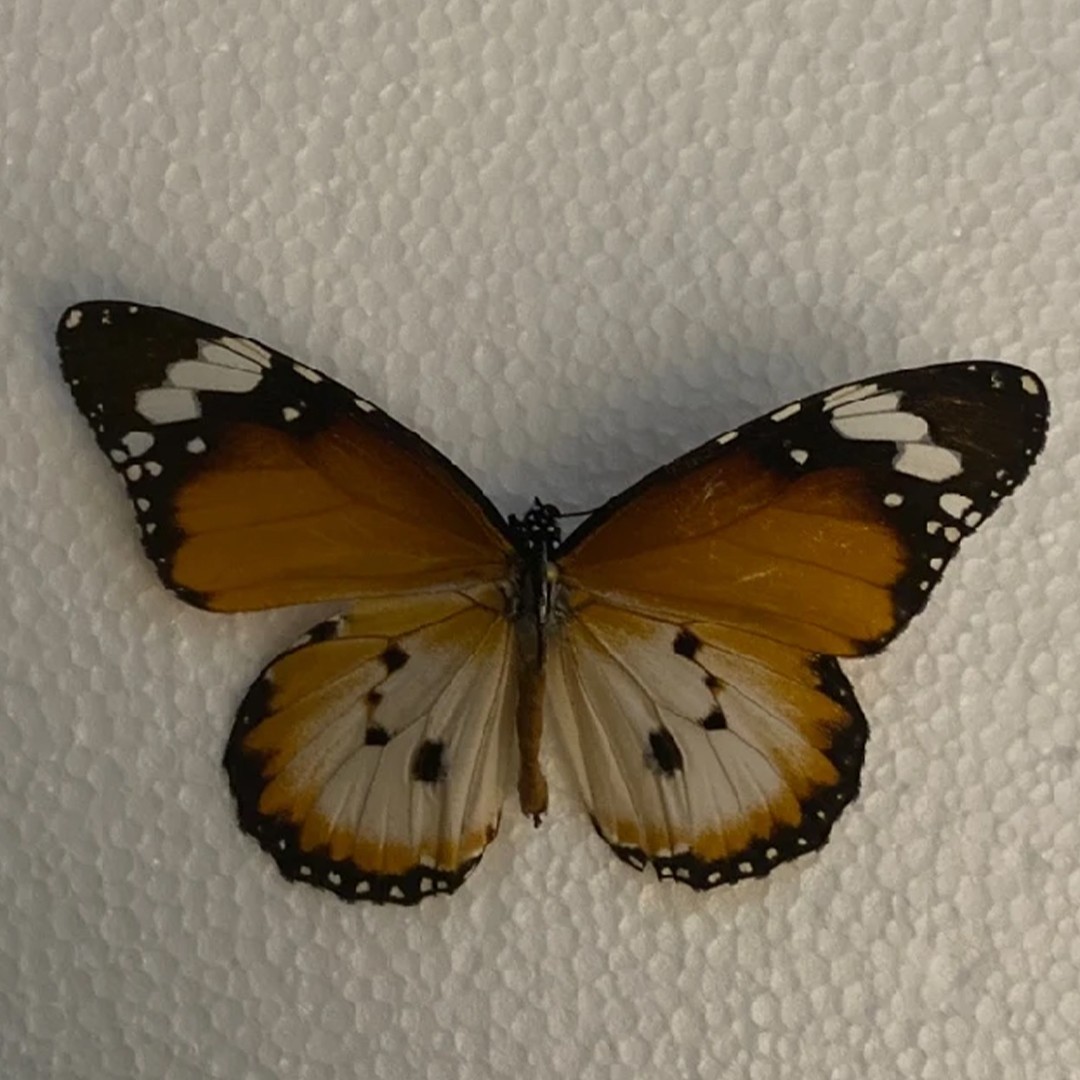
1. Plain tiger butterfly
D. chrysippus is a medium-sized butterfly with a wingspan of about 7–8 cm (2.8–3.1 in). The body is black with many white spots. The wings are orange, the upperside brighter and richer than the underside. The apical half of the forewing is black with a white band. The hindwing has three black spots in the center. The wings are bordered in black and outlined with semicircular white spots. This species exhibits slight sexual dimorphism, as the Male has large scent glands on his hindwings, which the female lacks. They appear as a large black spot with a white centre if viewed from the underside D. chrysippus is a polymorphic species, so the exact coloring and patterning vary within and between populations. It is similar in appearance to the Indian fritillary (Argynnis hyperbius), which may coexist with it. 

2. Lemon pansy
It is brown with numerous eyespots as well as black and lemon-yellow spots and lines on the upperside of the wings. The underside is a dull brown, with a number of wavy lines and spots in varying shades of brown and black. There is also an eyespot on the lower side of the forewing. The wet- and dry-season forms differ considerably in coloration and even shape. In the wet-season form the markings are distinct and vivid and the wing shape is a little more rounded. In the dry-season form the markings are obscure and pale especially on the underside and the wing margin is more angular and jagged.

3. Blue moon butterfly
Hypolimnas bolina, the great eggfly, common eggfly or in New Zealand the blue moon butterfly is a species of nymphalid butterfly found from Madagascar to Asia and Australia.

4. Scarlet skimmer
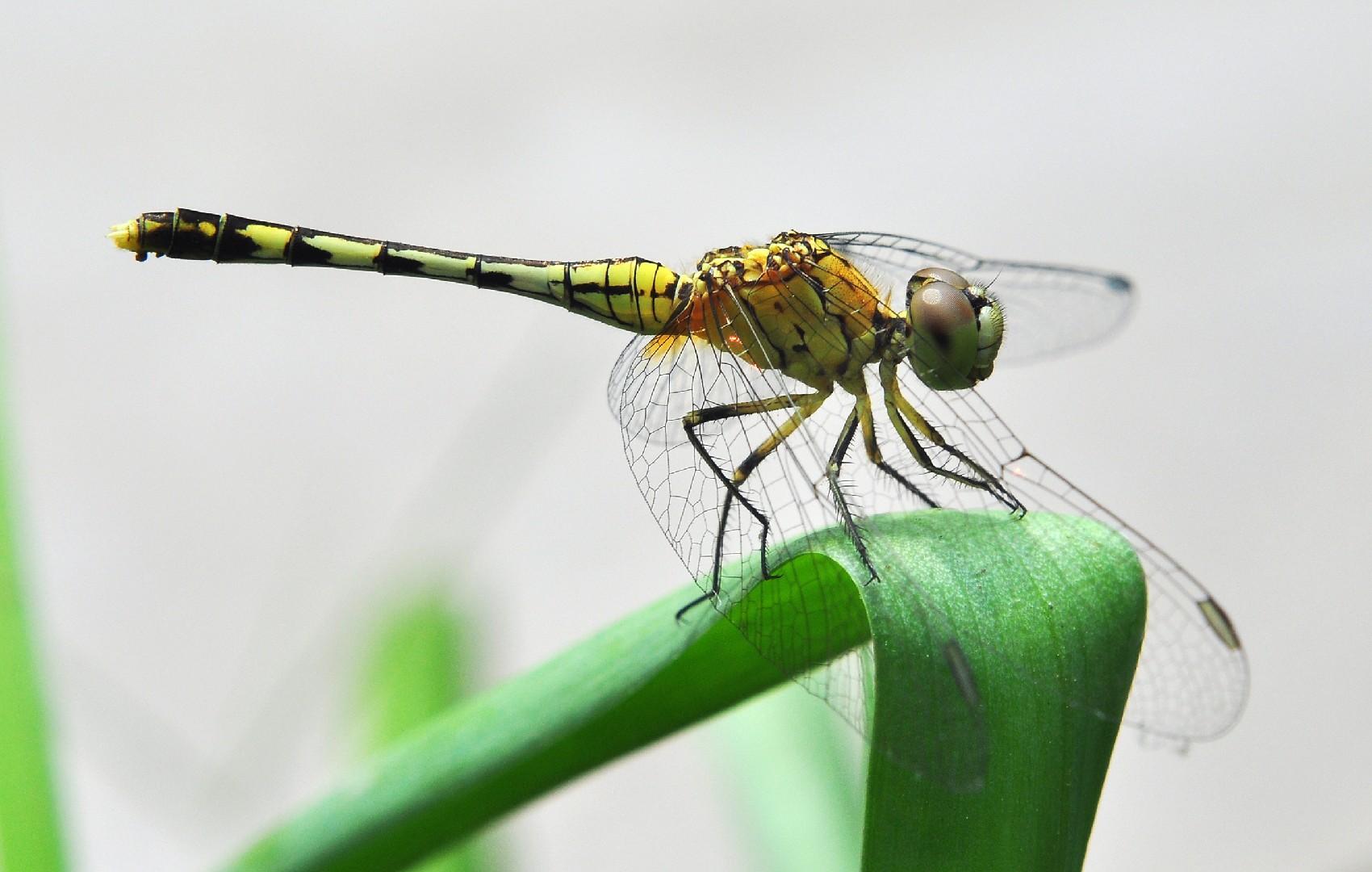
The species is on the IUCN Red List as not endangered, year of assessment 2009.
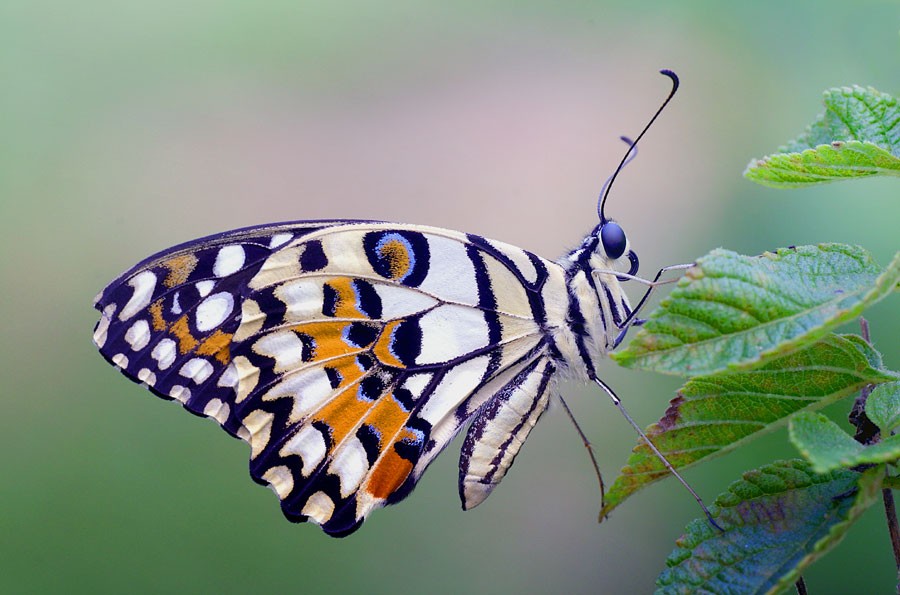
5. Lime swallowtail
The lime swallowtail (Papilio demoleus) has a beautiful black and white pattern, but it's considered a major pest to citrus trees. It feeds on nearly any type of citrus, including oranges and limes. This butterfly's small, green larvae are capable of defoliating an entire nursery grove. They are truly trouble makers in the citrus orchard.
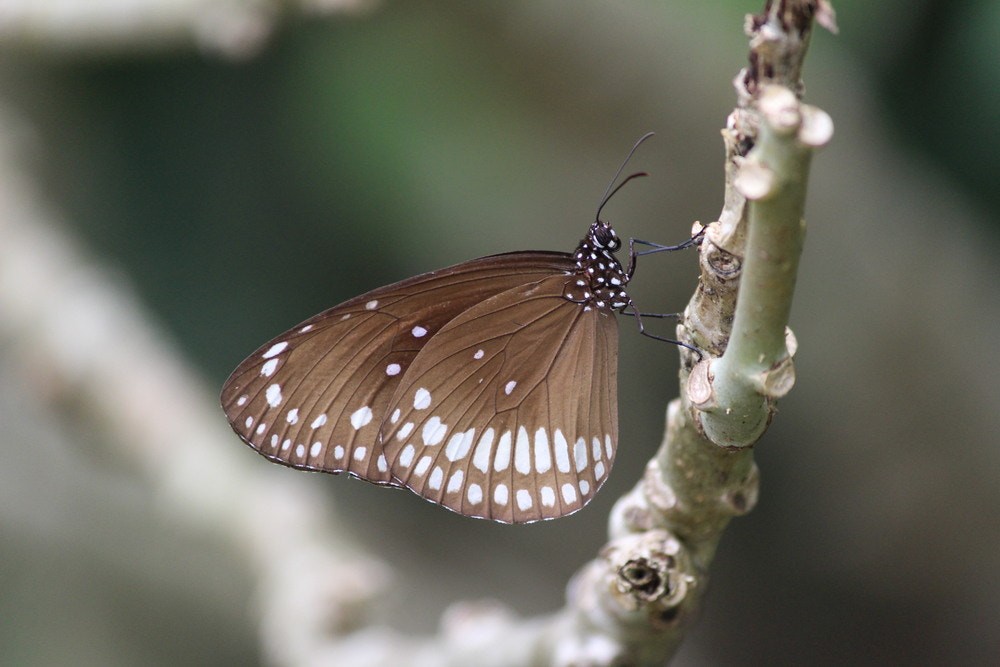
6. Common crow
The common crow is a glossy-black butterfly with brown undersides with white markings along the outer margins of both wings. The wingspan is about 8–9 cm and the body has prominent white spots. The male has a velvety black brand located near the rear edge on the upperside of the forewing. On the underside there is a white streak in the same location. This white streak is present in both male and female. Upperside dark brown, broadly paler along terminal margins; Fore and hind wing with subterminal and terminal series of white spots; on fore wing the former more or less oval, curved inwards opposite apex, the latter series often incomplete, not reaching apex, the spots smaller; often there is a small costal spot, and very rarely a spot in apex of cell and one or more discal spots; on the hind wing the inner series of spots are elongate, the outer conical.Underside similar, but ground-colour more uniform; cell, costal and discal spots on both fore and hind wing nearly always present.
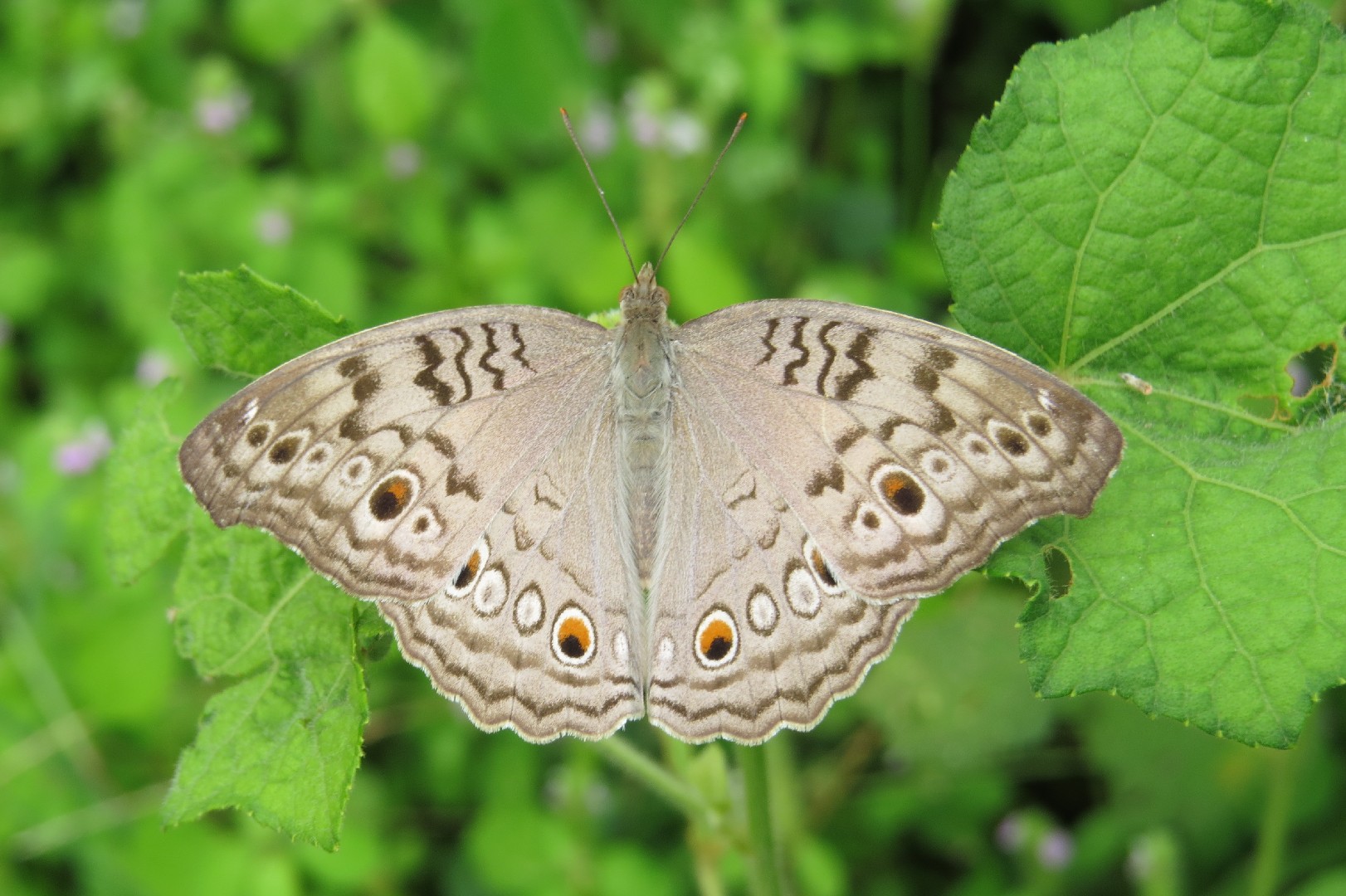
7. Grey pansy
Upperside of both sexes pale lavender brown, apical half of wings paler. Forewing: cell with, three transverse, short, sinuous black bands, the outermost defining the discocellulars; a similar short, somewhat broader band beyond the apex of the cell; two transverse discal dusky black fasciae, the inner highly sinuous and outward, angulate above vein 4, the outer straighter, somewhat lunular, bordered by a series of whitish ovals with dusky or black centers. The black-centered spots in the ovals in interspaces 2, 5, and 6 margined posteriorly with rich ocherous yellow. Beyond this series of ovals is a lunular, narrow, transverse dark band, followed by sinuous subterminal and terminal broad dark lines. Apex of wing slightly fuliginous. Hindwing: a short slender black loop from veins 6 to 4 at apex of cell-area; two discal sinuous transverse dark, fasciae in continuation of those on the forewing: followed by a series of dark-centered ovals in interspaces 2–6, the ovals in interspaces 2, 5, and 6 with the dark centers inwardly broadly bordered with ochreous yellow; postdiscal, subterminal and terminal dark lunular lines as on the forewing. Underside lilacine white markings as on the upperside but very delicate, slender and somewhat obsolescent. In the dry-season forms of the males the rows of oval ocelli are only indicated by the yellow-centered ovals. The most prominent marking is the inner discal fascia crossing the wings; this is much less sinuous than on the upperside and not angulated on the forewing. In the females the markings are all heavier and more distinct, the space between the various transverse fasciae tinged with ocherous.

8. Peacock pansy
The adult butterfly has a wingspan of 5 - 6 cm,and exhibits seasonal polyphenism. "Upperside rich orange-yellow. Fore wing with a pale dusky and a much darker short transverse bar with lateral jet-black marginal lines across cell, another somewhat similar bar defining the discocellulars; costal margin, an inner and an outer subterminal line, and a terminal line dusky black; a large minutely white-centred ocellus with an inner slender and outer black ring on disc in interspace 2; two similar but smaller geminate subapical ocelli with an obscure pale spot above them and a short oblique bar connecting them to the black on the costa. Hind wing: a small minutely white-centred and very slenderly black-ringed discal ocellus in interspace 2, with a very much larger pale yellow and black-ringed ocellus above it spreading over interspaces 4, 5 and 6, the centre of this ocellus inwardly brownish orange, outwardly bluish black, with two minute white spots in vertical order between the two colours; finally postdiscal subterminal and terminal black sinuous lines. "Underside ochraceous brown, very variable. In most specimens the cell of the fore wing is crossed by three dark sinuous bands, the outermost along the discocellulars; these are very faint in some; both fore and hind wings crossed by a basal and a discal pale sinuous line, the latter margined outwardly by a dark shade, which is traversed by an obscure somewhat obsolescent row of dark spots, and outwardly bounded by a subterminal sinuous line, the dark shade in many cases spreading on the fore wing to the terminal edge of the wing; on the hind wing the subterminal line meets the discal in an acute angle at the tornus. Antennae dark brown; head, thorax and abdomen more or less orange-brown; paler beneath." "Upperside similar, the black markings deeper in colour and heavier, the subterminal and terminal lines more clearly defined. "Underside pale ochraceous. Fore wing: cell crossed by live short sinuous dark brown lines, a similar line on the discocellulars and another beyond it, both bent inwards at an angle and continued to the dorsum, the space between them forming a discal broad fascia, which pales to whitish posteriorly; the postdiscal ocelli, subterminal and terminal lines as on the upperside but paler. Hind wing: a slender transverse subbasal dark line, a discal whitish straight fascia in continuation of the one on the fore wing; the postdiscal ocelli, the subterminal and terminal lines much as on the upperside but paler; the anterior ocellus with a double iris and centre. Antennae dark brown; head, thorax and abdomen slightly darker than in the dry-season form.
9. Common emigrant
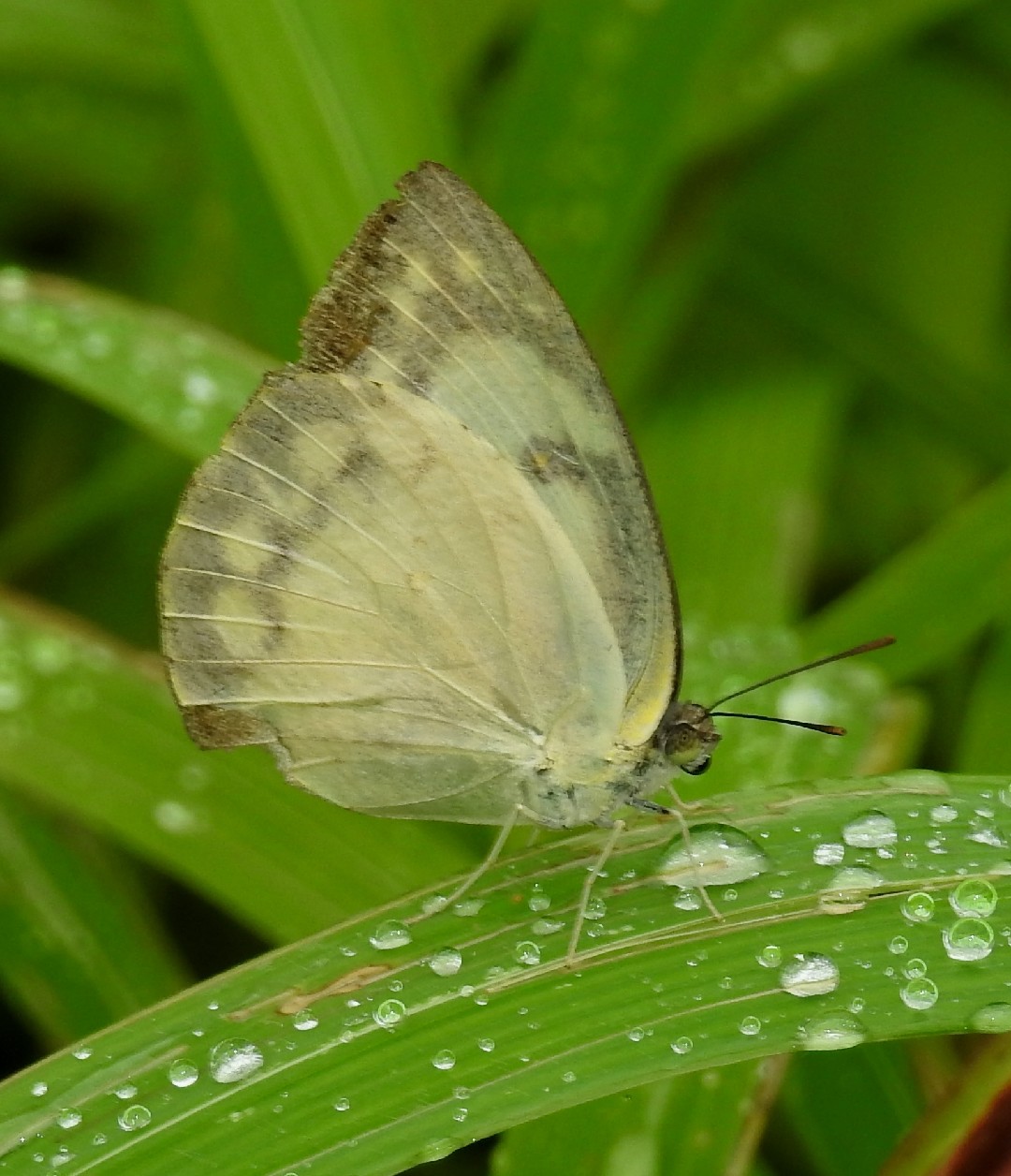
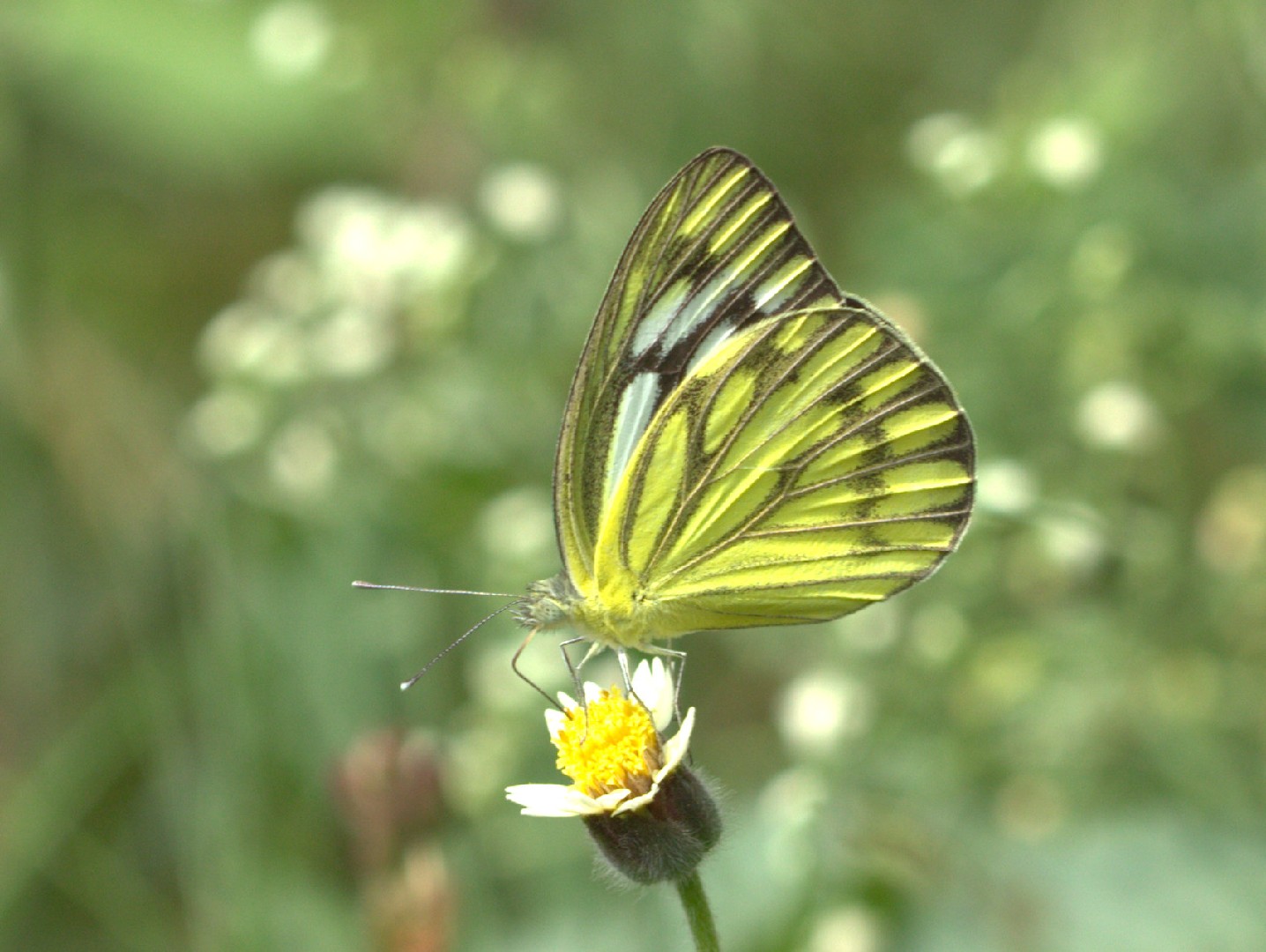
Male. "The upperside of the male is chalky-white, sometimes with a more or less broad and clearly defined basal sulphur-yellow area on both fore and hind wings; this sulphur-yellow colour is at times diffused over the whole surface of the wings, though generally it becomes paler towards the terminal margins. For the fore wing, the whole, or sometimes only the apical half, of the costa narrowly black, this color widened out irregularly at the apex; termen widely black at the apex, the colour narrowed posteriorly. This border in some specimens almost reaches the tornus, in others terminates above vein 4; occasionally it is continued posteriorly by a series of block dots at the apices of the veins. The Hind wing generally are uniform, unmarked, and some specimens bear minute black dots at the apices of the veins. "On the underside the groundcolour is very variable, with white with a slight to strong ochraceous tinge, greenish white or sulphur-yellow. The fore wing is typically without markings, in some specimens with a patch of sulphur-yellow on either side of base of median nervure, in the very yellow examples the tornal area is often widely greenish white, in others (Catopsilia catilla, Cramer) it bears a spot variable in size on the discocellulars. This spot has a pearly centre and an outer reddish line. Many specimens have an irregular angulated narrow discal reddish line (the colour varies in intensity) that runs from the costa obliquely outwards to vein 7, and then obliquely inwards to vein 2, though this line is often absent in specimens that bear the discocellular spot; apex and termen sometimes very narrowly reddish. The hind wing is typically uniform, without markings." Female. "On the female upperside the ground-color varies as in the male, but sometimes it is chalky white at the bases of the wings, with the terminal margins more or less broadly sulphur-yellow. Fore wings always with a round, occasionally quadrate, black discocellular spot variable in size; in some specimens the costa is black only towards the apex of the wing, in others broadly black throughout and opposite the apex of cell so widened out as to touch the discocellular spot. In lightly marked specimens in addition to the discocellular spot, there is only an irregular terminal black band dentate inwardly and widest at the apex of the wing; in others there is in addition a more or less diffuse highly curved macular postdiscal band that extends from the costa obliquely outwards down to vein 7, where it often touches the terminal black band, and thence is continued downward and slightly inclined inwards to interspace 1, getting gradually paler and fainter posteriorly. Hind wing are a series of terminal inter-spacial black spots that vary in size, and in the dark forms coalesce into a terminal black band."
10. Common castor
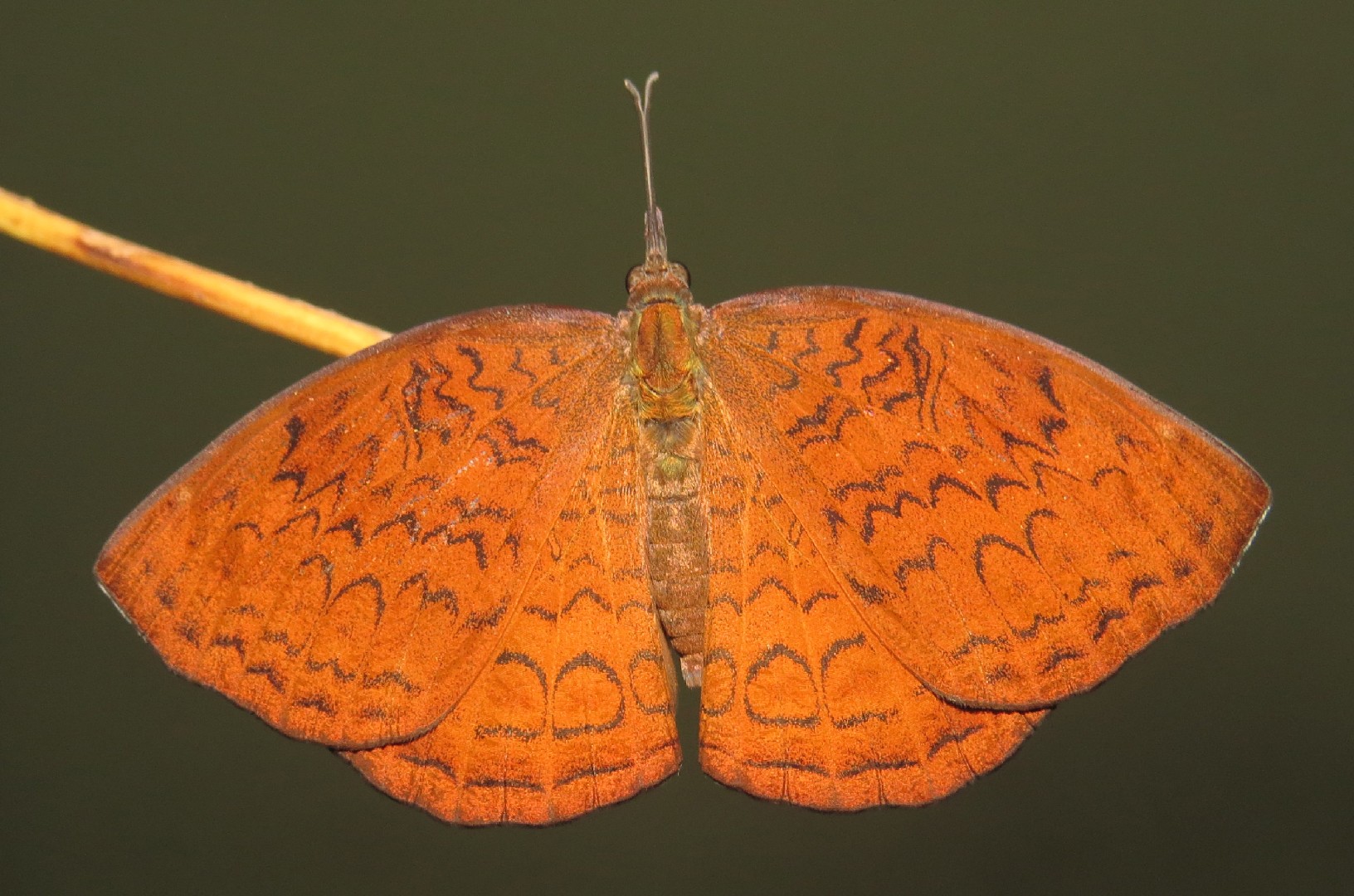
Male in Wet-season form: Upperside brownish ochraceous. Forewings and hindwings crossed by slender, somewhat obscure, very sinuous or zigzag dark basal, two subbasal and two discal lines disposed in pairs, followed by a single, sometimes double, postdiscal and a single subterminal slender line. All these lines more or less interrupted anteriorly on the hindwing, which has a smooth unmarked uniform appearance from costa to subcostal vein and vein 5. On the forewing there is in addition a series of obscure spots between the postdiscal and subterminal markings, arid a small white subcostal spot before the apex.Underside much as in Ariadne ariadne, but the transverse chestnut bands broader, more diffuse.Sex-mark on the underside of the forewing as in A. ariadne no sex-mark on upperside of hindwing. Female in Wet-season form: Similar; but on the upperside the transverse lines broader, more diffuse, with a greater tendency to form bands; the postdiscal line always double, forming a band traversed by a series of dark ochraceous spots in the interspaces; these lines and bands continuous, not interrupted anteriorly on the hindwing as they are in the male. Underside: except for the sex-mark, as in the male.Upperside of male and female in dry-season form : ground colour much paler, the transverse lines more distinctly in pairs, forming bands, the ground colour between each pair more dusky brown. Underside similar to that in the wet-season form, but the ground colour paler, the bands more diffuse.Wingspan 5 - 6 cm .
More







