




Top 20 Most Common Insects in Bhuj
Insects, a diversified class of arthropods, are an essential part of Bhuj's ecosystem. Their habitats range from lush greens of Gir to the sandy Rann, contributing to the area's remarkable insect diversity. In Bhuj, both pests and beneficial critters play crucial roles, indicating the subtle yet significant connection between the state’s environment and its insect inhabitants. Get ready as we unravel 20 of the most common insects thriving in this biologically rich state!

Most Common Insects
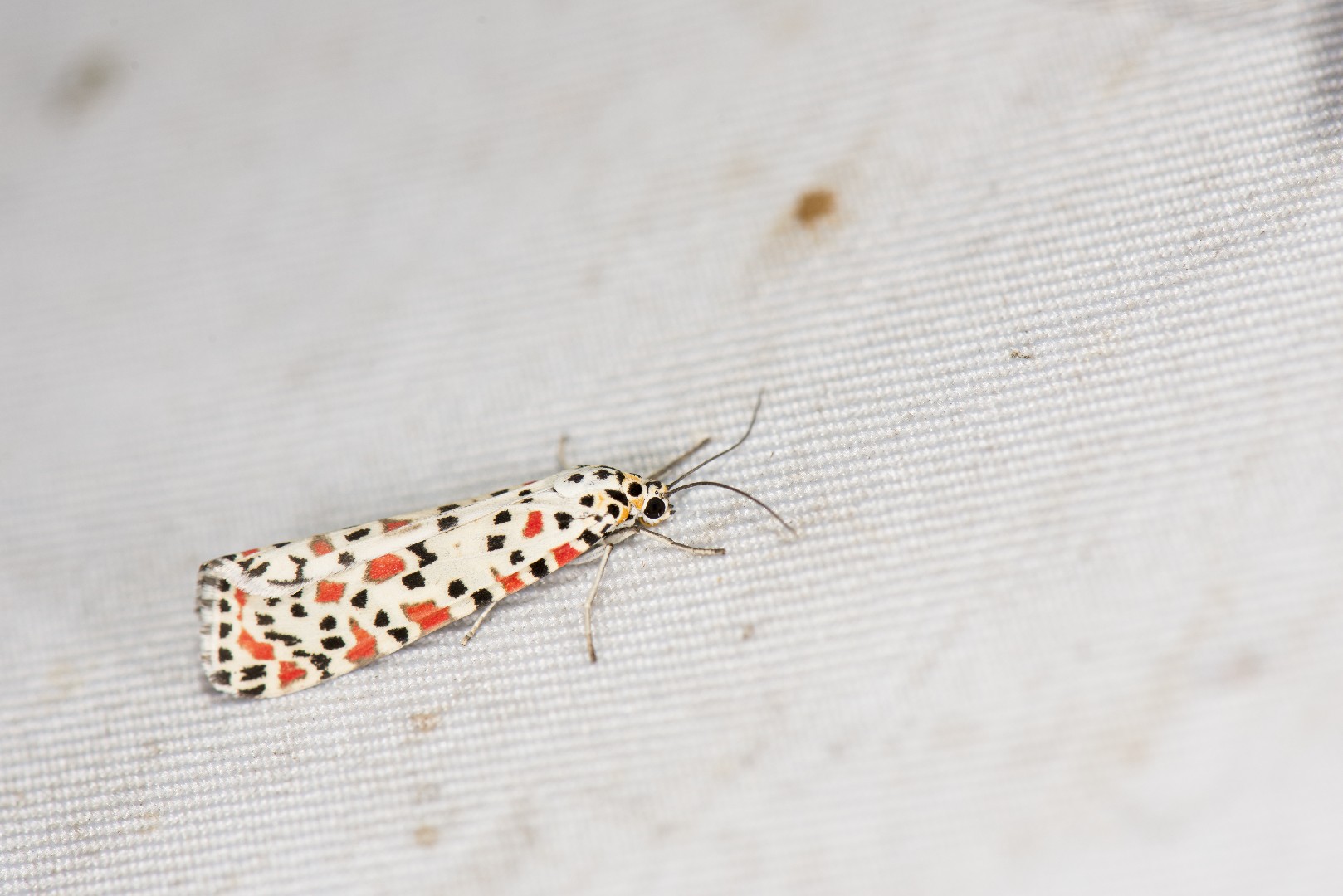
1. Rattlebox salt-and-pepper moth
Utetheisa lotrix, the salt-and-pepper moth or crotalaria moth, is a moth of the family Erebidae. The species was first described by Pieter Cramer in 1777. It is found in most of the Old World tropics. The wingspan is about 30 mm. The larvae feed on Crotalaria species. 
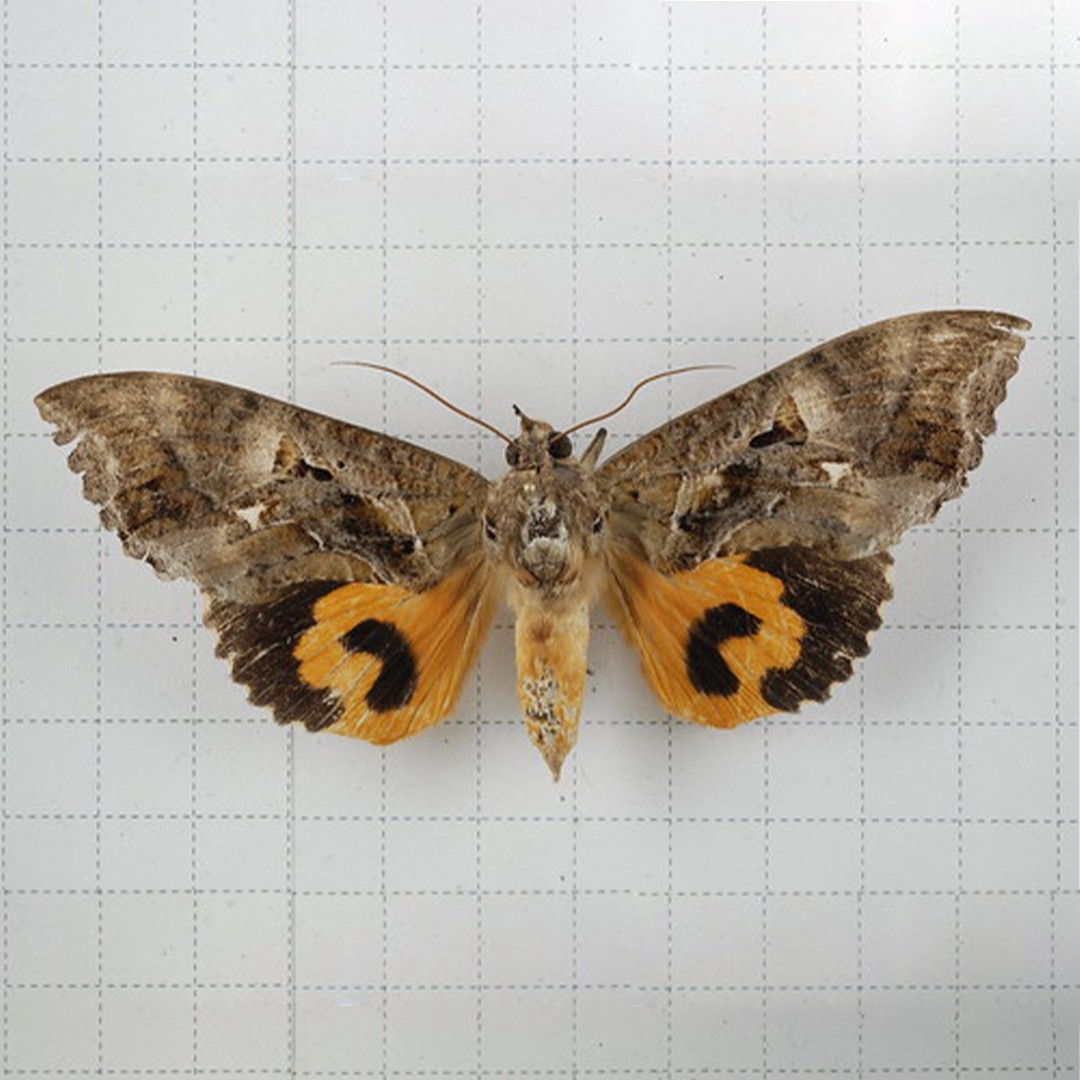
2. Common Fruit-Piercing Moth
The wingspan is about 80–94 mm in male. Palpi with third joint long and spatulate at extremity. Forewings with non-crenulate cilia in male, crenulate in female. Head and thorax reddish brown with plum-color suffusion. Abdomen orange. Forewings reddish brown, usually with a greenish tinge and irrorated with dark specks. An oblique antemedial line present, which is generally dark and indistinct but sometimes pale and prominent. Reniform indistinct. A curve postmedial line found, which is almost always met by an oblique streak from apex. Hindwings orange, with a large black lunule beyond lower angle of cell. There is a marginal black band with cilia pale spots runs from costa to vein 2. Ventral side of forewings with orange postmedial band. The wingspan is about 90–110 mm in female. Female has much more variegated and dark reddish brown striated forewings. Reniform dark and sending a spur along median nervure to below the orbicular speck. There is a triangular white mark usually present on the postmedial line below vein 3. Larva has dilated 11th somite and surrounded by a tubercle. Body purplish brown, where dorsum brown from 6th to 11th somites. Legs red and spiracular scarlet patches largest posteriorly and with some irregular white markings round them, on somite 9 in the form of an oblique white bar. There is a yellow sub-basal mark found on 4th somite. Fifth and sixth somites have black ocelli with yellow iris and white pupils. Two yellow patches can be seen on 11th somite. The adult is considered an agricultural pest, causing damage to many fruit crops by piercing it with its strong proboscis in order to suck the juice. Attempts have been made to control them using baits for the adults, egg parasites and larval parasitoids.
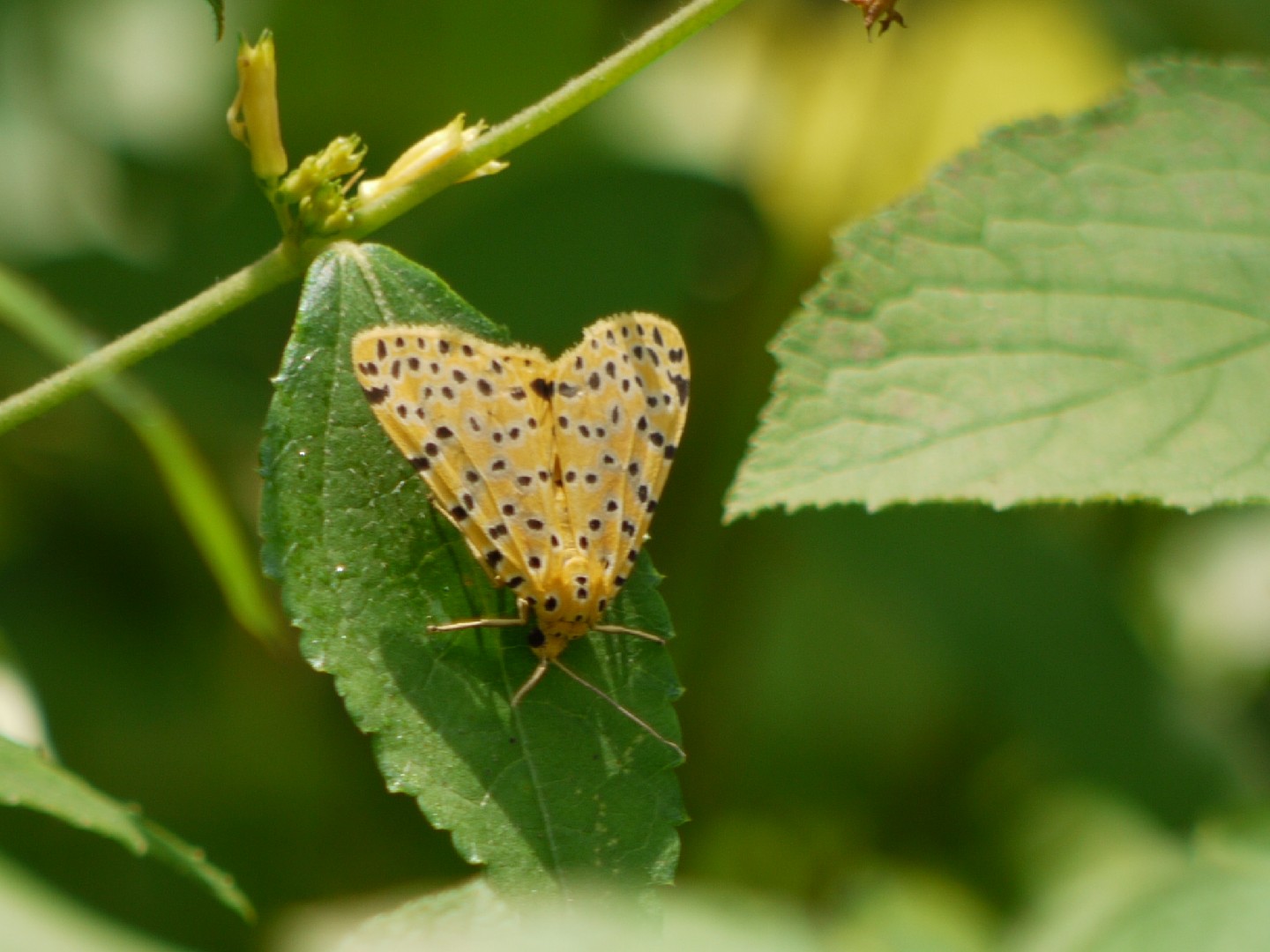
3. Crotalaria pod borer
The wingspan is about 40 mm. The species is extremely variable in wing pattern as well as ground colour. It differs from Mangina argus in the head, thorax and forewing being orange yellowish or whitish. The abdomen and hindwings are bright orange. Markings and spots are similar to its neighbor species. The head of the caterpillar is reddish brown when fully grown. Its body is black with white intersegmental rings that contain broken black transverse lines. Spiracles are in orange patches.
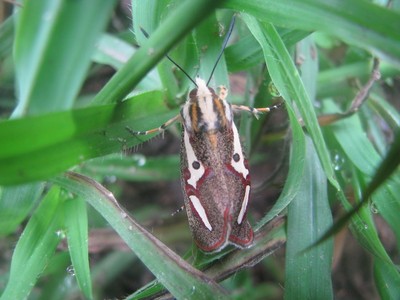
4. Red masked noctuid moth
Its wingspan is about 33 mm. Forewings of male without costal vesicles. Forewings with longitudinal white streak entire, and with an indenture on its upper edge and a small black spots near its lower edge. A red marginal line is present. Cilia of both wings white.
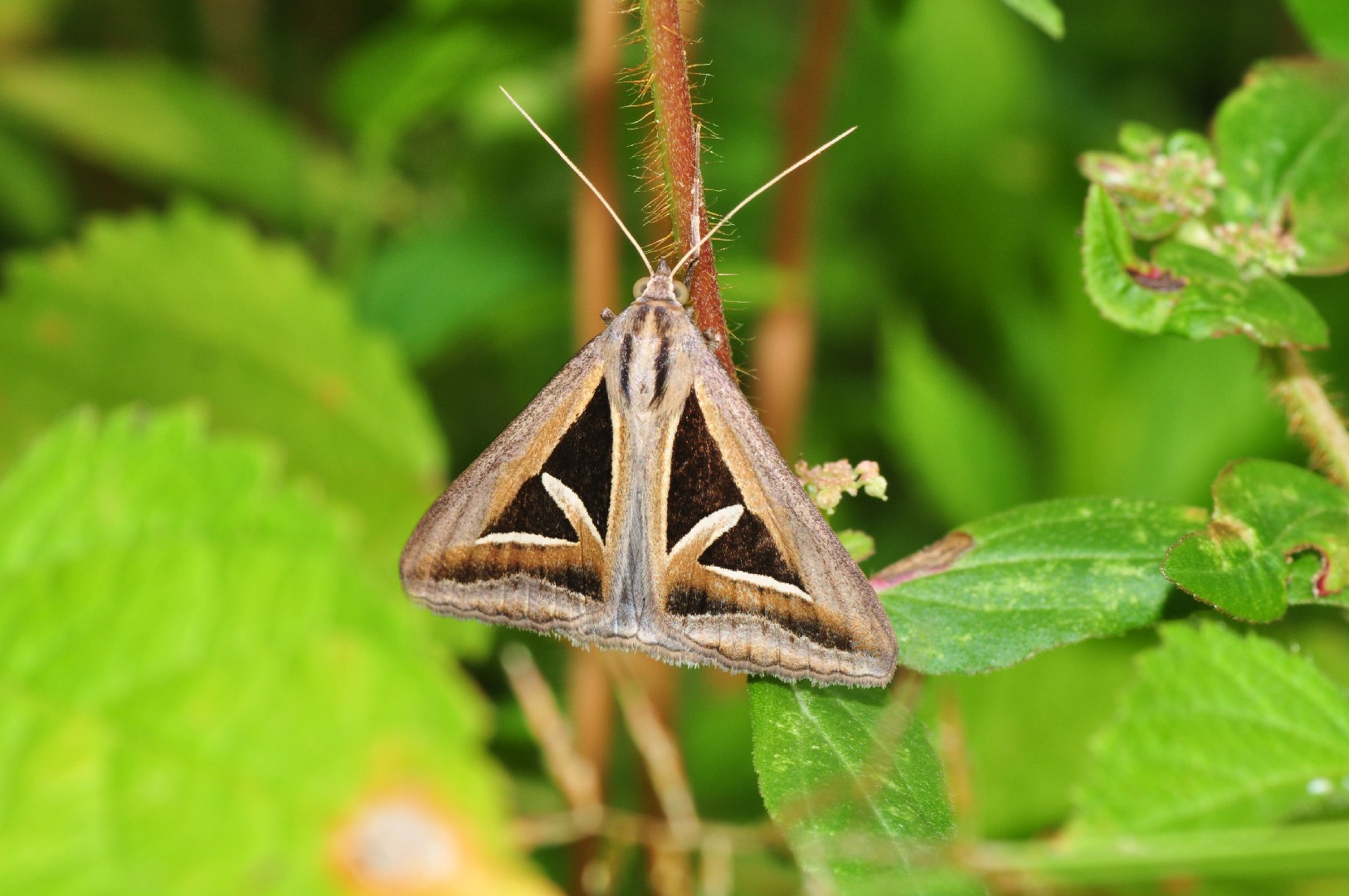
5. Triangles
The wingspan is about 3 - 4.5 cm. Antennae of male ciliated. Mid and hind tibia hairy. Body pale ochreous brown, slightly suffused with fuscous or dark grey brown. Forewings with a large black white-edged triangular patch easily distinguished below the cell from near base to towards outer angle. A similar smaller patch found beyond the cell on vein 5, with some pale fulvous behind it. A slightly sinuous submarginal pale line with patches of black suffusion found inside it and a series of black specks beyond it. A dark marginal line can be seen as well. Hindwings with indistinct medial line and fuscous suffused outer area. Larva has yellow upper half and brown ventral part. The yellow part is broken by longitudinal brown bands, which faints towards posterior and becomes intensive again in prolegs. Eggs olive green and speckled rusty red. First few instars are green with three lateral purple brown lines. Late instars are yellowish. Pupa within a slight cocoon of white silk, which spun amongst leaves.
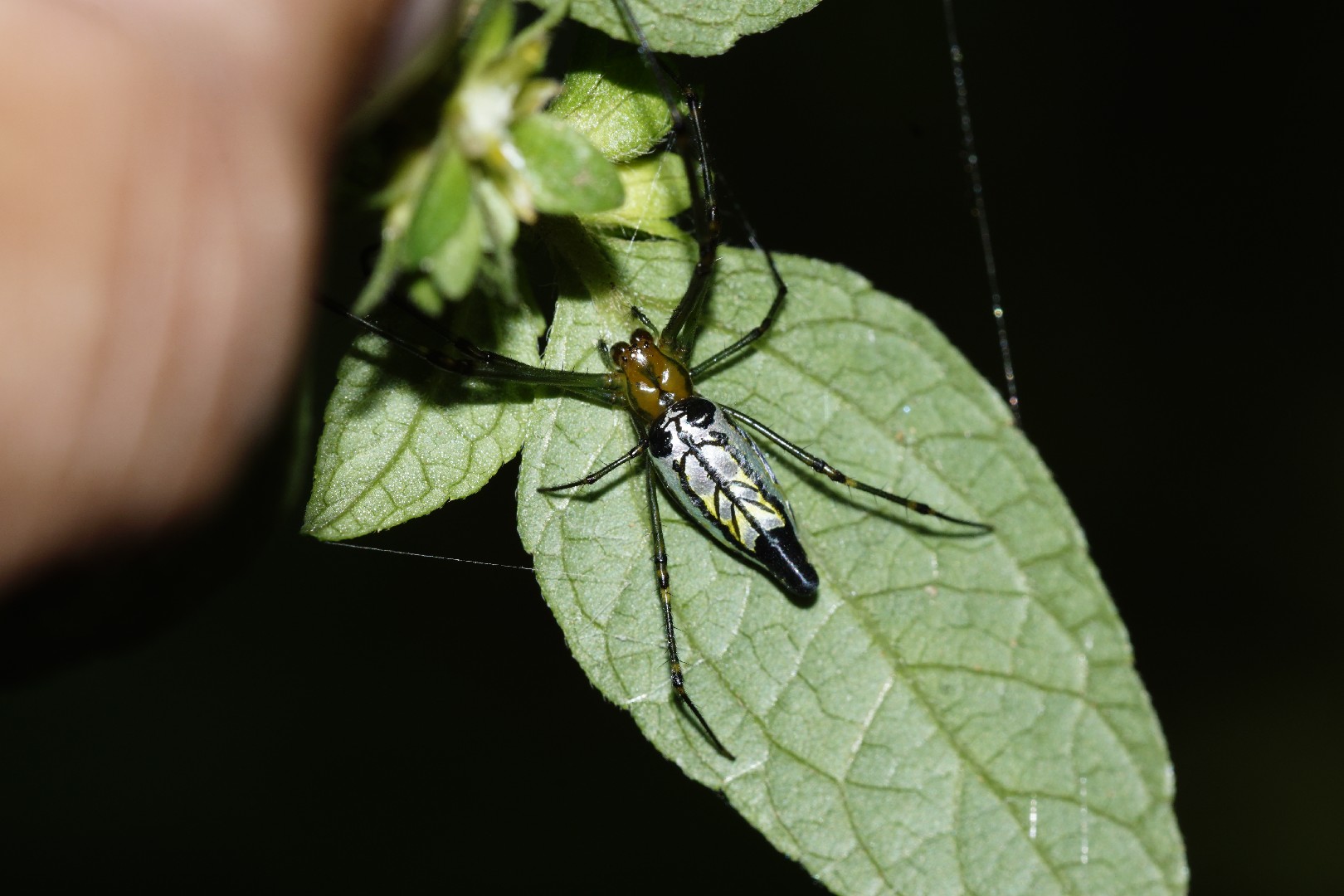
6. Decorative silver orb spider
Leucauge decorata, the decorative silver orb spider, is one of the long-jawed orb weaver spiders. A medium to large sized orb weaving spider, with a body length up to 12 mm long (female). Male to 6 mm. This species has a "point" to the end of the abdomen. Found in Africa, India, south east Asia, also to Australia.
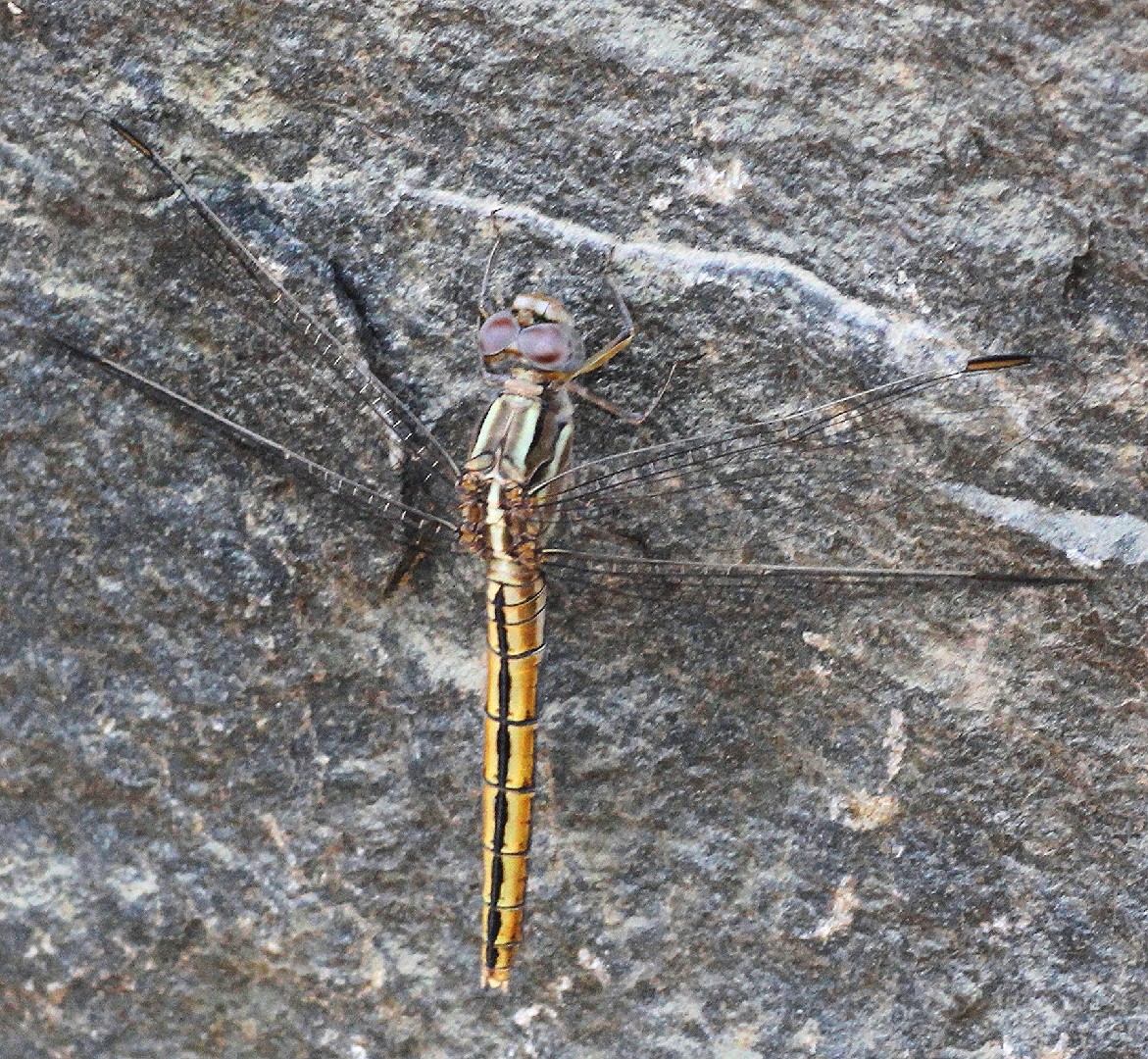
7. Small skimmer
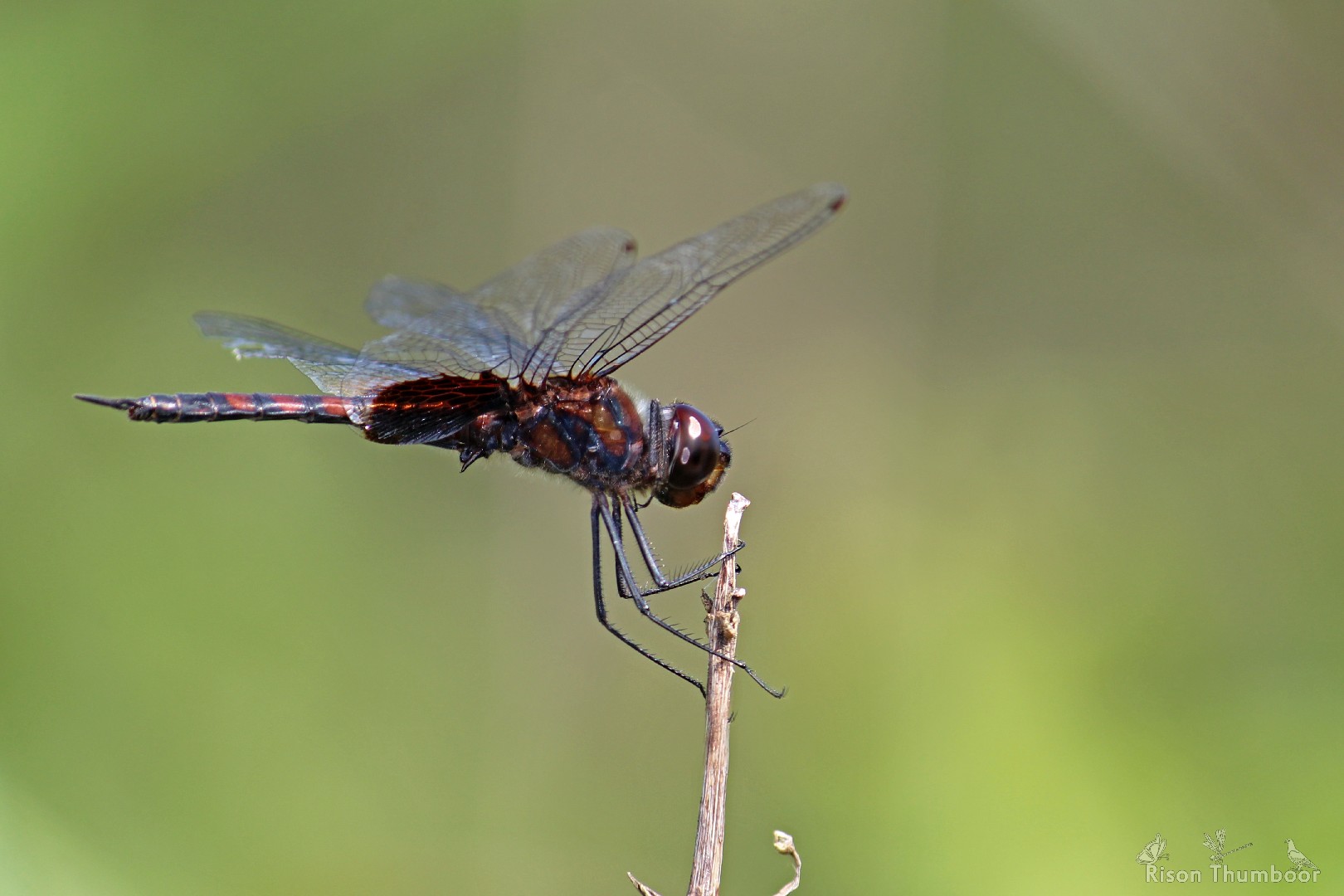
It is a medium-sized dragonfly with brown capped eyes, greenish brown thorax and bluish abdomen. Female lacks the powder blue pruinescence. It prefers medium to slow-flowing streams in the dry zones and hot plains. Adults are common around open rocky and sandy beds of the streams.
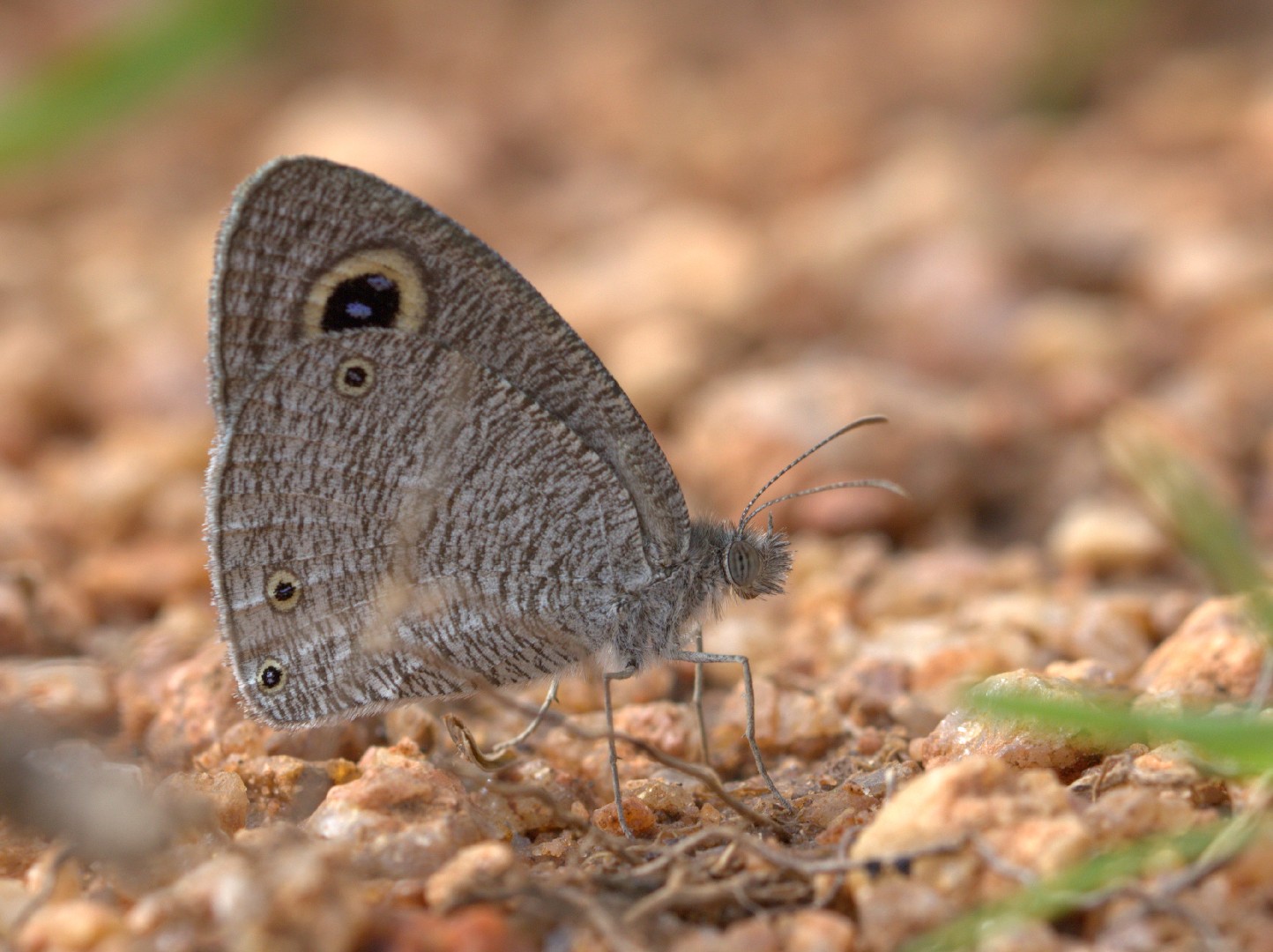
8. Common three-ring
The wingspan is 3 - 3.5 cm in males and 3 - 4 cm in females.
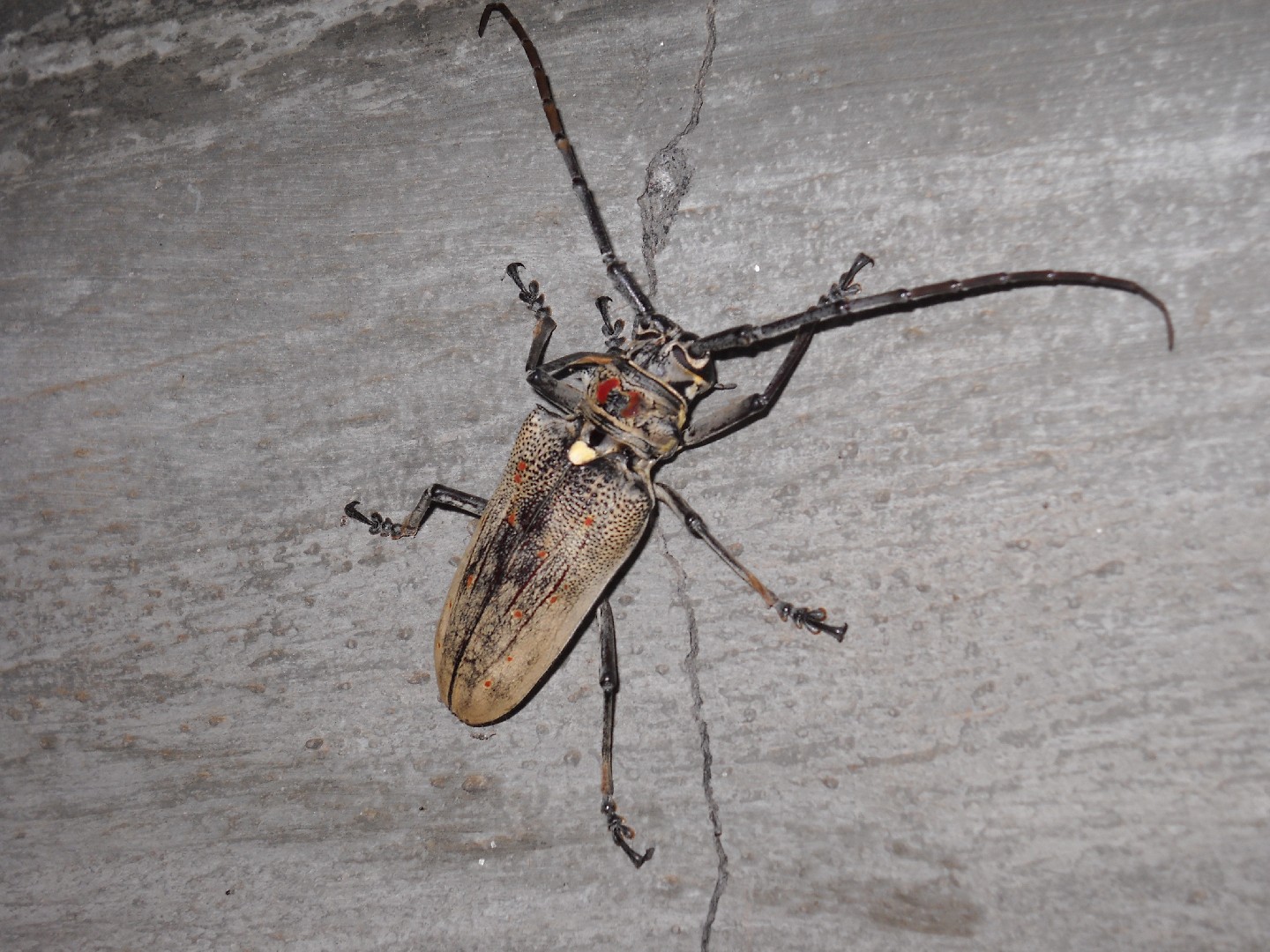
9. Mango stem borer
Batocera rufomaculata is a species of beetle in the family Cerambycidae. It was described by Charles De Geer in 1775. It is known from China, Israel, India, Jordan, Lebanon, Laos, Mauritius, Malaysia, Madagascar, Myanmar, Puerto Rico, Pakistan, Réunion, Syria, Sri Lanka, Thailand, Barbados, Bangladesh and the Virgin Islands. It feeds off of Ficus carica, Carica papaya, Mangifera indica, and Shorea robusta. It can be parasitically infected by Avetianella batocerae.
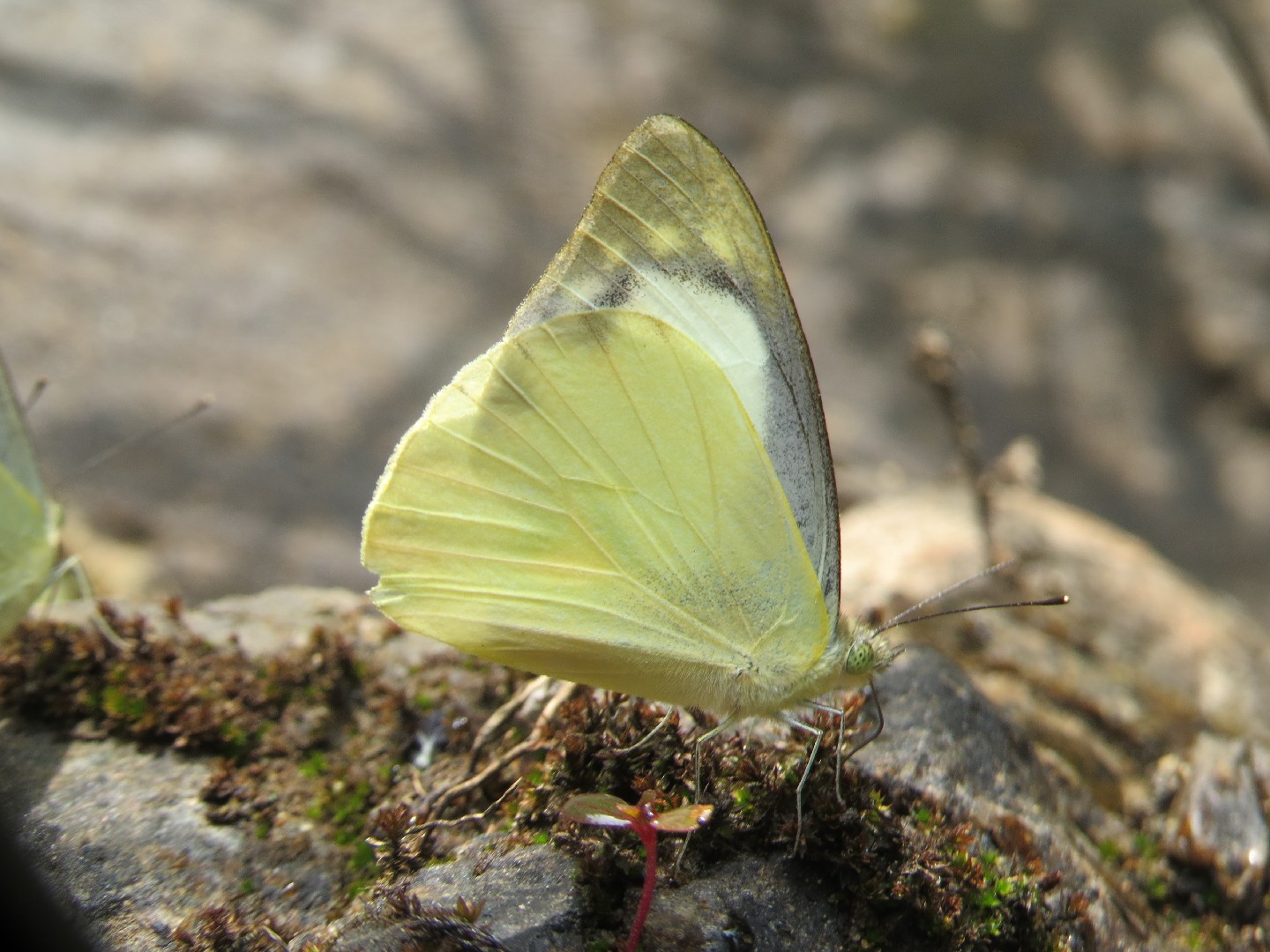
10. Common albatross butterfly
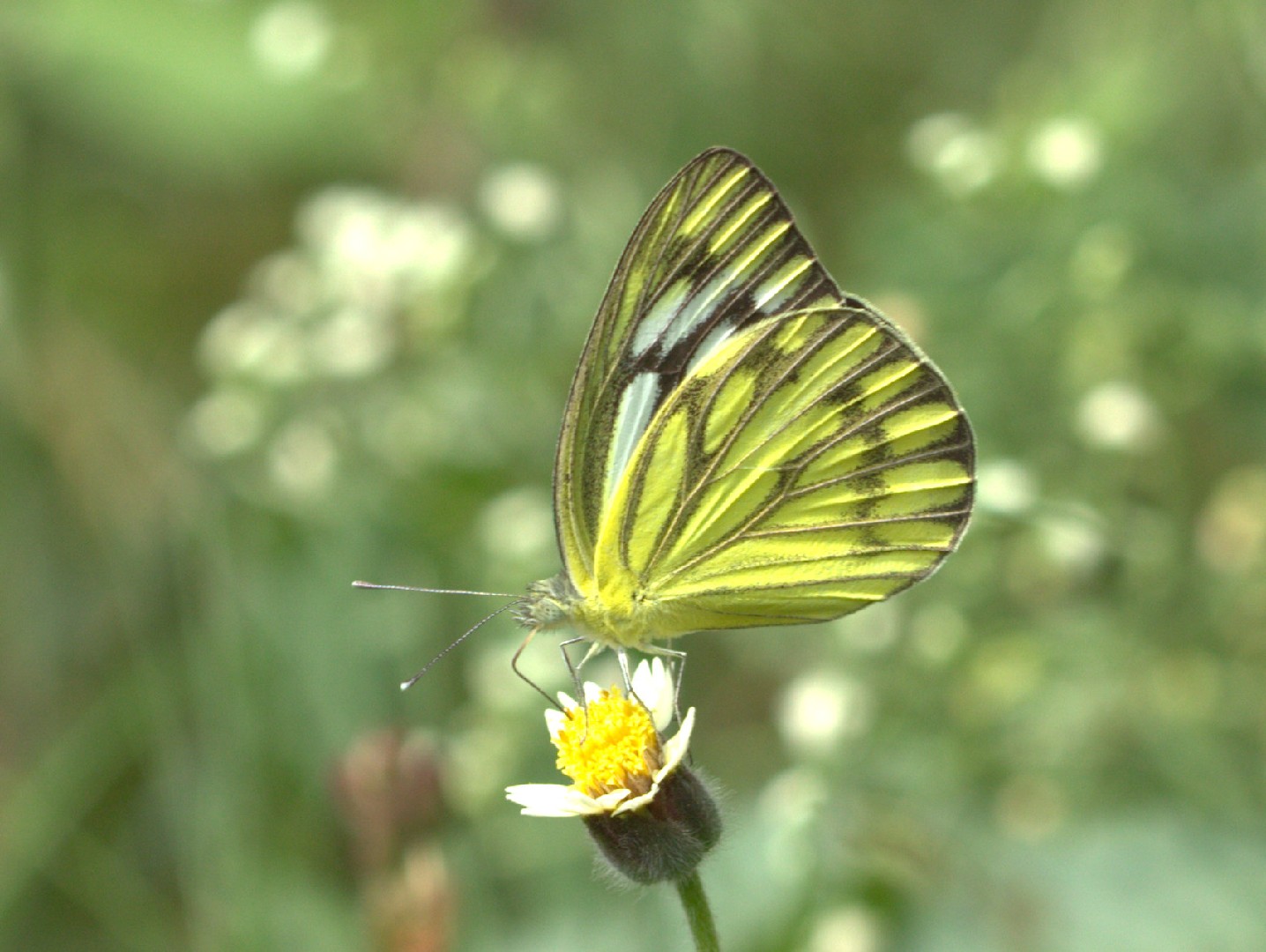
This butterfly closely resembles Appias paulina but the males can be distinguished by the more acutely pointed forewing and the females by the narrower oblique black band on the underside of the forewing. Other differences are given below. Wet-season form: Males have the upper forewings irrorated (sprinkled) with black scales at the apex and anteriorly along the termen, much more sparsely and narrower in general than in A. paulina. On the underside, the apex of the forewing and the whole surface of the hindwing are pale dull ochraceous, sometimes with a faint pinkish tint, but never pale yellow as in A. paulina. The sexes are dimorphic; the females differ as follows: 1st form: On the upperside, the posterior tornal portion of the black area on the forewing is not inwardly rounded, but straight and generally diffuse. The underside is very like the underside of the dry-season form of A. paulina female. It differs, however, in the narrowness of the oblique curved black band, the outer margin of which is irregularly zigzag, and never evenly curved as in A. paulina. 2nd form: Markings as in the 1st form, but the ground colour on the upperside is entirely pale yellow. On the underside, the apical half of the cell and the disc of the forewing up to the black band are pale sulphur yellow. The oblique curved black band is as in the 1st form and the interspace 1 is whitish. The rest of the forewing and the entire surface of the hindwing are rich chrome yellow. The antennae, head, thorax and abdomen are much as in A. paulina, but the antennae are dusky black and more closely speckled with white; the underside of the thorax is white in males, never yellow. Dry-season form: Upper and undersides: similar to that of the wet-season specimens, but in the male the dusting of black scales on the upperside has almost, in some specimens completely, disappeared, while on the underside the ochraceous colouring is much paler. In the females both dimorphs differ but little from the dimorphs of the wet-season form, only on the upperside the black on the apical half of the forewing and on the terminal margin of the hindwing is more restricted, while on the underside the oblique curved black band that crosses the forewing is distinctly narrower with a tendency to become diffuse. The wingspan is 6 - 7 cm.

More







