




Top 20 Most Common Insects in Bhopal
Insects, the world's smallest yet most spectacular creatures, inhabit nearly every environment within Bhopal, exhibiting stunning diversity. Thanks to Bhopal's varied geography, from dense forests to grasslands, each area teems with insect life, some considered pests, others beneficial. These insects play pivotal roles in Bhopal's ecosystem, touching all corners of life, from pollinators aiding vegetation growth to pest-controlling species maintaining balance. Join us as we delve into '20 most common insects in Bhopal.'

Most Common Insects

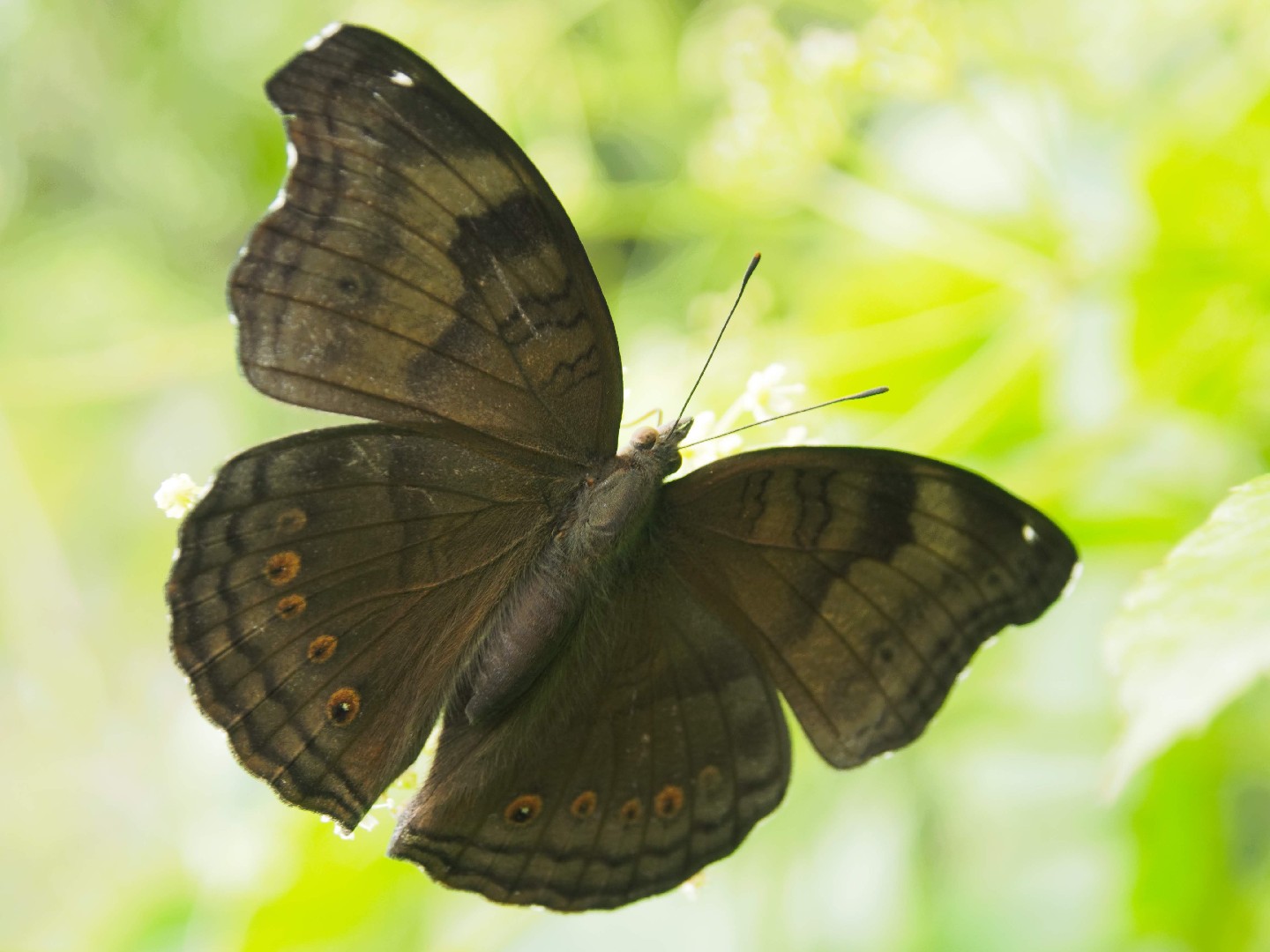
1. Lemon pansy
It is brown with numerous eyespots as well as black and lemon-yellow spots and lines on the upperside of the wings. The underside is a dull brown, with a number of wavy lines and spots in varying shades of brown and black. There is also an eyespot on the lower side of the forewing. The wet- and dry-season forms differ considerably in coloration and even shape. In the wet-season form the markings are distinct and vivid and the wing shape is a little more rounded. In the dry-season form the markings are obscure and pale especially on the underside and the wing margin is more angular and jagged. 
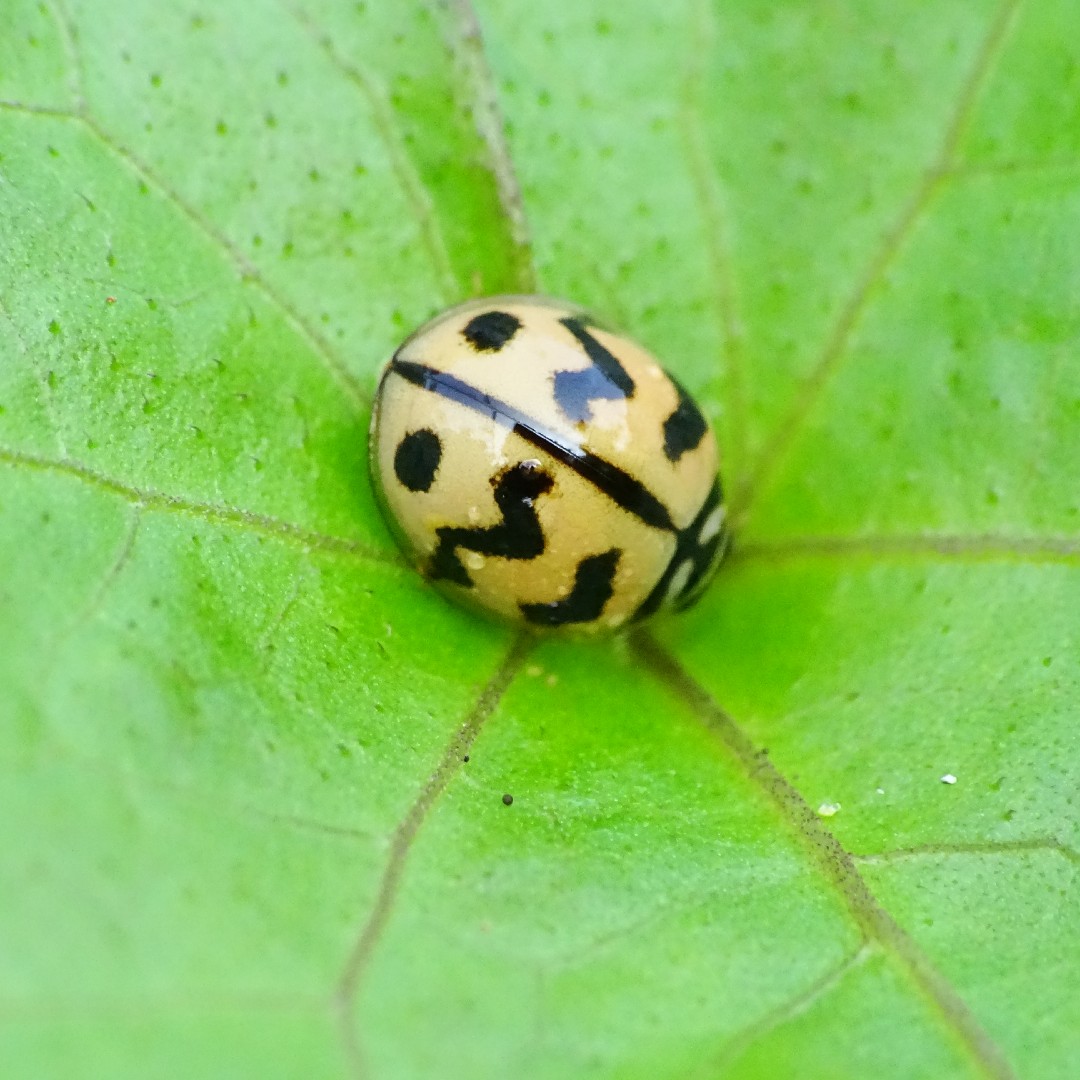
2. Six-spotted zigzag ladybird beetle
The six-spotted zigzag ladybird beetle is a common visitor to agricultural fields in India where it is considered a beneficial insect. It preys on several insects that reduce crop yield and is a more cost-effective and environmentally friendly method of pest control. The insect hibernates in cold temperatures, only appearing from spring through fall.
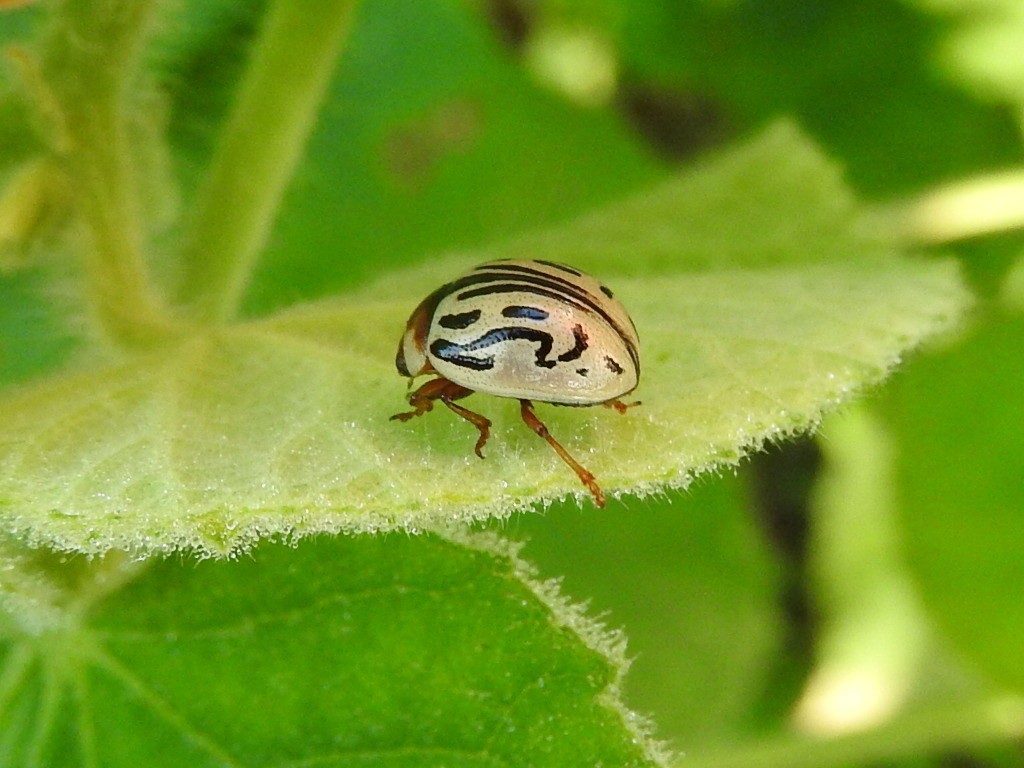
3. Mexican beetle
Z. bicolorata is a small lead beetle with a brown head, brown and yellow graduated pronotum and yellow elytra marked with characteristic elongated brown stripes. The pattern on the elytra is greatly variable - in a study of 478 beetles, 29 variations on this pattern were identified.
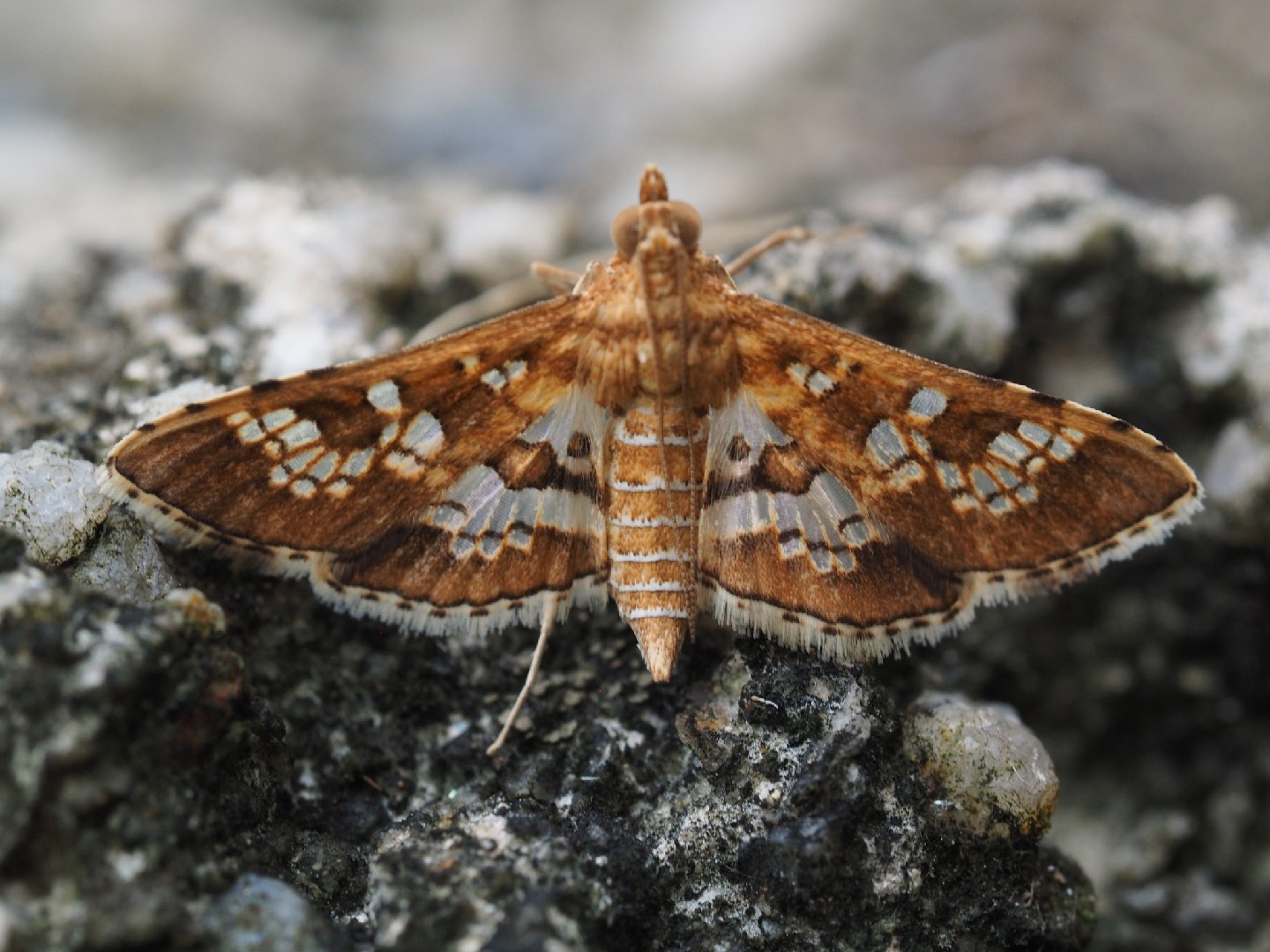
4. Banded pearl
The wingspan is about 2 cm. Adults are brown, with white spots partly outlined in black on the forewings, and white bands across the hindwings.
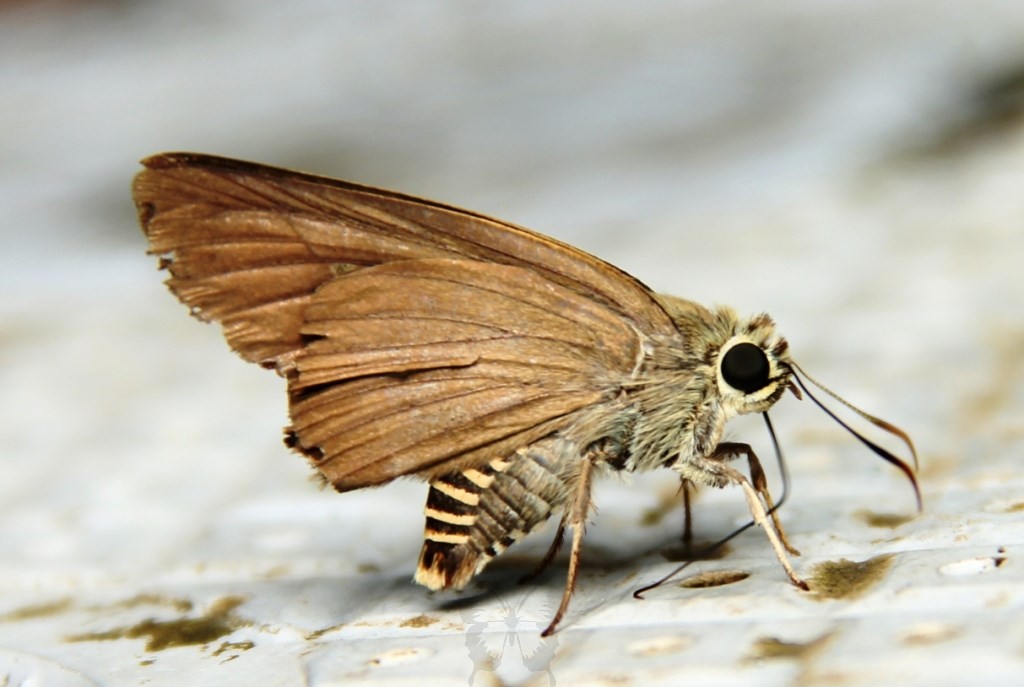
5. Brown awl
Badamia exclamationis is a butterfly from the family of Badamia exclamationis (Hesperiidae). The scientific name of the species was first validly published in 1775 by Johann Christian Fabricius.
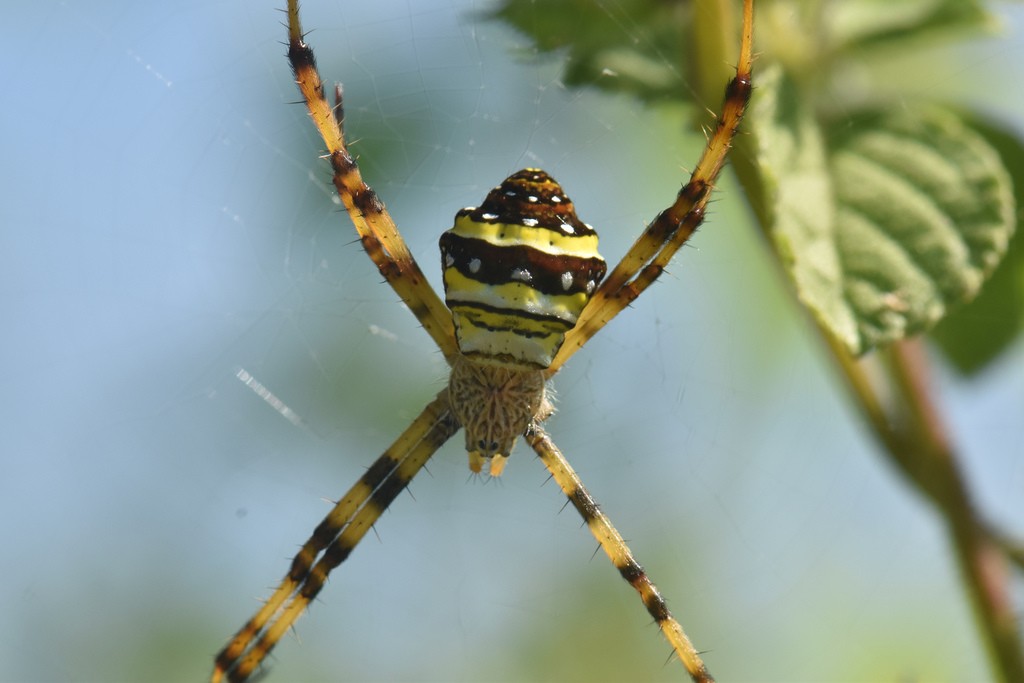
6. Signature spider
Female is about 8-12 mm long and male is 3.5-4.5 mm. After Cephalothorax greyish brown with hairs. Sternum heart shaped with hairy pubescent white patch. Palps bear spines. Legs greyish brown and hairy. Femora dorsally yellowish. Abdomen pentagonal and hairy. Dorsum yellowish with brown transverse bands. Three sigilla pairs distinct. Ventrum dark brownish with two longitudinal white patches.
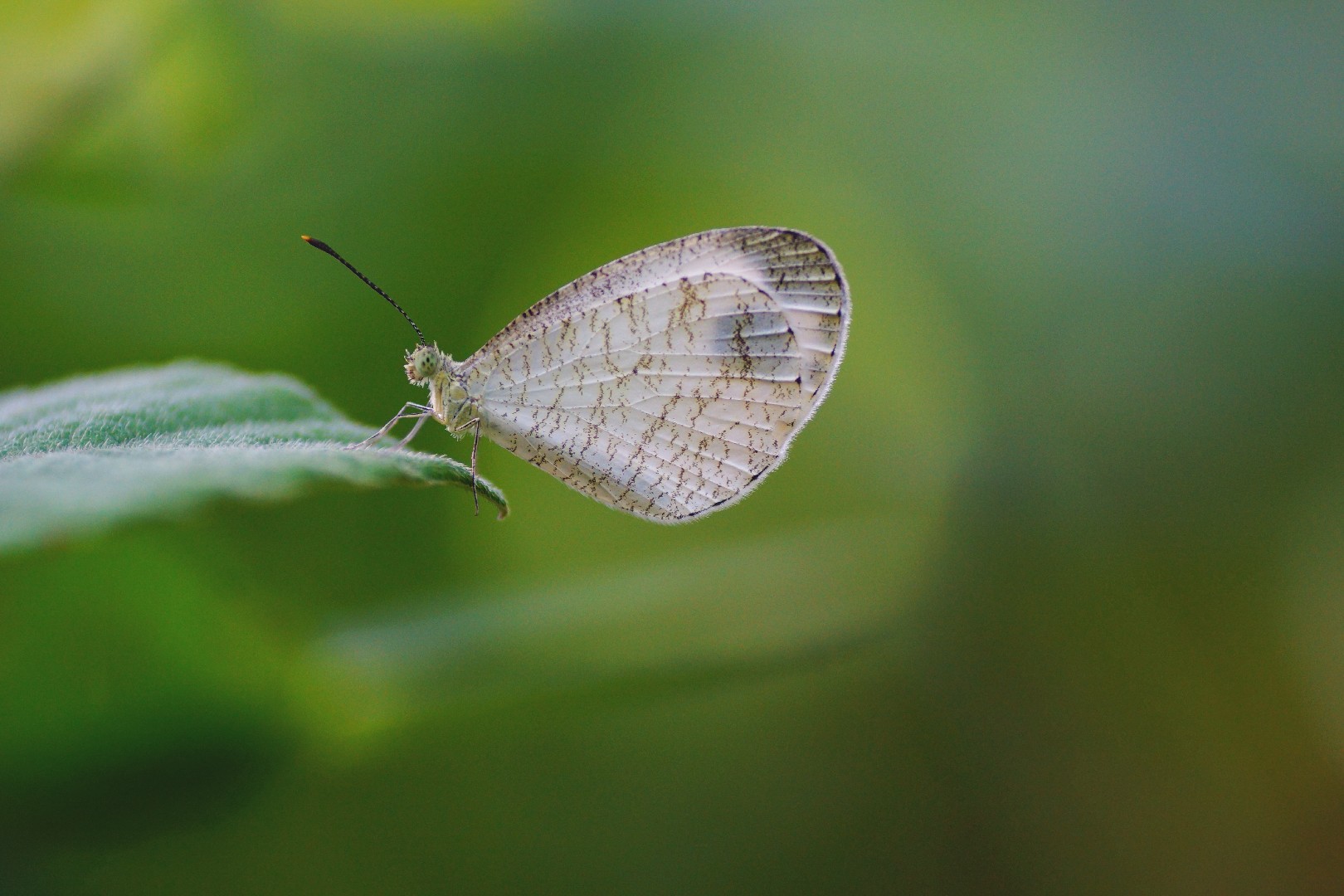
7. Psyche
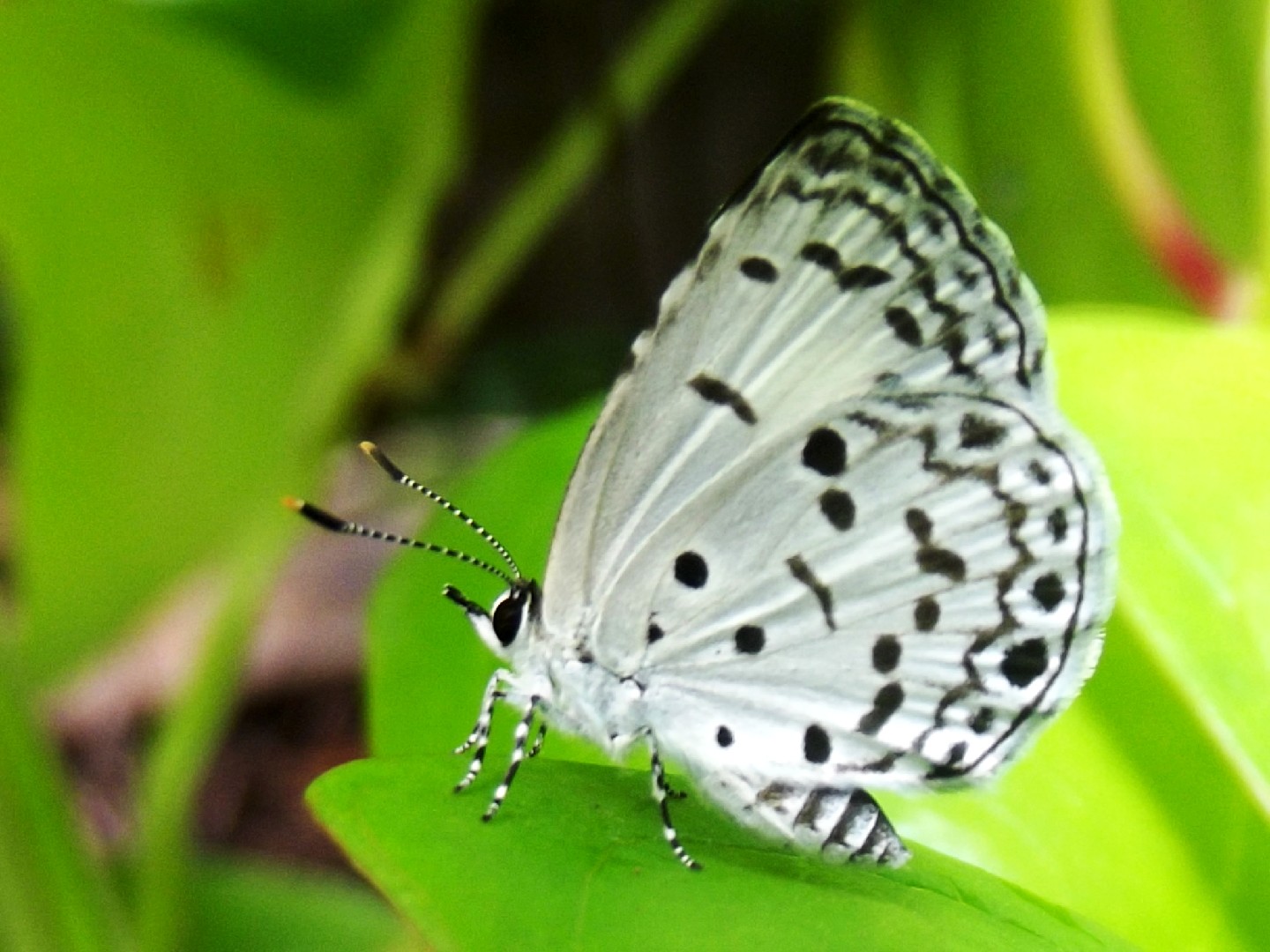
Upperside is white,base of wings are very slightly powdered with minute black scales.The costa of forewing is speckled obscurely with black; apex black, the inner margin of this inwardly angulate; a very large somewhat pear-shaped post-discal spot also black. Hindwing is white,in most specimens an obscure, extremely slender, terminal black line. Underside is white; costal margin and apex of forewing broadly, and the whole surface of the hindwing irrorated (speckled) with transverse, very slender, greenish strigae and minute dots; these on the hindwing have a tendency to form sub-basal, medial and discal obliquely transverse obscure bands; the postdiscal of forewing is black,spot as on the upperside; terminal margins of both forewings and hindwings with minute black, short, transverse slender lines at the apices of the veins, that have a tendency to coalesce and form a terminal continuous line as on the upperside. Antennae dark brown spotted with white, head slightly brownish, thorax and abdomen white. Female is similar as male, the black markings on the upperside of the forewing on the whole slightly broader, but not invariably so. Wingspan is 2.5 - 5 cm. Larva is green with a pale glaucous tinge about the bases of the legs and slightly hairy. Pupa sometimes green, but more often of a delicate pink shade.

8. Scarlet skimmer
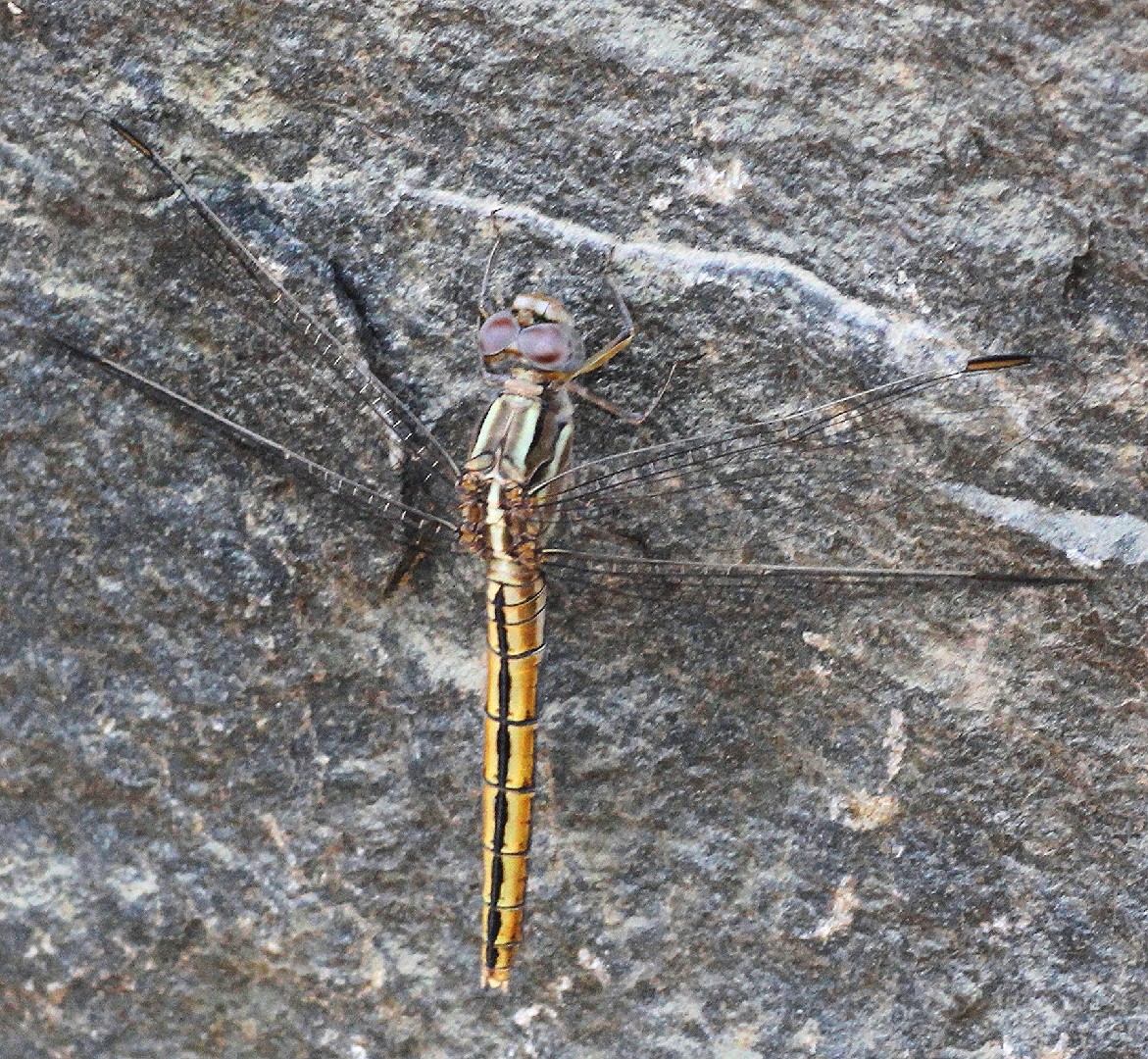
The species is on the IUCN Red List as not endangered, year of assessment 2009.
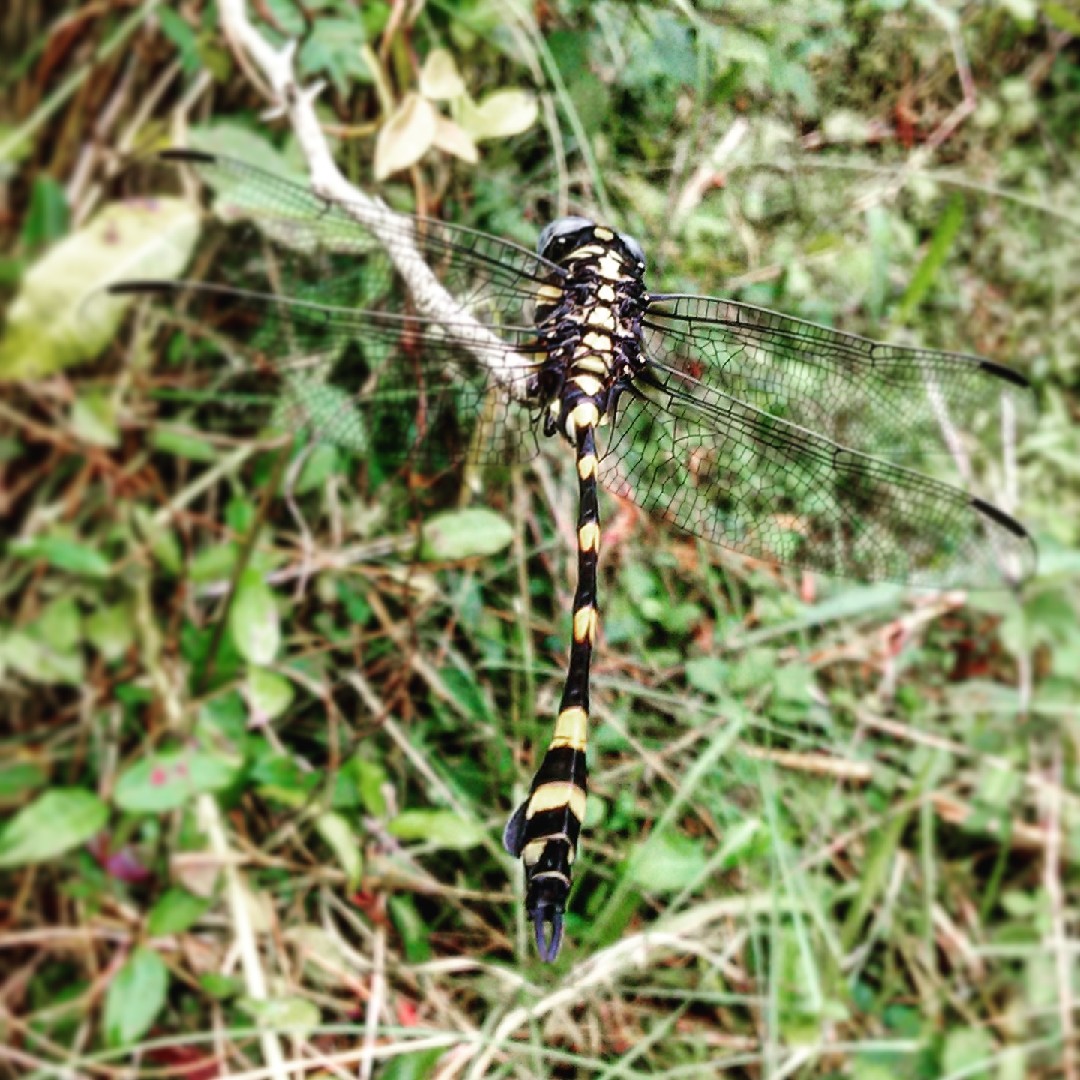
9. Indian common clubtail
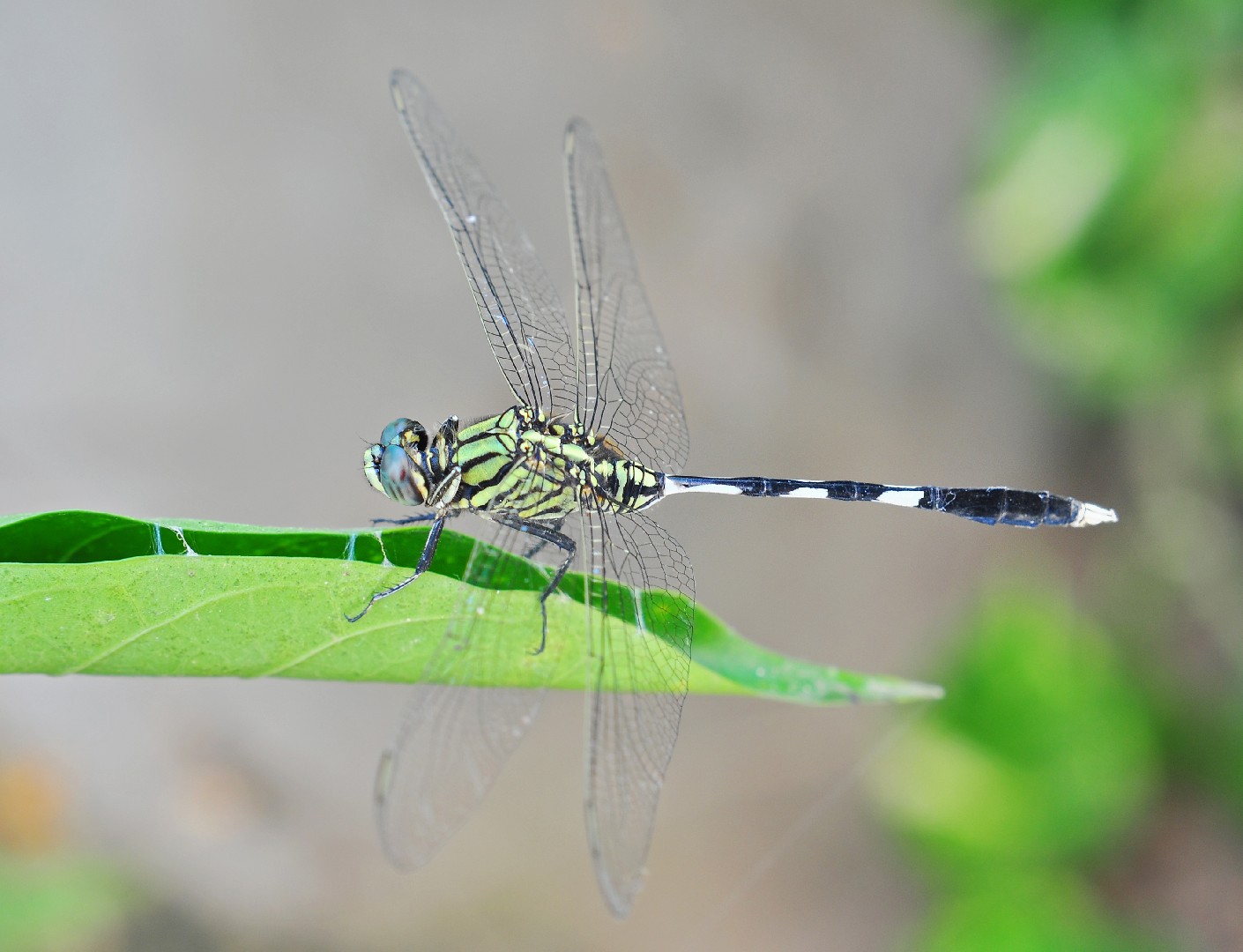
It's a large yellow and black colored dragonfly with bluish-grey eyes. Its thorax is black, marked with yellow or greenish-yellow stripes. Its abdomen is also black with bright yellow marks. There is a leaf like expansion in both sides of segment 8. This species usually perches on a bare twig facing the water, commonly found in ponds, tanks and rivers. It breeds in running and still water.
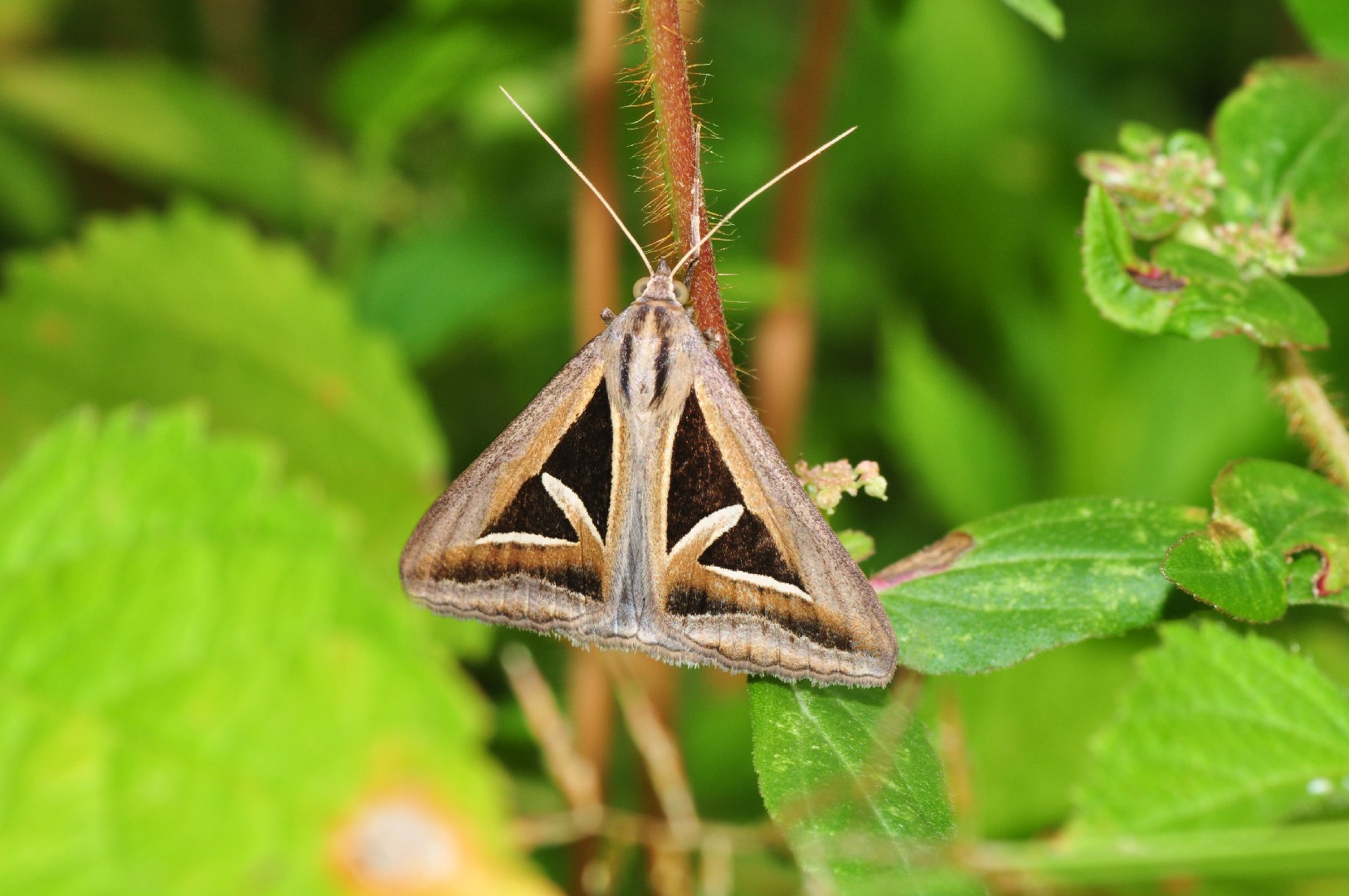
10. Triangles
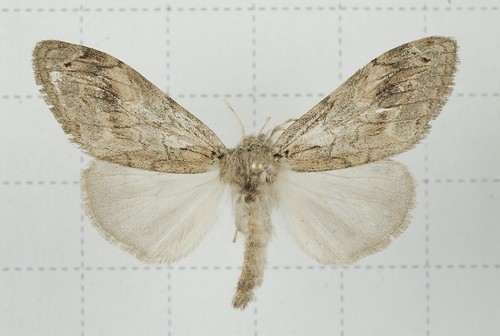
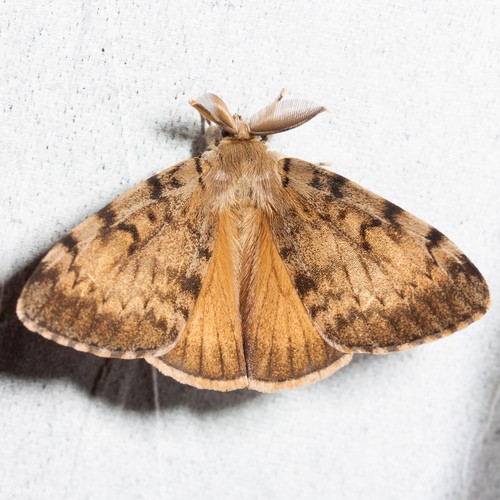
The wingspan is about 3 - 4.5 cm. Antennae of male ciliated. Mid and hind tibia hairy. Body pale ochreous brown, slightly suffused with fuscous or dark grey brown. Forewings with a large black white-edged triangular patch easily distinguished below the cell from near base to towards outer angle. A similar smaller patch found beyond the cell on vein 5, with some pale fulvous behind it. A slightly sinuous submarginal pale line with patches of black suffusion found inside it and a series of black specks beyond it. A dark marginal line can be seen as well. Hindwings with indistinct medial line and fuscous suffused outer area. Larva has yellow upper half and brown ventral part. The yellow part is broken by longitudinal brown bands, which faints towards posterior and becomes intensive again in prolegs. Eggs olive green and speckled rusty red. First few instars are green with three lateral purple brown lines. Late instars are yellowish. Pupa within a slight cocoon of white silk, which spun amongst leaves.
More







