




Top 20 Most Common Insects in Odisha
Discover the fascinating world of insects in Odisha, where varied landscapes host vibrant forms of insect life. From coastal ecosystems fostering unique coastal insects, to forests, fostering a diverse variety of jungle dwellers, Odisha's geography contributes significantly to insect diversity. Insects play pivotal roles in these environments, from pollinating plants to controlling pests. Our list of the '20 Most Common Insects' will delve into these tiny heroes and villains, enhancing our understanding of Odisha, one insect at a time.

Most Common Insects
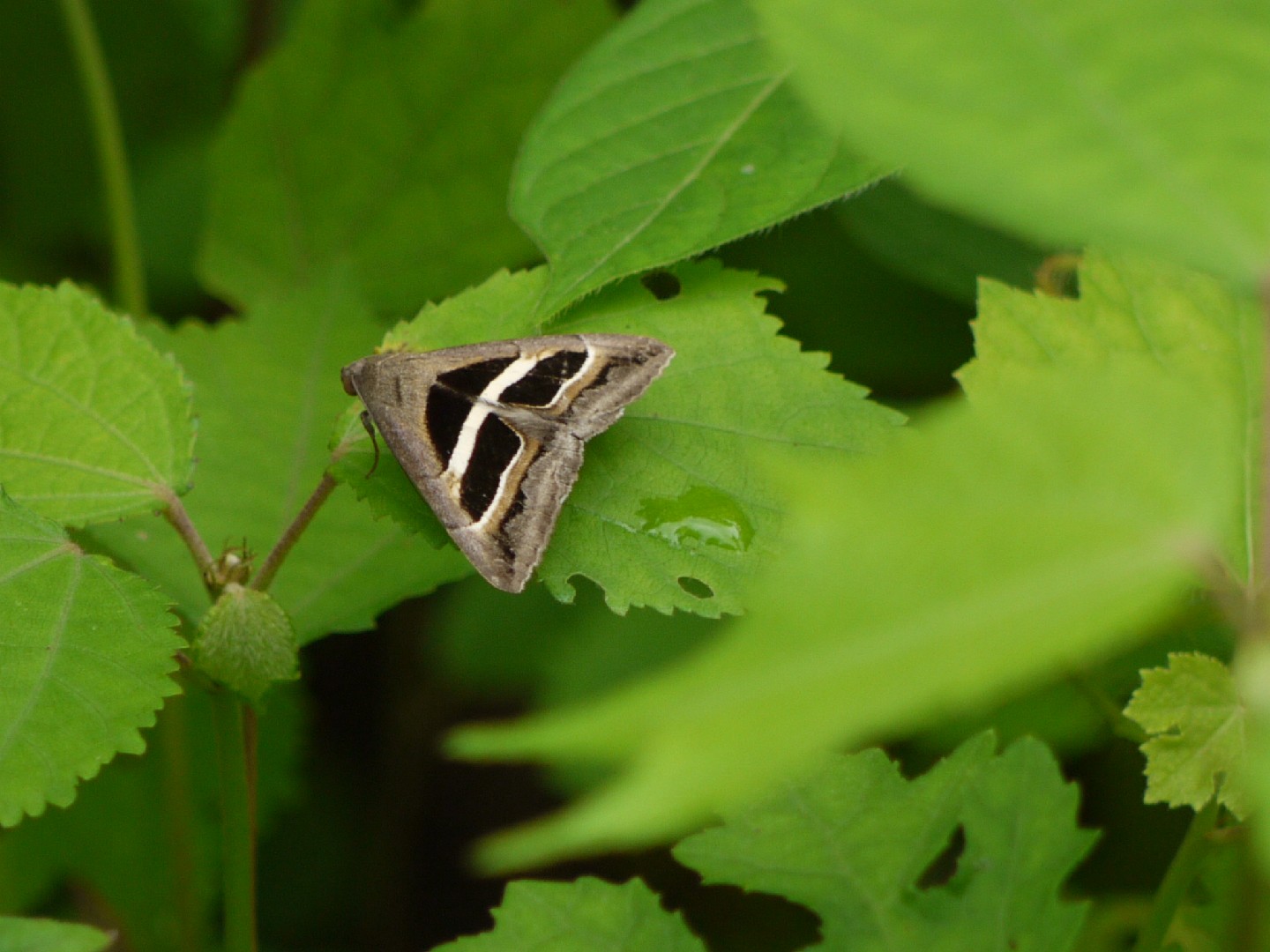
1. Grammodes geometrica
Its wingspan ranges from 26 to 45 mm. Body is greyish brown. Forewings with a large black patch occupying the whole wing except the basal, costal and outer area. Its outer edge waved ad joined by an oblique streak from the apex. Antemedial and postmedial lines curved inwards below the costa with whitish bands outside them on the black patch. The outer part of the postmedial band pale fulvous colored. Hindwings fuscous, with medial pale band. Cilia with white apex and anal angle. Larva is an elongated semi-looper. Tubercles absent. Head is pale ochreous with black spots. Body with longitudinal red lines dorsally and dorso-laterally. 
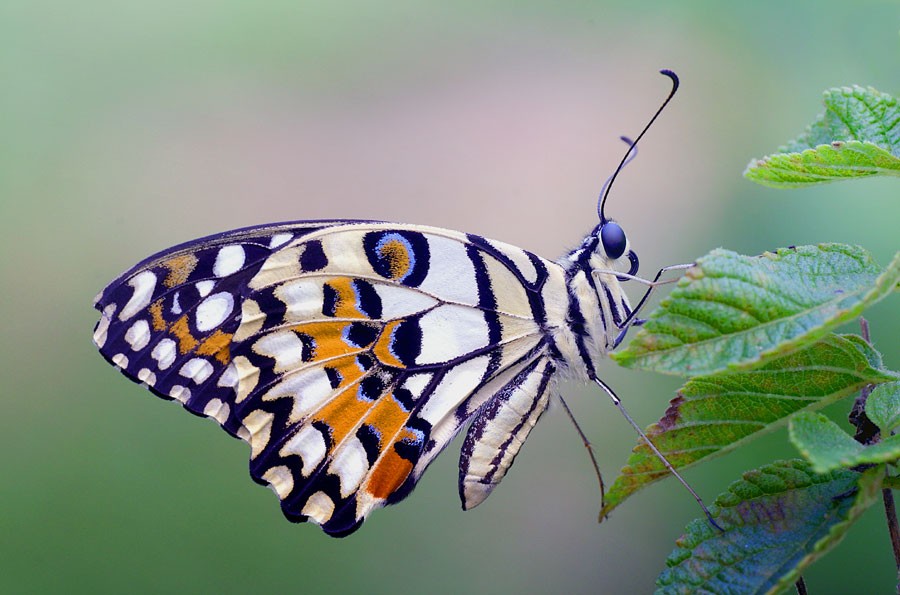
2. Lime swallowtail
The lime swallowtail (Papilio demoleus) has a beautiful black and white pattern, but it's considered a major pest to citrus trees. It feeds on nearly any type of citrus, including oranges and limes. This butterfly's small, green larvae are capable of defoliating an entire nursery grove. They are truly trouble makers in the citrus orchard.
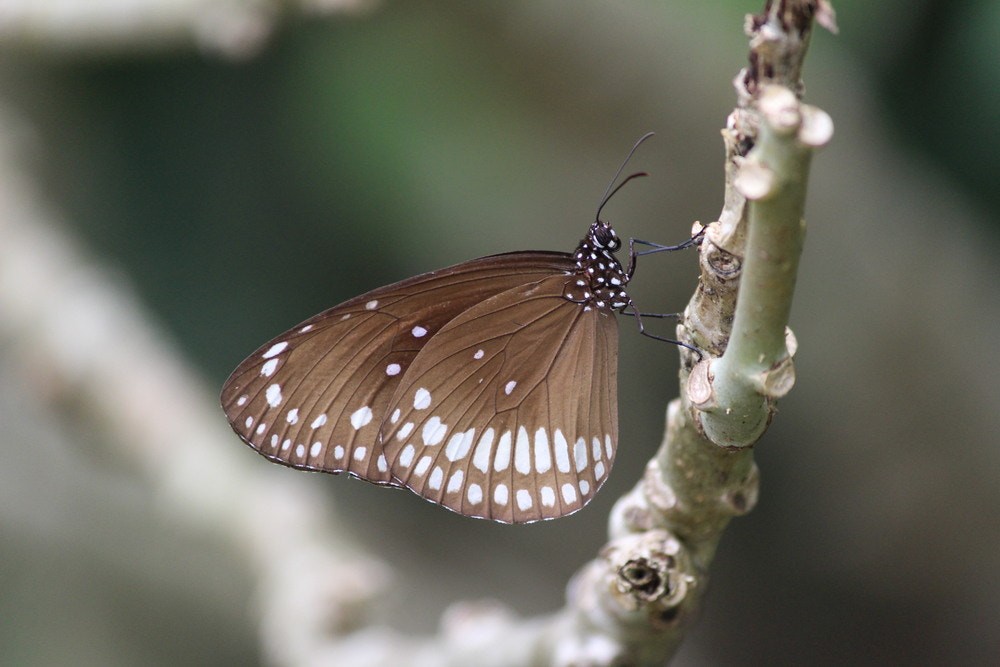
3. Common crow
The common crow is a glossy-black butterfly with brown undersides with white markings along the outer margins of both wings. The wingspan is about 8–9 cm and the body has prominent white spots. The male has a velvety black brand located near the rear edge on the upperside of the forewing. On the underside there is a white streak in the same location. This white streak is present in both male and female. Upperside dark brown, broadly paler along terminal margins; Fore and hind wing with subterminal and terminal series of white spots; on fore wing the former more or less oval, curved inwards opposite apex, the latter series often incomplete, not reaching apex, the spots smaller; often there is a small costal spot, and very rarely a spot in apex of cell and one or more discal spots; on the hind wing the inner series of spots are elongate, the outer conical.Underside similar, but ground-colour more uniform; cell, costal and discal spots on both fore and hind wing nearly always present.
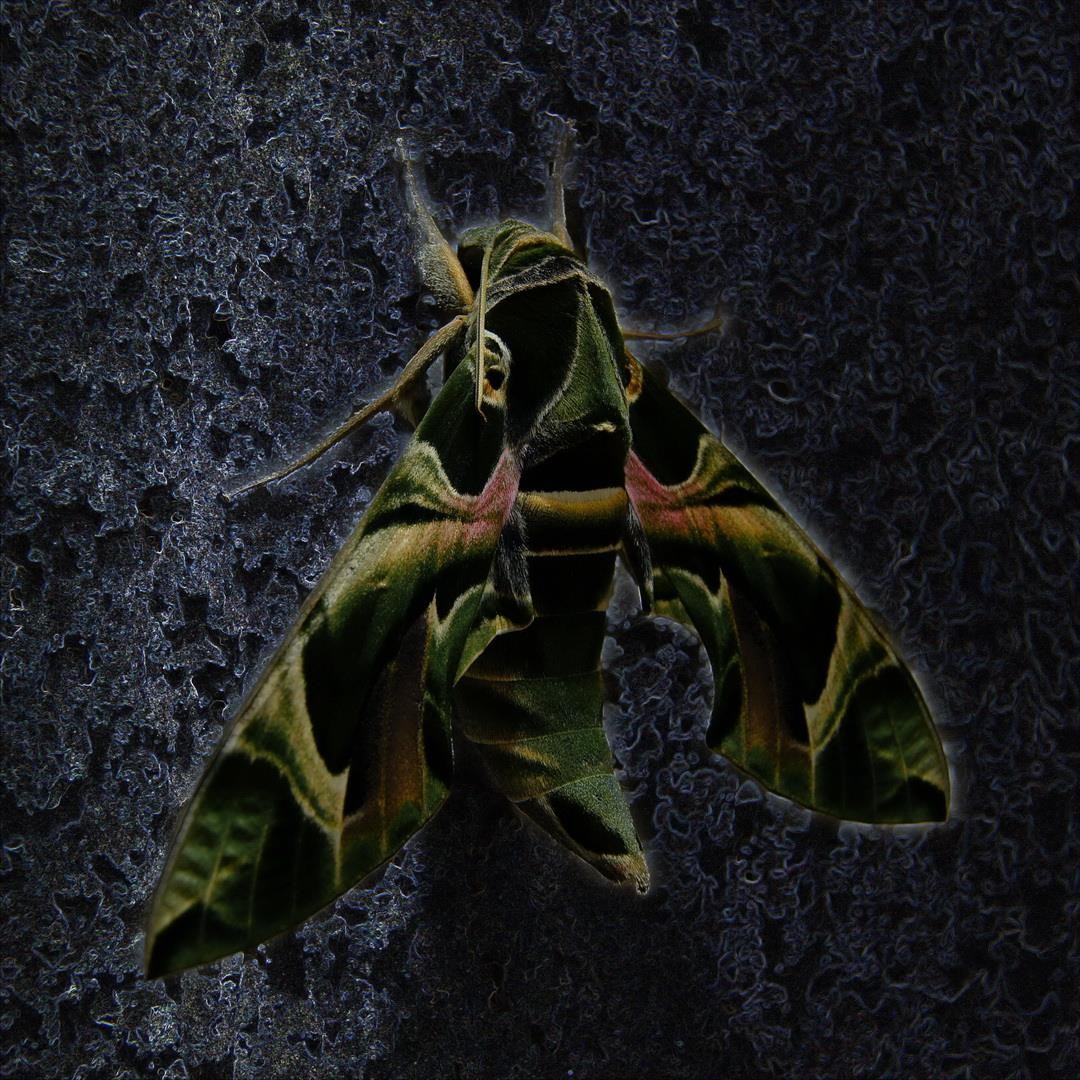
4. Oleander hawk-moth
Daphnis nerii, the oleander hawk-moth or army green moth, is a moth of the family Sphingidae. It was described by Carl Linnaeus in his 1758 10th edition of Systema Naturae.
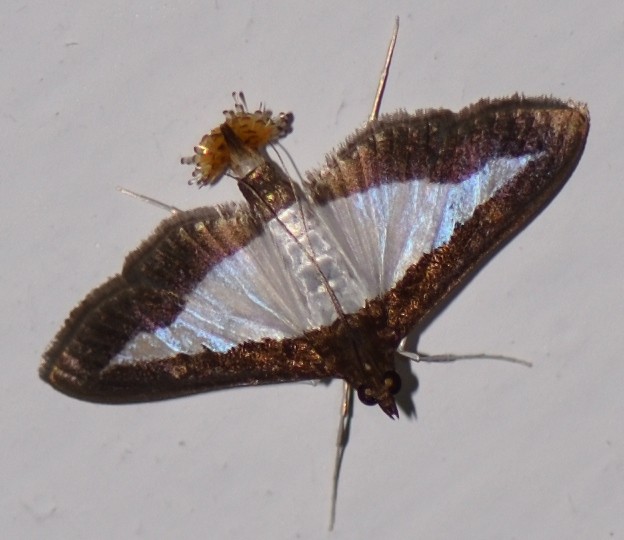
5. Cucumber Moth
The wingspan is about 30 mm. Adults have translucent whitish wings with broad dark brown borders. The body is whitish below, and brown on top of head and thorax as well as the end of the abdomen. There is a tuft of light brown "hairs" on the tip of the abdomen, vestigial in the male but well developed in the female. It is formed by long scales which are carried in a pocket on each side of the 7th abdominal segment, from where they can be everted to form the tufts. Unfertilized females are often seen sitting around with the tuft fully spread, forming two flower-like clumps of scales, which move slowly to spread their pheromones. These have been identified as consisting mainly of (E,E)-10,12-hexadecadienal and (E)-11-hexadecenal. From its closest relatives, the cucumber moth is most reliably distinguished by microscopic examination of the genitals. In the male, the clasper's harpe is twice as long as it is wide, with the costa and sacculus running almost in parallel and being strongly sclerotized, and a rounded cucullus. From the center of the harpe, which is otherwise only weakly sclerotized, a thin spine extends. The uncus is covered in bristles and ends in a small tube; it is a bit longer than the tegumen which in turn is about as wide as it is long. The vinculum is almost quadratic, and the anellus forms a small triangular plate which is more strongly sclerotized. The aedeagus is almost straight, strongly sclerotized below, and has a flattened curved process at end. In the female genitals, the ostium is transverse and oval, and the antrum broadly sclerotized. The ductus seminalis insert from above, a bit before the forward edge of the antrum. The bursa copulatrix is long and slim, with the forward third particularly narrow; its wall is covered with many short spines, and the hind end almost seamlessly merges into a short and barely distinguishable ductus bursae.
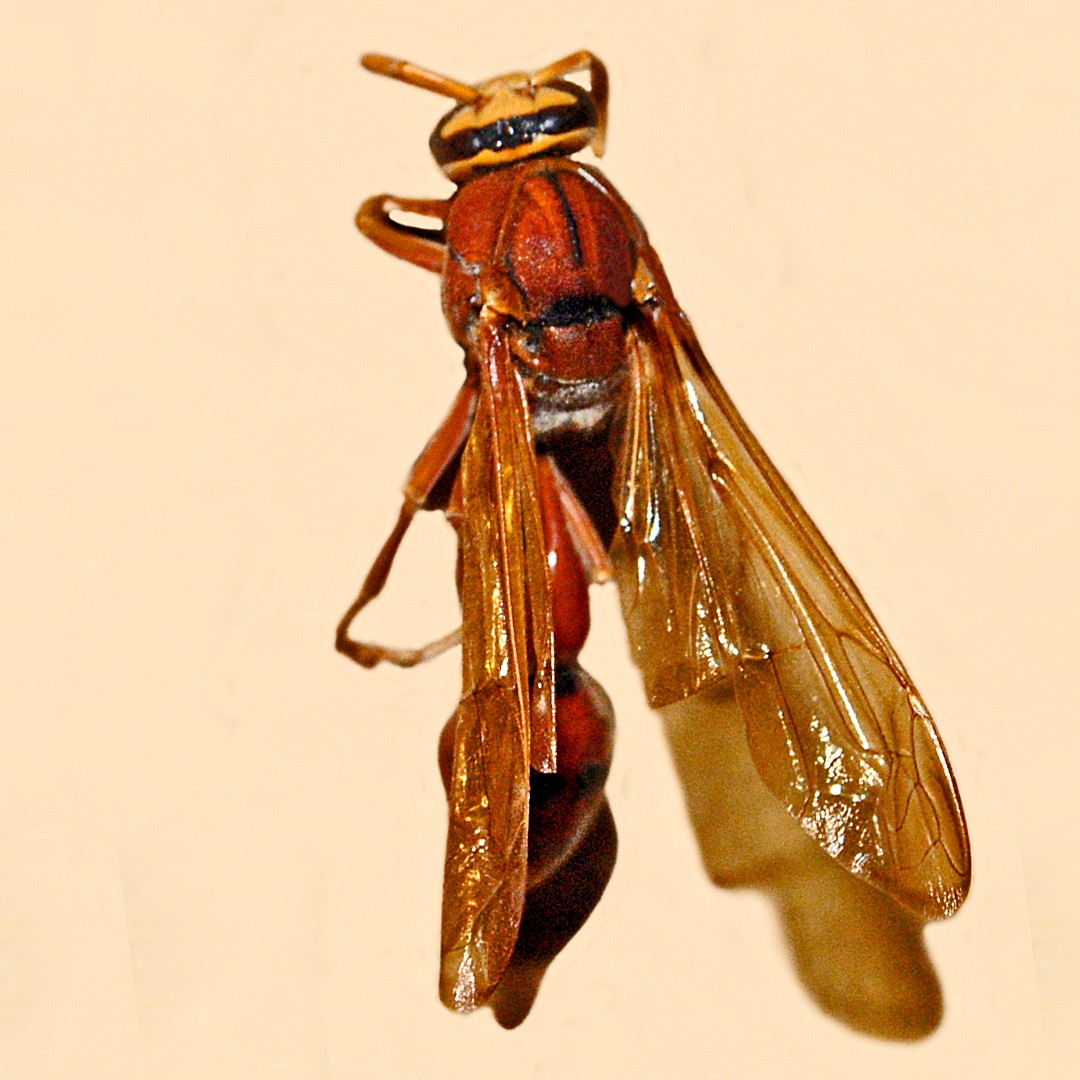
6. Mason Wasp
Delta conoideum, the mason wasp, is a species of potter wasp in the subfamily Eumeninae of the family Vespidae.

7. Common mormon
The common mormon (Papilio polytes) is a beautiful, black butterfly with unique hindwings that have orange and white colorings and two spots jutting out. They are named after the Mormon religion, as the butterflies participate in polygamy, which is a common practice for Mormons. They are also known to mimic red-bodied swallowtail, who are inedible.
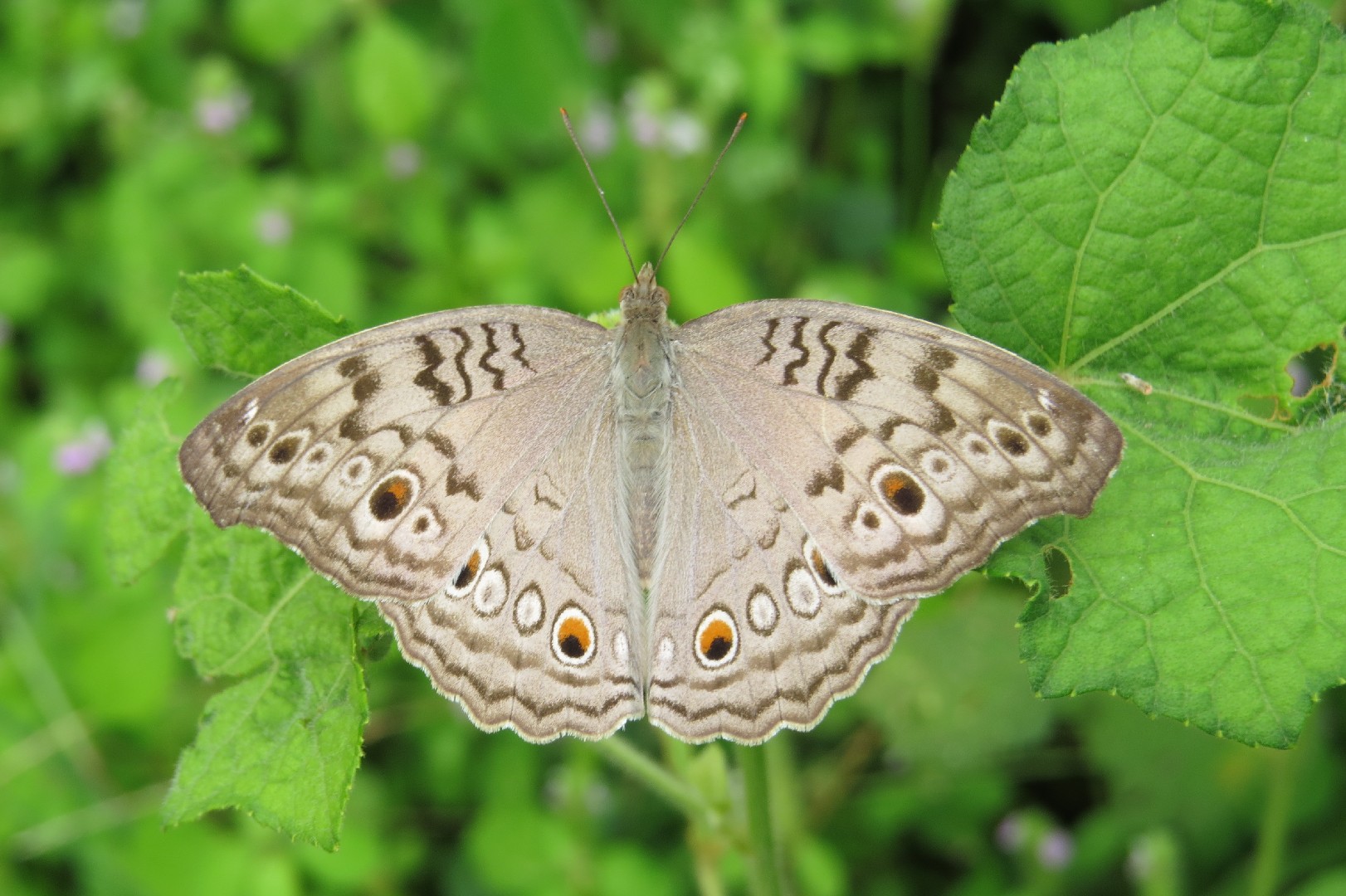
8. Grey pansy
Upperside of both sexes pale lavender brown, apical half of wings paler. Forewing: cell with, three transverse, short, sinuous black bands, the outermost defining the discocellulars; a similar short, somewhat broader band beyond the apex of the cell; two transverse discal dusky black fasciae, the inner highly sinuous and outward, angulate above vein 4, the outer straighter, somewhat lunular, bordered by a series of whitish ovals with dusky or black centers. The black-centered spots in the ovals in interspaces 2, 5, and 6 margined posteriorly with rich ocherous yellow. Beyond this series of ovals is a lunular, narrow, transverse dark band, followed by sinuous subterminal and terminal broad dark lines. Apex of wing slightly fuliginous. Hindwing: a short slender black loop from veins 6 to 4 at apex of cell-area; two discal sinuous transverse dark, fasciae in continuation of those on the forewing: followed by a series of dark-centered ovals in interspaces 2–6, the ovals in interspaces 2, 5, and 6 with the dark centers inwardly broadly bordered with ochreous yellow; postdiscal, subterminal and terminal dark lunular lines as on the forewing. Underside lilacine white markings as on the upperside but very delicate, slender and somewhat obsolescent. In the dry-season forms of the males the rows of oval ocelli are only indicated by the yellow-centered ovals. The most prominent marking is the inner discal fascia crossing the wings; this is much less sinuous than on the upperside and not angulated on the forewing. In the females the markings are all heavier and more distinct, the space between the various transverse fasciae tinged with ocherous.

9. Weaver ant
The weaver ant can be found in silk-woven nests in the foliage of Southeast Asia and Oceania. These ants have a painful bite and prey on other small insects. Larvae have many uses for local regions, including being a popular fishing bait and a good choice of bird food.
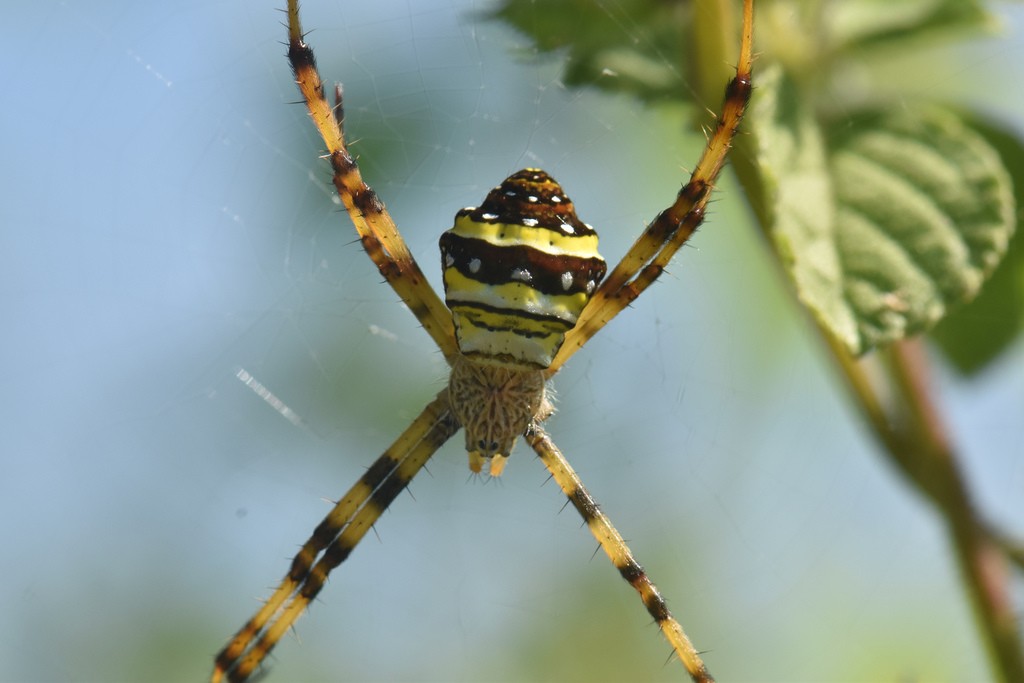
10. Signature spider
Female is about 8-12 mm long and male is 3.5-4.5 mm. After Cephalothorax greyish brown with hairs. Sternum heart shaped with hairy pubescent white patch. Palps bear spines. Legs greyish brown and hairy. Femora dorsally yellowish. Abdomen pentagonal and hairy. Dorsum yellowish with brown transverse bands. Three sigilla pairs distinct. Ventrum dark brownish with two longitudinal white patches.


More







