




Top 20 Most Common Insects in Faisalabad
Insects, with their diverse characteristics and habitats, are intriguing creatures that inhabit every nook and cranny of Faisalabad. As Faisalabad's landscapes differ, so does the insect diversity, showcasing an impressive array of species. These little creatures play an essential role in our ecosystem, from being pests affecting agricultural productivity to beneficial insects aiding in pollination. Our list, 'Top 20 most common insects in Faisalabad', will not just identify species, but will amplify our understanding of how our environment molds their lives.

Most Common Insects
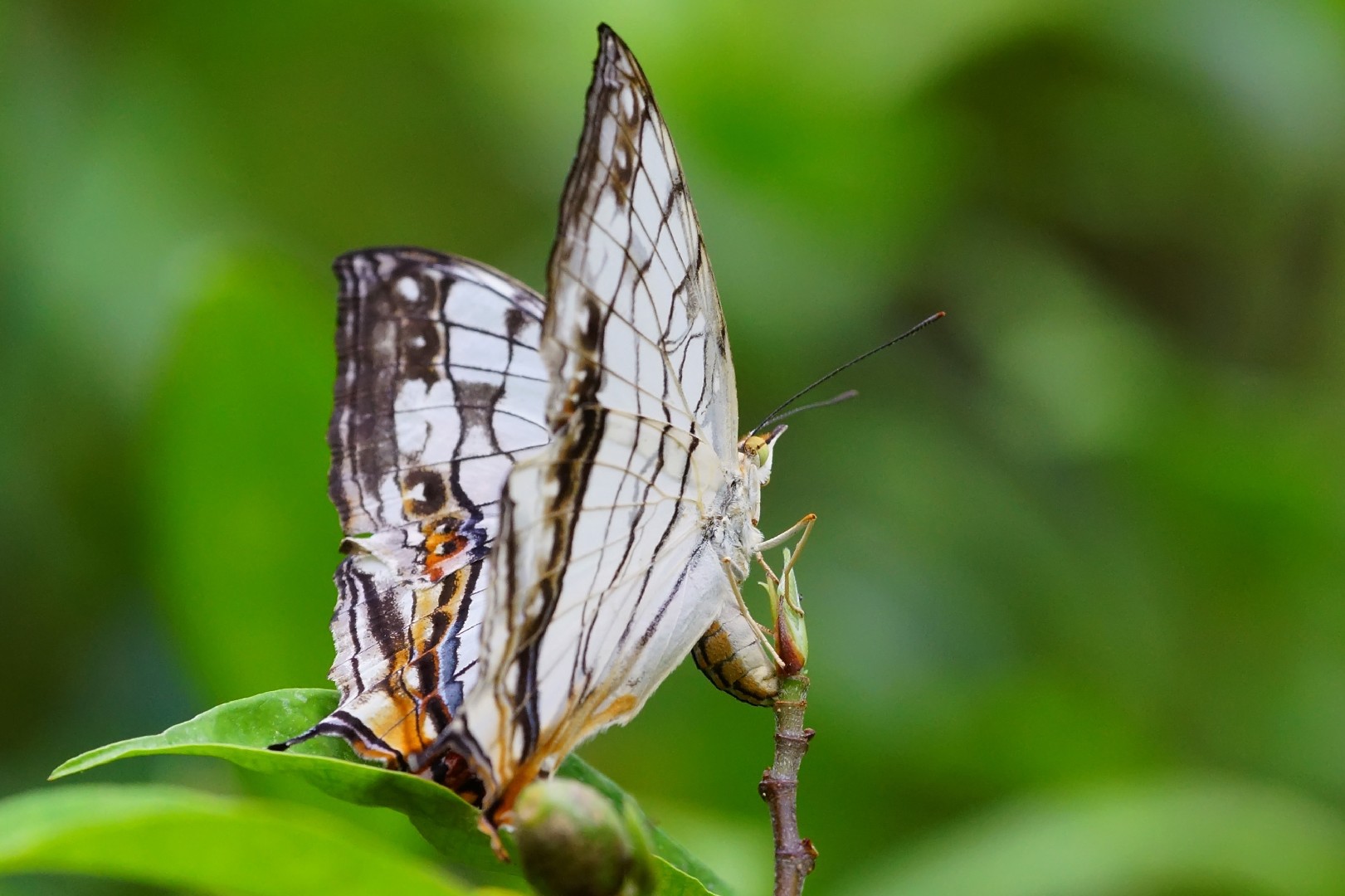
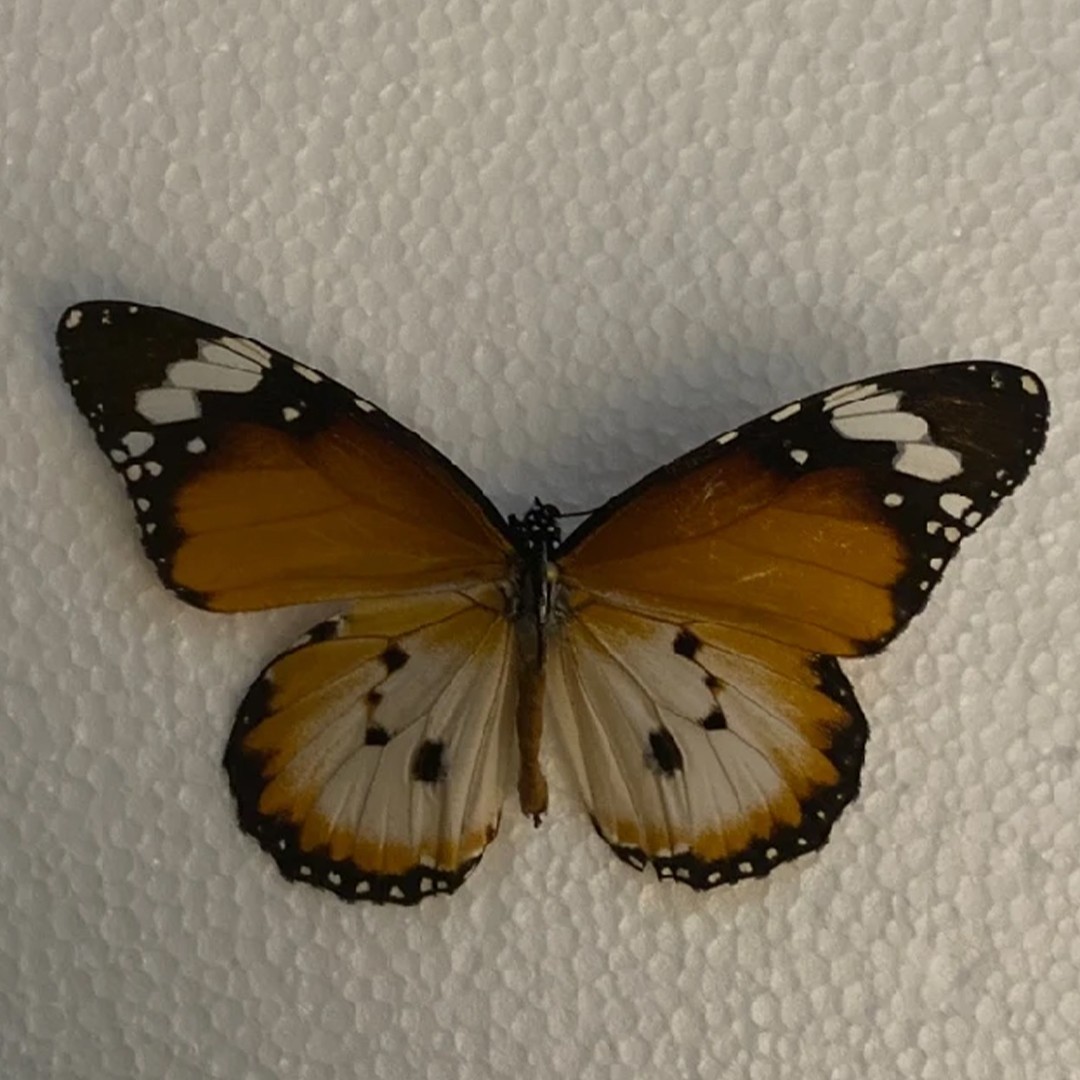
1. Common map
Males and females upperside white, in many specimens pale ochraceous yellow, veins black. Forewing with four very slender irregularly sinuous transverse black lines, the costal margin shaded with ochraceous at base and fuscous beyond; cell crossed by three or four additional short lines; a postdiscal very incomplete series of white-centred broad fuscous rings in the interspaces, tinged with ochraceous near the tornus and broadly interrupted in interspaces 3 and 4; beyond this two transverse black lines not reaching the dorsal margin, shaded with fuscous between; the apex broadly and the termen also shaded with fuscous. Hindwing with three transverse fine lines; a pair of postdiscal broad black lines shaded with light sepia brown between, forming a conspicuous band, the outer line broken and incomplete, followed by two irregular black lines, a subterminal more pronounced black line, and posteriorly a narrow black terminal margin; dorsal margin broadly fuscous at base; apical half and the tornal area and lobe rich ochraceous, with some sepia-brown and black markings. Underside similar, the markings of the upperside showing through by transparency; the ochraceous shading on dorsum and tornal area on hindwing of less extent, but the tornal lobe darker ochraceous with a central large round black spot. The markings both on upper and undersides vary a little in depth of colour and breadth. In many specimens there is a diffuse fuscous spot between the discal pair of transverse fine lines on forewing. Antennae, head, thorax and abdomen above black, thorax and abdomen with lateral greyish longitudinal stripes: beneath white. Body of the female paler than that of the male. Expanse 6 - 7 cm. The eggs were curious and beautiful, high domed-shaped or almost conical, with an aperture at the top fitted with a deeply dentate flat cap like a cogged wheel. The larva was unlike any other that, we have ever seen, slender, cylindrical and smooth; with two long curved divergent filaments or soft horns on the head, a single at outer sword-shaped one on the back at the 5th or 6th segment curved backwards and serrated on its inner edge, and another on the last segment curved forwards and serrated on its outer edge. The colour was a fine reddish brown with a broad green band on the side from the 5th to the last segment. The pupae were suspended by the tail, very much compressed, with a dorsal ridge from head to tail, high and obtusely pointed in the middle, the palpi-cases united and produced into a long somewhat recurved snout; colour brown with fine dark striae. 
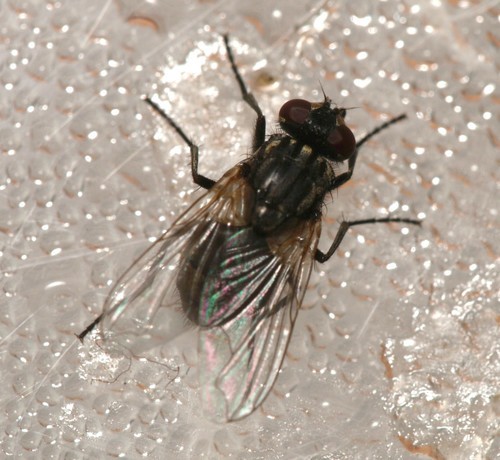
2. Common house fly
The female common house fly mates once and can store the sperm for multiple batches of eggs throughout her life. She will lay anywhere between 75 to 150 eggs at a time, usually in rotting organic matter, where the larvae will feed. The adults feed on feces and animal matter, making them important ecological composters. However, they can also transmit pathogens to human food and are considered pests and health hazards in human-occupied areas.
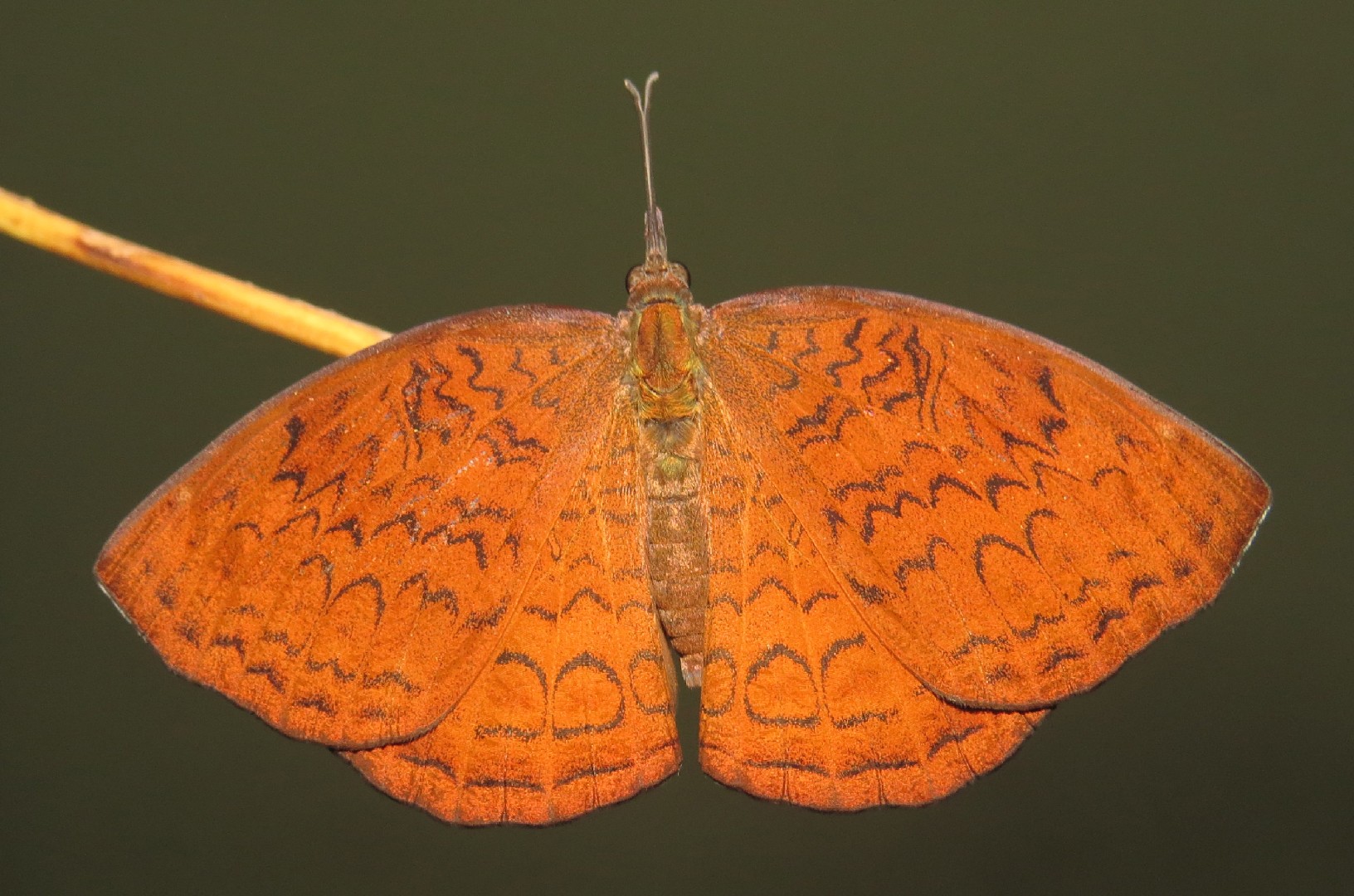
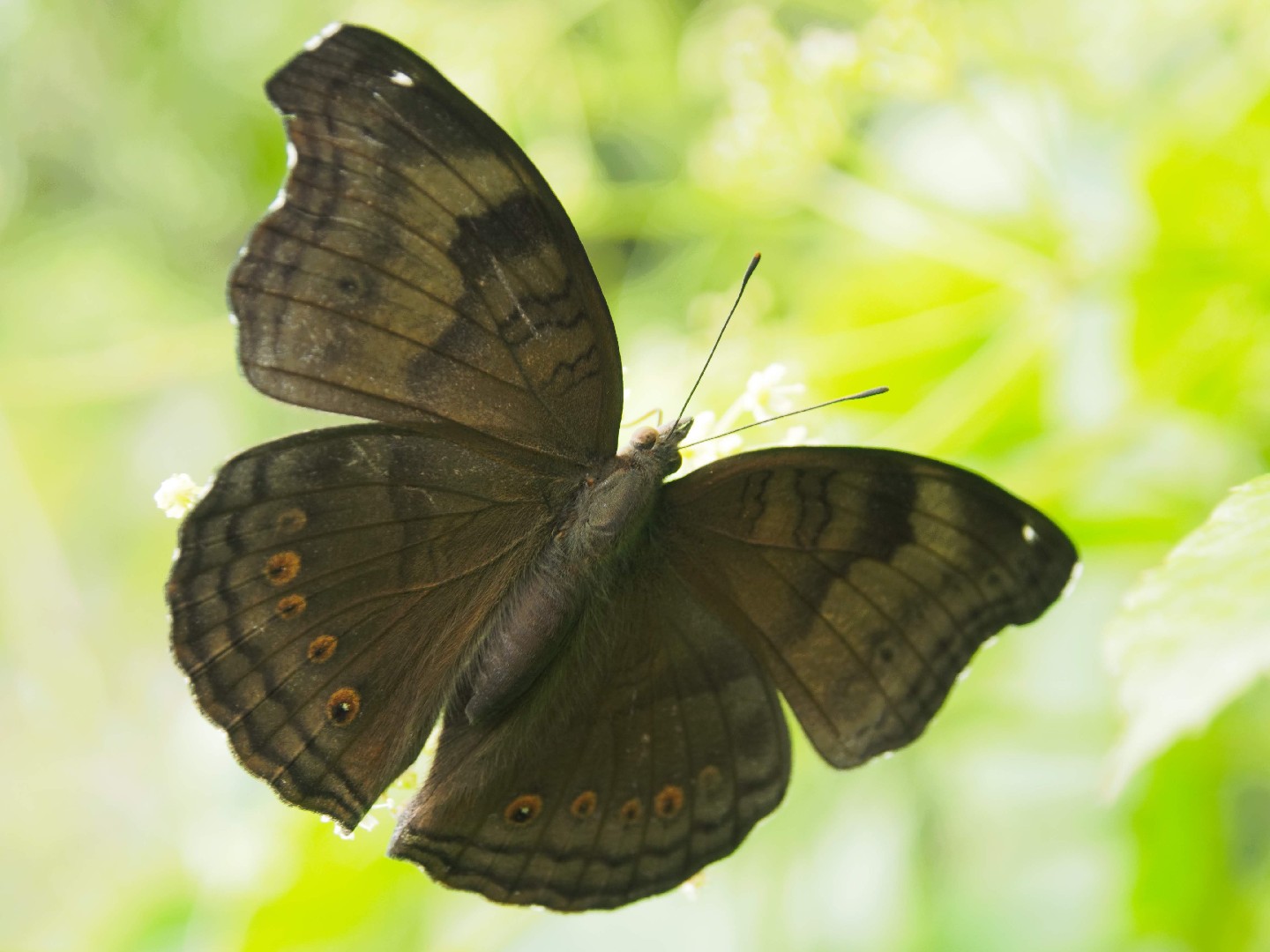
3. Common castor
Male in Wet-season form: Upperside brownish ochraceous. Forewings and hindwings crossed by slender, somewhat obscure, very sinuous or zigzag dark basal, two subbasal and two discal lines disposed in pairs, followed by a single, sometimes double, postdiscal and a single subterminal slender line. All these lines more or less interrupted anteriorly on the hindwing, which has a smooth unmarked uniform appearance from costa to subcostal vein and vein 5. On the forewing there is in addition a series of obscure spots between the postdiscal and subterminal markings, arid a small white subcostal spot before the apex.Underside much as in Ariadne ariadne, but the transverse chestnut bands broader, more diffuse.Sex-mark on the underside of the forewing as in A. ariadne no sex-mark on upperside of hindwing. Female in Wet-season form: Similar; but on the upperside the transverse lines broader, more diffuse, with a greater tendency to form bands; the postdiscal line always double, forming a band traversed by a series of dark ochraceous spots in the interspaces; these lines and bands continuous, not interrupted anteriorly on the hindwing as they are in the male. Underside: except for the sex-mark, as in the male.Upperside of male and female in dry-season form : ground colour much paler, the transverse lines more distinctly in pairs, forming bands, the ground colour between each pair more dusky brown. Underside similar to that in the wet-season form, but the ground colour paler, the bands more diffuse.Wingspan 5 - 6 cm .
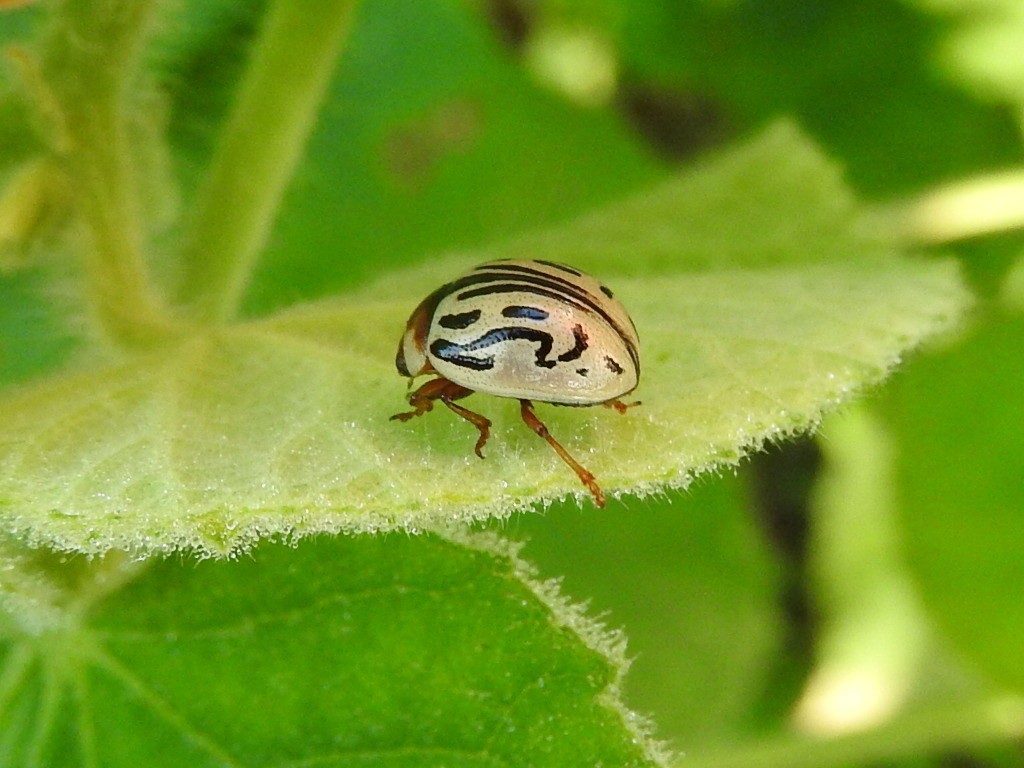
4. Mexican beetle
Z. bicolorata is a small lead beetle with a brown head, brown and yellow graduated pronotum and yellow elytra marked with characteristic elongated brown stripes. The pattern on the elytra is greatly variable - in a study of 478 beetles, 29 variations on this pattern were identified.
5. Zebra blue
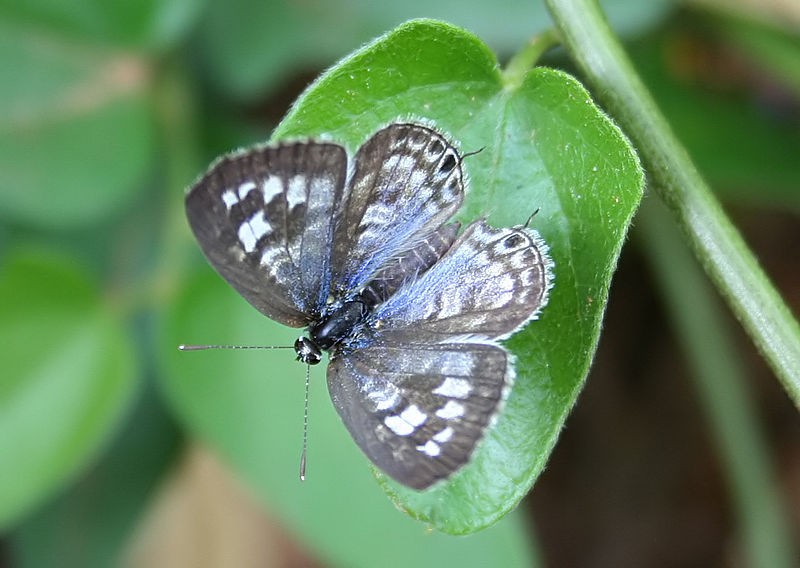
This form closely resembles, in both sexes, on the upperside of Tarucus theophrastus, but the character and disposition of the markings on the underside are completely different. Male upperside: dark violet with, in certain lights, a rich blue suffusion. Forewing: no discocellular black spot so conspicuous as in T. theophrastus; terminal margin with a narrow edging of fuscous black, widest at the apex, gradually decreasing to the tornus, followed by an inconspicuous anteciliary jet-black line. Hindwing: costal margin slightly but broadly shaded with fuscous, which is continued as a slender anteciliary black line to the tornus. Underside: white. Forewing: with the following brownish-black markings: an irregular edging along the costa to near the apex from which extends downwards a subbasal band, broadened across the cell and below it; an irregular band that extends along the discocellulars and below them to interspace 1 where it ends in a point; an upper discal curved band of more even width but dislocated below vein 4, the lower portion of it shifted inwards forms a large quadrate spot in interspace 3, below vein 3 the band is continued downwards by two small inconspicuous spots, beyond this is a very short acutely pointed comma-shaped mark; a very regular evenly curved complete transverse lunular line, a transverse series of subterminal spots and an anteciliary slender line. Close to the base of the wing extended obliquely upwards and outwards from the dorsum is a triangular mark, the edging of white colour left near the base forms above the apex of this mark an acute angle; between the band that crosses the middle of the cell and the transverse discocellular band is a more or less slender, irregular, similarly coloured line; and between the discocellular and upper discal bands another much shorter line that extends from the costa downwards but does not reach vein 4, this is slightly clavate anteriorly and posteriorly. Hindwing: mottled with brownish black that leaves only basal, subbasal, medial and discal transverse lines or bands of the ground colour; the medial and discal bands, which are highly irregular, enclose here and there small brownish markings, the bands themselves coalescing above a very irregularly shaped brown mark that is placed on the posterior half of the middle of the wing; terminal markings as on the forewing but the subterminal spots larger, the apical one especially so, the tornal two spots jet-black and each encircled by a glittering slender ring of metallic green scales. Cilia of both forewings and hindwings, the antennae, head, thorax and abdomen much as in T. theophrastus. Female. Upperside very closely resembles that of female T. theophrastus, but the extent of white on the forewing is greater so that there is a greater area of white to be seen between the brown markings superposed on it, these markings have the appearance of an irregularly formed V on a white background. Hindwing much as in T. theophrastus. Underside: similar to that of its own male but the brown bands less broken, more regular. Cilia, antennae, head, thorax and abdomen as in the male. It is found in the Ethiopian region, the north-western Himalayas to Kumaon, the plains of northern India; central and western India, Sri Lanka, Assam, Myanmar, Tenasserim in the low hot valleys of the north; extending to China and in the Malayan subregion to Java. The description given above is taken from males and females of wet-season broods. Specimens of the dry-season broods are paler on the upperside with, in the male only anteciliary black lines to the wings. On the underside the markings on the wings will, on careful examination, be found very similar but paler brown and all very much reduced in width so that a greater extent of the white ground colour is visible.
6. Secondary screwworm
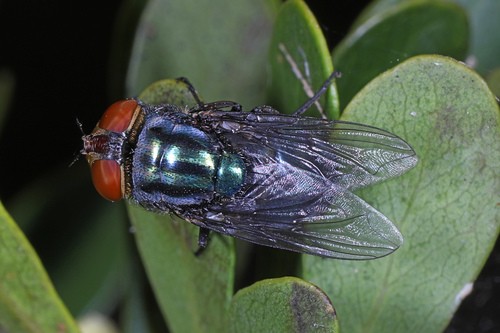
Cochliomyia macellaria is a fly species from the family of bluebottles (Calliphoridae). The scientific name of the species was first validly published in 1775 by Fabricius.
7. Cucumber Moth
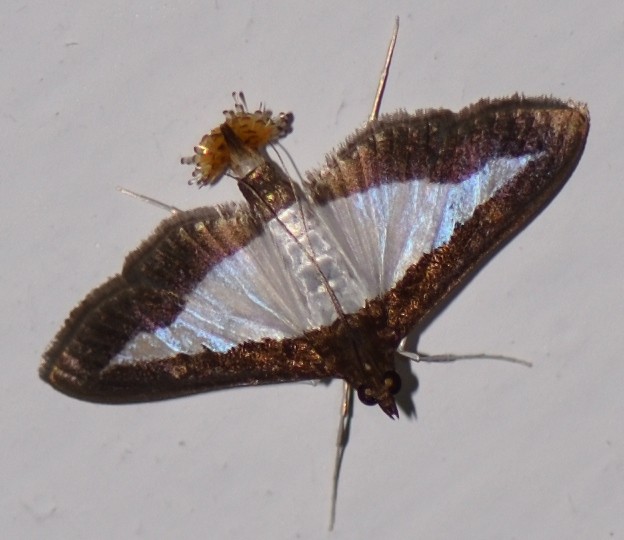
The wingspan is about 30 mm. Adults have translucent whitish wings with broad dark brown borders. The body is whitish below, and brown on top of head and thorax as well as the end of the abdomen. There is a tuft of light brown "hairs" on the tip of the abdomen, vestigial in the male but well developed in the female. It is formed by long scales which are carried in a pocket on each side of the 7th abdominal segment, from where they can be everted to form the tufts. Unfertilized females are often seen sitting around with the tuft fully spread, forming two flower-like clumps of scales, which move slowly to spread their pheromones. These have been identified as consisting mainly of (E,E)-10,12-hexadecadienal and (E)-11-hexadecenal. From its closest relatives, the cucumber moth is most reliably distinguished by microscopic examination of the genitals. In the male, the clasper's harpe is twice as long as it is wide, with the costa and sacculus running almost in parallel and being strongly sclerotized, and a rounded cucullus. From the center of the harpe, which is otherwise only weakly sclerotized, a thin spine extends. The uncus is covered in bristles and ends in a small tube; it is a bit longer than the tegumen which in turn is about as wide as it is long. The vinculum is almost quadratic, and the anellus forms a small triangular plate which is more strongly sclerotized. The aedeagus is almost straight, strongly sclerotized below, and has a flattened curved process at end. In the female genitals, the ostium is transverse and oval, and the antrum broadly sclerotized. The ductus seminalis insert from above, a bit before the forward edge of the antrum. The bursa copulatrix is long and slim, with the forward third particularly narrow; its wall is covered with many short spines, and the hind end almost seamlessly merges into a short and barely distinguishable ductus bursae.
8. Slate flash
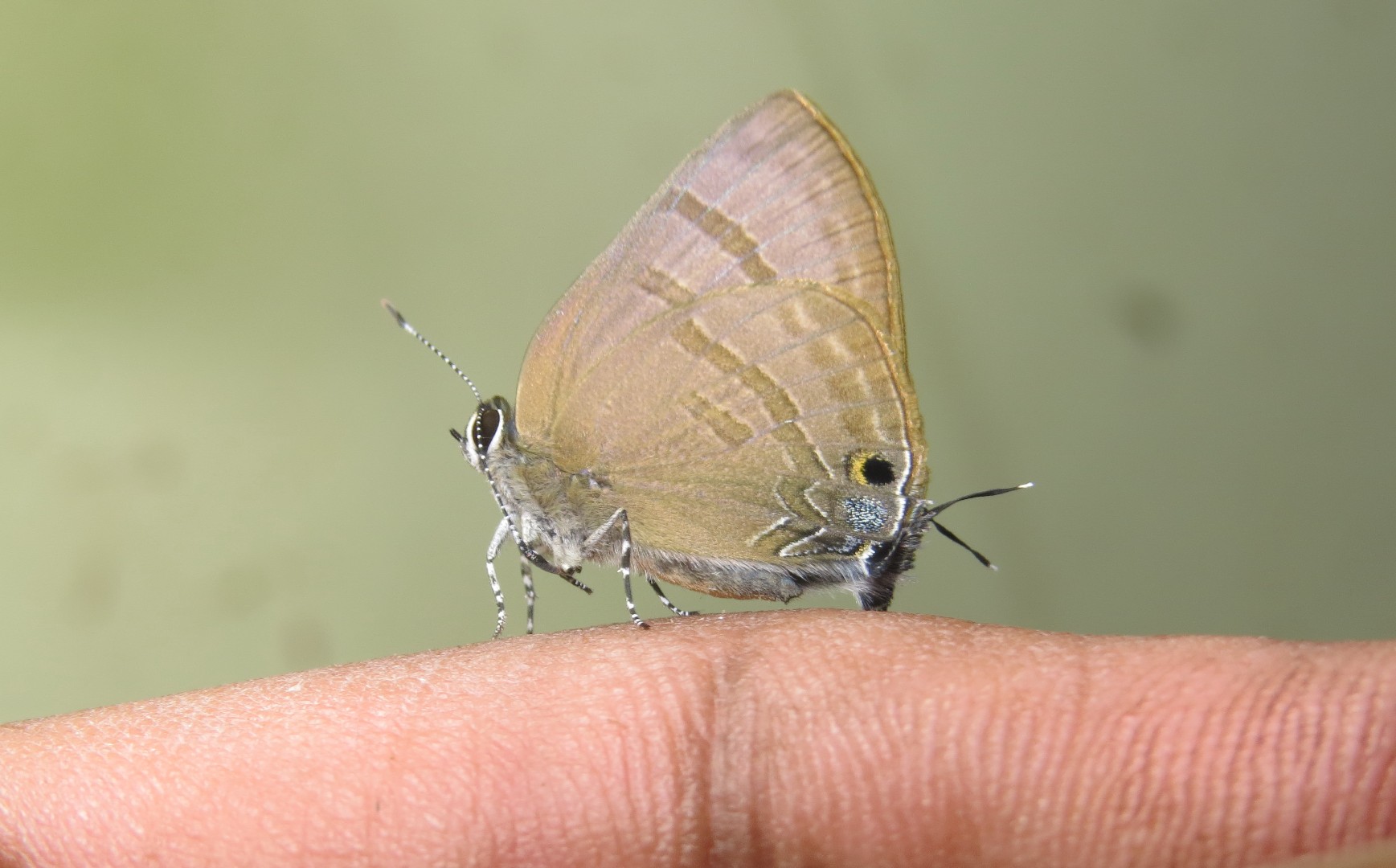
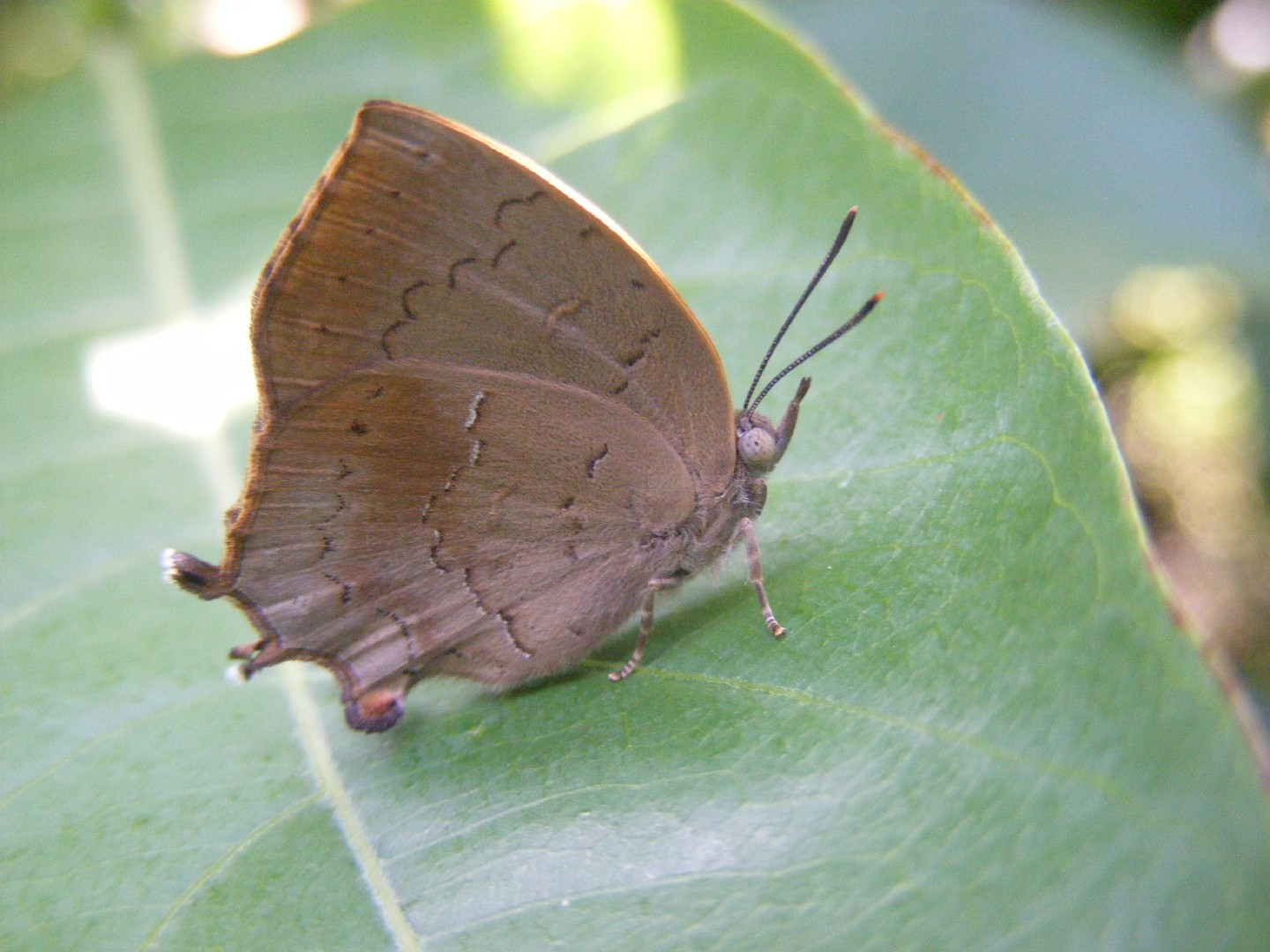
Rapala manea, slate flash, is a butterfly of the family Lycaenidae. It is found in most of the Indomalayan realm (excluding Taiwan). The wingspan is 24–26 mm. Adult males have dark brown wings with a hint of purple on the cell area of the wings. The underside is greyish brown with two irregular bands. Females are lighter and have androconial patches at the costal margin of the hindwing. The larvae of subspecies R. m. schistacea feed on the flowers of Rosaceae, Euphorbiaceae, Combretaceae and Leguminosae species, including Quisqualis indica and Acacia caesia. They are attended by ants. The larvae are dull rose red. Pupation takes place in a pinkish pupa, mottled with black. It is attached to the stem or a leaf of the host plant.
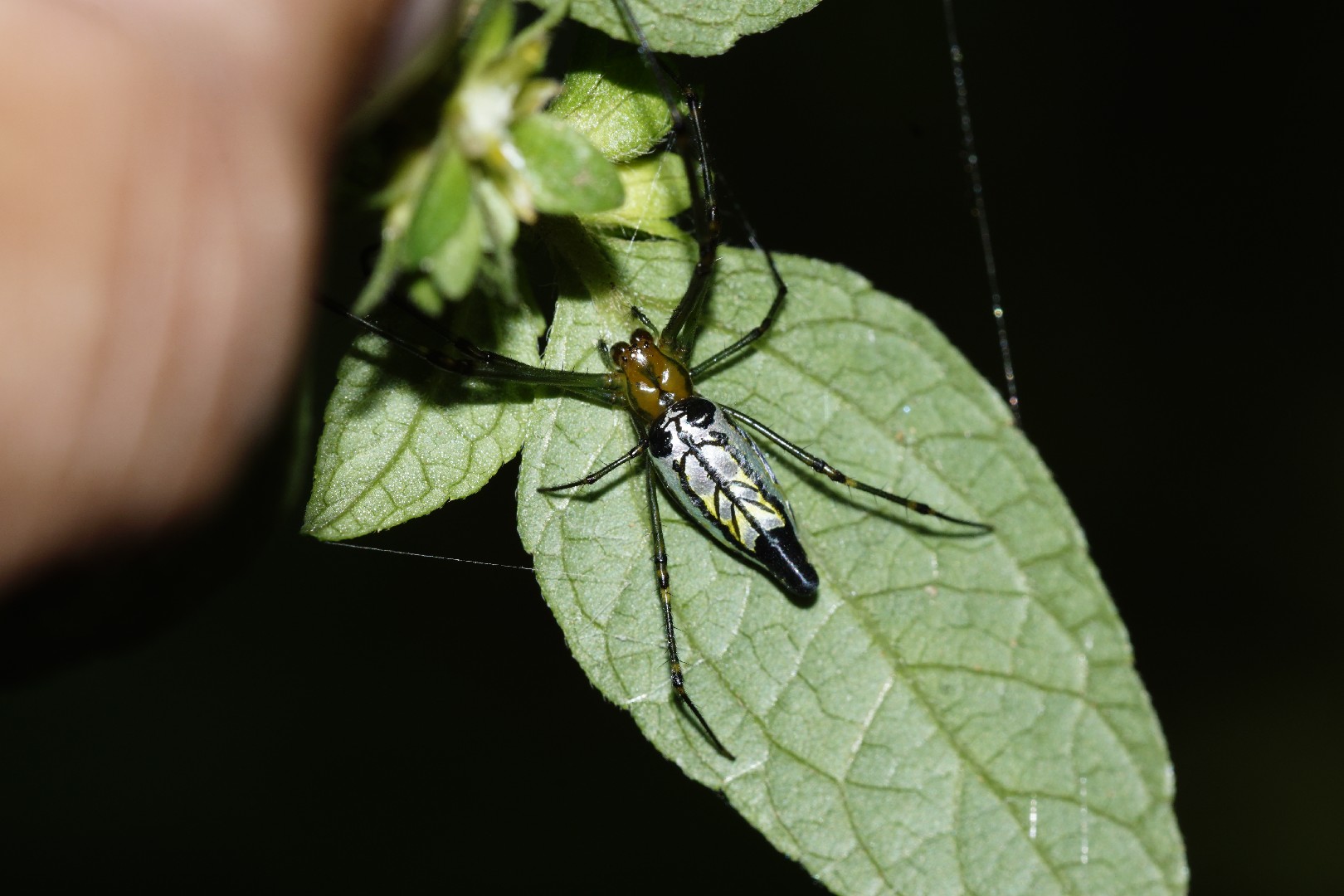
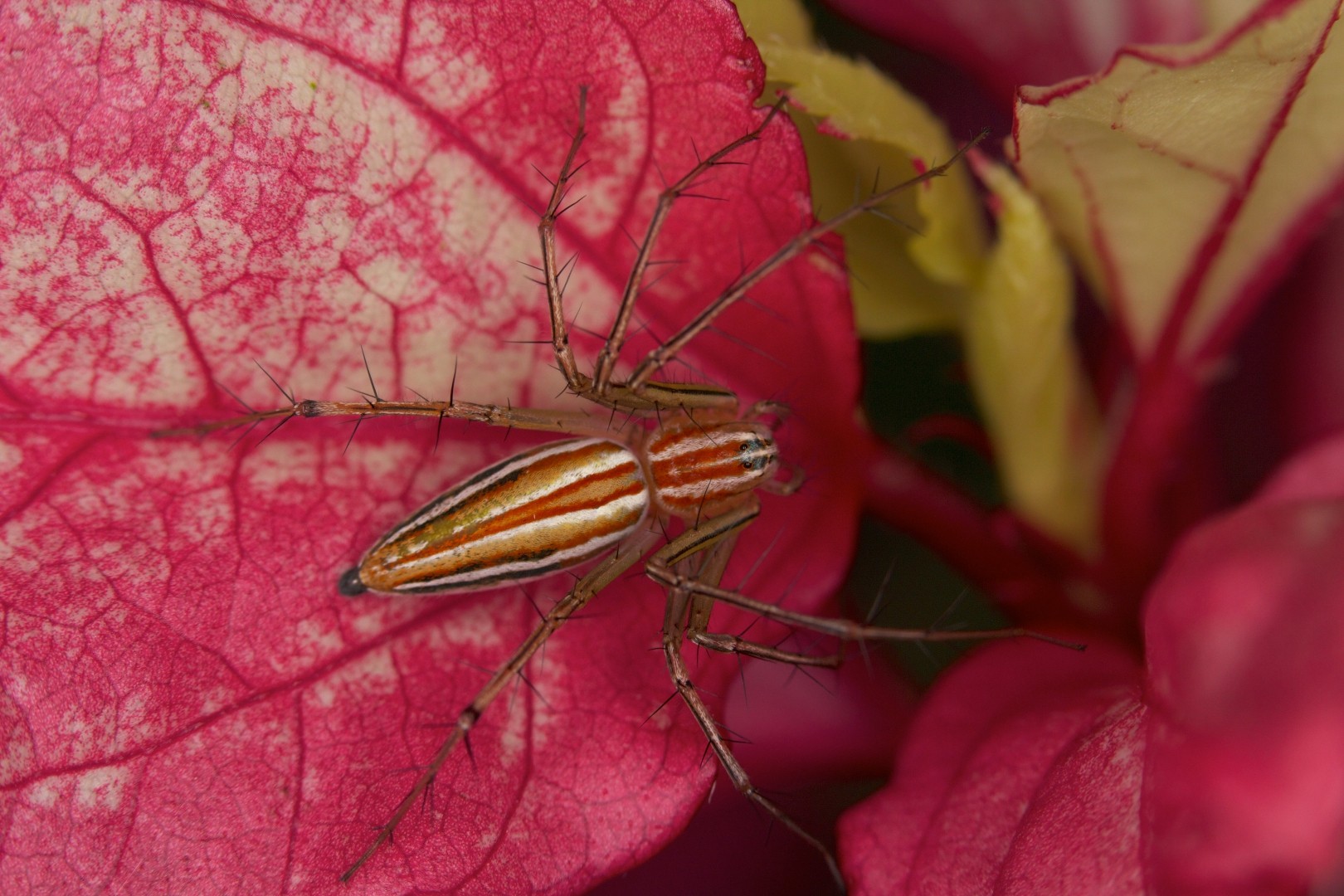
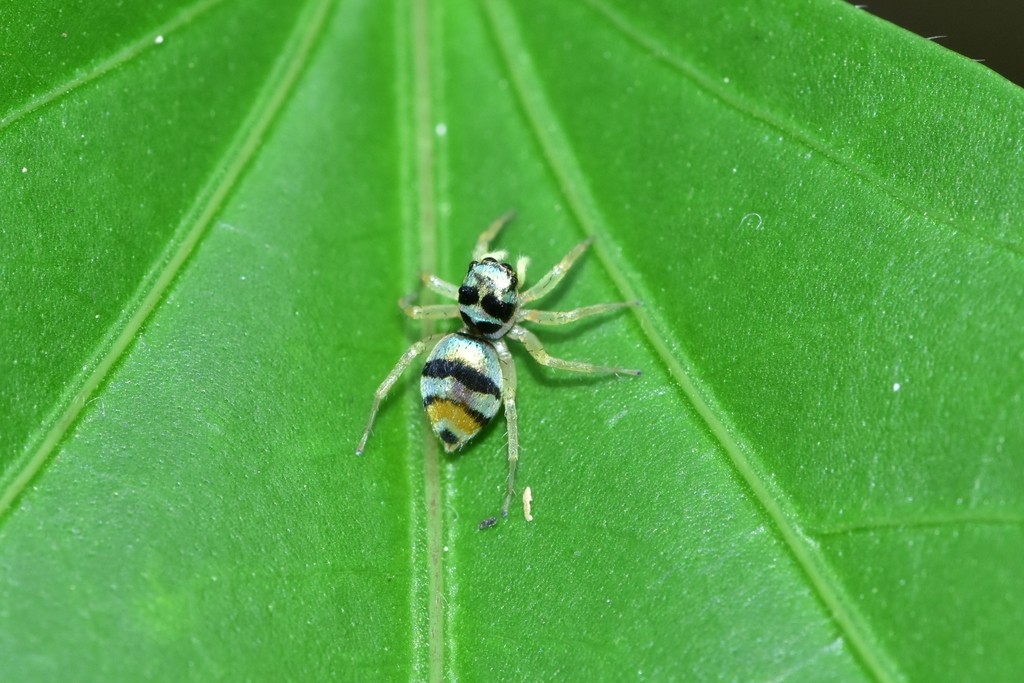
9. Decorative silver orb spider
Leucauge decorata, the decorative silver orb spider, is one of the long-jawed orb weaver spiders. A medium to large sized orb weaving spider, with a body length up to 12 mm long (female). Male to 6 mm. This species has a "point" to the end of the abdomen. Found in Africa, India, south east Asia, also to Australia.
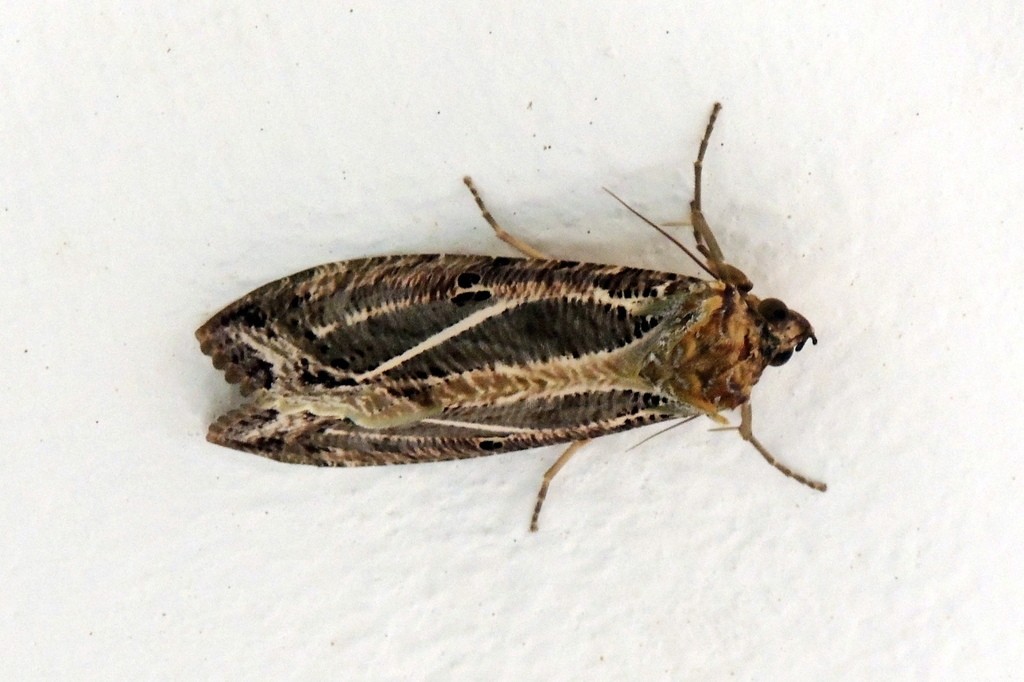
10. Fruit piercing moth
The wingspan is about 60–96 mm. Palpi with third joint long and spatulate at extremity. Forewings with crenulate cilia in both sexes. Male has greenish-grey head and thorax. Abdomen orange. Forewings greenish grey with very numerous faint striated reddish lines. There are three rufous spots which can be seen at end of cell. A dark oblique line from near apex to centre of inner margin. A silvery patch found on vein 1 and another below lower angle of cell. A marginal black band with crenulate inner edge. There is a series of white cilia spots. Ventral side is orange. Forewings with costa and apical area blotched with rufous. Oblique postmedial and sub-apical black bands can be seen. Hindwings with apical area blotched with rufous. A black spot found on costa and another beyond lower angle of cell. A marginal black band runs from vein 5 to anal angle. Female much more prominently striated with rufous coloured forewings. The silvery patches found below and beyond cell very large and conjoined crossed by white streaks above vein 2 and beyond cell.


More







