




Top 18 Most Common Insects in Jaisalmer
Insects, nature's smallest warriors, have carved their niche into every corner of Jaisalmer, standing testament to the diversity afforded by varied geographical landscapes. These creatures, typically seen as pests or allies, play significant roles within Jaisalmer's ecosystem, their presence signaling the health of our environment. Prepare to discover the 18 most popular insects that call Jaisalmer their home.

Most Common Insects
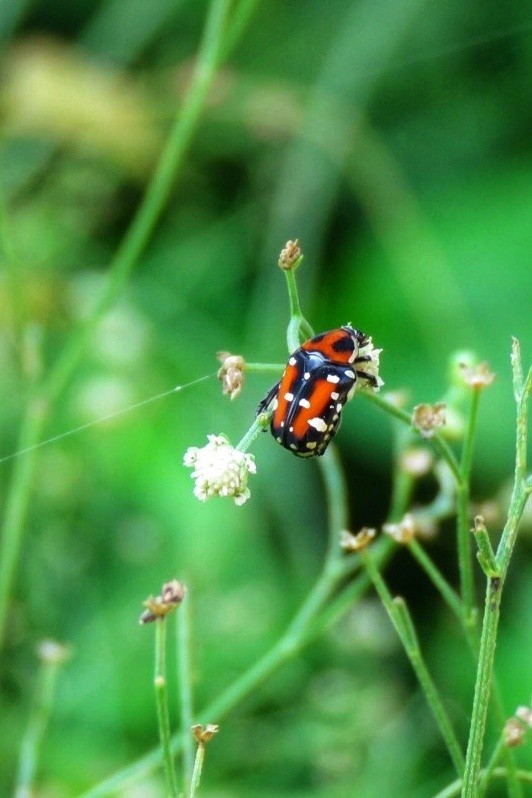
1. Flower chafer beetle

2. Peacock pansy
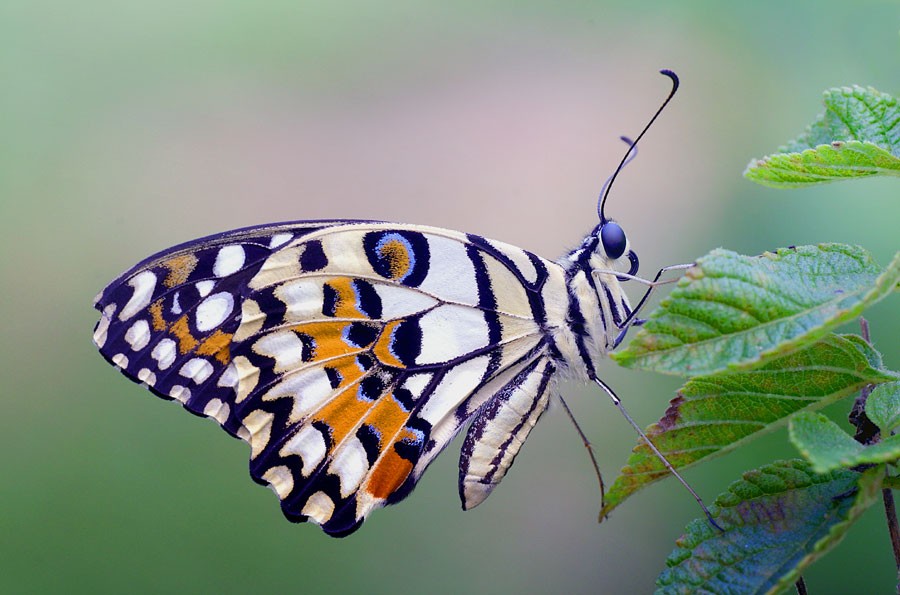
The adult butterfly has a wingspan of 5 - 6 cm,and exhibits seasonal polyphenism. "Upperside rich orange-yellow. Fore wing with a pale dusky and a much darker short transverse bar with lateral jet-black marginal lines across cell, another somewhat similar bar defining the discocellulars; costal margin, an inner and an outer subterminal line, and a terminal line dusky black; a large minutely white-centred ocellus with an inner slender and outer black ring on disc in interspace 2; two similar but smaller geminate subapical ocelli with an obscure pale spot above them and a short oblique bar connecting them to the black on the costa. Hind wing: a small minutely white-centred and very slenderly black-ringed discal ocellus in interspace 2, with a very much larger pale yellow and black-ringed ocellus above it spreading over interspaces 4, 5 and 6, the centre of this ocellus inwardly brownish orange, outwardly bluish black, with two minute white spots in vertical order between the two colours; finally postdiscal subterminal and terminal black sinuous lines. "Underside ochraceous brown, very variable. In most specimens the cell of the fore wing is crossed by three dark sinuous bands, the outermost along the discocellulars; these are very faint in some; both fore and hind wings crossed by a basal and a discal pale sinuous line, the latter margined outwardly by a dark shade, which is traversed by an obscure somewhat obsolescent row of dark spots, and outwardly bounded by a subterminal sinuous line, the dark shade in many cases spreading on the fore wing to the terminal edge of the wing; on the hind wing the subterminal line meets the discal in an acute angle at the tornus. Antennae dark brown; head, thorax and abdomen more or less orange-brown; paler beneath." "Upperside similar, the black markings deeper in colour and heavier, the subterminal and terminal lines more clearly defined. "Underside pale ochraceous. Fore wing: cell crossed by live short sinuous dark brown lines, a similar line on the discocellulars and another beyond it, both bent inwards at an angle and continued to the dorsum, the space between them forming a discal broad fascia, which pales to whitish posteriorly; the postdiscal ocelli, subterminal and terminal lines as on the upperside but paler. Hind wing: a slender transverse subbasal dark line, a discal whitish straight fascia in continuation of the one on the fore wing; the postdiscal ocelli, the subterminal and terminal lines much as on the upperside but paler; the anterior ocellus with a double iris and centre. Antennae dark brown; head, thorax and abdomen slightly darker than in the dry-season form. 
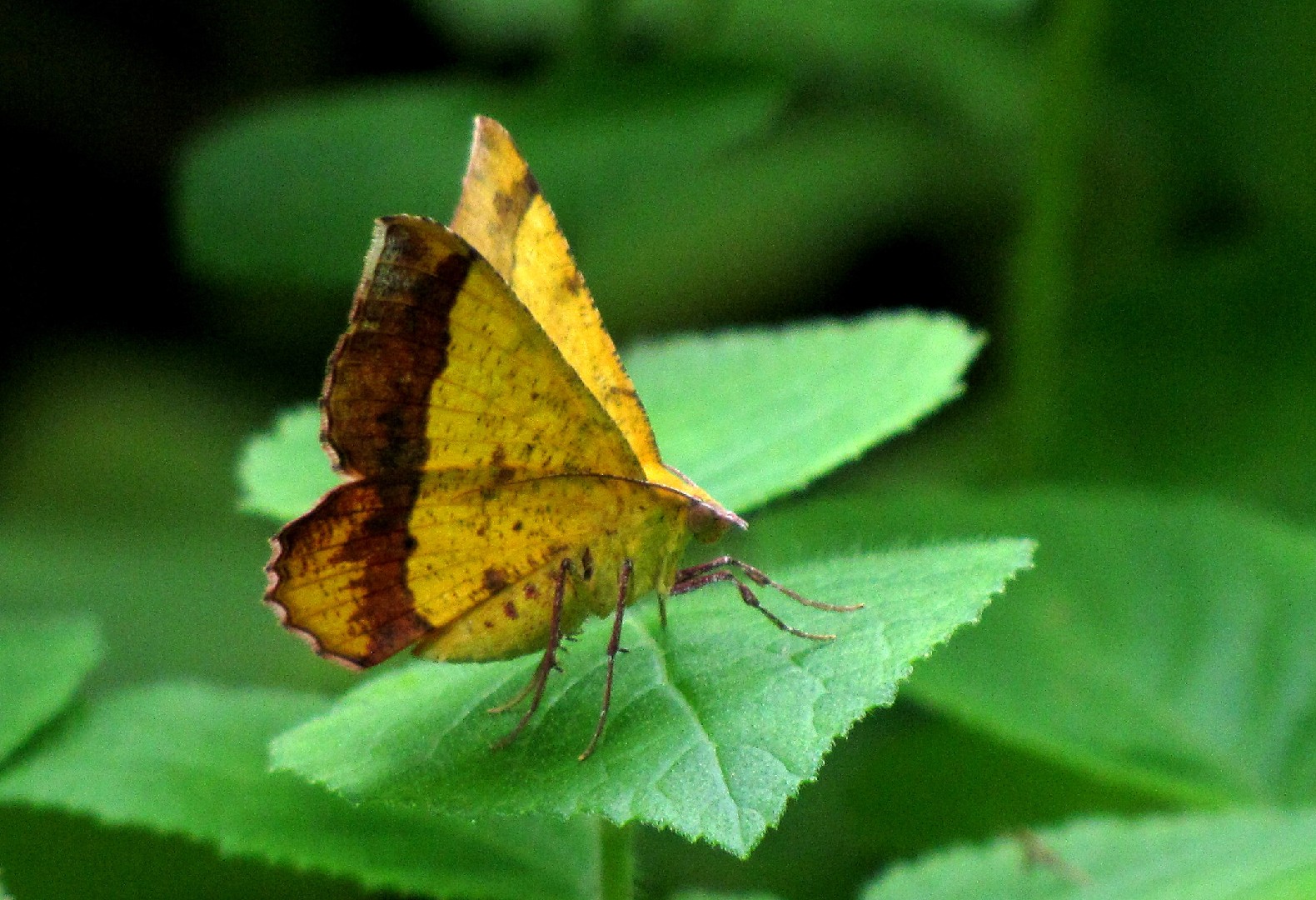
3. Hyperythra lutea
The wingspan of the male is 3.5 cm. Males with costa of hindwings highly arched. A very long tuft of hair found from base of cell lying in a fold above vein 6. The cell very short and open. Male yellowish, suffused with pink and striated with fuscous. Some white found on palpi and shaft of antennae. Forewings with indistinct antemedial line angled below costa. Medial and postmedial ill-defined, slightly curved pinkish bands. Hindwings with similar narrow antemedial and broad postmedial bands, the latter with one or two black marks on it below costa. Underside bright yellowish, with area beyond the postmedial line more or less completely colored pink. Forewings with a whitish patch below apex. The pink suffusion of upper and underside varies greatly in extent. The wingspan of the female is 4 - 4.5 cm. Female much brighter yellow with three lines to forewing and two to hindwing replacing the bands and usually prominent. Head and body of larva are finely granulate. Body cylindrical, and pale greyish with black rims.
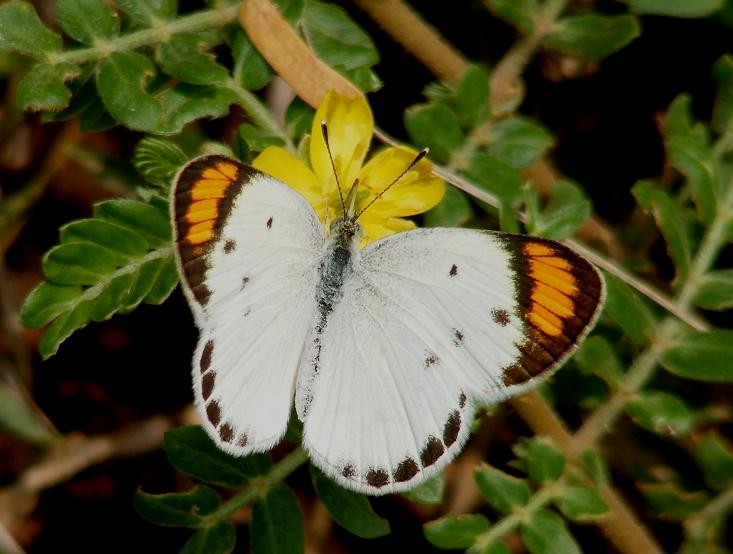
4. Little orange tip
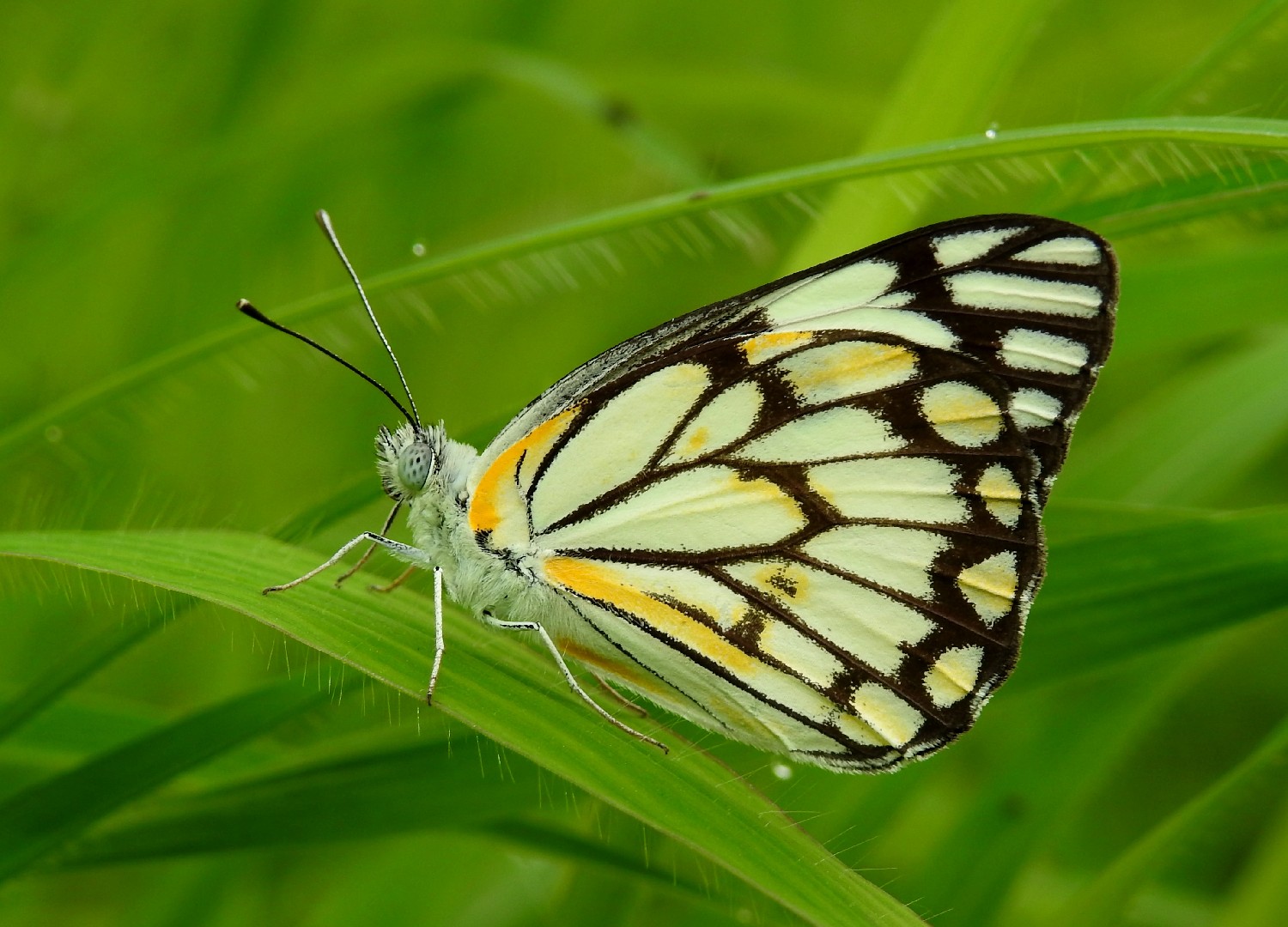
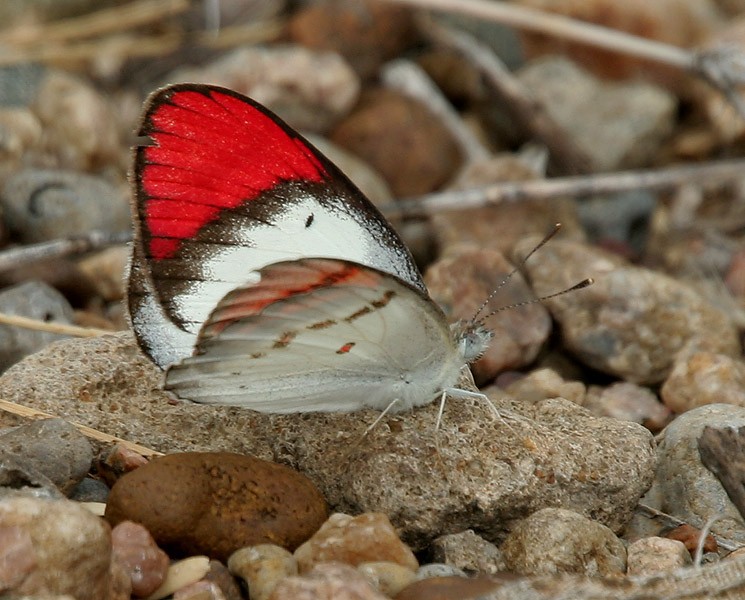
The ground colour on the upperside of the males is white, sparsely irrorated (speckled) at base of forewings and hindwings with black scales. The forewing has a small black spot on the discocellulars; apex broadly black, with an enclosed oval, curved, rich orange patch placed obliquely and traversed by the veins, which there are black; inner edge of black area diffuse. Hindwing is uniform, except for a preapical short diffuse black streak from the costa, sometimes absent, and a series of terminal black spots that in specimens from moist localities are very large. Underside is white with the cell and apex of forewing suffused with sulphur yellow, the orange patch of the upperside shows through by transparency, its inner edge margined anteriorly by a very obscure oblique fuscous band. Hindwing has the preapical short transverse black streak on the upperside obscurely indicated. The female is very similar to the male but can be distinguished as follows: Upperside of the forewing has a narrower orange patch enclosed within the black apical area; a small black spot in middle of interspace 1 and another in interspace 3. Hindwing has the terminal spots slightly larger. On the underside the apex of forewing and whole surface of hindwing suffused lightly, or in specimens from very dry localities heavily, with ochraceous. Forewing has spots in interspaces 1 and 3 as on the upperside. Hindwing: a curved, almost complete, discal series of fuscous spots; otherwise as in the male. In both sexes the antennae vary from white to pale brownish; head, thorax and abdomen black, the head and thorax with short greyish-brown hairs; beneath: the palpi, thorax and abdomen white.
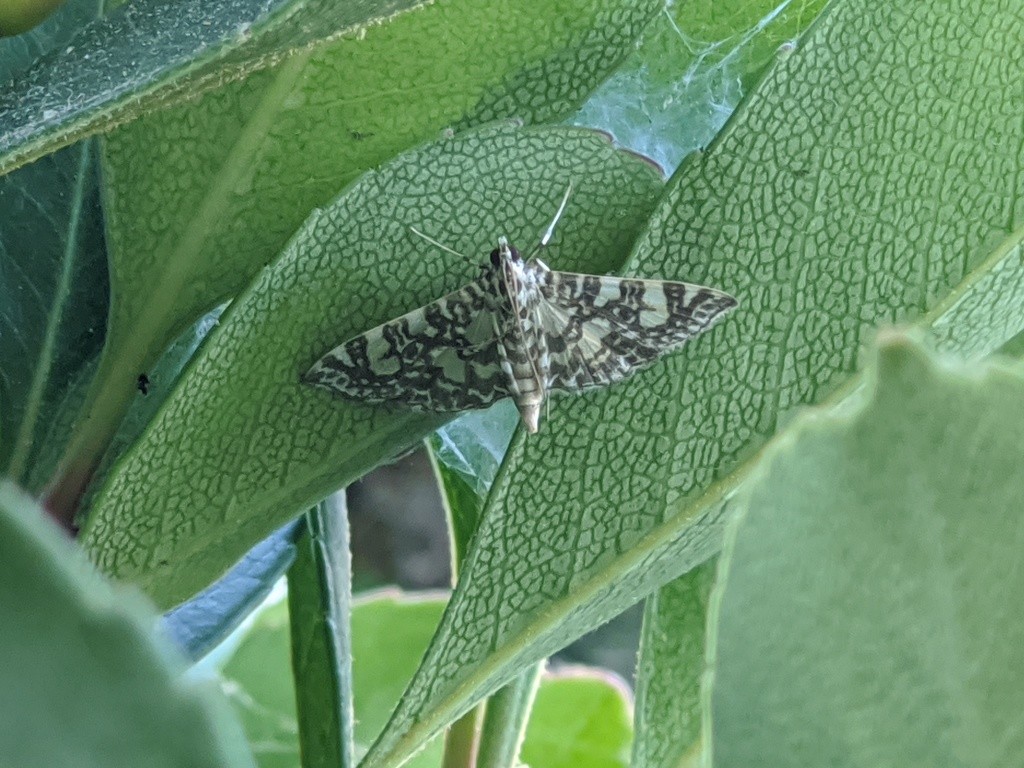
5. Glyphodes onychinalis
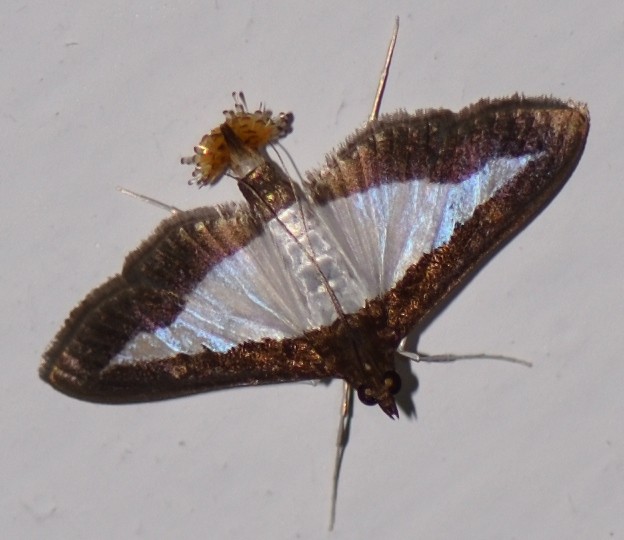
Glyphodes onychinalis is a moth of the family Crambidae. It is native to the Afro-Asian Region, including India, Sri Lanka, Hong Kong, Thailand, Indonesia, Japan, Australia (the Northern Territory and Queensland) and New Zealand, but has been recorded in California since 2000. The wingspan is about 15 mm. Adults have a striking brown and white pattern. The larvae have been recorded feeding on jasmine, Nerium oleander, Gomphocarpus fruticosus and probably also feed on other plants.
6. Plain tiger butterfly
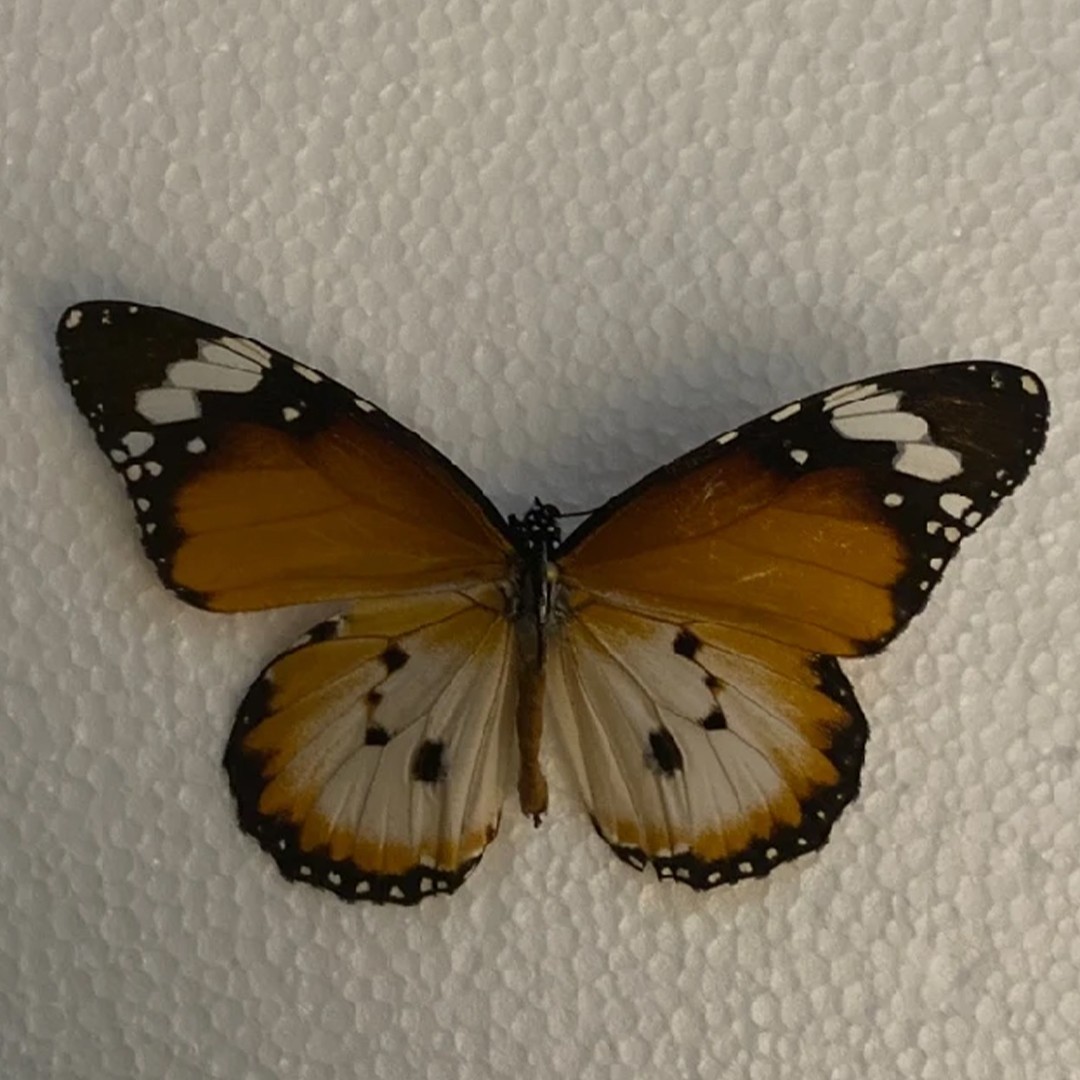
D. chrysippus is a medium-sized butterfly with a wingspan of about 7–8 cm (2.8–3.1 in). The body is black with many white spots. The wings are orange, the upperside brighter and richer than the underside. The apical half of the forewing is black with a white band. The hindwing has three black spots in the center. The wings are bordered in black and outlined with semicircular white spots. This species exhibits slight sexual dimorphism, as the Male has large scent glands on his hindwings, which the female lacks. They appear as a large black spot with a white centre if viewed from the underside D. chrysippus is a polymorphic species, so the exact coloring and patterning vary within and between populations. It is similar in appearance to the Indian fritillary (Argynnis hyperbius), which may coexist with it.
7. Eudocima homaena
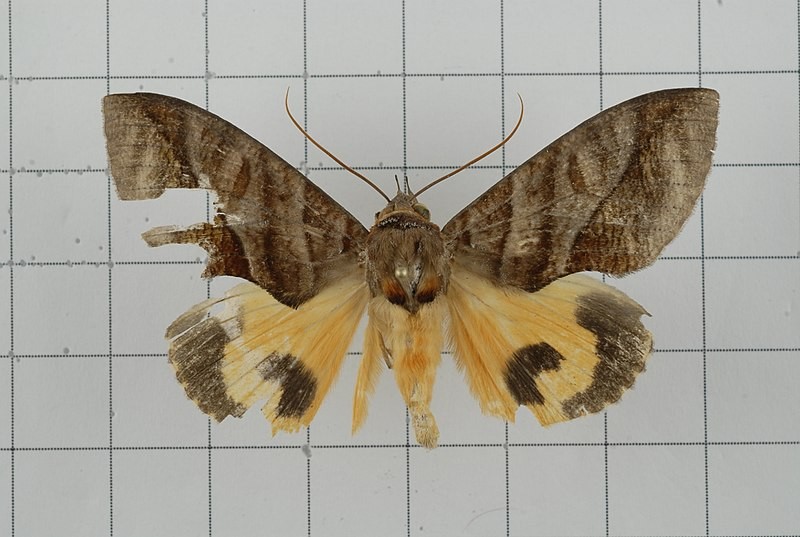
Its wingspan is about 80 mm. Palpi with third joint long and spatulate at extremity. Forewings with apex not produced. Outer margin rounded. Forewings with non-crenulate cilia. Male has fulvous brown head and thorax. The collar, metathoracic tufts and tibia with an orange tinge. Head and collar with a purple bloom. Abdomen orange. Forewings olive green, suffused with purplish red-brown and striated with rufous. Dark sub-basal and antemedial lines and slightly curved postmedial line present. There are traces of some waved medial lines. An indistinct reniform stigma and dentate sub-marginal line can be seen. Hindwings orange, with large black lunule beyond lower angle of cell. A submarginal band with waved edges runs from costa to vein 2. Ventral side of forewings with orange postmedial band. Female has much darker forewings, with deep purple and chocolate tones. A broad verditer-green fascia found below the cell, sending bars to inner margin near base and outer angle, and conjoined to the green reniform spot. Larva purplish brown with many blue specks and large yellow patch on 3rd, 4th and 5th somites. Fourth and fifth somites form ocelli with yellow iris and azure-blue black edged pupil. Somites 8 and 9 with irregular yellow patches. A dorsal tubercle found on 11th somite. Pupa orange colored, roughened and burnished. The larvae feed on Achyranthes, Cocculus, Cyclea peltata, Menispermum and Tiliacora species. Gallery
8. Keyhole glider
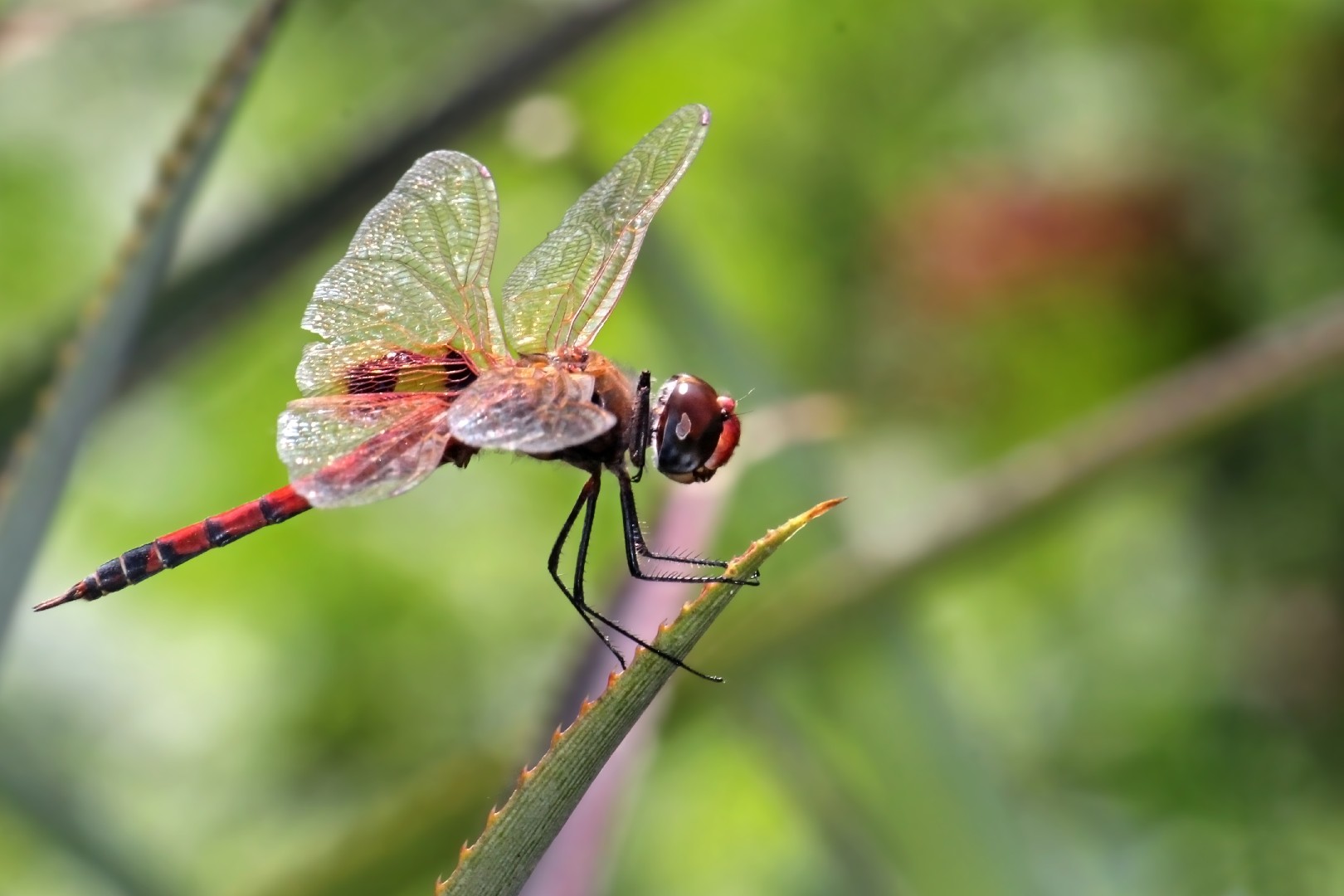
The species is on the IUCN Red List as not endangered, year of assessment 2007.
9. Kirby's dropwing
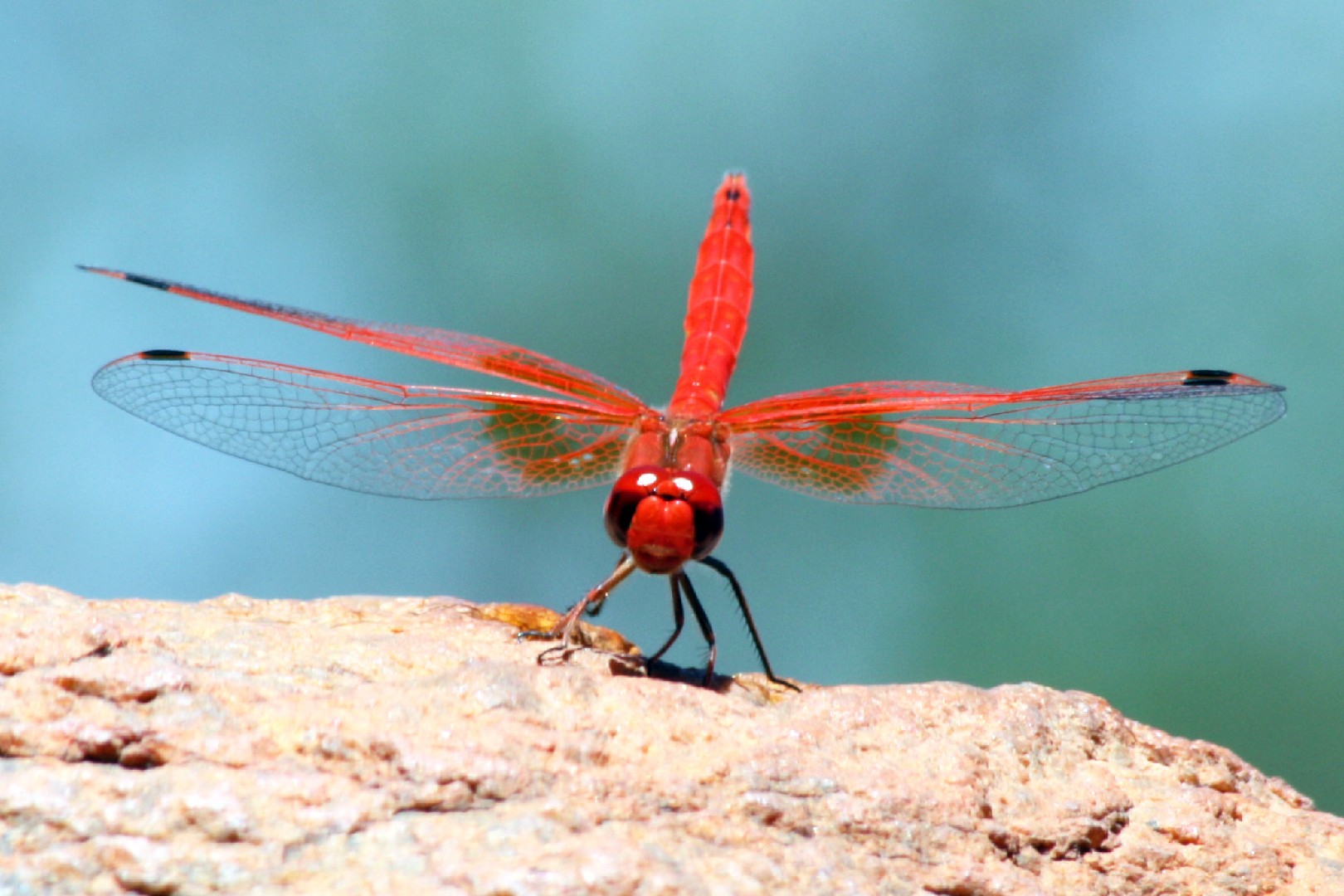
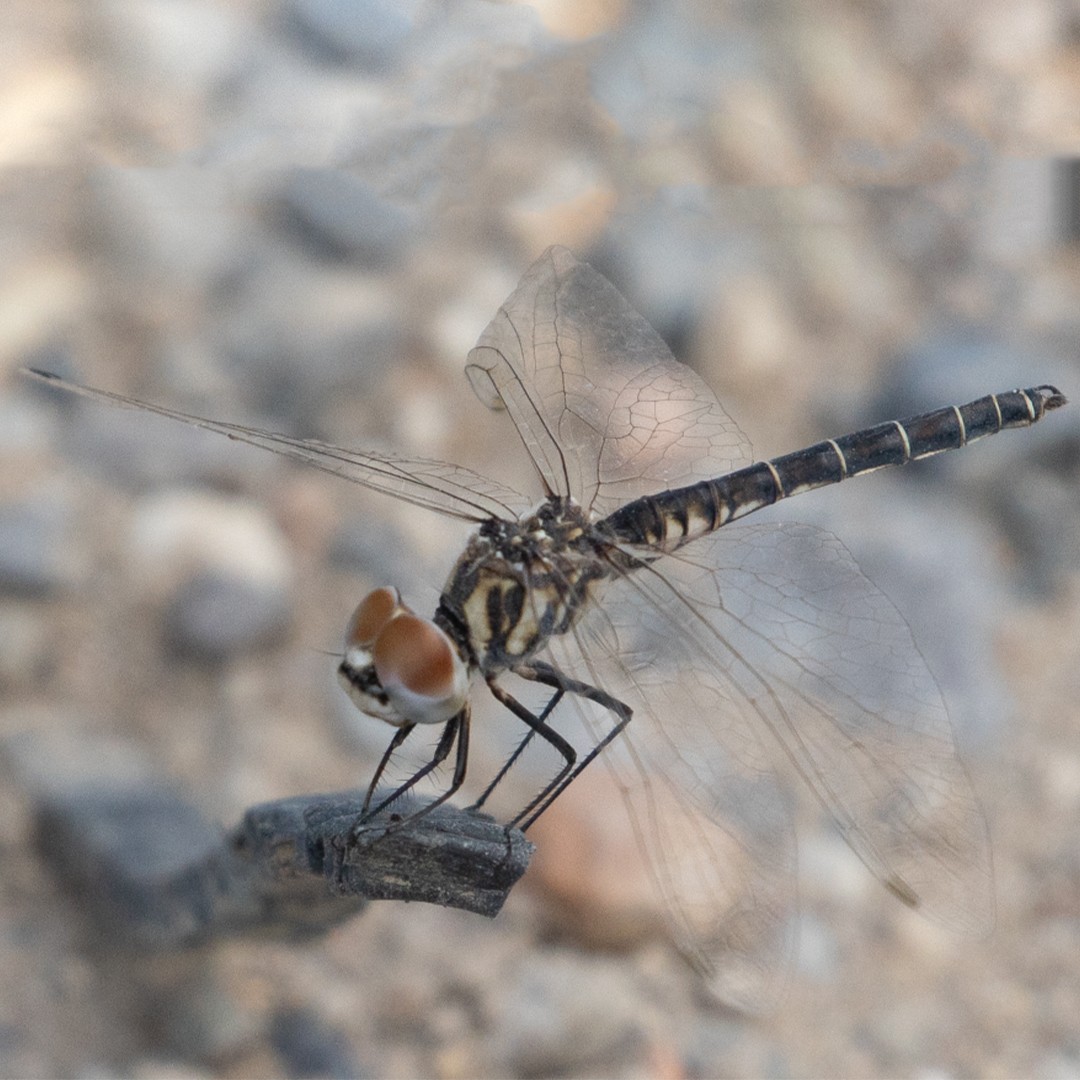
The spotted sun pointer (Trithemis kirbyi) is a dragonfly species from the family of the dragonflies (Libellulidae). Two subspecies are described. The nominate subspecies occurs in India and Sri Lanka, while the insufficiently defined taxon Trithemis kirbyi ardens occurs in the rest of the distribution area, which mainly includes Africa.

10. Silver-striped hawk-moth
The forewing is typically 1.1–1.4 inches in long. The body and forewing of the adult moth are green and ochre. They have silvery white dots and streaks, with a silvery band running obliquely on the forewing. The hindwing is red near its lower angle (tornus) to pinkish over other parts of the wing. It is crossed by a black bar and black veins.
More