




Top 20 Most Common Insects in Bichkunda
Welcome to a world teeming with life in ways we oftentimes overlook! Insects, nature's most numerous beings, inhabit every conceivable nook of Bichkunda - from arid desert to lush vegetation. Varying geographical characteristics begot an ecosystem of unimaginable insect diversity. Among them are admirable allies, crucial to our food production and pests that cause large-scale destruction. Join us as we explore the 'Top 20 Most Common Insects' in Bichkunda and celebrate the symbiotic relationship in this wild dance of survival.

Most Common Insects
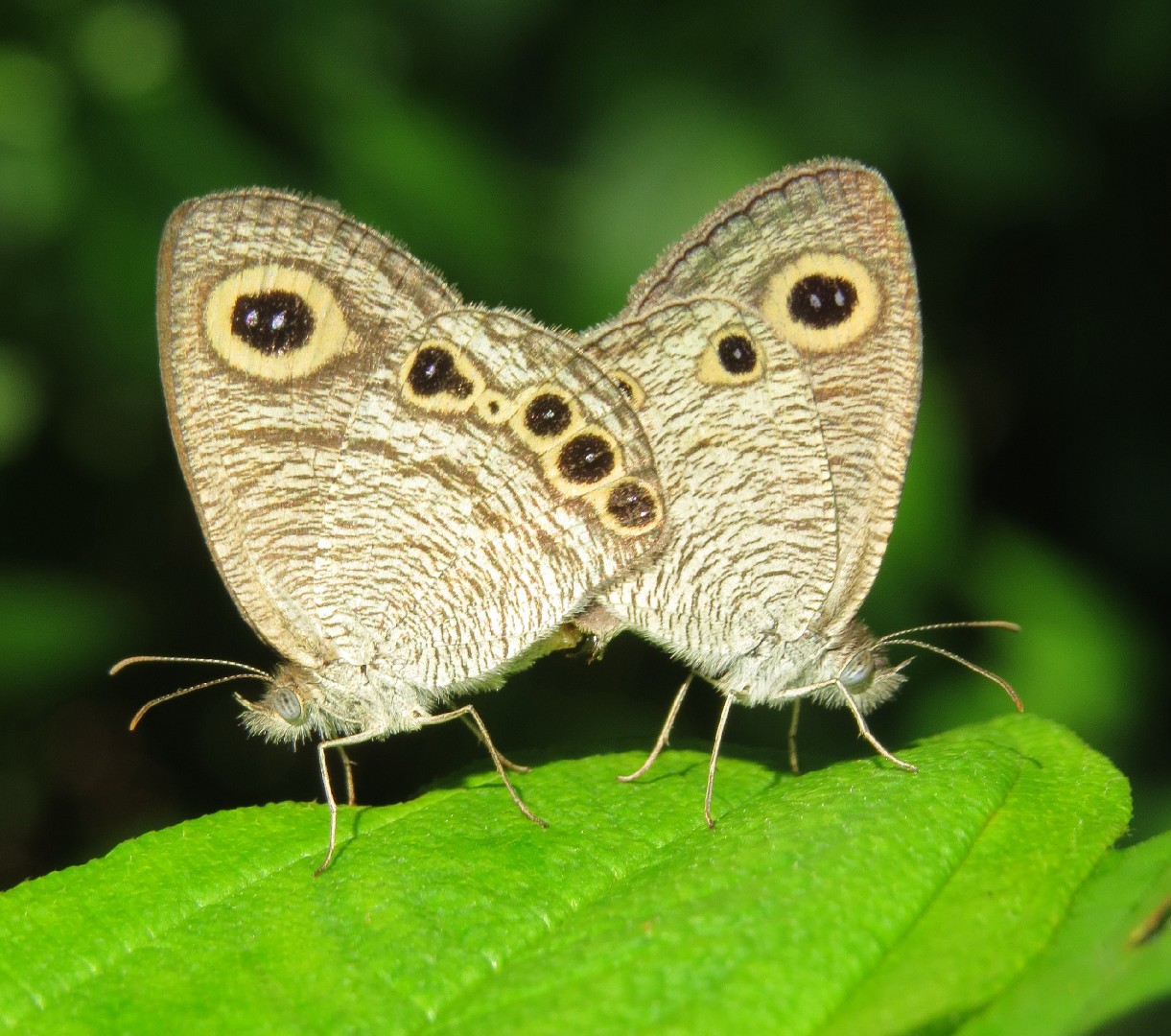
1. Common four-ring
Wet-season form: Upperside greyish brown. Forewing with the usual comparatively large, bi-pupilled, yellow-ringed, black preapical ocellus. Hindwing usually with two, sometimes with three, very rarely without any, smaller similar uni-pupilled postdiscal ocelli. Underside greyish white, not very densely covered with transverse short brown striae. Forewing with the preapical ocellus as on the upperside, obscure discal and subterminal dull brown transverse fasciae and a narrow brown ring round the ocellus diffusely produced posteriorly. Hindwing with one apical and typically three postdiscal posterior ocelli placed in a curve; traces of transverse brown discal and subterminal fasciae in most specimens. Antenna, head, thorax and abdomen greyish brown, the abdomen paler beneath. Male without secondary sex-mark. Dry-season form: Similar, somewhat paler on both upper and under sides; the discal and subterminal transverse fasciae more pronounced; the ocelli on the underside of the hindwing minute or absent. Adults have a wingspan of 4 - 4.5 cm. 
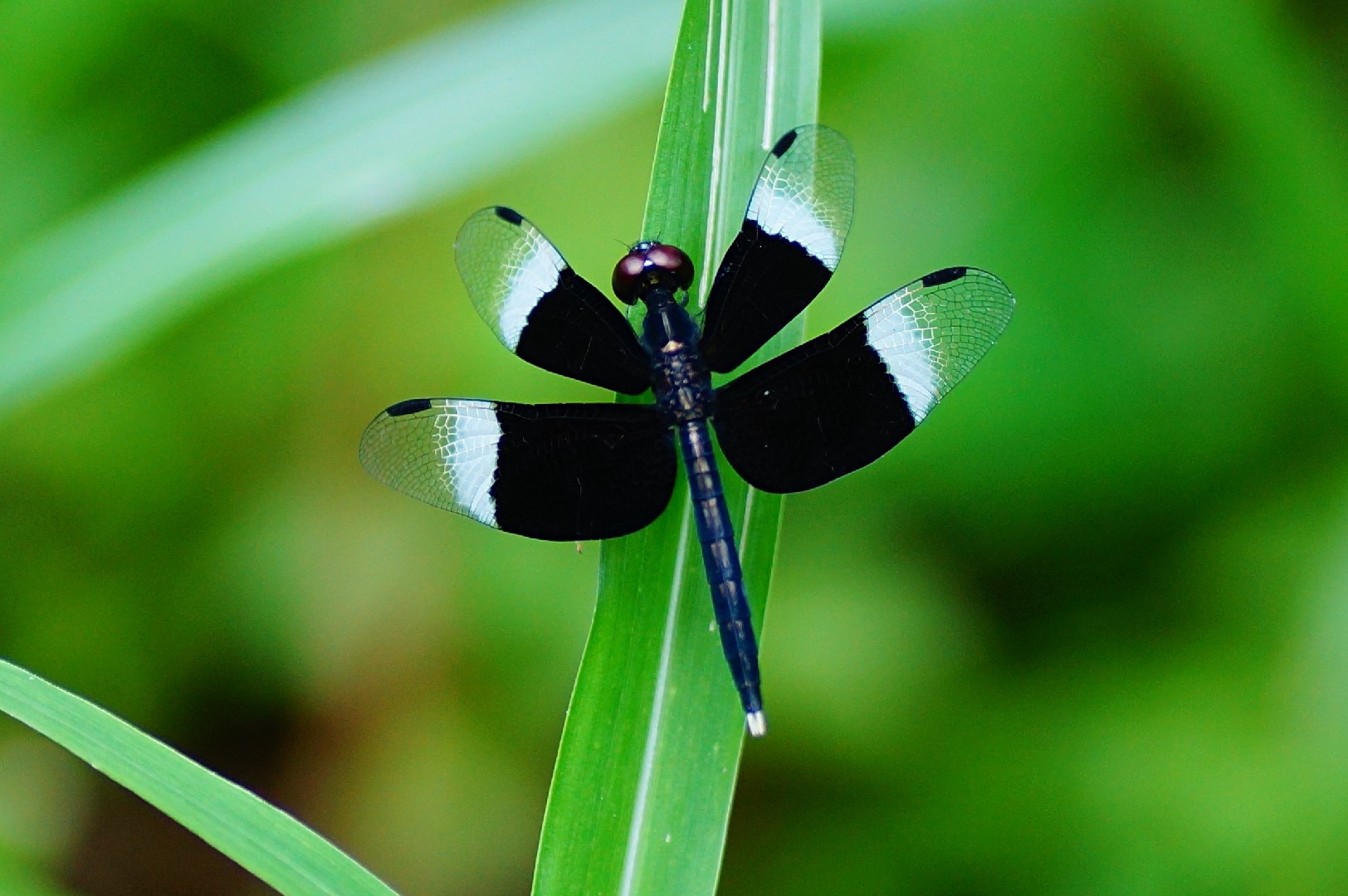
2. Pied paddy skimmer
The species is on the IUCN Red List as not endangered, year of assessment 2007.
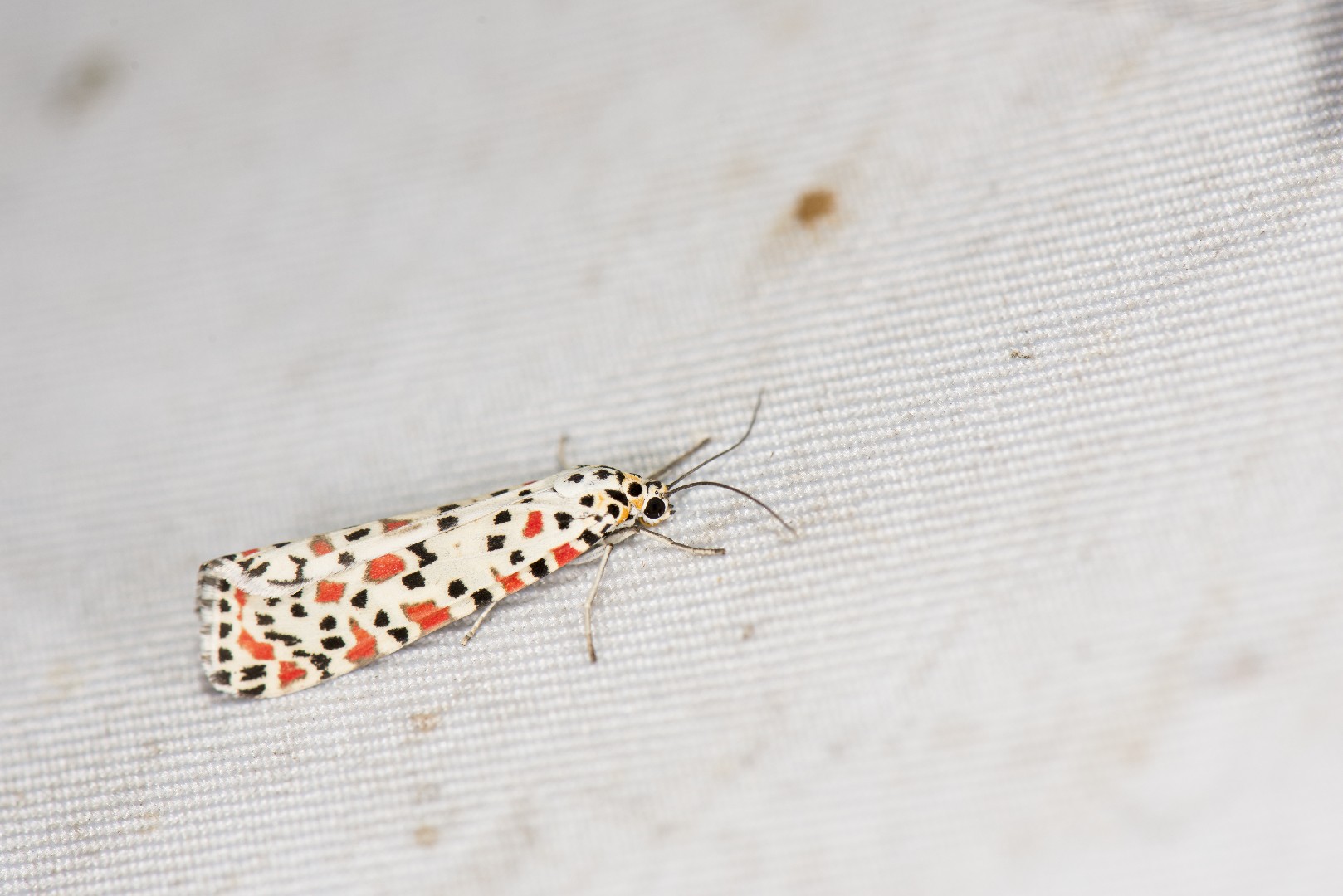
3. Rattlebox salt-and-pepper moth
Utetheisa lotrix, the salt-and-pepper moth or crotalaria moth, is a moth of the family Erebidae. The species was first described by Pieter Cramer in 1777. It is found in most of the Old World tropics. The wingspan is about 30 mm. The larvae feed on Crotalaria species.
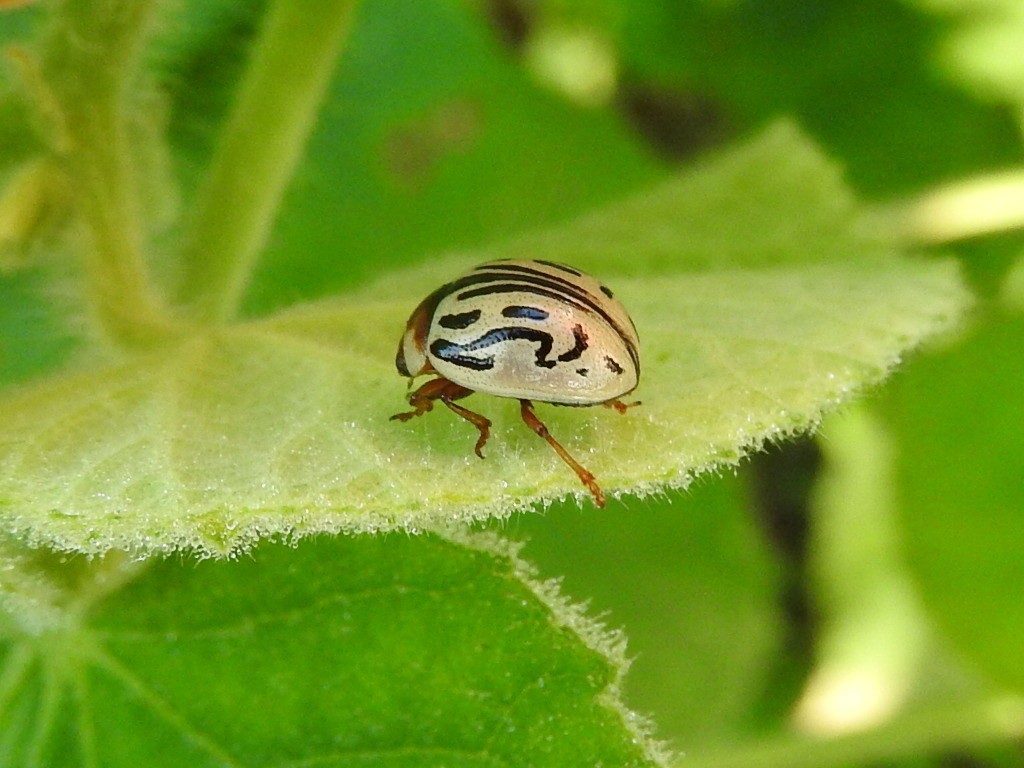
4. Mexican beetle
Z. bicolorata is a small lead beetle with a brown head, brown and yellow graduated pronotum and yellow elytra marked with characteristic elongated brown stripes. The pattern on the elytra is greatly variable - in a study of 478 beetles, 29 variations on this pattern were identified.
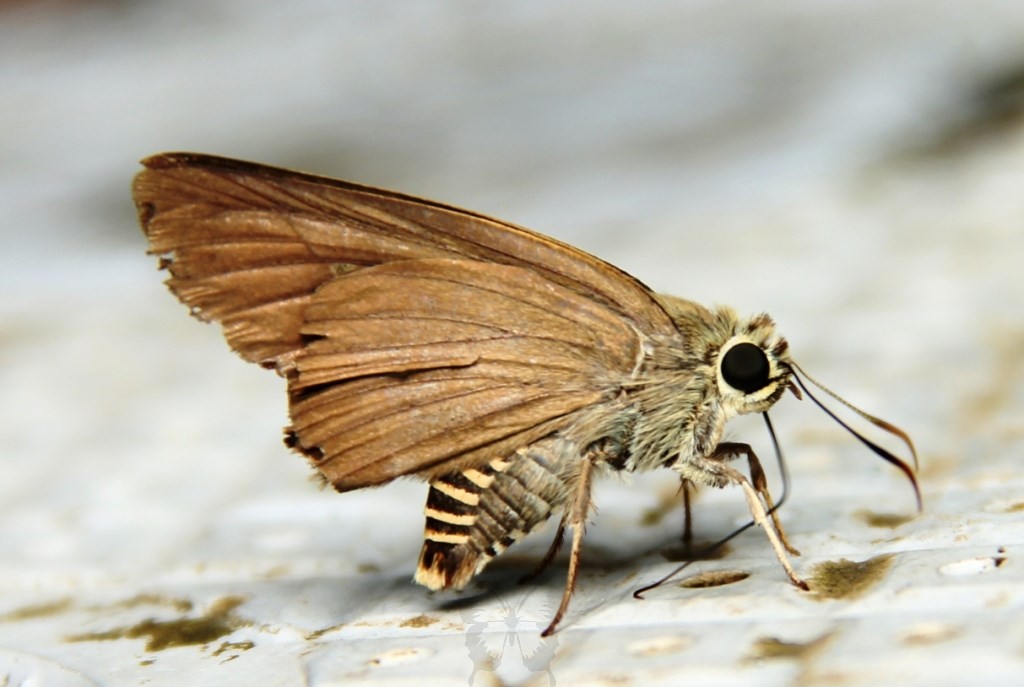
5. Brown awl
Badamia exclamationis is a butterfly from the family of Badamia exclamationis (Hesperiidae). The scientific name of the species was first validly published in 1775 by Johann Christian Fabricius.
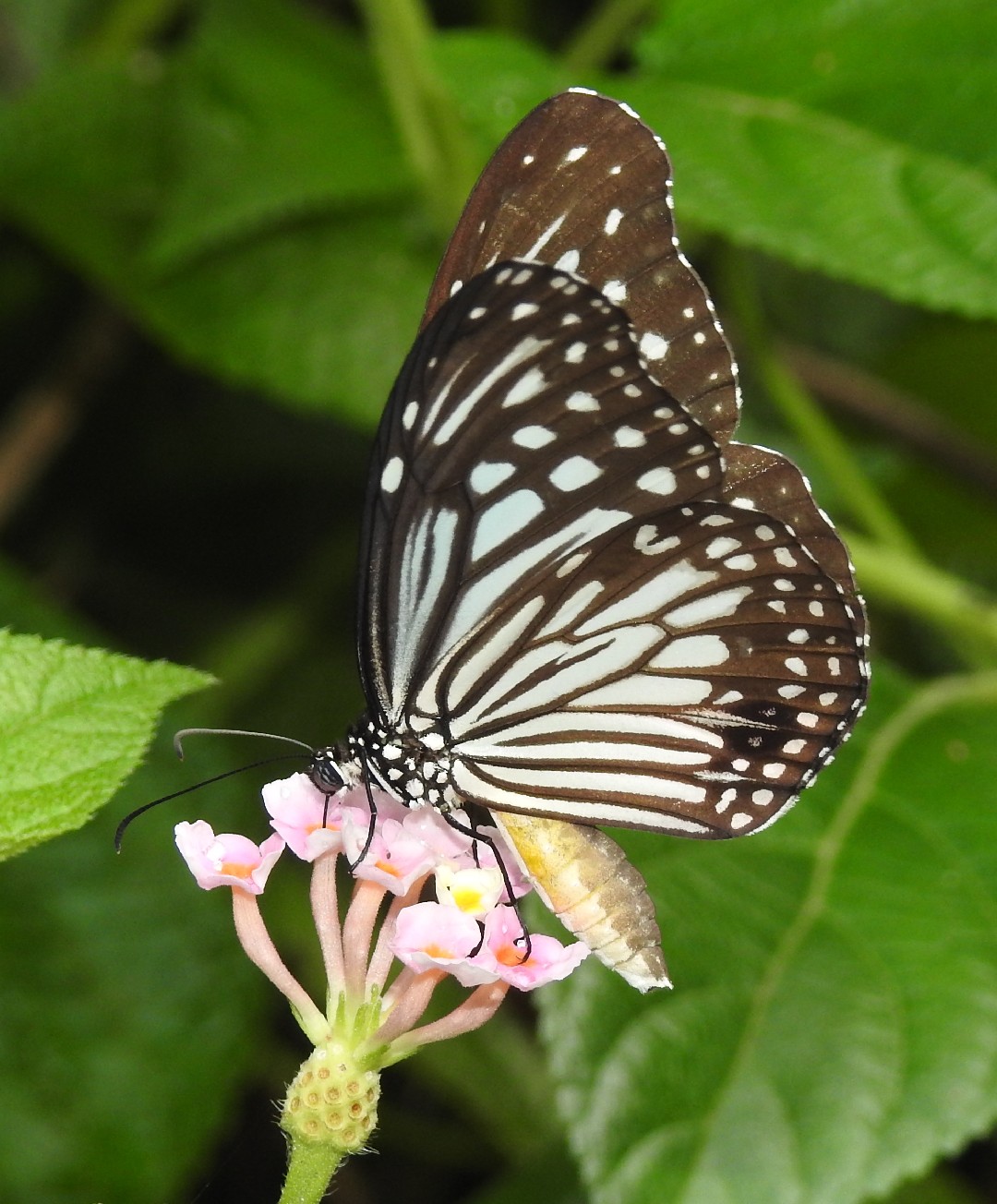
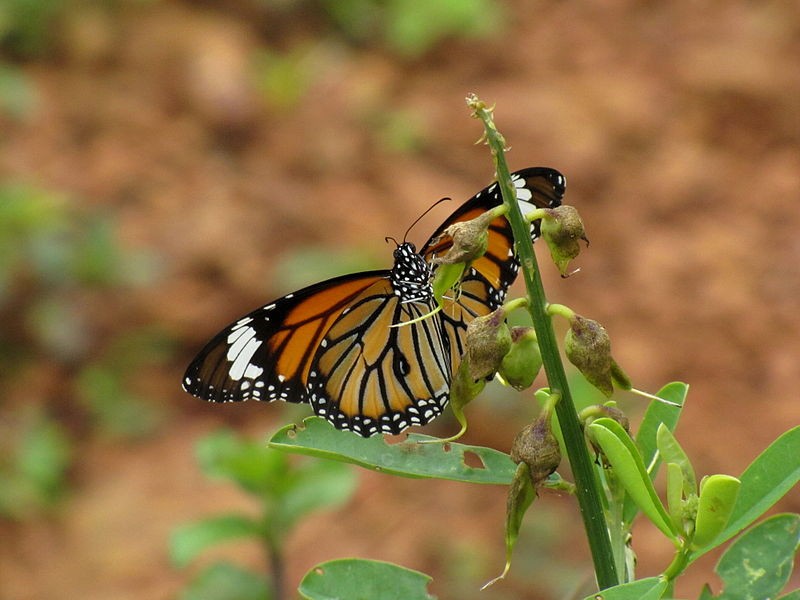
6. Glassy tiger
The scientific name of the species was first validly published in 1782 by Caspar Stoll.
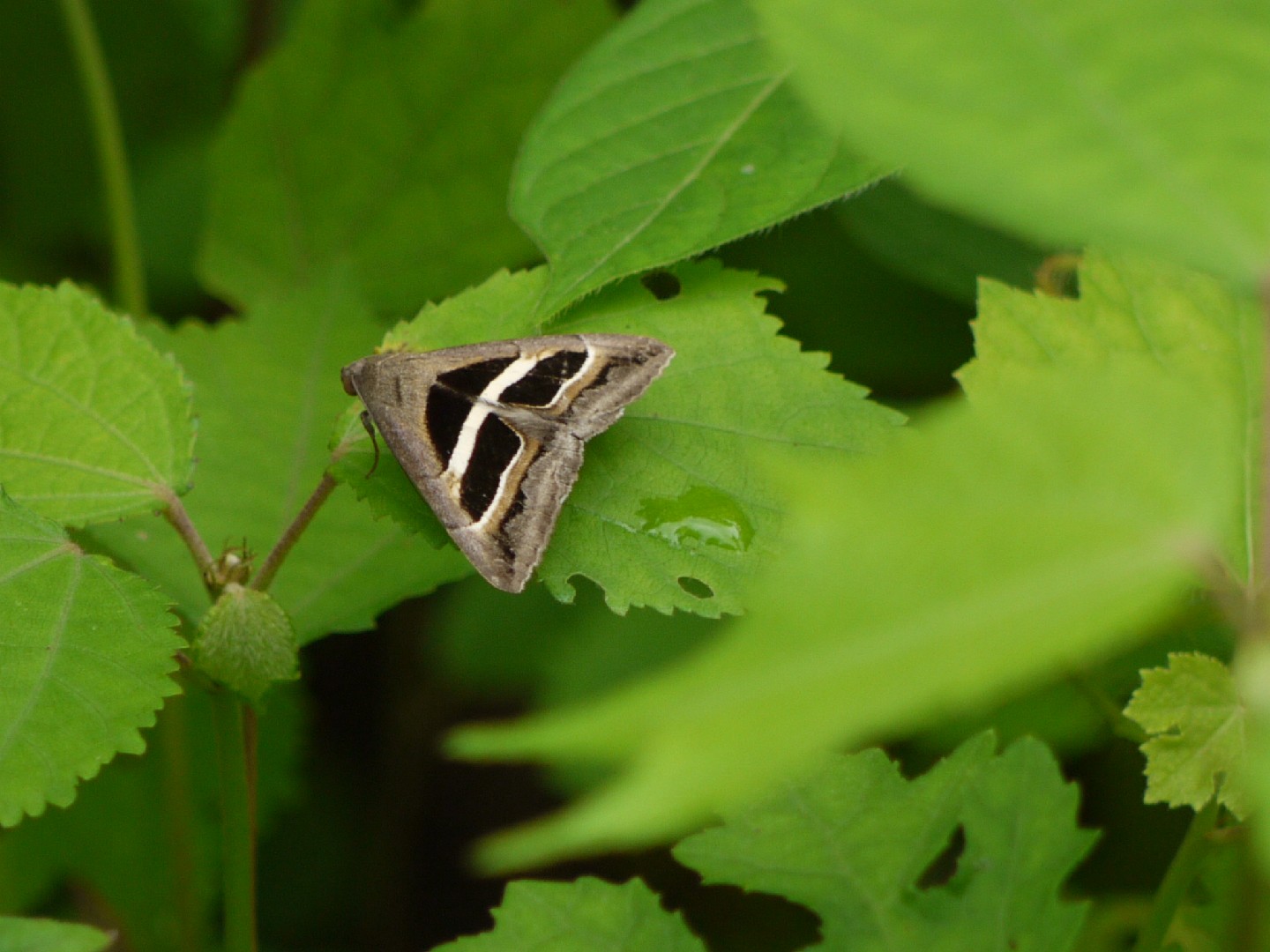
7. Grammodes geometrica
Its wingspan ranges from 26 to 45 mm. Body is greyish brown. Forewings with a large black patch occupying the whole wing except the basal, costal and outer area. Its outer edge waved ad joined by an oblique streak from the apex. Antemedial and postmedial lines curved inwards below the costa with whitish bands outside them on the black patch. The outer part of the postmedial band pale fulvous colored. Hindwings fuscous, with medial pale band. Cilia with white apex and anal angle. Larva is an elongated semi-looper. Tubercles absent. Head is pale ochreous with black spots. Body with longitudinal red lines dorsally and dorso-laterally.
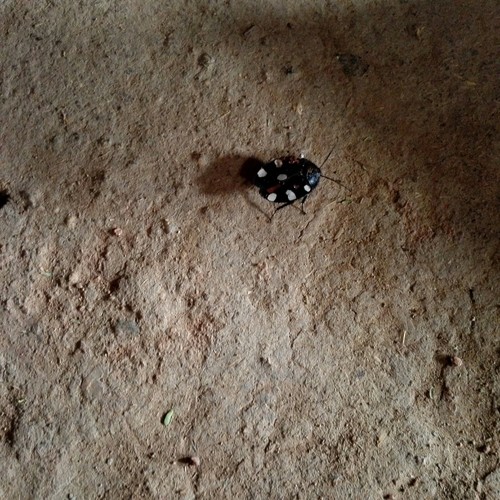
8. Indian domino cockroach
The black and white pattern of adults is believed to have evolved to mimic the pattern of the aggressive ground beetle Anthia sexguttata that has strong defenses, including the ability to spray chemical irritants. The upperside of the abdomen is orange-yellow, but is hidden by the tegmina. The spots on the asymmetrical tegmina are placed so that when closed, the spots appear symmetrical. The right tegmen lobe is bright orange-yellow. The species has been said to be one of the few cockroaches with "grace and beauty". The head is bent back underneath the pronotal shield (hypognathous) and the ocelli (simple eyes) face forward, helping sense light and thereby time foraging activity during early morning and late evening.
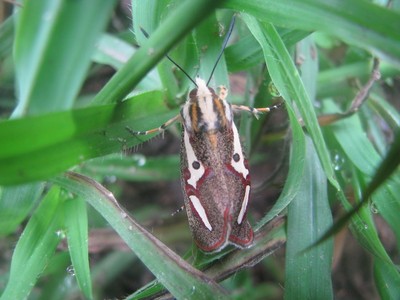
9. Red masked noctuid moth
Its wingspan is about 33 mm. Forewings of male without costal vesicles. Forewings with longitudinal white streak entire, and with an indenture on its upper edge and a small black spots near its lower edge. A red marginal line is present. Cilia of both wings white.
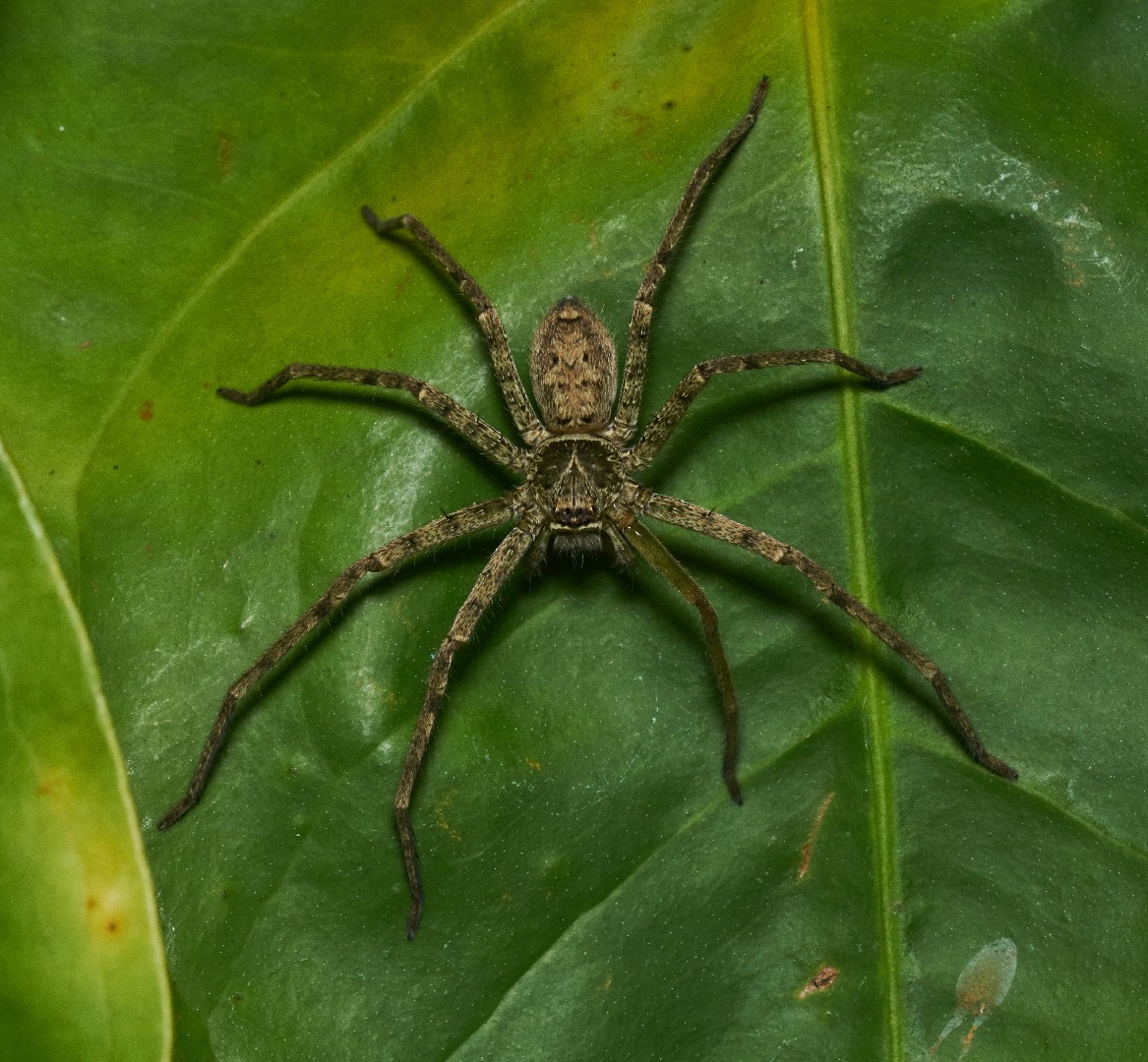
10. Giant Crab Spider
The giant Crab Spider is a large spider native to the tropics; the largest reported individual had a leg span of 30 cm. This cosmopolitan spider is highly valued in some areas, as it's able to catch cockroaches and other indoor pests. Reportedly, it hunts even scorpions and bats. This spider is venomous and sometimes bites humans, but it's considered harmless.

More







