




Top 8 Most Common Insects in Wadi Halfa'
Insects, with their unique features and vital ecosystem roles, are an intrinsic part of Wadi Halfa''s diverse wildlife. Their species diversity can vary greatly, influenced by Wadi Halfa''s changing landscapes. Insects, both pests and beneficial alike, shape the ecosystems they inhabit, underpinning Wadi Halfa''s varied environments. Here, we'll explore the top 8 most common insects found across Wadi Halfa', revealing their fascinating lives and significance.

Most Common Insects
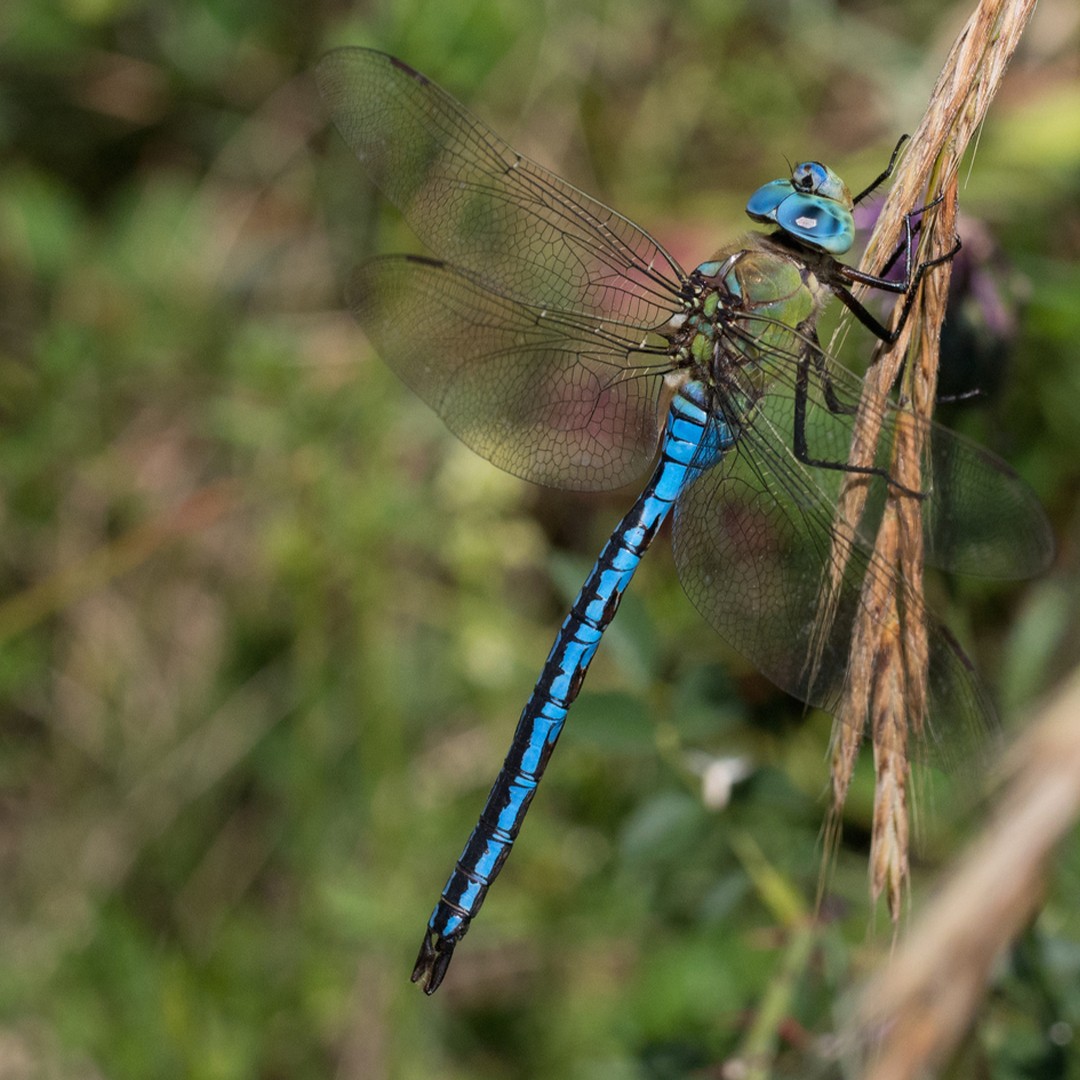
1. Emperor dragonfly
The emperor dragonfly or blue emperor (Anax imperator) is a large species of hawker dragonfly of the family Aeshnidae, averaging 78 millimetres (3.1 in) in length. 
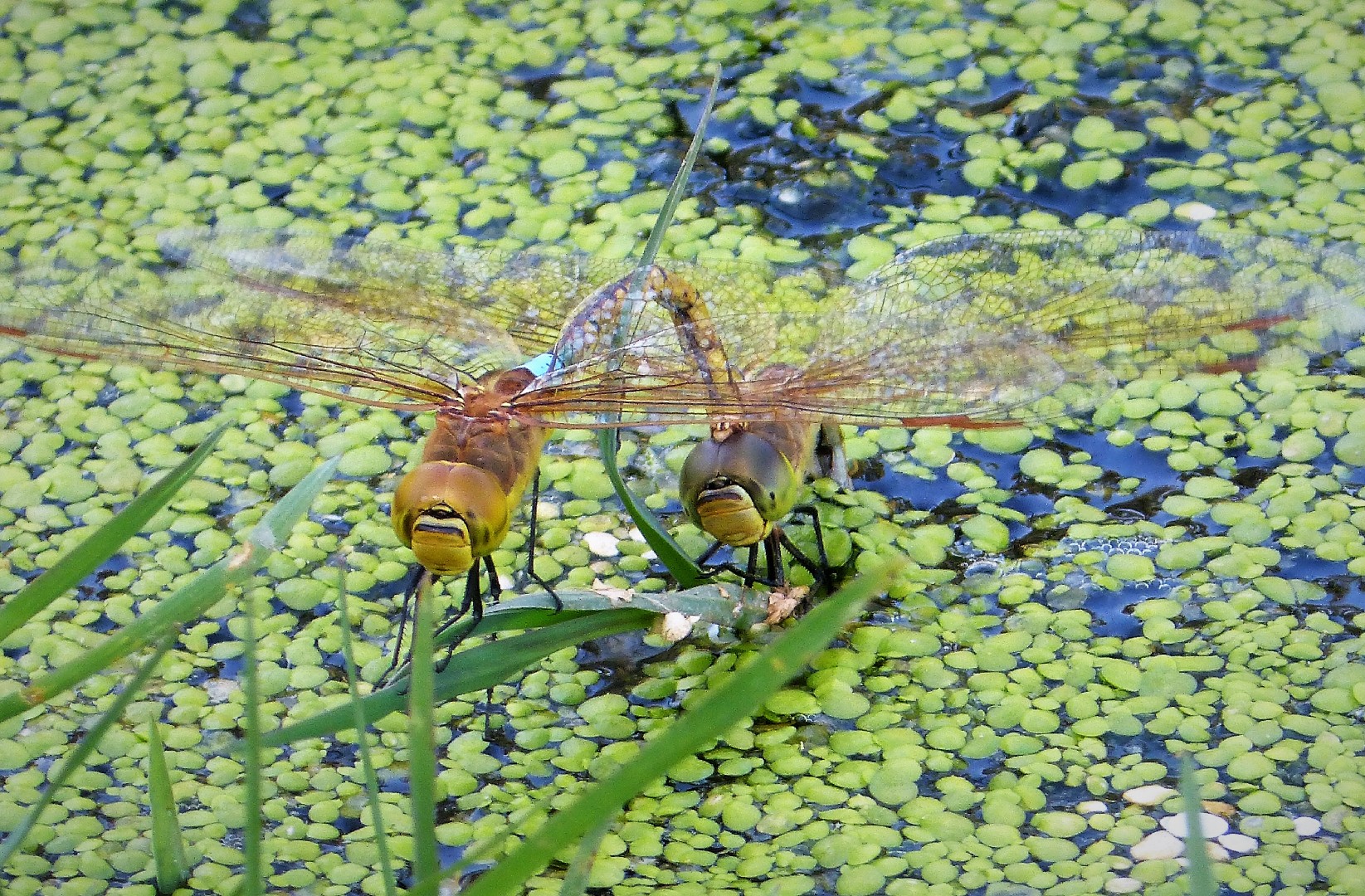
2. Vagrant Emperor
It is a large dragonfly with greenish-yellow eyes. Its thorax is olivaceous-brown, paler on sides. Wings are transparent with an amber-yellow patch. Abdomen is ochreous, marked with azure-blue and reddish-brown. Segment 2 is blue on dorsum and pale green on the sides. Segments 3 to 7 are olivaceous-yellow with irregular reddish-brown stripes on mid-dorsum and narrow black apical annules. There is a broad mid-dorsal blackish-brown stripe on segments 8 and 9, enclosing a pair of triangular yellow apical spots. Segment 10 is bright yellow, with its base and mid-dorsum broadly black. Female is similar to the male. Its natural habitats are shrub-dominated wetlands, swamps, freshwater lakes, intermittent freshwater lakes, freshwater marshes, intermittent freshwater marshes, and freshwater springs. It breeds in shallow tanks and marshes. A rare long-distance migrant to the British Isles, occasionally seen even in winter.
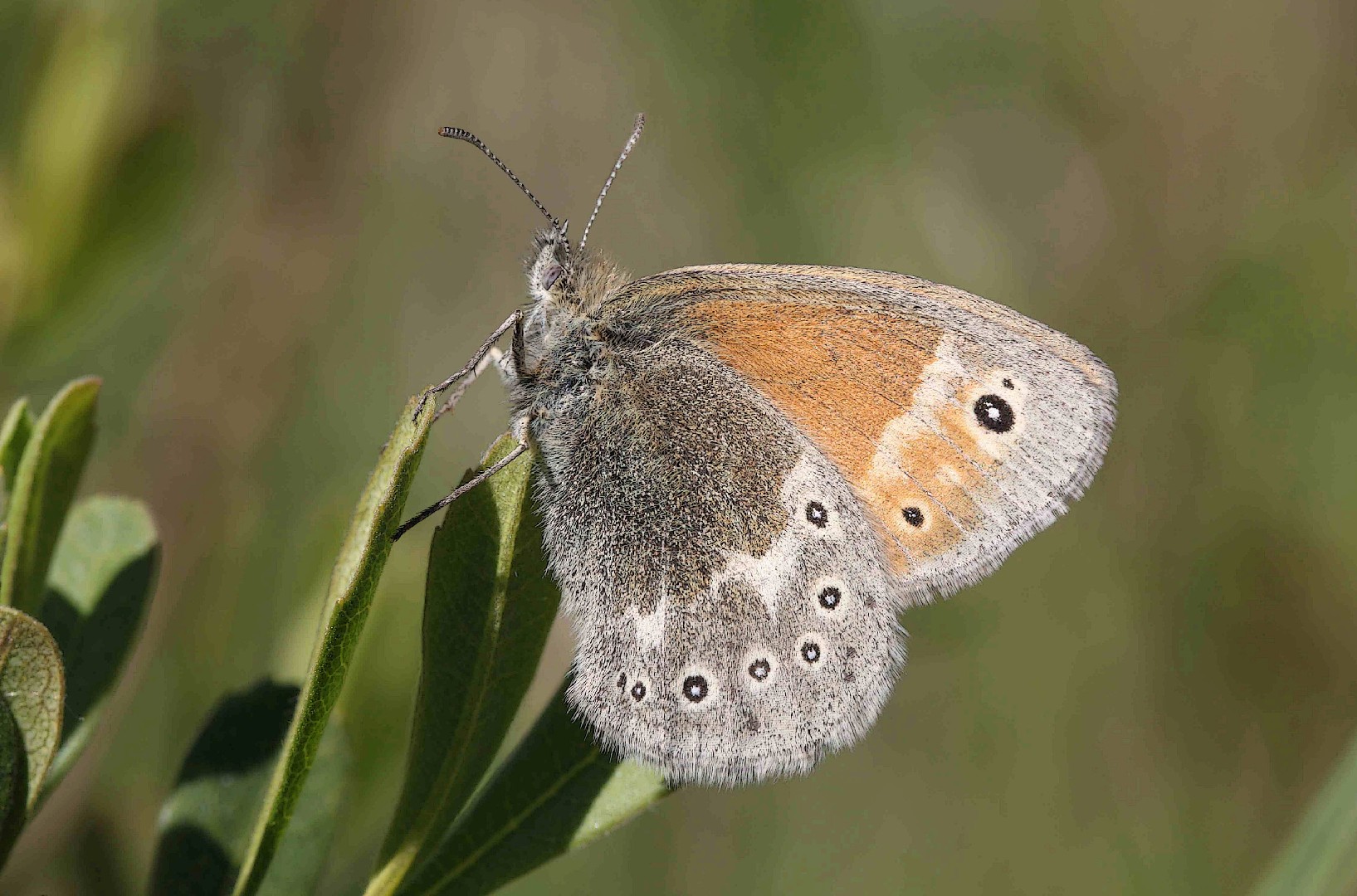
3. Large heath
The moths are very different in size and reach a wing span of 27 to 40 mm. They have very variable wing tops, from pale yellowish and ocher yellow to brownish. Mostly on the forewing underside near the tip of a small, brightly knurled eye spot is formed, which often shines on the top. At the leading edge there are sometimes further smaller eye spots. On the darker colored light, dark brown or gray rear wing underside as well usually several white or brightly gerandete black Augenflecken are to be seen with silver point, which can also be missing. Unmistakable feature of the species is there a white irregular and interrupted bandage, which already begins at the front edge of the hind wings. The egg is large, ovate and very finely meshed. It is initially pale yellowish green and later marbled reddish brown. The hairless caterpillar is about 25 millimeters long and has small, yellowish point warts and is tapered backwards. It is light green in Europe with a narrow, dark midline and a narrow upper white-yellow and dark upper bound and a lower broader, pale yellow and sharply delineated line. In North America, it varies from green to olive green to brown and has alternately bright and dark vertical stripes. At the end of the abdomen they carry two small pink lobes, which mark the caterpillars of the eye-butterflies (Satyrinae). The head is green or tan. The pupa is green in Europe and North America with light longitudinal lines and in California green to brown.
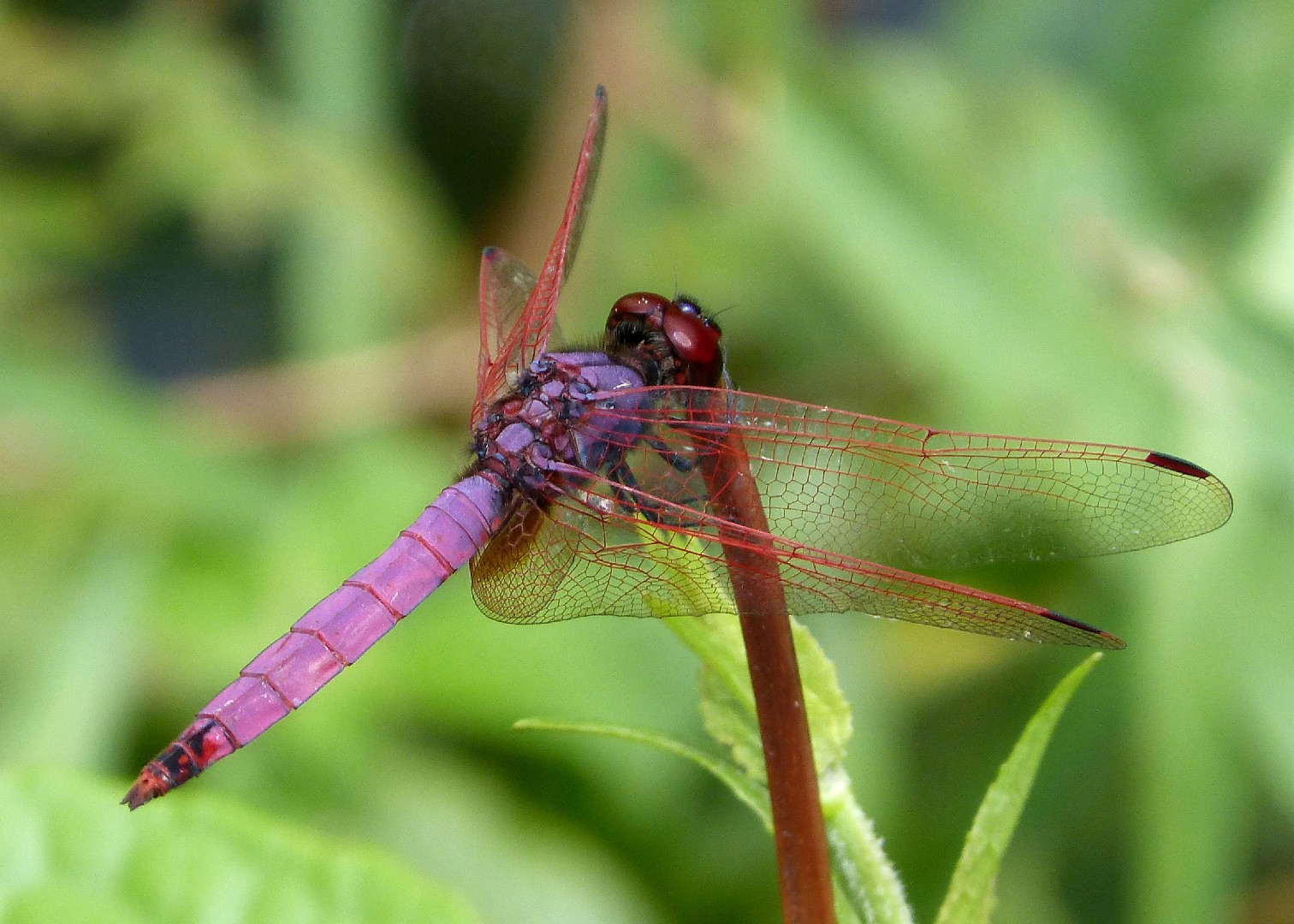
4. Violet dropwing
Trithemis annulata is a robust medium-sized species with a wingspan of 6 cm. The mature male has a dark red head and a yellow labium with brown central spot. The eyes are red with white spots on the rear edge, and the frons is dark metallic purplish-red. The prothorax is violet with slightly darker longitudinal stripes. The membranous wings have distinctive red veins, the pterostigma is orange-brown and there is a large orange-brown splash at the base of the hind wings. The abdomen is fairly broad and is pinkish-violet, with purple markings on the top of each segment and blackish markings on the terminal three segments. Females are a similar size to males but the thorax is brownish and the abdomen is yellow with dark brown markings. The wings of females lack the red veins of males but have similar orange-brown patches.
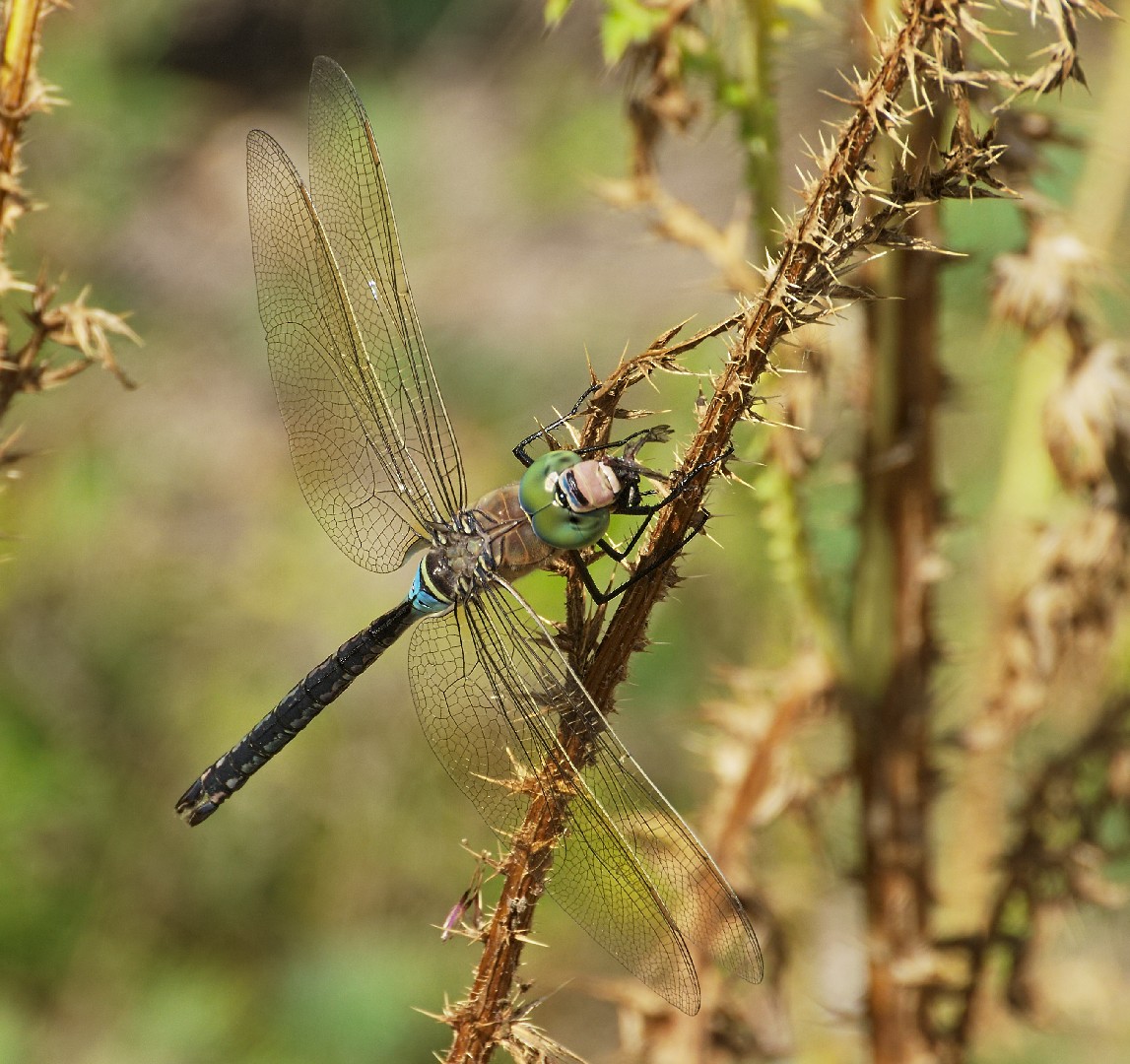
5. Lesser emperor
Its labium and labrum are golden-yellow and face and frons are greenish yellow and eyes are green, bluish when aged. Its thorax is pale olivaceous brown with dark brown sutures. Its segment two of the abdomen is turquoise blue. Segment three has a large blue patch at each side. Segments 4 to 9 have an irregular black middorsal stripe. Segment 10 is black.
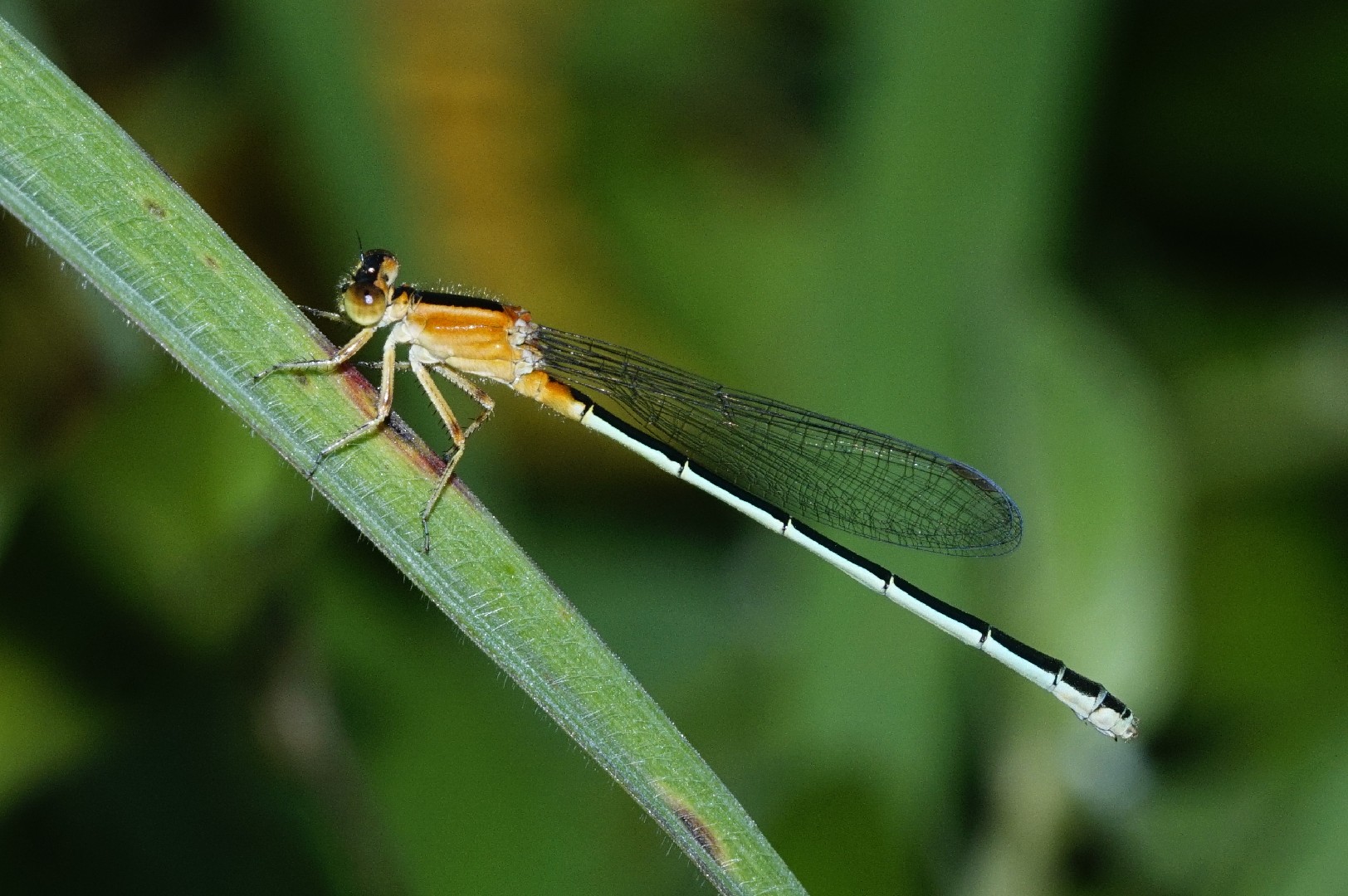
6. Common bluetail
The Senegal Pechlibelle (Ischnura senegalensis) is a dragonfly from the family of the slender dragonflies (Coenagrionidae).
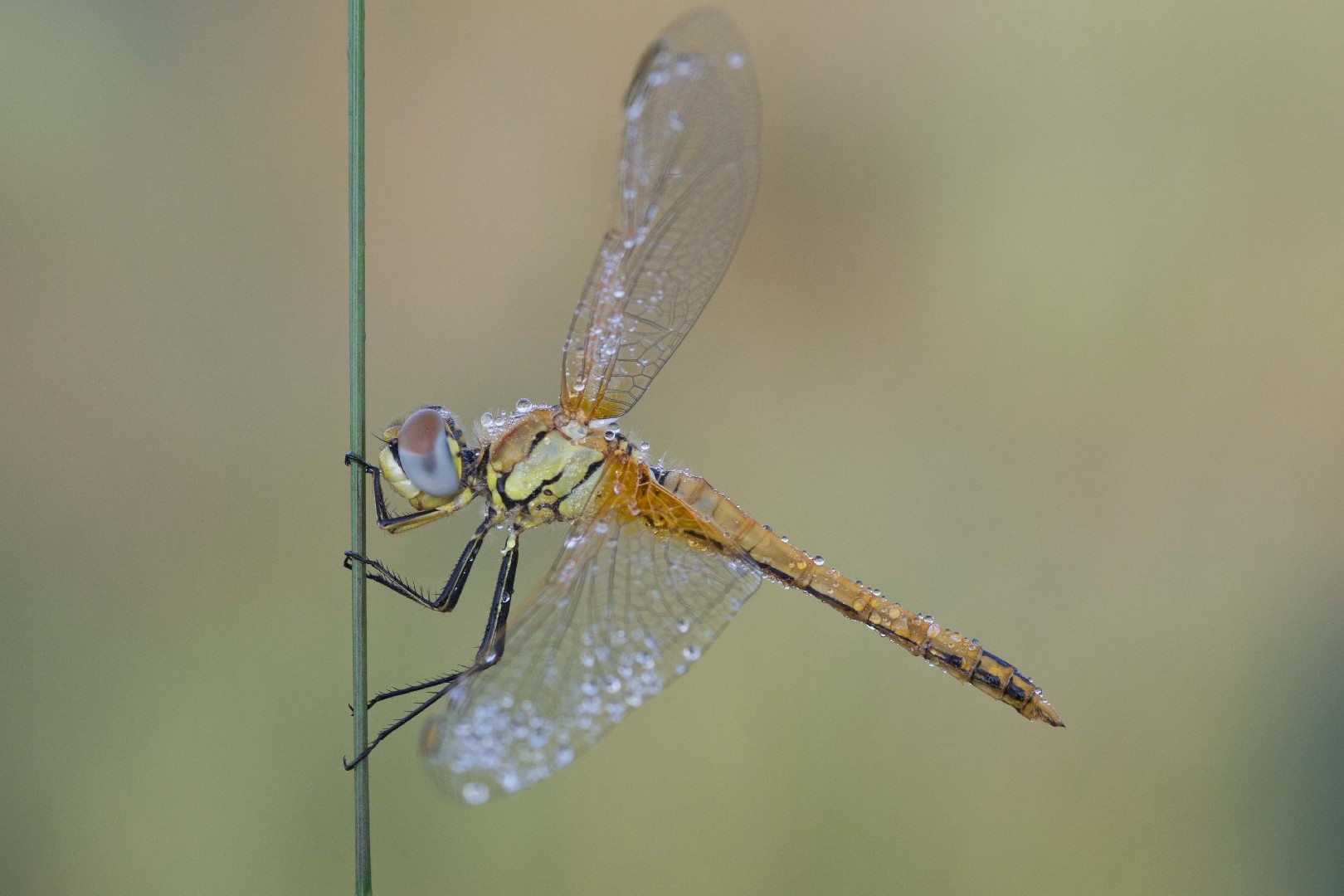
7. Red-veined darter
The Early Darter (Sympetrum fonscolombii) is a species of dragonfly in the family of the leaflets (Libellulidae), which belongs to the great dragonfly (Anisoptera).

8. Dark grass blue
The wingspan is 1.8 - 2.5 cm for males and 2 - 2.5 cm for females.