




Top 20 Most Common Insects in Misawa
Insects, characterized by segmented bodies and jointed limbs, are vital components of Misawa's rich biodiversity. The diverse geography of Misawa, from its coastal areas to mountainous regions, harbors distinct insect communities. These tiny creatures, whether pest or beneficial, significantly affect the state's ecosystem. Discover the marvel of 20 most common insects in Misawa and how nature shapes their existence.

Most Common Insects

1. Nephrotoma virgata
Nephrotoma virgata's uniqueness lies in its vibrational communication, achieved by twitching their abdomen to signal others of their species. They play a crucial role in the ecosystem as primary consumers, feeding extensively on grass and contributing to the nutrient cycle. In turn, their larval stage feeds voraciously on decaying plants, helping speed up decomposition and fostering soil health. Nephrotoma virgata also double as prey for birds and small mammals, sustaining biodiversity within their habitat.
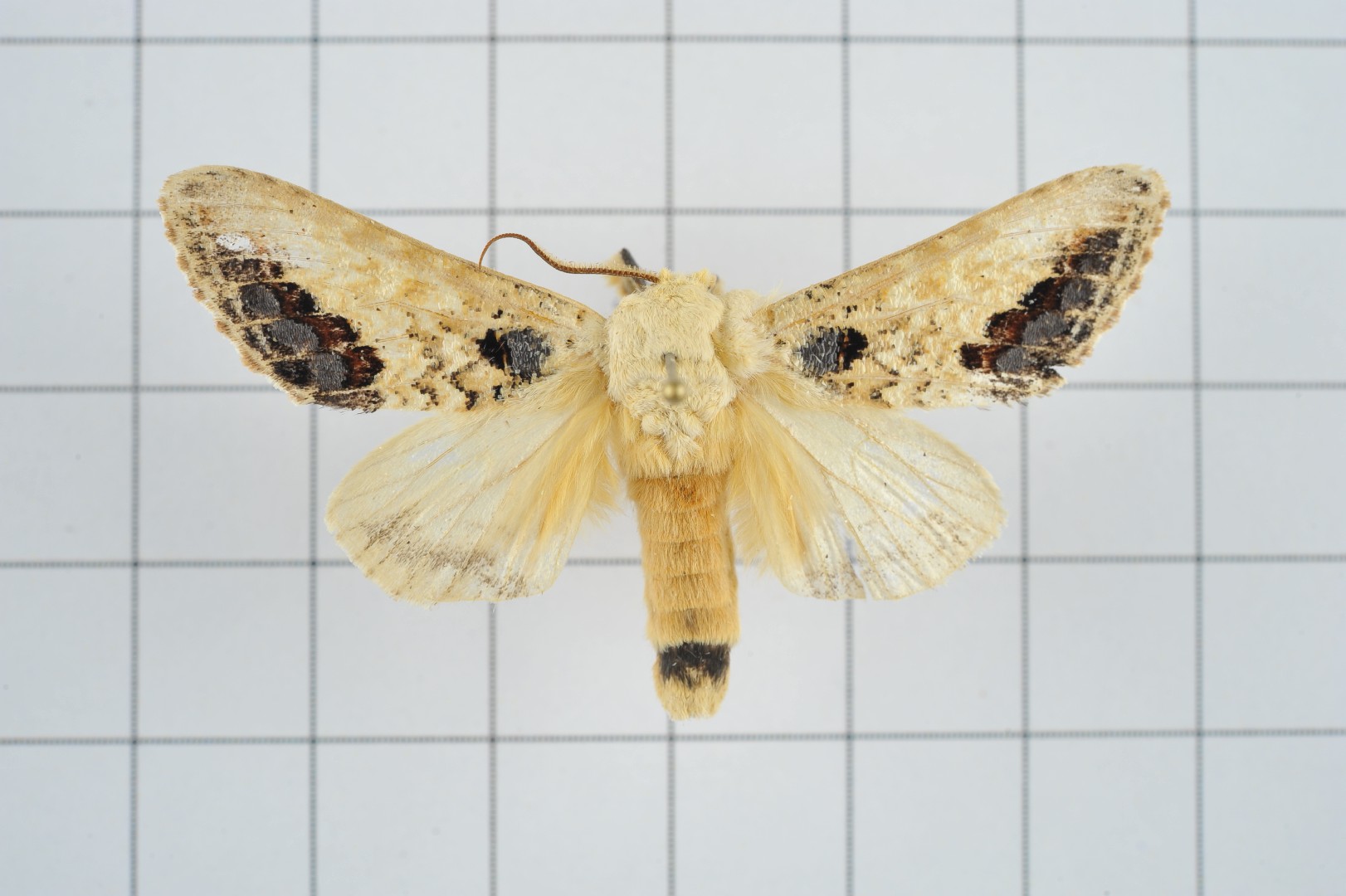
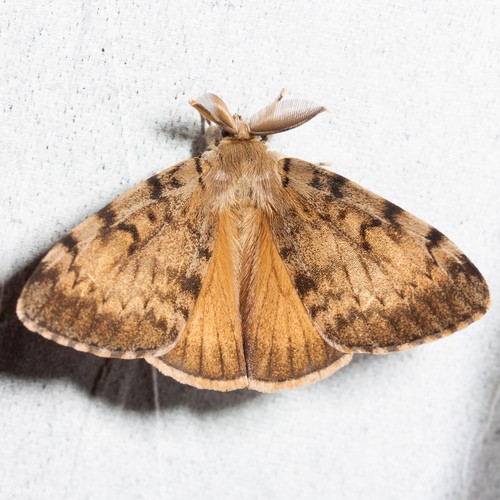
2. Japanese buff-tip moth
The wingspan is 45–54 for males and 55–59 mm for females. 
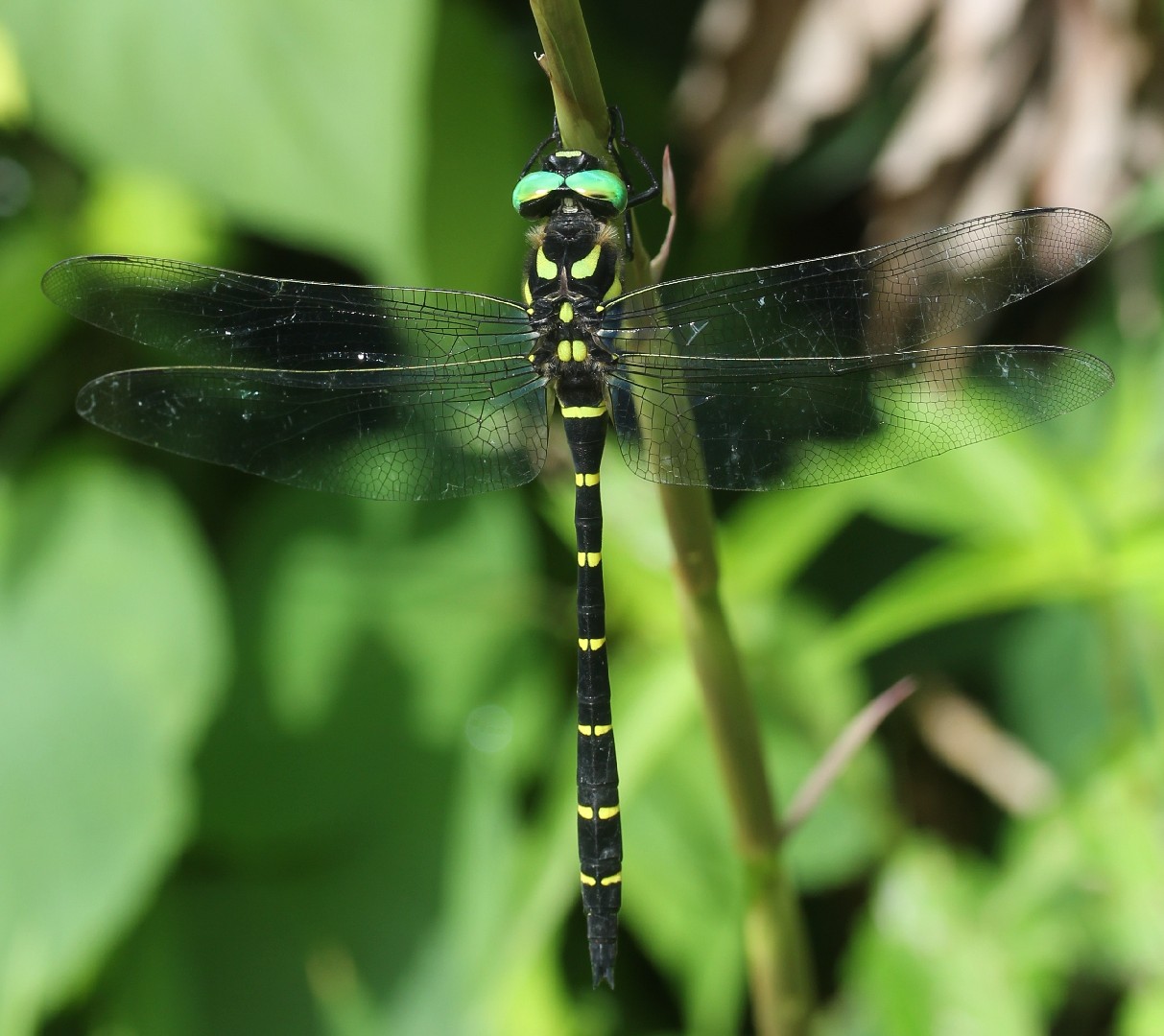
3. Jumbo dragonfly
It can grow between 10 cm and 10 cm in length.
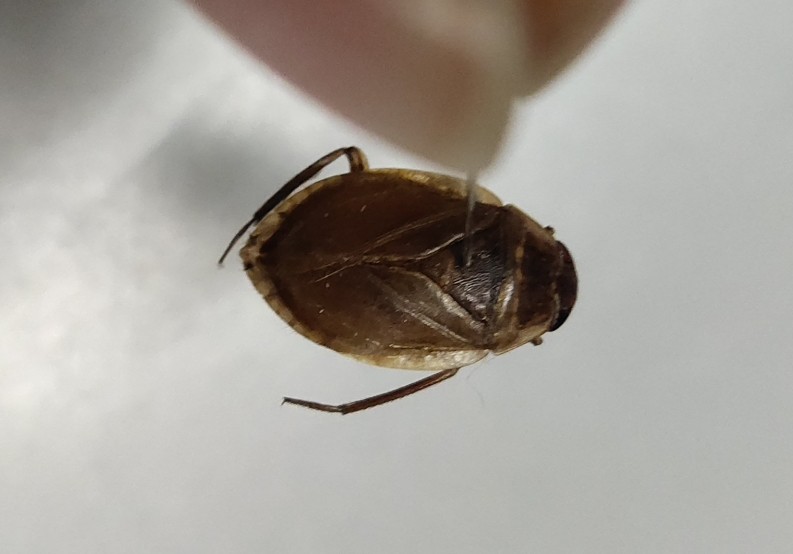
4. Japanese giant water bug
Appasus japonicus grows to a length of about 16 to 21 mm (0.6 to 0.8 in), rather smaller than the otherwise similar Appasus major. Three clades have been identified genetically, two in Japan, separated by mountain ranges, and one in Korea.

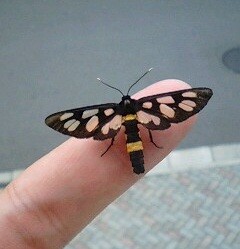
5. Ramie moth
Its wingspan is about 8 cm. The mid and hind tibia are spiny. Hindwings of male with long hairy inner margin. Head black and thorax vinous reddish brown. Pectus white. Abdomen bluish fuscous with a white tuft in male below claspers. Forewings with brown suffused with black, except costal area as far as postmedial line and the apical area, and irrorated with a few bluish-white scales. A short almost basal line, two black sub-basal patches, an oblique waved antemedial line present. A black spot in cell and two lunules at end of cell. Traces of a pale waved sub-marginal line can be seen. Hindwings are black with a bright blue patch on disk and a maculate post-medial band and patch near anal angle. Larva black. Somites with transverse dorsal white bars each enclosing a black line. Stigmata ochreous, black ridges and with some red color around the, situated on white patches from near the top of each of which springs a white hair. There is an inter-spiracular disconnected white line and a broader spiracular line with a black spot from which springs a white hair below each spiracle. A broad ventral white band present. The 11th somite humped and black above. Extremity orange above spotted with black. Head and somites are covered with long white hairs.
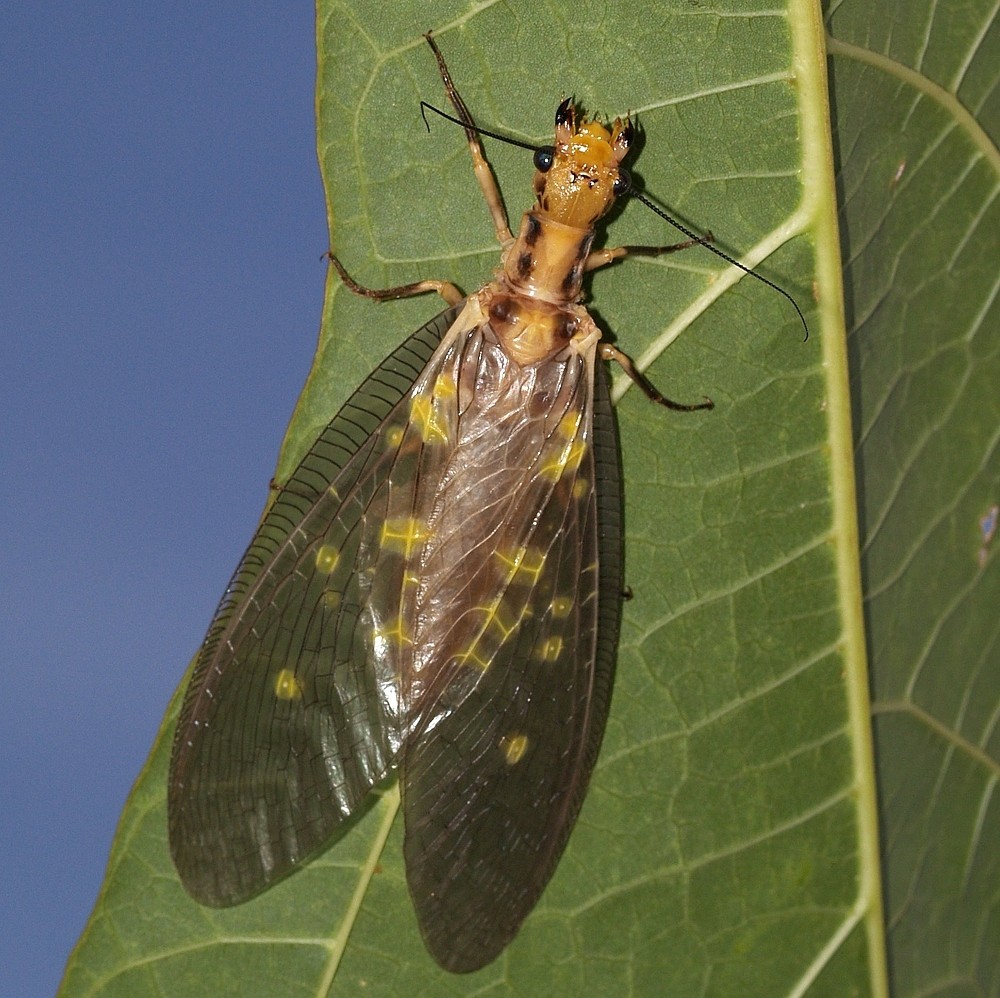
6. Protohermes grandis
Protohermes grandis is a large, colorful species of dobsonfly occurring in China, Japan, Korea, and Taiwan. “The TDF for P.grandis larvae suggests that their low TPs in nature were caused by incorporation of vascular plant-derived amino acids (with a different N-15 profile from that of algae) and not by an unusually low TDF or by the effects of the satiation/starvation on amino acid metabolism.
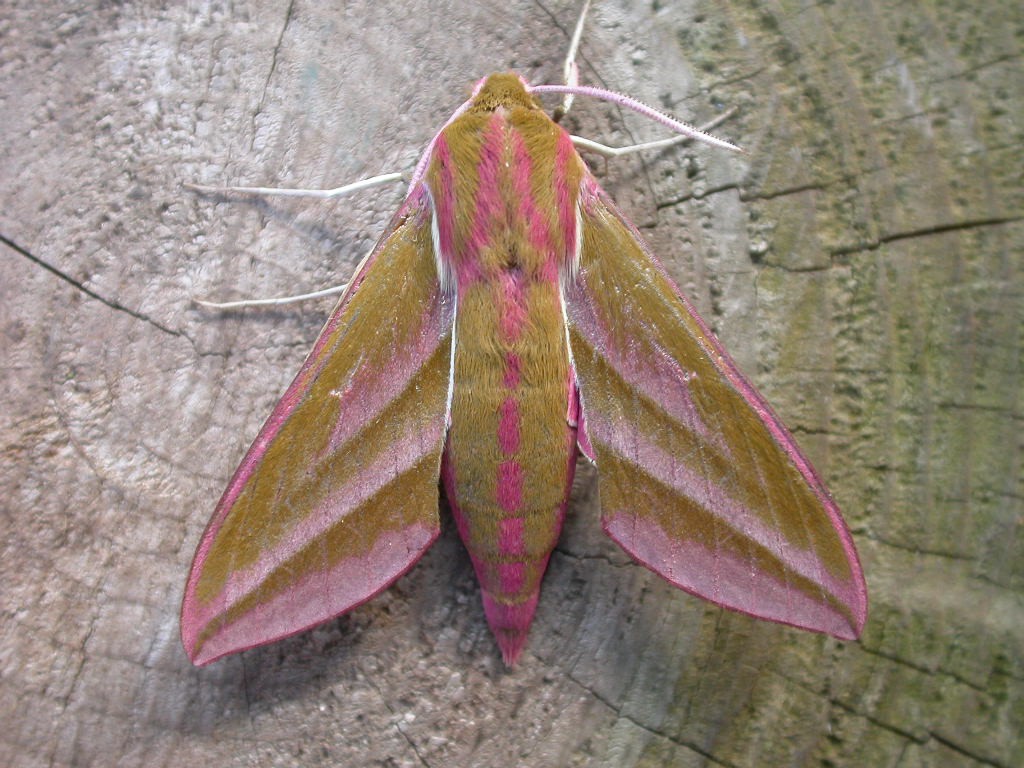
7. Elephant hawk moth
The elephant hawk moth (Deilephila elpenor) earns its name from its caterpillar form resembling an elephant trunk. When it grows up it turns into a vibrant combination of green and pink. Despite its distinctive appearance, it can be confused with the Small elephant hawk-month. Whether you prefer the pocket size of the extra-large edition, both are beautiful.
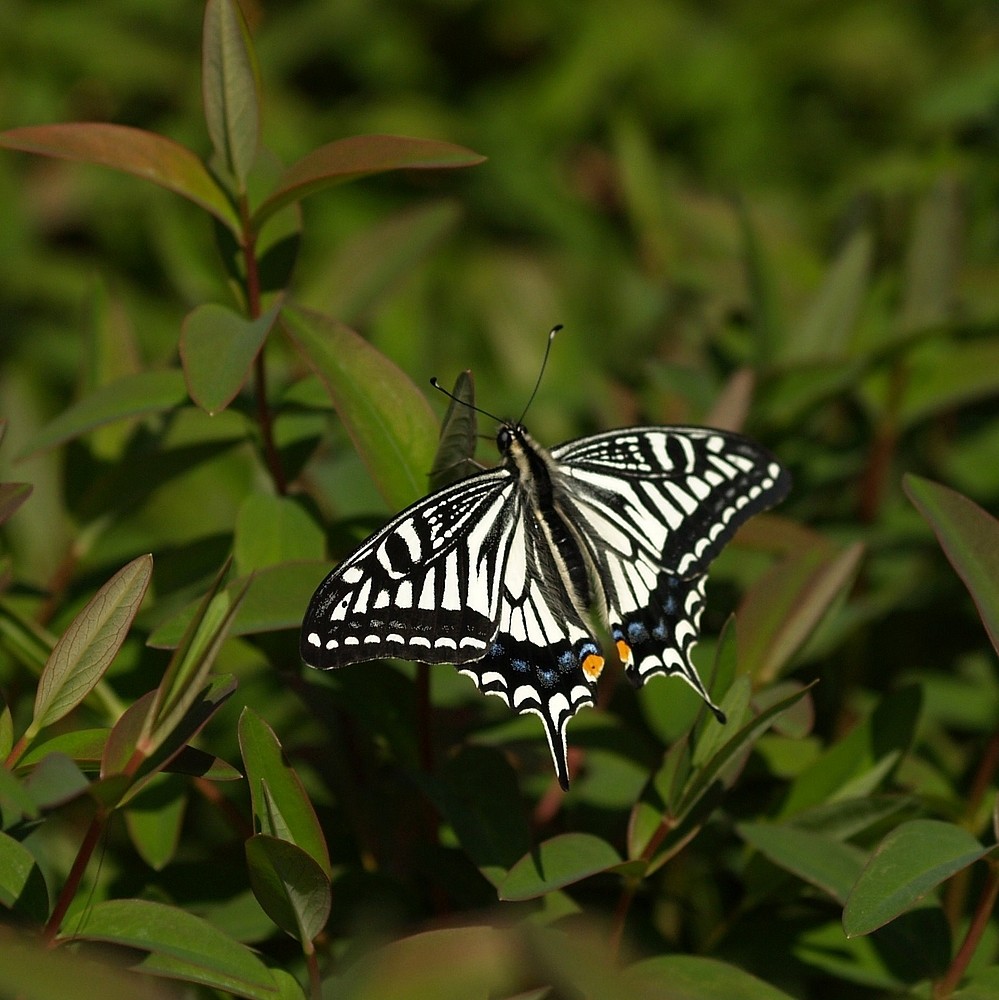
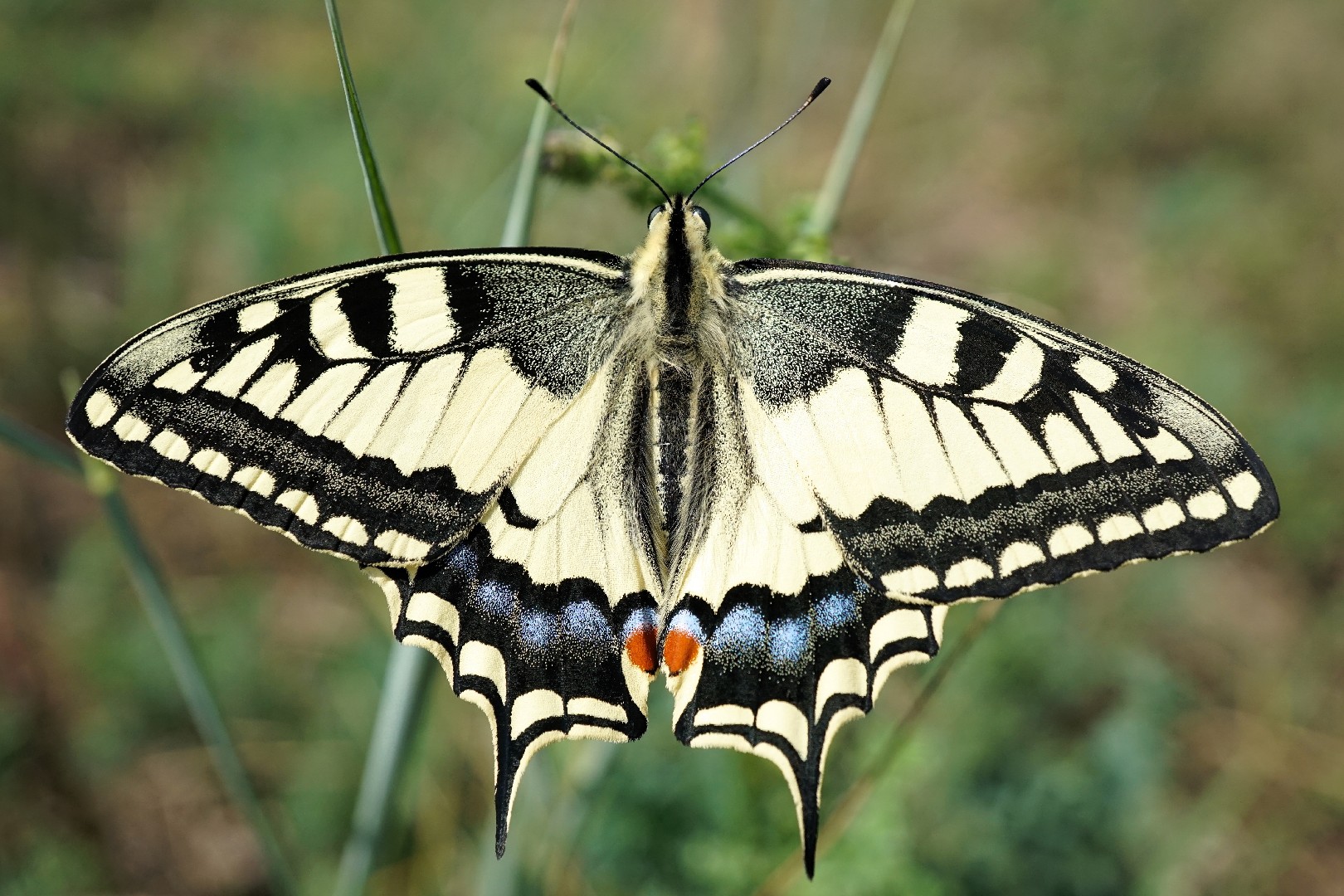
8. Asian swallowtail
The asian swallowtail (Papilio xuthus) is a beautiful yellow and black butterfly that is pretty common. Regardless, they try and mix it up by having multiple mates during their lifetime. This habit gives them a greater chance of genetic diversity. They want to ensure their kids grow up in a good neighborhood, so they keep an eye out for habitat and food quality when looking for a place to lay their eggs.

9. Scarlet skimmer
The species is on the IUCN Red List as not endangered, year of assessment 2009.
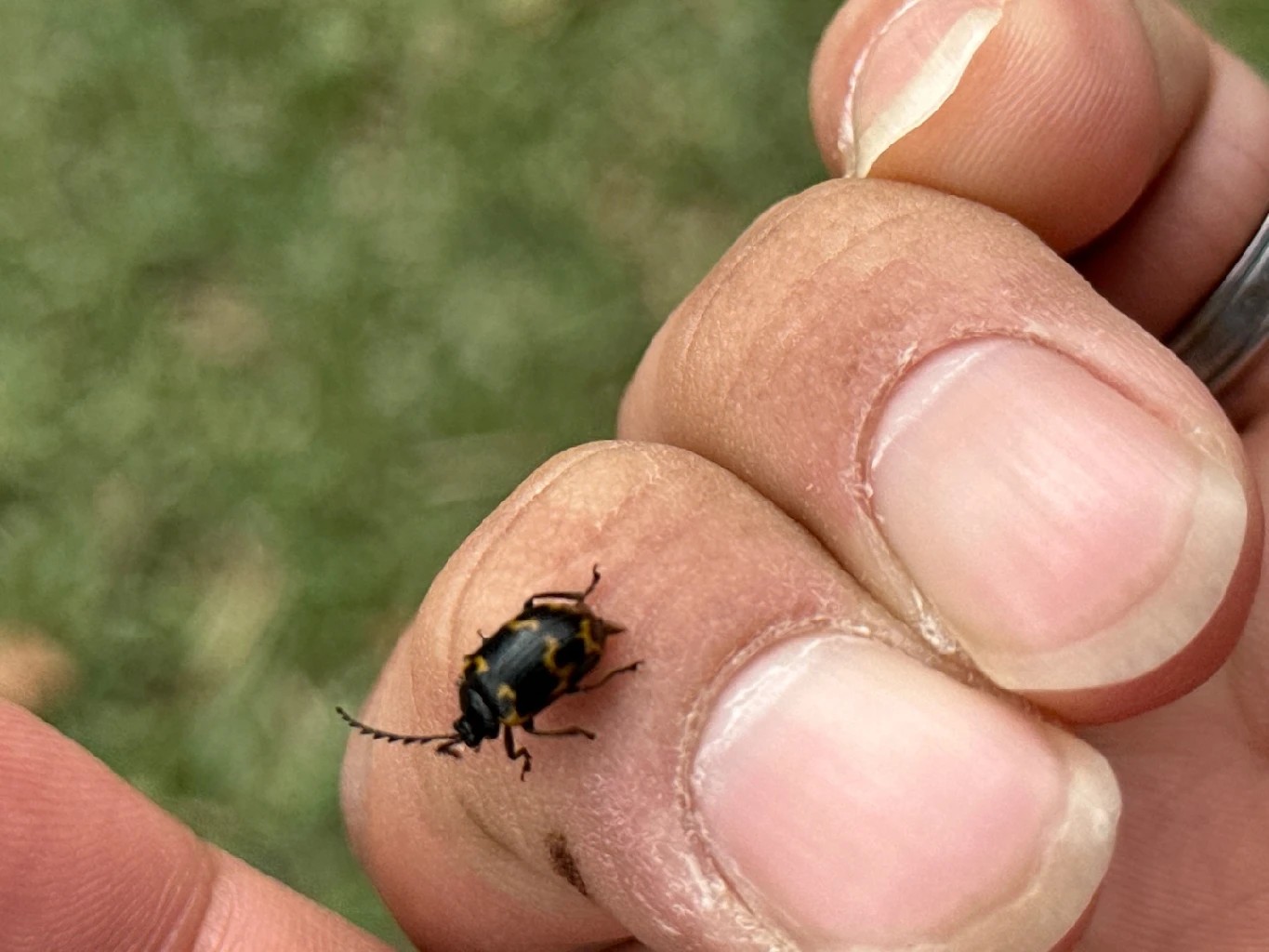
10. Japanese knotweed leaf beetle
More







