




Top 13 Most Common Insects in Kadena
Welcome to our virtual exploration of the world of insects in Kadena! Insects, with their fascinating diversity and rich roles in our ecosystem, thrive in varied habitats offered by Kadena's unique geography. Understanding the intricate relationship between these ecological warriors and pests to their surrounding environment helps us appreciate Kadena's vibrant biodiversity. Stay tuned as we unveil our list of 13 most common insects within this region.

Most Common Insects
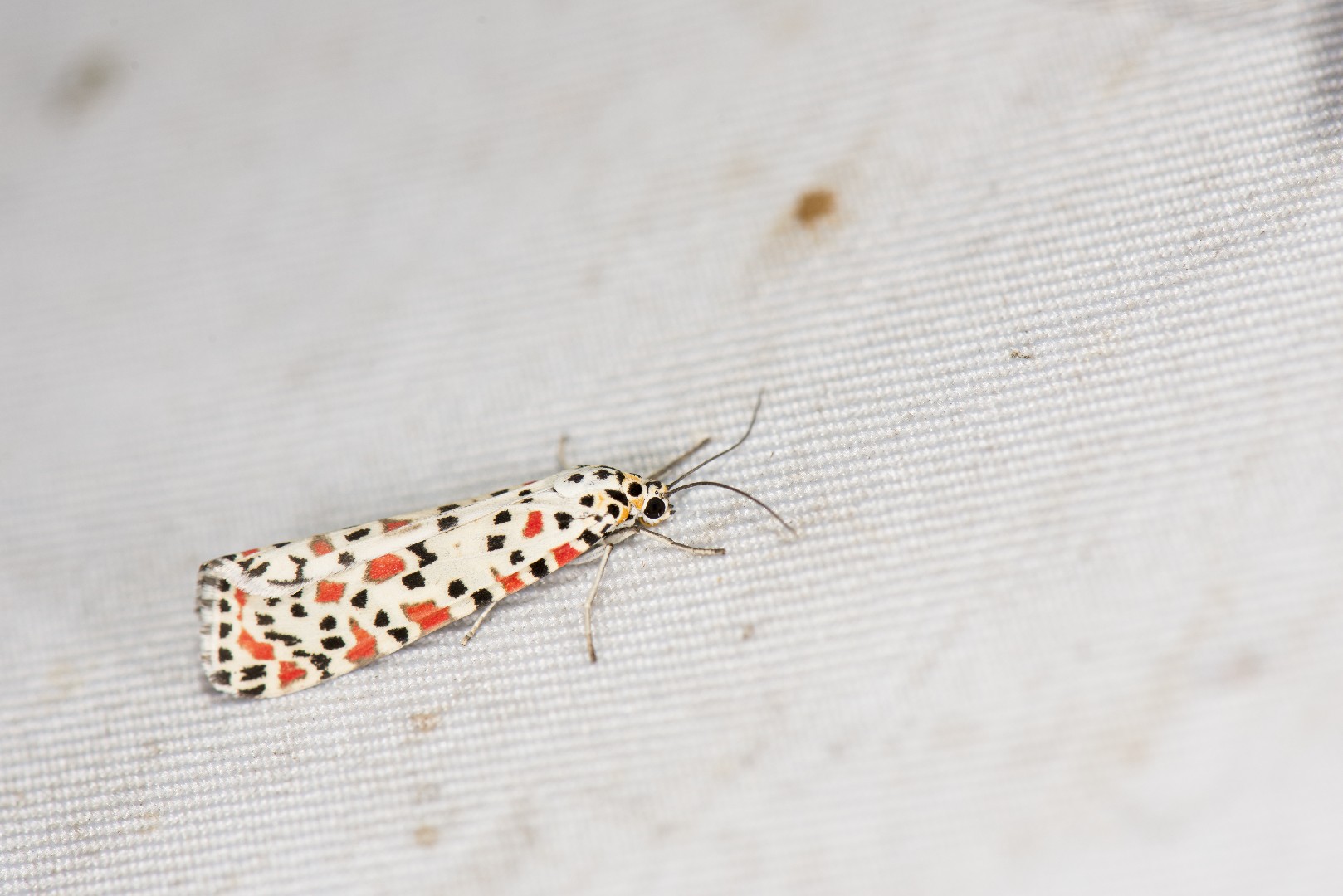
1. Rattlebox salt-and-pepper moth
Utetheisa lotrix, the salt-and-pepper moth or crotalaria moth, is a moth of the family Erebidae. The species was first described by Pieter Cramer in 1777. It is found in most of the Old World tropics. The wingspan is about 30 mm. The larvae feed on Crotalaria species. 
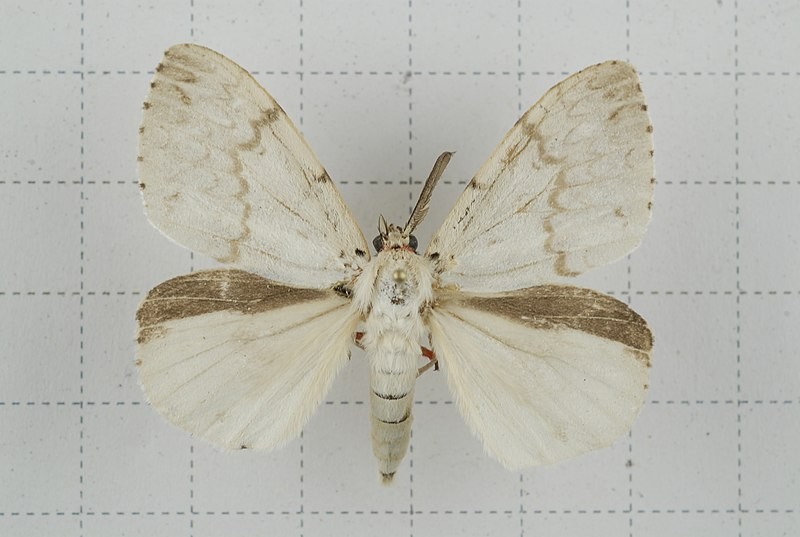
2. Casuarina Moth
Lymantria xylina, the casuarina moth or casuarina tussock moth, is a moth in the family Erebidae. The species was first described by Charles Swinhoe in 1903. It is found in Japan, Taiwan and the Chinese provinces of Fujian and Guangdong. It is a very important forest pest in Taiwan, with outbreaks occurring every five to ten years. The larvae feed on a wide range of host plants, including over 65 species of broadleaf trees. At least one virus is being investigated as a possible biopesticide.
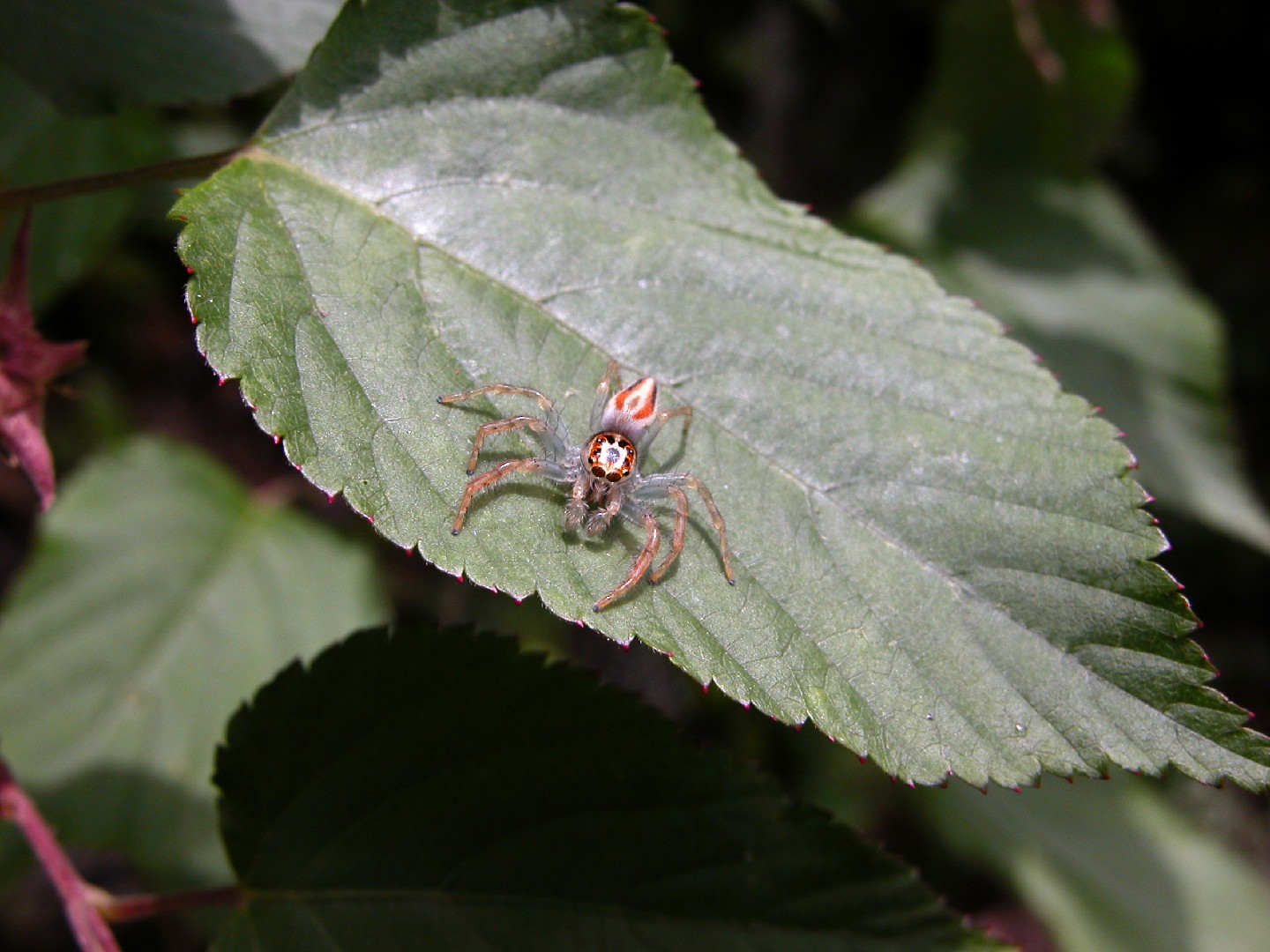
3. Telamonia vlijmi
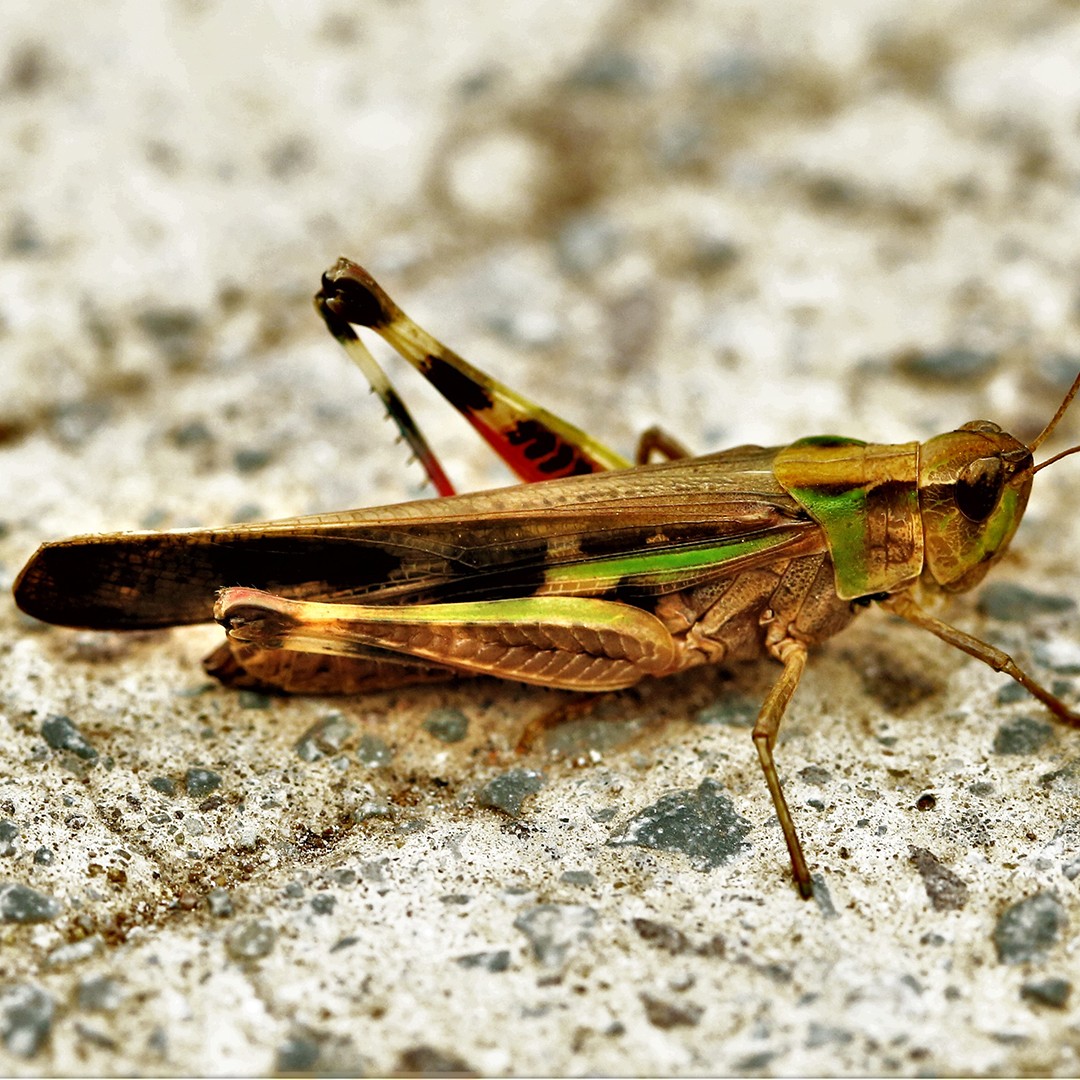
4. Long-winged grasshopper
Aiolopus thalassinus is a species of grasshopper belonging to the family Acrididae, subfamily Oedipodinae. It is present in many countries of Europe (but not the British Isles or Scandinavia), and in the Afrotropical realm to Asia and the Pacific islands. The colouration of this species is generally from clear brown to dark brown. Females have a size of 21–29 mm and males of 15–19 mm.
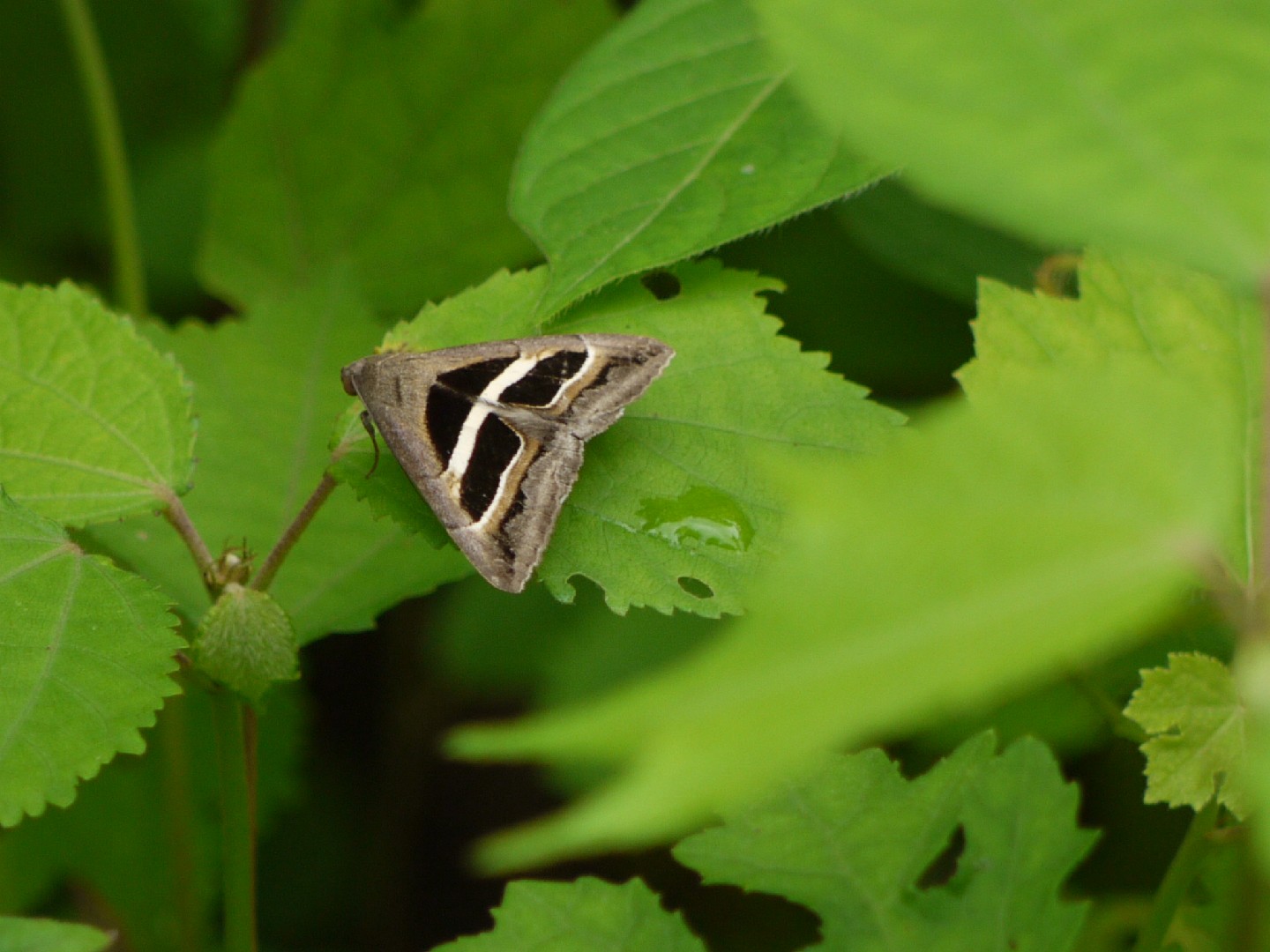
5. Grammodes geometrica
Its wingspan ranges from 26 to 45 mm. Body is greyish brown. Forewings with a large black patch occupying the whole wing except the basal, costal and outer area. Its outer edge waved ad joined by an oblique streak from the apex. Antemedial and postmedial lines curved inwards below the costa with whitish bands outside them on the black patch. The outer part of the postmedial band pale fulvous colored. Hindwings fuscous, with medial pale band. Cilia with white apex and anal angle. Larva is an elongated semi-looper. Tubercles absent. Head is pale ochreous with black spots. Body with longitudinal red lines dorsally and dorso-laterally.
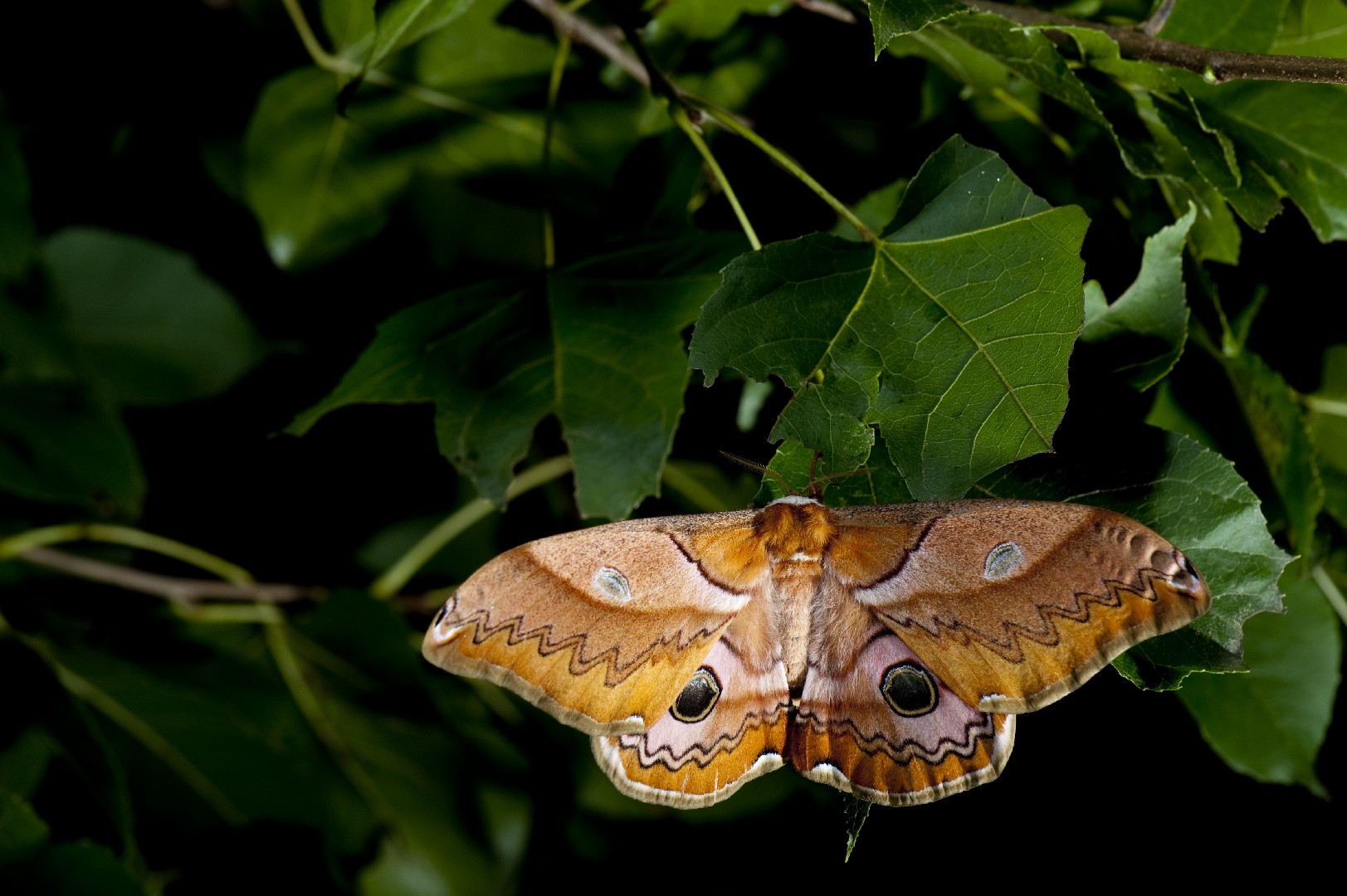
6. Caligula japonica
Caligula japonica, the Japanese giant silkworm, is a moth of the family Saturniidae. It was described by Frederic Moore in 1872. It is found in eastern Asia, including China, Korea, Japan and Russia. The larvae feed on various plants, including Salix, Fagus, Quercus and Juglans.
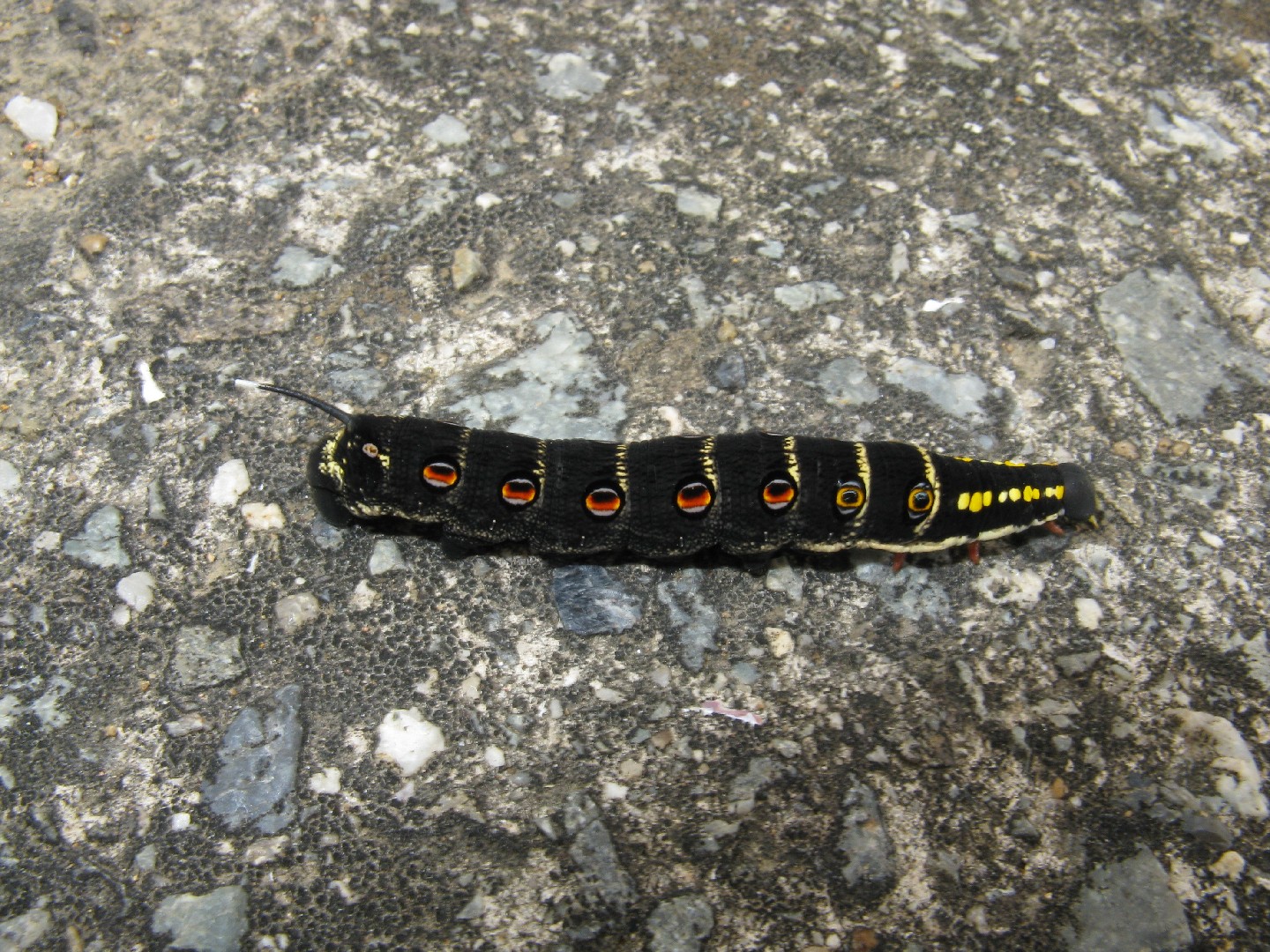
7. Impatiens hawk moth
The impatiens hawk moth can be considered a pest among commercial and residential gardeners. Both the moth and caterpillar feed on several flowering plants, including fuchsias and the Australian native violet. Adult females lay their eggs on the plant’s foliage, ensuring the hatching larvae have a ready food source.
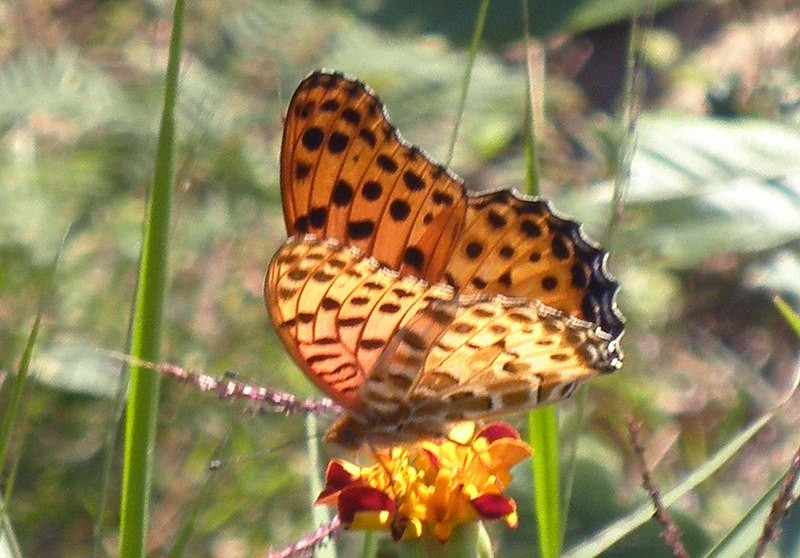
8. Indian fritillary
Male: Upperside: forewing rich orange yellow, hindwing paler yellow, with the following black markings: Forewing: cell with a basal short transverse streak, a medial broad oval loop, its outer margin sinuous; a broad transverse streak beyond cell not reaching the median nervure; a broad streak along the discocellulars; a zigzag discal series of large spots, angulated outwardly in interspace 4, inwardly in interspace 2, a minute spot at base of interspace 1; a somewhat diffuse large postdiscal spot below the costa in interspace 6; a postdiscal sinuous series of round spots, those in interspaces 1 and 4 very small; an inner complete subterminal sinuous series of round spots; an outer subterminal line, widening on the veins, and a terminal slender line. Hindwing: a basal, transverse, obscure narrow mark in cell, another above it in interspace 7, a transverse lunule across the middle of the cell; a small spot outwardly bordering the lower discocellular; a discal series of transverse spots from interspaces 1 to 7, sinuous posteriorly; a postdiscal series of five spots in interspaces 2 to 6; a subterminal series of somewhat lunular spots; finally, a narrow band on term en traversed posteriorly by a series of blue, anteriorly by a series of ochraceous lunules. Underside forewing pale terracotta red, shading into ochraceous towards the apex, the apex broadly suffused with that colour; markings as on the upperside, with the following exceptions: subcostal spot in interspace 6, upper two spots of postdiscal series, upper four spots of the inner subterminal series, and the anterior portions of the outer subterminal and of the terminal line olivaceous brown; the upper two postdiscal spots centred with white, with a white spot on each side; the upper four spots of the sub terminal series connate (united), forming a short curved band. Hindwing variegated with ochraceous, olivaceous-brown and silvery-white markings, the last for the most part narrowly margined on the outer side by short black lines; the veins prominently pale ochraceous; the medial silvery markings form a well-marked sinuous discal series, followed by a curved postdiscal series of five olivaceous round spots; each spot and the olivaceous-brown quadrate patch near base of cell with a minute white central spot; a slender black subterminal line widening at the veins, as on the forewing, followed by an ochraceous narrow lunular band and an outer slender black anteciliary line; the subterminal black line margined on the inner side by a series of: slender white lunules, bordered inwardly by a series of broad olivaceous-brown markings in the interspaces. Antennae brown above, ochraceous red beneath; head, thorax and abdomen olivascent tawny; beneath, palpi, thorax and abdomen pale ochraceous. Female similar. Differs from the male as follows: Upperside: apical half of forewing from about the middle of the costa obliquely to just above the tornus black, inwardly suffused with purple, crossed by a broad white band from costa to the subterminal series of black spots; four preapical white spots, the upper three bordering on each side and above a very obscure ocellus scarcely visible on the black background, an inner and an outer subterminal transverse series of slender white lunules. Underside: forewing markings similar to those on the upperside, but the apex of the wing beyond the white oblique band ochraceous green. Hindwing as in the male, but the markings slightly broader. Antennae, head, thorax and abdomen as in the male, the abdomen paler beneath. Wingspan: 80–98 mm (3.1–3.9 in). Var. taprobana, Moore, is a slightly darker race from Ceylon, with markings similar in both sexes to those of hyperbius. Moore, however, states that taprobana is an intermediate between the south Indian form (castetsi) and typical hyperbius specimens from Ceylon that do not differ from upper India, Assam, and Burmese specimens, except in the very slightly darker ground colour on the upperside. Race castetsi, Oberthur: The females of this remarkable form seem to be locally dimorphic. Male closely resembles the male of hyperbius but differs as follows: Upperside: ground colour a richer brighter shade of orange yellow; black markings similar but distinctly smaller, of a deeper black: subterminal transverse series of slender lunules traversing the terminal black margin on the hindwing of the same shade of orange yellow as the ground colour, not blue on the posterior half of the wing. Underside: the olivaceous brown at apex of forewing and variegating the hindwing more of a greenish golden tint. A sex-mark of specialized raised scales along middle of vein 1 on the upperside of the forewing very prominent. Female Nilgiri form: resembles the female of typical hyperbius differs as follows: Upperside: ground colour pale golden yellow; basal half of both forewings and hindwings shaded with metallic green in the forewing; in some specimens this tint is slightly olivaceous; black markings and the white oblique band on the apical area of the forewing as in hyperbius, but proportionately smaller, the purplish-blue shading along inner margin of the white band much less conspicuous, as is also the bluish tint; on the white preapical spots and subterminal markings on the forewing and on the posterior half of the subterminal line of limules on the hindwing. Underside as in hyperbius but the ground colour on the forewing a paler shade of terracotta red; the olivaceous brown variegating the hindwing of a distinctly greener tint. Female typical form as described from Trichinopoly. Similar to the male differs as follows: Upperside: ground colour pale golden yellow; basal half of the wings suffused with dark olivaceous green; black markings as in the male but larger; on the forewing the spots of the subterminal series very large, coalescent or nearly coalescent with one another and with the dentate spots on the veins in the inner terminal line; the upper two spots also of the postdiscal series very large and coalescent, the upper of the two joining on above and below to the inner postdiscal lunate spot in interspace 6, thus enclosing a prominent lunule of the ground colour. Underside as in the male but paler.
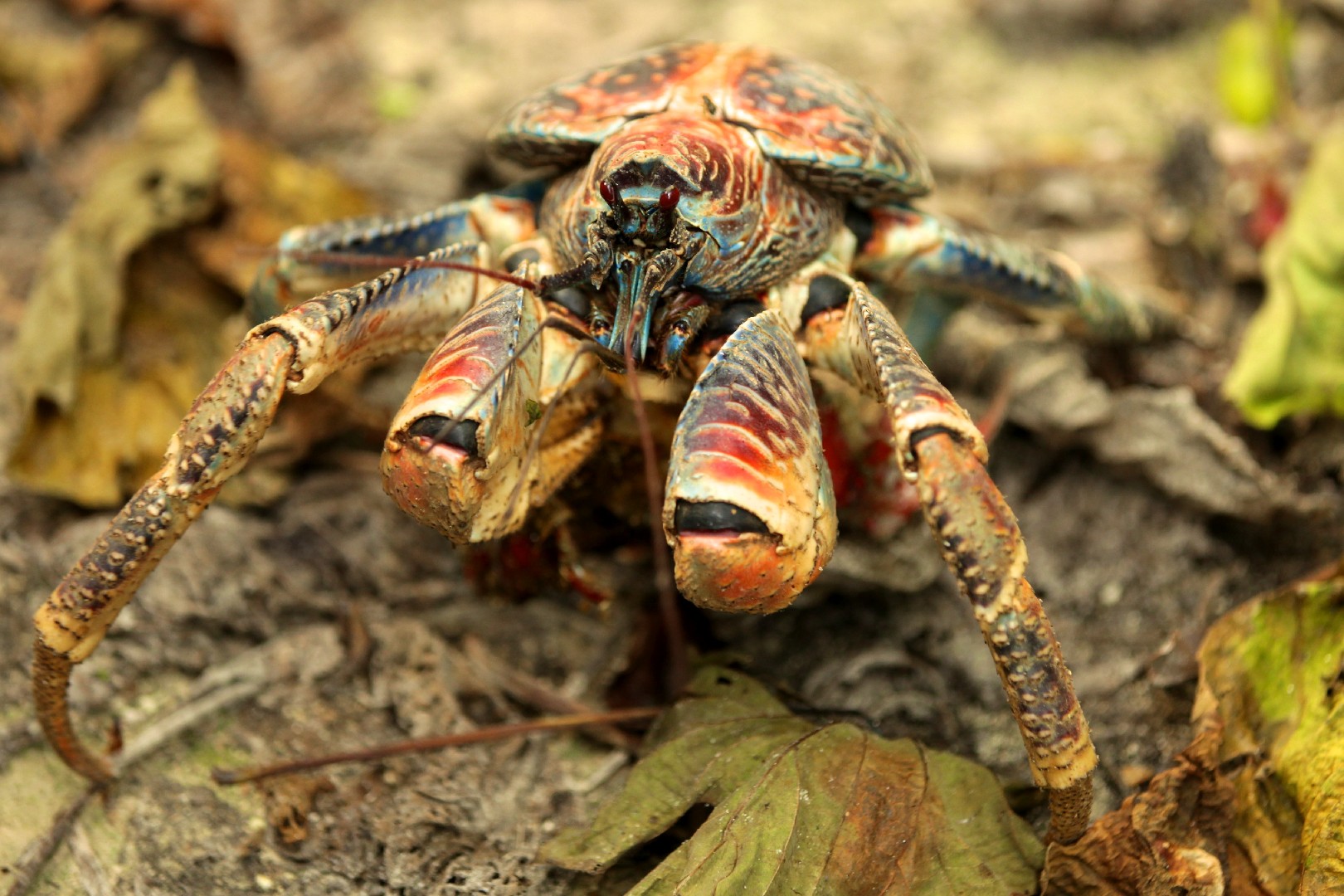
9. Coconut crab
Coconut crab (Birgus latro) is a terrestrial hermit crab found on islands of the Indian ocean, Impressively, it is the largest land arthropod in the world. Coconut crab is an opportunistic feeder, consuming nuts, fruits, tree pith, carrion, or any food source left on the ground. Despite being popularly associated with coconuts palms, coconuts do not make a significant part of its diet.
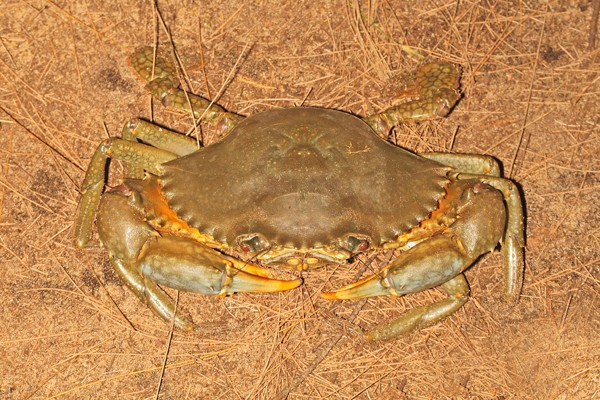
10. Mud crab
More







