




Top 20 Most Common Insects in Riga
Insects, tiny yet integral components of our environments in Riga. Their variety, shaped by diverse landscapes, mirrors the richness of ecological niches in the region. Insects exert crucial roles, from pollinating plants to controlling pests. Our list reveals the 20 most common insects in Riga, underscoring the symbiotic connection between these varied environments and their resident insects. Discover how these tiny creatures help to balance our ecosystem and contribute to our daily lives.

Most Common Insects
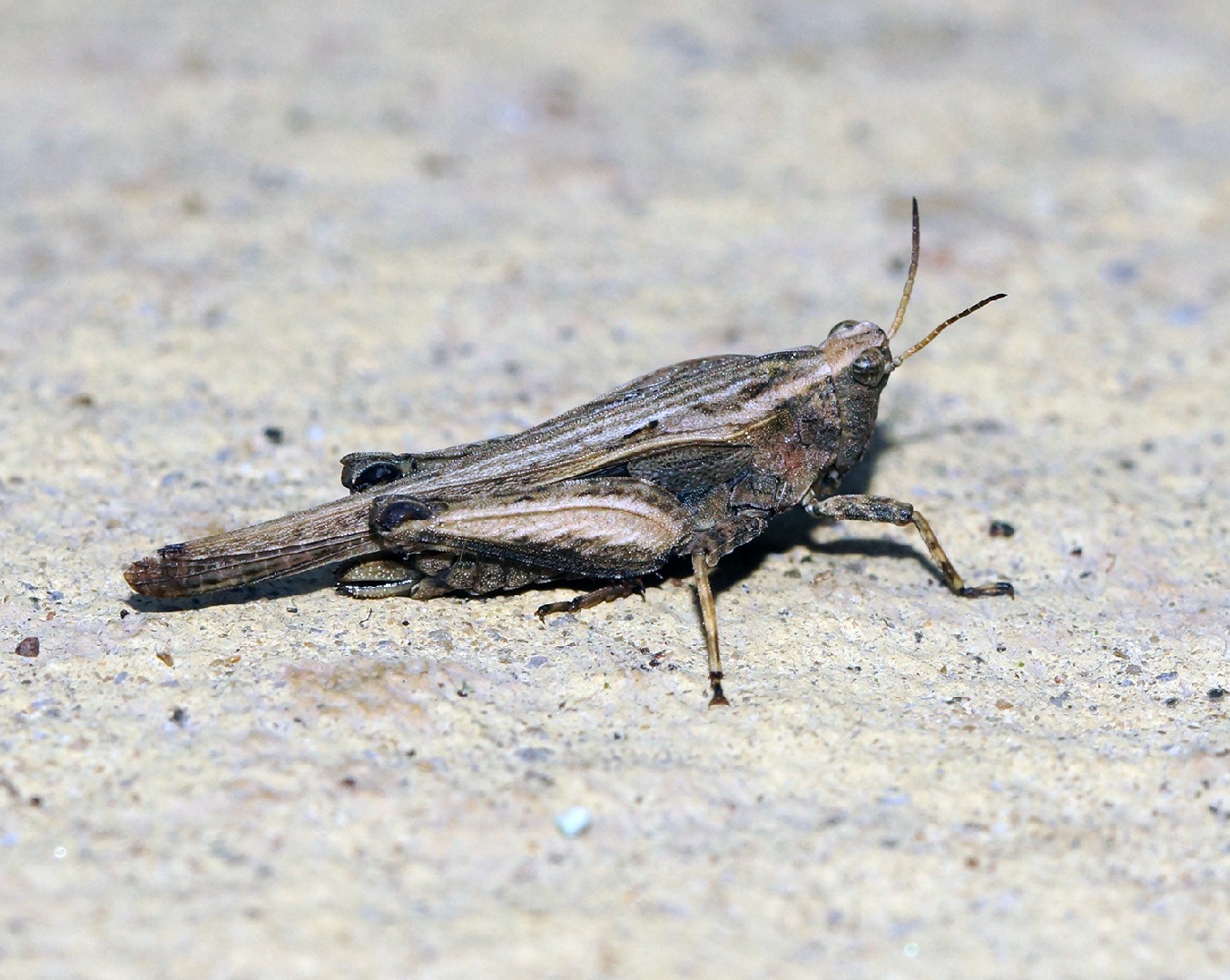
1. Slender ground hopper
The saber-spine-bug (Tetrix subulata) belongs to the family of spiny-throats (Tetrigidae) in the order of the short-term terrors (Caelifera).
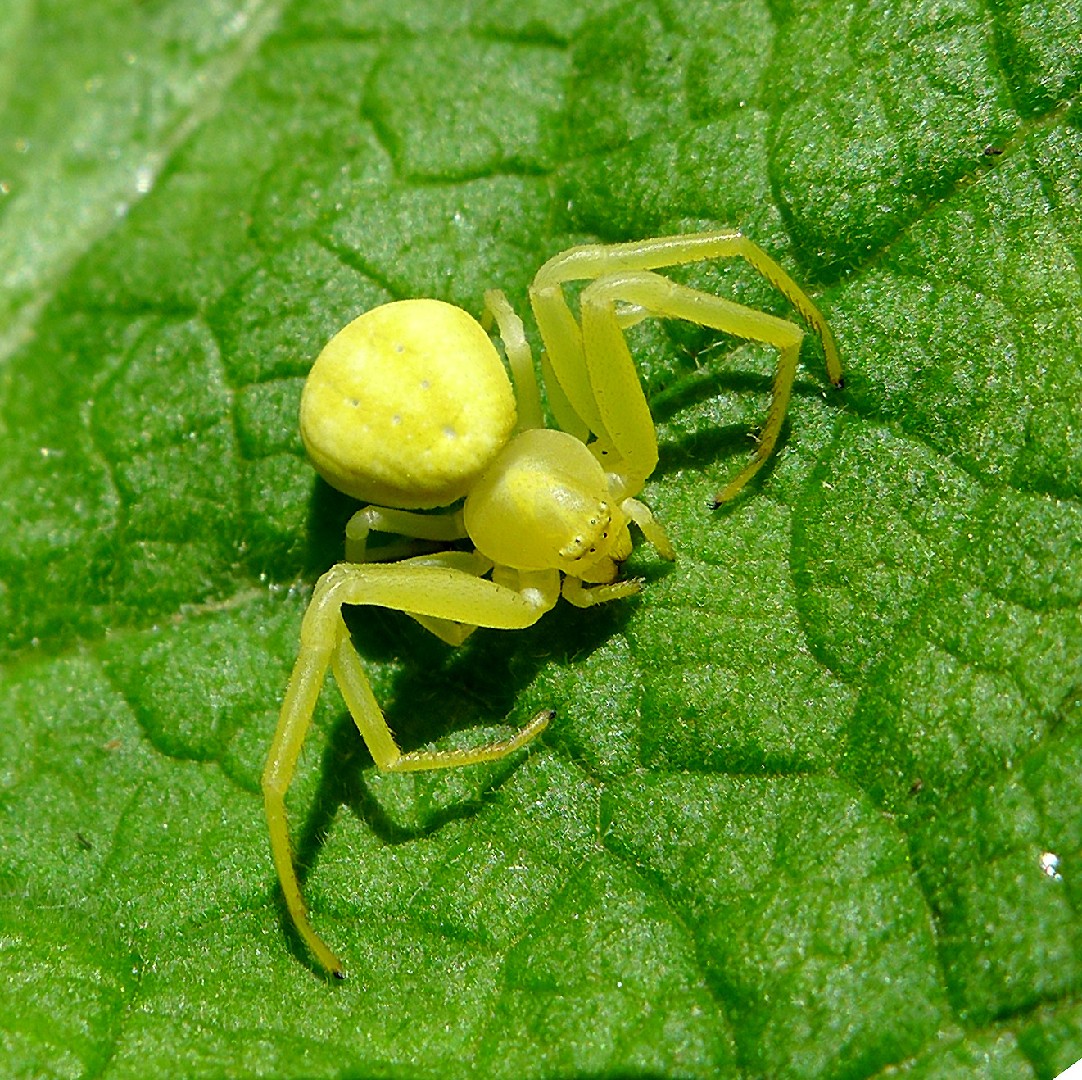
2. Goldenrod crab spider
Rather than for its coloring, goldenrod crab spider (Misumena vatia) is named for its tendency to hunt within sprays of goldenrod. This species is capable of catching and consuming prey several times larger than itself, such as dragonflies or grasshoppers. Loyal parents, the females will guard their eggs until they hatch and the tiny spiders disperse, after which the female will die.
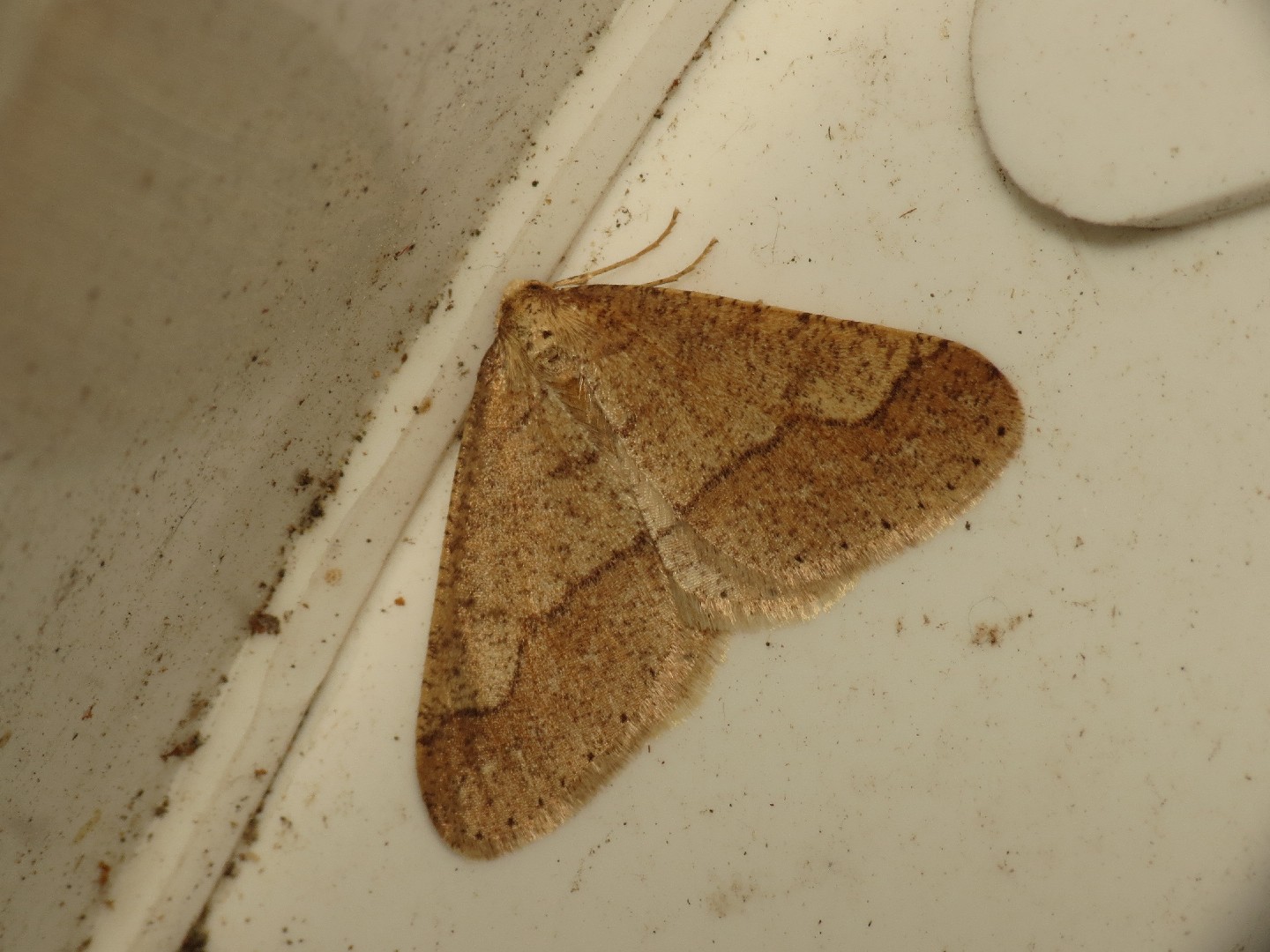
3. Dotted border
The dotted border (Agriopis marginaria) is a moth of the family Geometridae. The species was first described by Johan Christian Fabricius in 1776. It is found throughout Europe, except the far north, and the Near East. The female of this species has only vestigial wings and is totally flightless. It is usually found resting on the trunks and branches of the larval food plants. The male has orange-brown forewings with a paler yellowish band and a row of dots along the termen which gives it its common name. The hindwings are whitish with faint fascia. Melanic forms are frequently seen. The wingspan is 36–42 mm. The adults are active from February to April, the male sometimes coming to light but not strongly attracted. The egg is ovate, greenish, becoming reddish on the upper side. The very variable larva is usually greenish-brown with dark cross-shaped markings along the back and feeds on a range of trees and shrubs (see list below). The species overwinters as a pupa. ^ The flight season refers to the British Isles. This may vary in other parts of the range. 
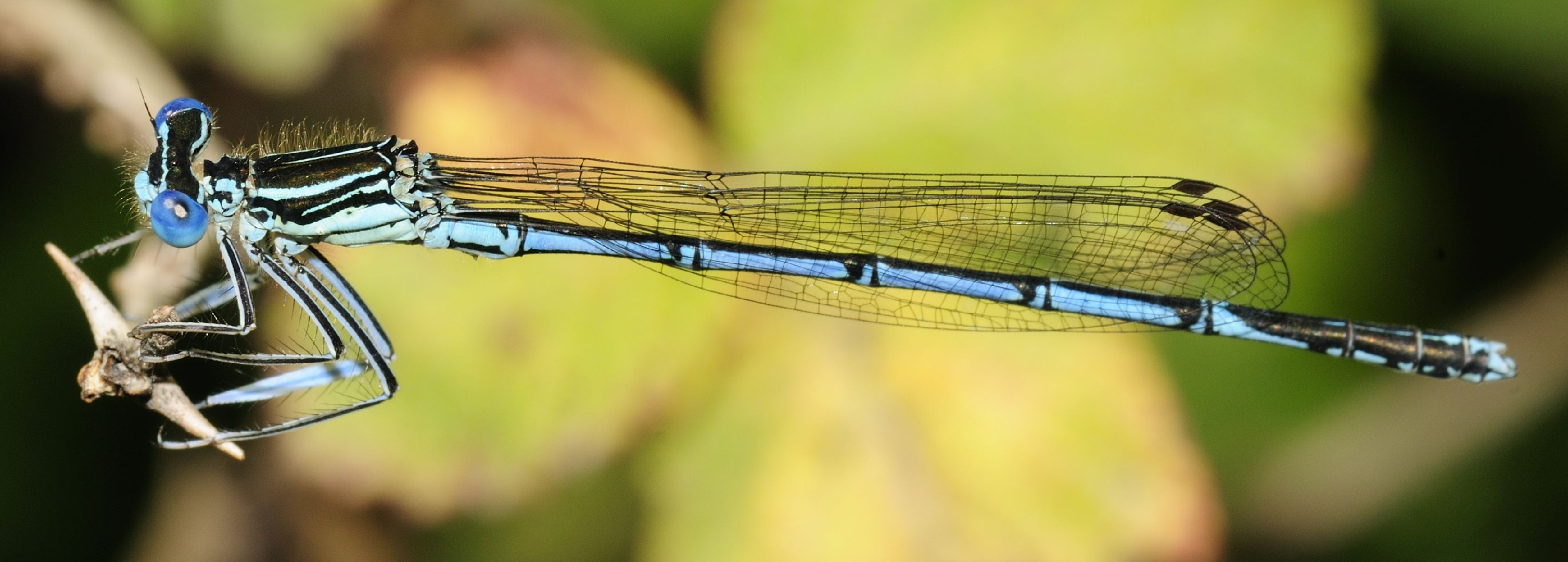
4. White-legged damselfly
The white-legged damselfly or blue featherleg (Platycnemis pennipes) is a damselfly of slow-flowing, muddy waters. It occurs from the Atlantic to Siberia and is often abundant throughout its range.
5. Scallop shell moth
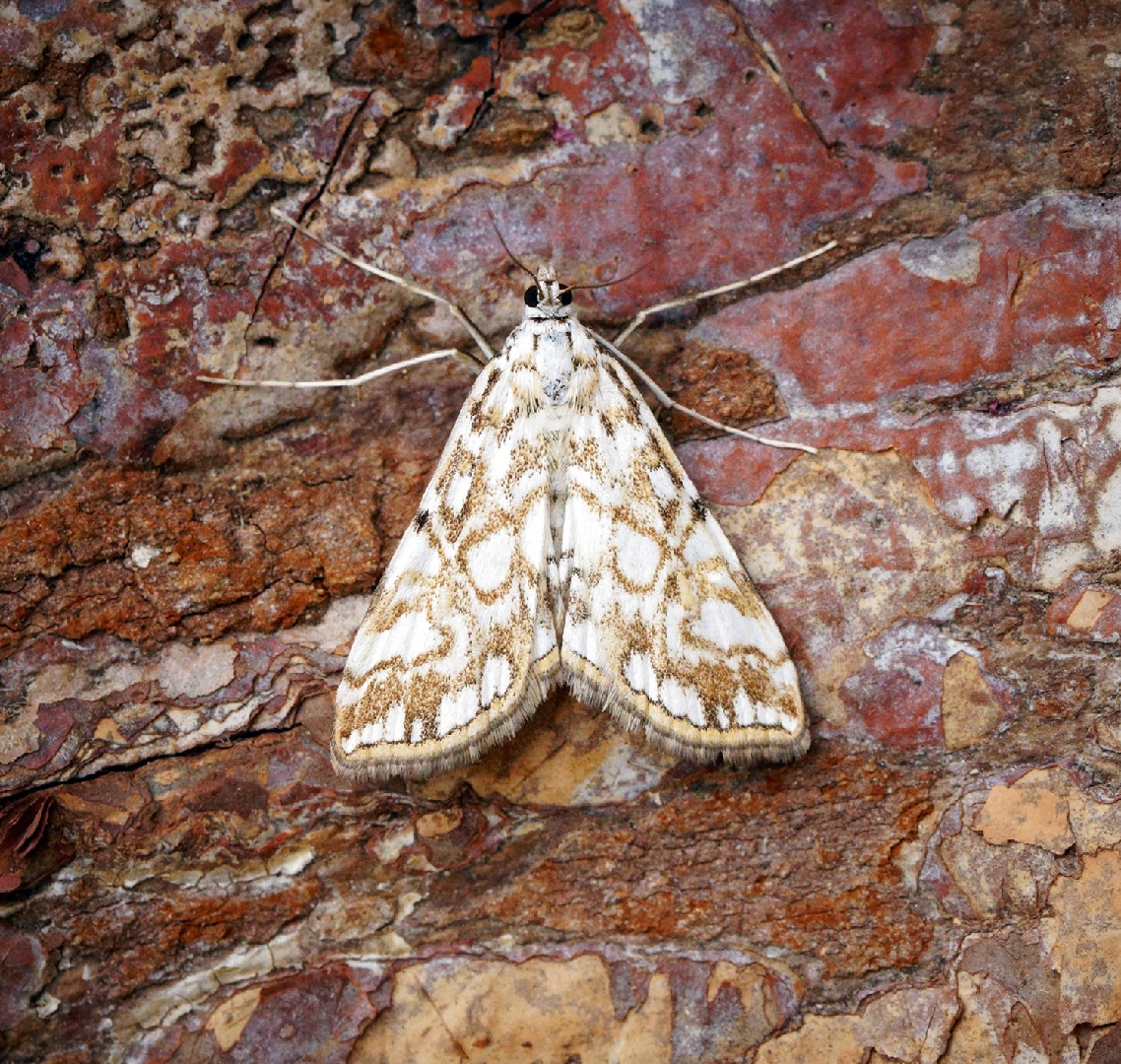
Rheumaptera undulata, the scallop shell, is a moth of the family Geometridae. It was first described by Carl Linnaeus in his 1758 10th edition of Systema Naturae. It is found in most of the Palearctic realm and North America. The wingspan is 25–30 mm. The ground colour of the forewings is pale. The crosslines are darker, wavy, evenly spaced and numerous. The outer margin is pale brown with a scalloped fringe. The hindwings resemble the forewings but are paler. There is one generation per year with adults on wing from the end of May to August in Europe. The larvae feed on birch (including Betula verrucosa and B. pubescens), Vaccinium (including V. myrtillus and V. uliginosum) and willow species (including Salix myrtilloides, S. caprea, S. aurita, S. cinerea, S. myrsinifolia and S. phylicifolia), as well as aspen {Populus tremula), Populus balsamifera, Berberis vulgaris, Ribes alpinum, Spiraea salicifolia, rowan (Sorbus aucuparia), Elaeagnus commutata and Myrica gale. Larvae can be found in August and September. It overwinters as a pupa.
6. Tapered drone fly
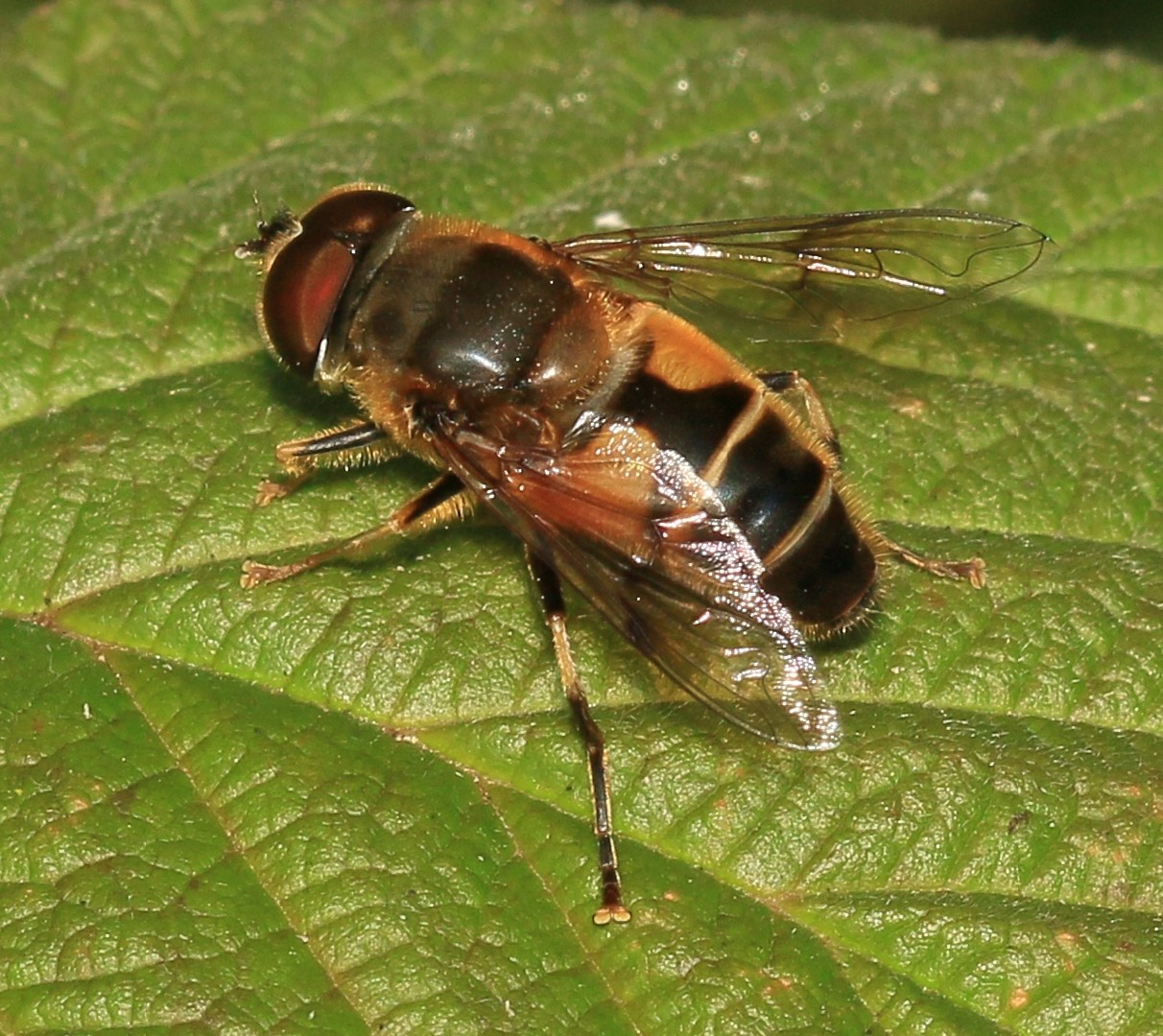
Wing length 8 - 13 mm. Antennomere 3 brown-black. Arista plumose to tip.Tarsi 1 and 2 entirely yellow. Wing with diffusely bordered darkened median band and pterostigma 4 times as long as wide. Dimorphic (males with triangular abdomen, females with squarish abdomen).
7. Large yellow underwing
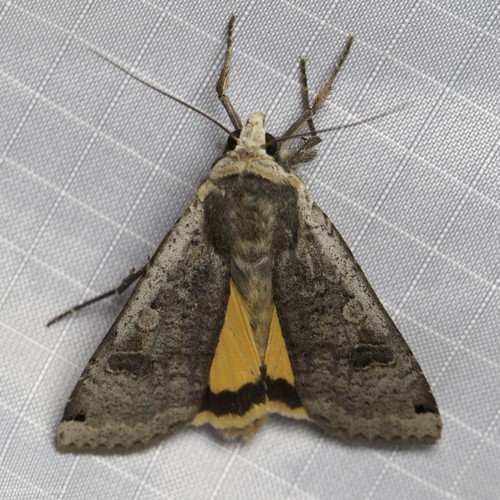
An unusually large and heavy species of moth, large yellow underwing (Noctua pronuba) is dreaded by gardeners for the larvae's habit of causing fatal damage to the base of virtually any herbaceous plant. Large migrations occur some years, but how those years are determined is not yet known. Its contrasting colors (yellow-orange and brown) are thought to confuse would-be predators.
8. Scorched carpet
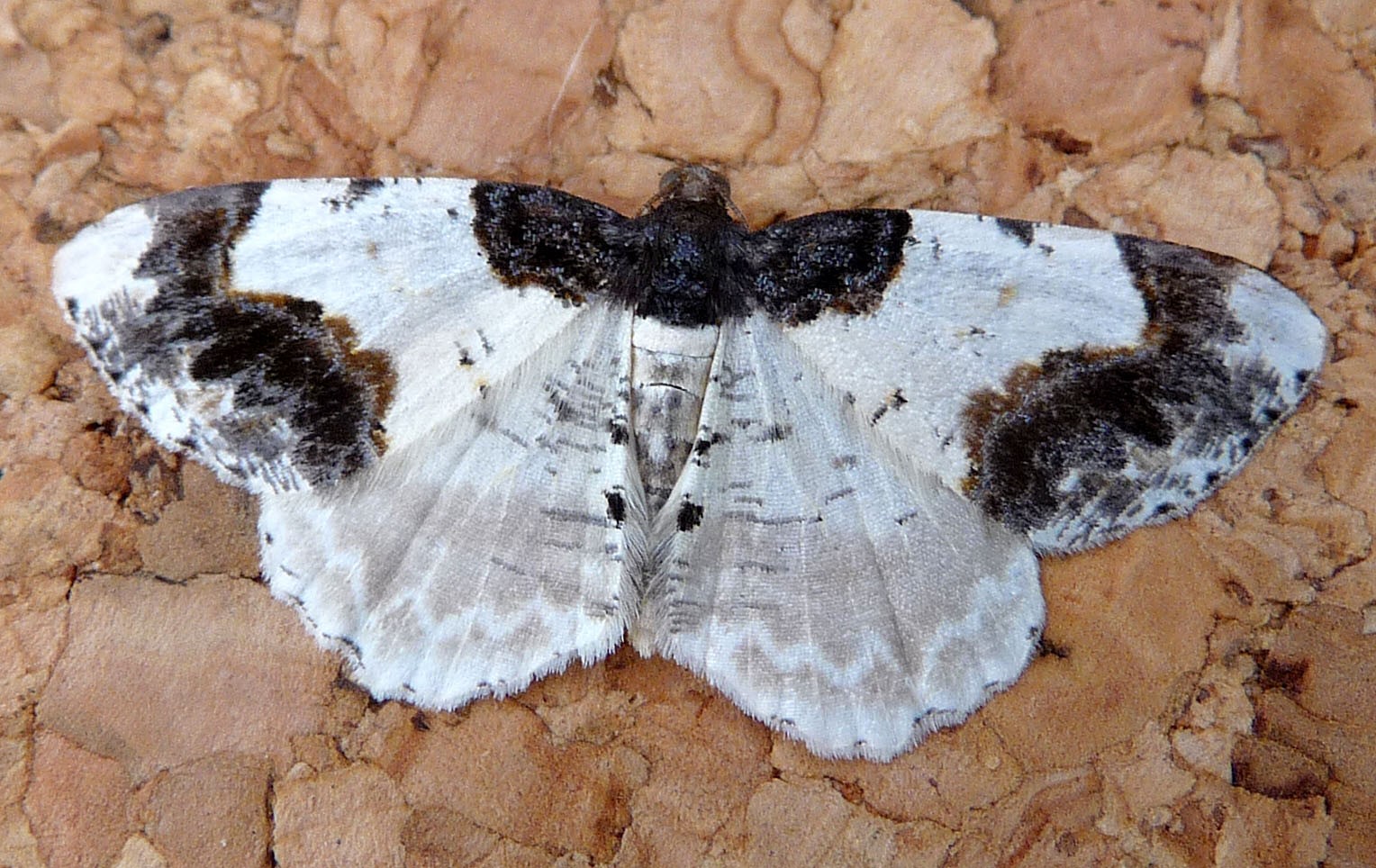
The wingspan is 25–30 mm. The basic color of the wings is glossy white, creamy white or light brownish. The basal area of the forewings is dark brown and can sometimes be slightly blue-grey. Across the forewings near the outer margin there is a blue-grey and brown wavy band. Hindwings are whitish with wavy pale brown lines on the slightly wavy outer edges. The underside of the wings is suffused with reddish brown. Larvae are moderately stout, bright green with red dorsal spots, a red lateral blotch on the 1st—2nd abdominals and red marks on claspers; a rare variety is grey-brown. The pupae are red-brown with blackish wings.
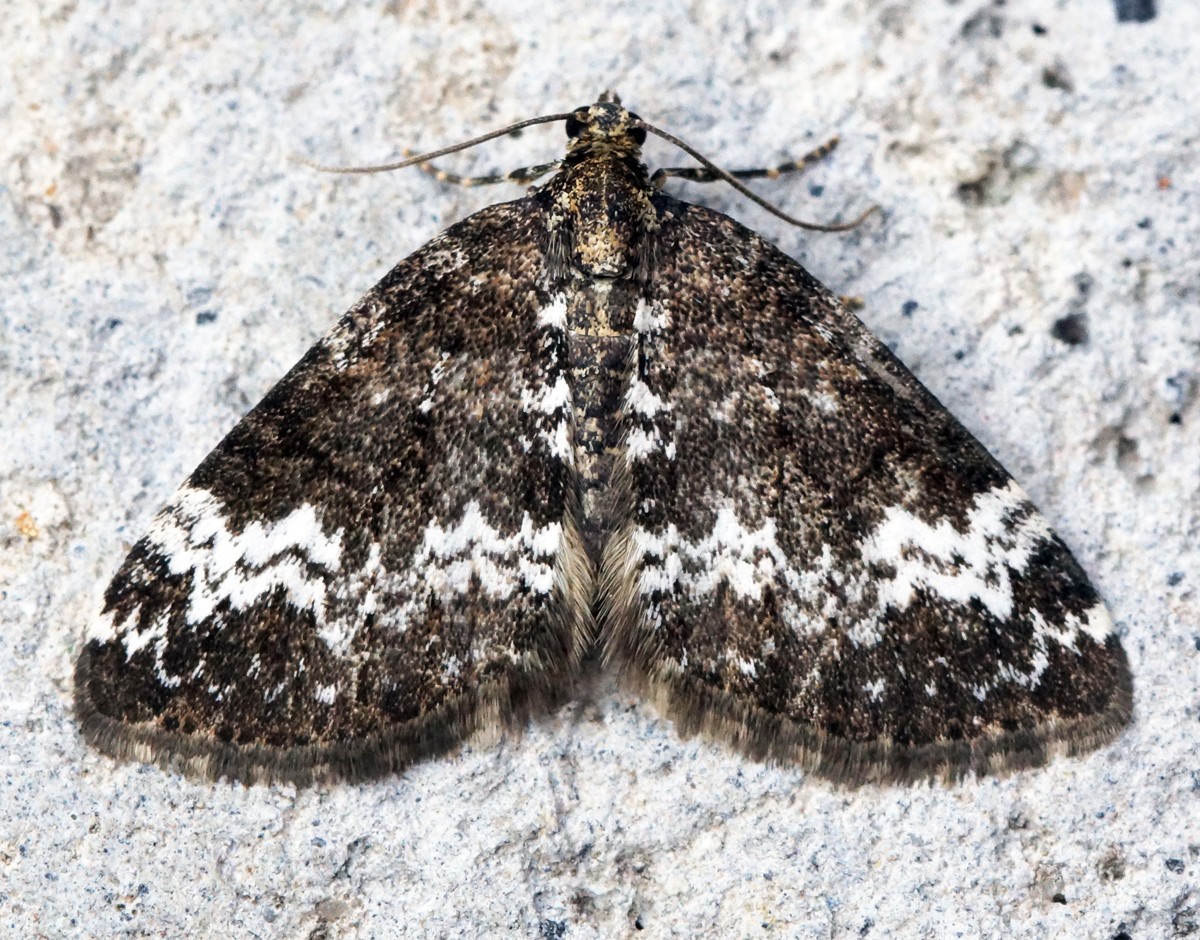
9. Small rivulet
The species is very similar to Perizoma affinitata in colour and pattern but often has a double indention in the inner margin of the band. It is also smaller. "Very similar to affinitata but smaller, with clearer and more regular white marks at the hindmargin of the forewing, tendency towards obsolescence of the pale band on the dark hindwing; distal area of forewing with black dushes on the veins. Generally less variable than affinitata. — peterseni notn. nov. has the white antemedian band well expressed; generally also the postmedian white band is somewhat widened and sometimes even a complete white subbasal is present.
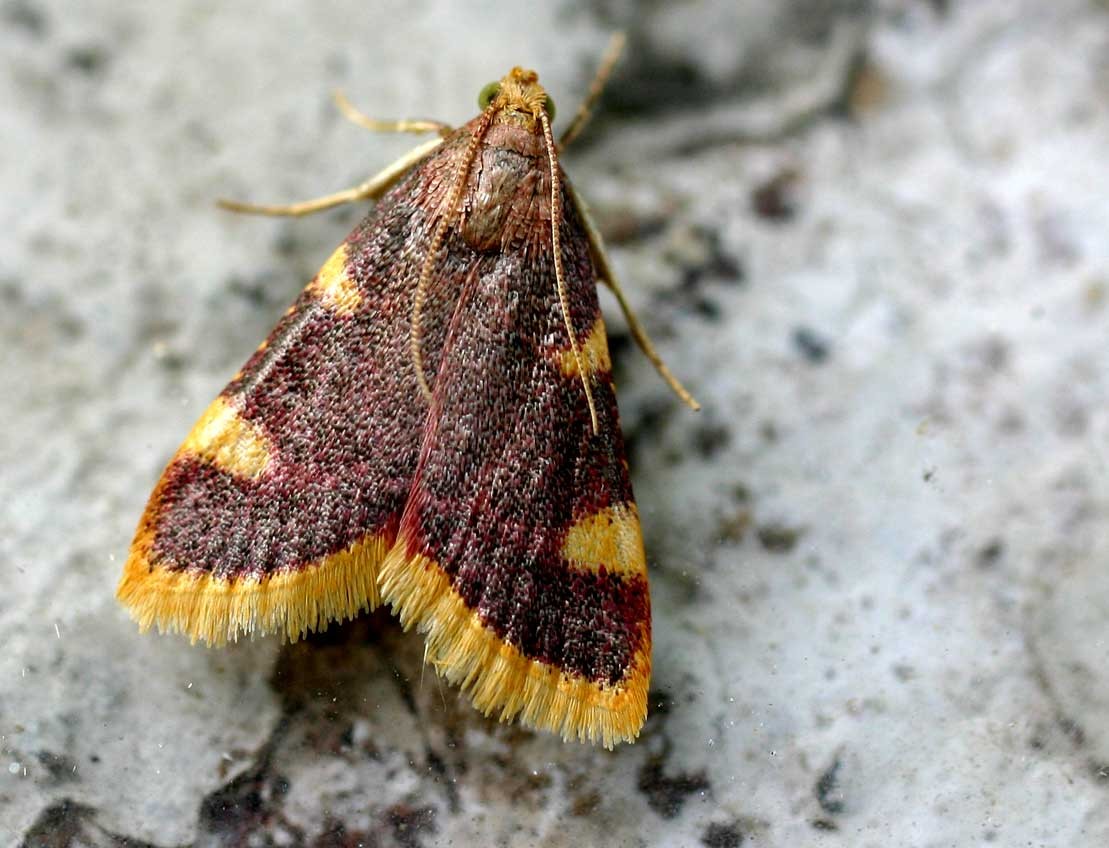
10. Clover hayworm moth
The wingspan is 1.6 - 2.5 cm.
More







