




Top 13 Most Common Insects in Maldives
Venture into a world often unnoticed, the bustling community of insects within the tropical paradise of Maldives. These minute beings, characterized by segmented bodies and jointed limbs, thrive amidst Maldives's unique geography and climate. Each island's distinct ecosystem nurtures a variety of insects, some pesky, others beneficial. Delve into our exploration of the 13 most common insects in Maldives, illustrating the compelling interplay that geography, climate, and human intervention has on these tiny, yet impactful creatures.

Most Common Insects
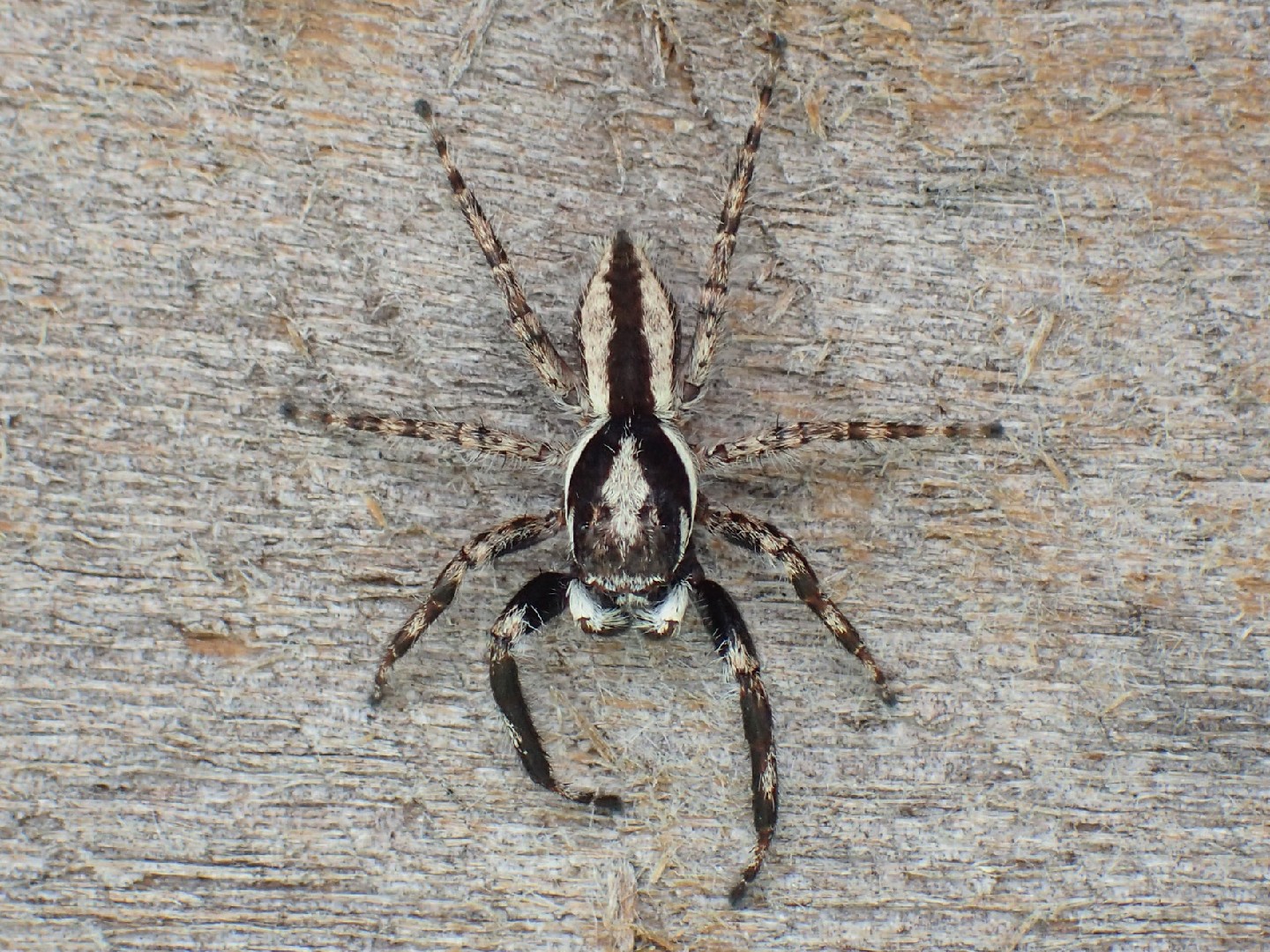
1. Gray wall jumper
The female gray wall jumper lays her eggs in cracks or other hidden areas. The young and mature spiders feed on flies, making them useful residents in a household. They do not make webs, but carefully hunt and jump on their prey.

2. Banded coral shrimp
Banded coral shrimp (Stenopus hispidus) is a crustacean that occupies tropical waters in the Atlantic Ocean, the Gulf of Mexico, and reefs surrounding Australia and New Zealand. It acts as a cleaner fish, and removing parasites and fungi from other passing fish. This species is monogamous and mates for life.
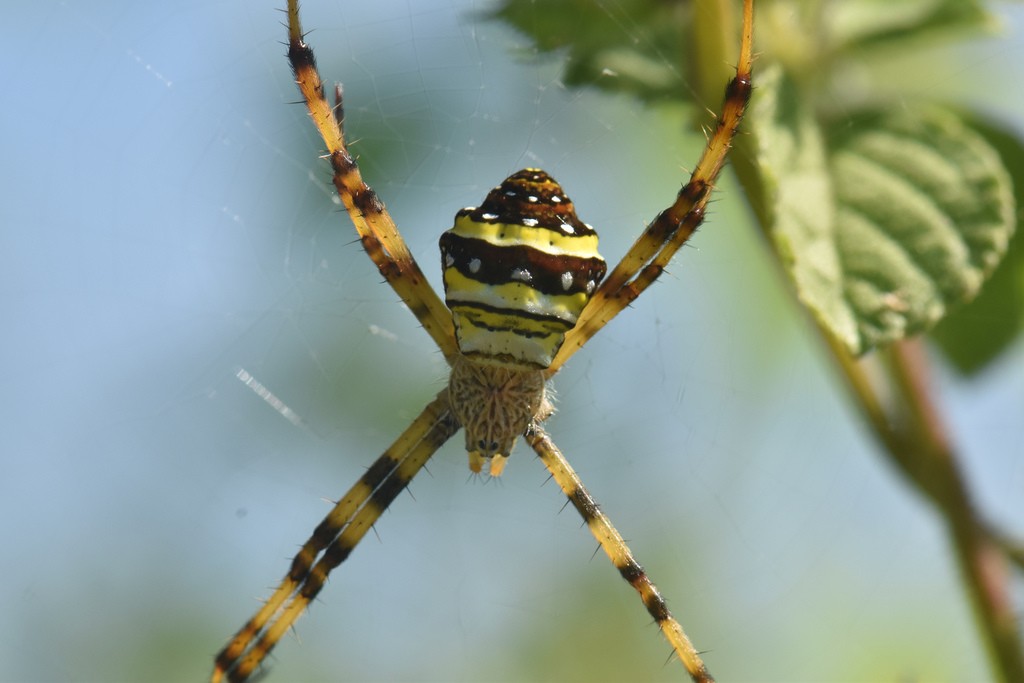
3. Signature spider
Female is about 8-12 mm long and male is 3.5-4.5 mm. After Cephalothorax greyish brown with hairs. Sternum heart shaped with hairy pubescent white patch. Palps bear spines. Legs greyish brown and hairy. Femora dorsally yellowish. Abdomen pentagonal and hairy. Dorsum yellowish with brown transverse bands. Three sigilla pairs distinct. Ventrum dark brownish with two longitudinal white patches. 
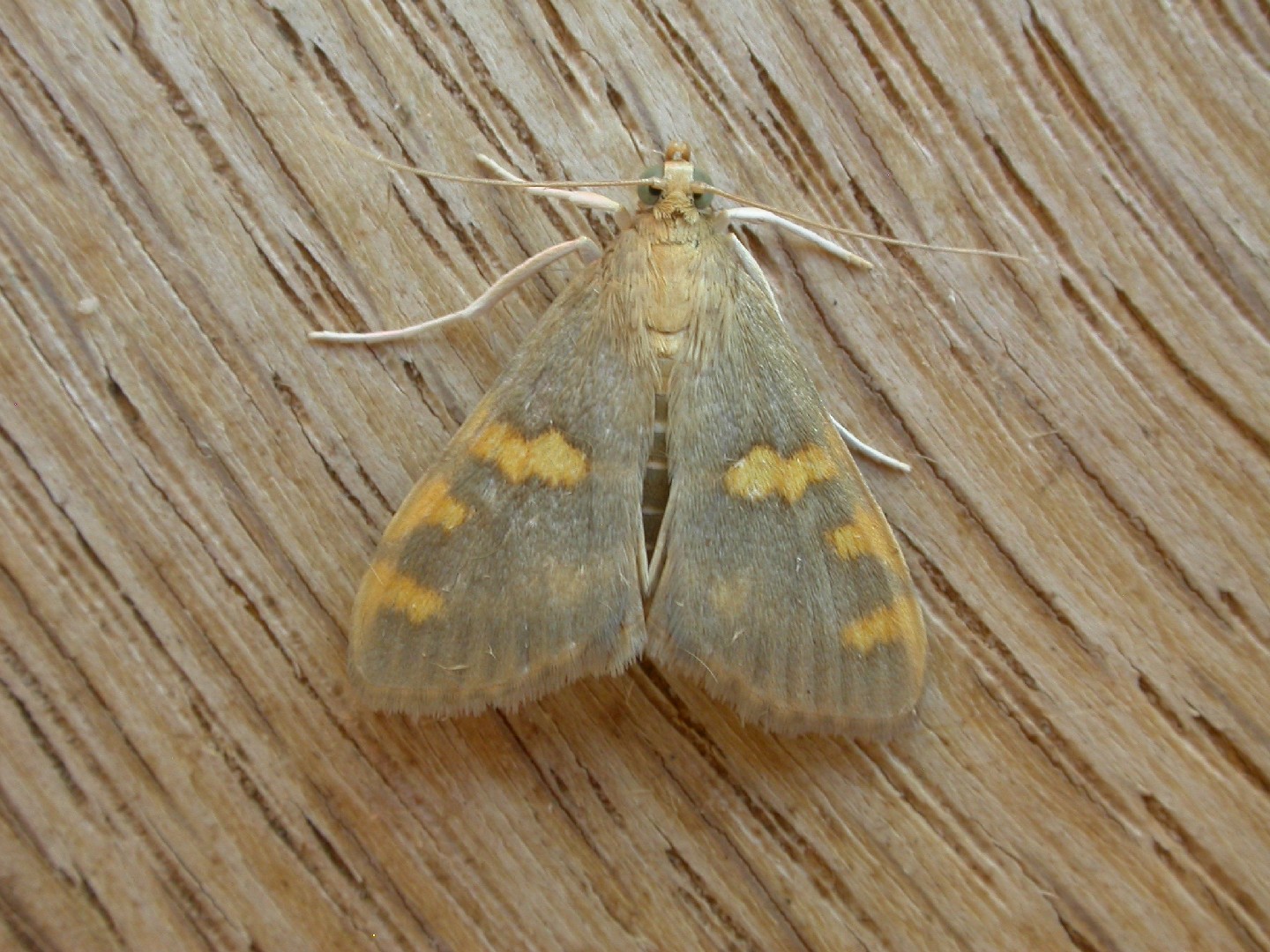
4. Rehimena surusalis
Rehimena surusalis is a species of moth of the family Crambidae described by Francis Walker in 1859. It is known from Australia (including New South Wales), China (including Hong Kong), the Andaman Islands, Sri Lanka, Indonesia, Taiwan, Korea and Japan. The wingspan is about 16 mm. The larvae bore in the buds of Hibiscus tiliaceus.
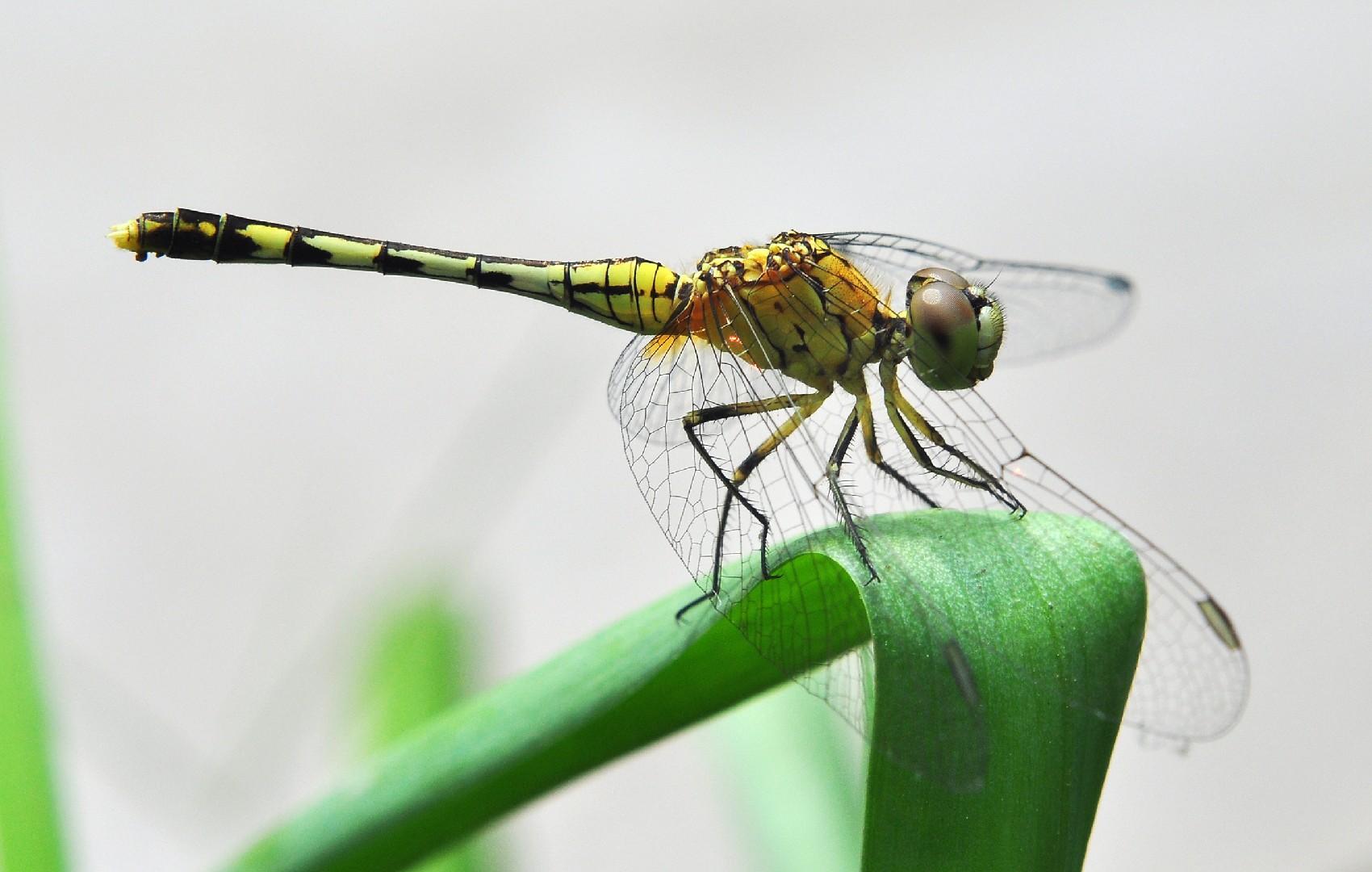
5. Chalky percher
Diplacodes trivialis is small dragonfly with bluish eyes and greenish-yellow or olivaceous thorax and abdomen with black marks. In very old adults, the whole thorax and abdomen become uniform pruinosed blue. Clear wings, without apical or basal markings, and the creamy white anal appendages and deep pruinescence in adults help to distinguish this species from others in its genus.
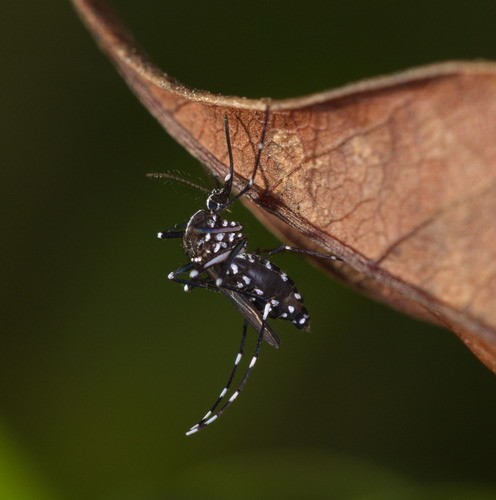
6. Asian Tiger Mosquito
The asian Tiger Mosquito (Aedes albopictus) has recently (the 1970s) infested every corner of the world through the shipment of used tired, lucky bamboo (Dracaena sanderiana), and other similar products. The asian Tiger Mosquito is known to transmit many deadly diseases that include West Nile Virus.
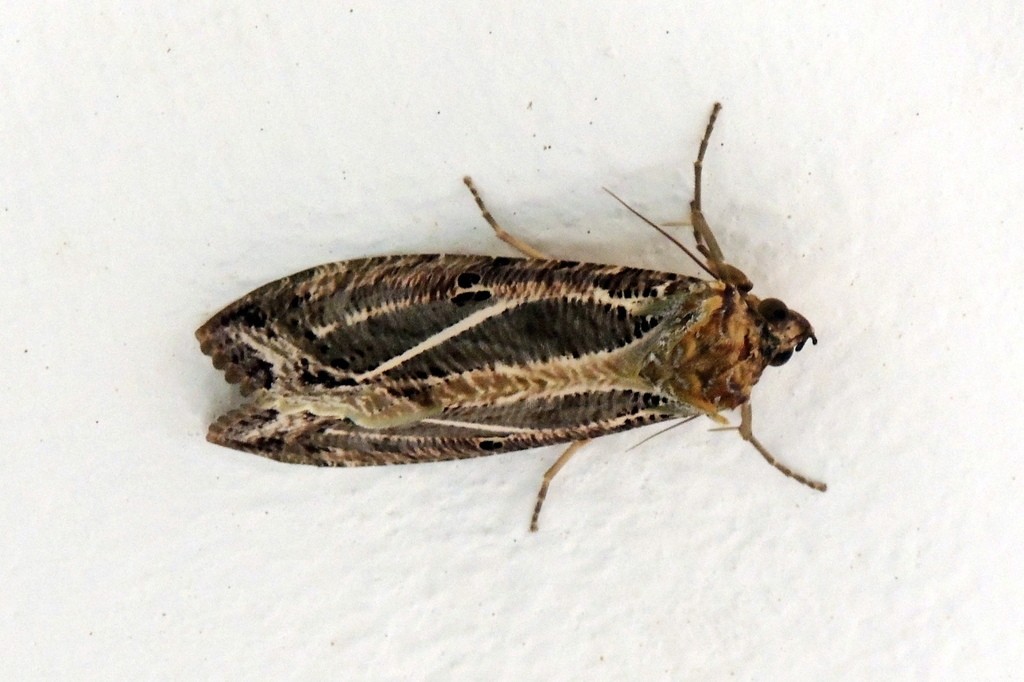
7. Fruit piercing moth
The wingspan is about 60–96 mm. Palpi with third joint long and spatulate at extremity. Forewings with crenulate cilia in both sexes. Male has greenish-grey head and thorax. Abdomen orange. Forewings greenish grey with very numerous faint striated reddish lines. There are three rufous spots which can be seen at end of cell. A dark oblique line from near apex to centre of inner margin. A silvery patch found on vein 1 and another below lower angle of cell. A marginal black band with crenulate inner edge. There is a series of white cilia spots. Ventral side is orange. Forewings with costa and apical area blotched with rufous. Oblique postmedial and sub-apical black bands can be seen. Hindwings with apical area blotched with rufous. A black spot found on costa and another beyond lower angle of cell. A marginal black band runs from vein 5 to anal angle. Female much more prominently striated with rufous coloured forewings. The silvery patches found below and beyond cell very large and conjoined crossed by white streaks above vein 2 and beyond cell.
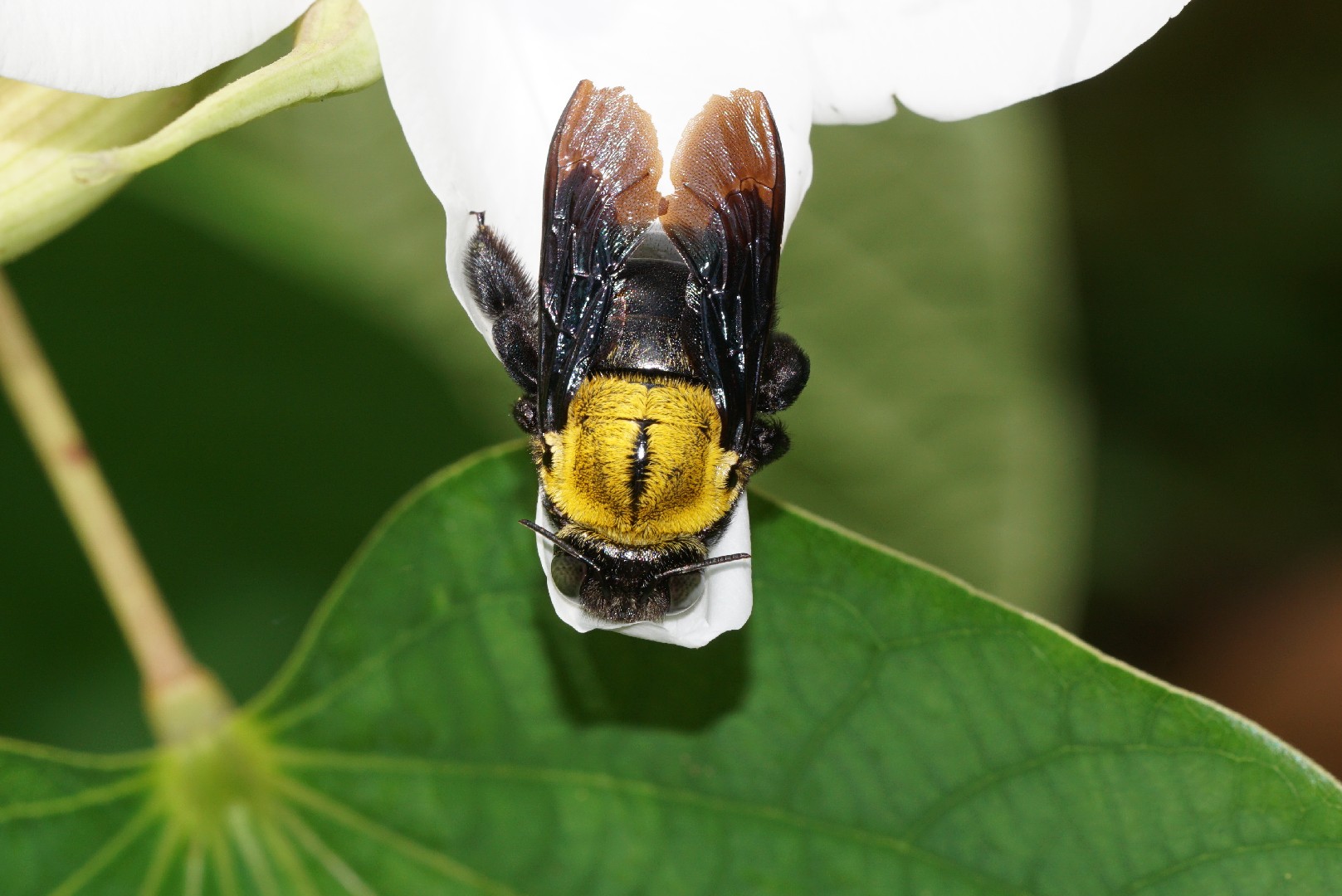
8. White-cheeked carpenter bee
The white-cheeked carpenter bee (Xylocopa aestuans) is among a group of bees known for burrowing in hardwood, such as abandoned structures, trees, or stumps. Males are identified by looking as though they have been sprayed with Cheeto dust. Females have a stark yellow upper half and a dark bottom half of their body when looking overhead.
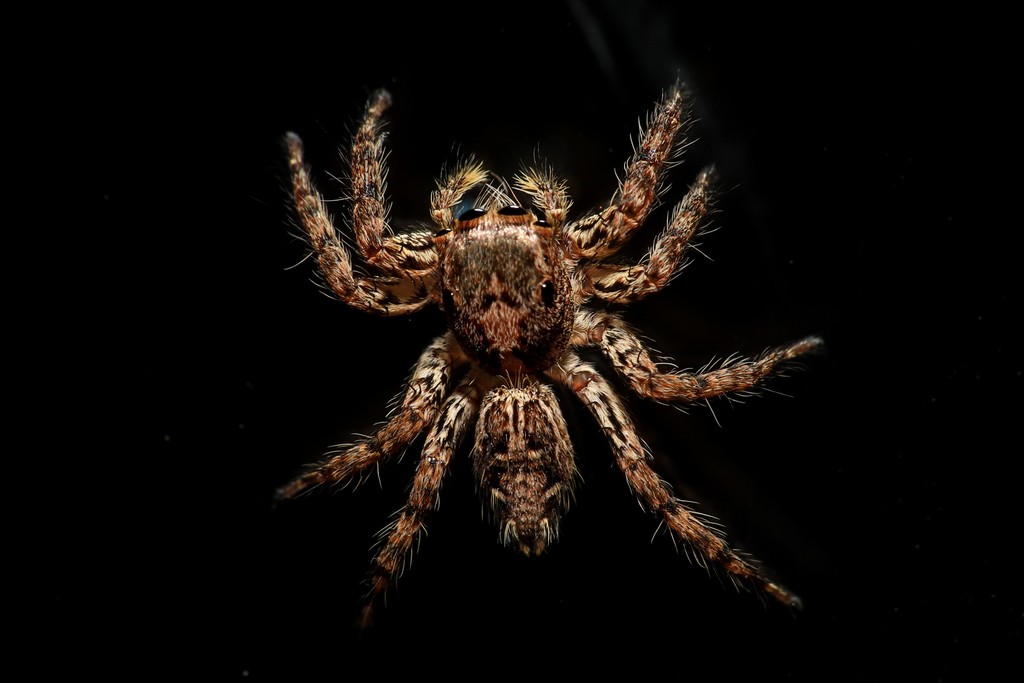
9. Tropical flycatcher
Plexippus petersi is a species of jumping spider native to Asia and has been introduced to Africa and Pacific islands.
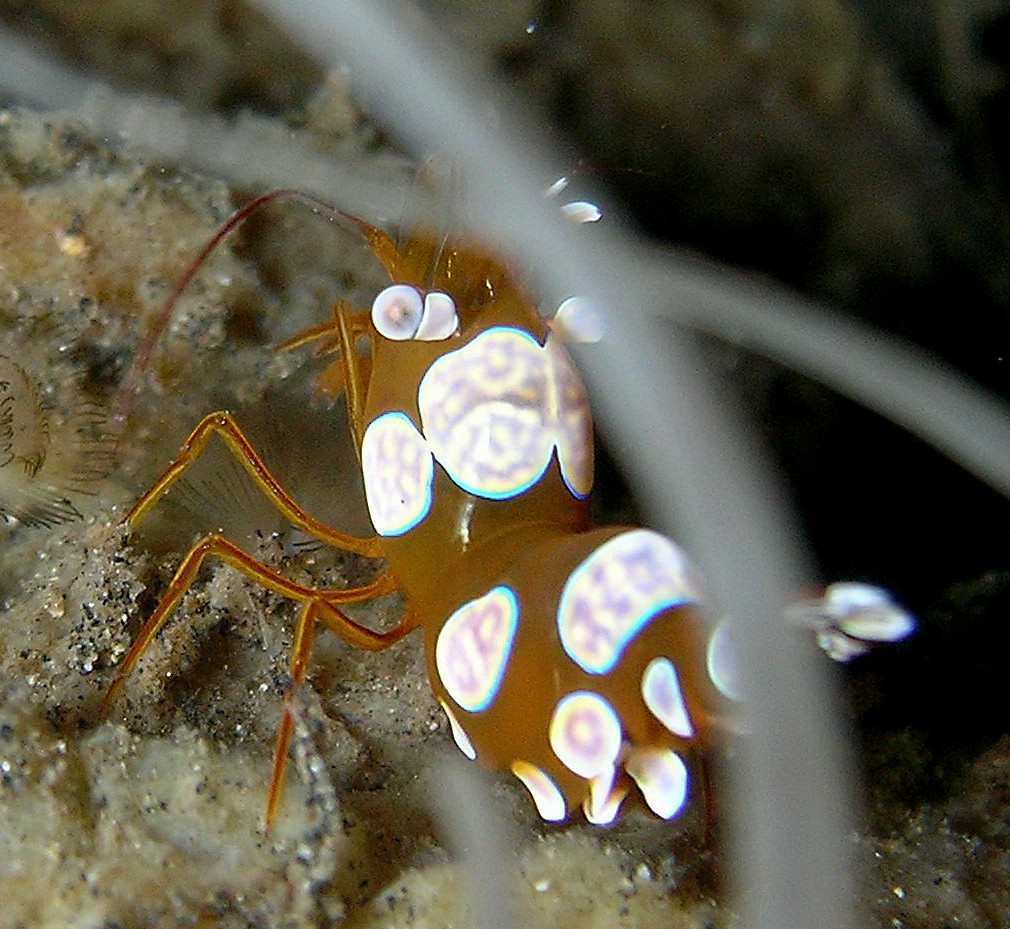
10. Squat shrimp
Thor amboinensis is a small shrimp growing to a length of about 13 millimetres (0.5 in). It is an olive brown colour with symmetrically placed white patches edged with thin blue lines. It characteristically carries its abdomen curved upwards with its tail fan above its head.
More







