




Top 17 Most Common Insects in Hermosillo
Insects, those many-legged creatures inhabiting Hermosillo, are as diverse as the state's varied landscapes. The region's geographical variation, from arid deserts to lush oases, gives rise to a brilliant spectrum of insect diversity. These insects not only adorn Hermosillo with their intriguing forms but also play integral roles in its ecosystem. Some are notorious pests while others are harmless, contributing to the state's ecological equilibrium. Stay tuned as we uncover 17 of Hermosillo's most common insects.

Most Common Insects
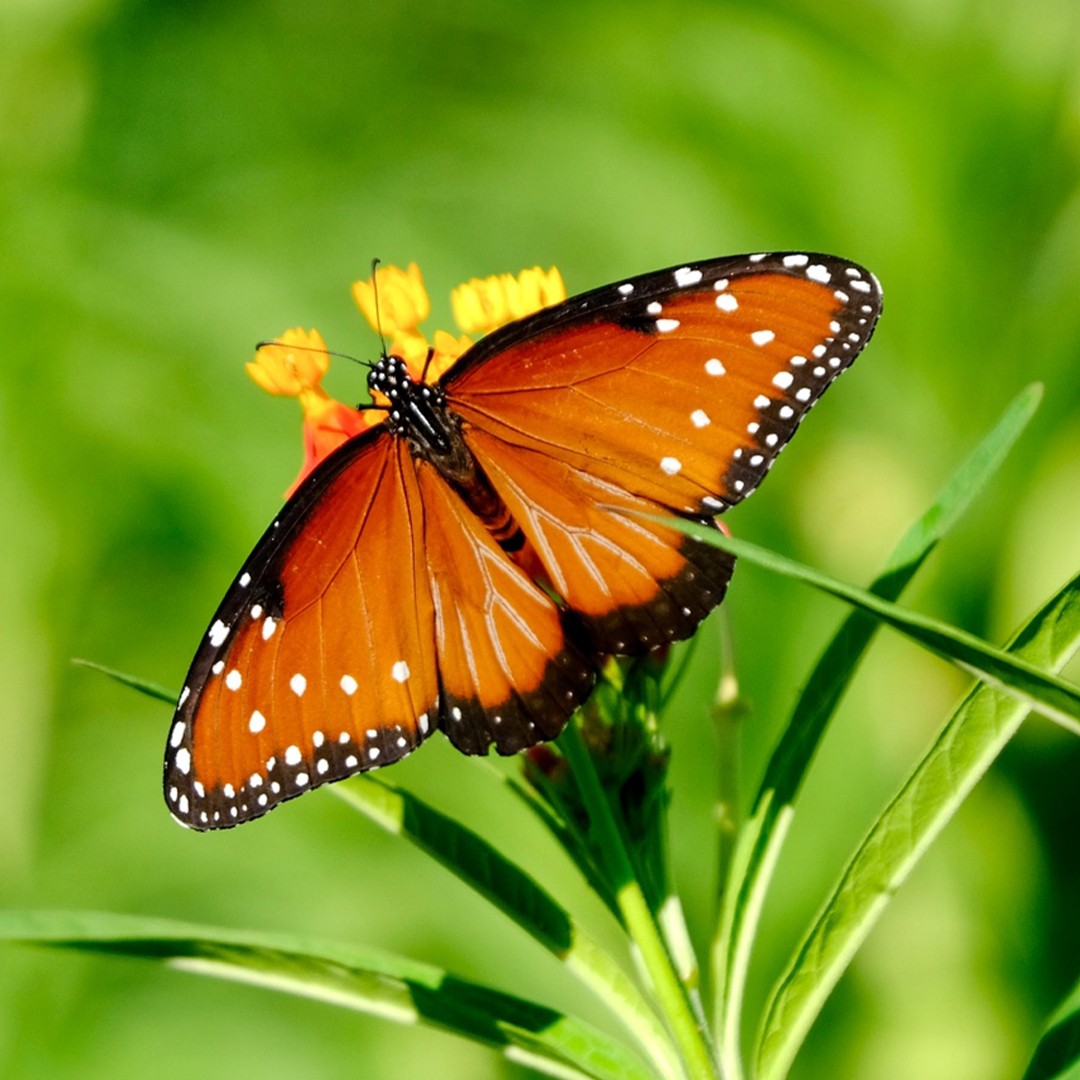
1. Queen
The queen butterfly (Danaus gilippus) is a North and South American butterfly in the family Nymphalidae with a wingspan of 70–88 mm (2.8–3.5 in). It is orange or brown with black wing borders and small white forewing spots on its dorsal wing surface, and reddish ventral wing surface fairly similar to the dorsal surface. The ventral hindwings have black veins and small white spots in a black border. The male has a black androconial scent patch on its dorsal hindwings. It is found throughout the tropics and into the temperate regions of the Americas, Asia and Africa. It can be found in meadows, fields, marshes, deserts, and at the edges of forests. This species is possibly a close relative to the similarly colored soldier butterfly (or tropic queen; Danaus eresimus); in any case, it is not close to the plain tiger (Danaus chrysippus) as was long believed. There are seven subspecies. Females lay one egg at a time on larval host plants. Larvae use these plants as a food source, whereas adult butterflies feed mainly on nectar from flowers. Unpalatability to avian predators is a feature of the butterfly; however, its level is highly variable. Unpalatability is correlated with the level of cardenolides obtained via the larval diet, but other compounds like alkaloids also play a part in promoting distastefulness. Males patrol to search for females, who may mate up to 15 times a day. Male organs called hair-pencils play an important role in courtship, with males with lower hair-pencil levels being selected against. These hair-pencils may be involved in releasing pheromones during courtship that could attract female mates. 

2. White-Lined Sphinx
The white-Lined Sphinx ( Hyles lineata) is a colorful furry moth with striped wings. It has a similar size of a hummingbird, and behaves like a hummingbird as well. It can fly extremely fast, and instantly swing from side to side while hovering just like a hummingbird. It feeds on nectar from a variety of flowers including petunia, honeysuckle, lilac, clovers, thistles, and jimson weed.
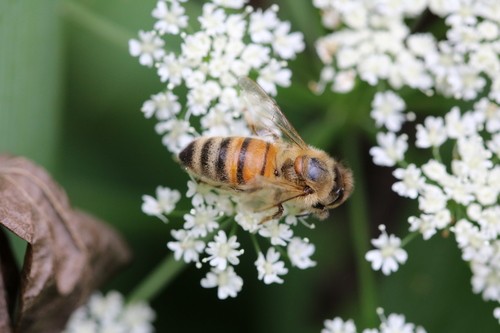
3. Western honey bee
Western honey bee(Apis mellifera) is the most common species of honeybee in the world. Among the first domesticated insects, its cultural and economic impact on humanity has been vast and far-reaching, providing honey, wax and its services as a pollinator. Western honey bee faces challenges worldwide, such as colony collapse disorder, and populations are thought to be decreasing.
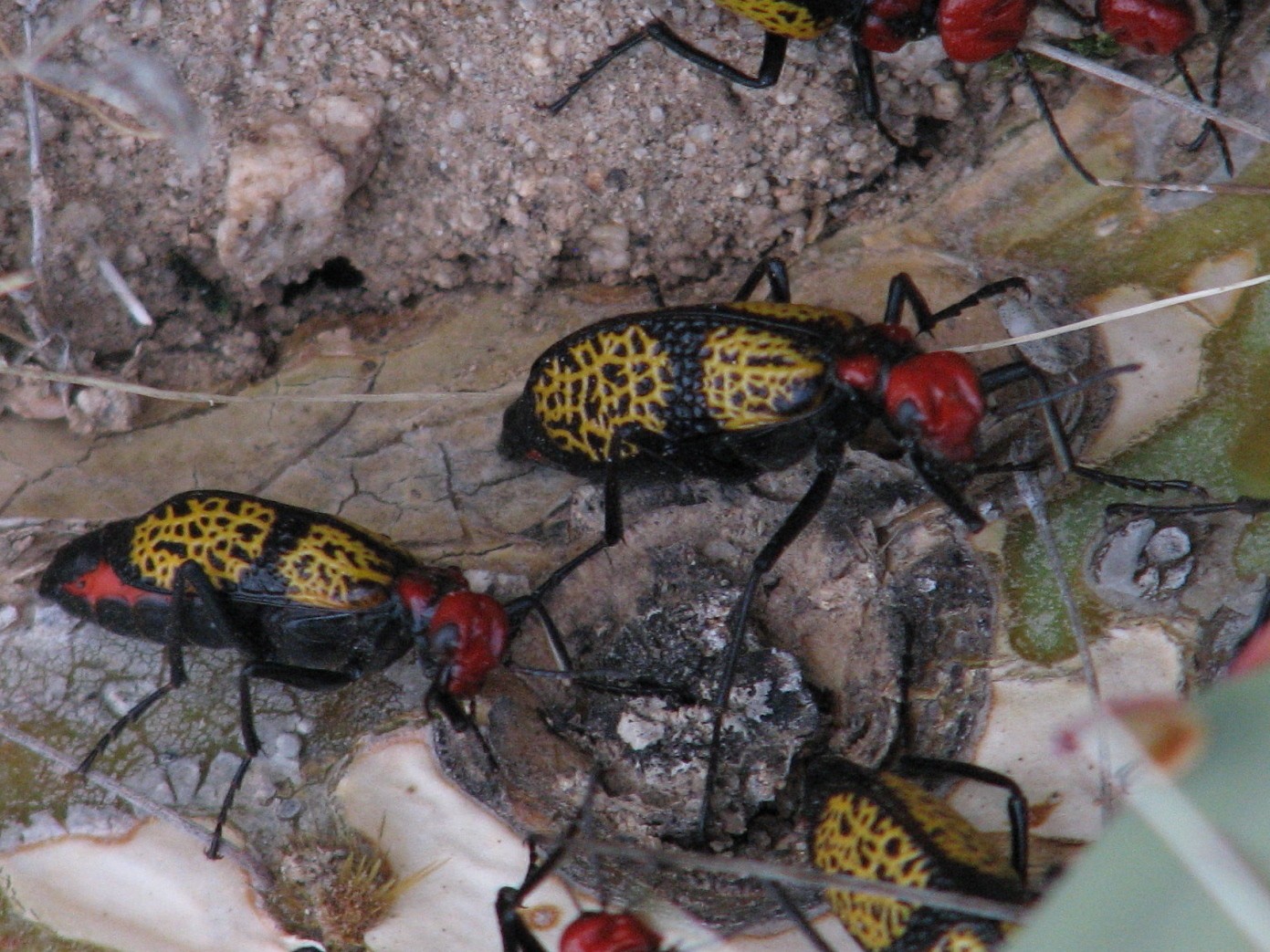
4. Iron cross blister beetle
Tegrodera aloga is generally about 2 cm long; it has a long, narrow and cylindrical body and a wide head. The beetle is easily recognizable due to its contrasting yellow and red spots found on its black body.
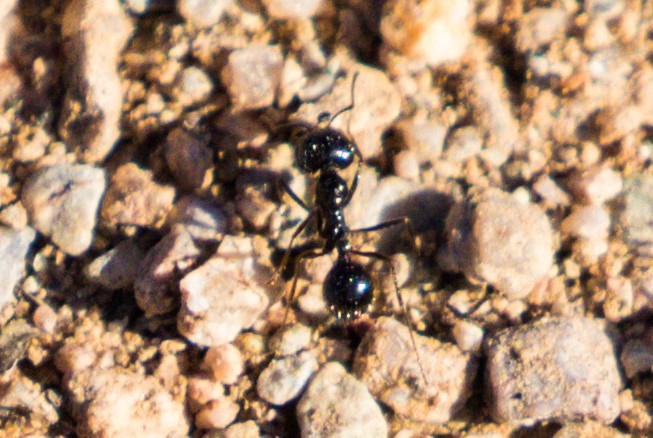
5. Messor pergandei
M. pergandei has a head of equal length and width, with very large mandibles. It has short white or yellow hair and a large thorax. Males typically measure about 8.5 mm (0.33 in) and females about 10 mm (0.39 in). However, individual size can vary based on factors such as availability of food and interspecific competition. The species is named after American myrmecologist Theodore Pergande.
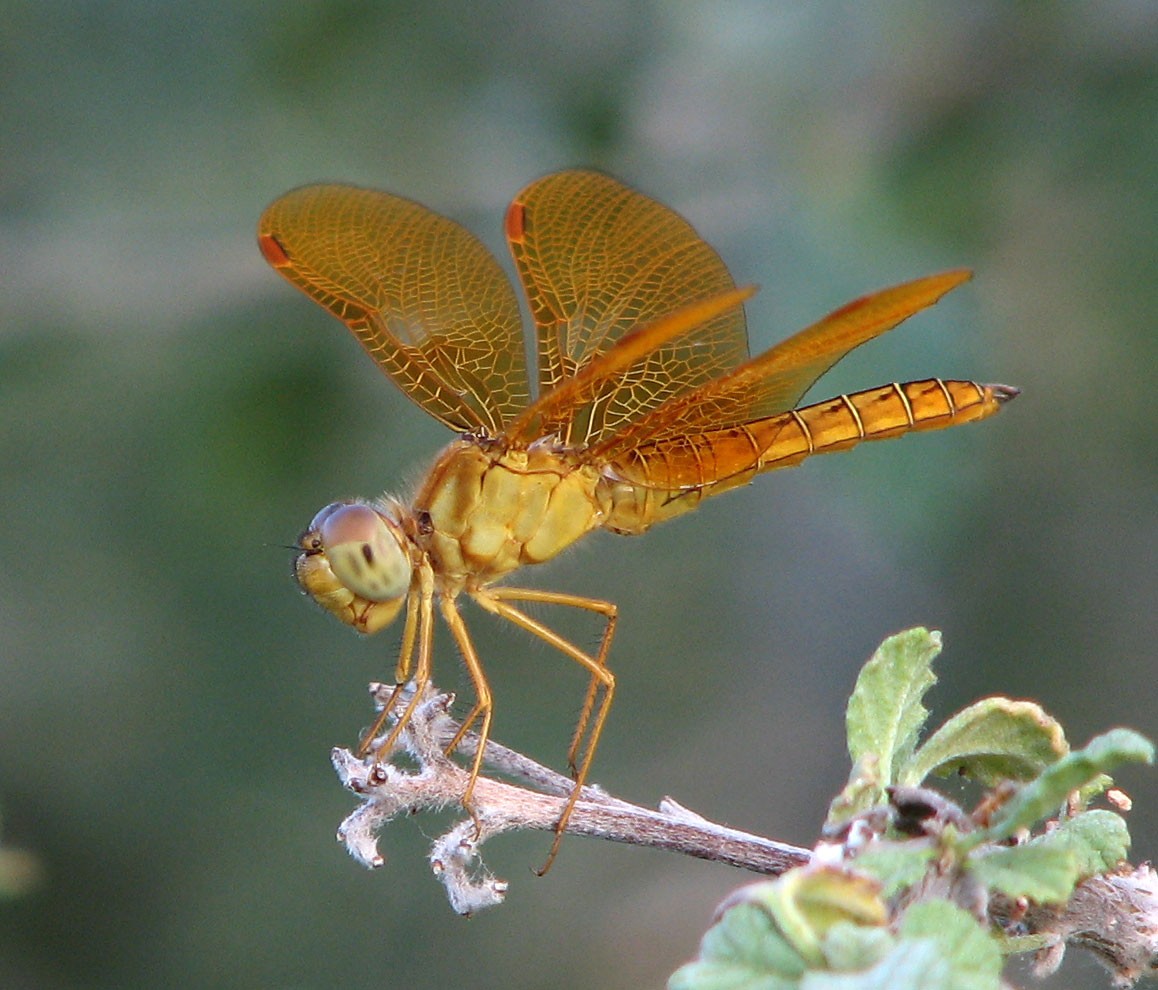
6. Mexican amberwing
The scientific name Perithemis intensa was first validly published in 1889 by Kirby.
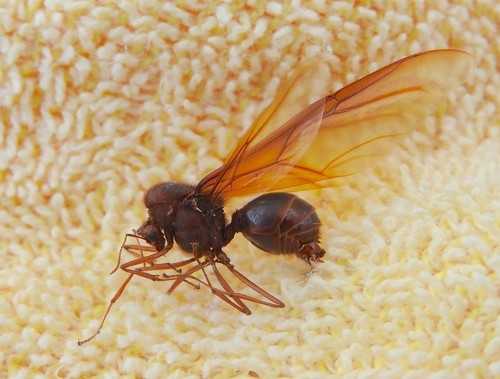
7. Mexican Leaf-Cutting Ant
The Atta mexicana is commonly known as the mexican Leaf-Cutting Ant. They cut leaves into pieces and carry the pieces back to the nests. They don't actually eat leaves. Instead, they use them to grow fungus which is their favorite food. They are notorious destroyers of gardens and orchards, resulting in decreases in crop yields in certain plant species.

8. American snout
American snout have prominent elongated mouthparts (labial palpi) which, in concert with the antennae, give the appearance of the petiole (stem) of a dead leaf. Wings are patterned black-brown with white and orange markings. The forewings have a distinctive squared off, hook-like (falcate) tip. The caterpillars appear humpbacked, having a small head, swollen first and second abdominal segments, and a last abdominal segment which is tapered and rounded. They are dark green with yellow stripes along the top and sides of the body, and have two black tubercles on the top of the thorax.
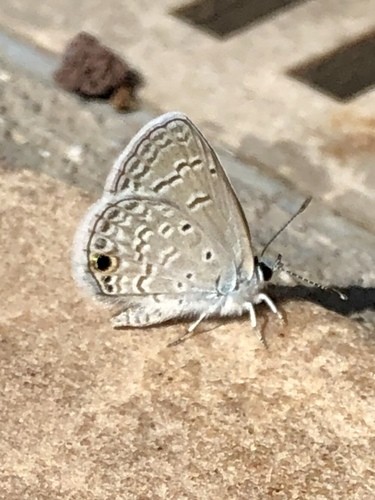
9. Ceraunus blue
The wingspan is 2 - 3 cm. The upperside of the males is light blue with a darker narrow border. Female are dark brown, often with blue wing bases. The underside is gray. Both wings have a row of dark postmedian dashes on the underside.
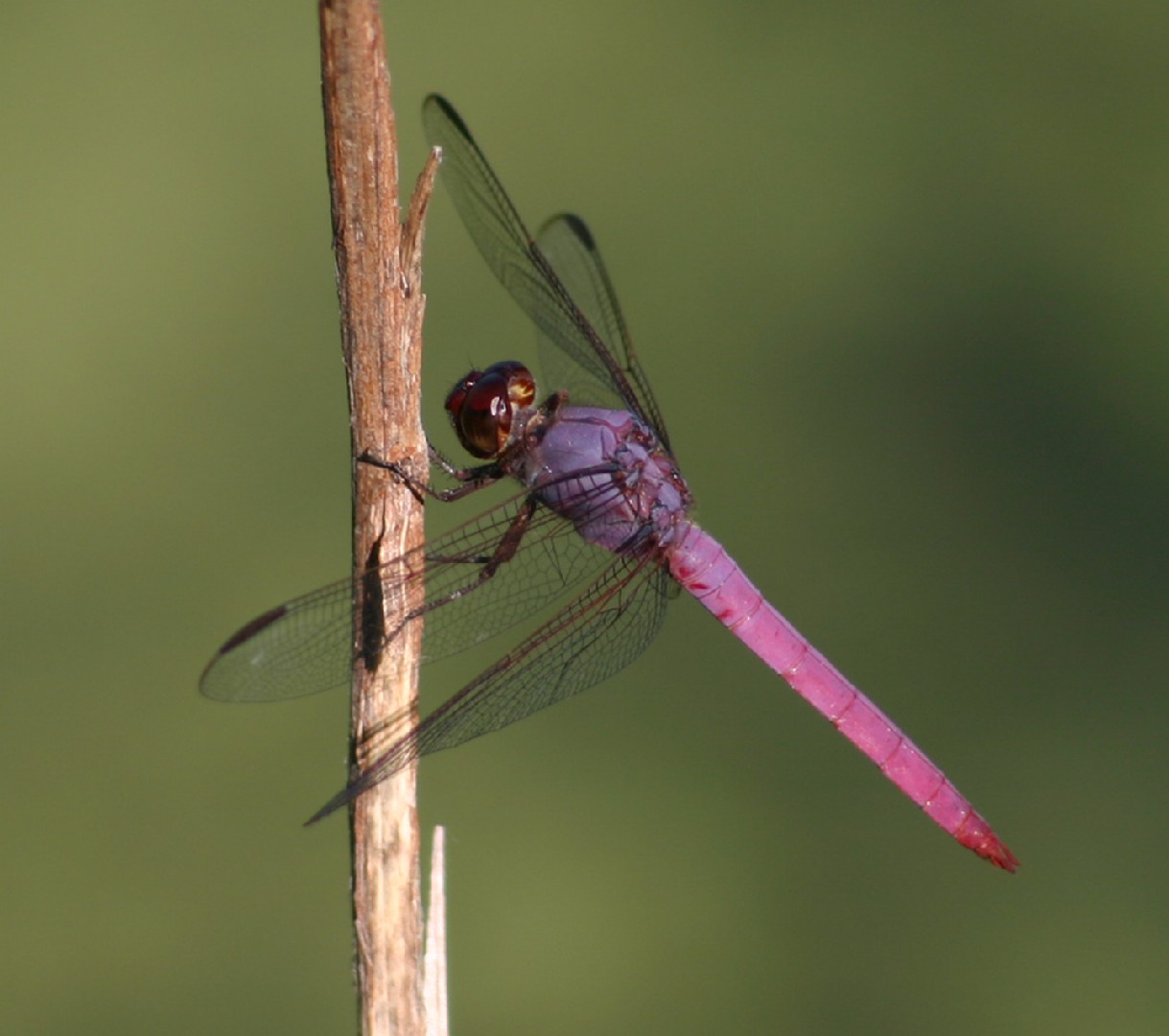
10. Roseate skimmer
The male of the species has a rose pink and red abdomen. The female has an orange-brown abdomen with clear orange veins and a brownish thorax with a light stripe down the back. The wings are normally clear except for brown pterostigmata at the leading edges. Its 4.5 - 6 cm in length with a wingspan of 3.5 - 4.5 cm long.

More