




Top 20 Most Common Insects in Puerto Penasco
Insects, those many-legged creatures inhabiting Puerto Penasco, are as diverse as the state's varied landscapes. The region's geographical variation, from arid deserts to lush oases, gives rise to a brilliant spectrum of insect diversity. These insects not only adorn Puerto Penasco with their intriguing forms but also play integral roles in its ecosystem. Some are notorious pests while others are harmless, contributing to the state's ecological equilibrium. Stay tuned as we uncover 20 of Puerto Penasco's most common insects.

Most Common Insects
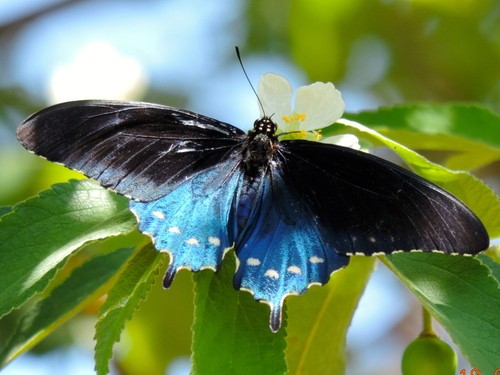
1. Pipevine Swallowtail
The pipevine Swallowtail (Battus philenor) is an insect that is protected globally but is considered a species of special concern in the northern part of their range in Michigan. The name pipevine Swallowtail comes from the common plants that they are hosts of. They are also known as the blue swallowtail due to their brilliant, blue color.
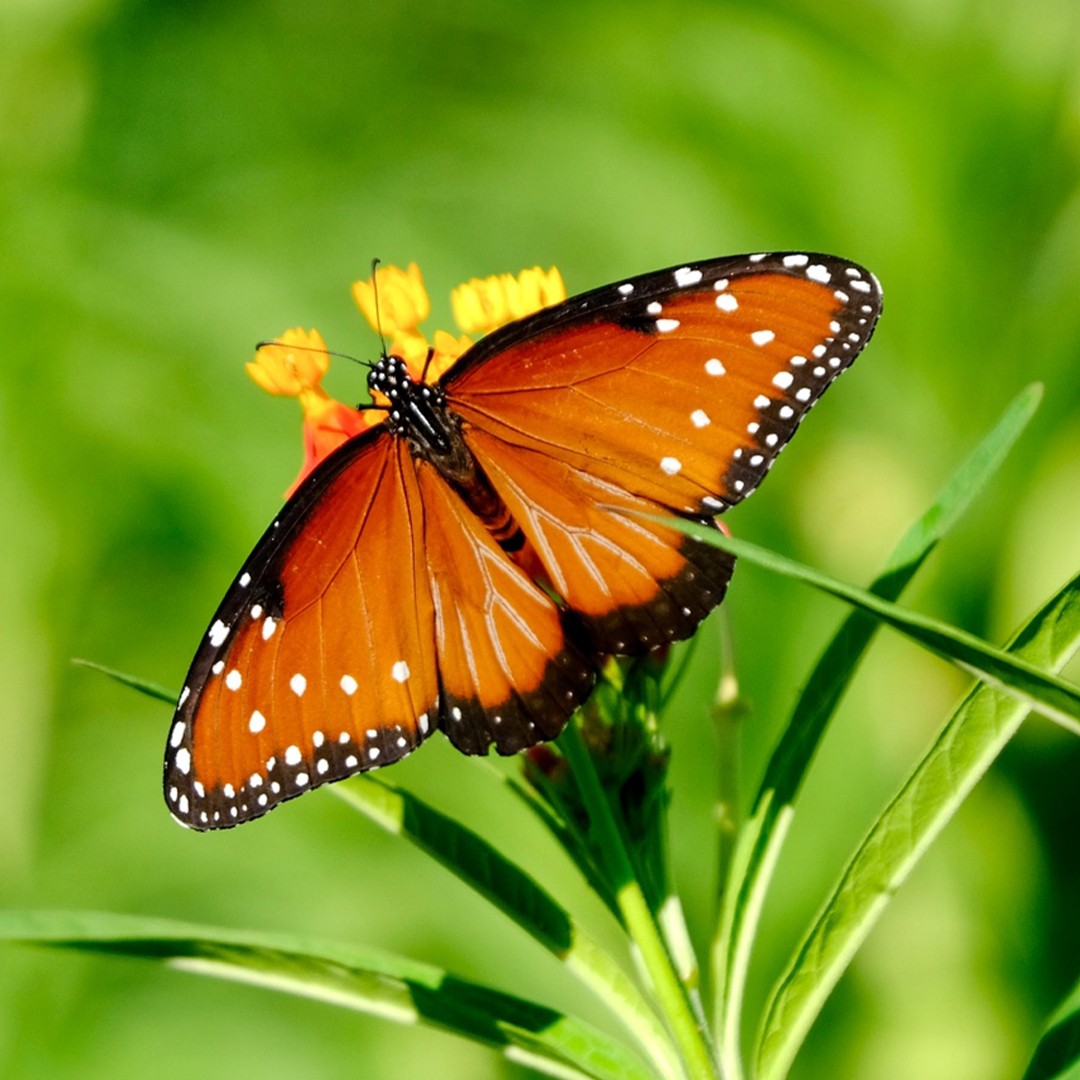
2. Queen
The queen butterfly (Danaus gilippus) is a North and South American butterfly in the family Nymphalidae with a wingspan of 70–88 mm (2.8–3.5 in). It is orange or brown with black wing borders and small white forewing spots on its dorsal wing surface, and reddish ventral wing surface fairly similar to the dorsal surface. The ventral hindwings have black veins and small white spots in a black border. The male has a black androconial scent patch on its dorsal hindwings. It is found throughout the tropics and into the temperate regions of the Americas, Asia and Africa. It can be found in meadows, fields, marshes, deserts, and at the edges of forests. This species is possibly a close relative to the similarly colored soldier butterfly (or tropic queen; Danaus eresimus); in any case, it is not close to the plain tiger (Danaus chrysippus) as was long believed. There are seven subspecies. Females lay one egg at a time on larval host plants. Larvae use these plants as a food source, whereas adult butterflies feed mainly on nectar from flowers. Unpalatability to avian predators is a feature of the butterfly; however, its level is highly variable. Unpalatability is correlated with the level of cardenolides obtained via the larval diet, but other compounds like alkaloids also play a part in promoting distastefulness. Males patrol to search for females, who may mate up to 15 times a day. Male organs called hair-pencils play an important role in courtship, with males with lower hair-pencil levels being selected against. These hair-pencils may be involved in releasing pheromones during courtship that could attract female mates. 

3. American snout
American snout have prominent elongated mouthparts (labial palpi) which, in concert with the antennae, give the appearance of the petiole (stem) of a dead leaf. Wings are patterned black-brown with white and orange markings. The forewings have a distinctive squared off, hook-like (falcate) tip. The caterpillars appear humpbacked, having a small head, swollen first and second abdominal segments, and a last abdominal segment which is tapered and rounded. They are dark green with yellow stripes along the top and sides of the body, and have two black tubercles on the top of the thorax.

4. White-Lined Sphinx
The white-Lined Sphinx ( Hyles lineata) is a colorful furry moth with striped wings. It has a similar size of a hummingbird, and behaves like a hummingbird as well. It can fly extremely fast, and instantly swing from side to side while hovering just like a hummingbird. It feeds on nectar from a variety of flowers including petunia, honeysuckle, lilac, clovers, thistles, and jimson weed.
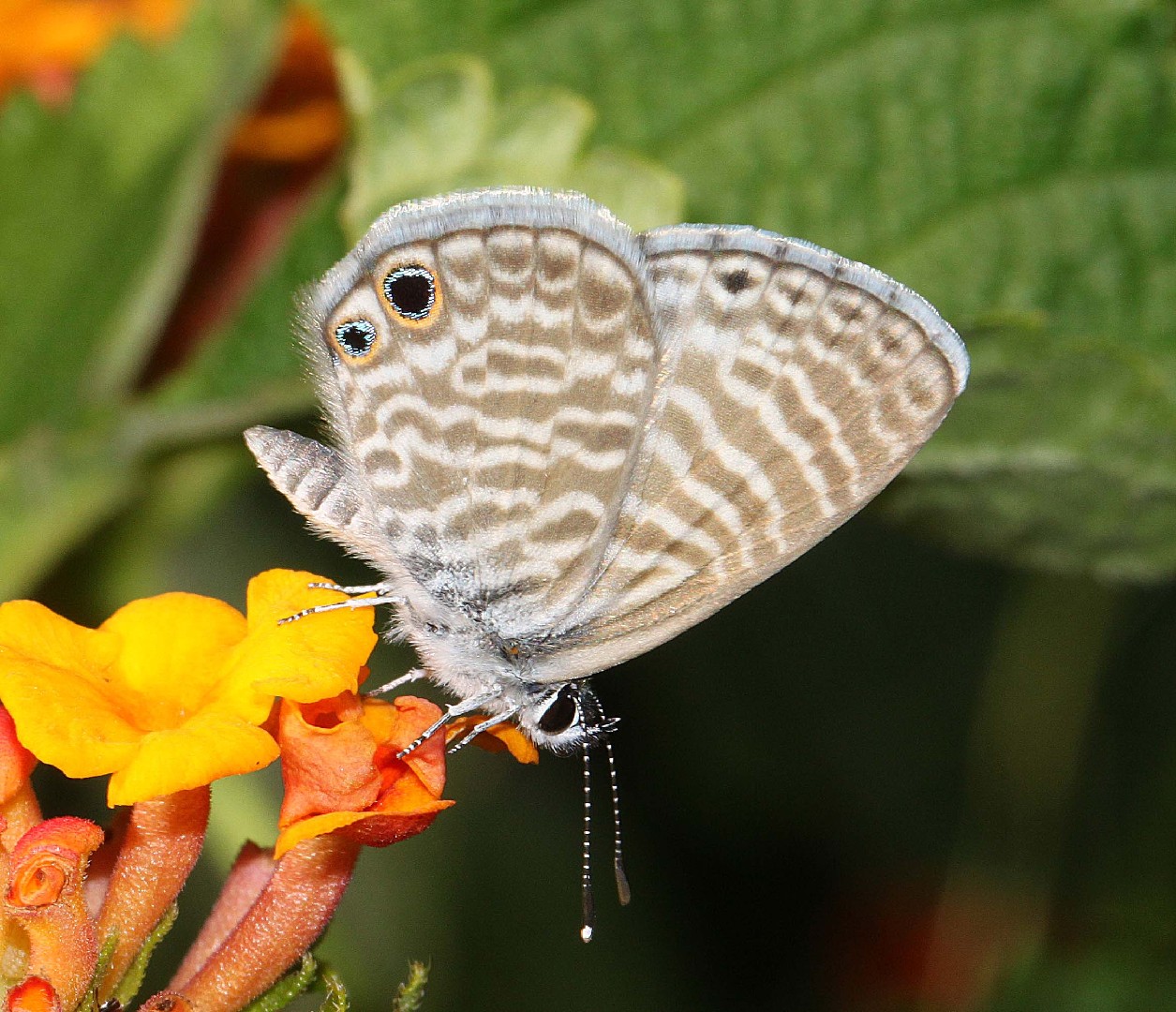
5. Marine blue
The wingspan is 2 - 3 cm.
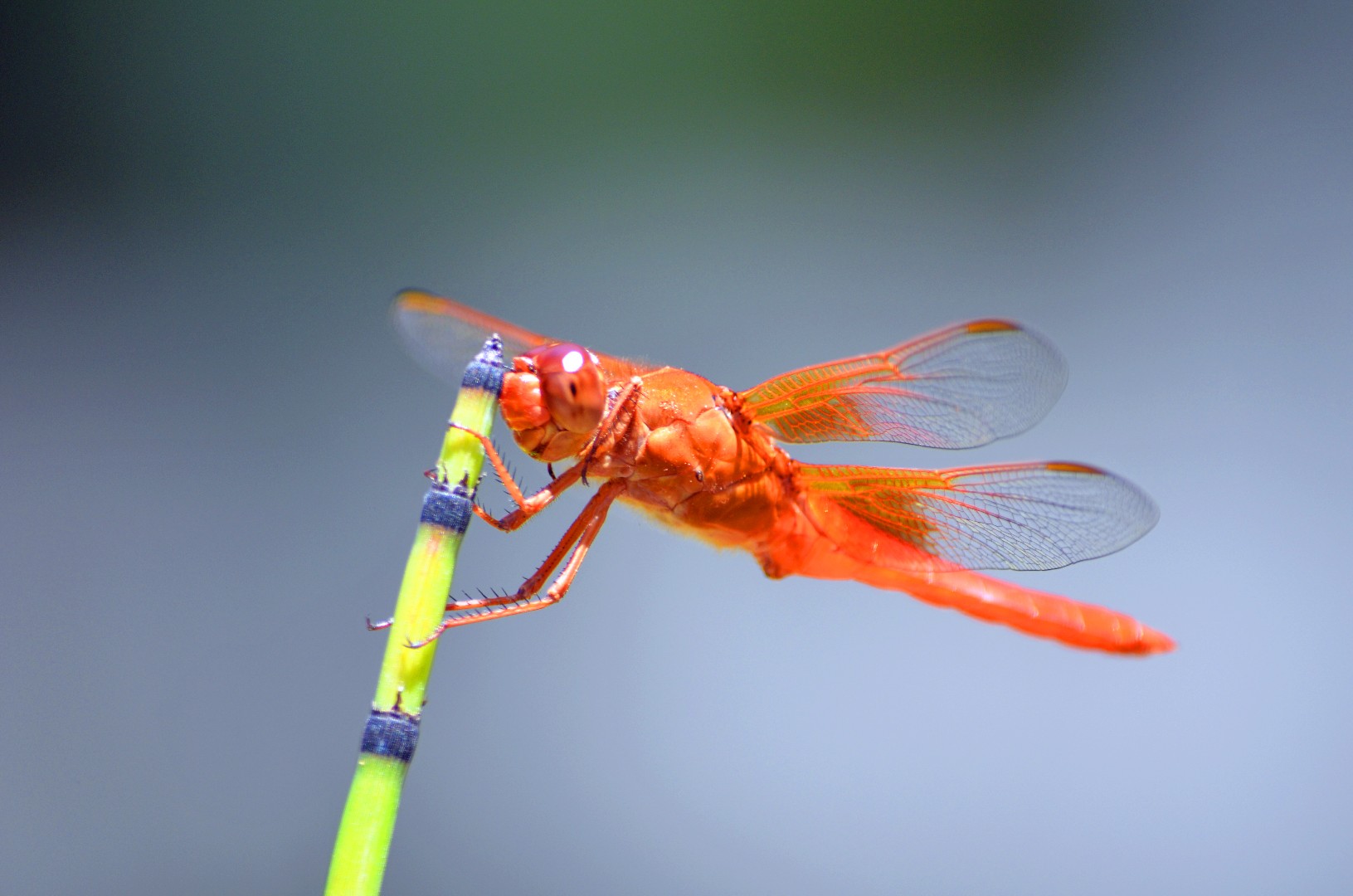
6. Flame skimmer
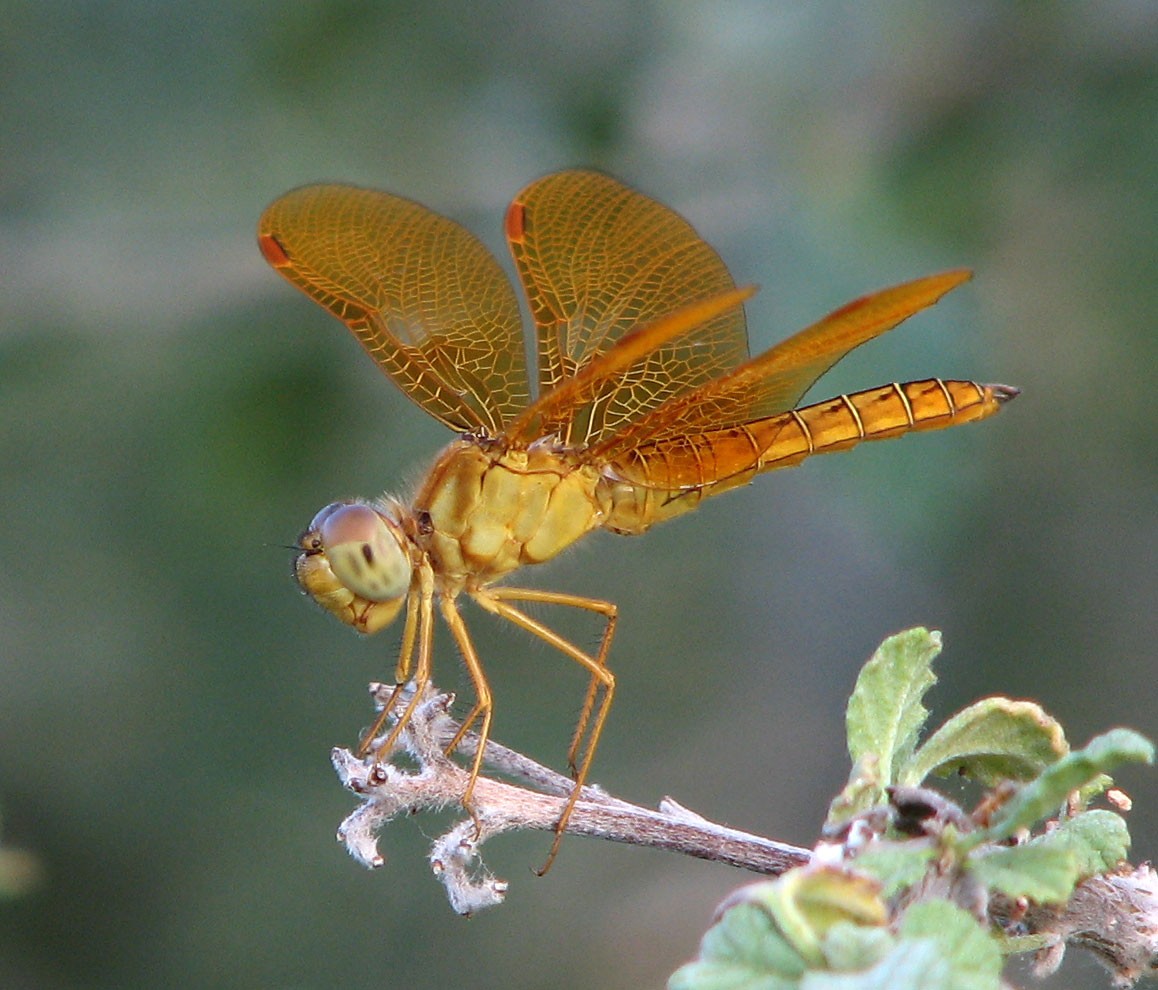
Male flame skimmers are known for their entirely red or dark orange body, this includes eyes, legs, and even wing veins. Females are usually a medium or darker brown with some thin, yellow markings. This particular type of skimmer varies in size but is generally measured somewhere between 5 cm and 8 cm long. These naiads are known for being rather large and chubby-looking due to their rounded abdomen. They are covered with hair but, unlike most young dragonflies, they lack hooks or spines.
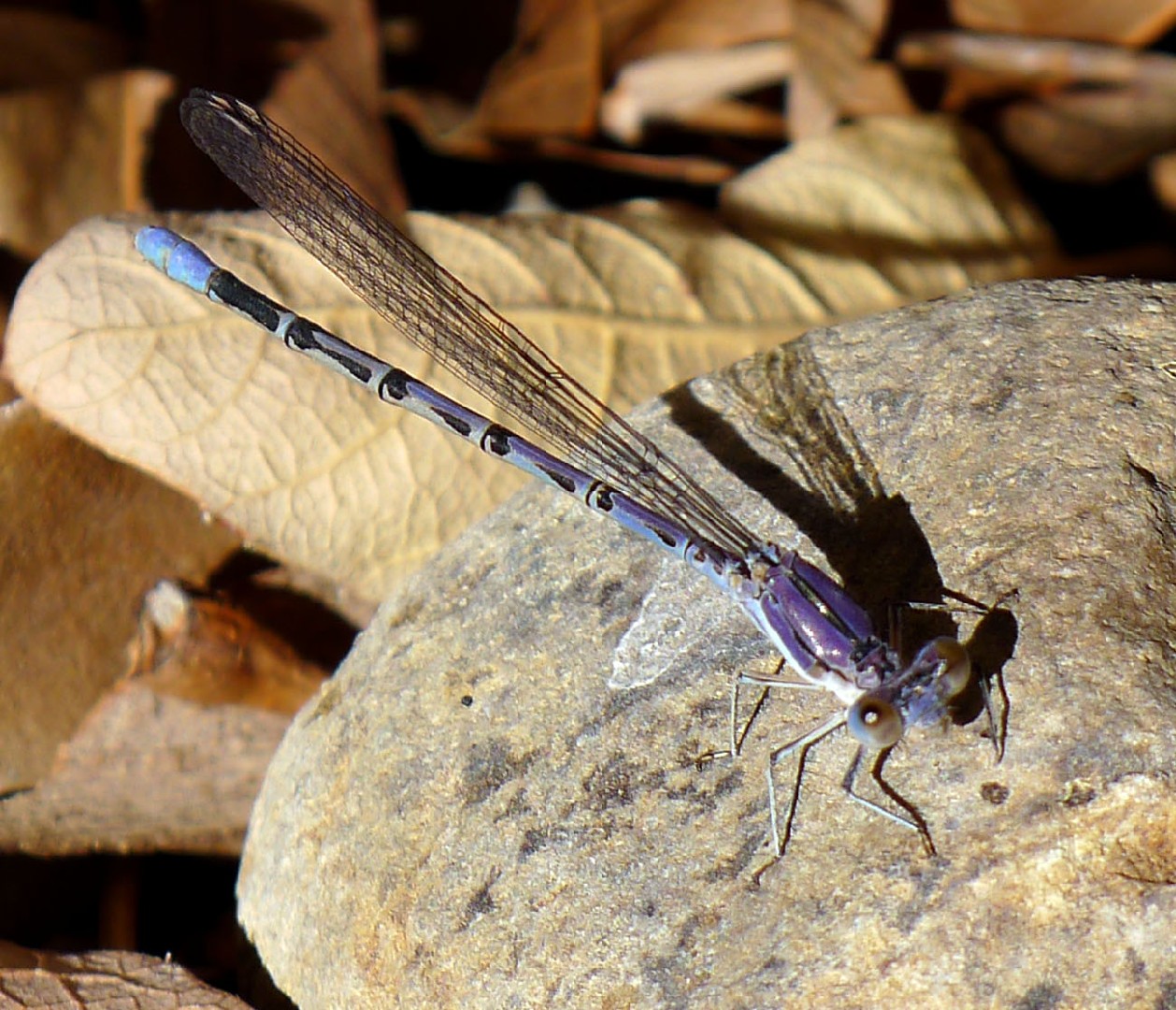
7. Springwater dancer
The springwater dancer has a black stripe along the side of its thorax. The male is typically blue, but some can be violet. The female is pale brown.

8. American rubyspot
Males have a lustrous red head and thorax. The abdomen of both genders is brilliant green. The female may have either green or copper colored marks on the thorax.
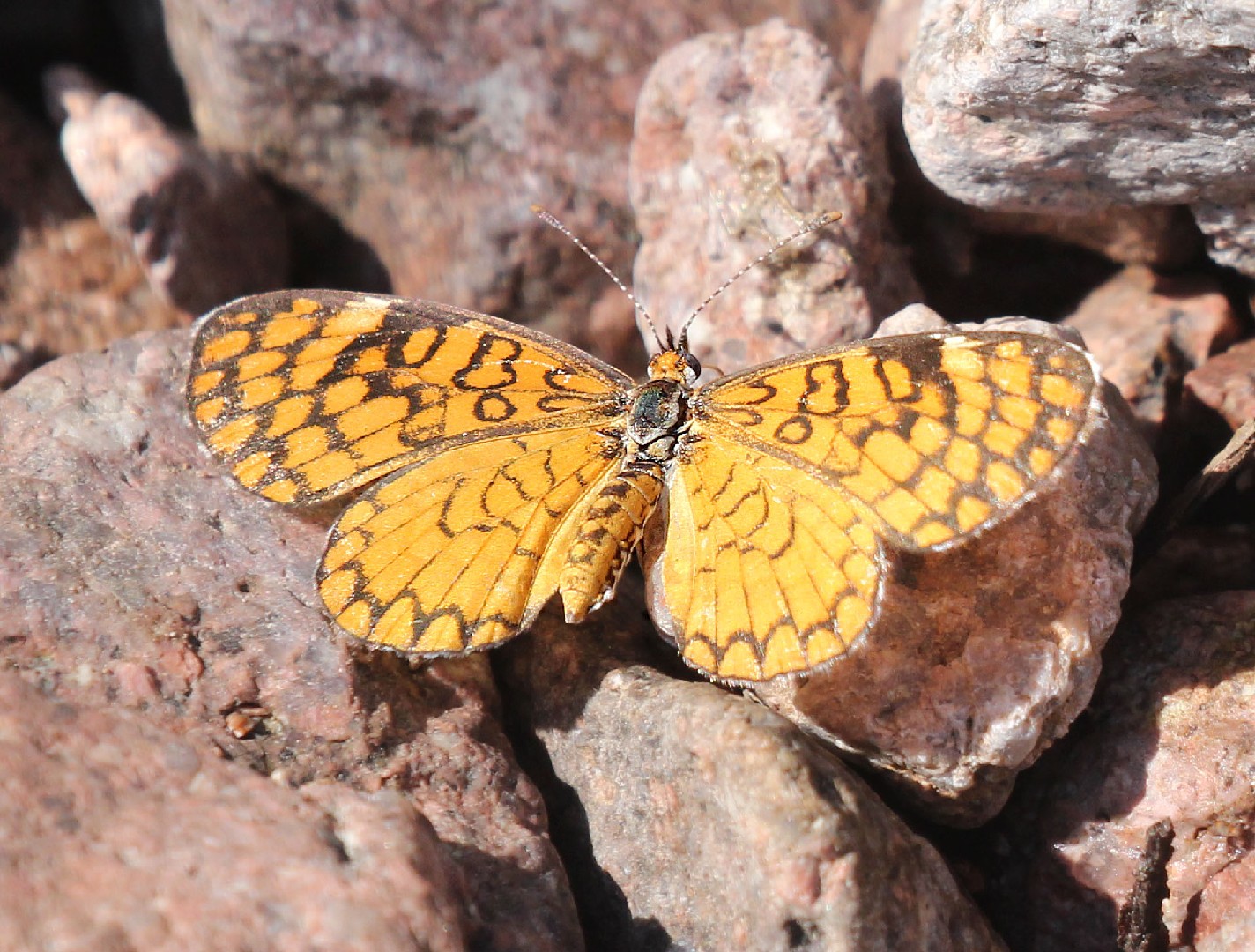
9. Tiny checkerspot
Dymasia dymas is a butterfly from the Nymphalidae family. The scientific name of the species was first validly published in 1877 by William Henry Edwards.
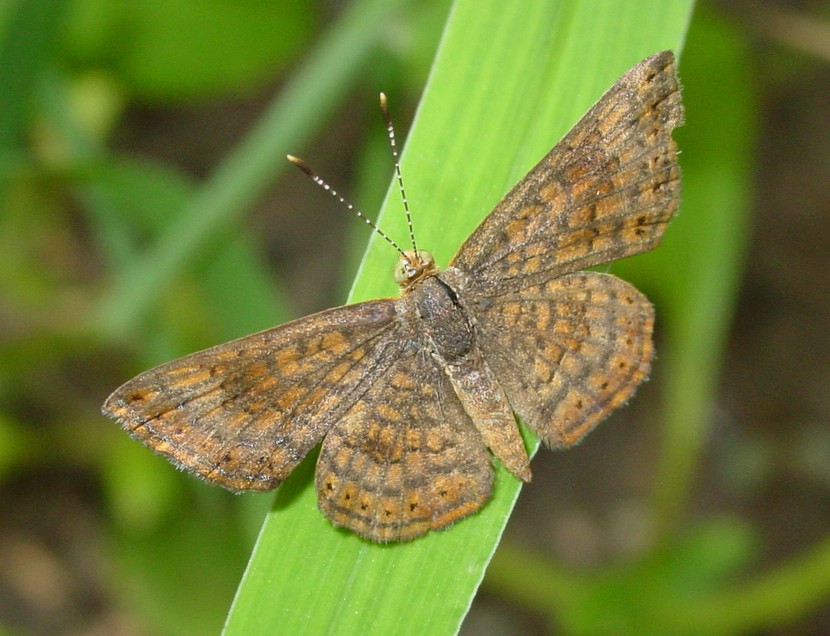
10. Fatal metalmark
The wingspan is 2 - 2.5 cm. The upperside of the wings is brown with somewhat darker median bands. The fringes are checkered.

More







