




Top 9 Most Common Insects in Noumea
Insects, nature's small yet mighty creatures, are as varied as the landscapes within Noumea. These legged critters play pivotal roles in our ecosystem - from pollination to pest control. The diverse geology and climate of Noumea contribute to this rich insect diversity. Our attention-grabbing list of the top 9 most common insects in Noumea explores the fascinating relationship between these insects and their environment that is often underappreciated.

Most Common Insects
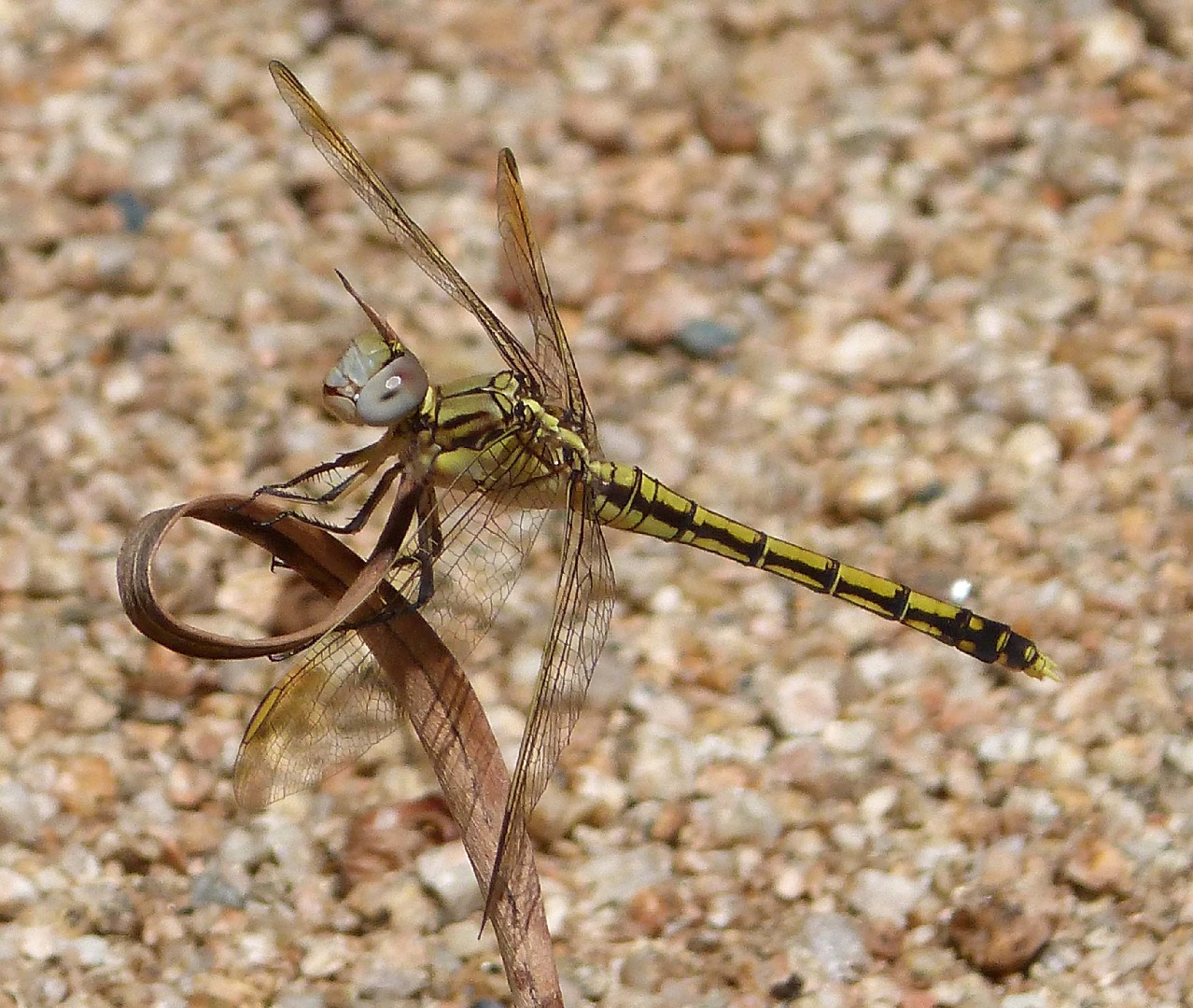
1. Blue skimmer
Males have a powder blue thorax and abdomen pruinescent blue when mature. The females are brownish grey in colour while the teneral are yellow with black markings. They are medium in size, with a body length of 5 cm and a wingspan of 8 cm. 
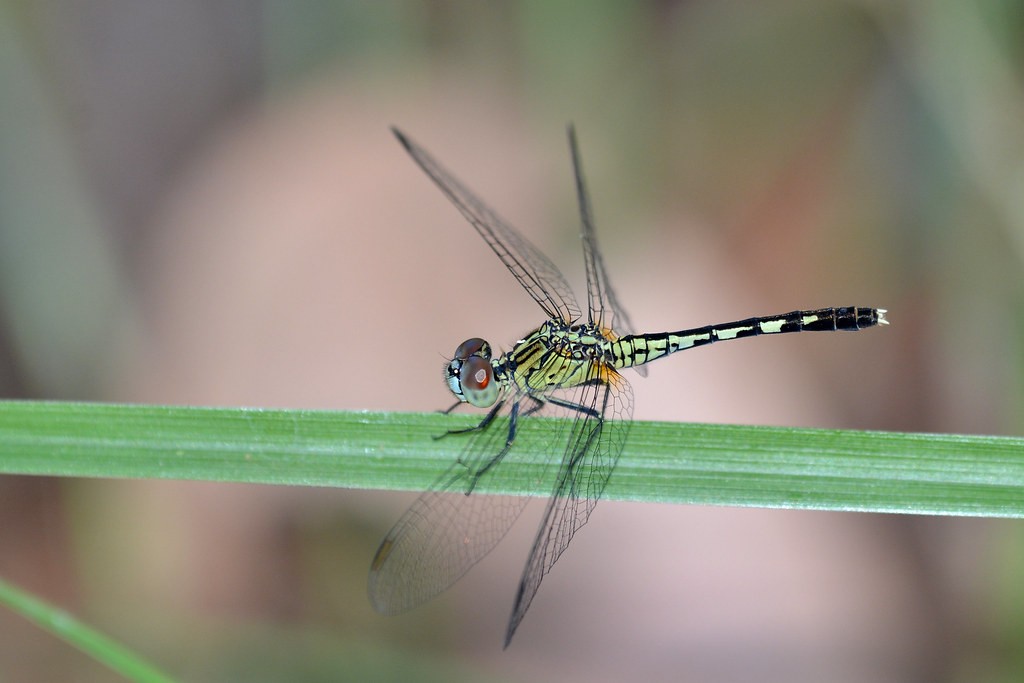
2. Green skimmer
Orthetrum serapia is a medium-sized dragonfly with a wingspan of 60-85mm. Its wings are clear except for a small dark spot at the base of the hindwing. The thorax is greenish to greyish yellow with black markings. The abdomen is black with pale yellow or pale green markings. Orthetrum serapia appears very similar to Orthetrum sabina and can be confused where the range of the two overlap in north-eastern Australia.
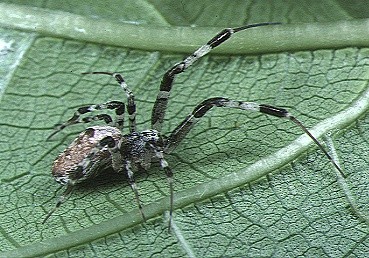
3. Banded-knees house spider
Zosis geniculata sometimes referred to as the humped spider or grey house spider, is a cosmopolitan species with a pantropical distribution. In Australia, it is often seen in buildings near human habitation.
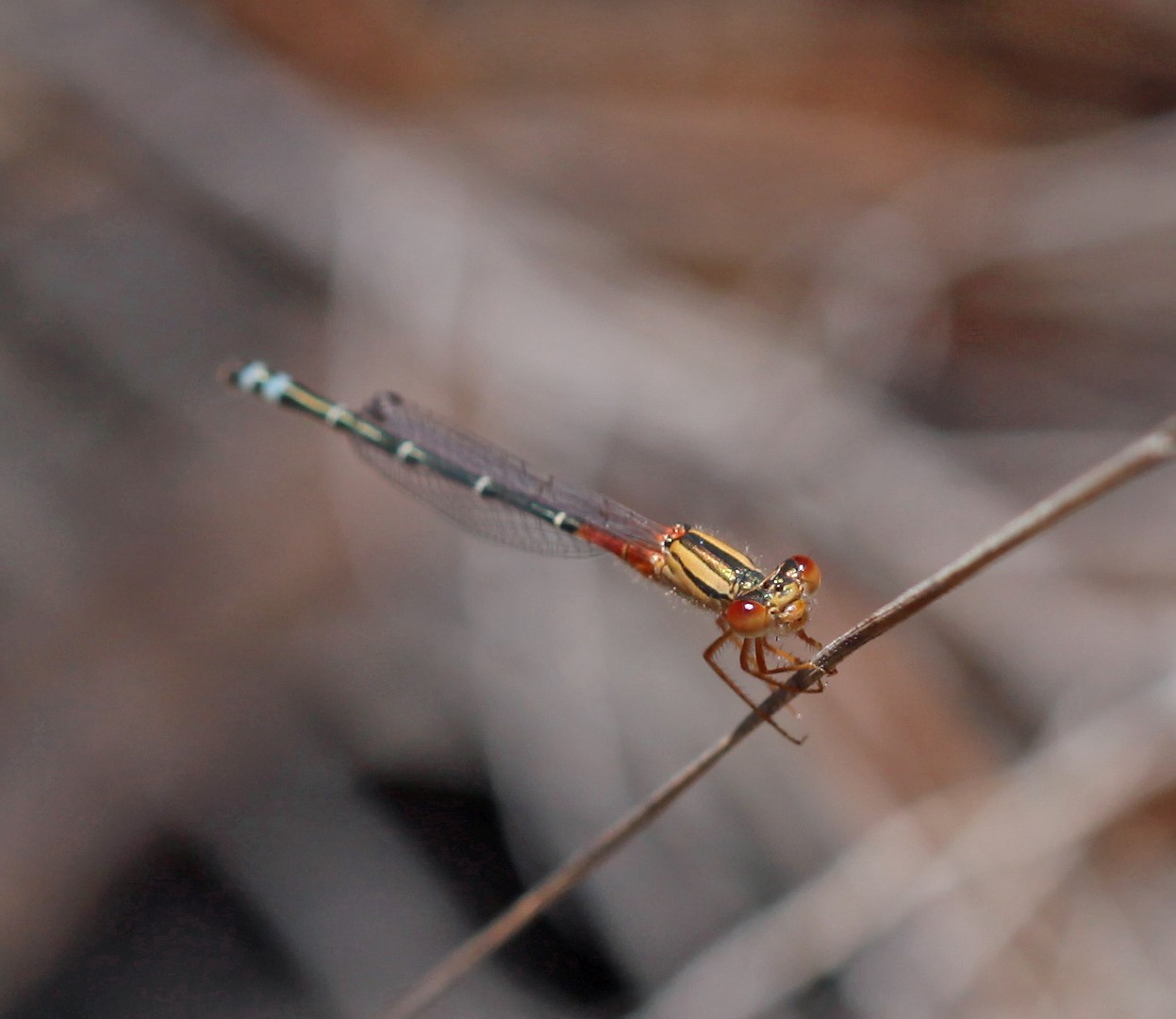
4. Red and blue damsel
The face and thorax are bright red. The abdomen is pale in colour and 2 - 2.5 cm long. The female and male are similar in colour.
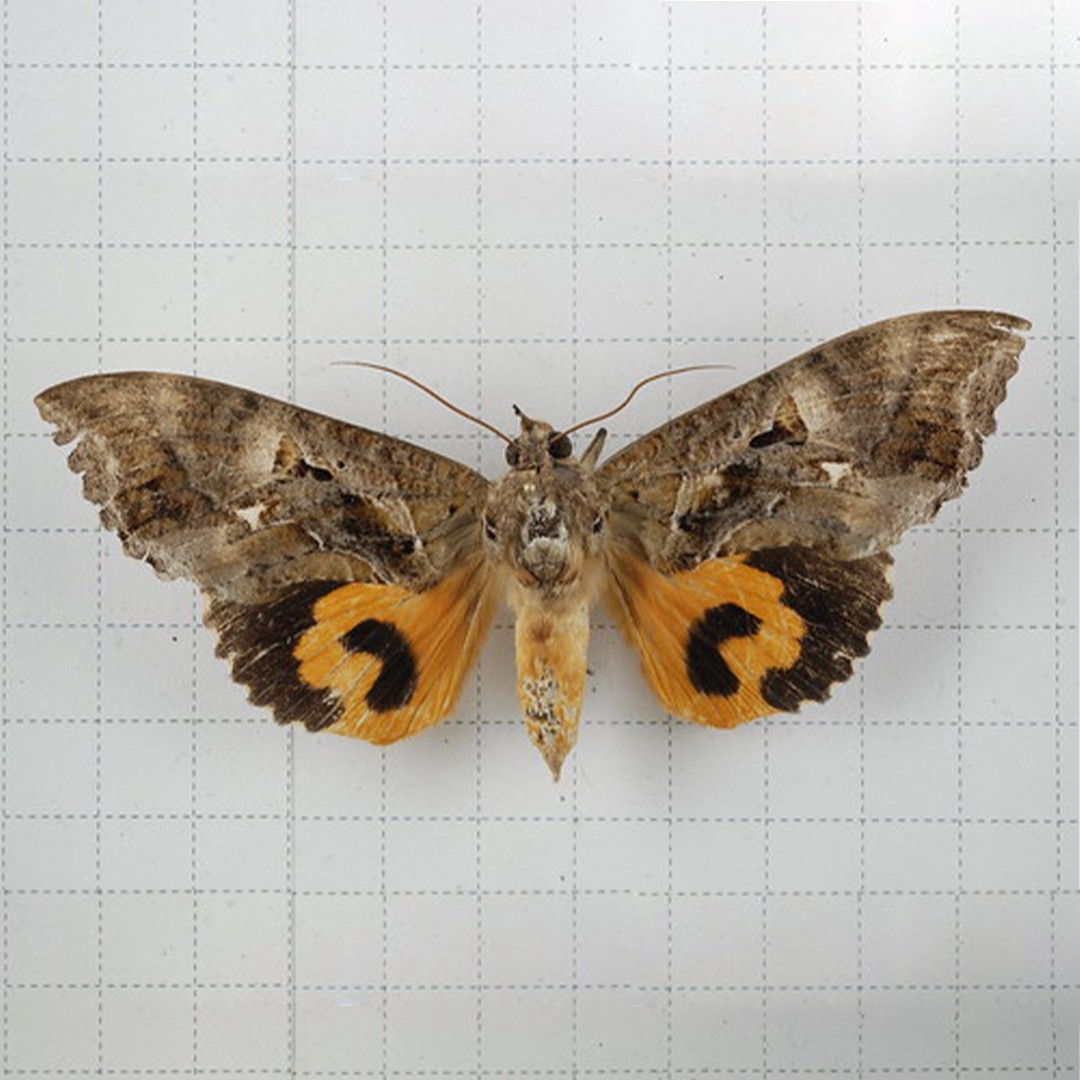
5. Common Fruit-Piercing Moth
The wingspan is about 80–94 mm in male. Palpi with third joint long and spatulate at extremity. Forewings with non-crenulate cilia in male, crenulate in female. Head and thorax reddish brown with plum-color suffusion. Abdomen orange. Forewings reddish brown, usually with a greenish tinge and irrorated with dark specks. An oblique antemedial line present, which is generally dark and indistinct but sometimes pale and prominent. Reniform indistinct. A curve postmedial line found, which is almost always met by an oblique streak from apex. Hindwings orange, with a large black lunule beyond lower angle of cell. There is a marginal black band with cilia pale spots runs from costa to vein 2. Ventral side of forewings with orange postmedial band. The wingspan is about 90–110 mm in female. Female has much more variegated and dark reddish brown striated forewings. Reniform dark and sending a spur along median nervure to below the orbicular speck. There is a triangular white mark usually present on the postmedial line below vein 3. Larva has dilated 11th somite and surrounded by a tubercle. Body purplish brown, where dorsum brown from 6th to 11th somites. Legs red and spiracular scarlet patches largest posteriorly and with some irregular white markings round them, on somite 9 in the form of an oblique white bar. There is a yellow sub-basal mark found on 4th somite. Fifth and sixth somites have black ocelli with yellow iris and white pupils. Two yellow patches can be seen on 11th somite. The adult is considered an agricultural pest, causing damage to many fruit crops by piercing it with its strong proboscis in order to suck the juice. Attempts have been made to control them using baits for the adults, egg parasites and larval parasitoids.
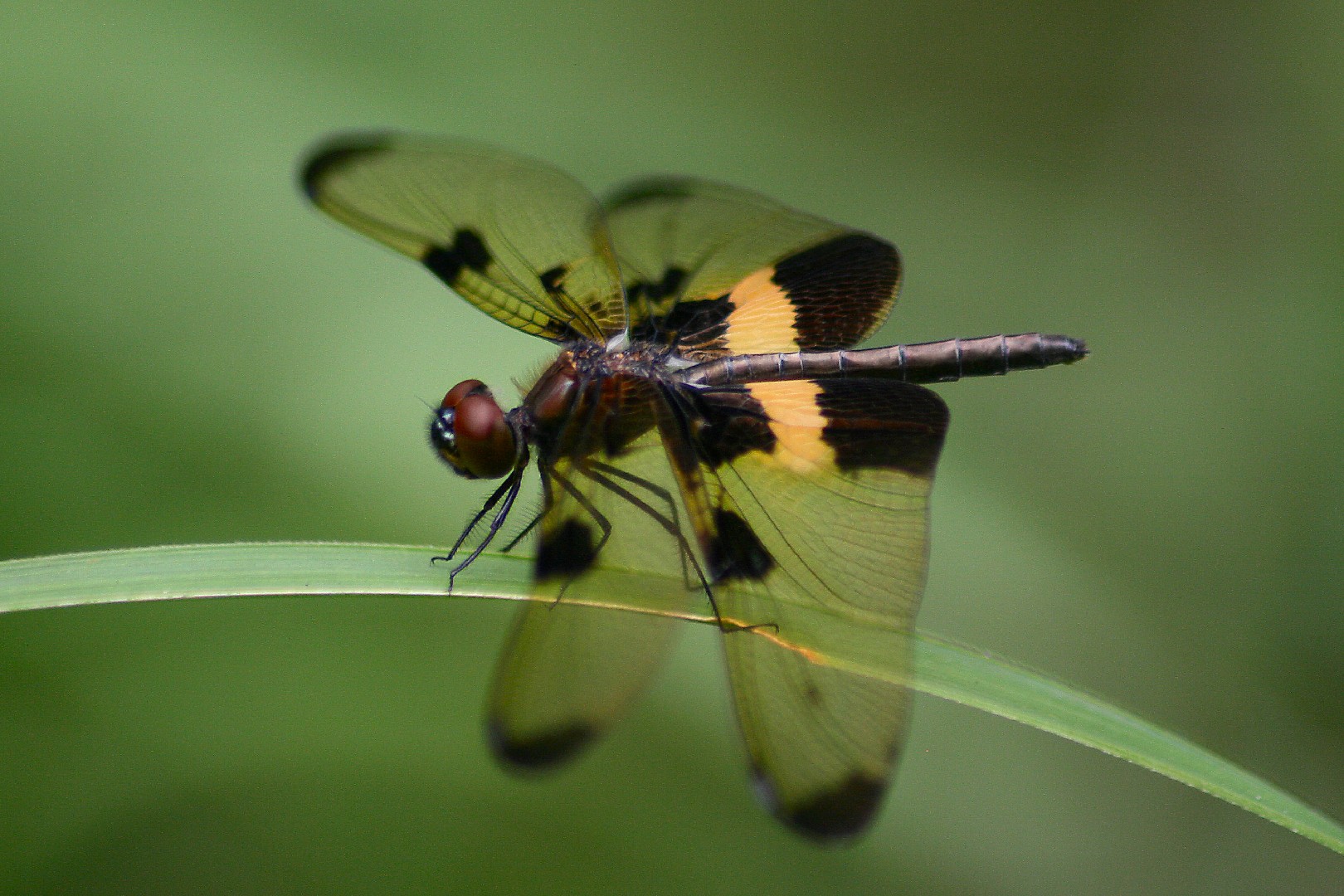
6. Yellow-barred flutterer
The scientific name Rhyothemis phyllis was first validly published in 1776 by Sulzer.
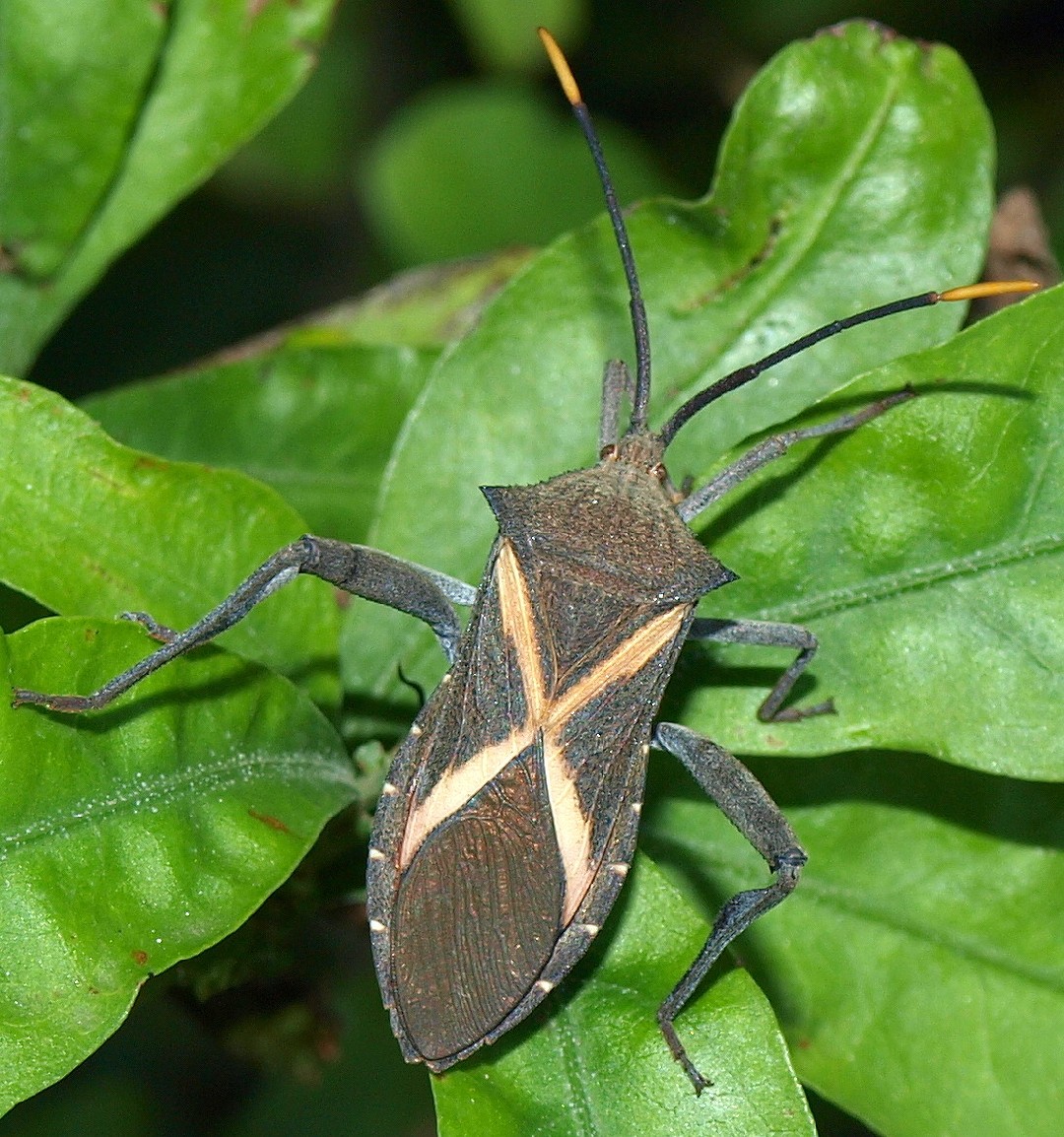
7. Crusader bug
The adult is 2 - 2.5 cm long and 7 - 10 mm wide, stout, and grey to brown with a clear saltire in cream or yellow on its back. The legs are long and the shoulders of the pronotum project into short spines in adults and older nymphs. The hindmost legs are much thicker than the other legs, and the hind femur has inner rows of fine teeth and one preapical spine. The hindmost legs are shorter and much swollen in the male. The hind tibia are inwardly lamellate in about middle third; less so in the male, which also has a distinct spine on the lamellate area. Later instar nymphs have a pair of orange spots in the middle of the upper surface of abdomen, and wing pads in later instars are marked with orange.

8. Meadow argus
Meadow argus has two brownish wings, each covered with two distinctive black and blue eyespots as well as white and orange marks that appear on the edge of the wings. The underside of the wings are mainly unmarked, except the lower part of the forewing has similar markings as the upperside.The wingspan measures 4 cm in males and 4.5 cm in females.
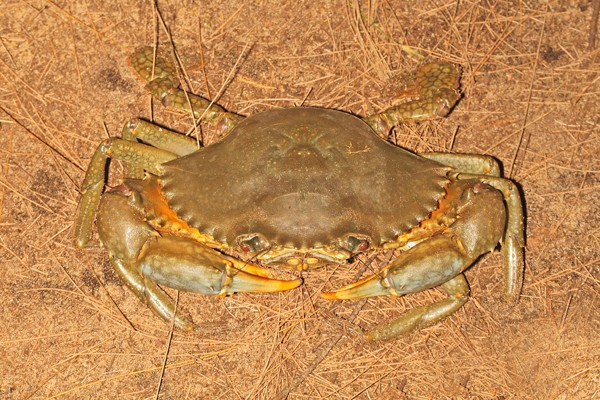
9. Mud crab







