




Top 8 Most Common Insects in Cross River
Insects, characterised by their six legs and segmented bodies, thrive diversely within Cross River's varied habitats. The correlation of Cross River's topography with insect diversity is fascinating. Interestingly, insects serve pivotal roles in our ecosystem, from being pests disrupting human endeavours to being beneficial pollinators and decomposers. In this piece, we step into the buzzing world of Cross River state, exploring the 8 most common insects playing a part in shaping their respective ecosystems.

Most Common Insects
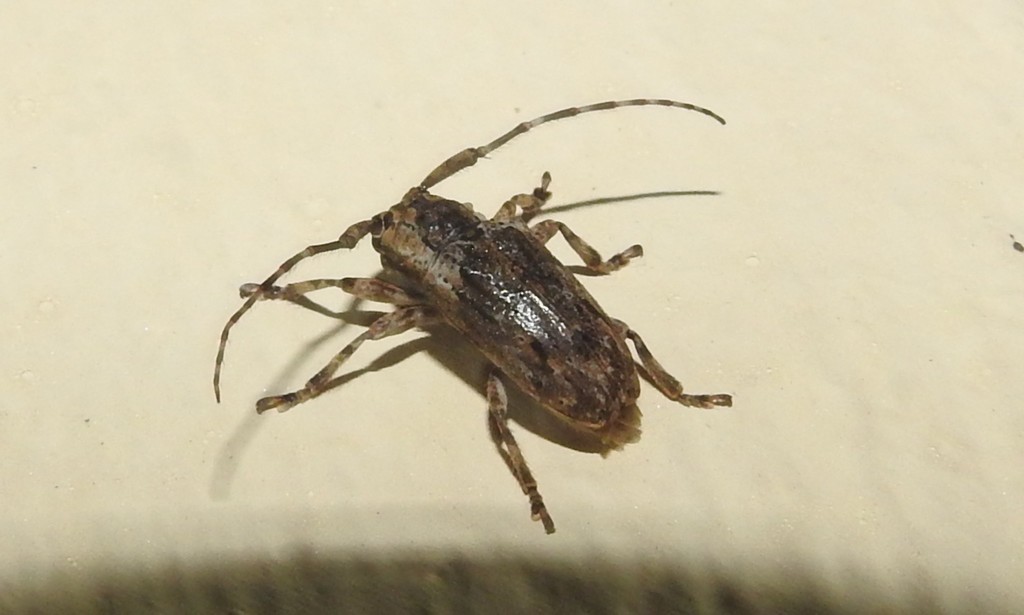
1. Long-horned beetle
Coptops aedificator (Albizia long-horned beetle) is a species of beetle in the family Cerambycidae. It was described by Johan Christian Fabricius in 1792, originally under the genus Lamia. It is known from Djibouti, Tanzania, the Democratic Republic of the Congo, Ethiopia, Oman, Gabon, India, Madagascar, Malawi, Namibia, Nigeria, Saudi Arabia, the Ivory Coast, Cameroon, Senegal, South Africa, Seychelles, Mauritius, Sri Lanka, and Zambia. It was also introduced into Cape Verde, Hawaii, and Taiwan. It feeds on Theobroma cacao and several Coffea species, including C. arabica, C. canephora, and C. liberica var. dewevrei. 
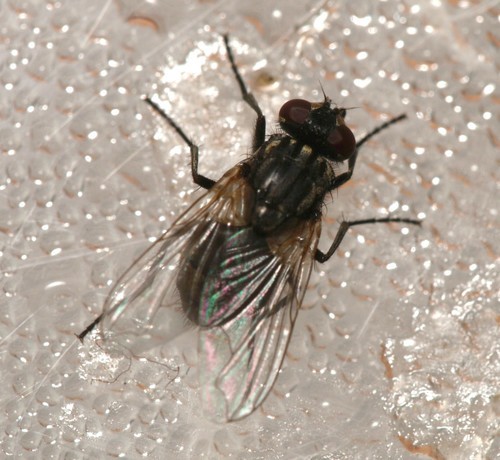
2. Common house fly
The female common house fly mates once and can store the sperm for multiple batches of eggs throughout her life. She will lay anywhere between 75 to 150 eggs at a time, usually in rotting organic matter, where the larvae will feed. The adults feed on feces and animal matter, making them important ecological composters. However, they can also transmit pathogens to human food and are considered pests and health hazards in human-occupied areas.

3. Citrus swallowtail
Papilio demodocus , also known under the English name Citrus Swallowtail ("Citrus Swallowtail"), is a butterfly from the family of the knight butterflies (Papilionidae).
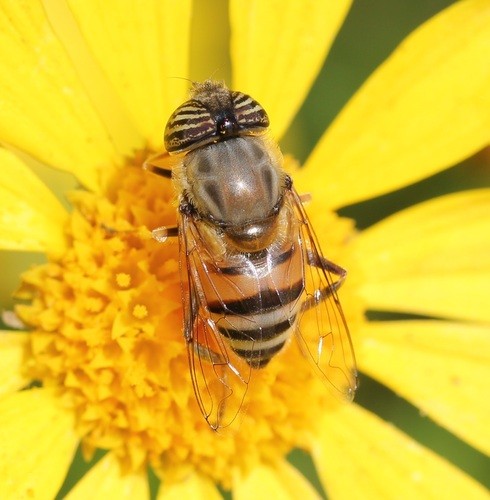
4. Band-eyed drone fly
Eristalinus taeniops can reach a length of 1.09 - 1.4 cm. These hoverflies exhibit a bee-like yellow-black drawing. The thorax has a metallic yellow-brown color and it is densely yellow hairy. Also the scutellum are yellow-brown colored. The abdomen is reddish-yellow, with transversal black bands. The compound eyes have five distinct, vertical, dark stripes. The wings are transparent, usually yellowish-brown at the base, while the halteres are brightly pale yellow colored.
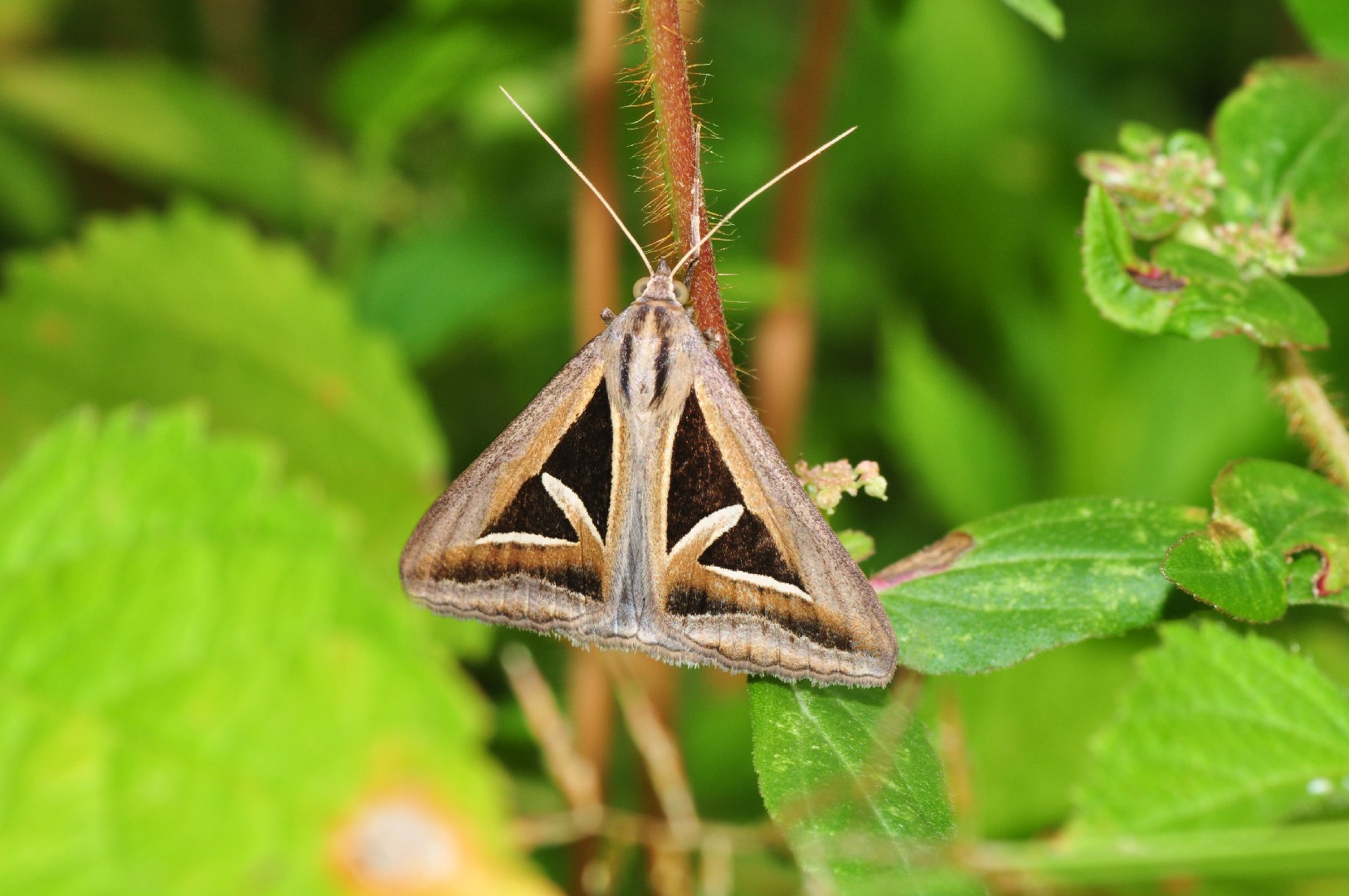
5. Triangles
The wingspan is about 3 - 4.5 cm. Antennae of male ciliated. Mid and hind tibia hairy. Body pale ochreous brown, slightly suffused with fuscous or dark grey brown. Forewings with a large black white-edged triangular patch easily distinguished below the cell from near base to towards outer angle. A similar smaller patch found beyond the cell on vein 5, with some pale fulvous behind it. A slightly sinuous submarginal pale line with patches of black suffusion found inside it and a series of black specks beyond it. A dark marginal line can be seen as well. Hindwings with indistinct medial line and fuscous suffused outer area. Larva has yellow upper half and brown ventral part. The yellow part is broken by longitudinal brown bands, which faints towards posterior and becomes intensive again in prolegs. Eggs olive green and speckled rusty red. First few instars are green with three lateral purple brown lines. Late instars are yellowish. Pupa within a slight cocoon of white silk, which spun amongst leaves.
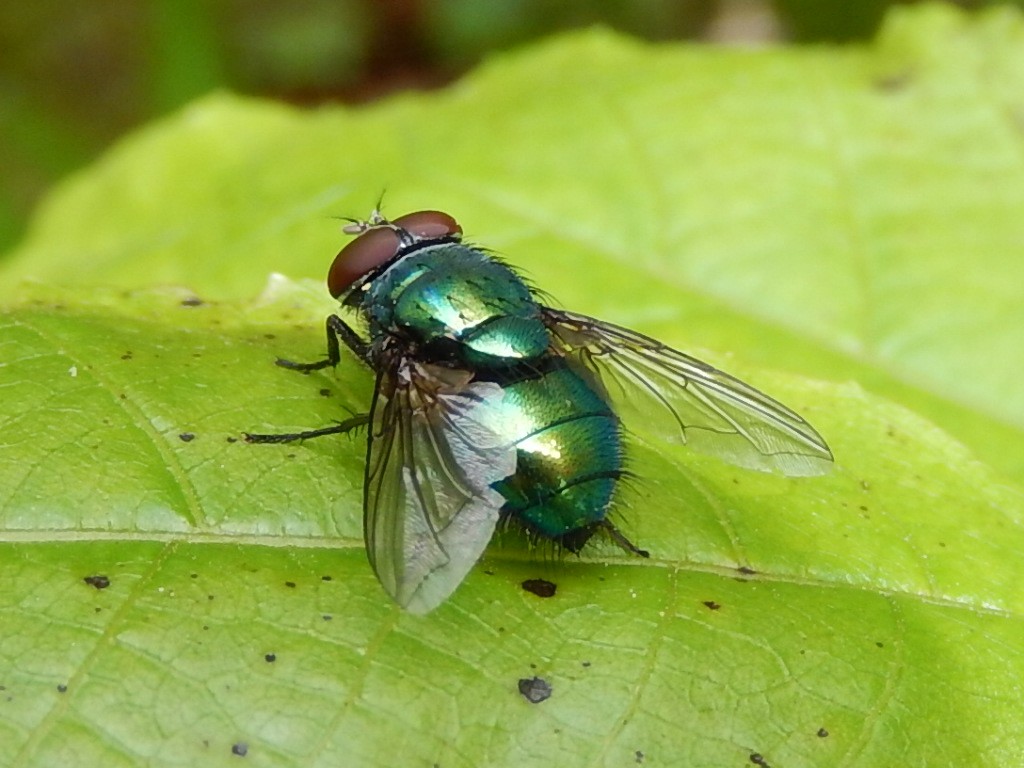
6. Common green bottle fly
Since the larvae of the common green bottle fly feed only on dead tissue, they are sometimes used for maggot therapy, where the larvae are introduced into a human wound to remove the dead tissue. The adults will feed on feces as well as pollen and nectar, making them important pollinator insects.
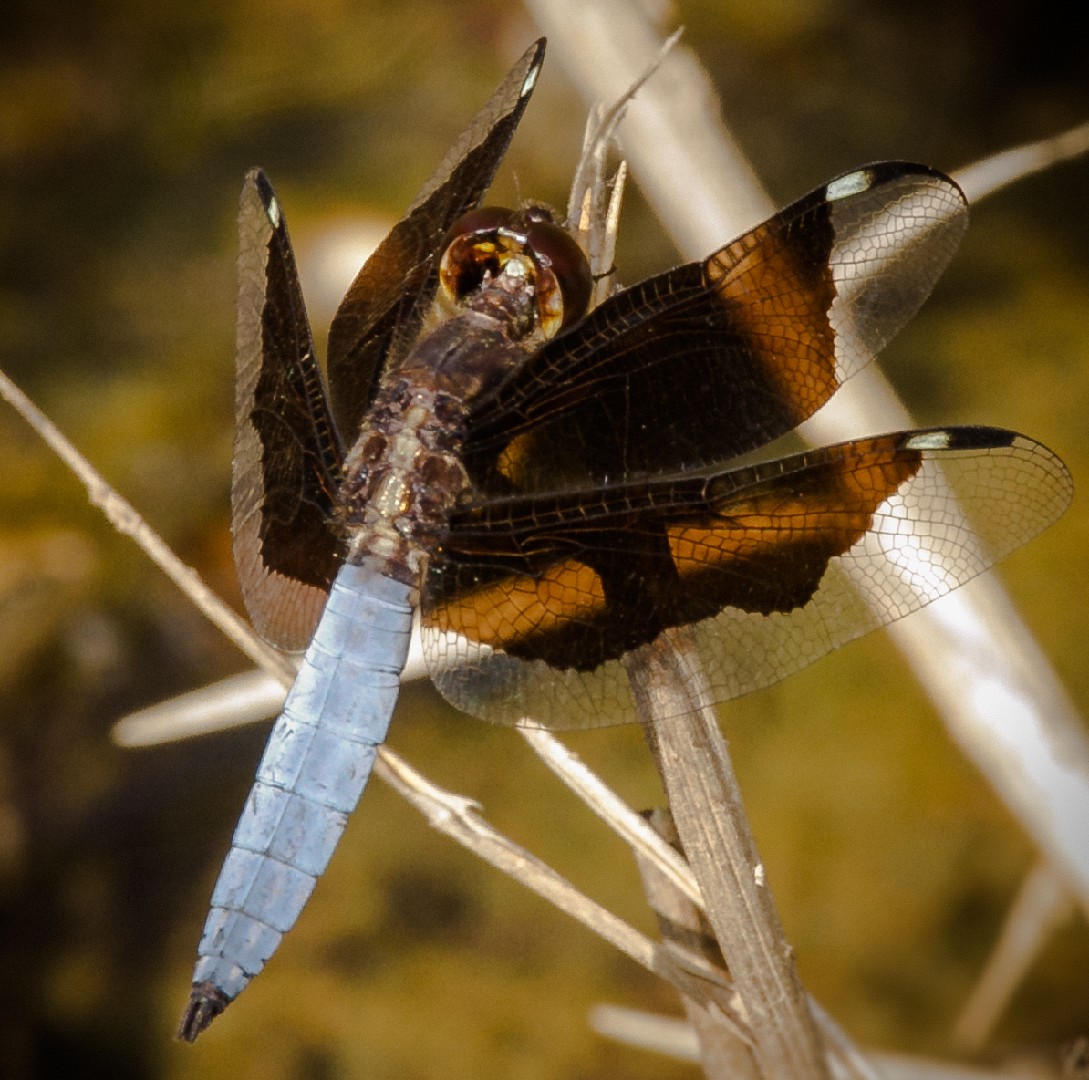
7. Lucia widow
The species is on the IUCN Red List as not endangered, year of assessment 2009.
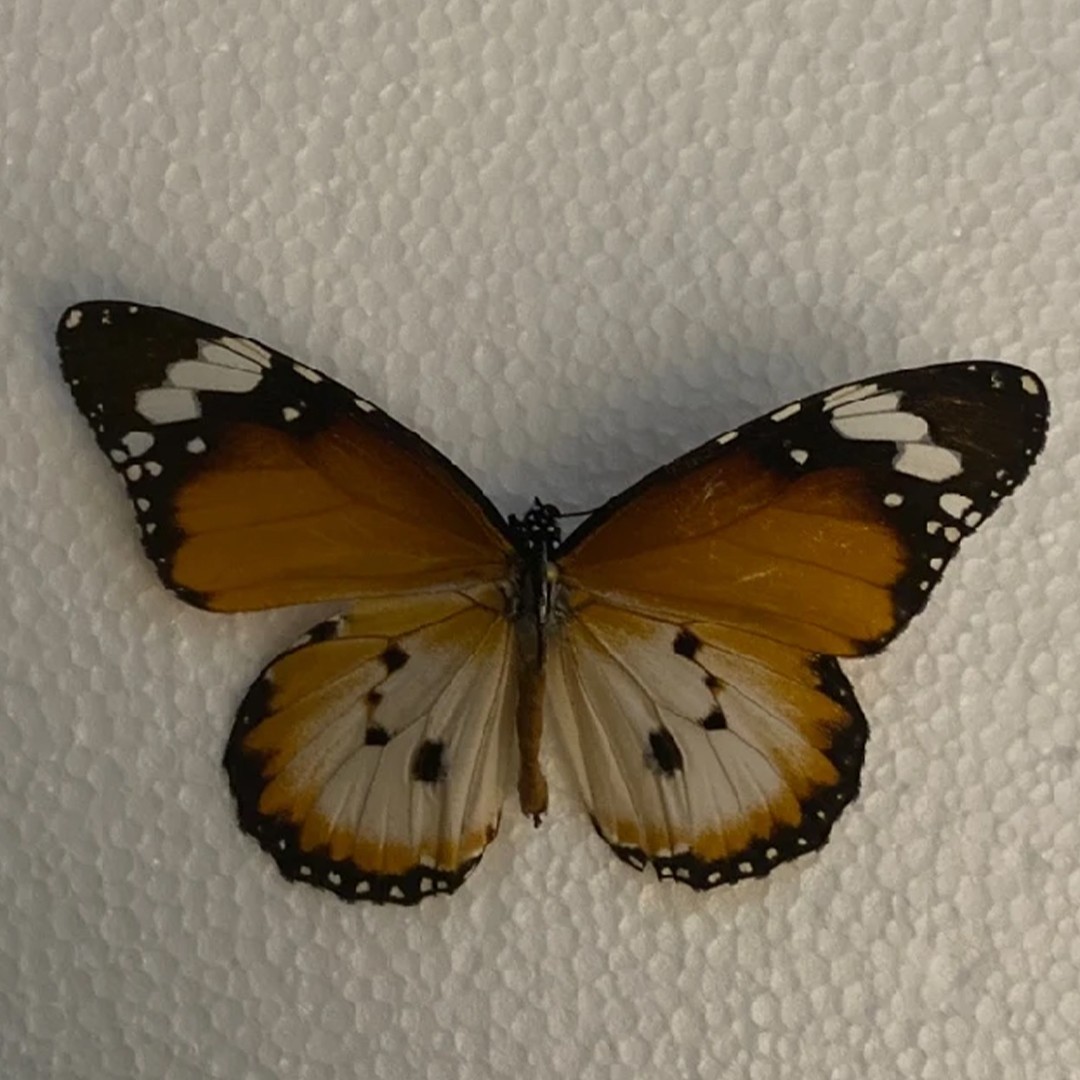
8. Plain tiger butterfly
D. chrysippus is a medium-sized butterfly with a wingspan of about 7–8 cm (2.8–3.1 in). The body is black with many white spots. The wings are orange, the upperside brighter and richer than the underside. The apical half of the forewing is black with a white band. The hindwing has three black spots in the center. The wings are bordered in black and outlined with semicircular white spots. This species exhibits slight sexual dimorphism, as the Male has large scent glands on his hindwings, which the female lacks. They appear as a large black spot with a white centre if viewed from the underside D. chrysippus is a polymorphic species, so the exact coloring and patterning vary within and between populations. It is similar in appearance to the Indian fritillary (Argynnis hyperbius), which may coexist with it.







