




Top 20 Most Common Insects in Hong Kong
Welcome to the fascinating world of insects! In Hong Kong, these tiny creatures can surprise us with their unique features, diverse habitats, strategy for survival, and crucial roles in our ecosystems. The wide geographical expanse in Hong Kong give rise to diverse insect populations from pests to beneficial critters. This list unravels the top 20 most common insects of Hong Kong, underscoring the fascinating interplay between their lifestyles and the local environments.

Most Common Insects
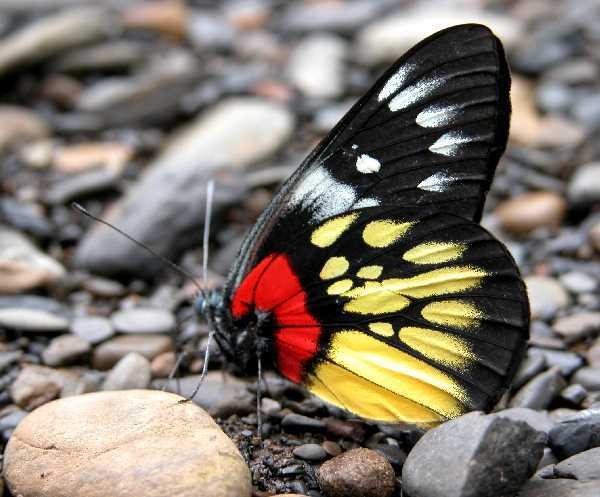
1. Redbase jezebel
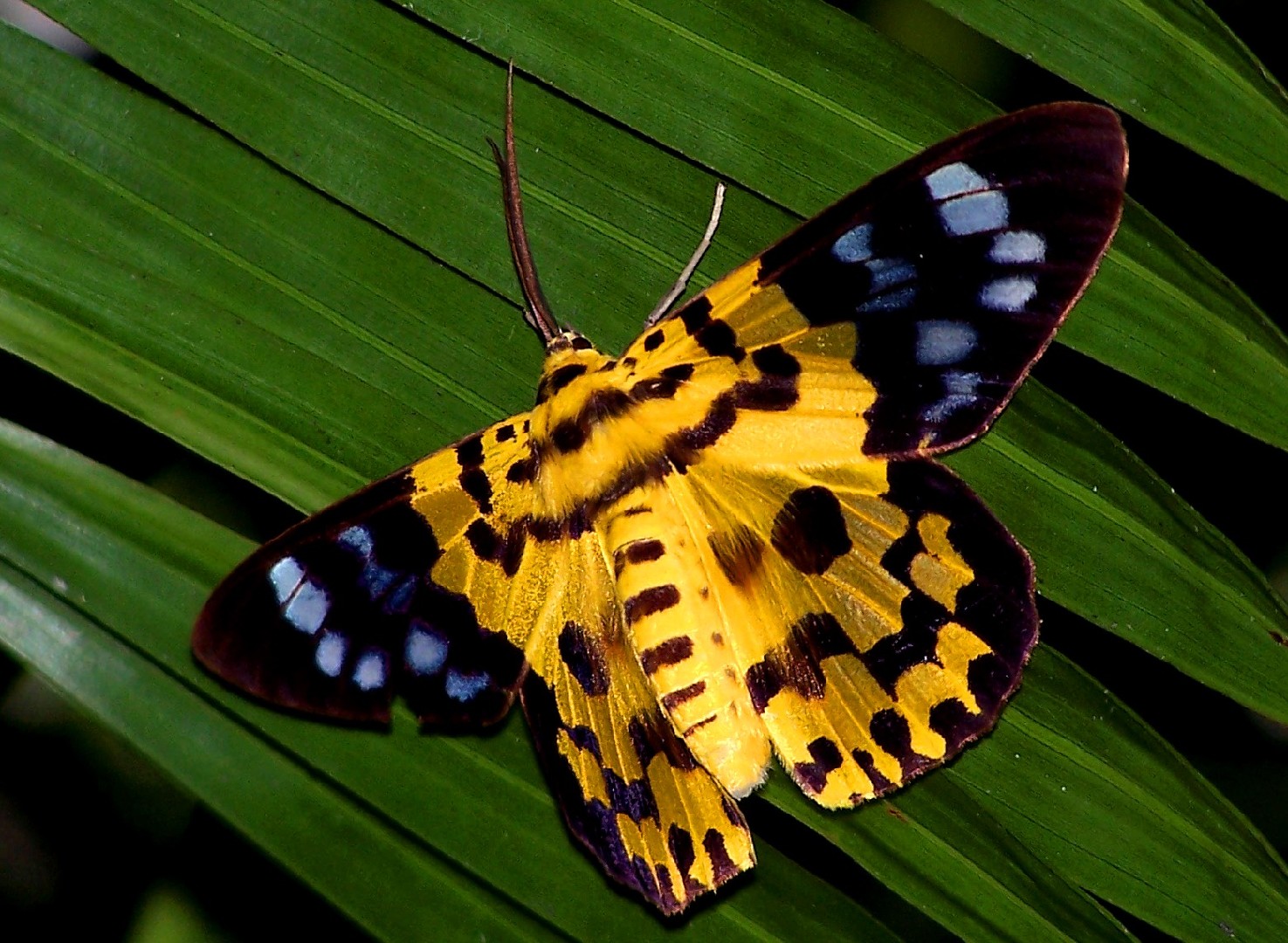
Upperside: black. Forewing with more or less distinct, somewhat diffuse, broad streaks from base, in the discoidal cell and interspaces 1 and 2, the streak in the last the most produced; a white oval spot at lower apex of cell traversed by the lower discocellular, followed by a subterminal series of greyish-white hastate (spear-shaped) markings with their points turned inwards, the markings opposite the apex of the wing elongate and shifted a little inwards. Hindwing: a broad subbasal transverse greyish-white band merged posteriorly in a large bright yellow dorsal patch that fills the apical two-thirds, the extreme apex excepted, of interspaces 1a, 1, and of 2; a white transversely elongate spot along the middle discocellular, and beyond it a postdiscal curved series of greyish-white elongate hastate spots in interspaces 3 to 7. Underside: black. Forewing: somewhat elongate greyish-white markings in interspaces 1, 2, 3 and in cell, formed into a conspicuous oblique broad bar across the middle of the wing; a white spot at lower apex of cell and a postdiscal series of hastate spots as on the upperside. Hindwing: black, a rich dark crimson patch at base, a yellow dorsal patch as on the upperside but darker; the apical two-thirds of the cell, three spots above it and one below at bases of interspaces 3, 6 and 7 respectively and a curved discal series of elongate spots beyond apex of cell, rich chrome-yellow; of these latter spots the spot in interspace 5 is much the longest. Antennae, head, thorax and abdomen above black, abdomen on the sides and below grey. Upperside: brownish black. Forewing: markings as in the male, but the cellular streak and the streaks in interspaces 1 and 2 below the cell short and formed into a broken oblique broad greyish-white band across the wing. Hindwing: markings similar to those in the male, but the basal crimson patch of the underside seen through by transparency, the transverse broad subbasal band and dorsal patch both pale yellow and much broader than in the male, and the postdiscal curved series of hastate spots obscure and ill-defined. Antennae, head, thorax and abdomen as in the male, the abdomen whitish grey below and on the sides. Wingspan is 7 - 9 cm. 
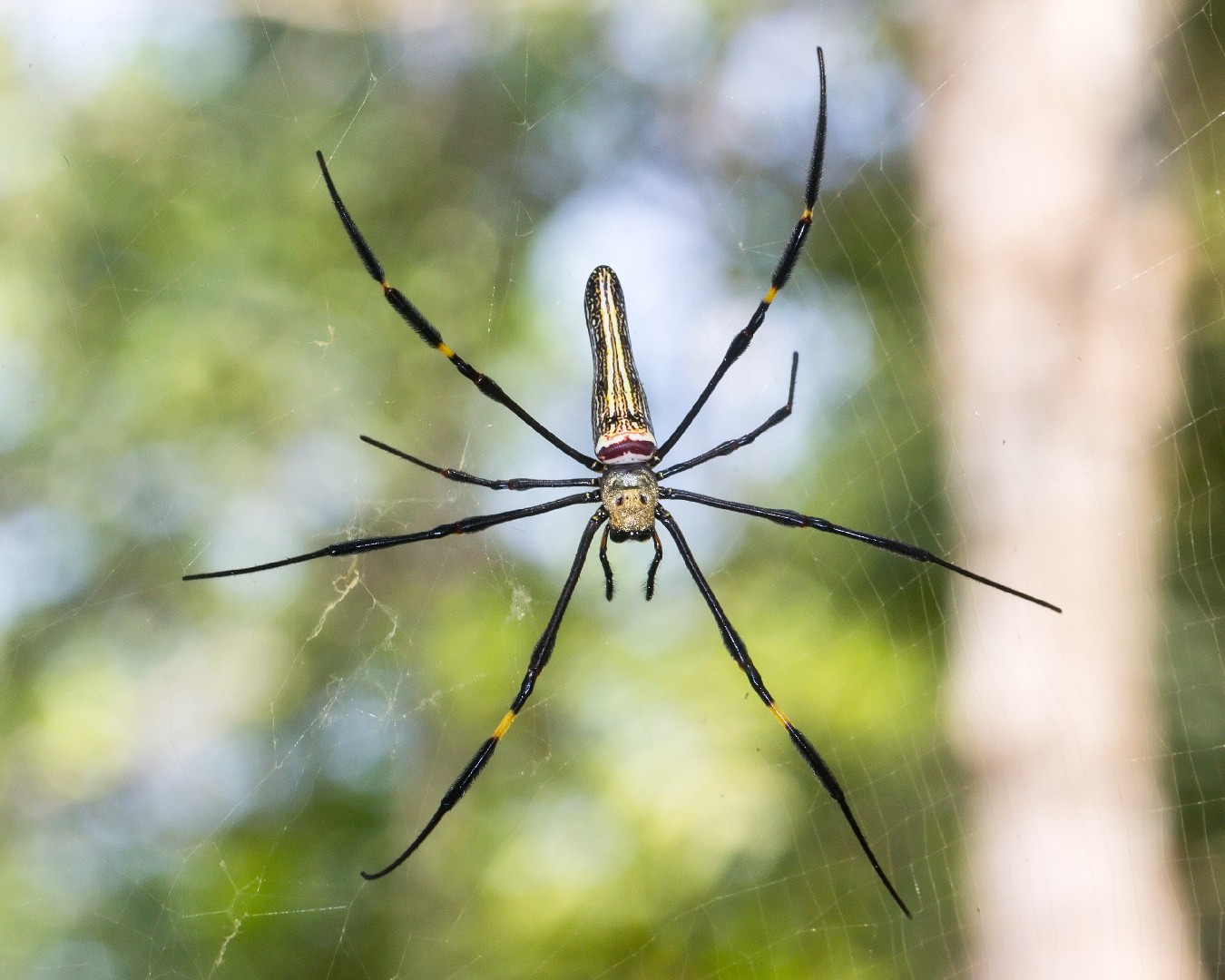
2. Giant golden orb weaver
The giant golden orb weaver (Nephila pilipes) is known for spinning a golden web. Despite that being neat, that isn't the weirdest part about them. Females are known to favor gigantism, causing males to be much smaller than average females. Males are known to have mating plugs which attempt to prevent other males from mating, but the size difference can make this tricky.
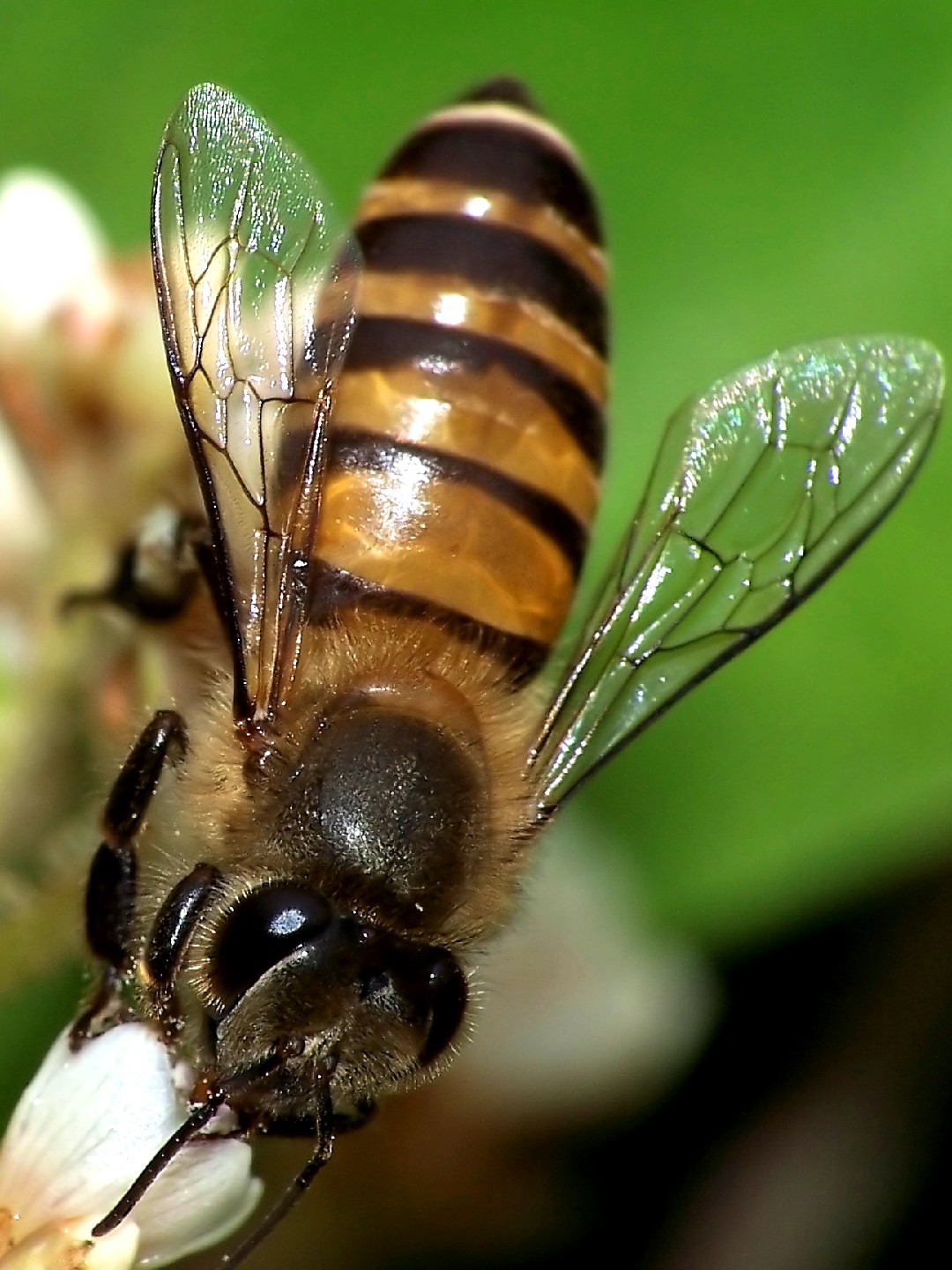
3. Eastern honey bee
Eastern honey bees communicate to one another about good sources of nectar and pollen through the "waggle dance". A bee will perform this descriptive dance to other bees, after which they can interpret the dance and find their way to the food source. When they need to defend their nest from a wasp, they will surround the wasp and vibrate their muscles to generate heat, eventually killing the wasp via "heat balling".

4. Common mormon
The common mormon (Papilio polytes) is a beautiful, black butterfly with unique hindwings that have orange and white colorings and two spots jutting out. They are named after the Mormon religion, as the butterflies participate in polygamy, which is a common practice for Mormons. They are also known to mimic red-bodied swallowtail, who are inedible.
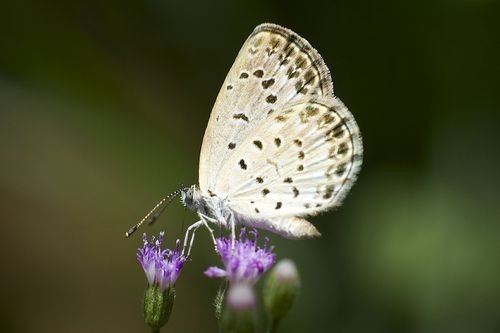
5. Pale grass blue
Male in wet-season brood. Upperside silvery light blue with a satiny sheen in certain lights. Forewing: the apical half of the costa narrowly and the terminal margin for varying widths fuscous black, bounded outwardly on the latter by an obscure anteciliary black line. Hindwing: the costa broadly, the termen somewhat more narrowly fuscous black as in the forewing, with the width of this dark edging similarly variable; in addition there is a very diffuse and ill-defined subterminal series of spots darker than the fuscous margin. Underside is brownish grey. Forewing: a spot in cell, a transverse lunule on the discocellulars, and a transverse anteriorly inwardly curved series of eight discal spots, black; the transverse lunule and each spot encircled with a narrow white edging; the posterior two spots of the discal series geminate (paired). Beyond these are a postdiscal and a subterminal series of short transverse dusky black spots followed by an anteciliary black line; the ground colour between the discal and postdiscal series and between the latter and the subterminal series of spots posteriorly paler than on the rest of the wing. Hindwing: a transverse, subbasal, slightly sinuate line of four spots, a short, slender, lunular line on the discocellulars, and a very strongly curved discal series of eight small spots, black; the lunule and each spot encircled with a narrow edging of white; the posterior two spots of the discal series geminate as on the forewing; beyond these as on the forewing there is a double line of dusky spots, only more lunular, with between them and between the discal and postdiscal series the ground colour in the same way followed by slightly paler; an anteciliary fine black line. Cilia of both forewings and hindwings whitey brown, darker anteriorly on the forewing. Antennae, head, thorax and abdomen dark brown, shafts of the antennae ringed with white; in fresh specimens the thorax and abdomen with a little light blue pubescence; beneath: palpi, thorax and abdomen white. Female in wet-season brood. Upperside is brownish black; the basal halves of the wings slightly suffused with light blue, anteciliary black lines on both forewings and hindwings, and on the latter wing an obscure subterminal series of spots as in the male. Underside, similar,only the ground colour darker, the markings larger and more clearly defined. Antennae, head, thorax and abdomen as in the male, but with no blue pubescence on the thorax and abdomen on the upperside. Male in dry-season brood. Upperside is pale bluish grey with, in some specimens, a pinkish undertone. Forewing: as in the wet-season brood, but the black terminal edging much reduced in width in some specimens to a transverse, somewhat diffuse, very narrow band that borders the anteciliary black line on the inner side, in others to a much broader similar band that coalesces with the anteciliary black line and occupies about the outer sixth of the wing. This edging along the termen is sometimes even, sometimes it widens from a slender anteciliary at and above the tornus to a broad black patch at the apex of the wing. Hindwing: the terminal black edging much narrower proportionately than in wet-season specimens, most often reduced to a slender black anteciliary line with a series of black spots on the inner side, bordering and sometimes coalescing with the line. Underside: as in the wet-season brood but the ground colour paler, in some specimens much paler, the markings on both forewings and hindwings similar, with frequently the terminal markings obsolescent, sometimes entirely absent or only indicated anteriorly on each wing. Cilia whitish. Antennae, head, thorax, and abdomen as in the wet-season specimens. Female in dry-season brood similar to the female of the wet-season brood, but more like the male, with the light silvery-blue suffusion very irregular, but generally extended much further outwards from the base. Underside: as in the male, the ground colour slightly darker. Antenna, head, thorax and abdomen similar to those of the male.
6. Longan lanternfly
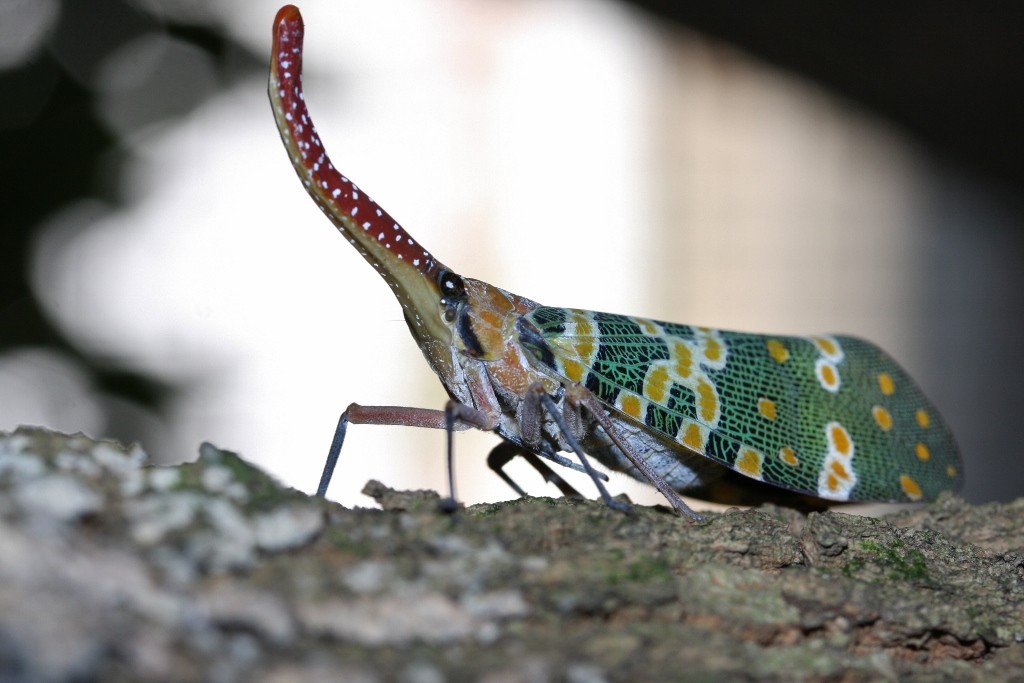
They are often sought-out by collectors, attracted by their fore wings, yellow-orange hind wings with a black zone around the wing tips, a reddish head and cephalic process with white spots.
7. Dark-branded bushbrown
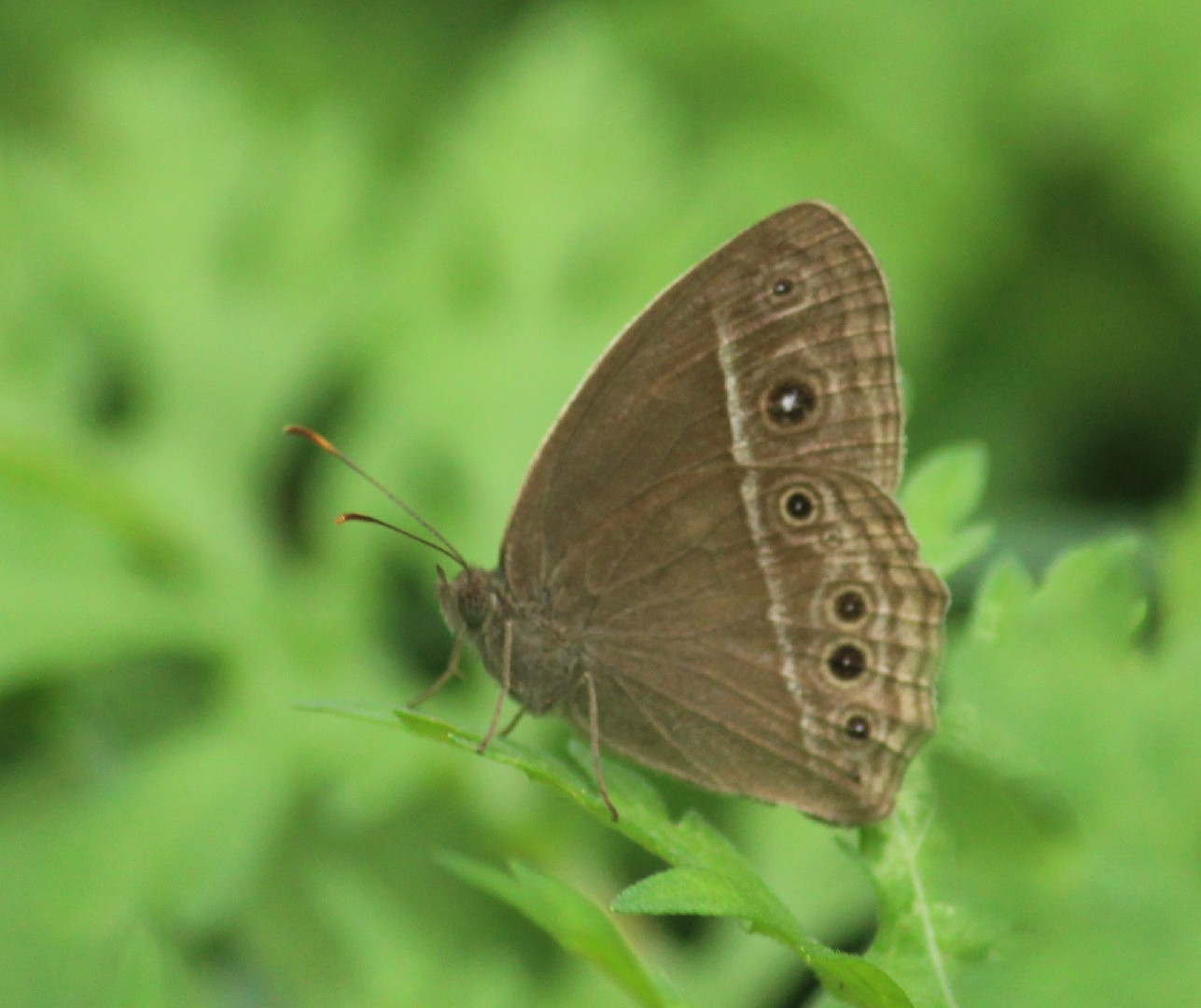
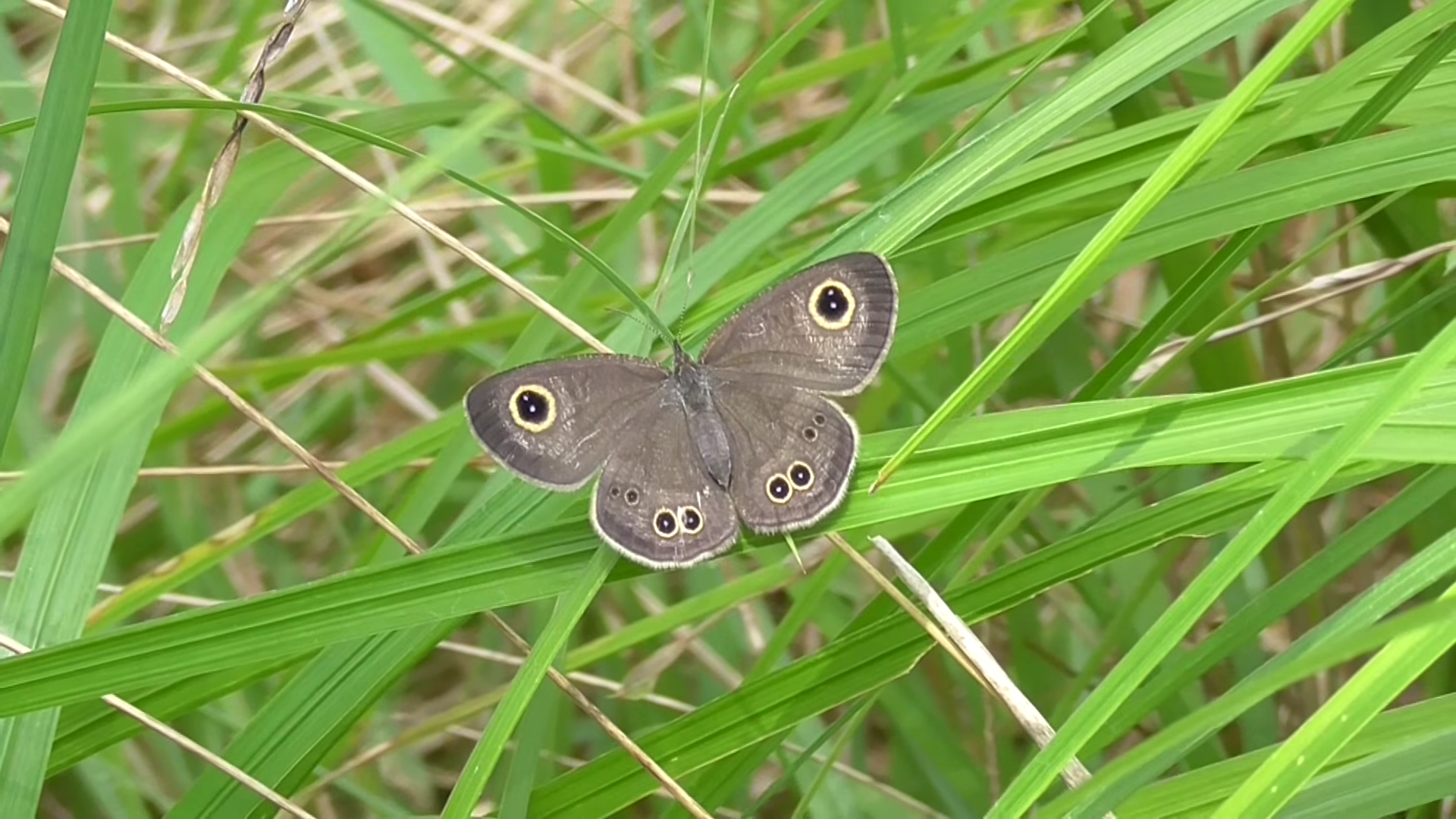
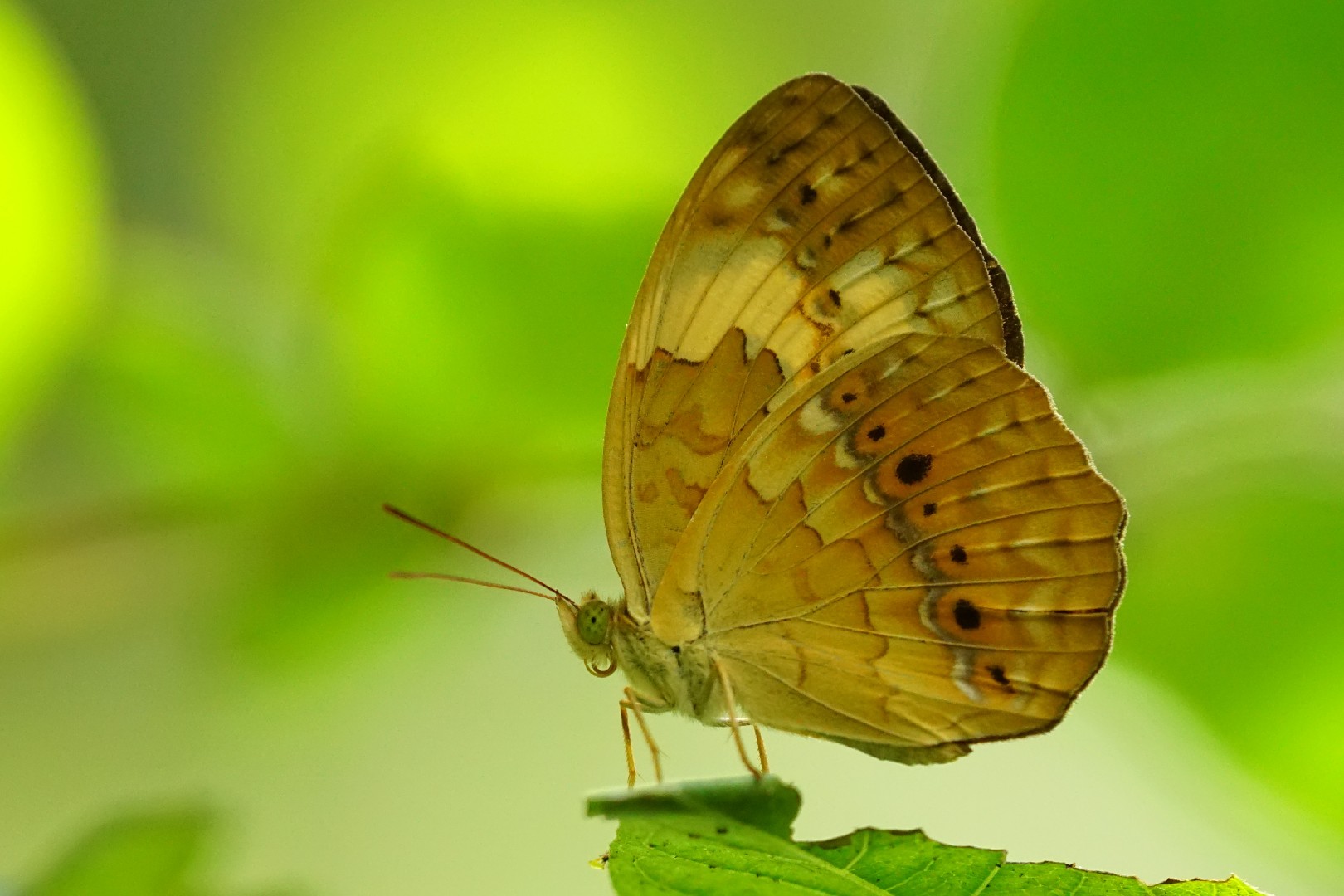
Wet-season form: Upperside dark Vandyke brown; forewings and hindwings with slender subterminal and terminal pale lines. Forewing with a single white-centred, fulvous-ringed, black ocellus, generally set in a square pale area, in interspace 2, occasionally a similar smaller ocellus without any pale surrounding area in interspace 5. Hindwing uniform sometimes with one or two obscure postmedian ocelli. Underside: ground colour similar; forewings and hindwings crossed by a transverse dusky-white discal band, well-defined inwardly, diffuse outwardly, followed by a postdiscal series of ocelli surrounded by a dusky-yellowish, sometimes purplish white, line; the ocelli are similar to the ocelli on the upperside, and vary from two to four on the forewing and from five to seven (the preapical two being sometimes obsolescent) on the hindwing; of these latter the posterior four, not three as in Mycalesis perseus, are in a straight line; finally, beyond the rows of ocelli on both wings there are pale or purplish-white subterminal and terminal sinuous lines. Dry-season form: Upperside similar to that in the wet-season form, but paler. Underside from ochraceous brown to dusky brown of a darker shade; basal half of the wings conspicuously darker than the outer portions; the whole surface irrorated (sprinkled) with fine brown striae; sometimes a distinct dark discal band crosses both wings; ocelli nearly obsolete, indicated by minute white specks, the posterior four on the hindwing in a straight line as in the wet-season form. Antennae, head, thorax and abdomen brown; the club of the antennae with black and ochraceous marks. Male sex-mark in form 1 as in M. perseus, but the patch of specialized scales on the underside of the forewing half as large again.
8. Punchinello
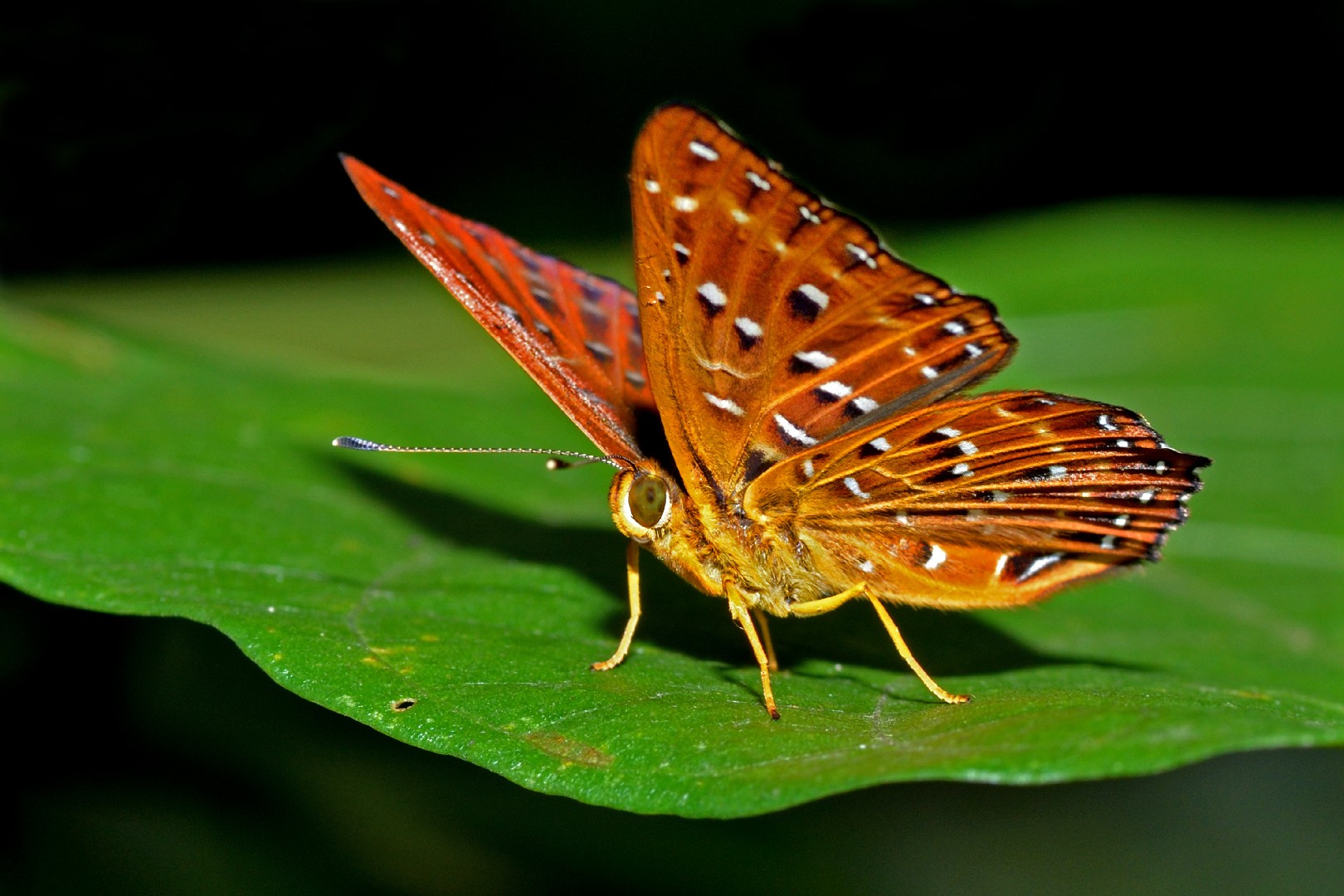
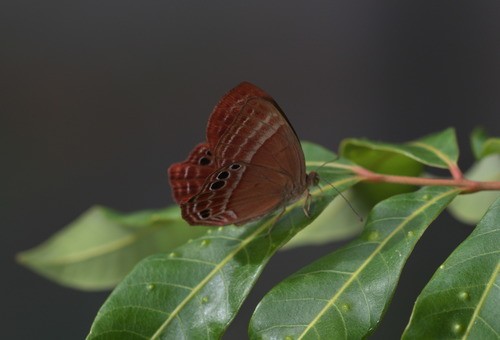
Male in wet-season form: upperside is vinaceous (colour of red wine) brown, the veins ochraceous brown. Forewings and hindwings crossed by four series of minute white spots, the postdiscal series very often obscure, each spot bordered inwardly by a more or less elongate black spot; a terminal very slender black line; cilia alternately black and white. Underside is bright ochraceous brown, the veins conspicuously paler, the white black-bordered spots as on the upperside but larger, more clearly defined and prominent. Antennae brown ringed with white; club black, ochraceous at apex; head, thorax and abdomen concolorous with the wings; beneath, the palpi, thorax and abdomen slightly paler than the wings. Male in dry-season form: upperside has the ground colour darker than in the wet-season form; the spots are smaller and duller in colour. On the forewing the postdiscal series of spots often obsolescent except the spots in interspaces 3, 6 and 8, the latter two very large and prominent; sub-terminal series of spots also often obsolescent. The veins on both forewings and hindwings not paler than the ground colour. Underside is similar to the underside in the wet-season form, but the ground colour a shade darker; the veins not conspicuously paler; the white spots as in the wet-season form, except the postdiscal and subterminal series on the forewing, which are as on the upperside, the anterior large white spots of the postdiscal series being very prominent; the inner black bordering to the white spots much smaller than in the wet-season form. Antennae, head, thorax and abdomen as in the wet-season form. Females have the upper and undersides similar to those of the wet-season form, but the ground colour brighter and paler; markings also similar, but the black bordering to the white spots less prominent.
9. Blue marsh hawk
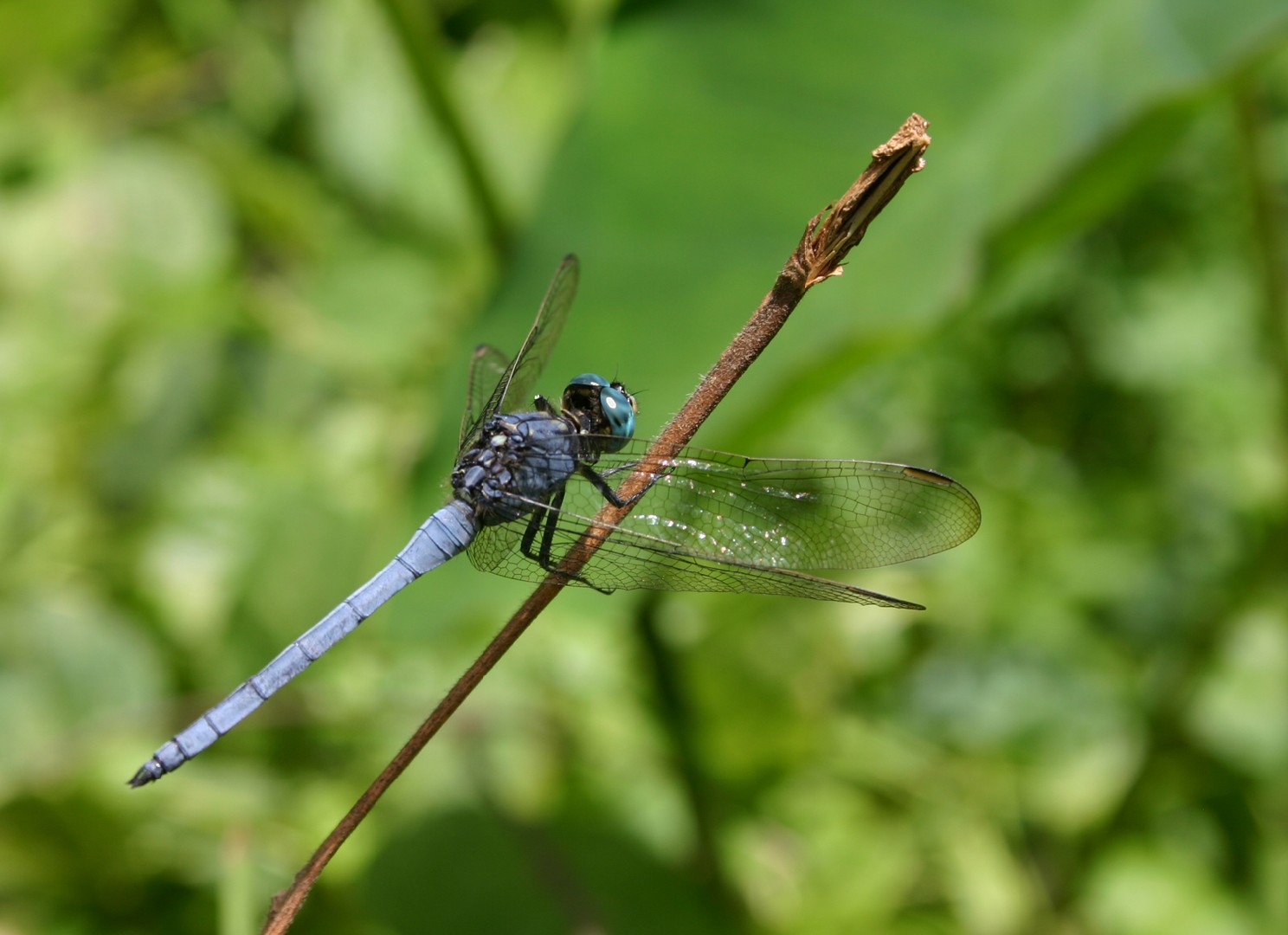
The species is on the IUCN Red List as not endangered, year of assessment 2007.

10. Blue moon butterfly
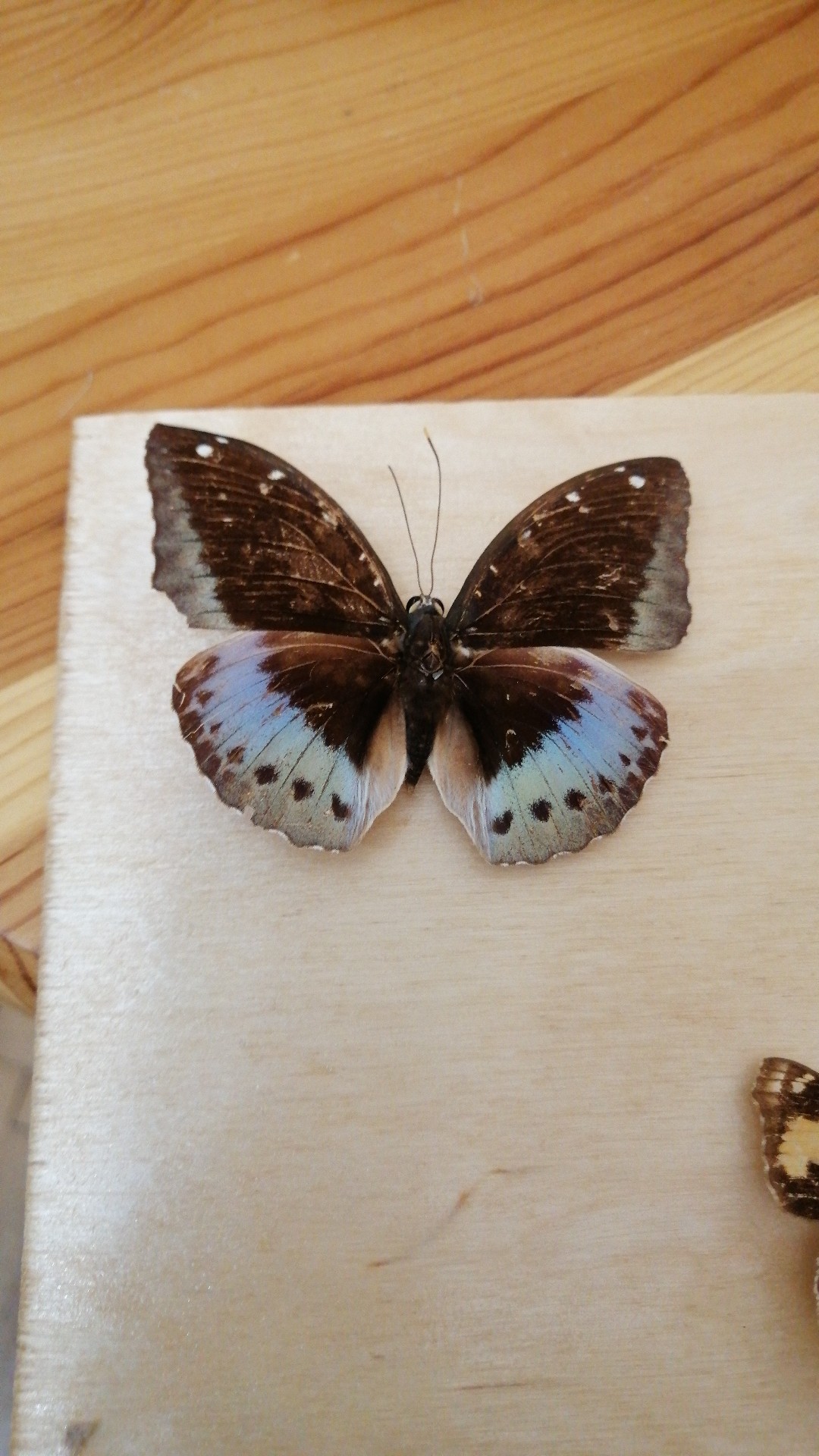
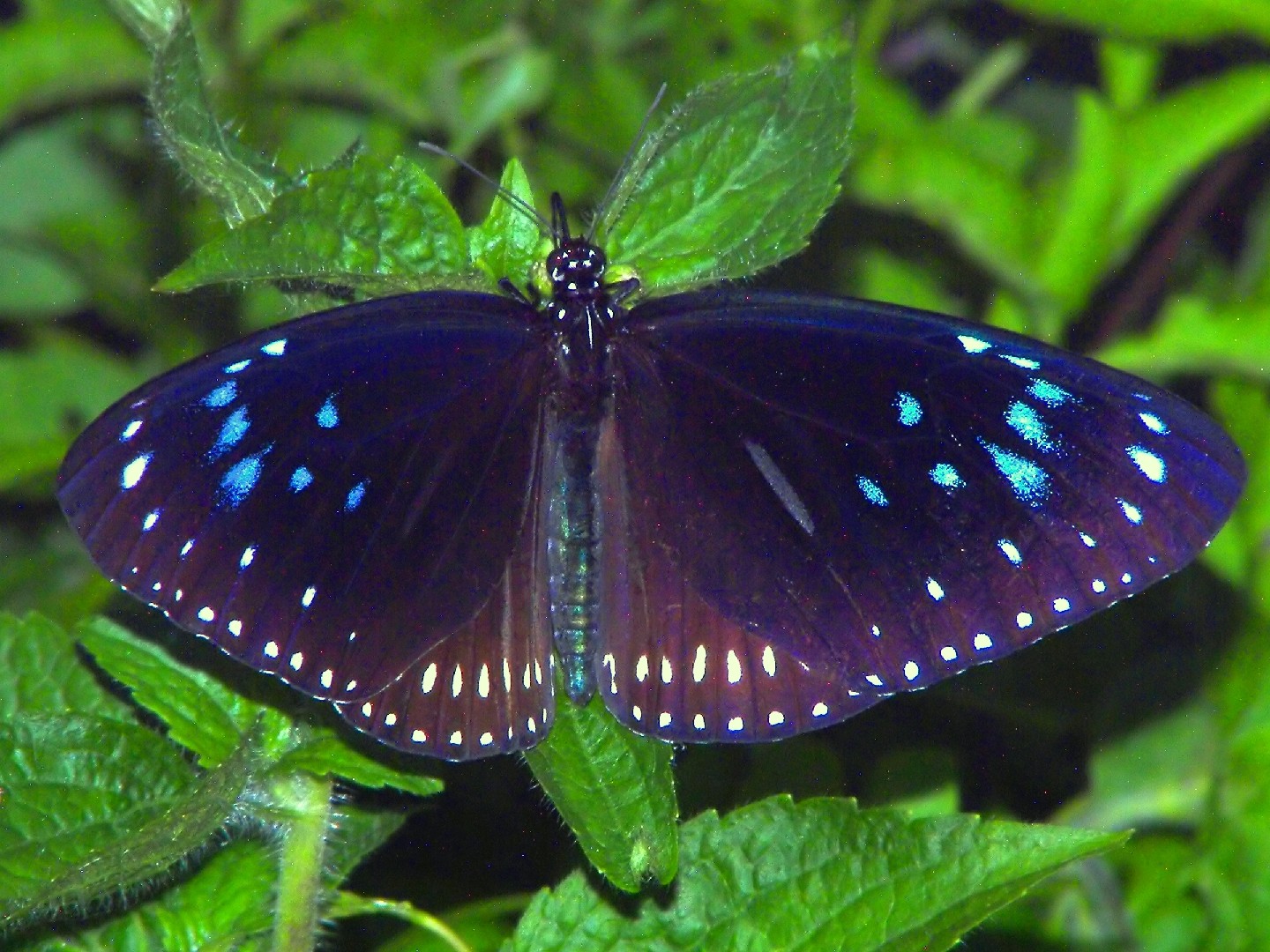
Hypolimnas bolina, the great eggfly, common eggfly or in New Zealand the blue moon butterfly is a species of nymphalid butterfly found from Madagascar to Asia and Australia.

More







