




Top 13 Most Common Insects in Benguet
Insects, known for their segmented bodies, multichambered hearts, and extraordinary reproduction rates, are pivotal to every ecosystem, including the vibrant landscapes within Benguet. Due to its geographic diversity - from its lush, foggy forests to its flourishing farmlands - Benguet is a hotspot for insect variety. Among these diminutive creatures, the Top 13 insects here play a mix of roles, as pests interfering with human endeavours and pollinators fostering biodiversity. A snapshot of Benguet's critters indeed mirrors its ecological richness!

Most Common Insects
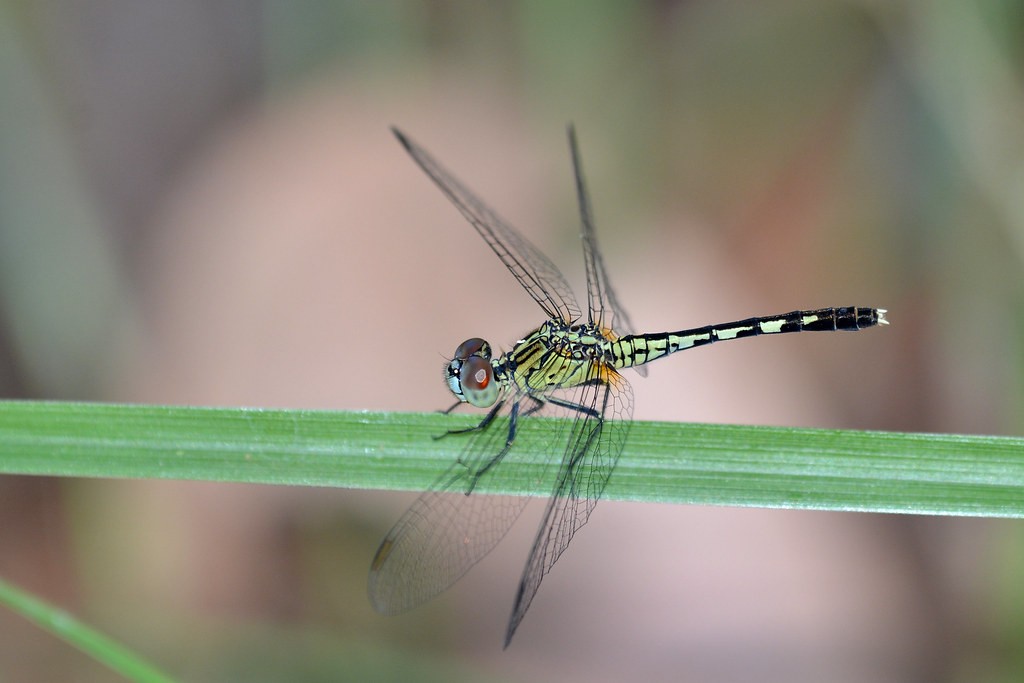
1. Green skimmer
Orthetrum serapia is a medium-sized dragonfly with a wingspan of 60-85mm. Its wings are clear except for a small dark spot at the base of the hindwing. The thorax is greenish to greyish yellow with black markings. The abdomen is black with pale yellow or pale green markings. Orthetrum serapia appears very similar to Orthetrum sabina and can be confused where the range of the two overlap in north-eastern Australia. 
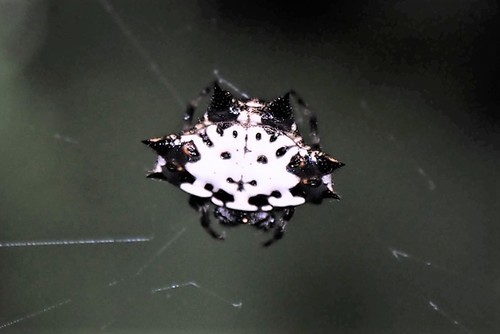
2. Black-and-white spiny spider
Female black-and-white spiny spider are 6 - 9 mm wide and possess a hard, shiny abdomen armed with six black conical spines. The upper surface of the abdomen is white to yellowish with variable black or dark brown markings and sigilla. Males are much smaller at 3 - 4 mm and in place of spines have small bumps on their abdomens.
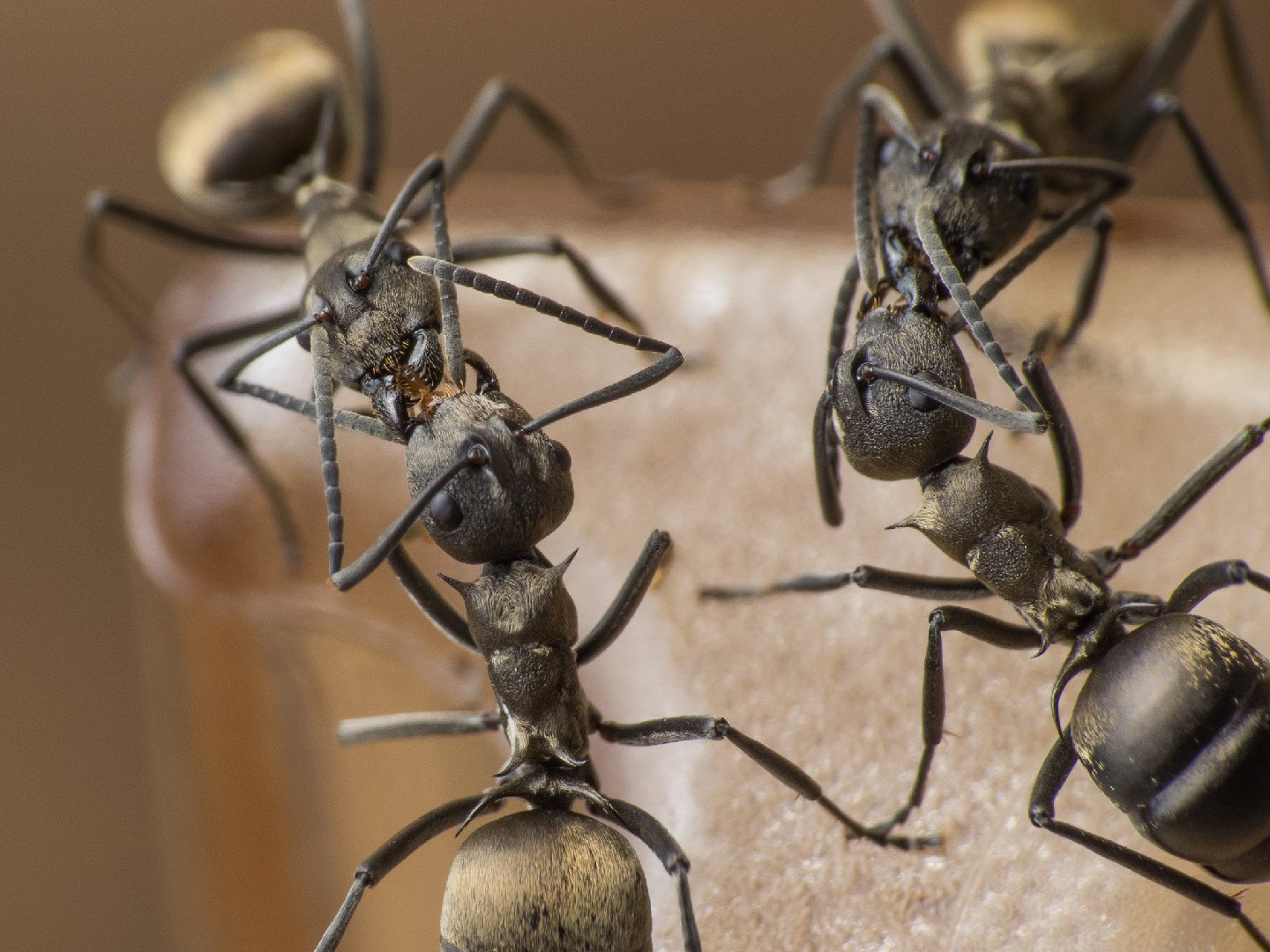
3. Rich spiny sugar ant
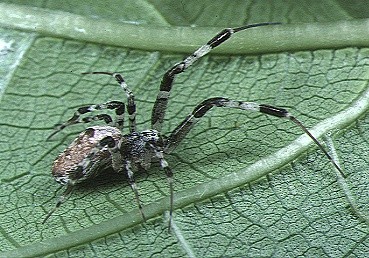
4. Banded-knees house spider
Zosis geniculata sometimes referred to as the humped spider or grey house spider, is a cosmopolitan species with a pantropical distribution. In Australia, it is often seen in buildings near human habitation.
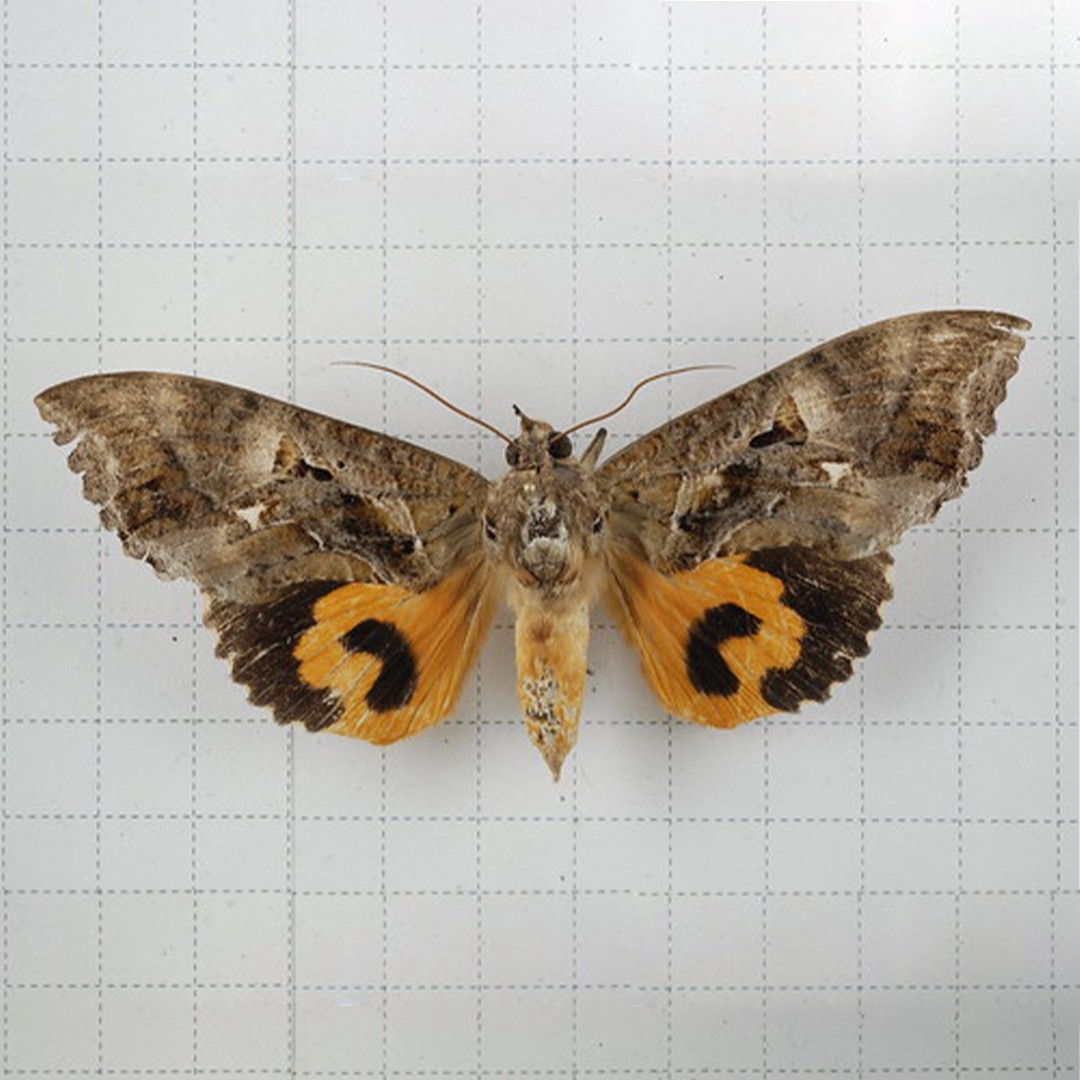
5. Common Fruit-Piercing Moth
The wingspan is about 80–94 mm in male. Palpi with third joint long and spatulate at extremity. Forewings with non-crenulate cilia in male, crenulate in female. Head and thorax reddish brown with plum-color suffusion. Abdomen orange. Forewings reddish brown, usually with a greenish tinge and irrorated with dark specks. An oblique antemedial line present, which is generally dark and indistinct but sometimes pale and prominent. Reniform indistinct. A curve postmedial line found, which is almost always met by an oblique streak from apex. Hindwings orange, with a large black lunule beyond lower angle of cell. There is a marginal black band with cilia pale spots runs from costa to vein 2. Ventral side of forewings with orange postmedial band. The wingspan is about 90–110 mm in female. Female has much more variegated and dark reddish brown striated forewings. Reniform dark and sending a spur along median nervure to below the orbicular speck. There is a triangular white mark usually present on the postmedial line below vein 3. Larva has dilated 11th somite and surrounded by a tubercle. Body purplish brown, where dorsum brown from 6th to 11th somites. Legs red and spiracular scarlet patches largest posteriorly and with some irregular white markings round them, on somite 9 in the form of an oblique white bar. There is a yellow sub-basal mark found on 4th somite. Fifth and sixth somites have black ocelli with yellow iris and white pupils. Two yellow patches can be seen on 11th somite. The adult is considered an agricultural pest, causing damage to many fruit crops by piercing it with its strong proboscis in order to suck the juice. Attempts have been made to control them using baits for the adults, egg parasites and larval parasitoids.
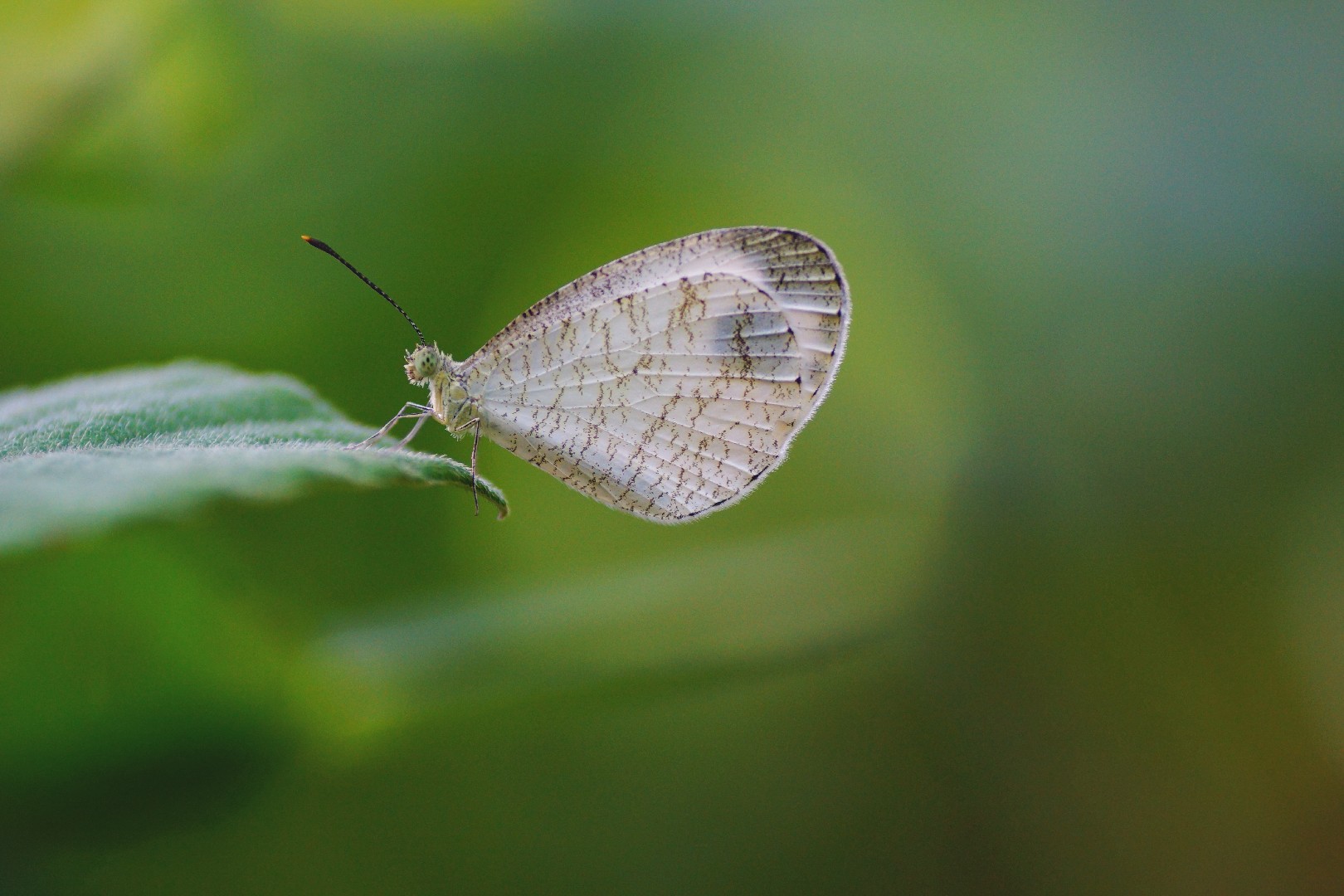
6. Psyche
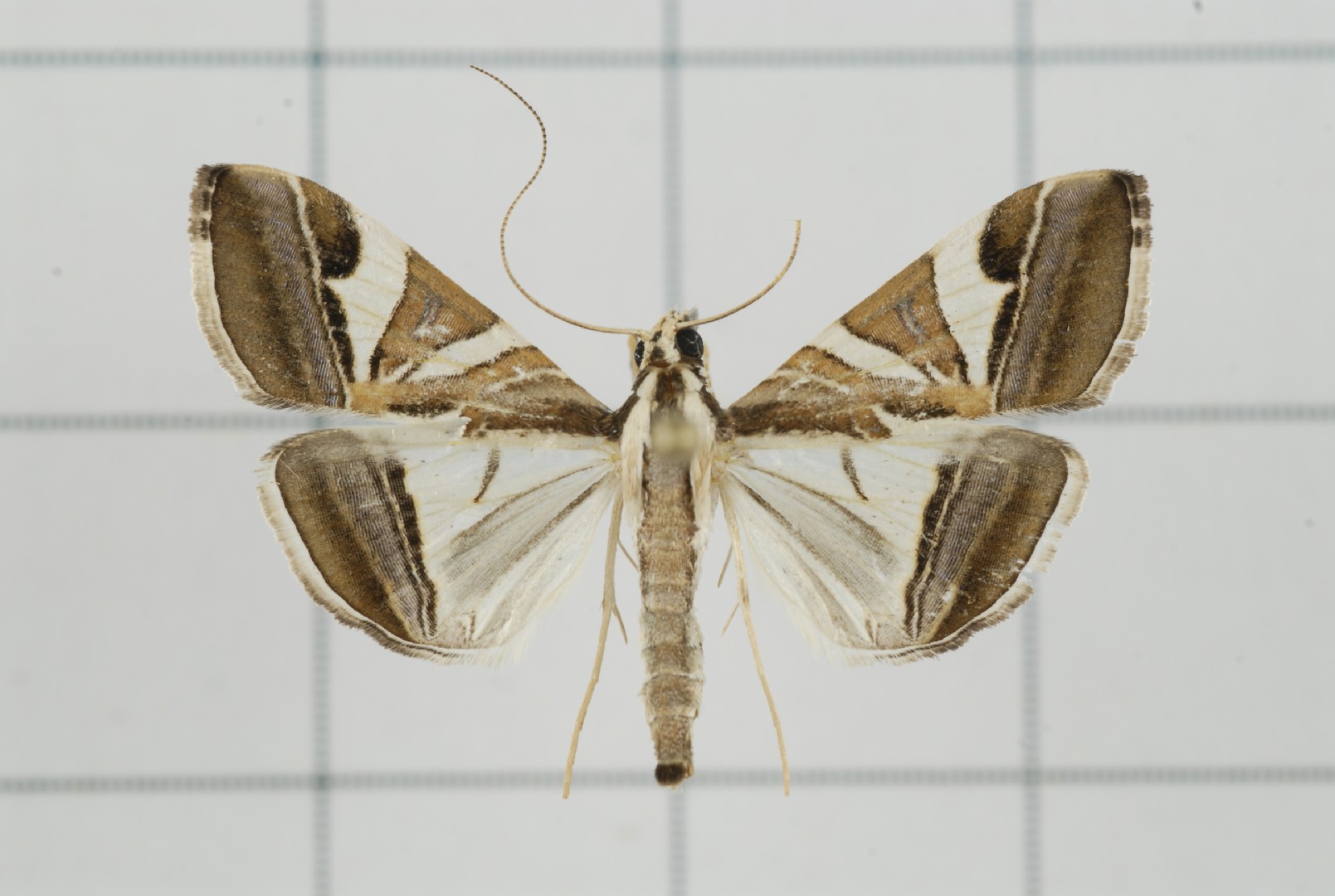
Upperside is white,base of wings are very slightly powdered with minute black scales.The costa of forewing is speckled obscurely with black; apex black, the inner margin of this inwardly angulate; a very large somewhat pear-shaped post-discal spot also black. Hindwing is white,in most specimens an obscure, extremely slender, terminal black line. Underside is white; costal margin and apex of forewing broadly, and the whole surface of the hindwing irrorated (speckled) with transverse, very slender, greenish strigae and minute dots; these on the hindwing have a tendency to form sub-basal, medial and discal obliquely transverse obscure bands; the postdiscal of forewing is black,spot as on the upperside; terminal margins of both forewings and hindwings with minute black, short, transverse slender lines at the apices of the veins, that have a tendency to coalesce and form a terminal continuous line as on the upperside. Antennae dark brown spotted with white, head slightly brownish, thorax and abdomen white. Female is similar as male, the black markings on the upperside of the forewing on the whole slightly broader, but not invariably so. Wingspan is 2.5 - 5 cm. Larva is green with a pale glaucous tinge about the bases of the legs and slightly hairy. Pupa sometimes green, but more often of a delicate pink shade.
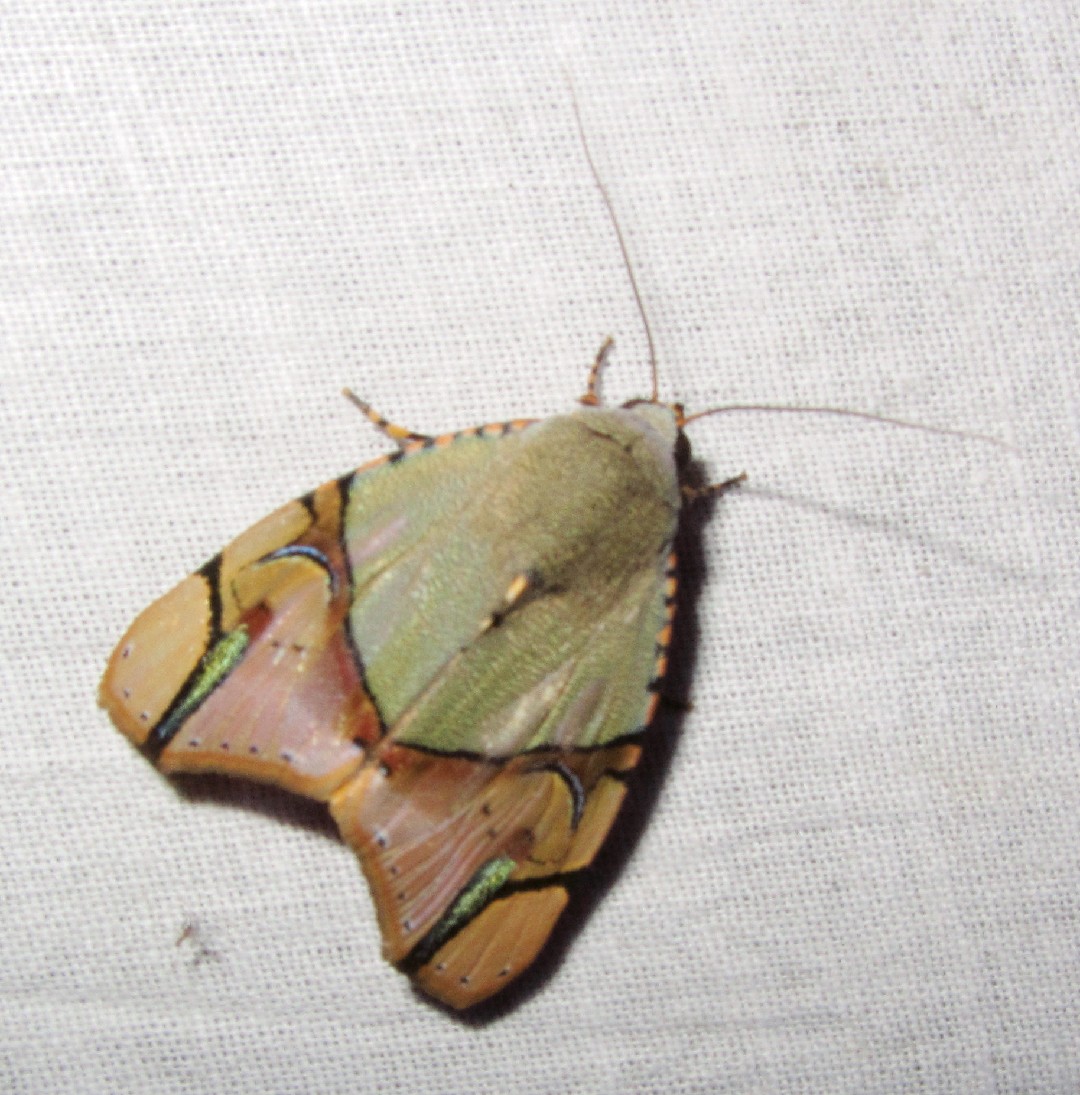
7. Ramadasa pavo
The wingspan is 45 mm in male and 50 mm in female. Forewing of male with veins 3, 4, and 5 curved at their bases. The membrane in the cell and interno-median interspace slightly ridged, probably for stridulation. Head and thorax clothed with grey brown mottled scaled. The frons barred with orange and metallic blue black. Abdomen orange. Forewings with greyish basal area, mottled with brown. Costa orange, with five blue-black spots. There is an oblique medial black line with vinous suffusion on its outer edge. The outer area pale chestnut. The reniform large and incomplete, outlined on its upper and inner sides by black and violet, the upper part of its outer edge by a black line, terminating in a red speck with two black specks below it. A black striga runs from the costa to the reniform, and a blue-black band beyond it from the costa to vein 6, where it is bent outwards to the margin as a streak. There is a black and white sub-marginal specks series. Hindwings are orange.
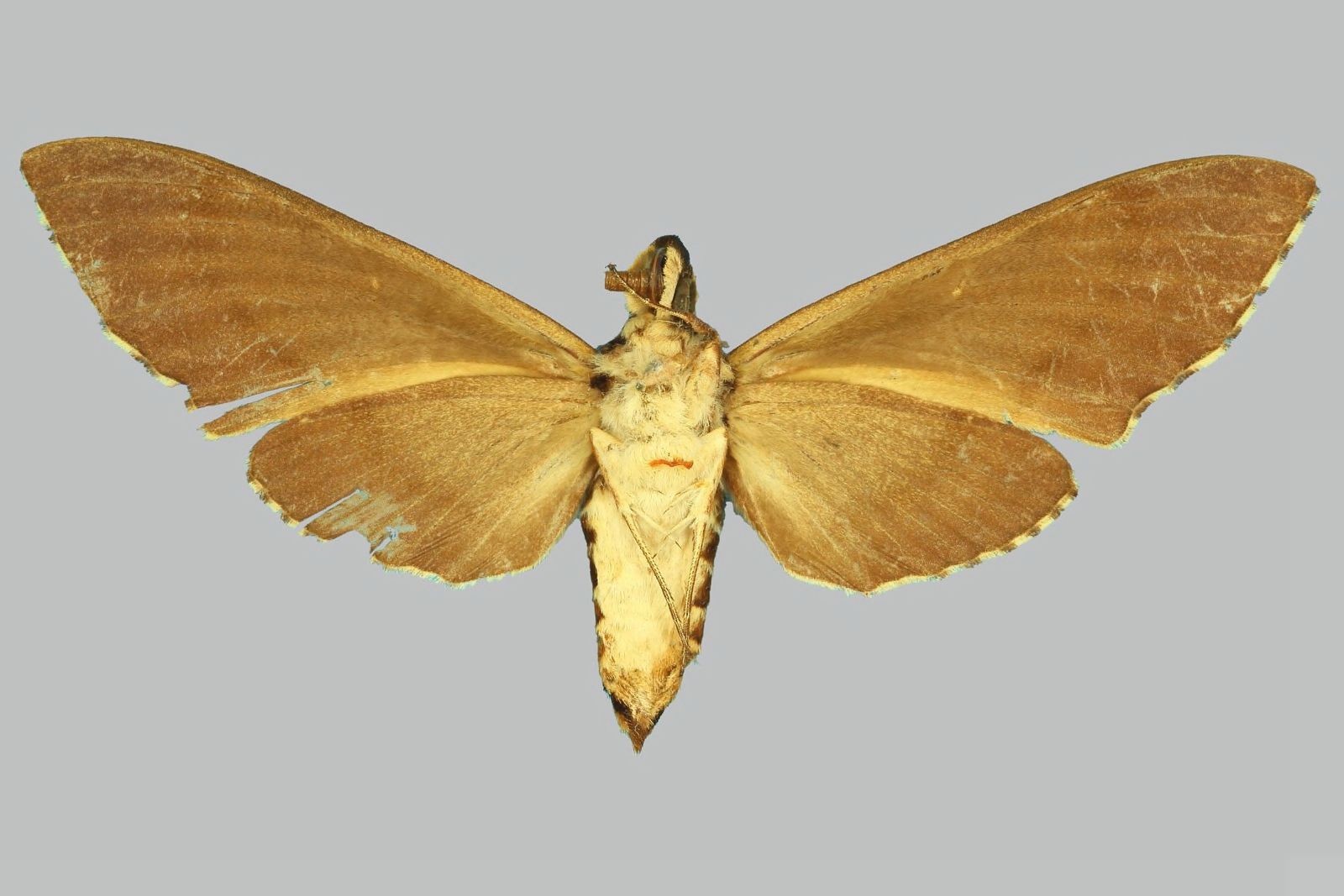
8. Cerberonoton rubescens
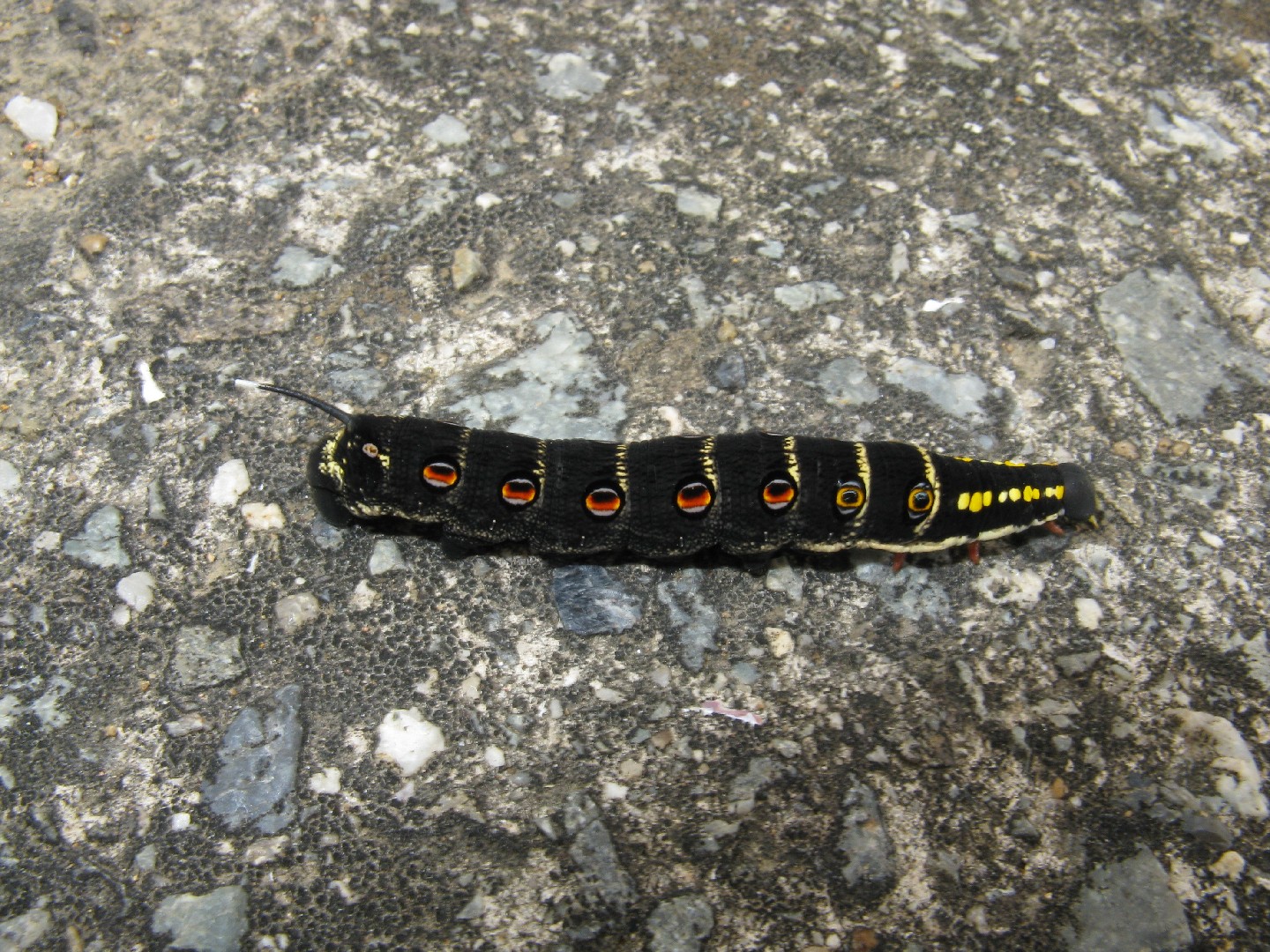
9. Impatiens hawk moth
The impatiens hawk moth can be considered a pest among commercial and residential gardeners. Both the moth and caterpillar feed on several flowering plants, including fuchsias and the Australian native violet. Adult females lay their eggs on the plant’s foliage, ensuring the hatching larvae have a ready food source.
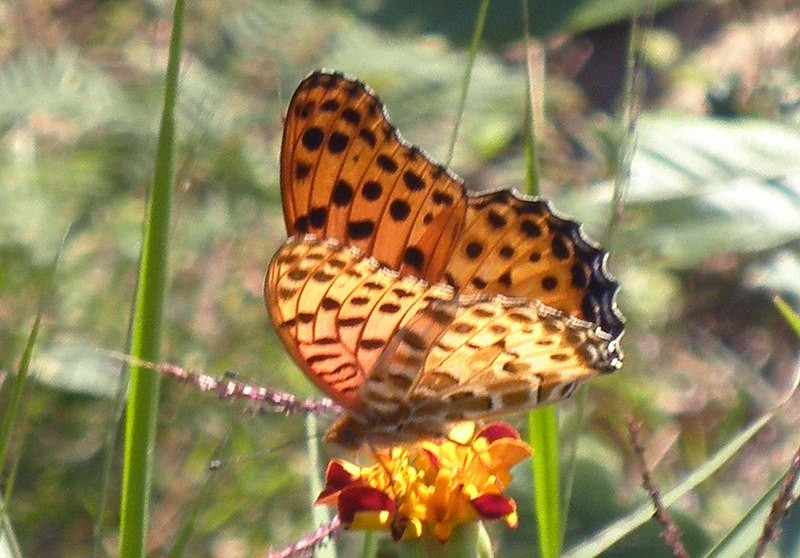
10. Indian fritillary
Male: Upperside: forewing rich orange yellow, hindwing paler yellow, with the following black markings: Forewing: cell with a basal short transverse streak, a medial broad oval loop, its outer margin sinuous; a broad transverse streak beyond cell not reaching the median nervure; a broad streak along the discocellulars; a zigzag discal series of large spots, angulated outwardly in interspace 4, inwardly in interspace 2, a minute spot at base of interspace 1; a somewhat diffuse large postdiscal spot below the costa in interspace 6; a postdiscal sinuous series of round spots, those in interspaces 1 and 4 very small; an inner complete subterminal sinuous series of round spots; an outer subterminal line, widening on the veins, and a terminal slender line. Hindwing: a basal, transverse, obscure narrow mark in cell, another above it in interspace 7, a transverse lunule across the middle of the cell; a small spot outwardly bordering the lower discocellular; a discal series of transverse spots from interspaces 1 to 7, sinuous posteriorly; a postdiscal series of five spots in interspaces 2 to 6; a subterminal series of somewhat lunular spots; finally, a narrow band on term en traversed posteriorly by a series of blue, anteriorly by a series of ochraceous lunules. Underside forewing pale terracotta red, shading into ochraceous towards the apex, the apex broadly suffused with that colour; markings as on the upperside, with the following exceptions: subcostal spot in interspace 6, upper two spots of postdiscal series, upper four spots of the inner subterminal series, and the anterior portions of the outer subterminal and of the terminal line olivaceous brown; the upper two postdiscal spots centred with white, with a white spot on each side; the upper four spots of the sub terminal series connate (united), forming a short curved band. Hindwing variegated with ochraceous, olivaceous-brown and silvery-white markings, the last for the most part narrowly margined on the outer side by short black lines; the veins prominently pale ochraceous; the medial silvery markings form a well-marked sinuous discal series, followed by a curved postdiscal series of five olivaceous round spots; each spot and the olivaceous-brown quadrate patch near base of cell with a minute white central spot; a slender black subterminal line widening at the veins, as on the forewing, followed by an ochraceous narrow lunular band and an outer slender black anteciliary line; the subterminal black line margined on the inner side by a series of: slender white lunules, bordered inwardly by a series of broad olivaceous-brown markings in the interspaces. Antennae brown above, ochraceous red beneath; head, thorax and abdomen olivascent tawny; beneath, palpi, thorax and abdomen pale ochraceous. Female similar. Differs from the male as follows: Upperside: apical half of forewing from about the middle of the costa obliquely to just above the tornus black, inwardly suffused with purple, crossed by a broad white band from costa to the subterminal series of black spots; four preapical white spots, the upper three bordering on each side and above a very obscure ocellus scarcely visible on the black background, an inner and an outer subterminal transverse series of slender white lunules. Underside: forewing markings similar to those on the upperside, but the apex of the wing beyond the white oblique band ochraceous green. Hindwing as in the male, but the markings slightly broader. Antennae, head, thorax and abdomen as in the male, the abdomen paler beneath. Wingspan: 80–98 mm (3.1–3.9 in). Var. taprobana, Moore, is a slightly darker race from Ceylon, with markings similar in both sexes to those of hyperbius. Moore, however, states that taprobana is an intermediate between the south Indian form (castetsi) and typical hyperbius specimens from Ceylon that do not differ from upper India, Assam, and Burmese specimens, except in the very slightly darker ground colour on the upperside. Race castetsi, Oberthur: The females of this remarkable form seem to be locally dimorphic. Male closely resembles the male of hyperbius but differs as follows: Upperside: ground colour a richer brighter shade of orange yellow; black markings similar but distinctly smaller, of a deeper black: subterminal transverse series of slender lunules traversing the terminal black margin on the hindwing of the same shade of orange yellow as the ground colour, not blue on the posterior half of the wing. Underside: the olivaceous brown at apex of forewing and variegating the hindwing more of a greenish golden tint. A sex-mark of specialized raised scales along middle of vein 1 on the upperside of the forewing very prominent. Female Nilgiri form: resembles the female of typical hyperbius differs as follows: Upperside: ground colour pale golden yellow; basal half of both forewings and hindwings shaded with metallic green in the forewing; in some specimens this tint is slightly olivaceous; black markings and the white oblique band on the apical area of the forewing as in hyperbius, but proportionately smaller, the purplish-blue shading along inner margin of the white band much less conspicuous, as is also the bluish tint; on the white preapical spots and subterminal markings on the forewing and on the posterior half of the subterminal line of limules on the hindwing. Underside as in hyperbius but the ground colour on the forewing a paler shade of terracotta red; the olivaceous brown variegating the hindwing of a distinctly greener tint. Female typical form as described from Trichinopoly. Similar to the male differs as follows: Upperside: ground colour pale golden yellow; basal half of the wings suffused with dark olivaceous green; black markings as in the male but larger; on the forewing the spots of the subterminal series very large, coalescent or nearly coalescent with one another and with the dentate spots on the veins in the inner terminal line; the upper two spots also of the postdiscal series very large and coalescent, the upper of the two joining on above and below to the inner postdiscal lunate spot in interspace 6, thus enclosing a prominent lunule of the ground colour. Underside as in the male but paler.
More







