




Top 20 Most Common Insects in Lanao del Sur
Insects, with their myriad shapes, sizes, and unique survival strategies, often reflect the ecological complexities of a region they inhabit. For instance, the diverse topographical features of Lanao del Sur have brewed a fascinating array of insect species. These tiny creatures, both pesky intruders and vital lifelines, play crucial roles in our ecosystem, from pollination to pest control, and even as decomposers. Dive into a world often overlooked, as we outline the 20 most common insects thriving amidst the natural paradises and developed areas of Lanao del Sur.

Most Common Insects
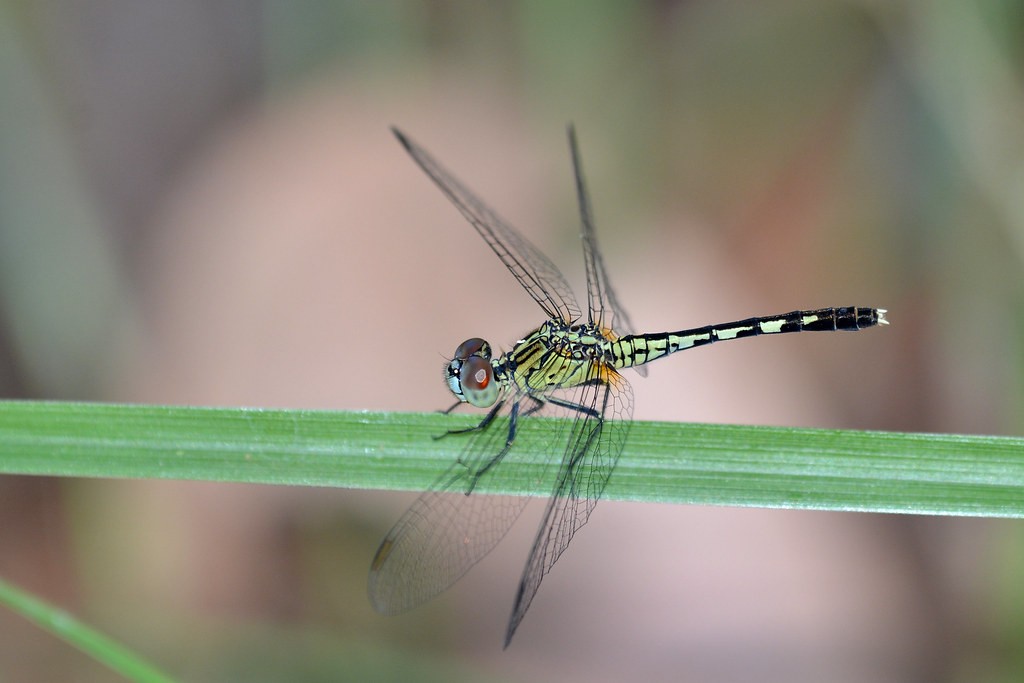
1. Green skimmer
Orthetrum serapia is a medium-sized dragonfly with a wingspan of 60-85mm. Its wings are clear except for a small dark spot at the base of the hindwing. The thorax is greenish to greyish yellow with black markings. The abdomen is black with pale yellow or pale green markings. Orthetrum serapia appears very similar to Orthetrum sabina and can be confused where the range of the two overlap in north-eastern Australia. 
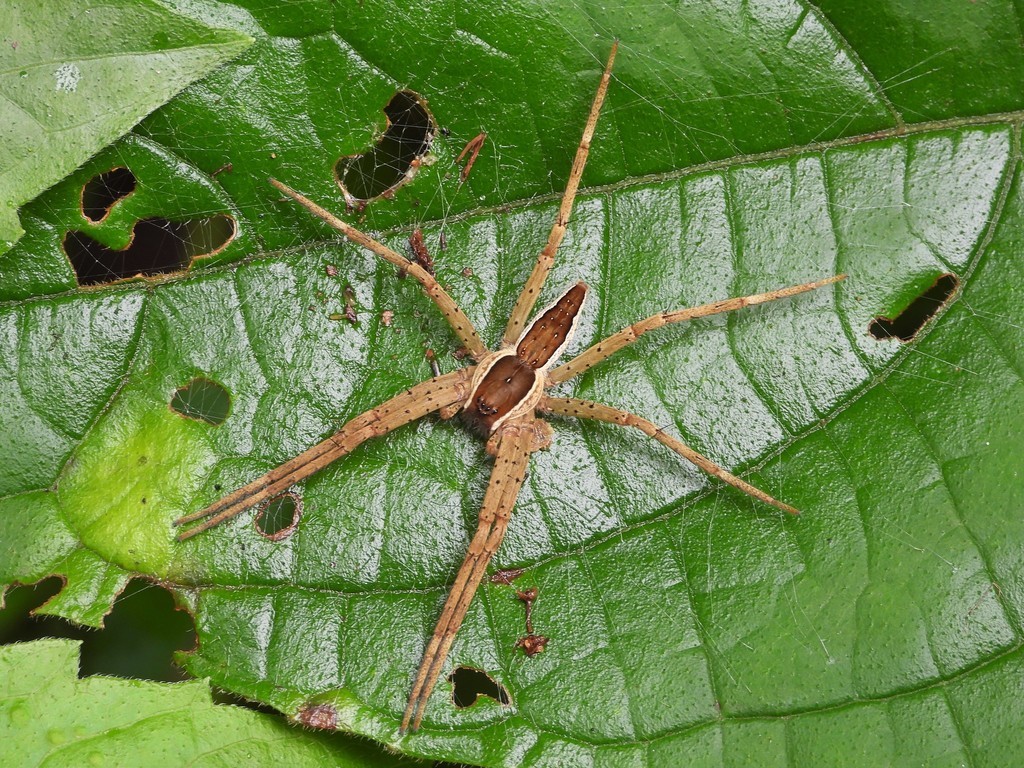
2. Common white-flanked water spider
Nilus albocinctus, synonym Thalassius albocinctus, commonly called the fishing spider, is a species of spider found in tropical Asia from India to the Philippines. It is named after its habit of catching small fish. The spider is striking in appearance and can be easily recognised by the presence of a black, glossy, broad median band bordered by a white lateral band on the cephalothorax and abdomen. The legs are long and yellowish brown. It is usually found near water. Female pisaurids create their egg case in one piece and carry it under their body with their chelicerae. This differs from similar looking female lycosids which construct their egg case in two pieces and fasten it behind them with their spinnerets.
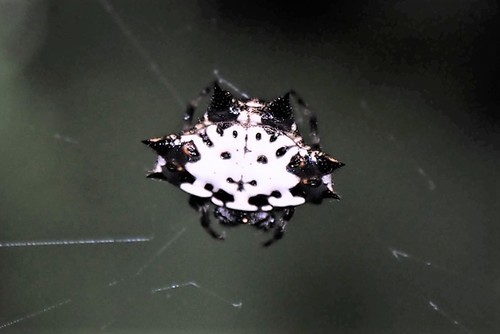
3. Black-and-white spiny spider
Female black-and-white spiny spider are 6 - 9 mm wide and possess a hard, shiny abdomen armed with six black conical spines. The upper surface of the abdomen is white to yellowish with variable black or dark brown markings and sigilla. Males are much smaller at 3 - 4 mm and in place of spines have small bumps on their abdomens.
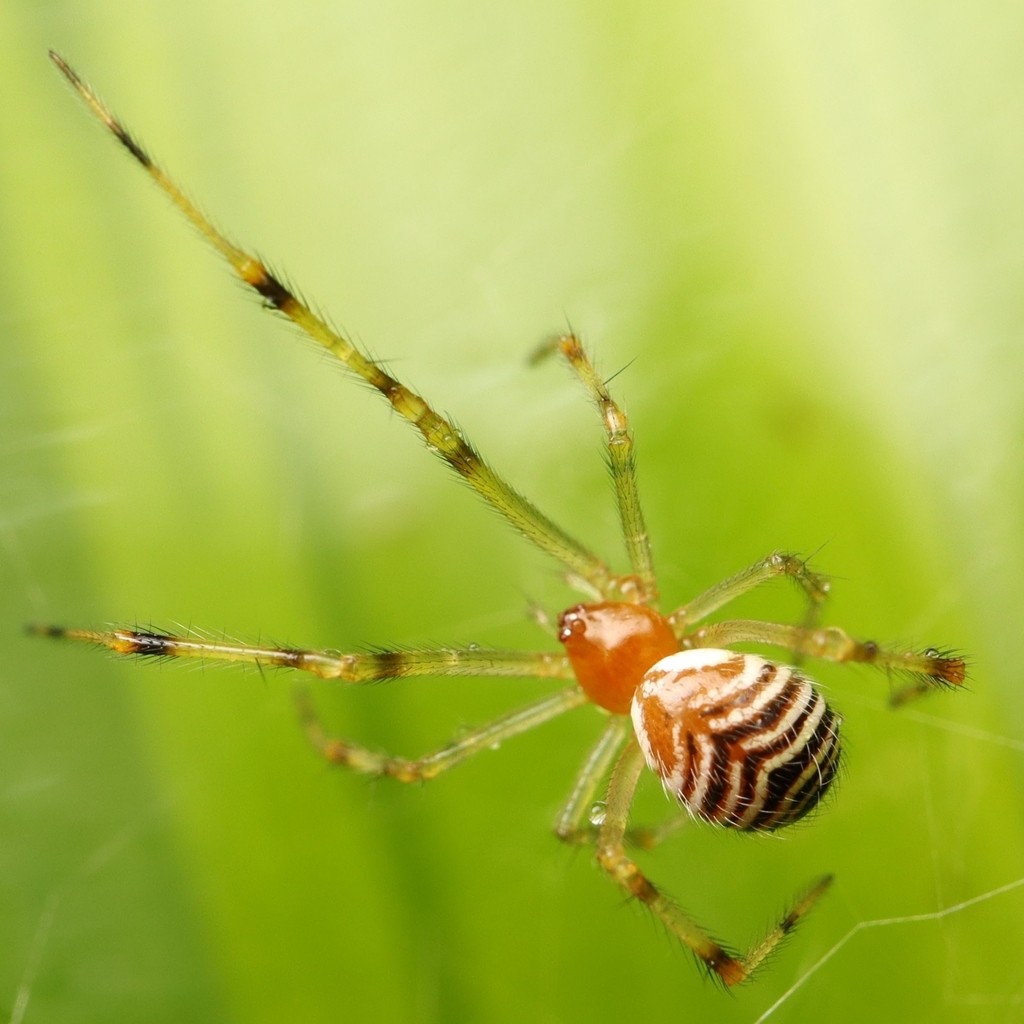
4. Theridion zonulatum
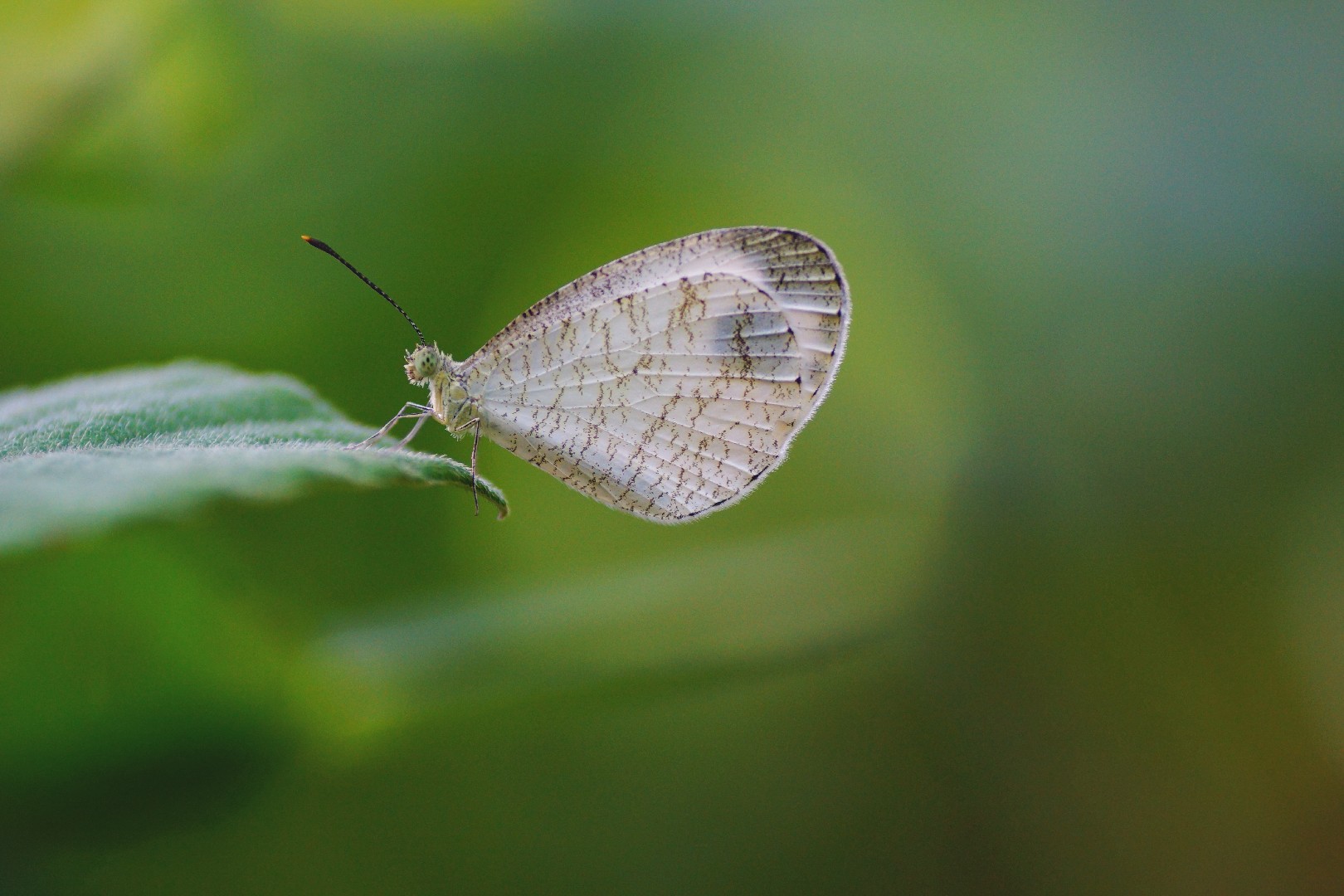
5. Psyche
Upperside is white,base of wings are very slightly powdered with minute black scales.The costa of forewing is speckled obscurely with black; apex black, the inner margin of this inwardly angulate; a very large somewhat pear-shaped post-discal spot also black. Hindwing is white,in most specimens an obscure, extremely slender, terminal black line. Underside is white; costal margin and apex of forewing broadly, and the whole surface of the hindwing irrorated (speckled) with transverse, very slender, greenish strigae and minute dots; these on the hindwing have a tendency to form sub-basal, medial and discal obliquely transverse obscure bands; the postdiscal of forewing is black,spot as on the upperside; terminal margins of both forewings and hindwings with minute black, short, transverse slender lines at the apices of the veins, that have a tendency to coalesce and form a terminal continuous line as on the upperside. Antennae dark brown spotted with white, head slightly brownish, thorax and abdomen white. Female is similar as male, the black markings on the upperside of the forewing on the whole slightly broader, but not invariably so. Wingspan is 2.5 - 5 cm. Larva is green with a pale glaucous tinge about the bases of the legs and slightly hairy. Pupa sometimes green, but more often of a delicate pink shade.
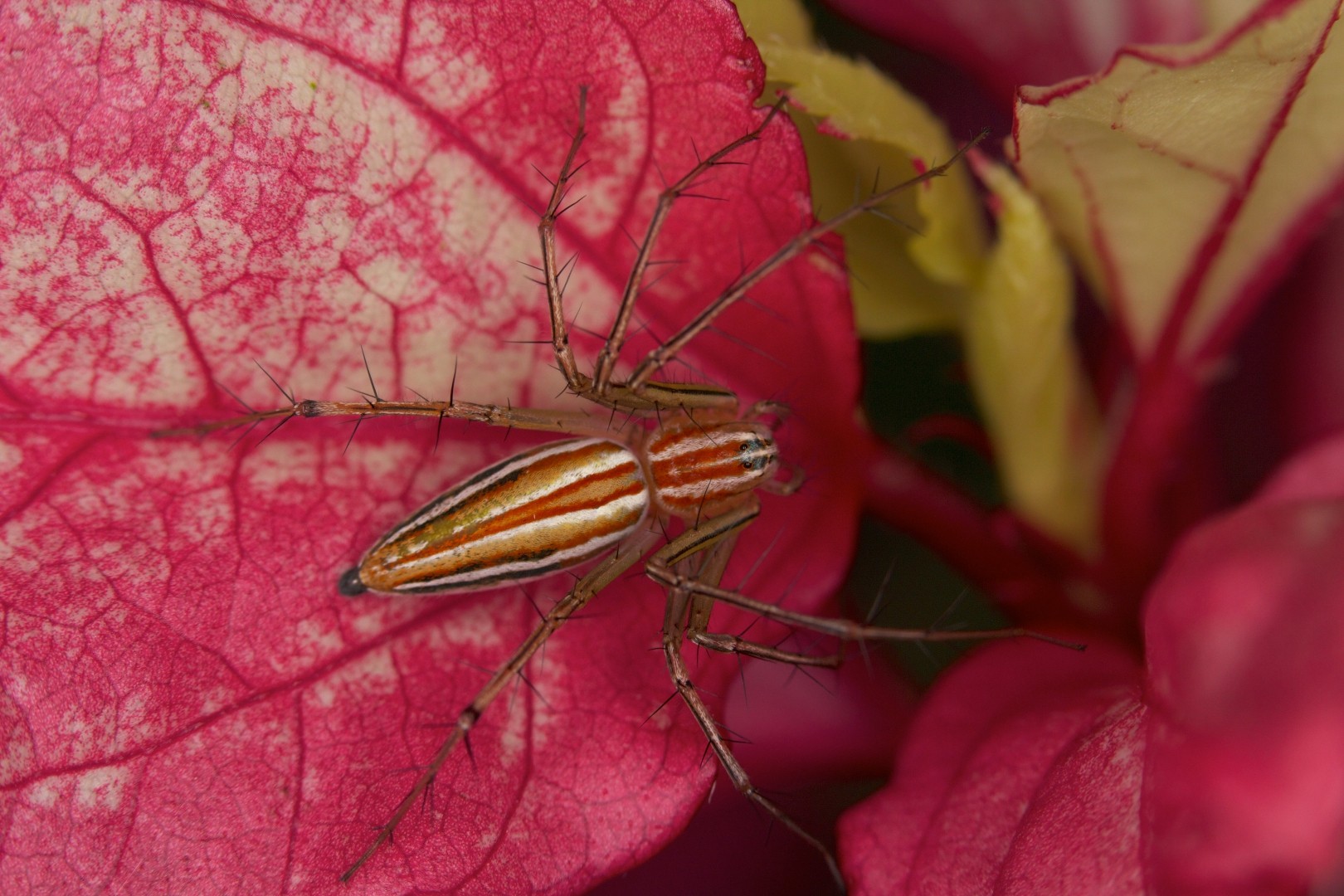
6. Lean lynx spider
Oxyopes macilentus, sometimes known as the lean lynx spider, is a species of lynx spiders from East Asia, South Asia, Southeast Asia, and northern Australia. They are active predators, hunting invertebrates (including other spiders) among vegetation. They are especially common in grassy areas and rice fields. Their bodies are characteristically long and thin, about four times as long as it is wide. Their body color ranges from pale white to yellow, orange, or green; with a pattern of black, orange, and white longitudinal lines. Females have a maximum body length of 10 mm (0.39 in), while males grow to 9 mm (0.35 in). The species was first described in 1878 by the German arachnologist Ludwig Carl Christian Koch. The specific name is from Latin macilentus ("lean" or "thin"), in reference to the spider's body. It is classified under the genus Oxyopes.
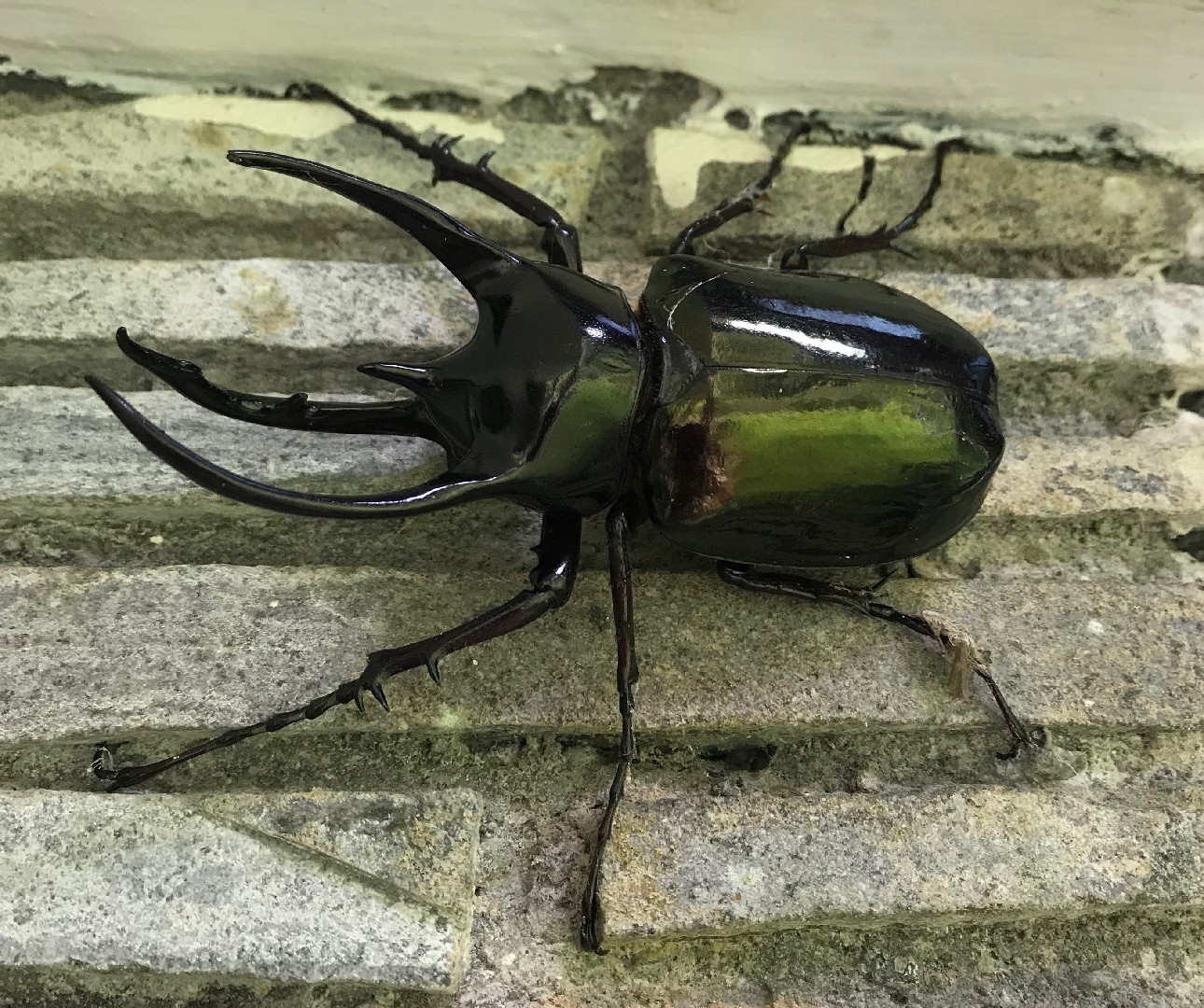
7. Atlas beetle
Chalcosoma atlas, like other beetles of the genus Chalcosoma, is remarkable for its size. As is common in the Scarabaeidae, males are larger than the females, reaching a length of about 60–130 millimetres (2.4–5.1 in); females are about 25–60 millimetres (0.98–2.36 in). Males have specialised horns on their head and thorax that they use to fight with each other, to gain mating rights with females. The Atlas beetle differs from other Chalcosoma species (such as C. caucasus) by the broader end of the cephalic (head) horn.
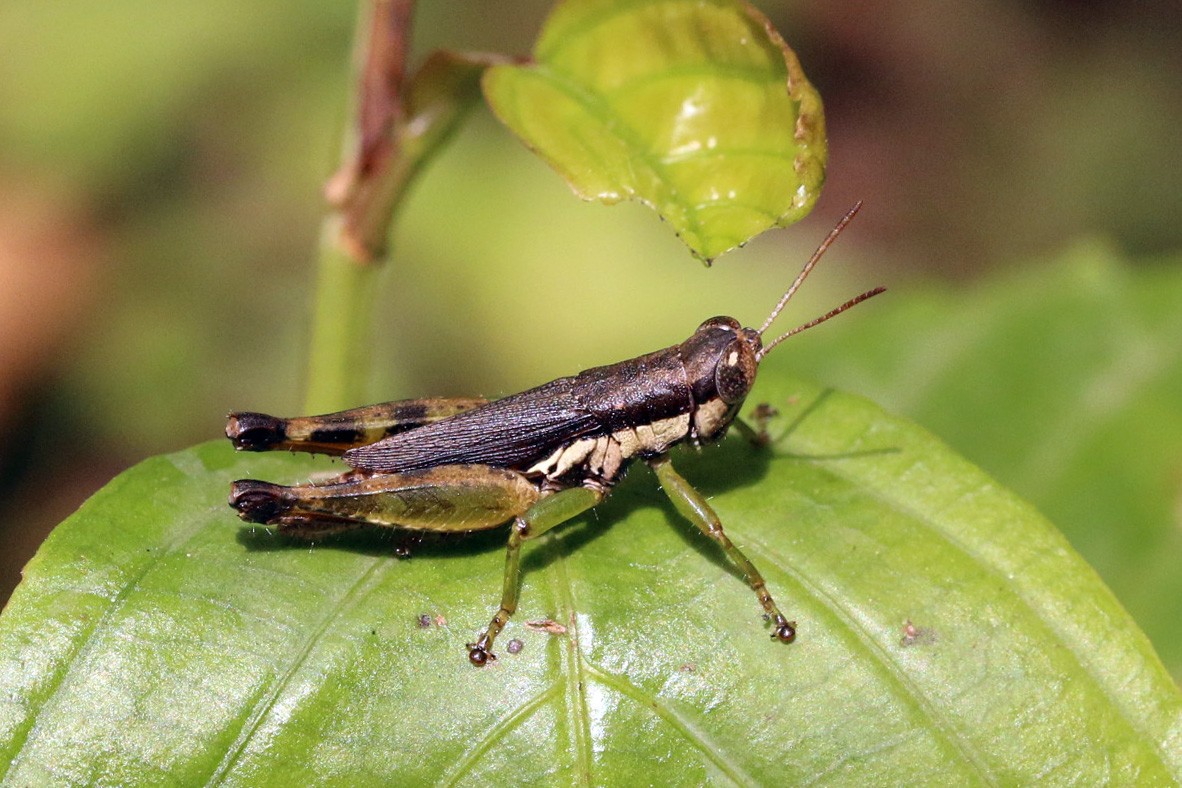
8. Short-winged rice grasshopper
Pseudoxya diminuta is a right-winged insect from the family locusts (Acrididae). The scientific name of this species was first validly published in 1871 by Walker.
9. Silver forget-me-not
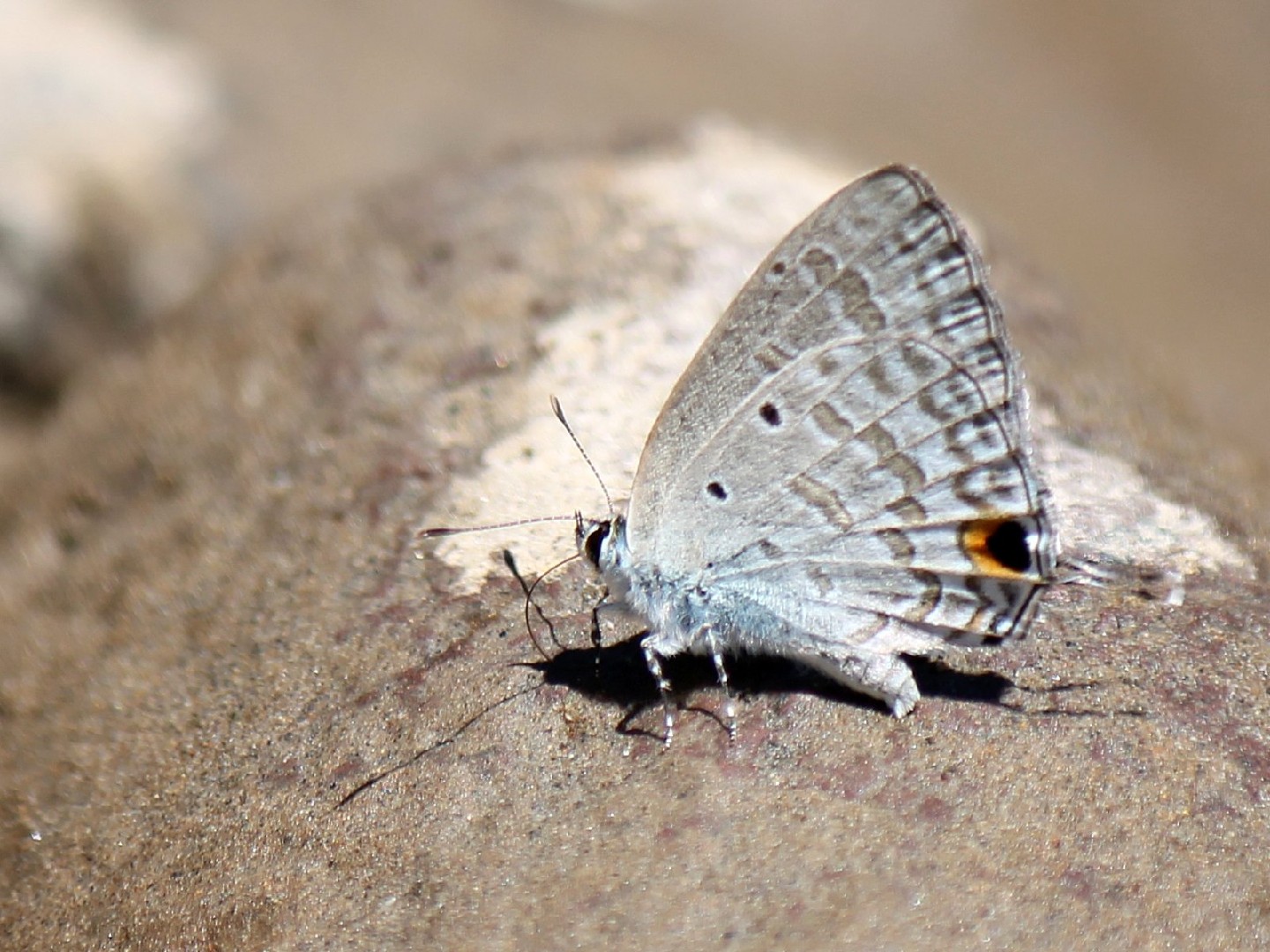
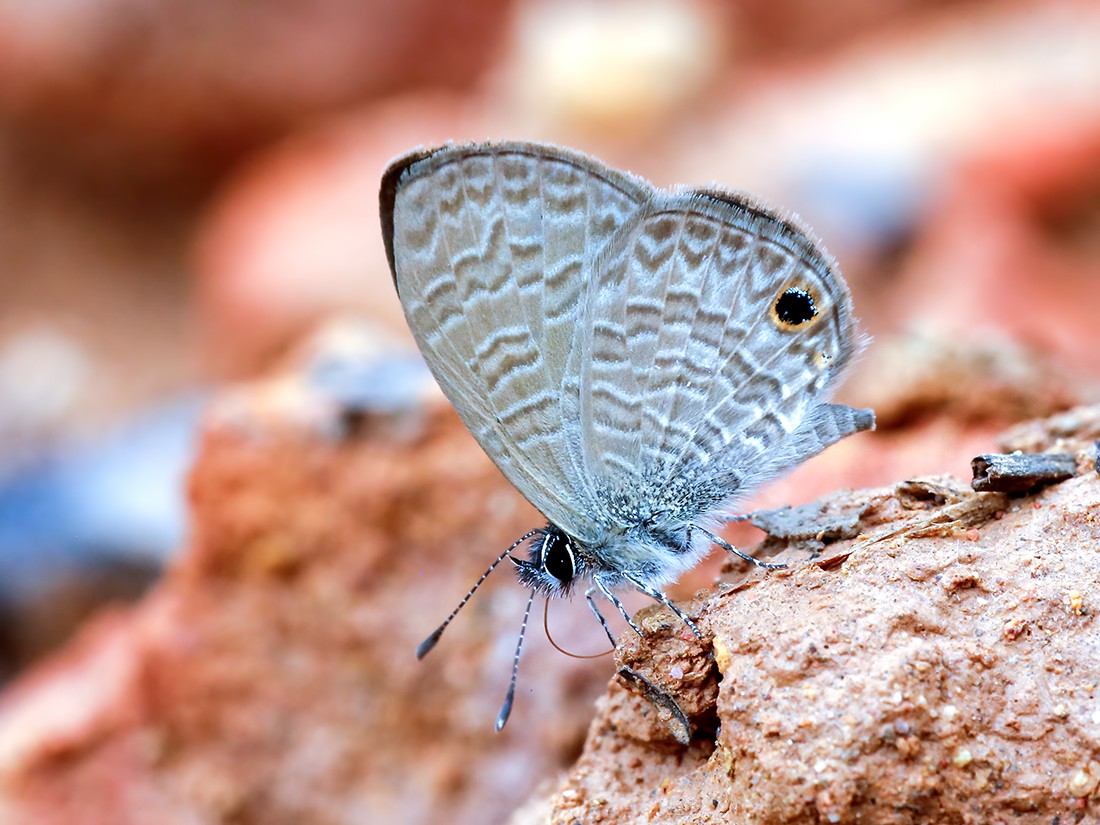
Catochrysops panormus, the silver forget-me-not, is a small butterfly found from India to the Philippines and south to Australia that belongs to the lycaenids or blues family. The species was first described by Cajetan Felder in 1860.
10. Pear-shaped leucauge
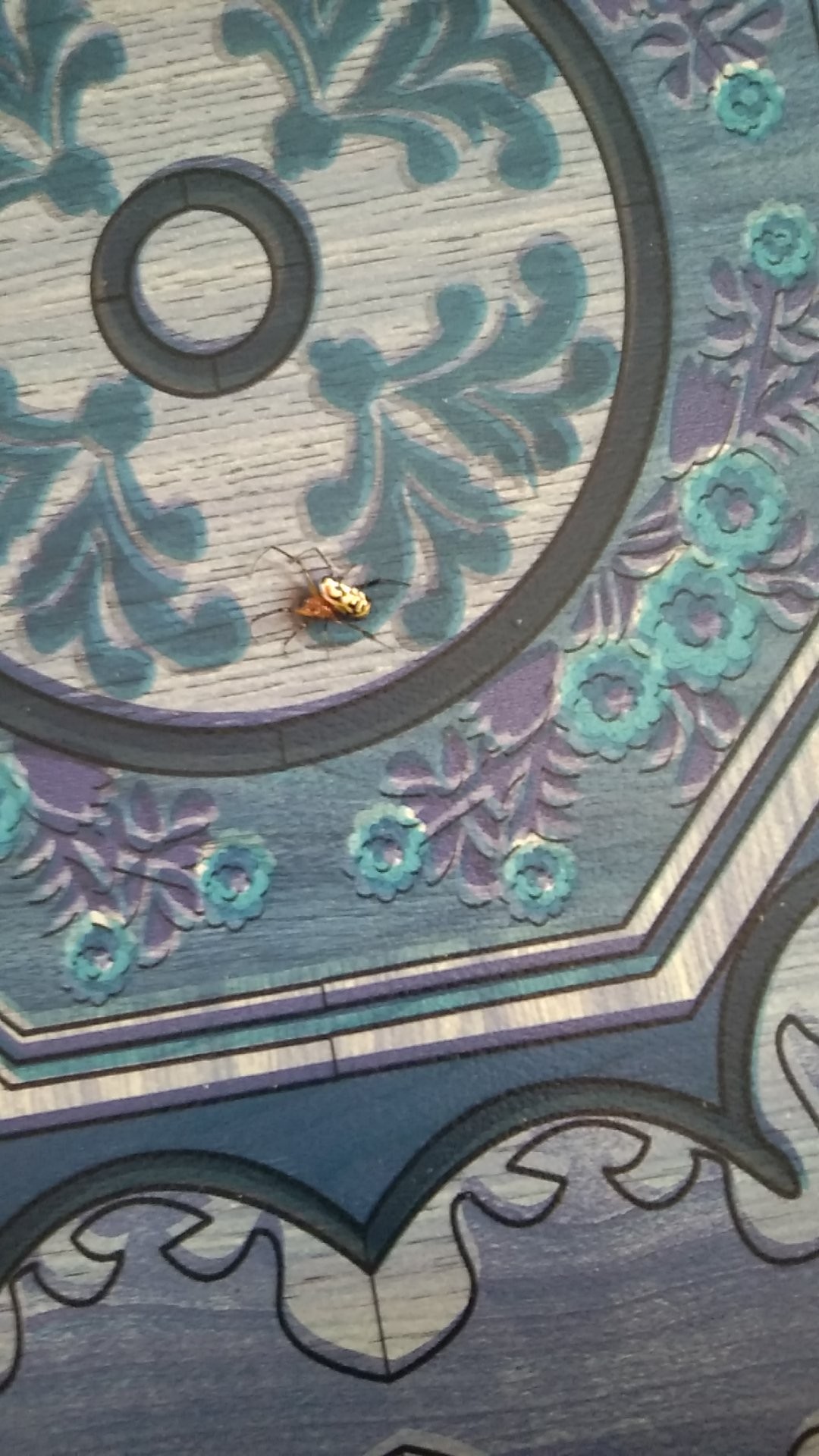
Opadometa fastigata, the pear-shaped leucauge, is a species of spiders in the family Tetragnathidae (long-jawed orb weavers). It is found in India to Philippines and Sulawesi. Members of the species have silvery or golden spots on the abdomen. They are elongated spiders with long legs and chelicerae. They are orb web weavers, weaving small orb webs with an open hub and few, wide-set radii and spirals. The webs have no signal line and no retreat. The web is a large horizontally-placed orb structure with a diameter of more than a metre. The entire web is often suspended by several long strands of silk attached to branches and leaves nearby. This species is separated from other Leucauge spiders by its pear-shaped abdomen and its unique fourth leg. In addition to the two rows of curved hairs (characteristic of Leucauge), this leg also has a thick brush of spines which are not present in most other species of Leucauge.
More







