




Top 19 Most Common Insects in Leyte
Welcome to the fascinating world of insects in Leyte, home to a remarkable range of these tiny creatures. The rich ecosystem and diverse geographical areas of Leyte significantly contribute to its insect diversity. Insects, as integral parts of our ecosystem, perform crucial roles, whether as pests or beneficial allies. In our list of the '19 most common insects,' we unveil their unique connections to Leyte's environments. Let's delve into the enthralling world of these tiny powerhouses of Leyte.

Most Common Insects
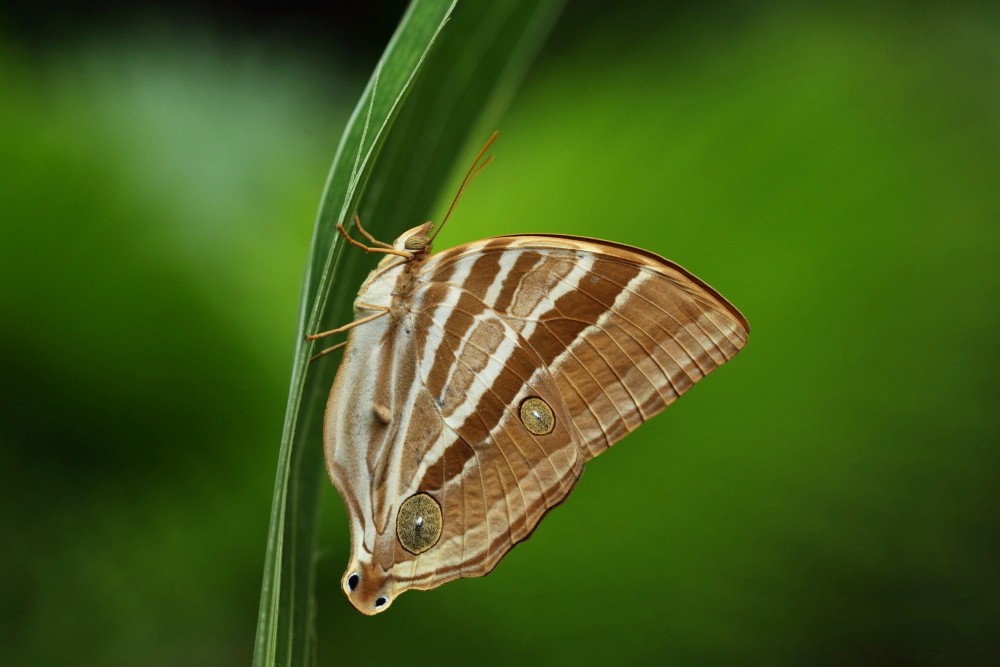
1. Palm king
Male: upperside umber brown. Forewing with the costal margin narrowly fulvous (reddish brown) near apex, crossing towards the termen, forming an obscure preapical band joining a subterminal lunular band of the same colour. Hindwing uniform, with a subterminal band as in the forewing but not lunular, straight. Underside pale brown, with the following transverse pale lilac-white bands crossing both forewing and hindwing: basal, subbasal, discal, postdiscal, broad subterminal and terminal; the subbasal and discal of equal width, meeting above the tornal angle in V-shape, the space between the two bands with, on the forewing, two shorter similar bands crossing the cell, on the hindwing a single similar band from costa to median vein; subterminal band on hindwing bent upwards above tornal area and continued halfway up the dorsal margin, the broadly-produced tornus with a dark brown spot; finally a large ochraceous ocellus in interspace 2, and a smaller similar one in interspace 6. Antennae reddish; head, thorax and abdomen umber brown. Secondary sex-mark a glandular fold in membrane of wing shaded by tufts of long hair along vein 1 on upperside of hindwing, and preapically on the abdomen with tufts of stiff long hairs. Female: Upper and undersides as in the male but paler; on the upperside the fulvous along the costal margin widens into a preapical patch, and generally the bands on the underside show through and appear above as pale fulvous bands.Wingspan: 11 - 12 cm .Eggs: The freshly laid eggs are creamy white with a small black spot in the centre and a black circular ring. The eggs are laid in a row. At Thenmala, the observer saw two rows, the first having 15 eggs and the second 3 eggs. Prior to hatching, the colour of the egg changes to black. Larvae: The first instar larvae are cylindrical, measuring 0.6 - 0.8 mm in length. The second instar larvae are pale greenish yellow measuring 0.8 - 1.2 mm in length. The third instar larvae are morphologically very similar to the previous instar, but are longer ( 3 - 4 cm ) and stouter. The fourth instar larvae are stouter and longer measuring 4.5 - 5 cm . During the fifth instar, the larvae become more brownish than greyish and measure 7 - 8 cm in length. Larvae of the palm king are voracious feeders. Most of the time, they remain on the underside of the leaf, eating from the tip of the leaf working towards the base. With regard to coloration, the fifth instars show marked difference in their ground colour: some being more brownish and some more greyish. Pupa: The process of pupation takes about half a day and resulted in a greenish spindle-shaped pupa, well-camouflaged among the pointed leaves of the host plant. Initially, they are semi-transparent but later they become more opaque. The pupa has veins and lines similar to that of the leaves of the host plant, all veins ending at the pointed lower end of the pupa. The pupa becomes transparent on the eve of hatching, with the wings and head clearly visible. 
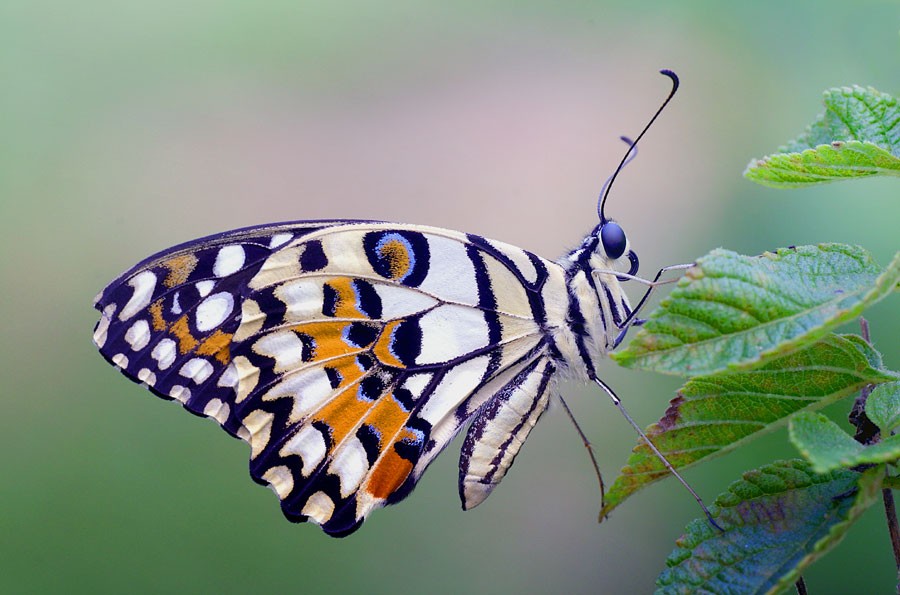
2. Lime swallowtail
The lime swallowtail (Papilio demoleus) has a beautiful black and white pattern, but it's considered a major pest to citrus trees. It feeds on nearly any type of citrus, including oranges and limes. This butterfly's small, green larvae are capable of defoliating an entire nursery grove. They are truly trouble makers in the citrus orchard.
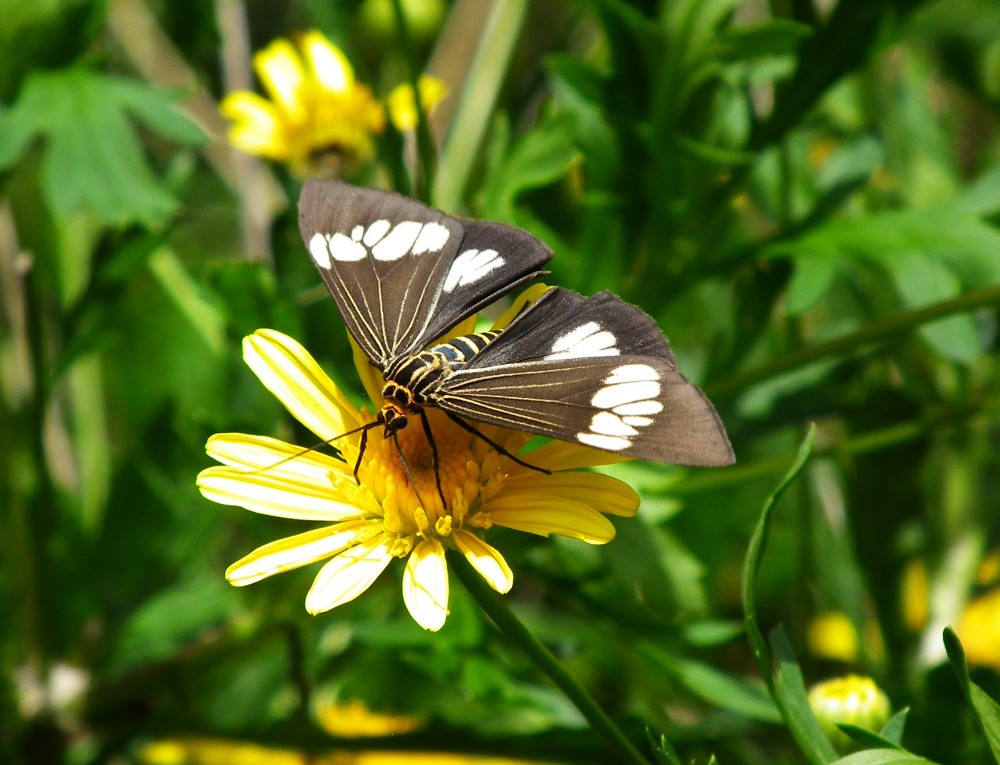
3. Magpie moth
The wingspan is 4.5 - 5 cm.
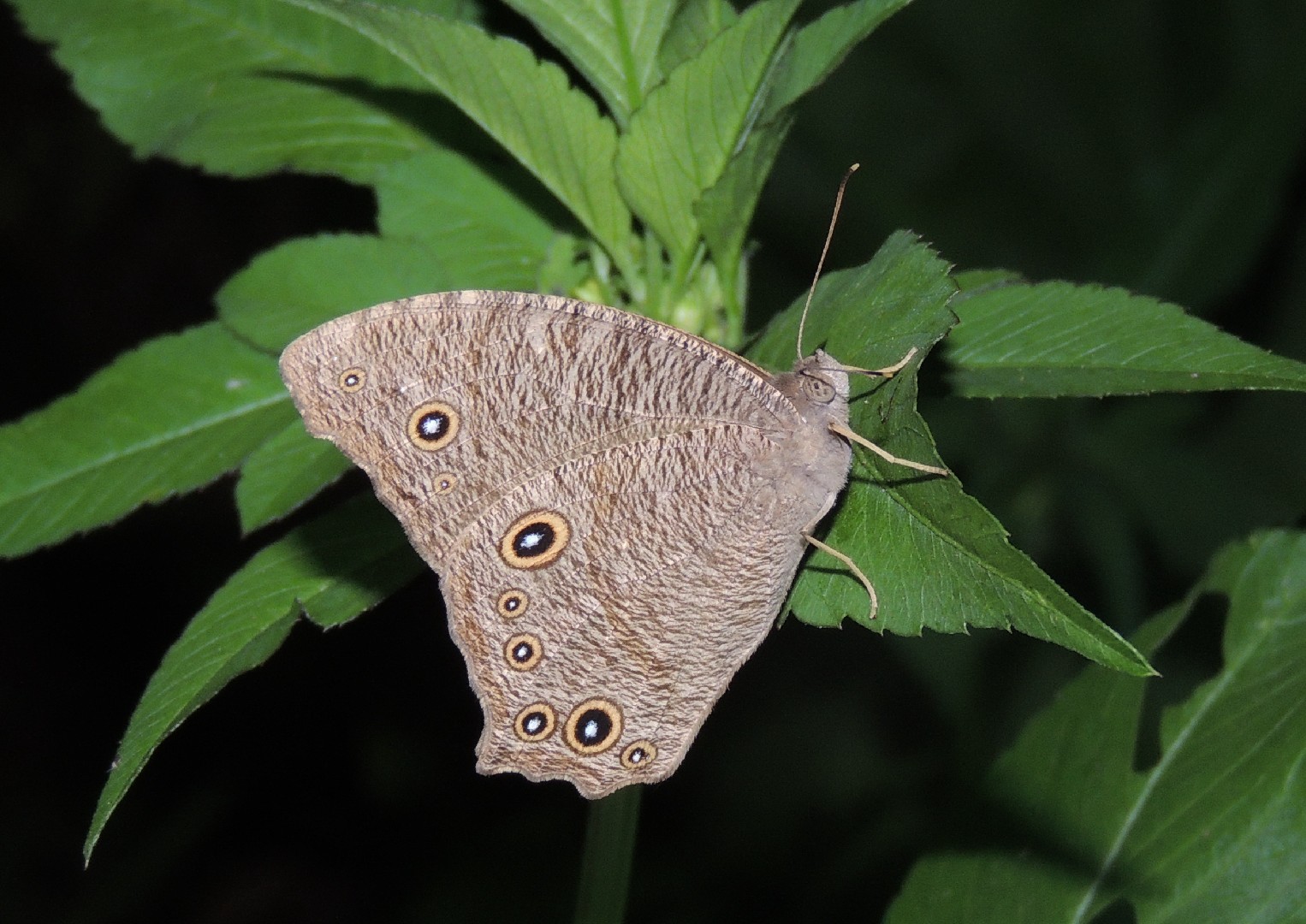
4. Common evening brown
The common evening brown (Melanitis leda) changes its appearance based on the season. During wet seasons, it has a pale brown underside and a dark brown top. Then, during dry seasons, it often has more distinguished bands or spots. It uses these neutral colors to help it blend into leaves and trees. It usually only flies during the evening, resting during daylight.
5. Indian cotton stainer bug
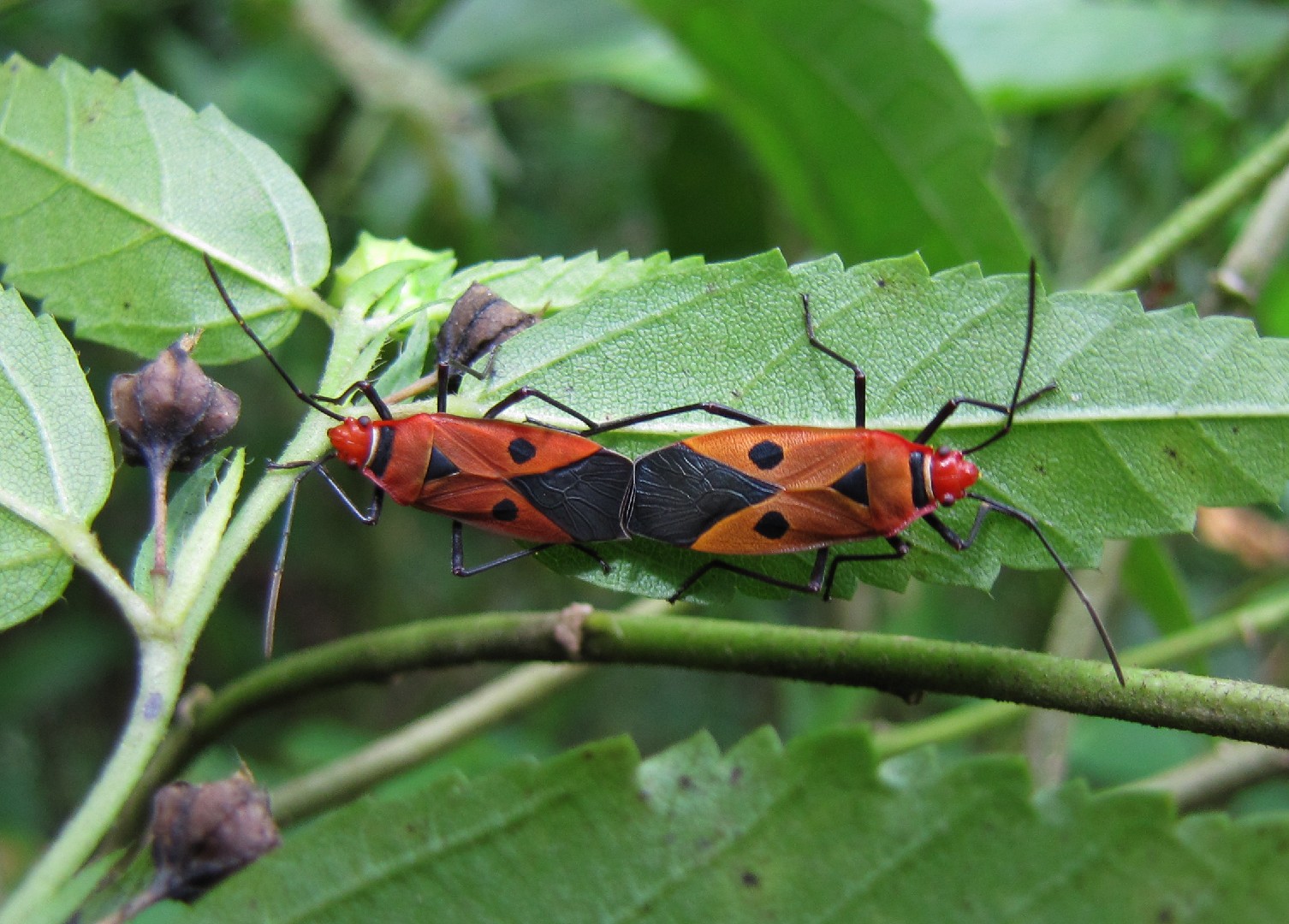
Dysdercus cingulatus grows to a length of 12 to 18 mm (0.47 to 0.71 in). It is mainly red but has a white collar and three black spots. It is closely related and very similar to Dysdercus koenigii but D. cingulatus is slightly larger and the femora have varying amounts of black while D. koenigii has completely red femora.
6. Baphomet moth
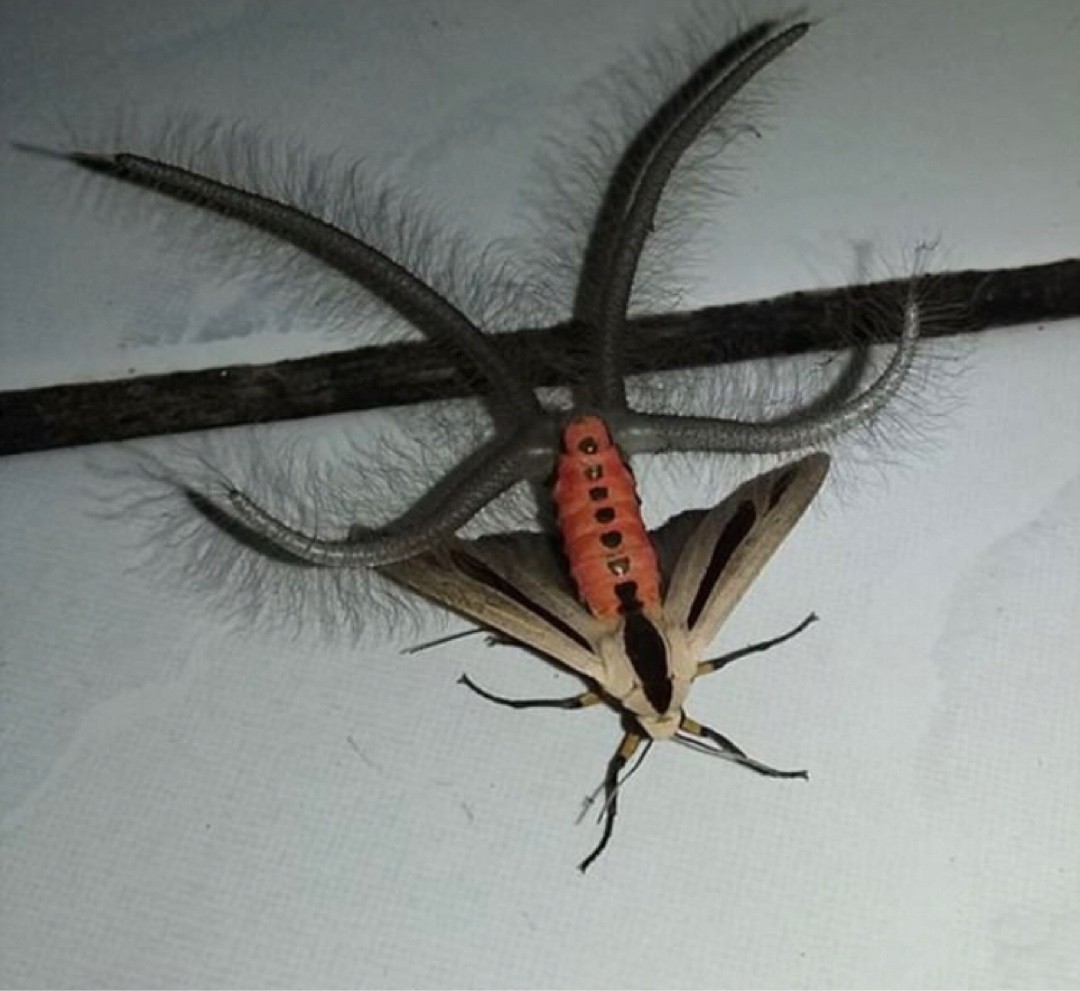
The Creatonotos gangis can be identified by looking at its red abdomen with black dots running up the body. In rare instances, the abdomen can be yellow. Its colors may be bright and friendly, but don't let looks deceive you. It is considered to be a pest that feeds on a wide variety of foods that include everything from rice to sweet potatoes.
7. Atlas moth
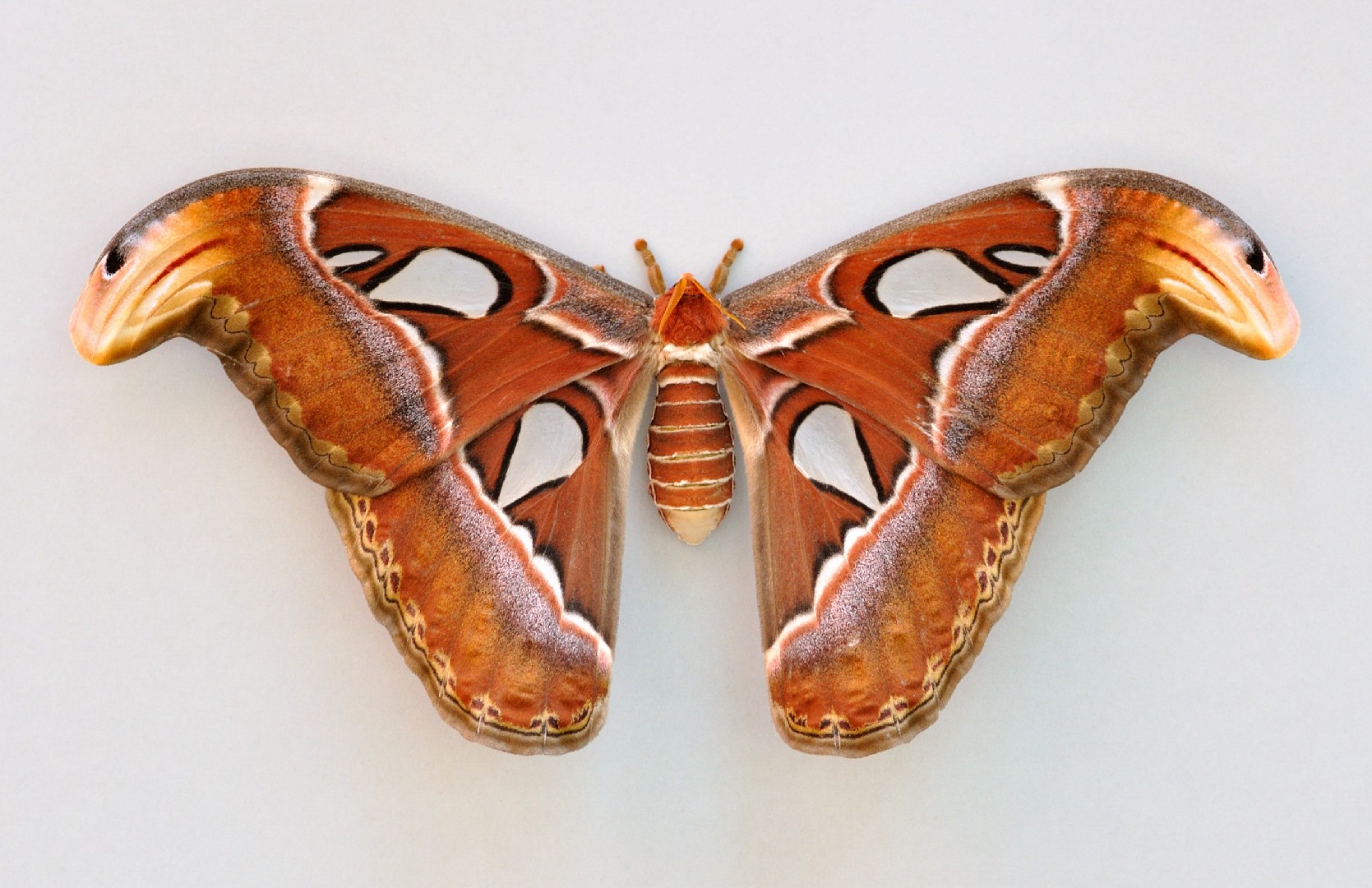
While the atlas moth (Attacus atlas) can't tell you where to find your country on the map, it does earn its name through other means. It is one of the largest moths in the world, with a wingspan that is far larger than its body, creating an abnormal comparison. In India, their silk is gathered in a non-commercial capacity and is considered to be more durable than the domestic silkworm.

8. Common mormon
The common mormon (Papilio polytes) is a beautiful, black butterfly with unique hindwings that have orange and white colorings and two spots jutting out. They are named after the Mormon religion, as the butterflies participate in polygamy, which is a common practice for Mormons. They are also known to mimic red-bodied swallowtail, who are inedible.
9. Rusty millipede
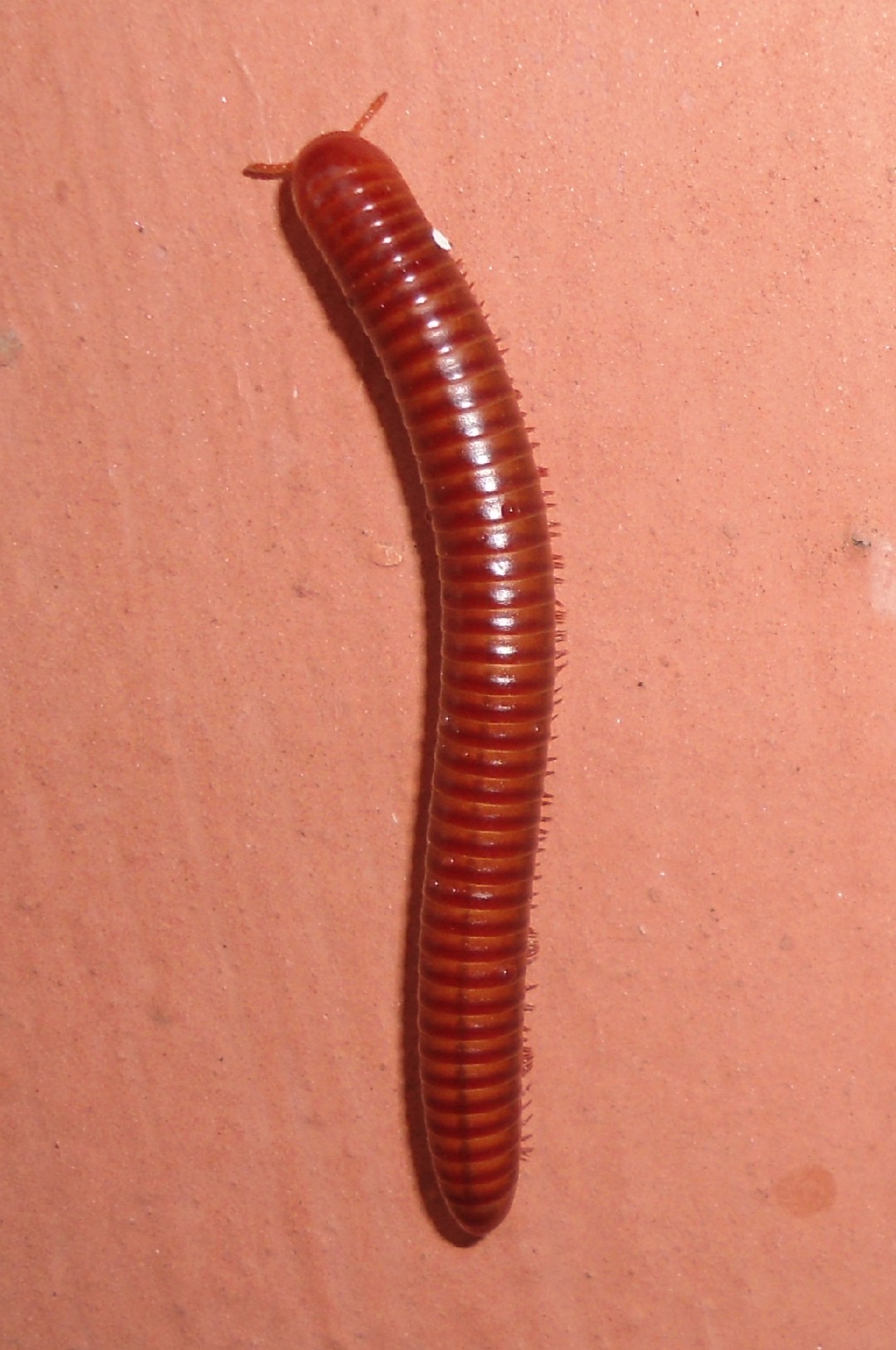
The rusty millipede (Trigoniulus corallinus), also referred to as the "scarlet millipede", is often kept as a pet. It can be distinguished by its rusty red coloring. It loves burrowing, and it primarily feeds on the substrate around it, such as decomposing wood and leaves. It's not an aggressive species, so it can be housed with other millipedes.

10. Weaver ant
The weaver ant can be found in silk-woven nests in the foliage of Southeast Asia and Oceania. These ants have a painful bite and prey on other small insects. Larvae have many uses for local regions, including being a popular fishing bait and a good choice of bird food.



More