




Top 16 Most Common Insects in Talisay
In the verdant landscape of Talisay, insects are abundant and manifest in unique diversity. These mini-beasts, celebrated for their role in pollination and decomposition, can differ vastly in distinct geographical regions. While notorious pests may harm Talisay's plant life, beneficial insects play a critical role in maintaining the ecosystem. Stay tuned for our list of the 16 most common insects residing in Talisay.

Most Common Insects
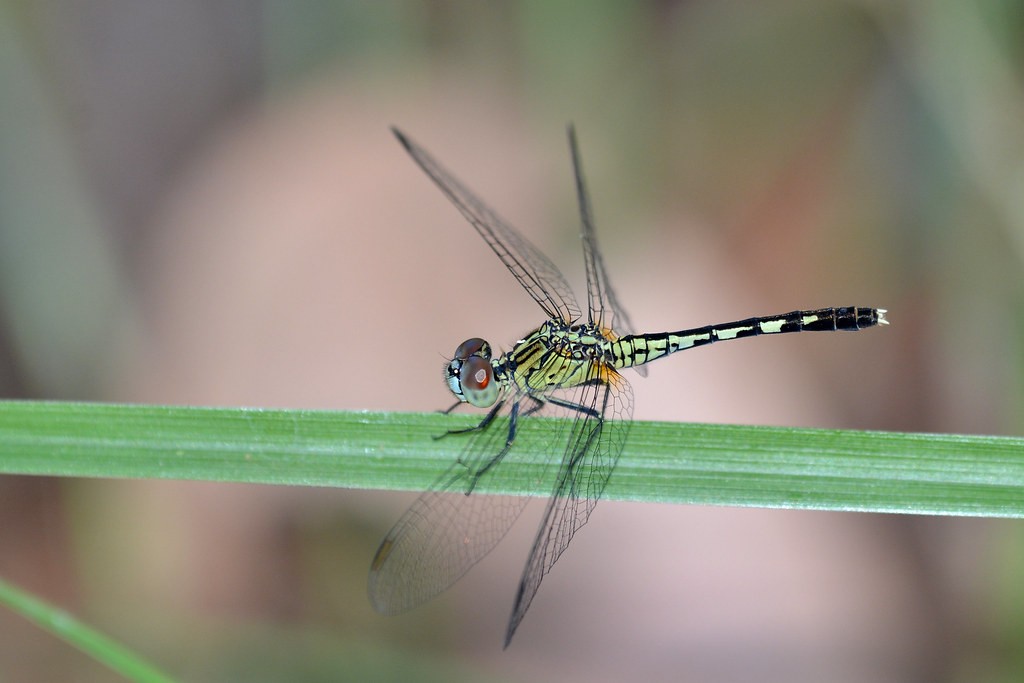
1. Green skimmer
Orthetrum serapia is a medium-sized dragonfly with a wingspan of 60-85mm. Its wings are clear except for a small dark spot at the base of the hindwing. The thorax is greenish to greyish yellow with black markings. The abdomen is black with pale yellow or pale green markings. Orthetrum serapia appears very similar to Orthetrum sabina and can be confused where the range of the two overlap in north-eastern Australia. 
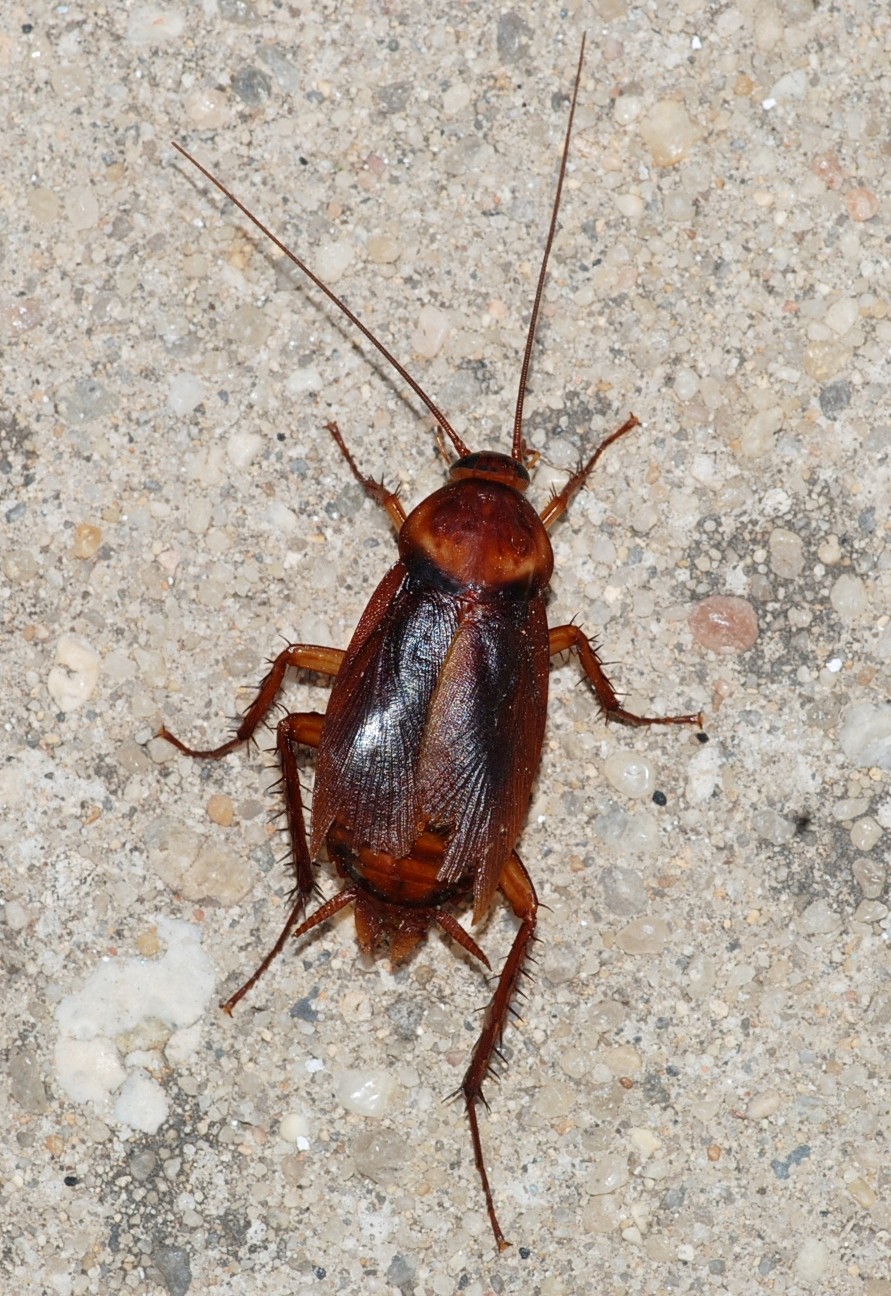
2. American cockroach
Despite its name, american cockroach (Periplaneta americana) is not native to the Americas but rather to Africa and the Middle East, from which it arrived as a result of human commercial patterns. Notably quick and rather resilient, this species is capable of limb regeneration. It requires a certain level of moisture to thrive, and it will avoid drier areas unless it has access to the required level of water.
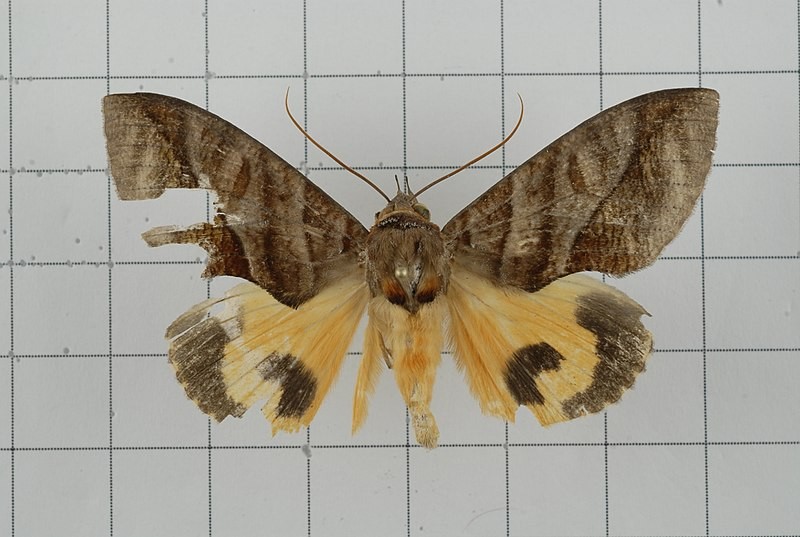
3. Eudocima homaena
Its wingspan is about 80 mm. Palpi with third joint long and spatulate at extremity. Forewings with apex not produced. Outer margin rounded. Forewings with non-crenulate cilia. Male has fulvous brown head and thorax. The collar, metathoracic tufts and tibia with an orange tinge. Head and collar with a purple bloom. Abdomen orange. Forewings olive green, suffused with purplish red-brown and striated with rufous. Dark sub-basal and antemedial lines and slightly curved postmedial line present. There are traces of some waved medial lines. An indistinct reniform stigma and dentate sub-marginal line can be seen. Hindwings orange, with large black lunule beyond lower angle of cell. A submarginal band with waved edges runs from costa to vein 2. Ventral side of forewings with orange postmedial band. Female has much darker forewings, with deep purple and chocolate tones. A broad verditer-green fascia found below the cell, sending bars to inner margin near base and outer angle, and conjoined to the green reniform spot. Larva purplish brown with many blue specks and large yellow patch on 3rd, 4th and 5th somites. Fourth and fifth somites form ocelli with yellow iris and azure-blue black edged pupil. Somites 8 and 9 with irregular yellow patches. A dorsal tubercle found on 11th somite. Pupa orange colored, roughened and burnished. The larvae feed on Achyranthes, Cocculus, Cyclea peltata, Menispermum and Tiliacora species. Gallery
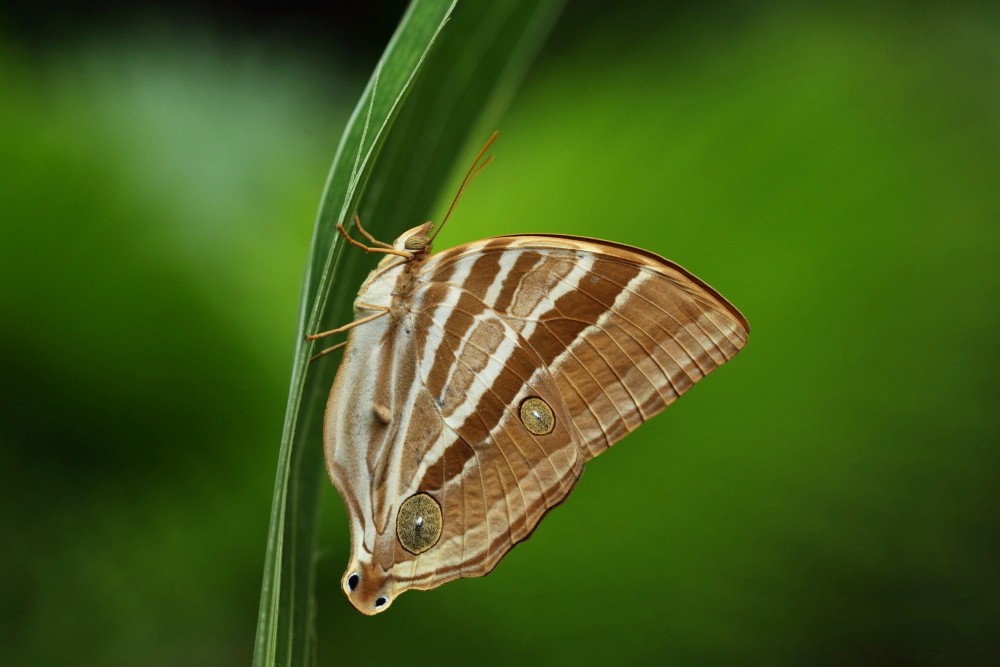
4. Palm king
Male: upperside umber brown. Forewing with the costal margin narrowly fulvous (reddish brown) near apex, crossing towards the termen, forming an obscure preapical band joining a subterminal lunular band of the same colour. Hindwing uniform, with a subterminal band as in the forewing but not lunular, straight. Underside pale brown, with the following transverse pale lilac-white bands crossing both forewing and hindwing: basal, subbasal, discal, postdiscal, broad subterminal and terminal; the subbasal and discal of equal width, meeting above the tornal angle in V-shape, the space between the two bands with, on the forewing, two shorter similar bands crossing the cell, on the hindwing a single similar band from costa to median vein; subterminal band on hindwing bent upwards above tornal area and continued halfway up the dorsal margin, the broadly-produced tornus with a dark brown spot; finally a large ochraceous ocellus in interspace 2, and a smaller similar one in interspace 6. Antennae reddish; head, thorax and abdomen umber brown. Secondary sex-mark a glandular fold in membrane of wing shaded by tufts of long hair along vein 1 on upperside of hindwing, and preapically on the abdomen with tufts of stiff long hairs. Female: Upper and undersides as in the male but paler; on the upperside the fulvous along the costal margin widens into a preapical patch, and generally the bands on the underside show through and appear above as pale fulvous bands.Wingspan: 11 - 12 cm .Eggs: The freshly laid eggs are creamy white with a small black spot in the centre and a black circular ring. The eggs are laid in a row. At Thenmala, the observer saw two rows, the first having 15 eggs and the second 3 eggs. Prior to hatching, the colour of the egg changes to black. Larvae: The first instar larvae are cylindrical, measuring 0.6 - 0.8 mm in length. The second instar larvae are pale greenish yellow measuring 0.8 - 1.2 mm in length. The third instar larvae are morphologically very similar to the previous instar, but are longer ( 3 - 4 cm ) and stouter. The fourth instar larvae are stouter and longer measuring 4.5 - 5 cm . During the fifth instar, the larvae become more brownish than greyish and measure 7 - 8 cm in length. Larvae of the palm king are voracious feeders. Most of the time, they remain on the underside of the leaf, eating from the tip of the leaf working towards the base. With regard to coloration, the fifth instars show marked difference in their ground colour: some being more brownish and some more greyish. Pupa: The process of pupation takes about half a day and resulted in a greenish spindle-shaped pupa, well-camouflaged among the pointed leaves of the host plant. Initially, they are semi-transparent but later they become more opaque. The pupa has veins and lines similar to that of the leaves of the host plant, all veins ending at the pointed lower end of the pupa. The pupa becomes transparent on the eve of hatching, with the wings and head clearly visible.
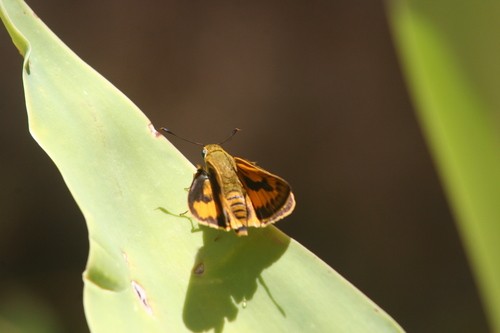
5. Yellow palm dart
The wingspan is about 4 cm.
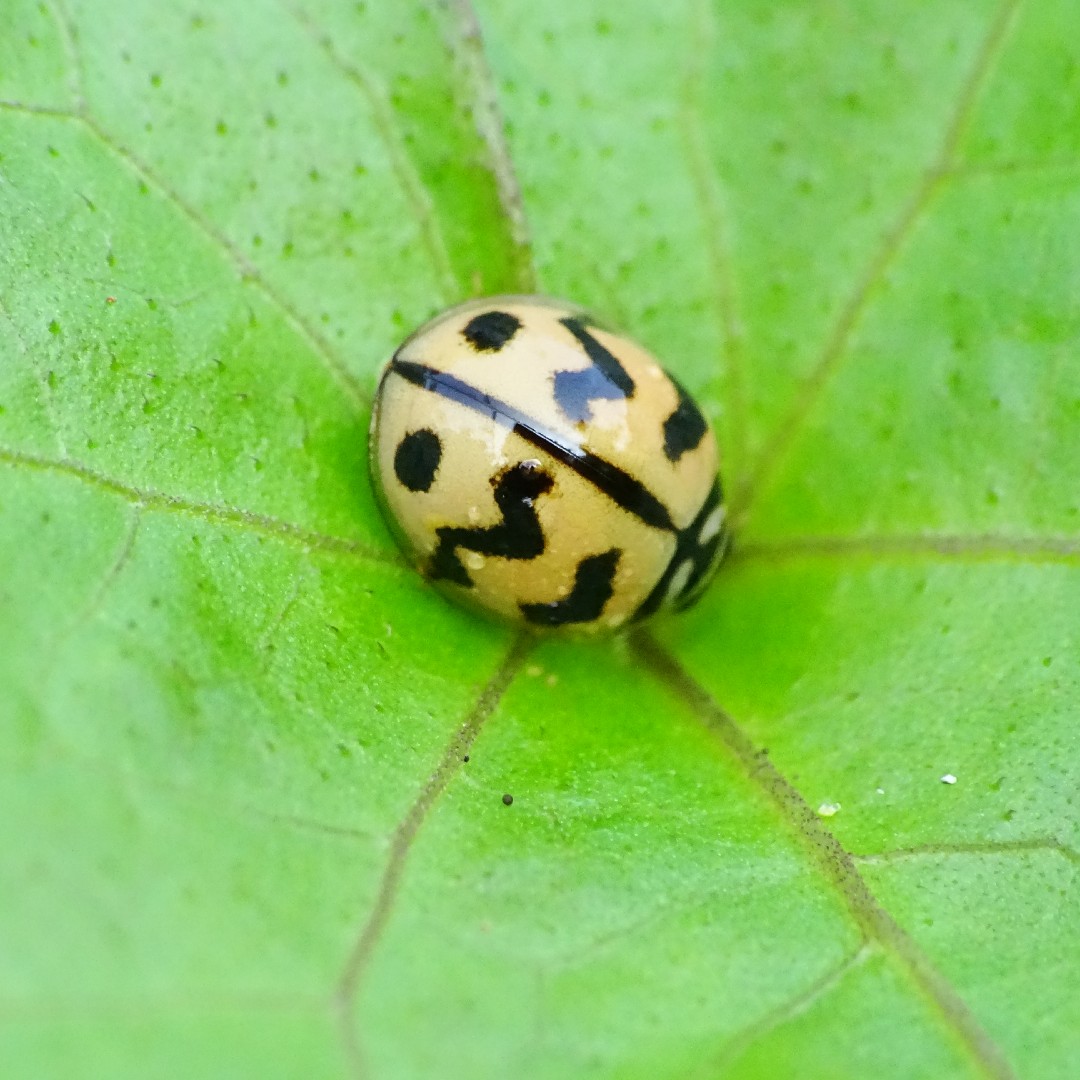
6. Six-spotted zigzag ladybird beetle
The six-spotted zigzag ladybird beetle is a common visitor to agricultural fields in India where it is considered a beneficial insect. It preys on several insects that reduce crop yield and is a more cost-effective and environmentally friendly method of pest control. The insect hibernates in cold temperatures, only appearing from spring through fall.
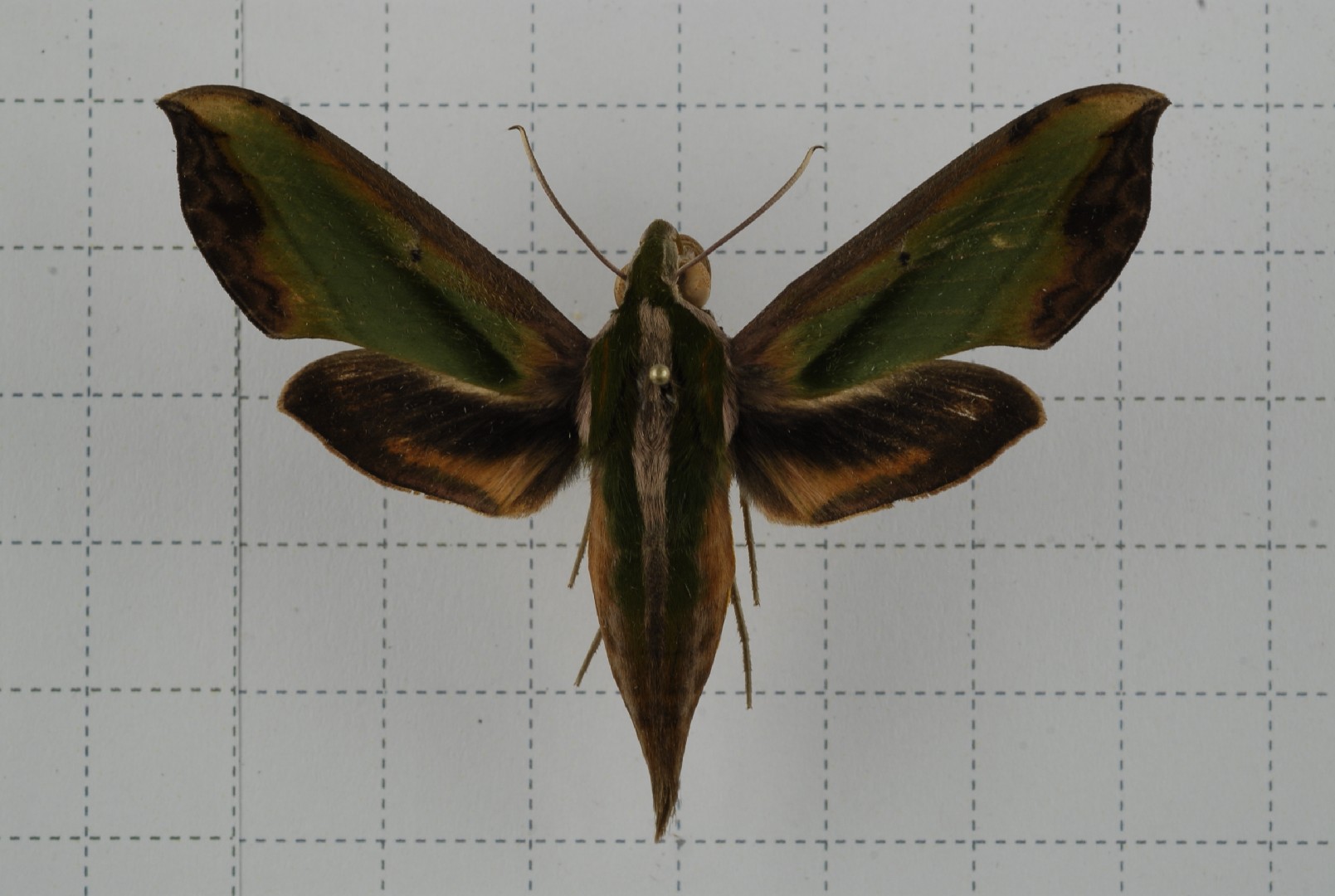
7. Green pergesa hawkmoth
The wingspan is 6 - 8 cm. Head, thorax and abdomen are purplish grey, which differs from Theretra nessus. Vertex of head and a dorso-lateral stripe to thorax and abdomen is green. Forewings are purplish grey with a green oblique central area from below apex to inner margin with some indistinct lines on it. There is an irregular dark outer area with some yellow inside it. Hindwings with anal patch and submarginal band are pointed.Larva are greenish with a dark dorsal line, and a subdorsal pale line on thoracic somites. The fourth somite has a large ocellus, which is white ringed with brown and centered with blue and green. The ocelli on the fifth to tenth somites are bluish with yellow centers. Lateral area is greenish and horn is yellowish.
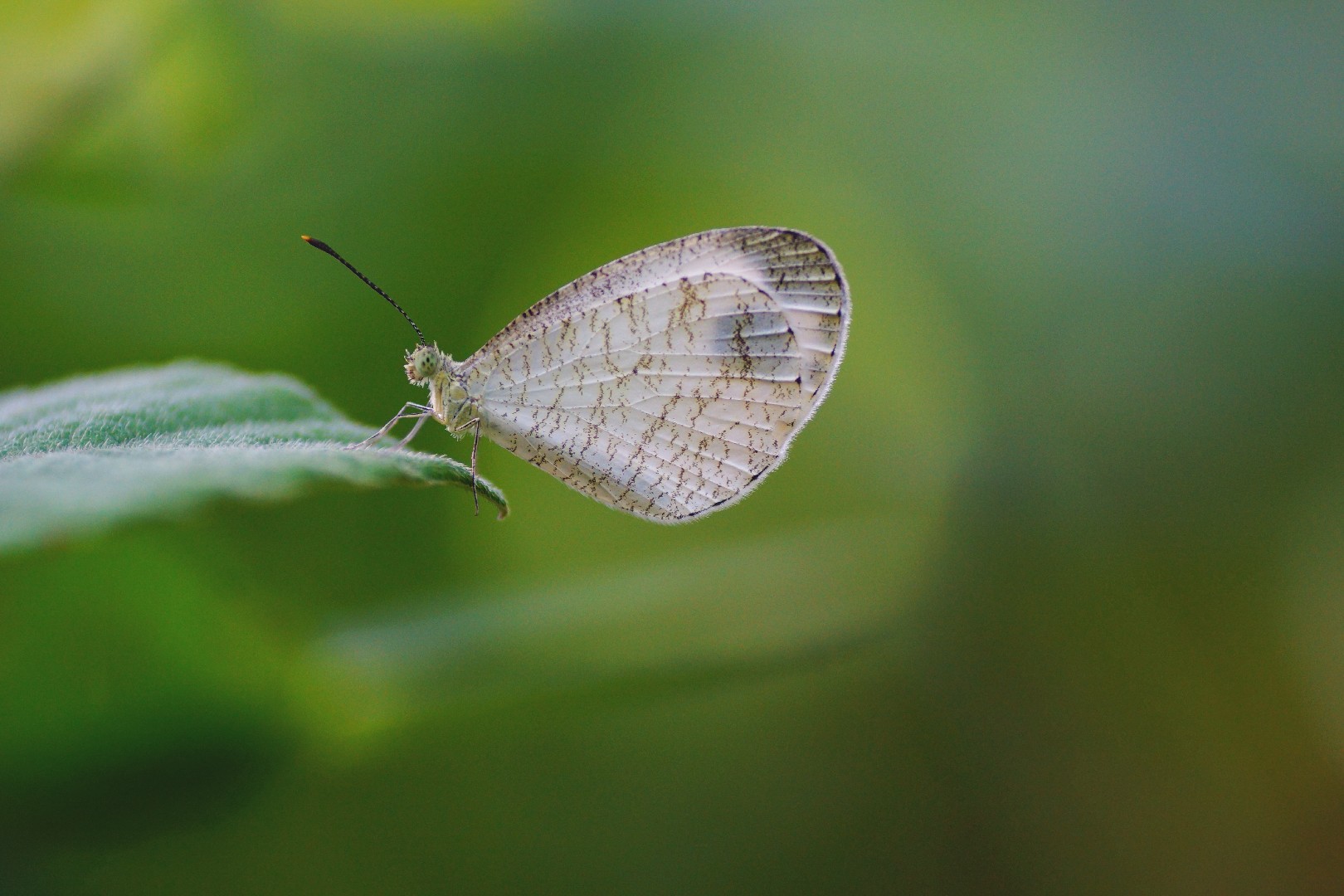
8. Psyche
Upperside is white,base of wings are very slightly powdered with minute black scales.The costa of forewing is speckled obscurely with black; apex black, the inner margin of this inwardly angulate; a very large somewhat pear-shaped post-discal spot also black. Hindwing is white,in most specimens an obscure, extremely slender, terminal black line. Underside is white; costal margin and apex of forewing broadly, and the whole surface of the hindwing irrorated (speckled) with transverse, very slender, greenish strigae and minute dots; these on the hindwing have a tendency to form sub-basal, medial and discal obliquely transverse obscure bands; the postdiscal of forewing is black,spot as on the upperside; terminal margins of both forewings and hindwings with minute black, short, transverse slender lines at the apices of the veins, that have a tendency to coalesce and form a terminal continuous line as on the upperside. Antennae dark brown spotted with white, head slightly brownish, thorax and abdomen white. Female is similar as male, the black markings on the upperside of the forewing on the whole slightly broader, but not invariably so. Wingspan is 2.5 - 5 cm. Larva is green with a pale glaucous tinge about the bases of the legs and slightly hairy. Pupa sometimes green, but more often of a delicate pink shade.
9. Impatiens hawk moth
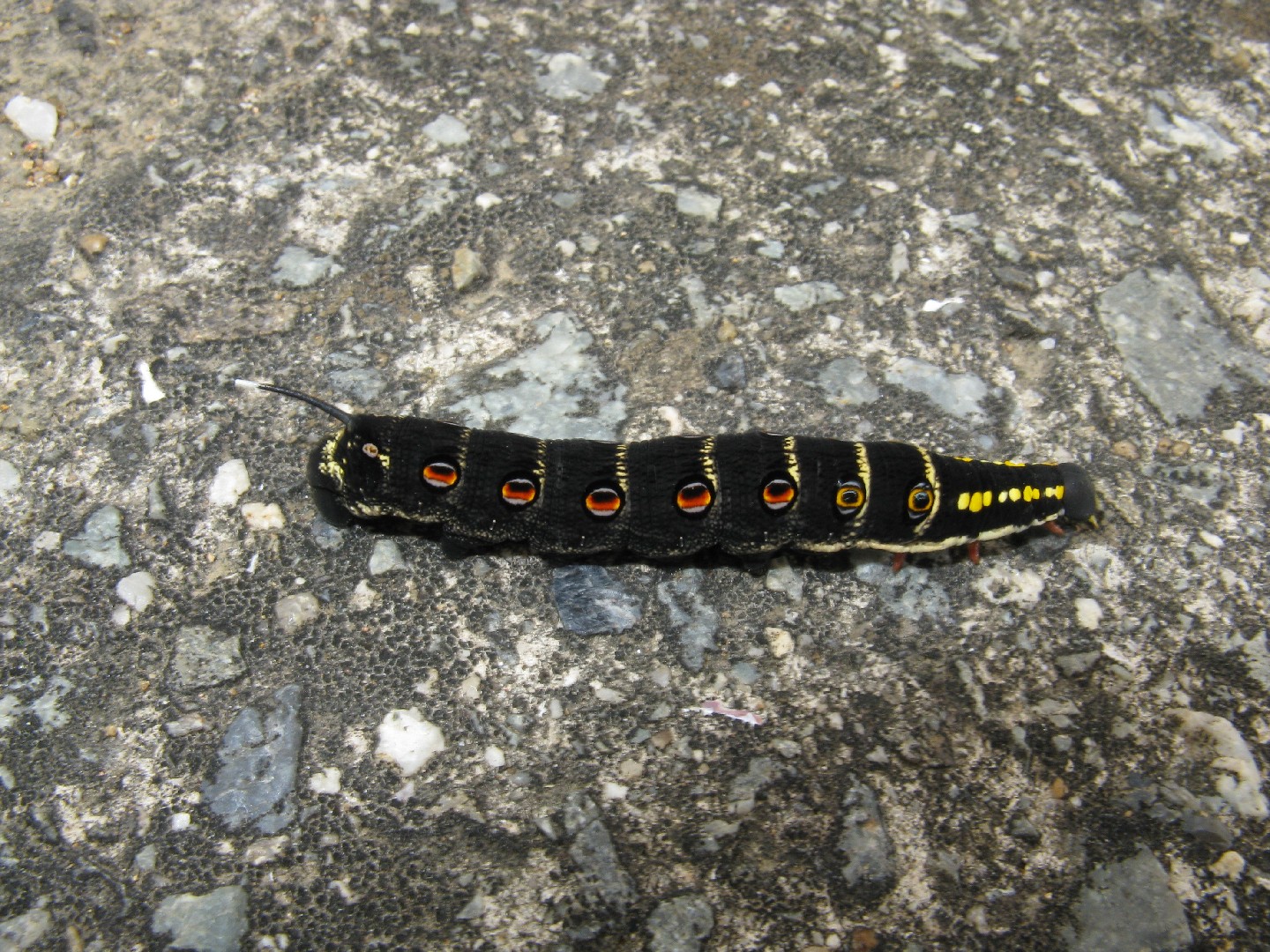
The impatiens hawk moth can be considered a pest among commercial and residential gardeners. Both the moth and caterpillar feed on several flowering plants, including fuchsias and the Australian native violet. Adult females lay their eggs on the plant’s foliage, ensuring the hatching larvae have a ready food source.
10. Gray glassy tiger
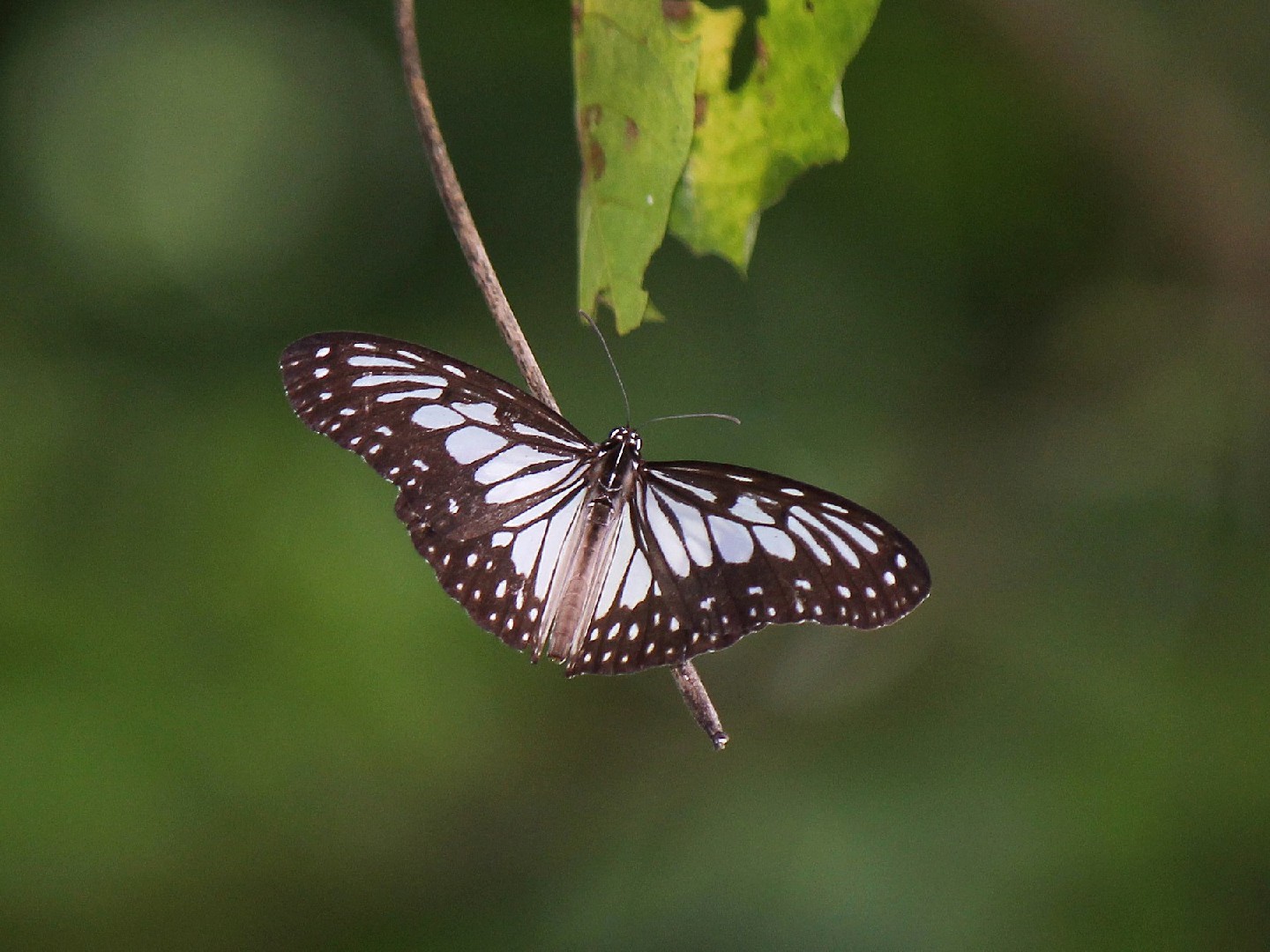
This butterfly is dark gray or black with two rows of circular white dots along the margins of its wings and elongated white patches closer to the body. The elongated white patches appear to radiate from the thorax.
More







