




Top 16 Most Common Insects in Occidental Mindoro
Insects, diverse and unique, are a vital part of Occidental Mindoro's vibrant ecosystem. From lake shores to dense forests, Occidental Mindoro's varied geographical features breed an incredible diversity of insects. The importance of these 16 common creatures cannot be overstated - they are both pests and beneficial allies, influencing, and being influenced by, their native environments. Stay tuned as we delve into the beautiful world of Occidental Mindoro's indigenous insects.

Most Common Insects
1. Palm king
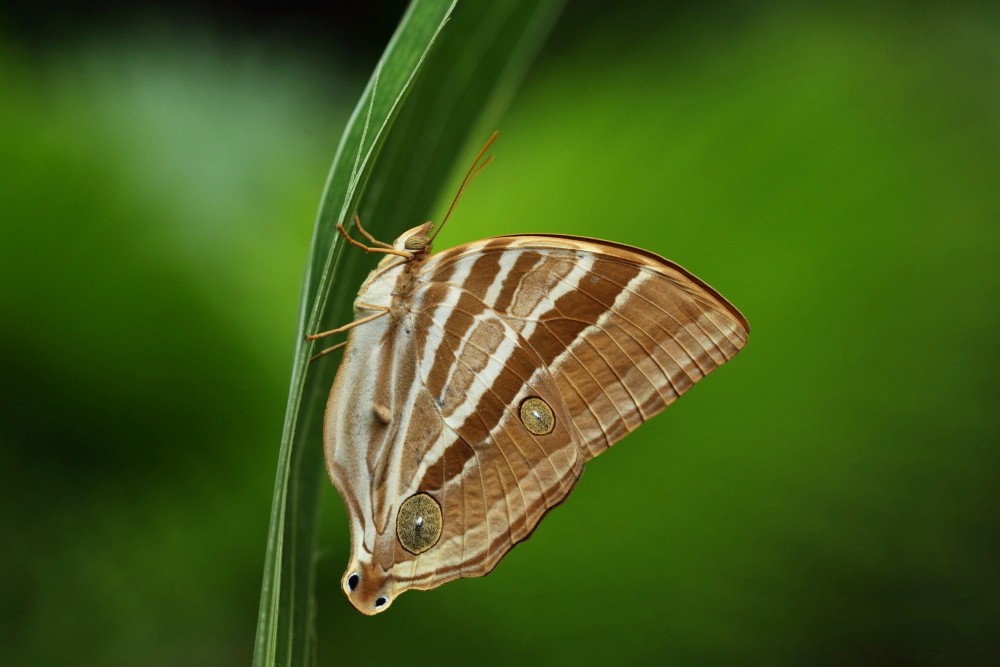
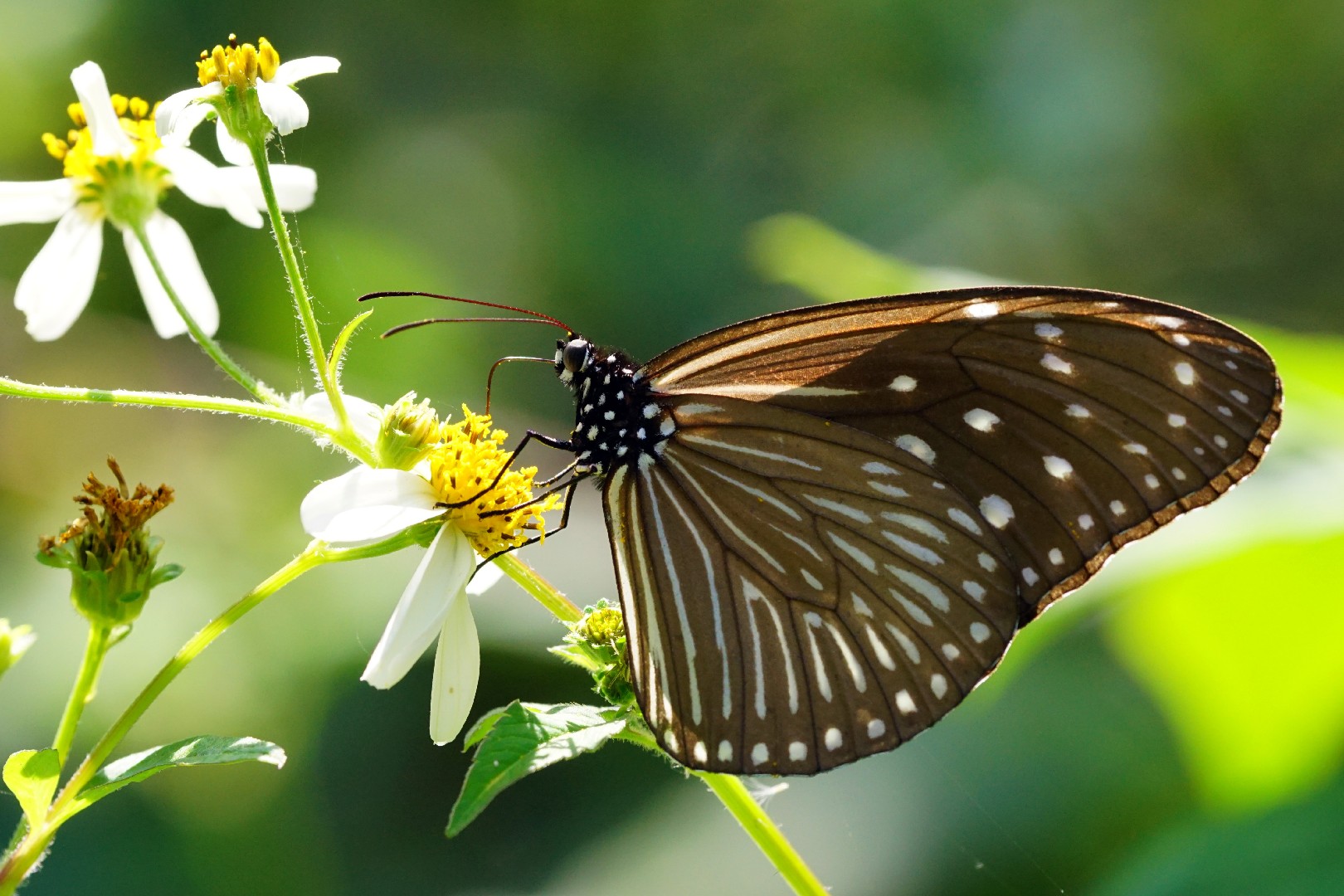
Male: upperside umber brown. Forewing with the costal margin narrowly fulvous (reddish brown) near apex, crossing towards the termen, forming an obscure preapical band joining a subterminal lunular band of the same colour. Hindwing uniform, with a subterminal band as in the forewing but not lunular, straight. Underside pale brown, with the following transverse pale lilac-white bands crossing both forewing and hindwing: basal, subbasal, discal, postdiscal, broad subterminal and terminal; the subbasal and discal of equal width, meeting above the tornal angle in V-shape, the space between the two bands with, on the forewing, two shorter similar bands crossing the cell, on the hindwing a single similar band from costa to median vein; subterminal band on hindwing bent upwards above tornal area and continued halfway up the dorsal margin, the broadly-produced tornus with a dark brown spot; finally a large ochraceous ocellus in interspace 2, and a smaller similar one in interspace 6. Antennae reddish; head, thorax and abdomen umber brown. Secondary sex-mark a glandular fold in membrane of wing shaded by tufts of long hair along vein 1 on upperside of hindwing, and preapically on the abdomen with tufts of stiff long hairs. Female: Upper and undersides as in the male but paler; on the upperside the fulvous along the costal margin widens into a preapical patch, and generally the bands on the underside show through and appear above as pale fulvous bands.Wingspan: 11 - 12 cm .Eggs: The freshly laid eggs are creamy white with a small black spot in the centre and a black circular ring. The eggs are laid in a row. At Thenmala, the observer saw two rows, the first having 15 eggs and the second 3 eggs. Prior to hatching, the colour of the egg changes to black. Larvae: The first instar larvae are cylindrical, measuring 0.6 - 0.8 mm in length. The second instar larvae are pale greenish yellow measuring 0.8 - 1.2 mm in length. The third instar larvae are morphologically very similar to the previous instar, but are longer ( 3 - 4 cm ) and stouter. The fourth instar larvae are stouter and longer measuring 4.5 - 5 cm . During the fifth instar, the larvae become more brownish than greyish and measure 7 - 8 cm in length. Larvae of the palm king are voracious feeders. Most of the time, they remain on the underside of the leaf, eating from the tip of the leaf working towards the base. With regard to coloration, the fifth instars show marked difference in their ground colour: some being more brownish and some more greyish. Pupa: The process of pupation takes about half a day and resulted in a greenish spindle-shaped pupa, well-camouflaged among the pointed leaves of the host plant. Initially, they are semi-transparent but later they become more opaque. The pupa has veins and lines similar to that of the leaves of the host plant, all veins ending at the pointed lower end of the pupa. The pupa becomes transparent on the eve of hatching, with the wings and head clearly visible. 
2. Anemone hermit crab
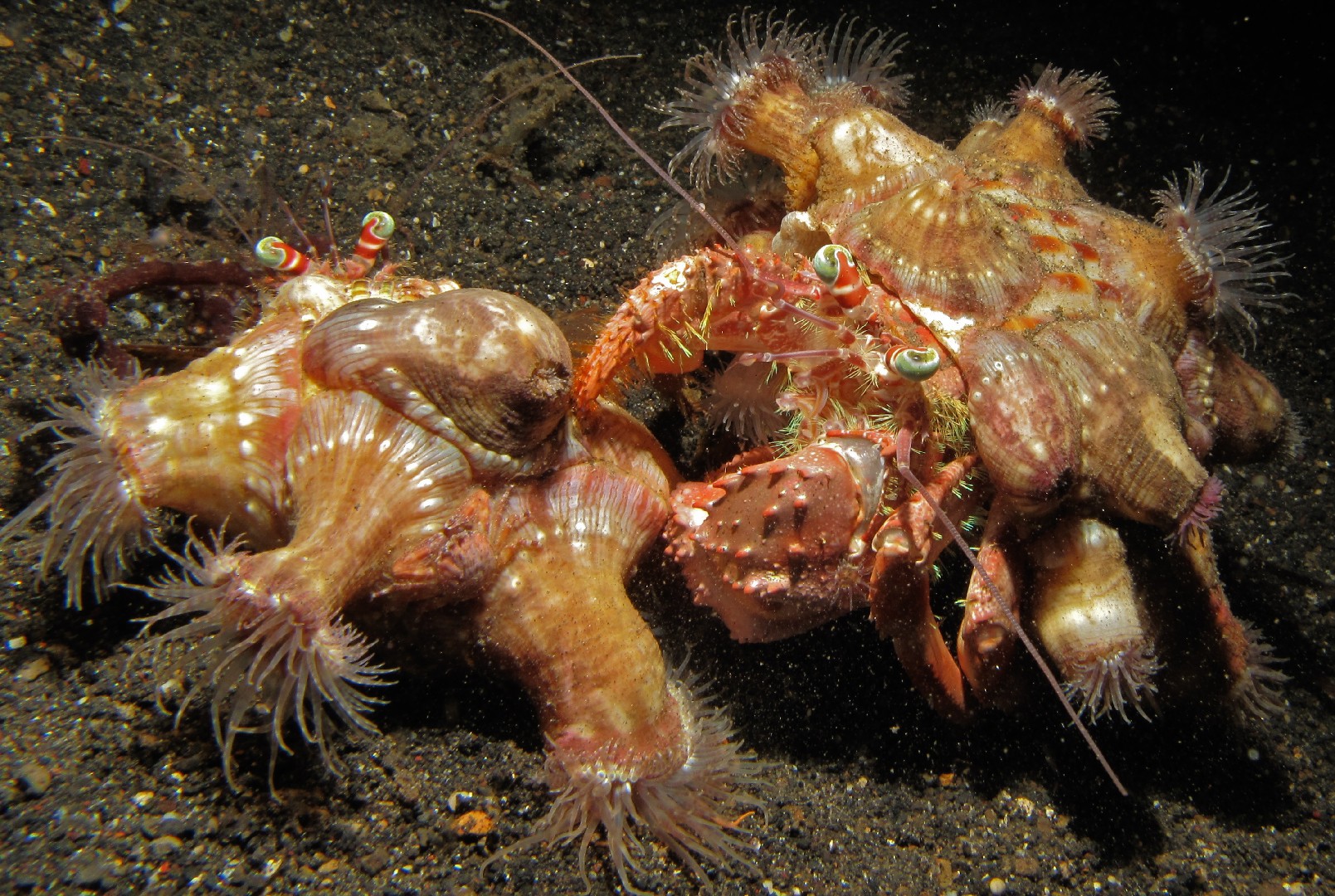
Dardanus pedunculatus usually attain a maximum size of 10 centimetres (4 in). The carapace is mottled in tan and cream, while the eyestalks are white with red bands. The sexes are similar. The left claw is much larger than the right claw.
3. Giant Crab Spider
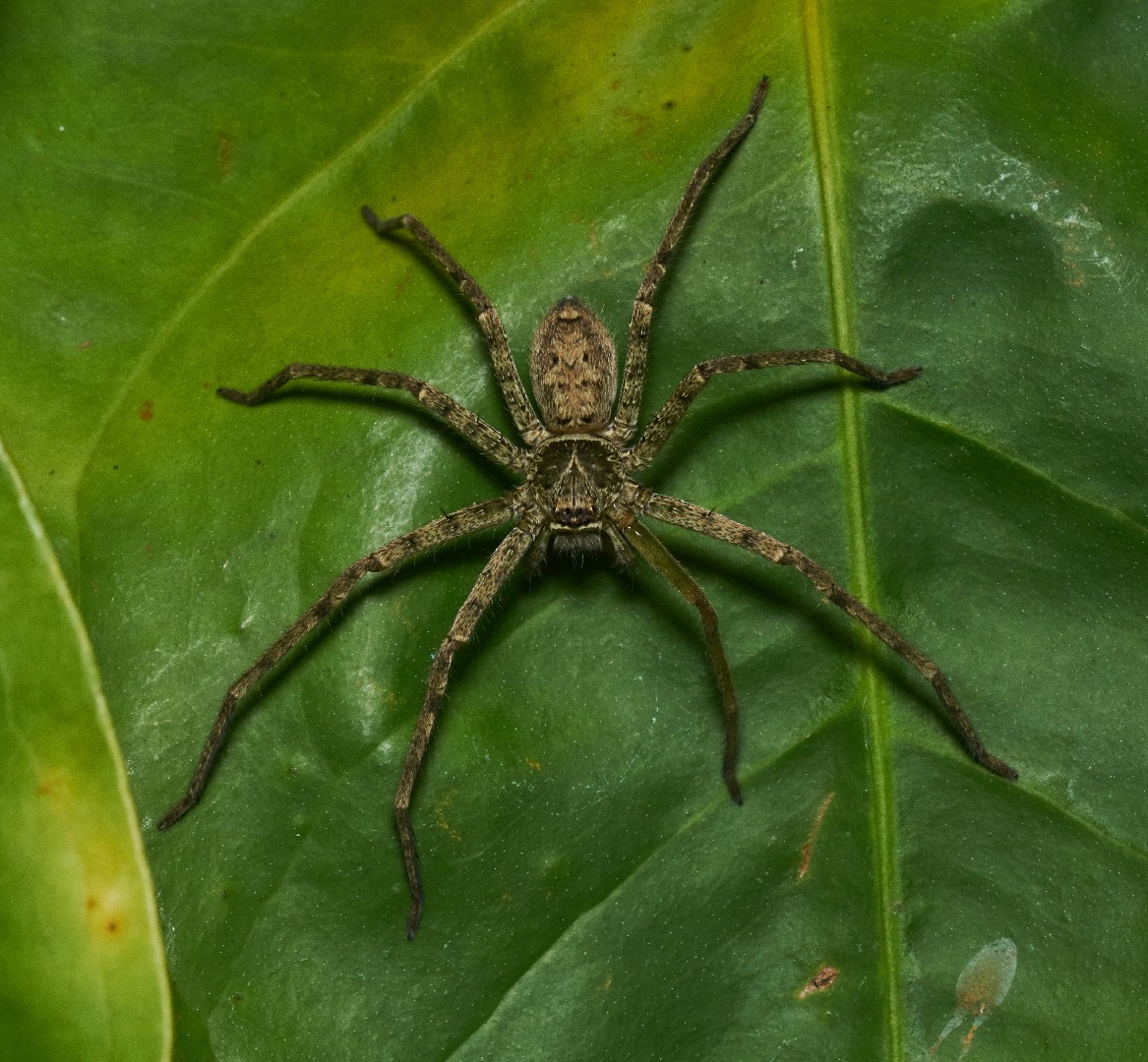
The giant Crab Spider is a large spider native to the tropics; the largest reported individual had a leg span of 30 cm. This cosmopolitan spider is highly valued in some areas, as it's able to catch cockroaches and other indoor pests. Reportedly, it hunts even scorpions and bats. This spider is venomous and sometimes bites humans, but it's considered harmless.
4. Pacific cleaner shrimp
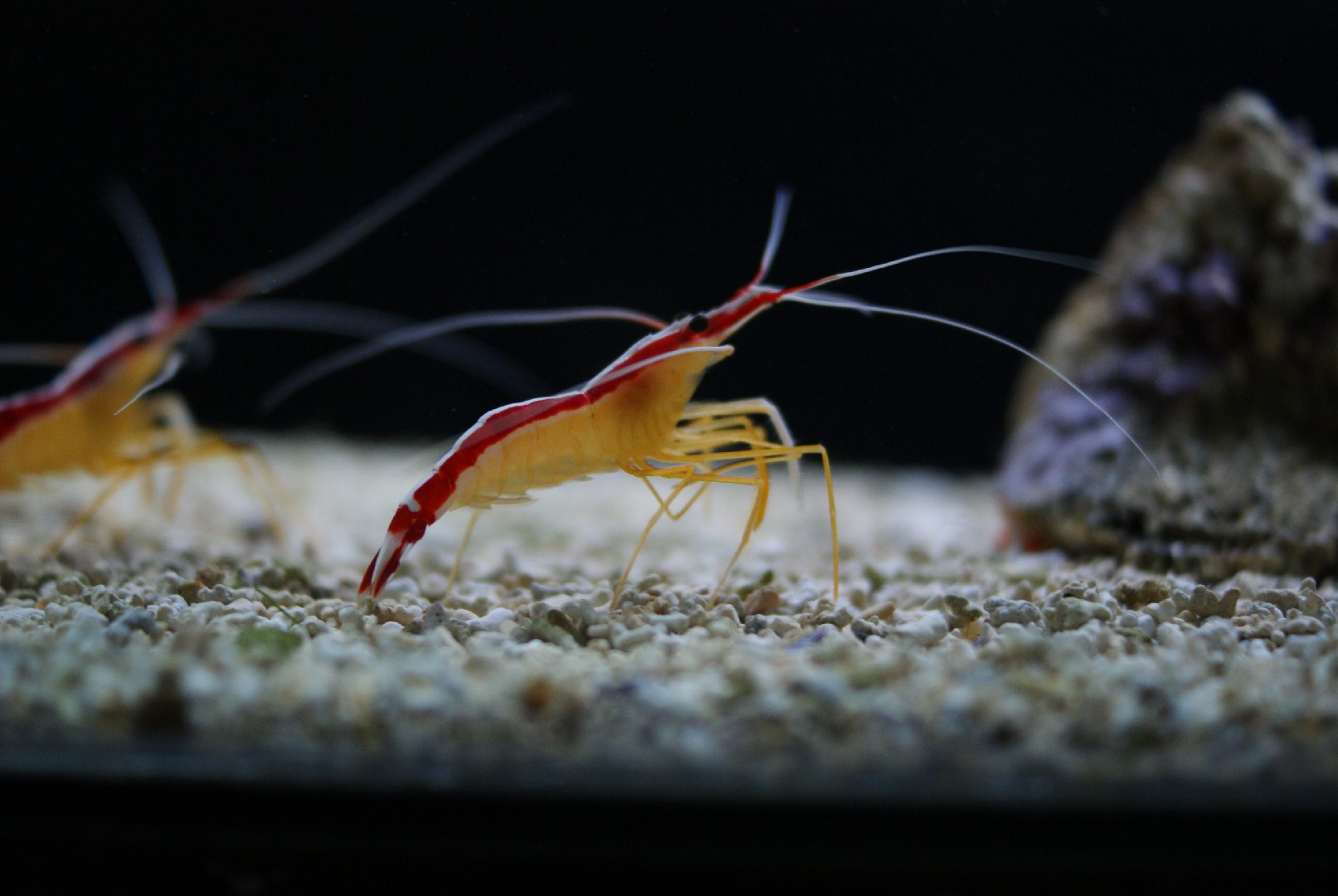
Like all cleaner species, pacific cleaner shrimp (Lysmata amboinensis) derives at least some of its food intake by consuming parasites and dead particles on the skin of friendly fish. Due to its appealing variety of colors, it is one of the most common crustaceans in the pet trade.
5. Common bluebottle butterfly
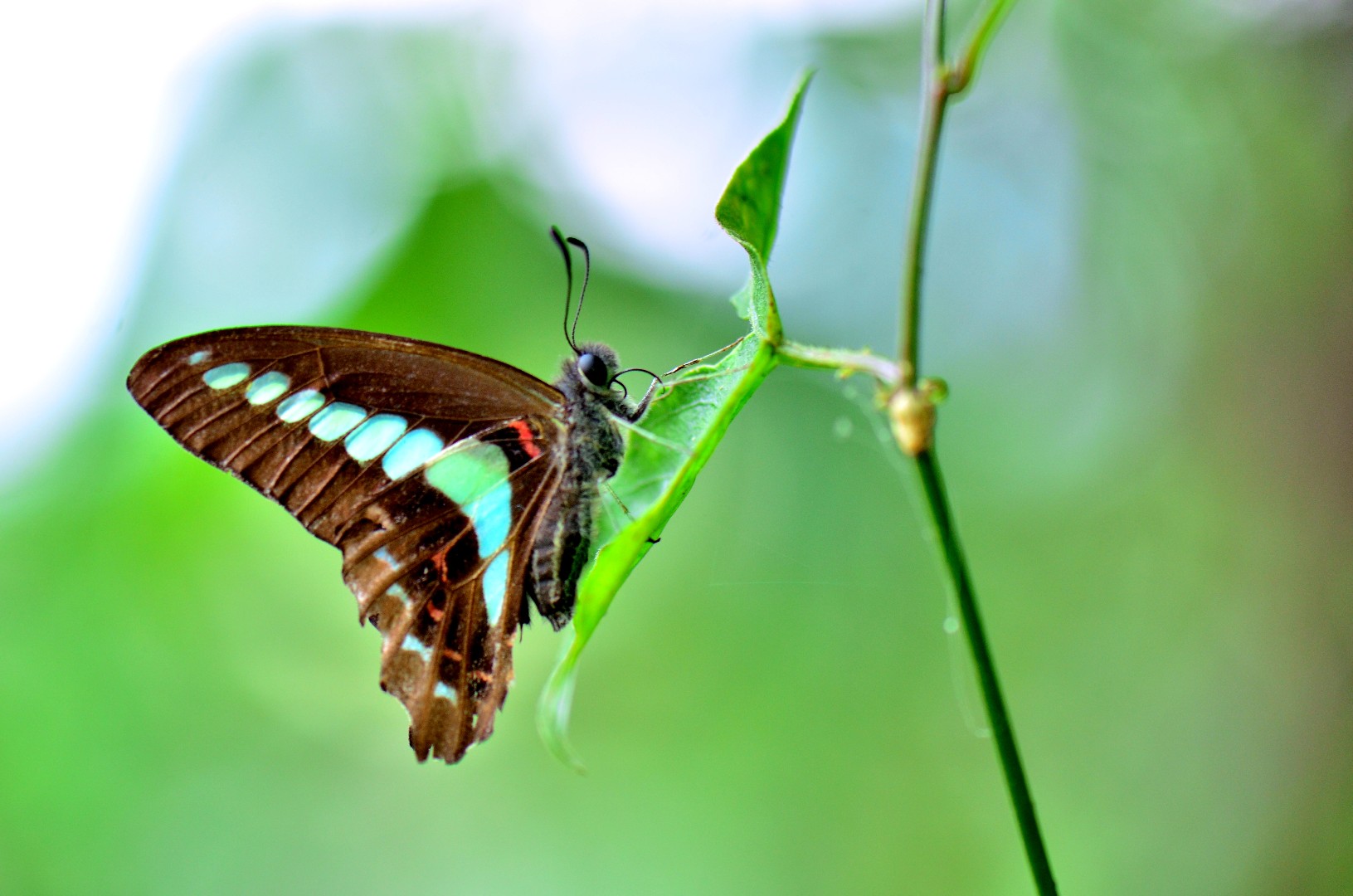
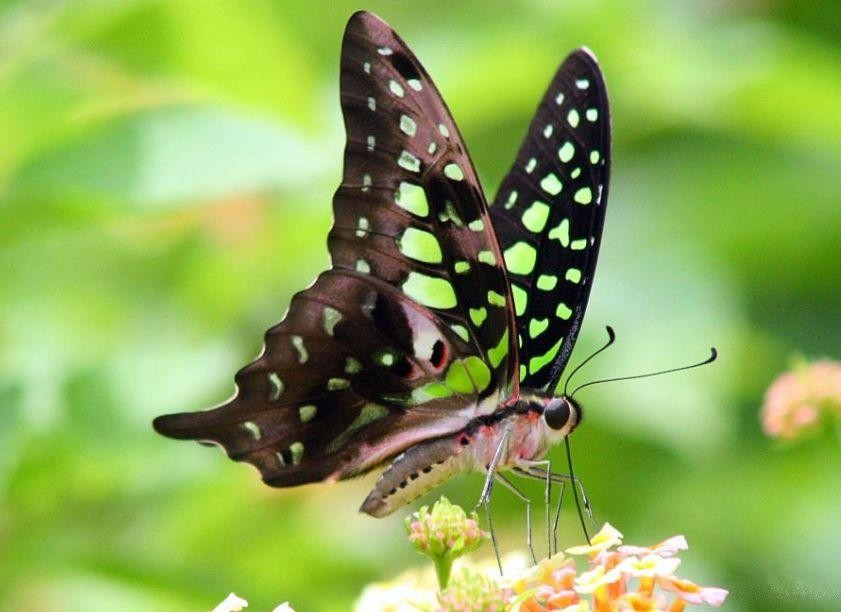
Upperside is opaque black. Forewings and hindwings crossed from above the tornal area on the hindwing to near the apex of the forewing by a semi-hyaline broad pale blue medial band which is broadest in the middle, more or less greenish and macular anteriorly; the portion of the band that crosses interspaces 6, 7 and 8 on the hindwing white; beyond the band on the hindwing there is a sub-terminal line of blue slender lunules. Underside similar, ground colour dark brown. The hindwing has a short comparatively broad sub-basal band from costa to sub-costal vein, and the postdiscal area between the medial blue band and the sub-terminal lunules velvety black traversed by the pale veins and transversely, except in interspaces 6 and 7, by narrow crimson lines; lastly, a crimson spot near the tornal angle with an admarginal yellowish-white spot below it. Antenna, head, thorax and abdomen brown, the head and thorax suffused with greenish grey. The palpi, thorax and abdomen touched with dingy white, the abdomen with two whitish lateral lines. Male has abdominal fold within grey, furnished with a tuft of long, somewhat stiff white hairs. Variously reported with wingspans between 6 cm and 8 cm, the common bluebottle butterfly has black upper wings and brown lower wings. Both forewings and hindwings are marked by a central spot in the form of a blue or blue-green triangle, with apex pointing toward the body.
6. Painted rock lobster
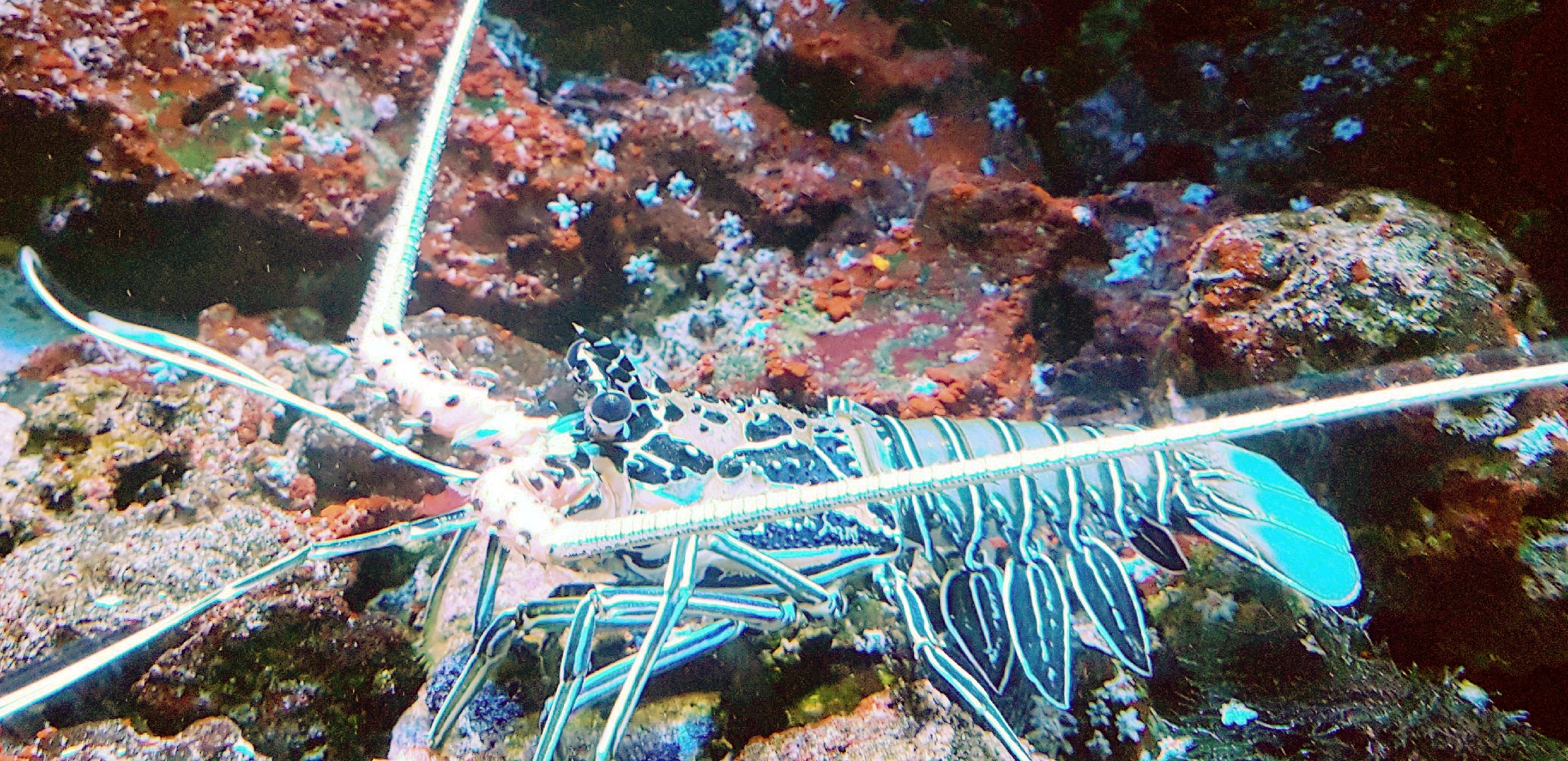
The multicolored lobster (Panulirus versicolor) is a ten foot crayfish of the crawfish family.
7. White-spotted hermit crab
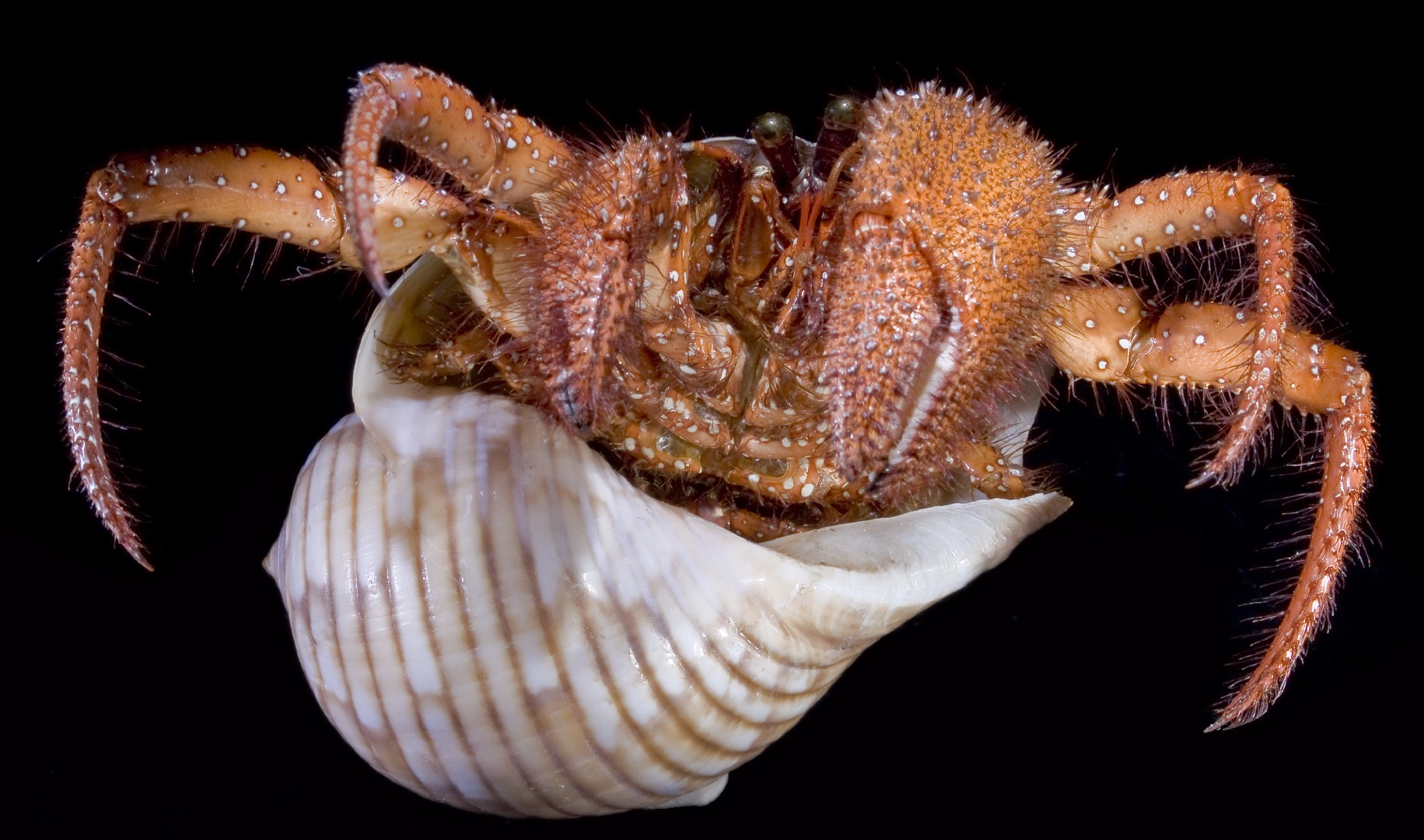
Dardanus megistos is a ten- Dardanus megistos species from the Diogenidae family. The scientific name of the species was first validly published in 1804 by Herbst.
8. Squat shrimp
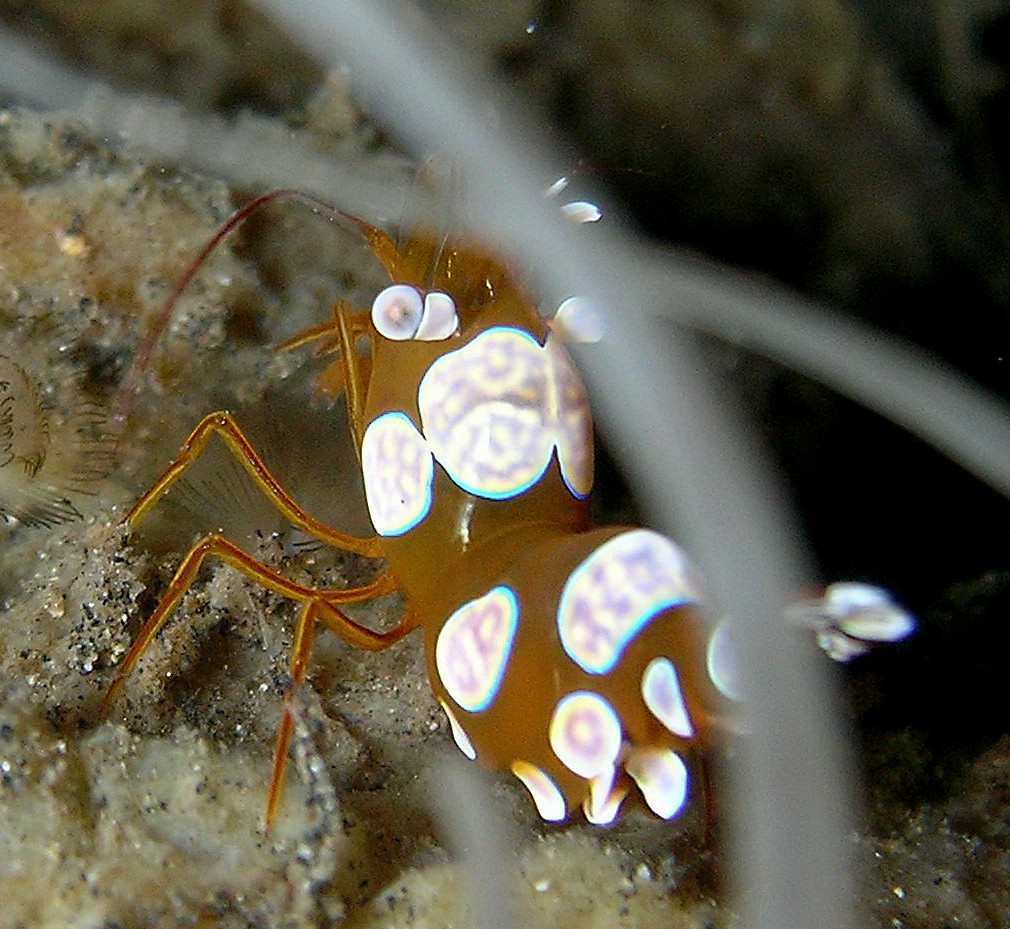
Thor amboinensis is a small shrimp growing to a length of about 13 millimetres (0.5 in). It is an olive brown colour with symmetrically placed white patches edged with thin blue lines. It characteristically carries its abdomen curved upwards with its tail fan above its head.

9. Chocolate argus
Junonia hedonia is a butterfly from the Nymphalidae family. The scientific name of the species was first validly published in 1764 by Carl Linnaeus.

10. Peacock pansy
The adult butterfly has a wingspan of 5 - 6 cm,and exhibits seasonal polyphenism. "Upperside rich orange-yellow. Fore wing with a pale dusky and a much darker short transverse bar with lateral jet-black marginal lines across cell, another somewhat similar bar defining the discocellulars; costal margin, an inner and an outer subterminal line, and a terminal line dusky black; a large minutely white-centred ocellus with an inner slender and outer black ring on disc in interspace 2; two similar but smaller geminate subapical ocelli with an obscure pale spot above them and a short oblique bar connecting them to the black on the costa. Hind wing: a small minutely white-centred and very slenderly black-ringed discal ocellus in interspace 2, with a very much larger pale yellow and black-ringed ocellus above it spreading over interspaces 4, 5 and 6, the centre of this ocellus inwardly brownish orange, outwardly bluish black, with two minute white spots in vertical order between the two colours; finally postdiscal subterminal and terminal black sinuous lines. "Underside ochraceous brown, very variable. In most specimens the cell of the fore wing is crossed by three dark sinuous bands, the outermost along the discocellulars; these are very faint in some; both fore and hind wings crossed by a basal and a discal pale sinuous line, the latter margined outwardly by a dark shade, which is traversed by an obscure somewhat obsolescent row of dark spots, and outwardly bounded by a subterminal sinuous line, the dark shade in many cases spreading on the fore wing to the terminal edge of the wing; on the hind wing the subterminal line meets the discal in an acute angle at the tornus. Antennae dark brown; head, thorax and abdomen more or less orange-brown; paler beneath." "Upperside similar, the black markings deeper in colour and heavier, the subterminal and terminal lines more clearly defined. "Underside pale ochraceous. Fore wing: cell crossed by live short sinuous dark brown lines, a similar line on the discocellulars and another beyond it, both bent inwards at an angle and continued to the dorsum, the space between them forming a discal broad fascia, which pales to whitish posteriorly; the postdiscal ocelli, subterminal and terminal lines as on the upperside but paler. Hind wing: a slender transverse subbasal dark line, a discal whitish straight fascia in continuation of the one on the fore wing; the postdiscal ocelli, the subterminal and terminal lines much as on the upperside but paler; the anterior ocellus with a double iris and centre. Antennae dark brown; head, thorax and abdomen slightly darker than in the dry-season form.

More







