




Top 20 Most Common Insects in El Nido
Insects, nature's mini architects, form an integral part of El Nido's rich biodiversity. From forests to coastal areas, geographical variations across El Nido contribute to a wide variety of insect species. Whether pests, pollinators or prey, these insects play crucial roles in the ecosystem. Discover the top 20 most common insects nestled in El Nido and their unique relationships with their environment!

Most Common Insects
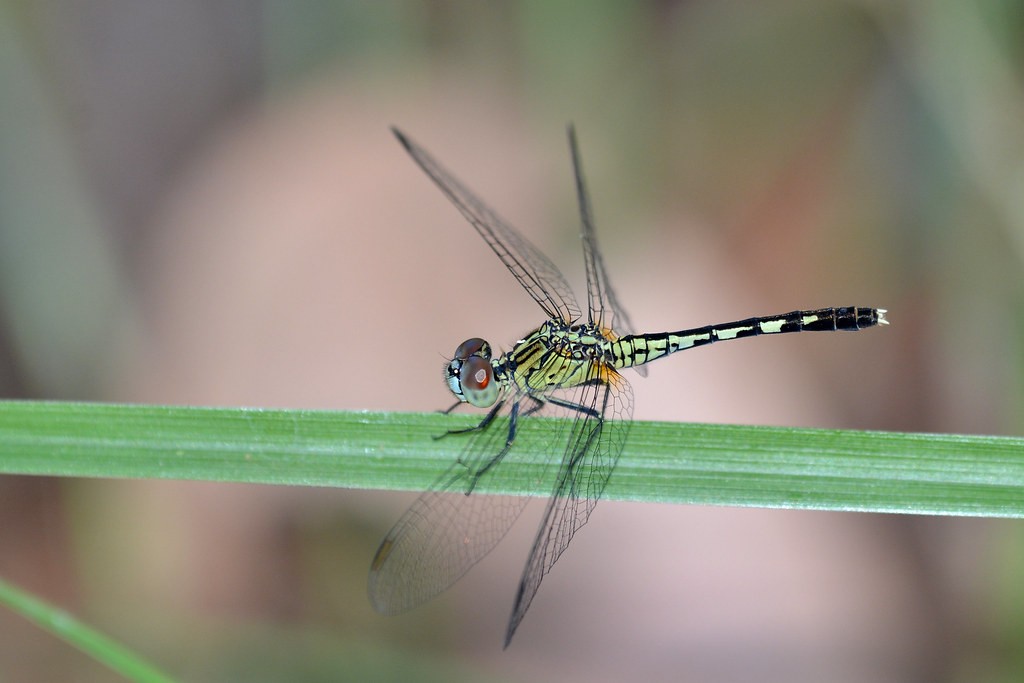
1. Green skimmer
Orthetrum serapia is a medium-sized dragonfly with a wingspan of 60-85mm. Its wings are clear except for a small dark spot at the base of the hindwing. The thorax is greenish to greyish yellow with black markings. The abdomen is black with pale yellow or pale green markings. Orthetrum serapia appears very similar to Orthetrum sabina and can be confused where the range of the two overlap in north-eastern Australia. 
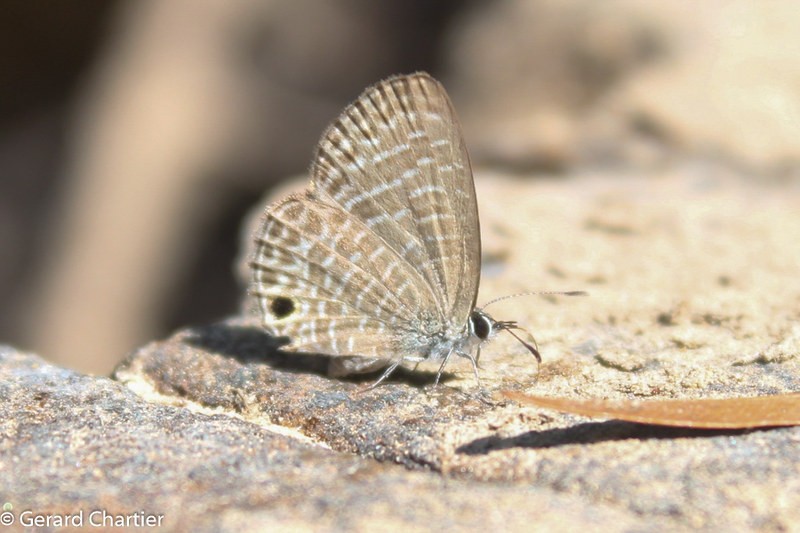
2. Opaque six-line blue
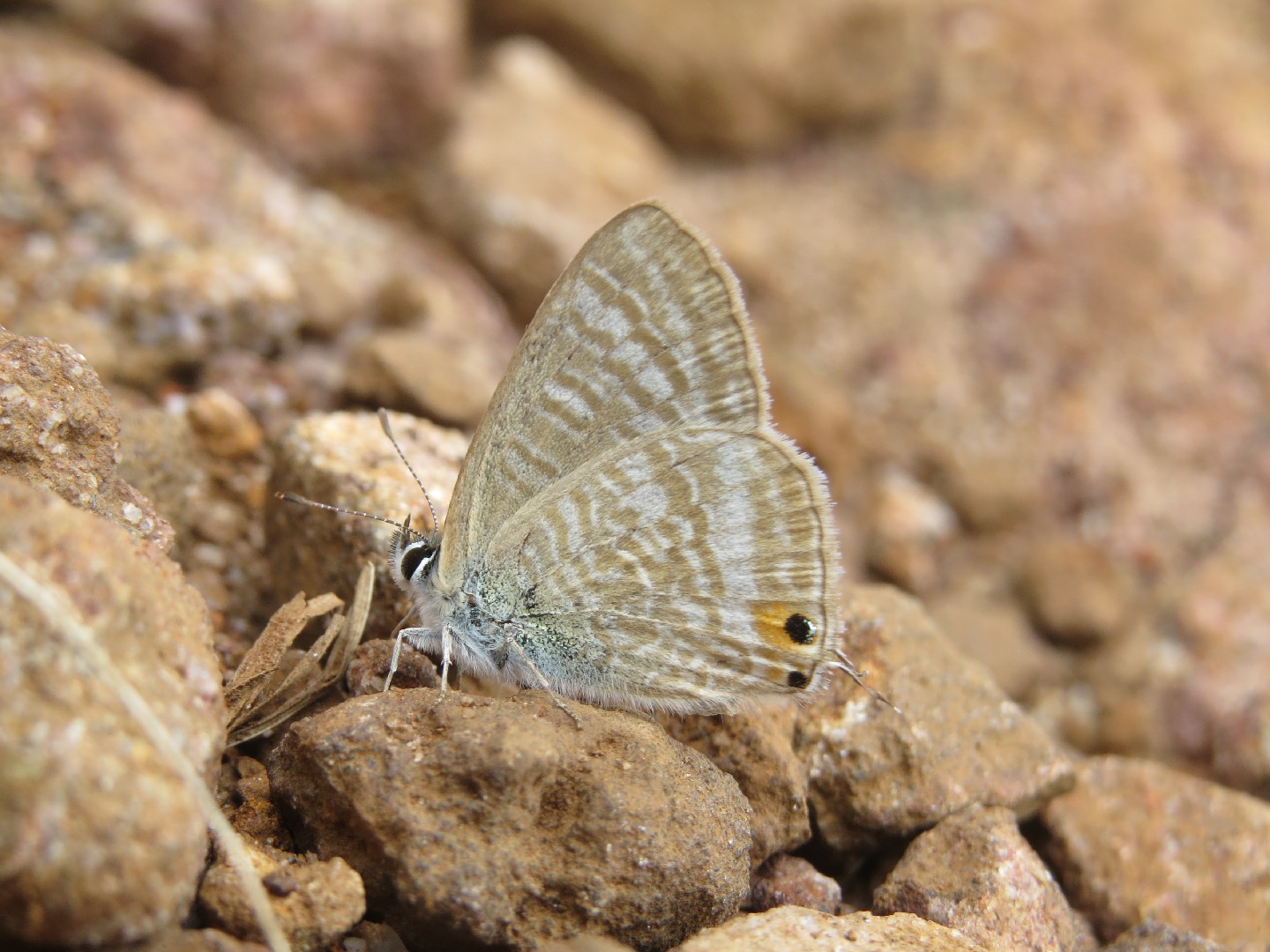
Nacaduba beroe, the opaque six-line blue, is a lycaenid butterfly found in South and Southeast Asia. The species was first described by Cajetan Felder and Rudolf Felder in 1865. Life cycle
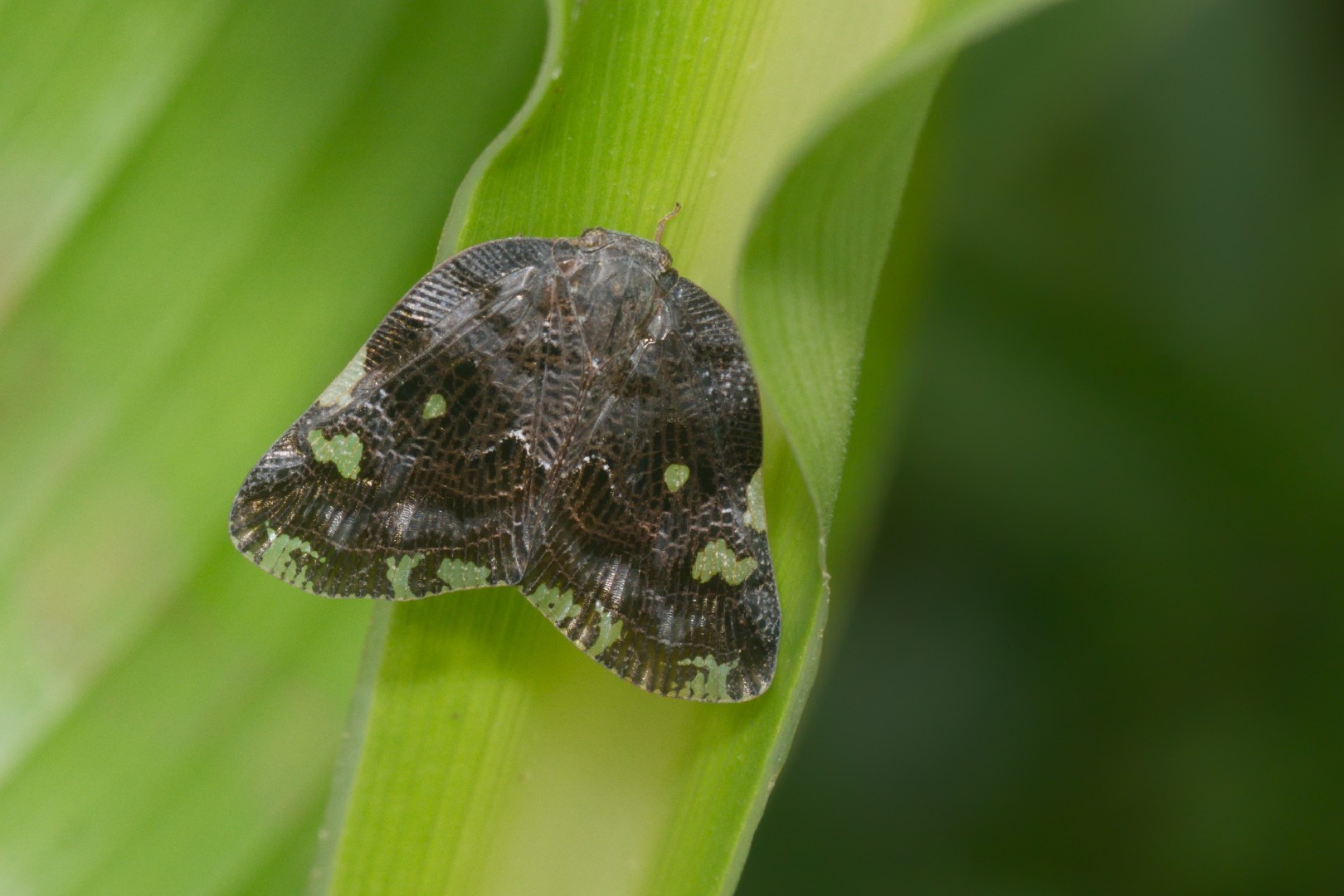
3. Black planthopper
Ricania speculum can reach a length of about 8 mm, with a wingspan of about 1.5 cm. These planthoppers have dark brown wings with central wavy horizontal bands and irregular transparent patches of different sizes. The precostal area of the forewings shows dense transverse veinlets and the costal margin is distinctly convex near the base. In males the tip of the abdomen is pointed, while in females is rounded. The final instar nymphs are white with dark brown markings and waxy secretions on the abdomen.
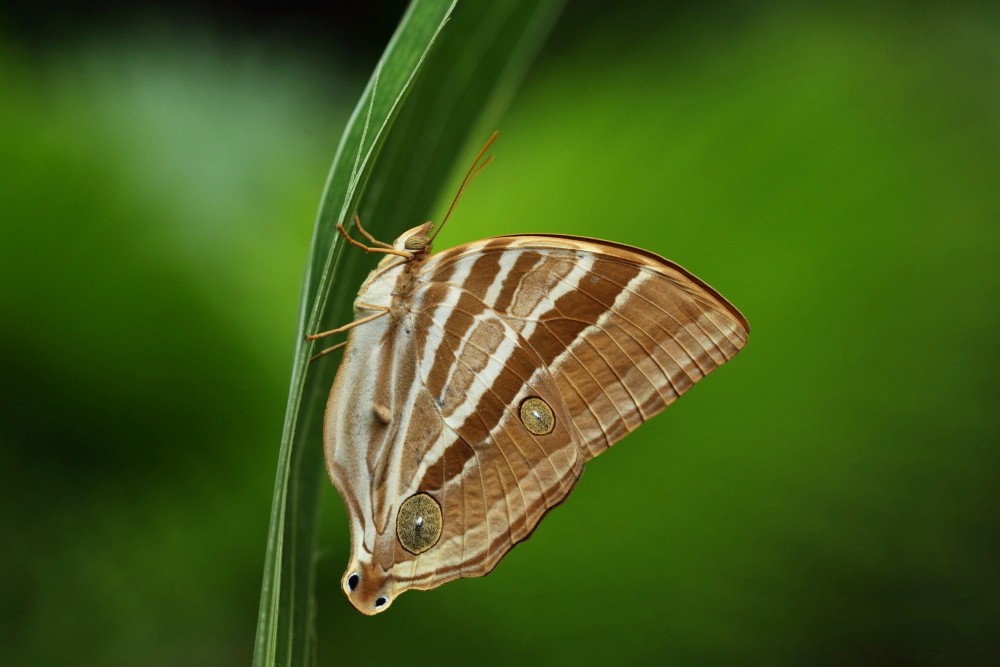
4. Palm king
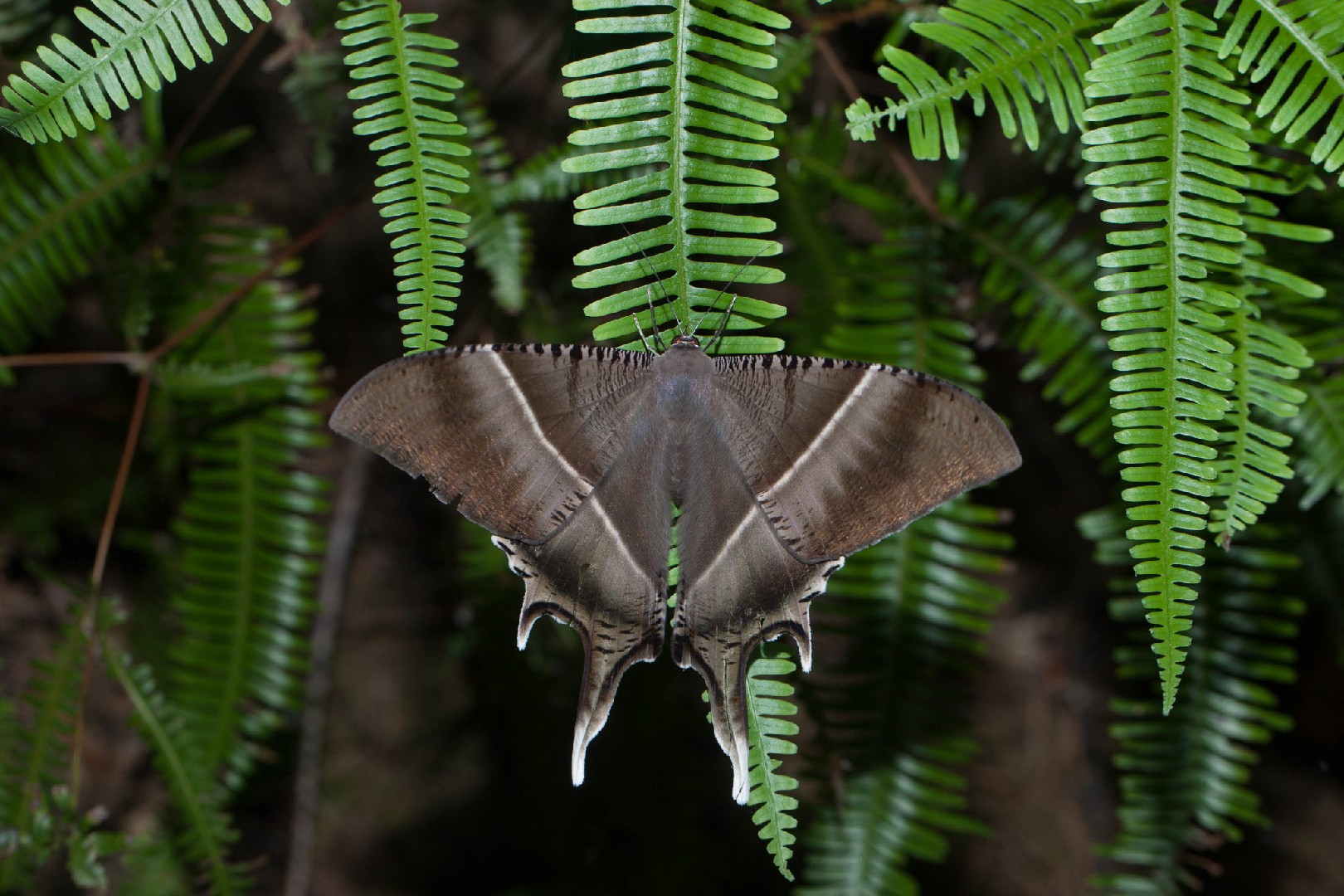
Male: upperside umber brown. Forewing with the costal margin narrowly fulvous (reddish brown) near apex, crossing towards the termen, forming an obscure preapical band joining a subterminal lunular band of the same colour. Hindwing uniform, with a subterminal band as in the forewing but not lunular, straight. Underside pale brown, with the following transverse pale lilac-white bands crossing both forewing and hindwing: basal, subbasal, discal, postdiscal, broad subterminal and terminal; the subbasal and discal of equal width, meeting above the tornal angle in V-shape, the space between the two bands with, on the forewing, two shorter similar bands crossing the cell, on the hindwing a single similar band from costa to median vein; subterminal band on hindwing bent upwards above tornal area and continued halfway up the dorsal margin, the broadly-produced tornus with a dark brown spot; finally a large ochraceous ocellus in interspace 2, and a smaller similar one in interspace 6. Antennae reddish; head, thorax and abdomen umber brown. Secondary sex-mark a glandular fold in membrane of wing shaded by tufts of long hair along vein 1 on upperside of hindwing, and preapically on the abdomen with tufts of stiff long hairs. Female: Upper and undersides as in the male but paler; on the upperside the fulvous along the costal margin widens into a preapical patch, and generally the bands on the underside show through and appear above as pale fulvous bands.Wingspan: 11 - 12 cm .Eggs: The freshly laid eggs are creamy white with a small black spot in the centre and a black circular ring. The eggs are laid in a row. At Thenmala, the observer saw two rows, the first having 15 eggs and the second 3 eggs. Prior to hatching, the colour of the egg changes to black. Larvae: The first instar larvae are cylindrical, measuring 0.6 - 0.8 mm in length. The second instar larvae are pale greenish yellow measuring 0.8 - 1.2 mm in length. The third instar larvae are morphologically very similar to the previous instar, but are longer ( 3 - 4 cm ) and stouter. The fourth instar larvae are stouter and longer measuring 4.5 - 5 cm . During the fifth instar, the larvae become more brownish than greyish and measure 7 - 8 cm in length. Larvae of the palm king are voracious feeders. Most of the time, they remain on the underside of the leaf, eating from the tip of the leaf working towards the base. With regard to coloration, the fifth instars show marked difference in their ground colour: some being more brownish and some more greyish. Pupa: The process of pupation takes about half a day and resulted in a greenish spindle-shaped pupa, well-camouflaged among the pointed leaves of the host plant. Initially, they are semi-transparent but later they become more opaque. The pupa has veins and lines similar to that of the leaves of the host plant, all veins ending at the pointed lower end of the pupa. The pupa becomes transparent on the eve of hatching, with the wings and head clearly visible.
5. Crimson-tailed marsh hawk
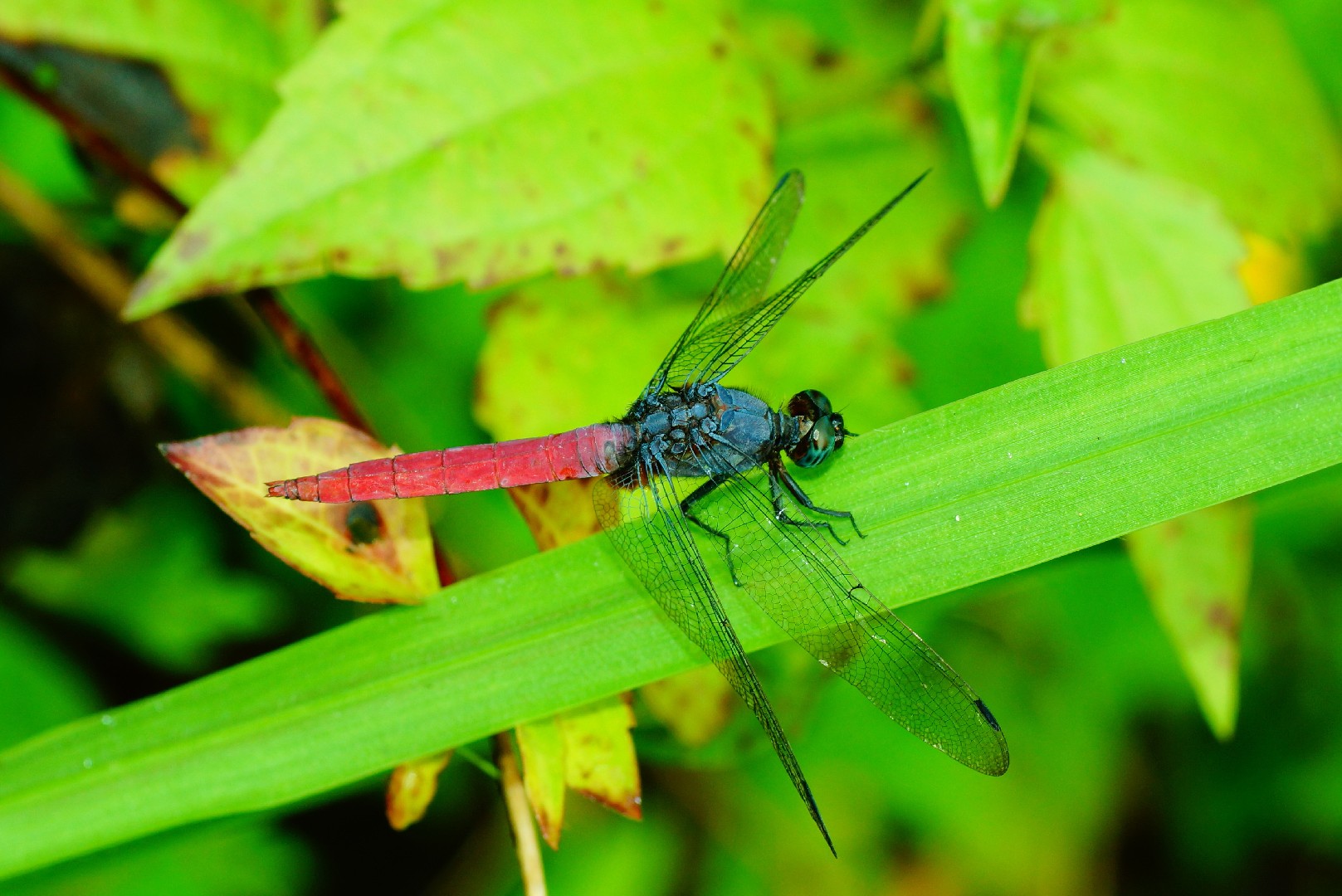
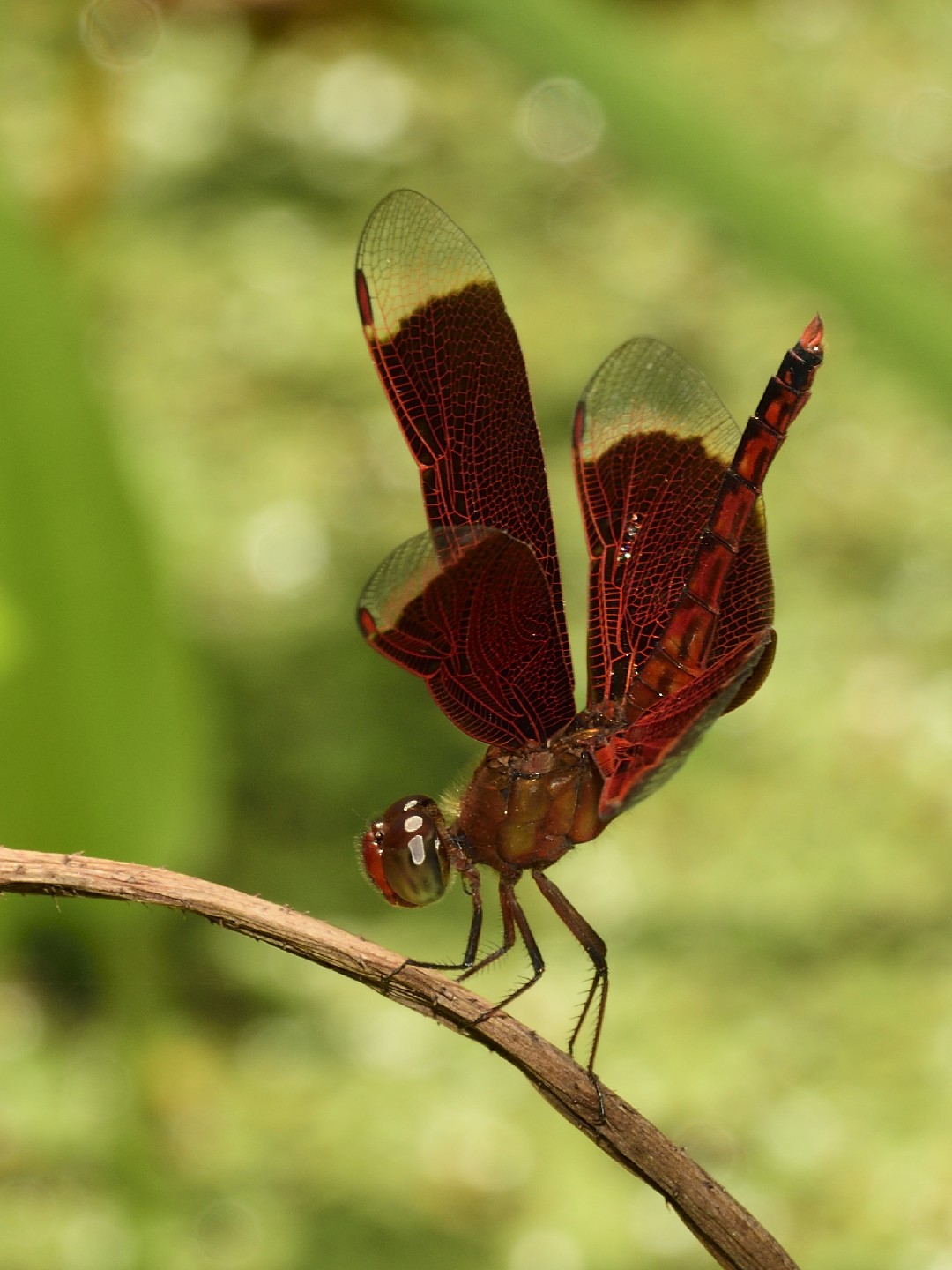
The species is on the IUCN Red List as not endangered, year of assessment 2010.
6. Psyche
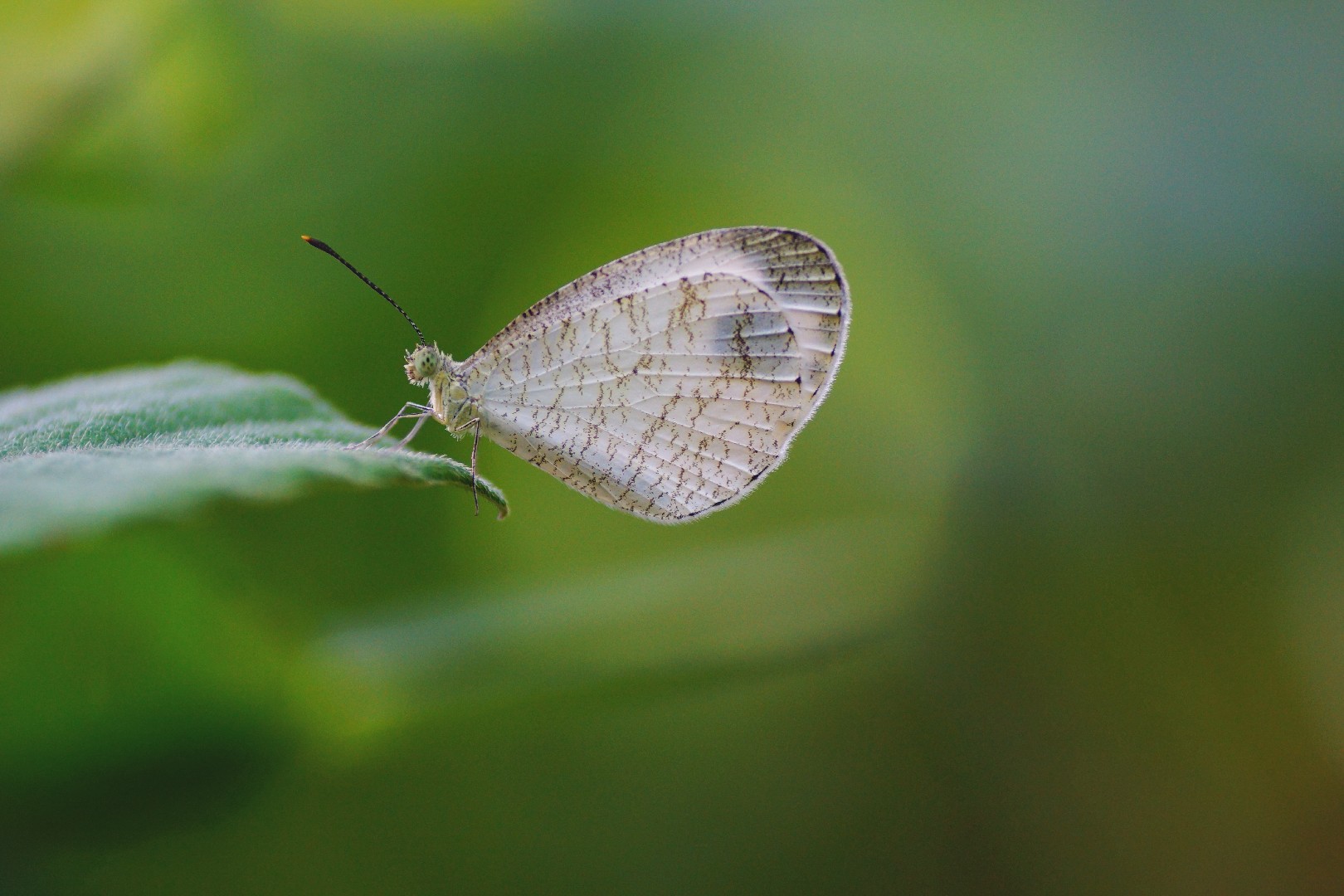
Upperside is white,base of wings are very slightly powdered with minute black scales.The costa of forewing is speckled obscurely with black; apex black, the inner margin of this inwardly angulate; a very large somewhat pear-shaped post-discal spot also black. Hindwing is white,in most specimens an obscure, extremely slender, terminal black line. Underside is white; costal margin and apex of forewing broadly, and the whole surface of the hindwing irrorated (speckled) with transverse, very slender, greenish strigae and minute dots; these on the hindwing have a tendency to form sub-basal, medial and discal obliquely transverse obscure bands; the postdiscal of forewing is black,spot as on the upperside; terminal margins of both forewings and hindwings with minute black, short, transverse slender lines at the apices of the veins, that have a tendency to coalesce and form a terminal continuous line as on the upperside. Antennae dark brown spotted with white, head slightly brownish, thorax and abdomen white. Female is similar as male, the black markings on the upperside of the forewing on the whole slightly broader, but not invariably so. Wingspan is 2.5 - 5 cm. Larva is green with a pale glaucous tinge about the bases of the legs and slightly hairy. Pupa sometimes green, but more often of a delicate pink shade.
7. Chalky percher
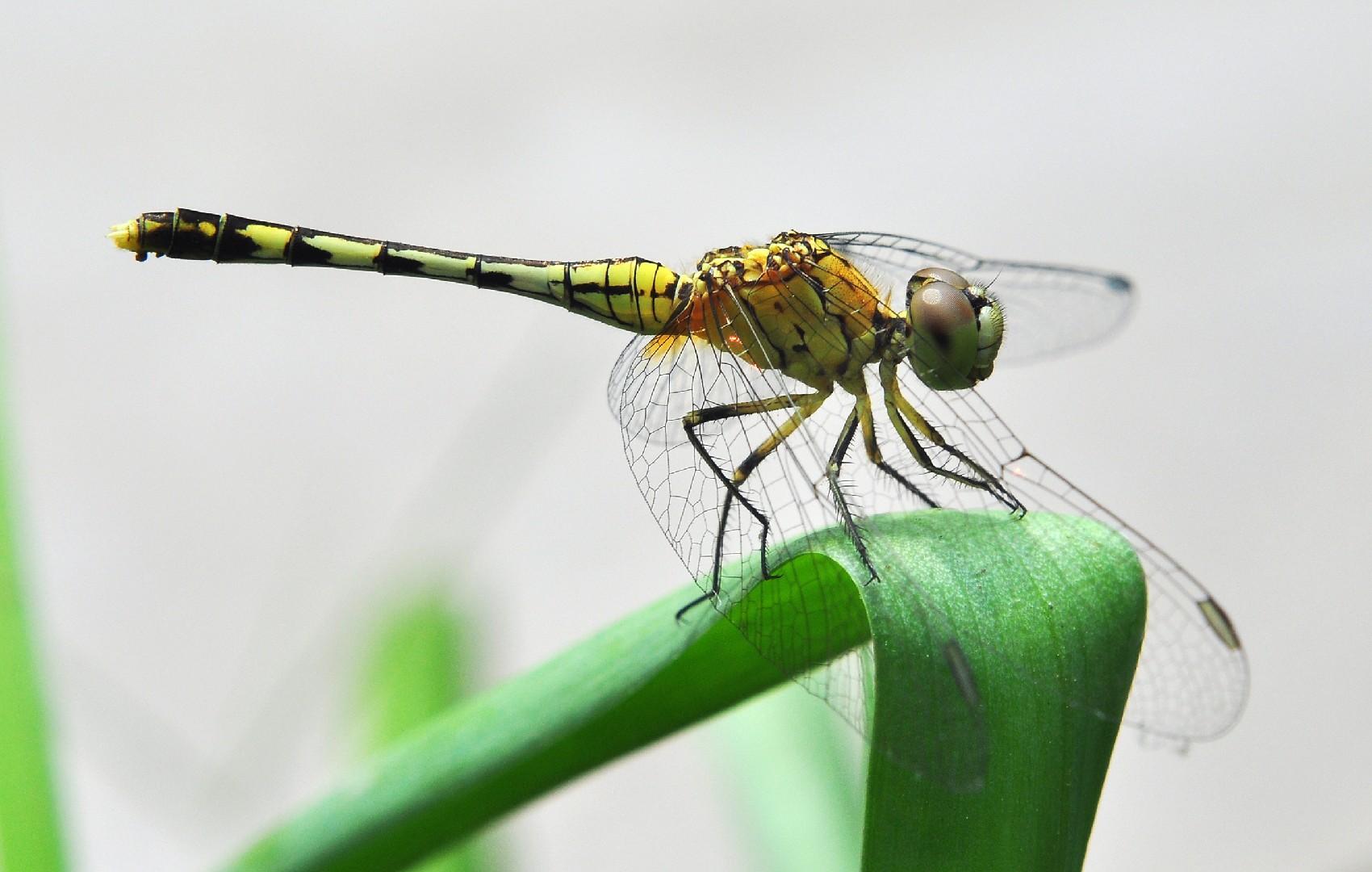
Diplacodes trivialis is small dragonfly with bluish eyes and greenish-yellow or olivaceous thorax and abdomen with black marks. In very old adults, the whole thorax and abdomen become uniform pruinosed blue. Clear wings, without apical or basal markings, and the creamy white anal appendages and deep pruinescence in adults help to distinguish this species from others in its genus.
8. Scarlet skimmer
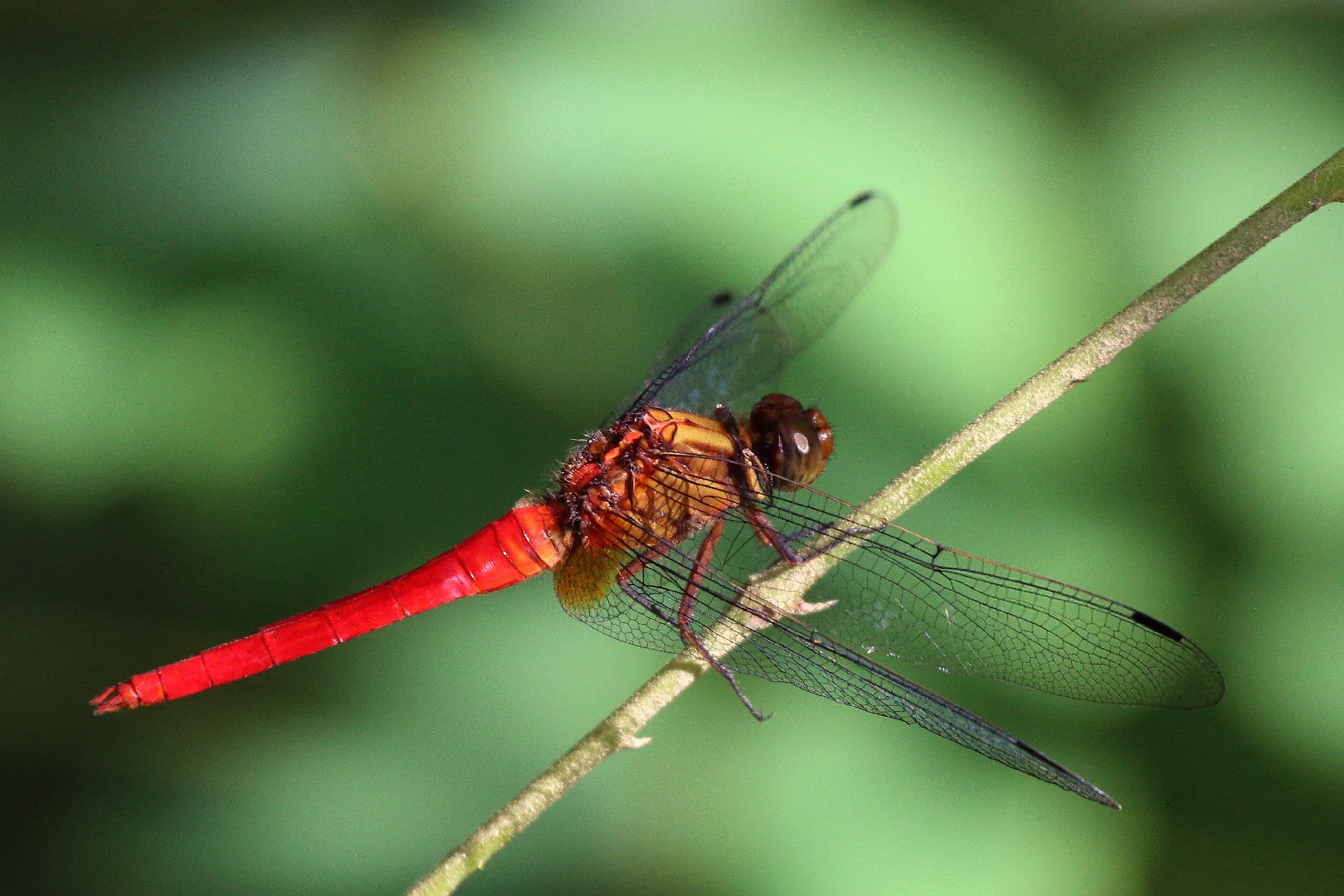
The species is on the IUCN Red List as not endangered, assessment year 2011, the trend of the population is increasing according to the IUCN.
9. Emerald-banded skimmer
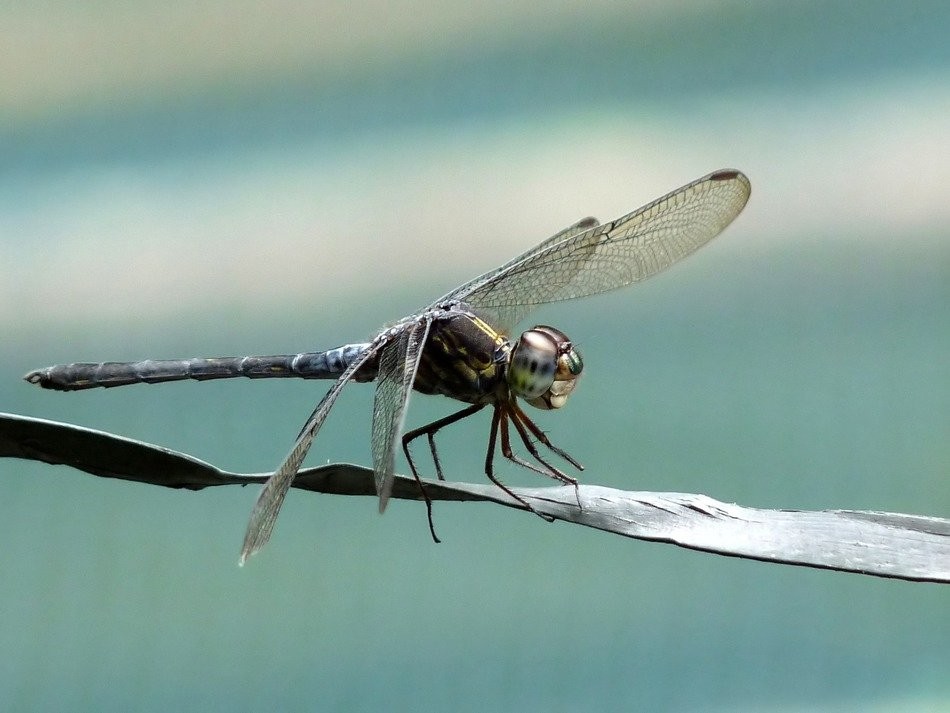
It is a medium-sized dragonfly with metallic-blue frons and brown-capped grey eyes. Its thorax is bronze-black, marked with yellow. There is a mid-dorsal carina, and an anterior and a posterior stripes narrowly separated and very irregular in shapes. There are four stripes on each sidel the first and third rather broad, the others narrow. Abdomen is black, marked with bright ochreous-yellow. Segments 1 and 2 have moderately broad lateral and mid-dorsal stripes. Segments 3 to 8 have fine stripes bordering the ventral borders of segments and mid-dorsal carina. Arial appendages are black. Female is similar to the male. It is commonly found in forested areas in lowland and montane regions. Prefers to breed in shaded muddy pools and marshes in forest.
10. Common posy
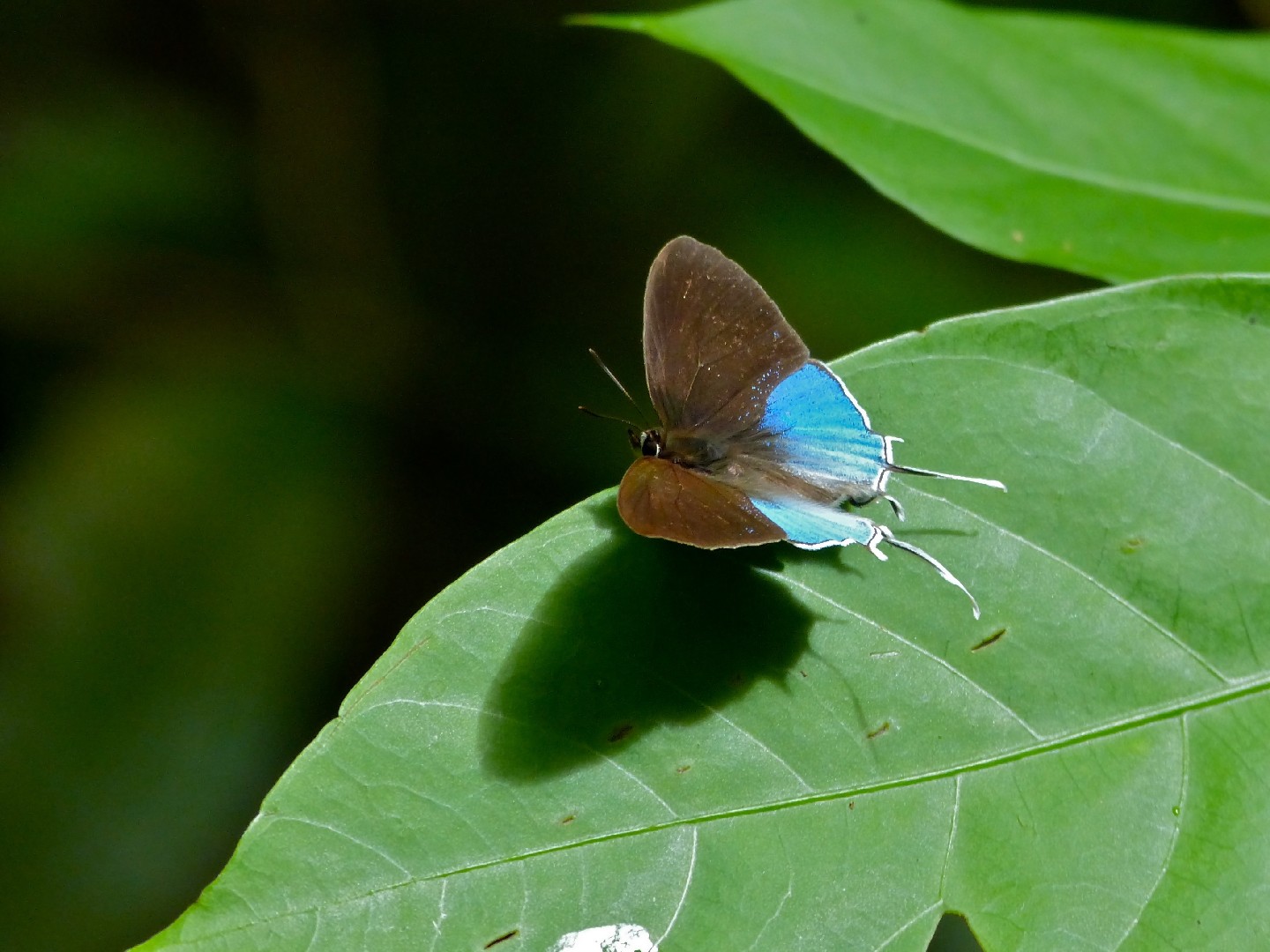
Drupadia ravindra has a wingspan of about 3 - 3.5 cm. On the upperside the forewings of males are dark brown, while the hindwings are metallic blue. The females lack the metallic sheen. The underside of the hindwings of these butterflies show a pattern of black markings on a white background, while the forewings are orange. On the hindwings there are long tails.

More







