




Top 20 Most Common Insects in Pangasinan
Insects, with their unique features and adaptable nature, inhabit diverse habitats across the state of Pangasinan. The region's varying geographical landscapes greatly influence the diversity of insect species found. Insects play pivotal roles in our ecosystem, from pests that challenge us to beneficial ones assisting in pollination and decomposition. This complexity in Pangasinan's insect population emphasizes the intricate relationship between the local environments and their respective inhabitants. Join us as we delve into the Top 20 most common insects found in Pangasinan.

Most Common Insects
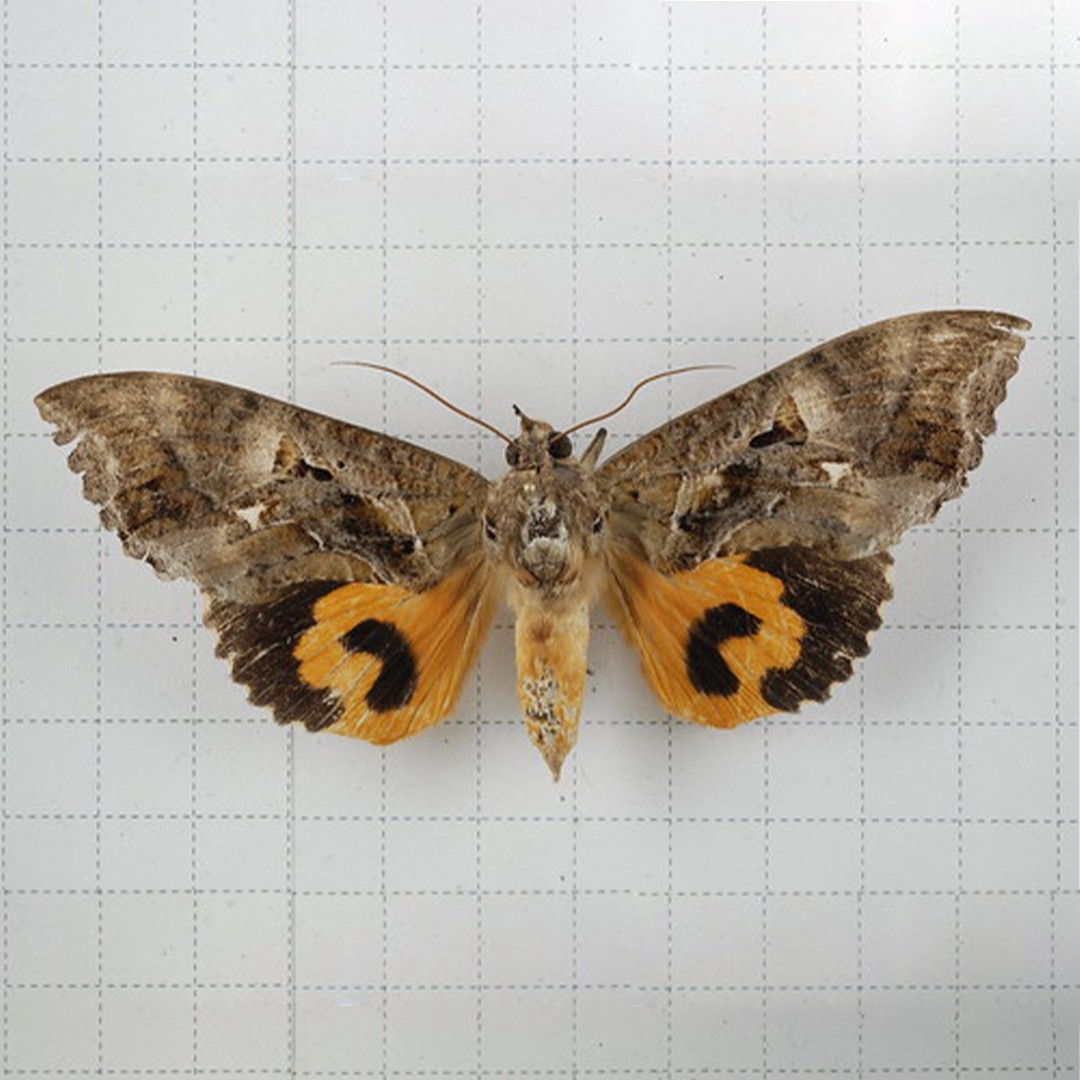
1. Common Fruit-Piercing Moth
The wingspan is about 80–94 mm in male. Palpi with third joint long and spatulate at extremity. Forewings with non-crenulate cilia in male, crenulate in female. Head and thorax reddish brown with plum-color suffusion. Abdomen orange. Forewings reddish brown, usually with a greenish tinge and irrorated with dark specks. An oblique antemedial line present, which is generally dark and indistinct but sometimes pale and prominent. Reniform indistinct. A curve postmedial line found, which is almost always met by an oblique streak from apex. Hindwings orange, with a large black lunule beyond lower angle of cell. There is a marginal black band with cilia pale spots runs from costa to vein 2. Ventral side of forewings with orange postmedial band. The wingspan is about 90–110 mm in female. Female has much more variegated and dark reddish brown striated forewings. Reniform dark and sending a spur along median nervure to below the orbicular speck. There is a triangular white mark usually present on the postmedial line below vein 3. Larva has dilated 11th somite and surrounded by a tubercle. Body purplish brown, where dorsum brown from 6th to 11th somites. Legs red and spiracular scarlet patches largest posteriorly and with some irregular white markings round them, on somite 9 in the form of an oblique white bar. There is a yellow sub-basal mark found on 4th somite. Fifth and sixth somites have black ocelli with yellow iris and white pupils. Two yellow patches can be seen on 11th somite. The adult is considered an agricultural pest, causing damage to many fruit crops by piercing it with its strong proboscis in order to suck the juice. Attempts have been made to control them using baits for the adults, egg parasites and larval parasitoids. 
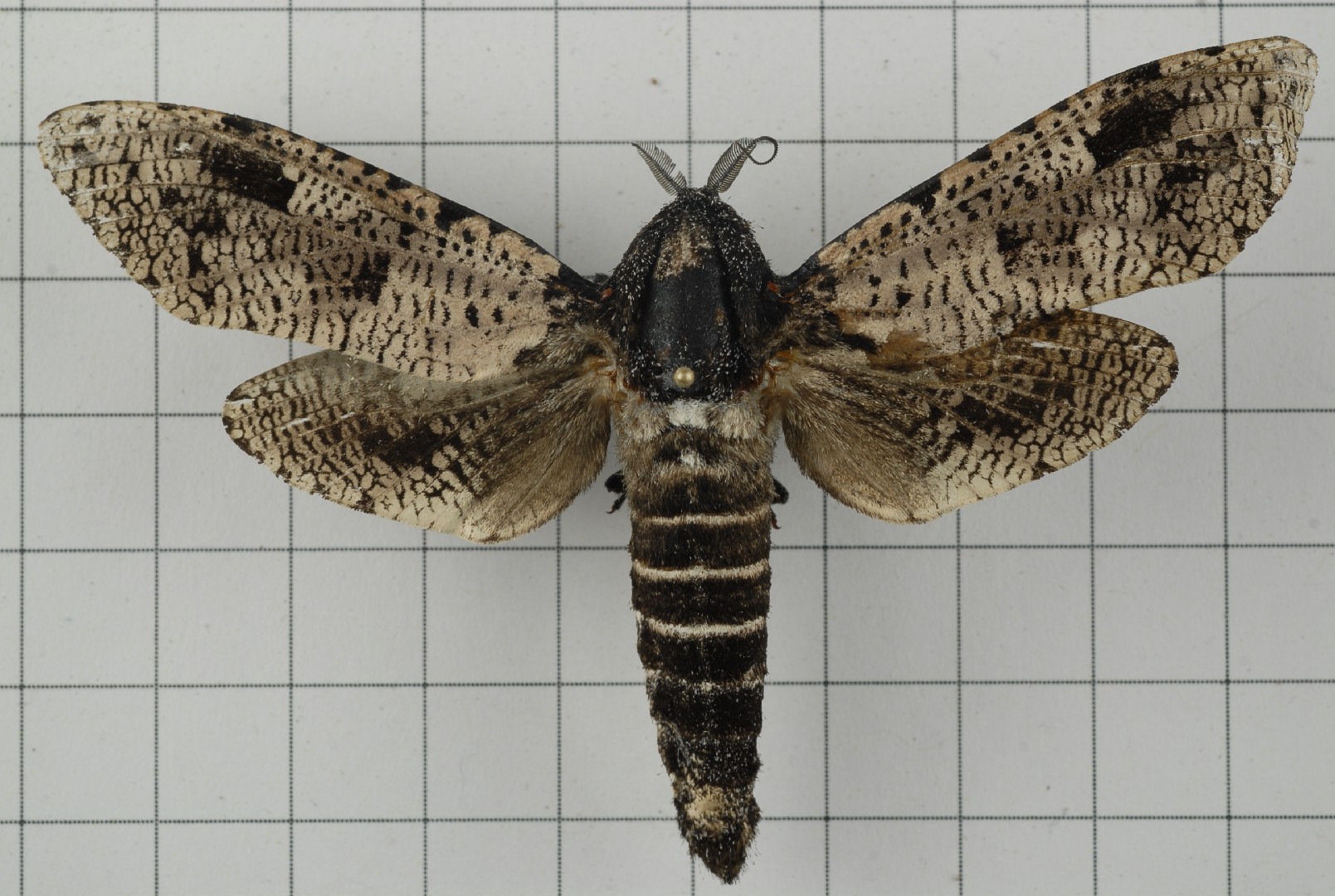
2. Xyleutes strix
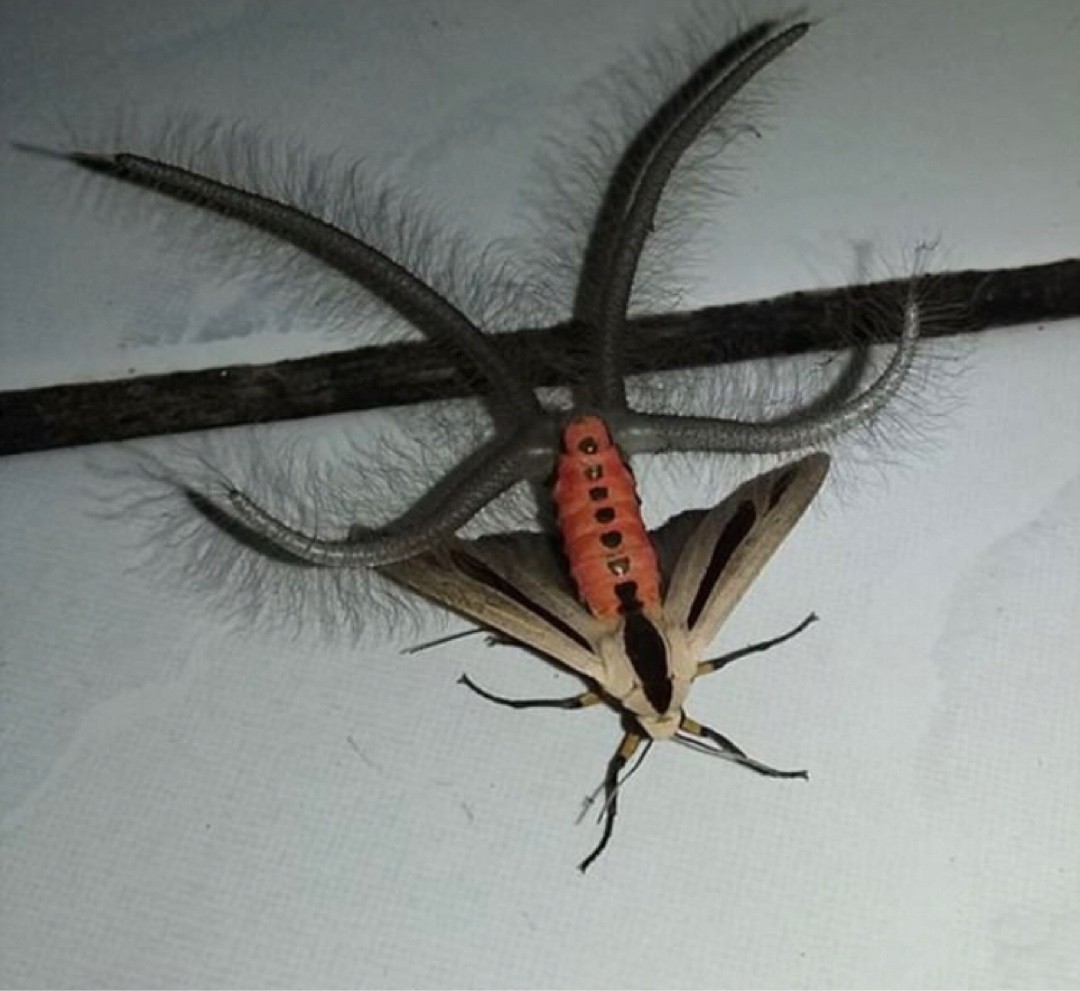
Xyleutes strix is a moth of the family Cossidae. It is found in India, south-eastern Asia, Sundaland, the Philippines, Sulawesi, the Moluccas and New Guinea.
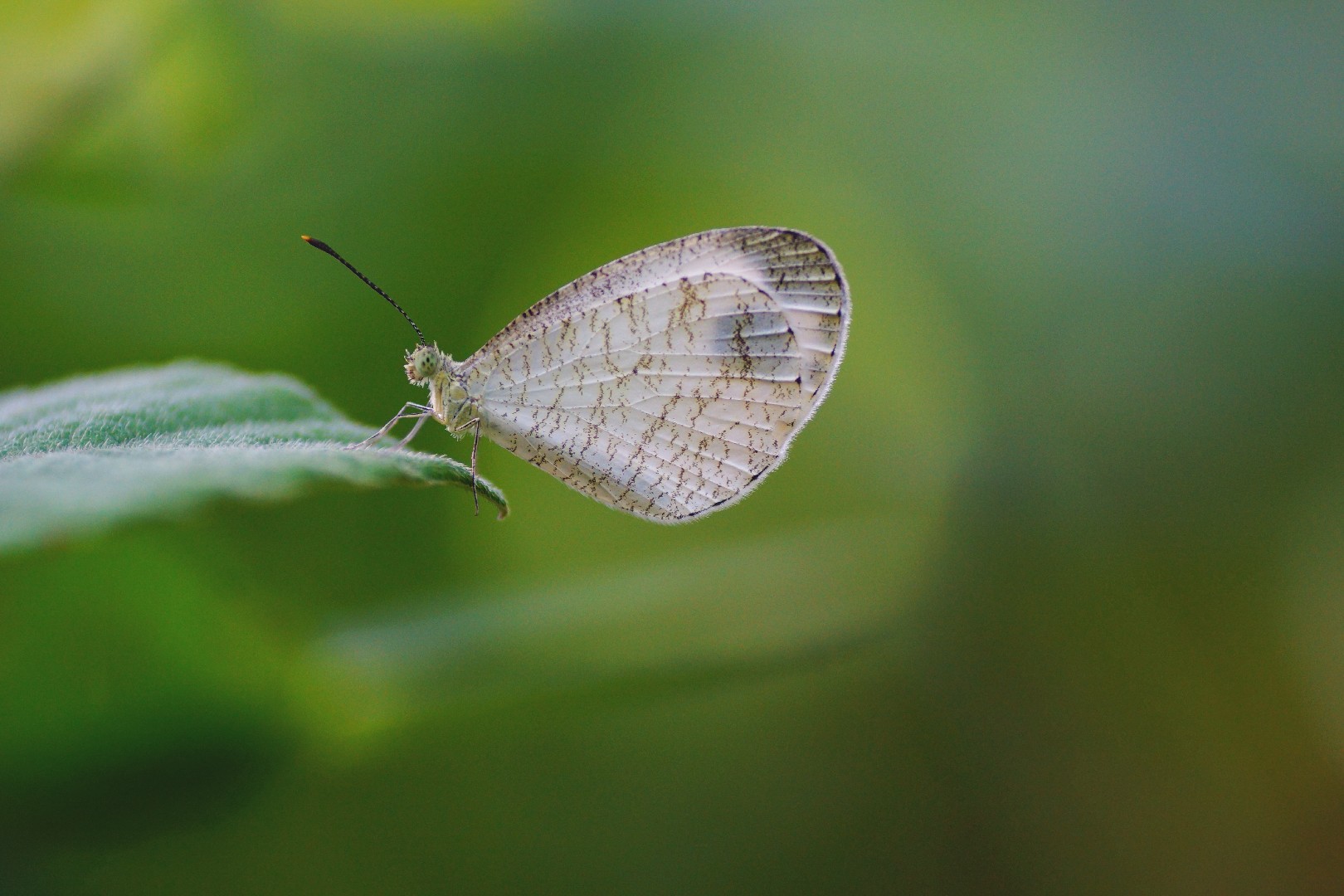
3. Psyche
Upperside is white,base of wings are very slightly powdered with minute black scales.The costa of forewing is speckled obscurely with black; apex black, the inner margin of this inwardly angulate; a very large somewhat pear-shaped post-discal spot also black. Hindwing is white,in most specimens an obscure, extremely slender, terminal black line. Underside is white; costal margin and apex of forewing broadly, and the whole surface of the hindwing irrorated (speckled) with transverse, very slender, greenish strigae and minute dots; these on the hindwing have a tendency to form sub-basal, medial and discal obliquely transverse obscure bands; the postdiscal of forewing is black,spot as on the upperside; terminal margins of both forewings and hindwings with minute black, short, transverse slender lines at the apices of the veins, that have a tendency to coalesce and form a terminal continuous line as on the upperside. Antennae dark brown spotted with white, head slightly brownish, thorax and abdomen white. Female is similar as male, the black markings on the upperside of the forewing on the whole slightly broader, but not invariably so. Wingspan is 2.5 - 5 cm. Larva is green with a pale glaucous tinge about the bases of the legs and slightly hairy. Pupa sometimes green, but more often of a delicate pink shade.
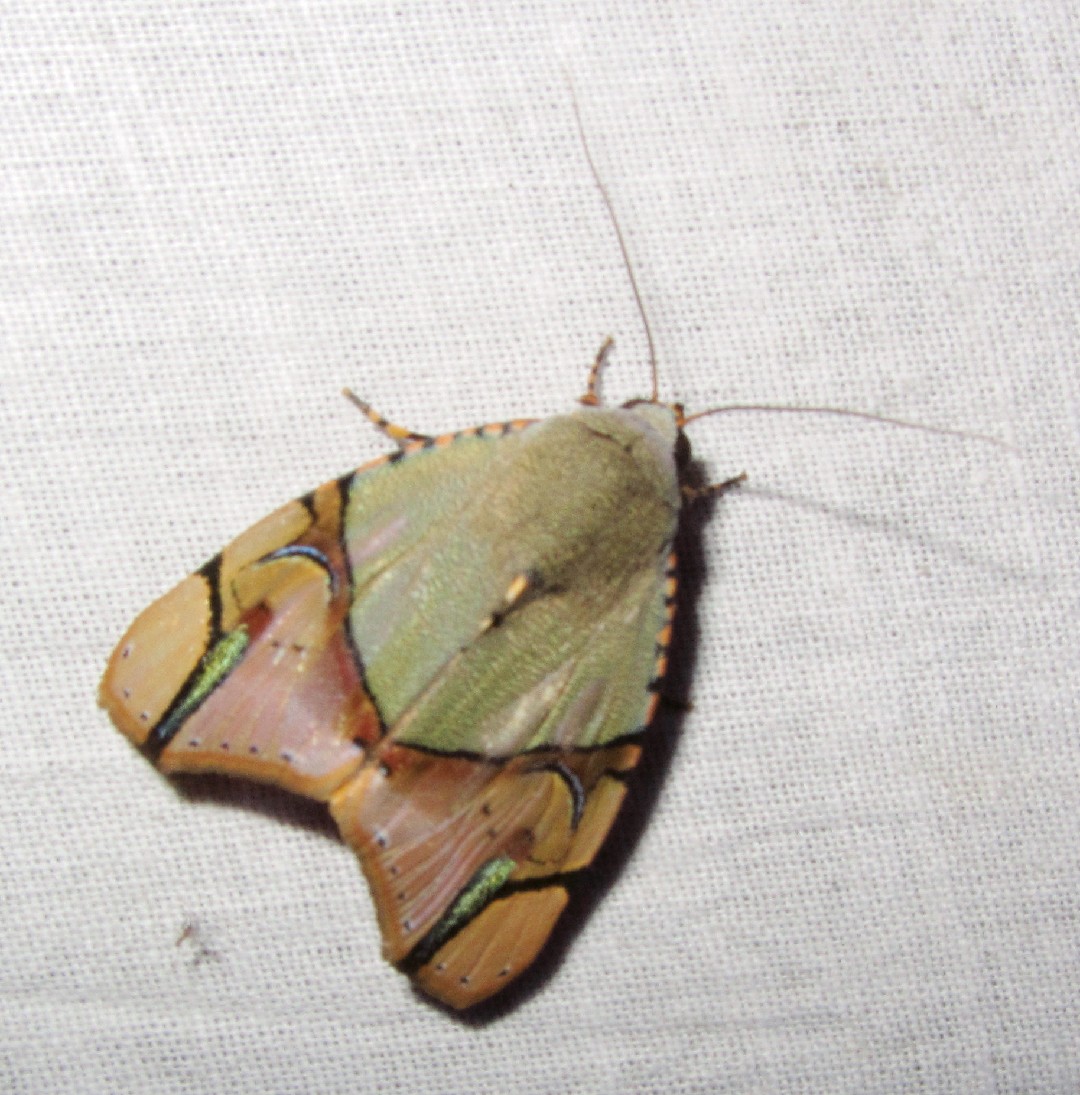
4. Ramadasa pavo
The wingspan is 45 mm in male and 50 mm in female. Forewing of male with veins 3, 4, and 5 curved at their bases. The membrane in the cell and interno-median interspace slightly ridged, probably for stridulation. Head and thorax clothed with grey brown mottled scaled. The frons barred with orange and metallic blue black. Abdomen orange. Forewings with greyish basal area, mottled with brown. Costa orange, with five blue-black spots. There is an oblique medial black line with vinous suffusion on its outer edge. The outer area pale chestnut. The reniform large and incomplete, outlined on its upper and inner sides by black and violet, the upper part of its outer edge by a black line, terminating in a red speck with two black specks below it. A black striga runs from the costa to the reniform, and a blue-black band beyond it from the costa to vein 6, where it is bent outwards to the margin as a streak. There is a black and white sub-marginal specks series. Hindwings are orange.
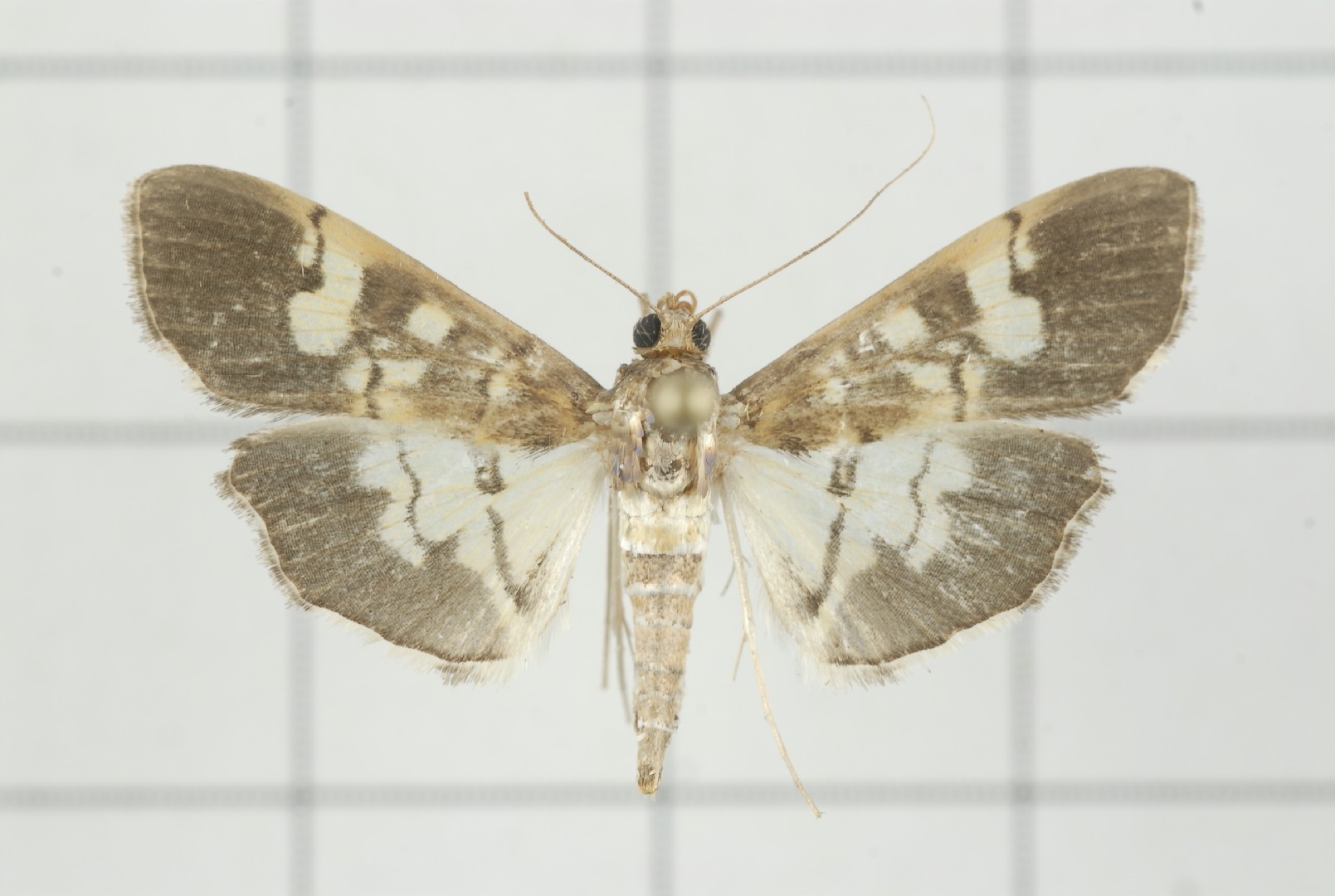
5. Mecyna quinquigera
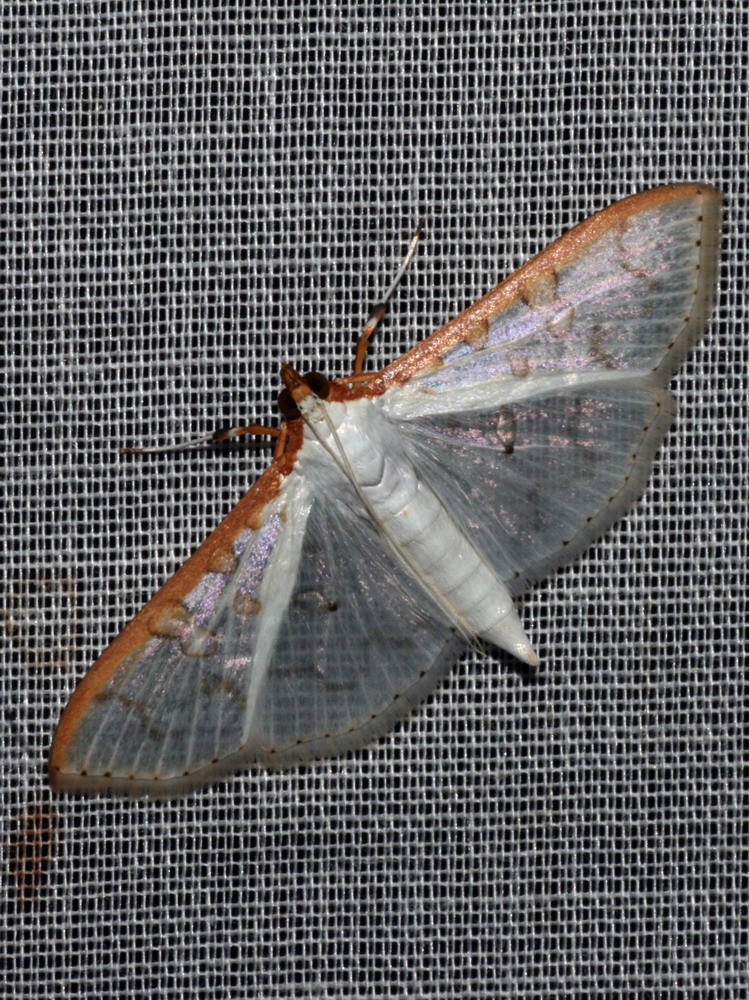
Mecyna quinquigera is a moth in the family Crambidae. It was described by Frederic Moore in 1888. It is found in China, Japan and Taiwan.
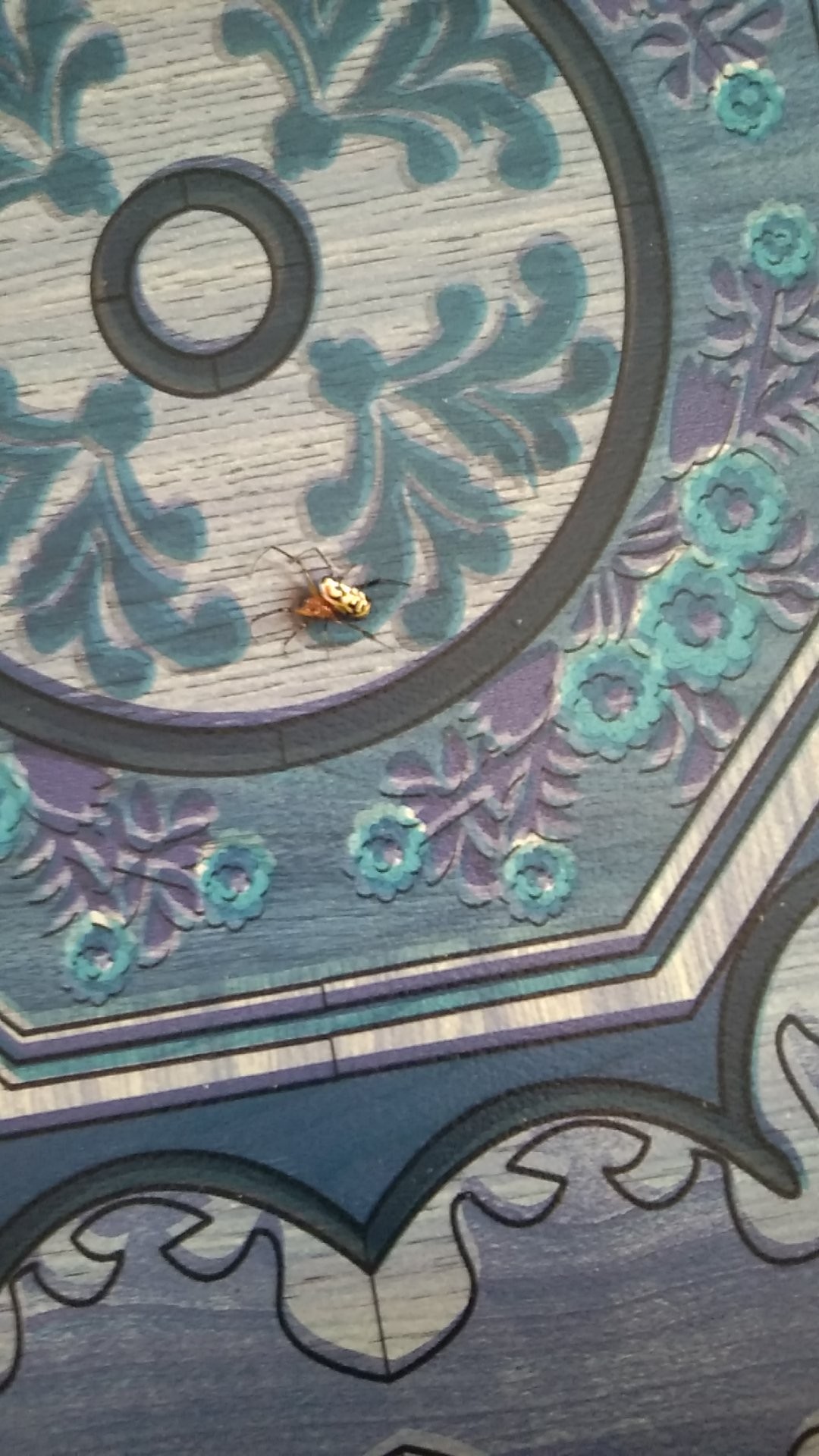
6. Pear-shaped leucauge
Opadometa fastigata, the pear-shaped leucauge, is a species of spiders in the family Tetragnathidae (long-jawed orb weavers). It is found in India to Philippines and Sulawesi. Members of the species have silvery or golden spots on the abdomen. They are elongated spiders with long legs and chelicerae. They are orb web weavers, weaving small orb webs with an open hub and few, wide-set radii and spirals. The webs have no signal line and no retreat. The web is a large horizontally-placed orb structure with a diameter of more than a metre. The entire web is often suspended by several long strands of silk attached to branches and leaves nearby. This species is separated from other Leucauge spiders by its pear-shaped abdomen and its unique fourth leg. In addition to the two rows of curved hairs (characteristic of Leucauge), this leg also has a thick brush of spines which are not present in most other species of Leucauge.
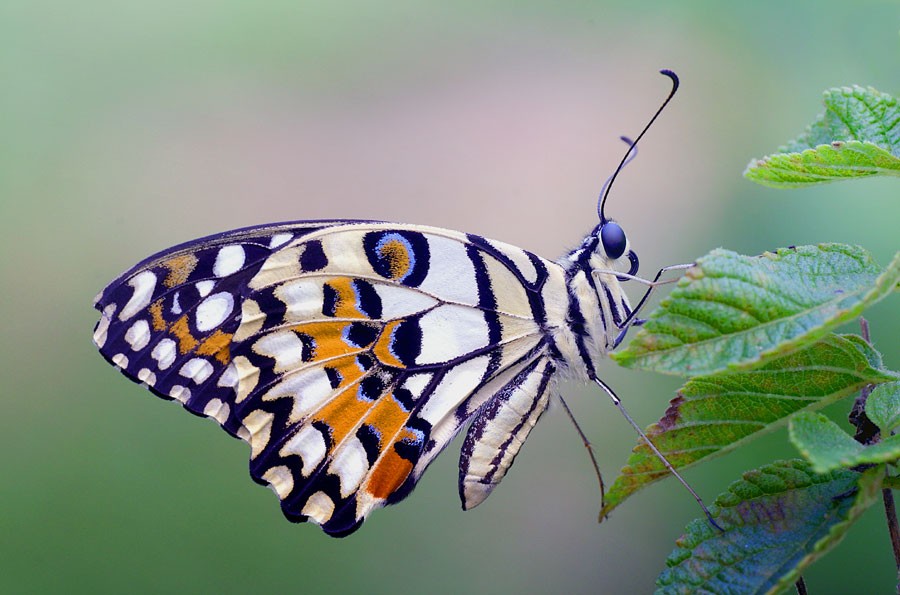
7. Lime swallowtail
The lime swallowtail (Papilio demoleus) has a beautiful black and white pattern, but it's considered a major pest to citrus trees. It feeds on nearly any type of citrus, including oranges and limes. This butterfly's small, green larvae are capable of defoliating an entire nursery grove. They are truly trouble makers in the citrus orchard.
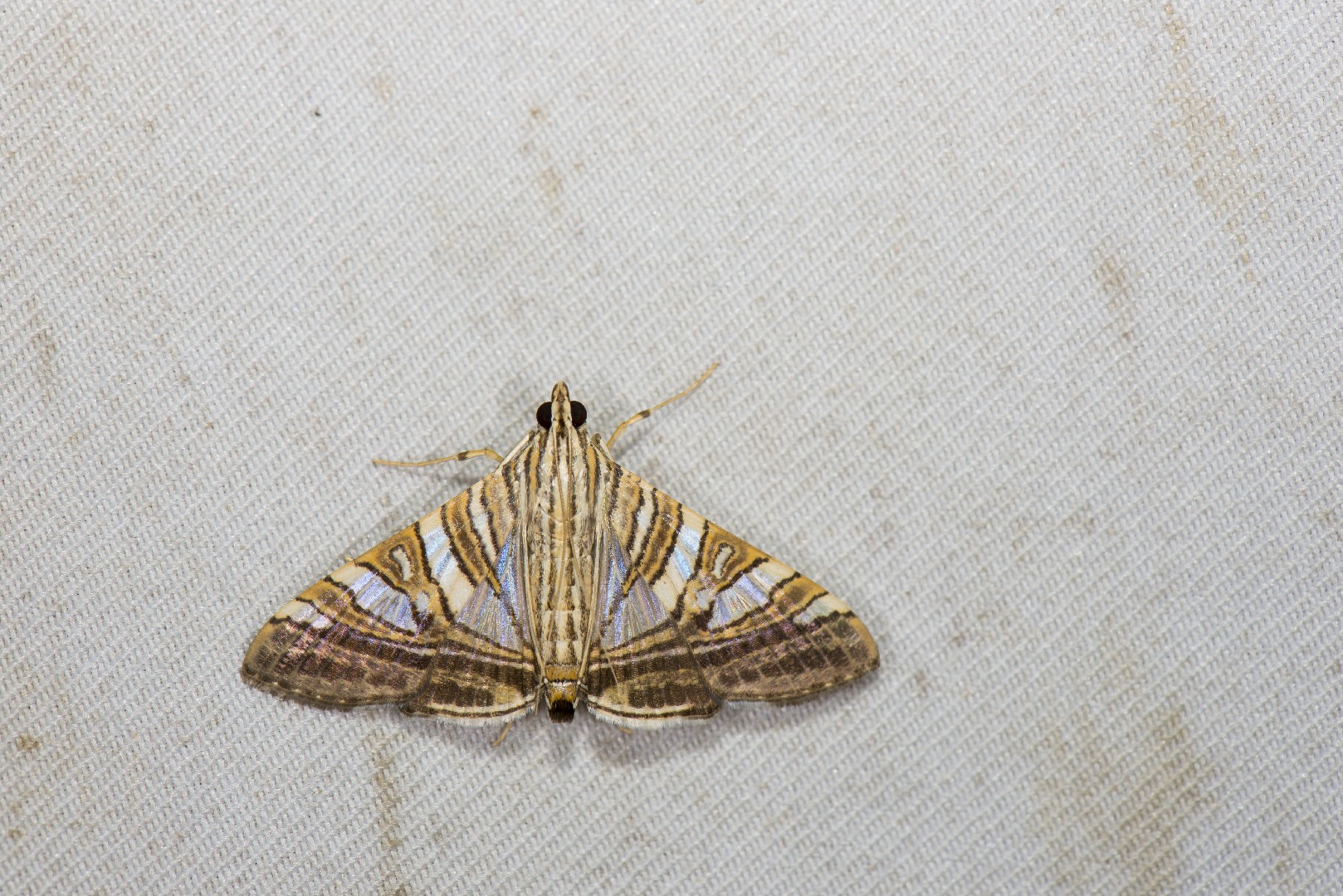
8. Glyphodes stolalis
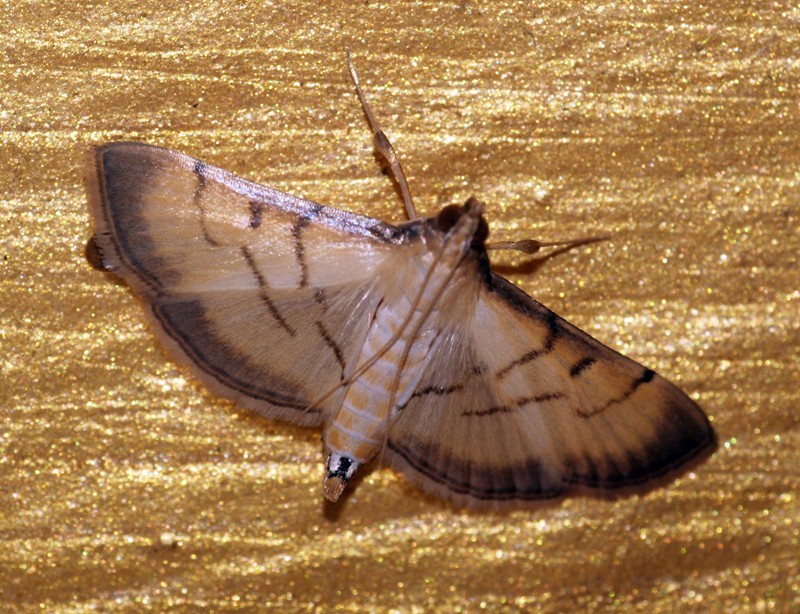
Glyphodes stolalis is a moth in the family Crambidae. It was described by Achille Guenée in 1854. It is found in Cameroon, the Comoros, the Democratic Republic of the Congo (Equateur, Orientale, North Kivu), Kenya, Réunion, Madagascar, the Seychelles (Félicité, Denis, Silhouette, Round, Sainte-Marie, Mahé, Long), South Africa (KwaZulu-Natal), the Gambia, Uganda, Zimbabwe, China, India, Indonesia (Sulawesi), Sri Lanka, Japan, Taiwan, Thailand and Australia (Western Australia, Queensland). The wingspan is about 30 mm. The wings are pale brown with white and purple patches outlined in dark brown.
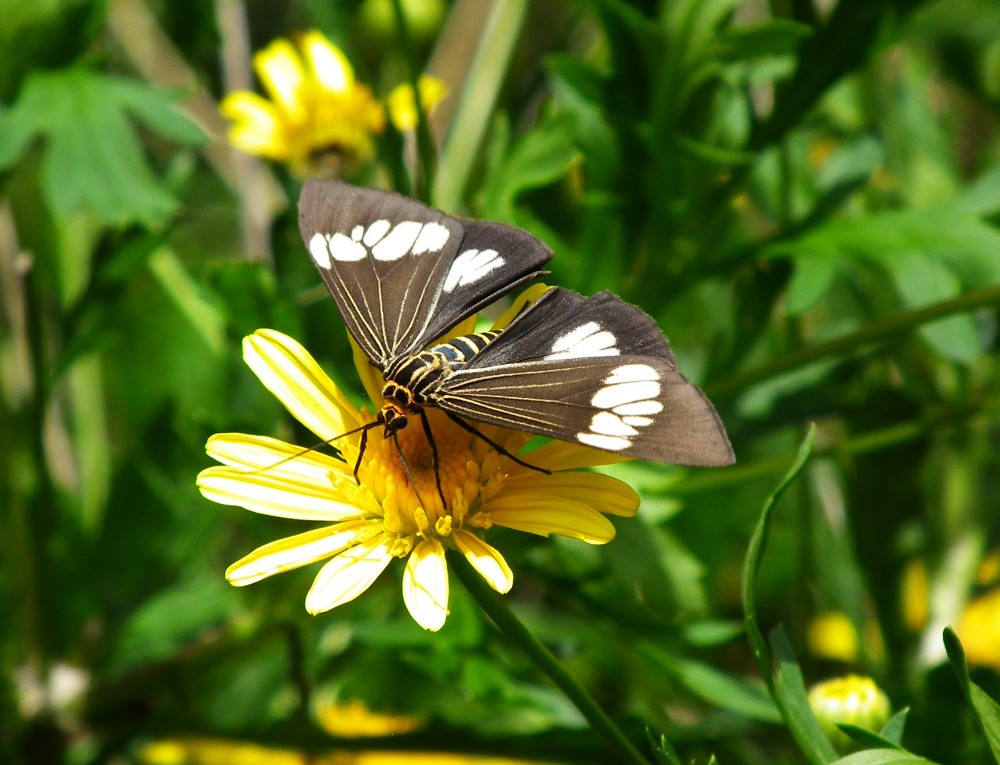
9. Magpie moth
The wingspan is 4.5 - 5 cm.
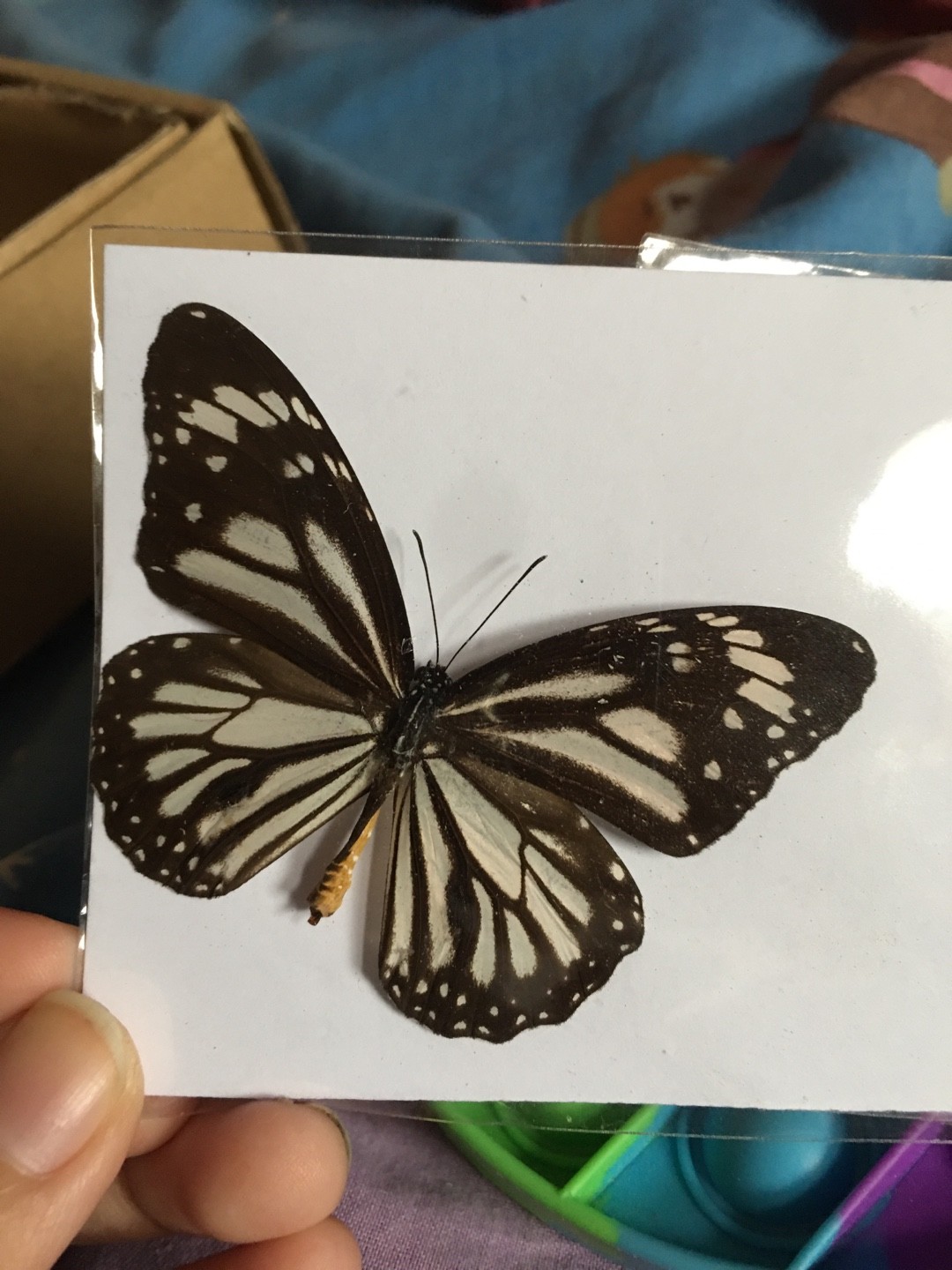
10. Black Veined Tiger
Danaus melanippus, the black veined tiger, white tiger, common tiger, or eastern common tiger, is a butterfly species found in tropical Asia which belongs to the "crows and tigers", that is, the danaine group of the brush-footed butterflies family. It ranges from Assam in eastern India through South-East Asia south to Indonesia, and eastwards to the Philippines and through southern China to Taiwan. It has around 17 subspecies, and its closest relative is the Malay tiger, Danaus affinis.

More







