




Top 9 Most Common Insects in Calbayog City
Insects, with their fascinating array of shapes, colors, and survival tactics, are an integral part of Calbayog City's diverse ecosystems. The varied topography of Calbayog City offers numerous habitats, thus influencing insect diversity vastly. From pollinators to predators, these insects play vital roles in our ecosystem, both as service providers and pests. This 'Top 9 Most Common Insects' list illuminates the delicate relationship between Calbayog City's environment and its insect inhabitants.

Most Common Insects
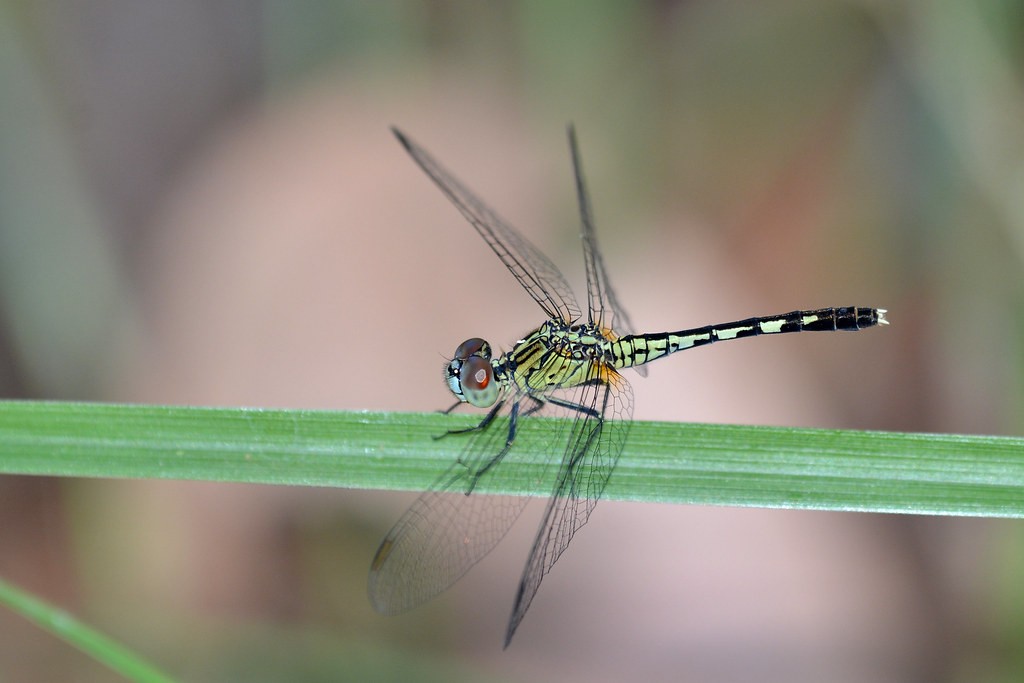
1. Green skimmer
Orthetrum serapia is a medium-sized dragonfly with a wingspan of 60-85mm. Its wings are clear except for a small dark spot at the base of the hindwing. The thorax is greenish to greyish yellow with black markings. The abdomen is black with pale yellow or pale green markings. Orthetrum serapia appears very similar to Orthetrum sabina and can be confused where the range of the two overlap in north-eastern Australia. 

2. Banded coral shrimp
Banded coral shrimp (Stenopus hispidus) is a crustacean that occupies tropical waters in the Atlantic Ocean, the Gulf of Mexico, and reefs surrounding Australia and New Zealand. It acts as a cleaner fish, and removing parasites and fungi from other passing fish. This species is monogamous and mates for life.
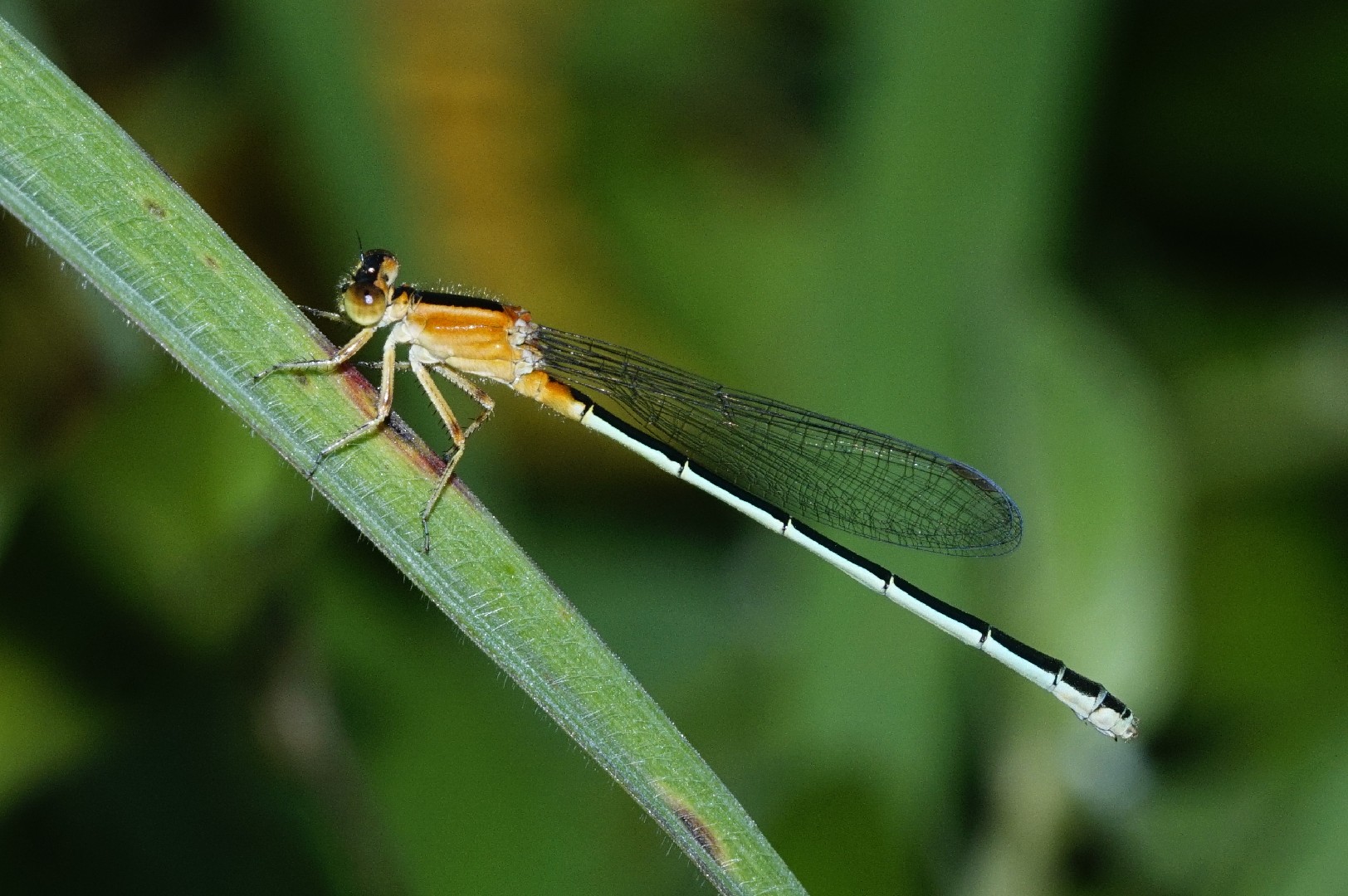
3. Common bluetail
The Senegal Pechlibelle (Ischnura senegalensis) is a dragonfly from the family of the slender dragonflies (Coenagrionidae).
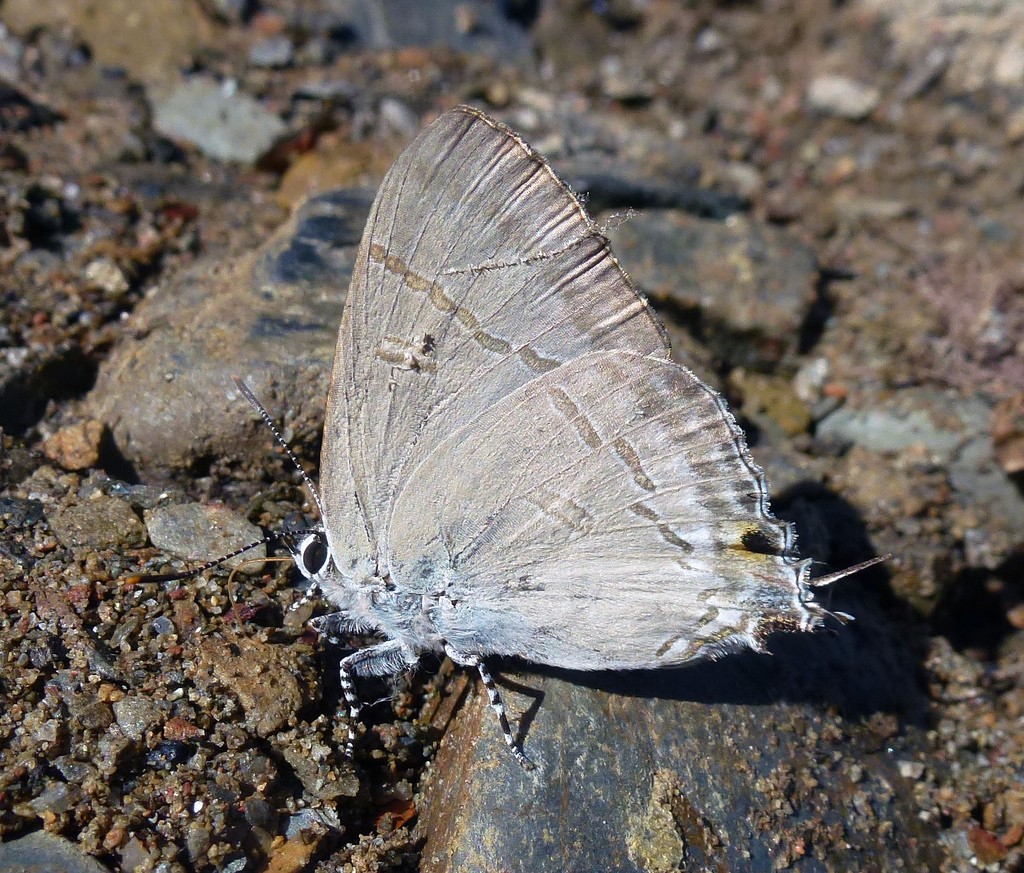
4. Common tit
The underside of both sexes is pale greyish brown. The underside hindwing does not have a spot in the basal area of 7. The butterfly has two tails - a 6 mm long one at V1 and a 5 mm long tail at V2. The markings include: a double bar at end-cell,a regular discal line on the forewing,a broken, less regular line on the hindwing. The male butterfly is pale blue to dark brown above, dark shining purple depending on the light. It has a black border with the upper forewing having a large black discal area of modified scales. The female butterfly is dark brown and its hindwing has a white disconnected discal band above the tornus. The butterfly also has a white-edged tornal black spot in 2.
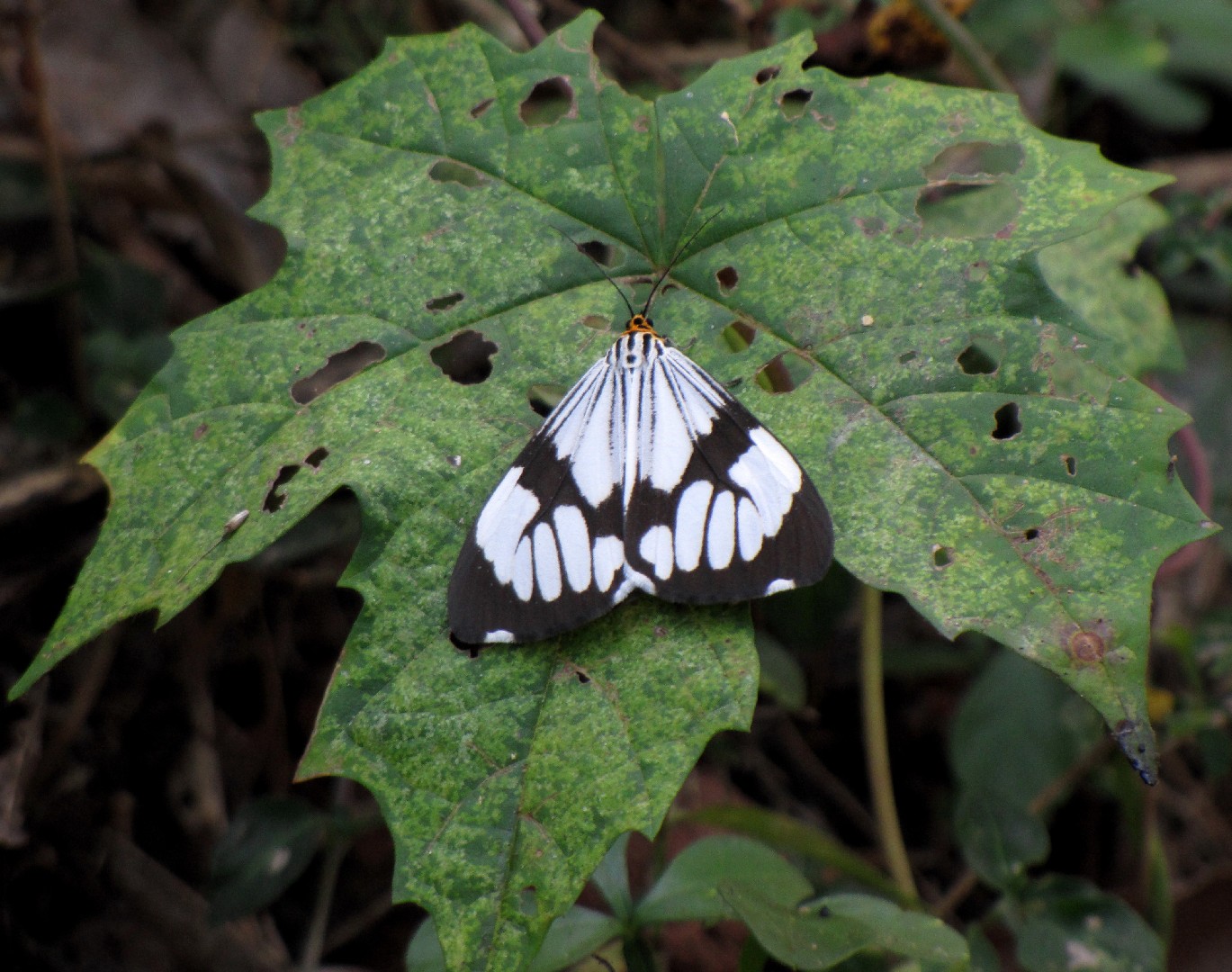
5. Marbled white moth
The male has a large tuft of hair arising from the base of the tibia of the foreleg. It differs from Nyctemera tripunctaria in the lower three spots of the post-medial band of forewing being separated and having another spot below them towards outer angle. Cilia white below the apex and at outer angle. Hindwing with the cilia white below the apex, and in most specimens at anal angle. The Sri Lankan subspecies has black veins 3 and 4 of hindwing and the spots of the postmedial band of forewing are smaller than other subspecies. The larva are purplish and hairy. Anterior somites yellowish. Each somite is black and marked with short dorsal and lateral white streaks. Pupa yellowish and spotted with black.
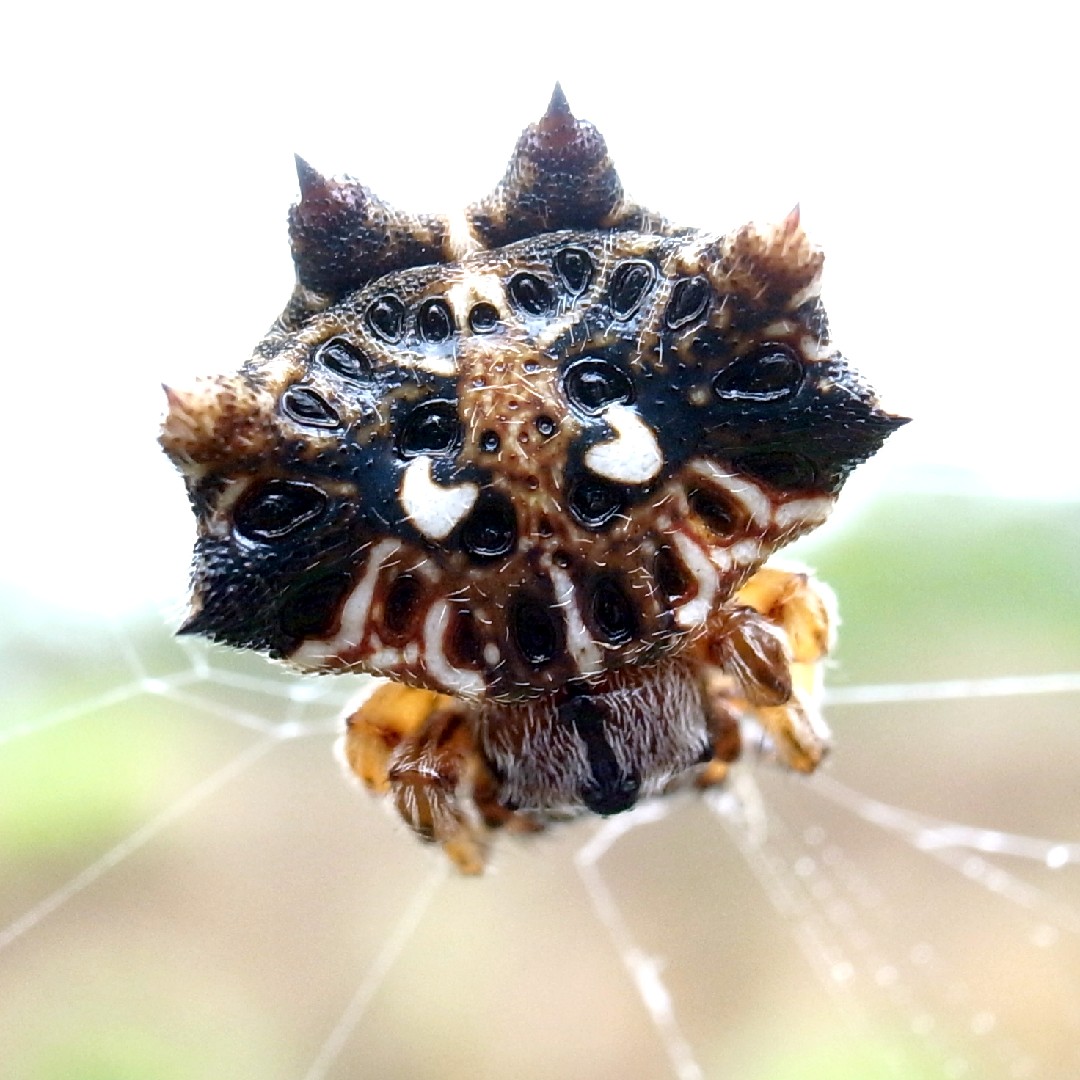
6. Double spotted spiny spider
Females grow to about 6 - 10 mm long, while males reach a size of 3 - 5 mm. Females have six abdominal spines ending in distinct sharp points. Most have two large white spots on the upper surface of their abdomens, which are otherwise mottled with black, brown, and white patterns.
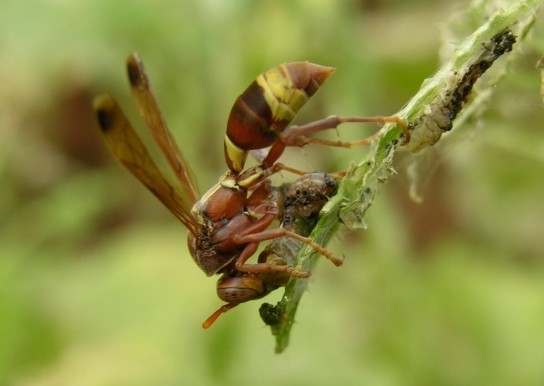
7. Tropical paper wasp
Polistes stigma is a species of paper wasp from Southeast Asia.
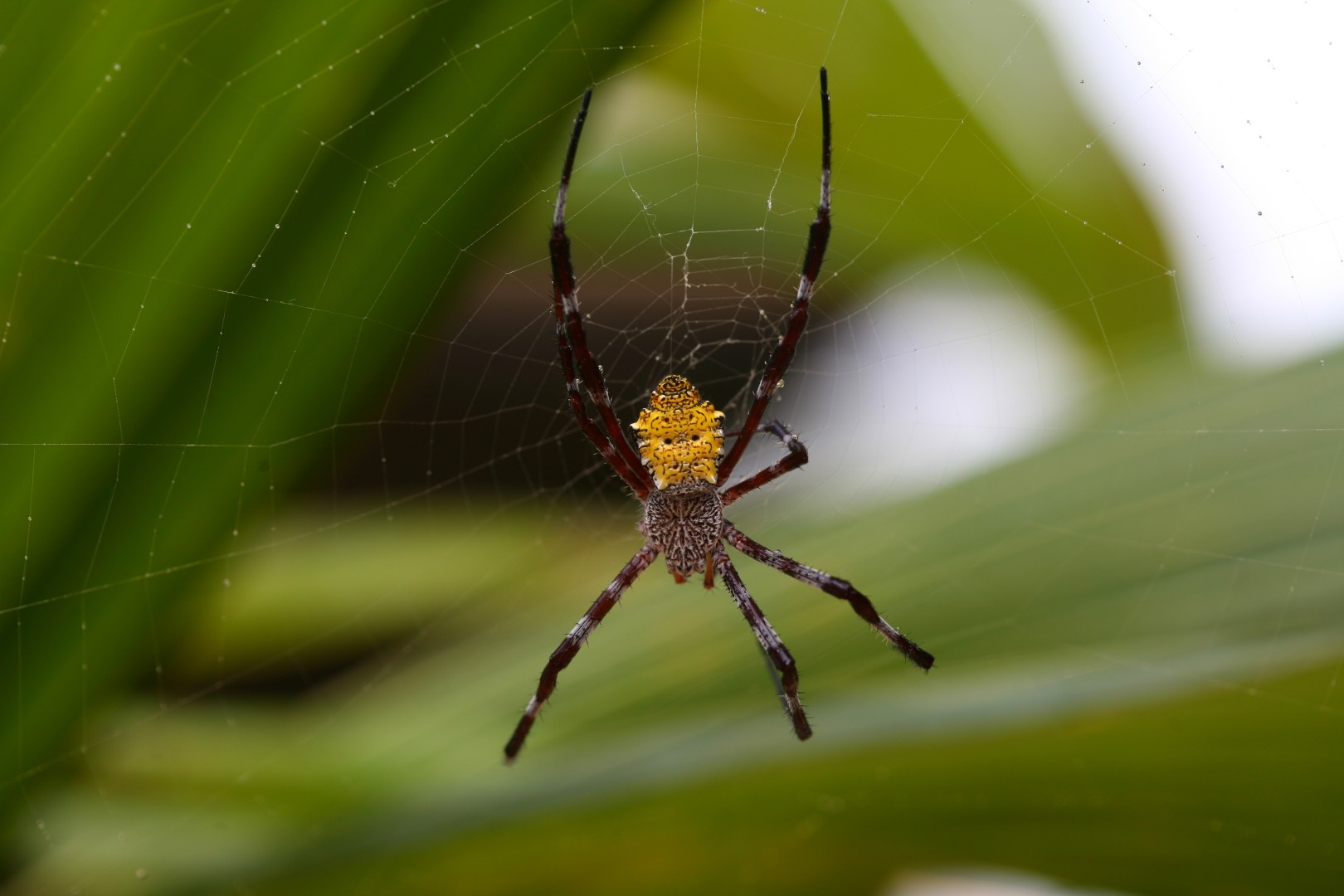
8. Hawaiian garden spider
This species shows an evident sexual dimorphism. The strikingly black and yellow females are 5.1–6.4 cm (2–2.5 in) long, including legs, while the brown males reach only about 1.9 cm (0.75 in). In Hawaii they are referred to as Hawaiian garden spiders. In Hawaii, they are known to be quite communal (see picture), with multi-generational specimens living within close quarters, using the same anchor lines for separate webs. On Guam, where Argiope appensa is ubiquitous, it is frequently visited by Argyrodes argentatus, that steals food from the host. Locals there refer to them as banana spiders. Following the introduction of the brown tree snake and the subsequent extinction or near-extinction of many of the island's small birds, spider populations on Guam exploded in response to decreasing predation and competition. Nature writer David Quammen has called Argiope appensa "almost certainly one of the larger species" which were encountered in vast numbers during his research trip to Guam for the book The Song of the Dodo.
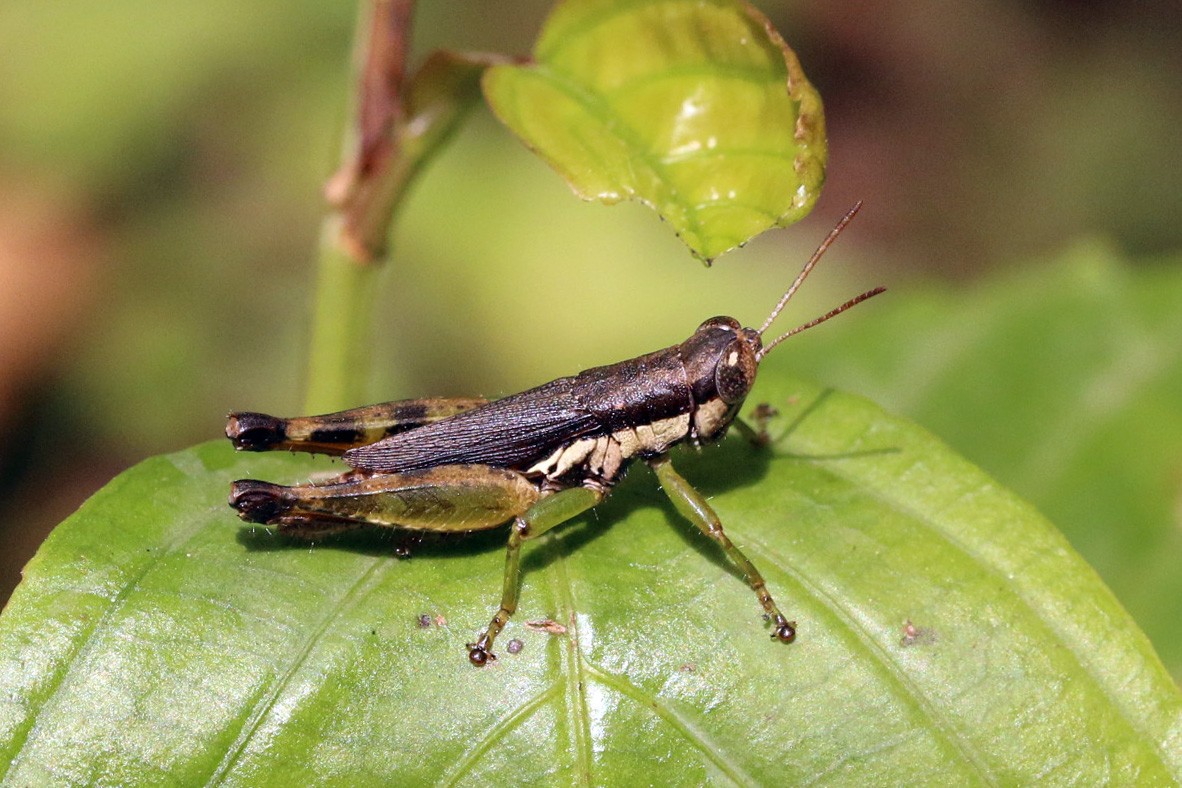
9. Short-winged rice grasshopper
Pseudoxya diminuta is a right-winged insect from the family locusts (Acrididae). The scientific name of this species was first validly published in 1871 by Walker.







