




Top 20 Most Common Insects in Surigao del Sur
Insects, the little marvels of our world, are teeming across every nook and cranny of Surigao del Sur, each differing in features and habitat. Surigao del Sur's geographical diversity, stretching from coastal plains to lush forests, fosters a rich array of these creatures. From pests wreaking havoc to beneficial insects assisting in pollination and waste decomposition - each plays a vital role within their ecosystems. Join us as we explore the top 20 most common insects within Surigao del Sur.

Most Common Insects
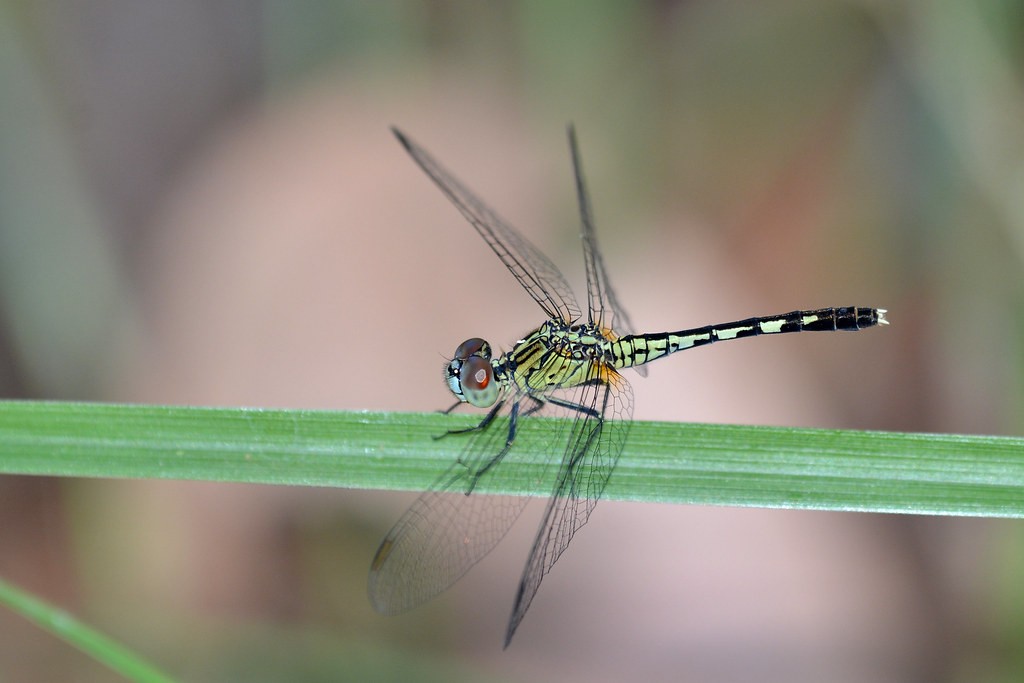
1. Green skimmer
Orthetrum serapia is a medium-sized dragonfly with a wingspan of 60-85mm. Its wings are clear except for a small dark spot at the base of the hindwing. The thorax is greenish to greyish yellow with black markings. The abdomen is black with pale yellow or pale green markings. Orthetrum serapia appears very similar to Orthetrum sabina and can be confused where the range of the two overlap in north-eastern Australia. 
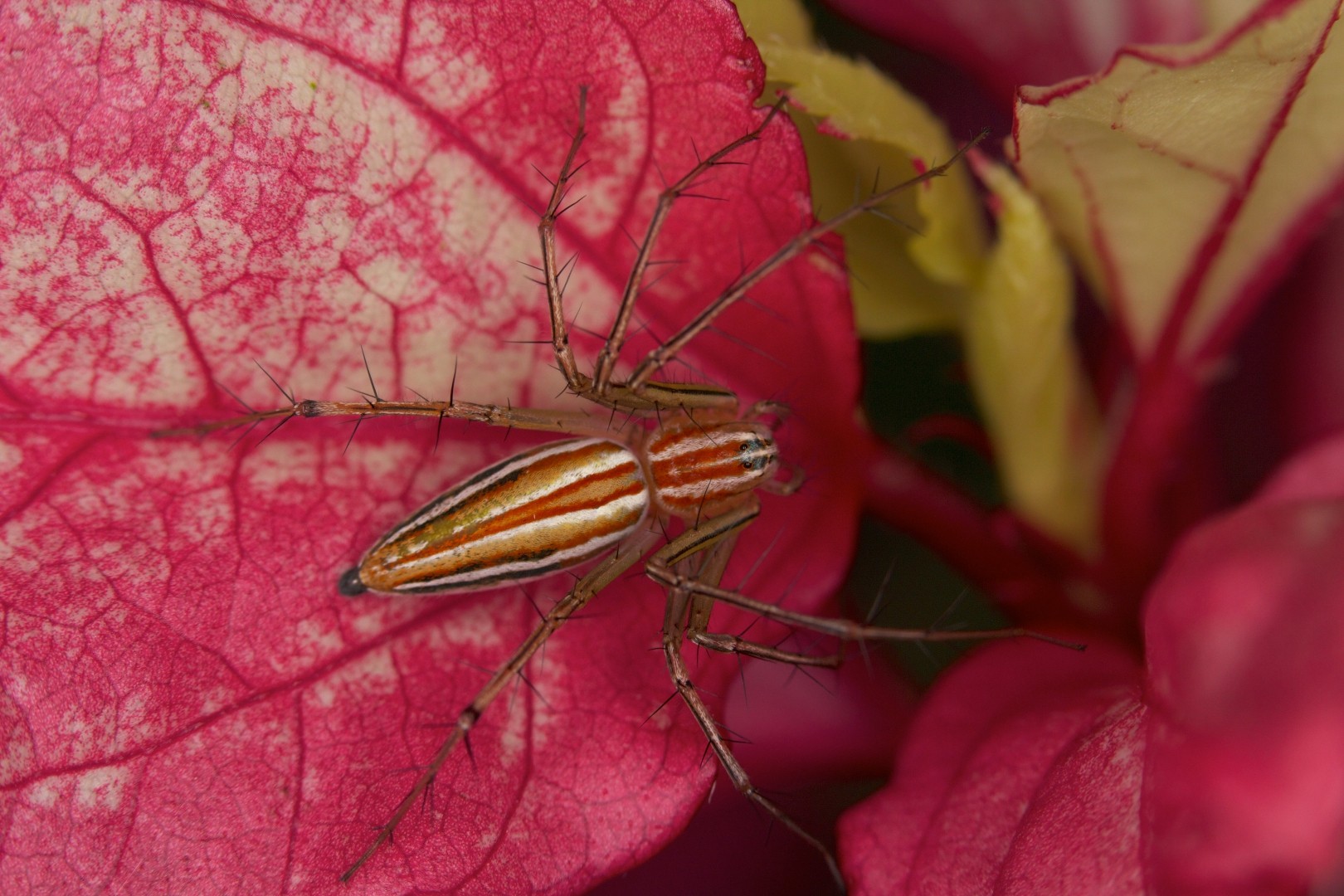
2. Lean lynx spider
Oxyopes macilentus, sometimes known as the lean lynx spider, is a species of lynx spiders from East Asia, South Asia, Southeast Asia, and northern Australia. They are active predators, hunting invertebrates (including other spiders) among vegetation. They are especially common in grassy areas and rice fields. Their bodies are characteristically long and thin, about four times as long as it is wide. Their body color ranges from pale white to yellow, orange, or green; with a pattern of black, orange, and white longitudinal lines. Females have a maximum body length of 10 mm (0.39 in), while males grow to 9 mm (0.35 in). The species was first described in 1878 by the German arachnologist Ludwig Carl Christian Koch. The specific name is from Latin macilentus ("lean" or "thin"), in reference to the spider's body. It is classified under the genus Oxyopes.
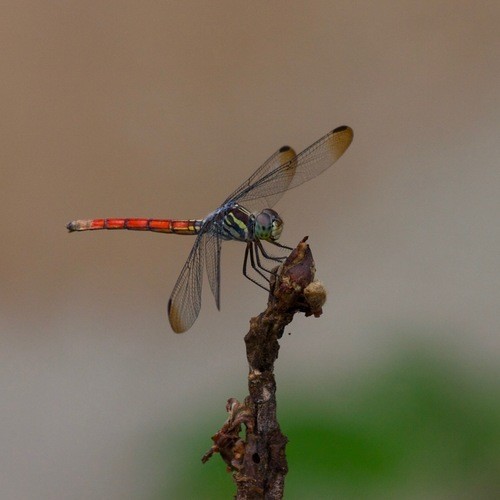
3. Asiatic blood tail
The species is on the IUCN Red List as not endangered, year of assessment 2009.
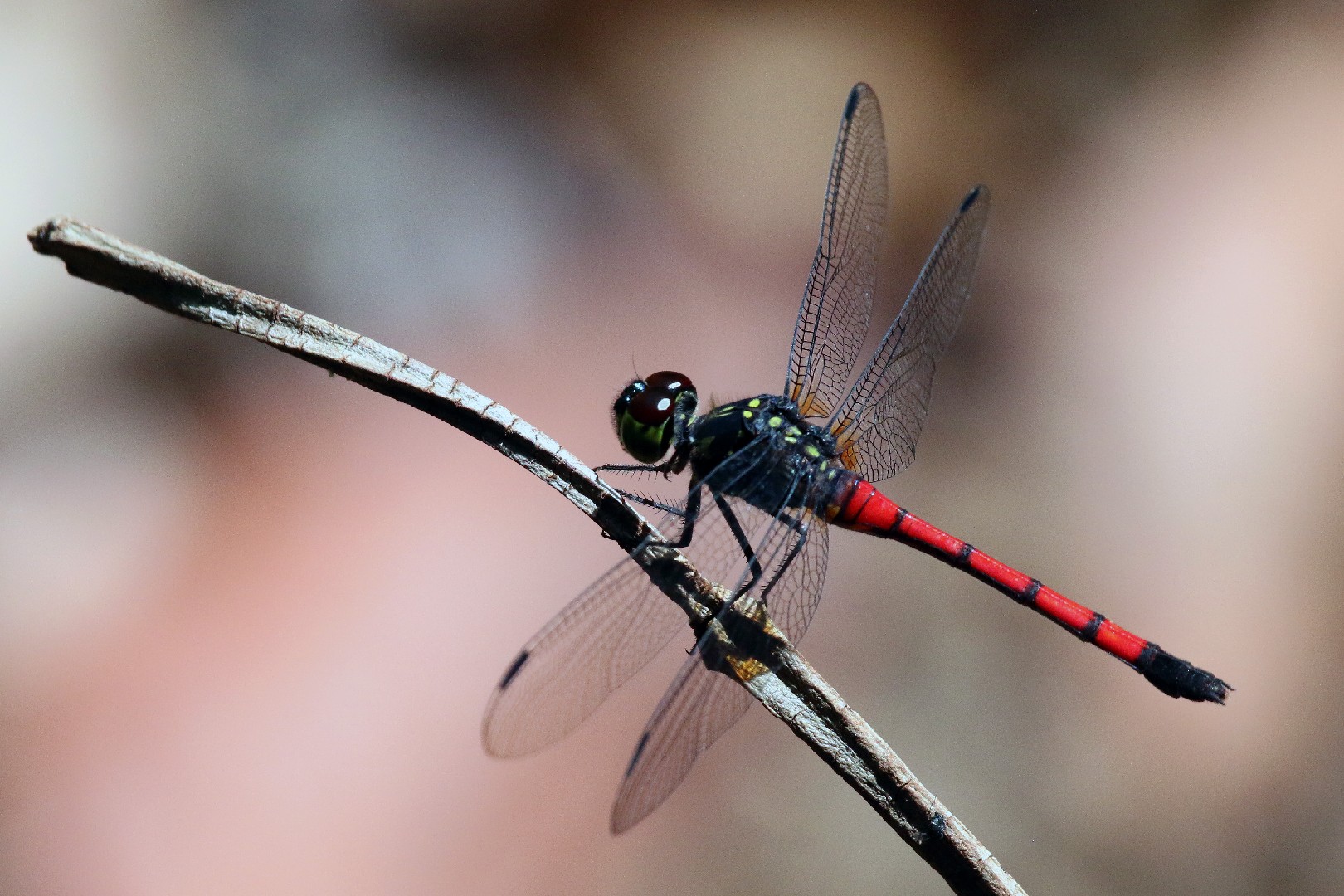
4. Grenadier
The male of this species is generally 3.5 - 4 cm long, the hindwing about 3 - 3 cm long. The thorax is metallic green with yellow mottling. The eyes are brown and yellow. The abdomen is mostly red with a black tip. The abdomen of the female is duller in color.
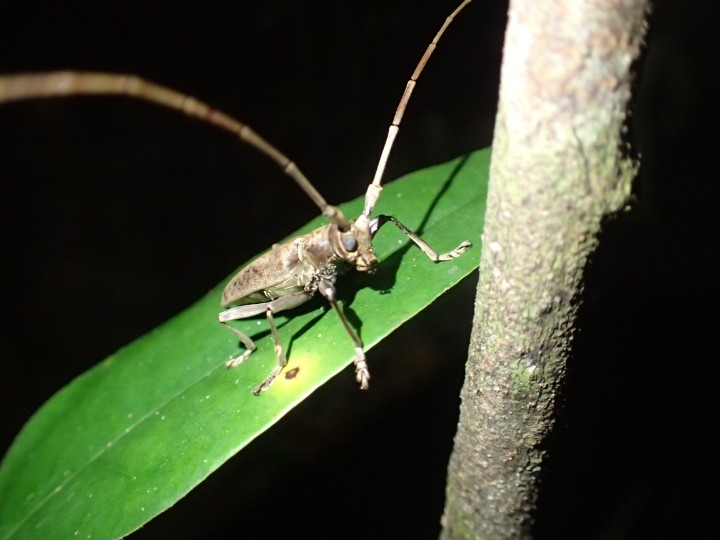
5. Acalolepta rusticatrix
Acalolepta rusticatrix is a species of beetle in the family Cerambycidae. It was described by Johan Christian Fabricius in 1801, originally under the genus Lamia. It is known from Myanmar, India, the Philippines, Malaysia, Sumatra, Sri Lanka, Java, Taiwan, Indonesia, Sulawesi, and Vietnam.

6. Black soldier fly
The larvae of the black soldier fly are voracious eaters, making them excellent composters of a wide range of decomposing organic matter, including food waste and feces. The adults do not eat food - they only consume water and nectar and live off of the nutrients consumed as larvae, so they are not household pests. The larvae have been used as an important protein source for both animals and humans.

7. Chocolate argus
Junonia hedonia is a butterfly from the Nymphalidae family. The scientific name of the species was first validly published in 1764 by Carl Linnaeus.
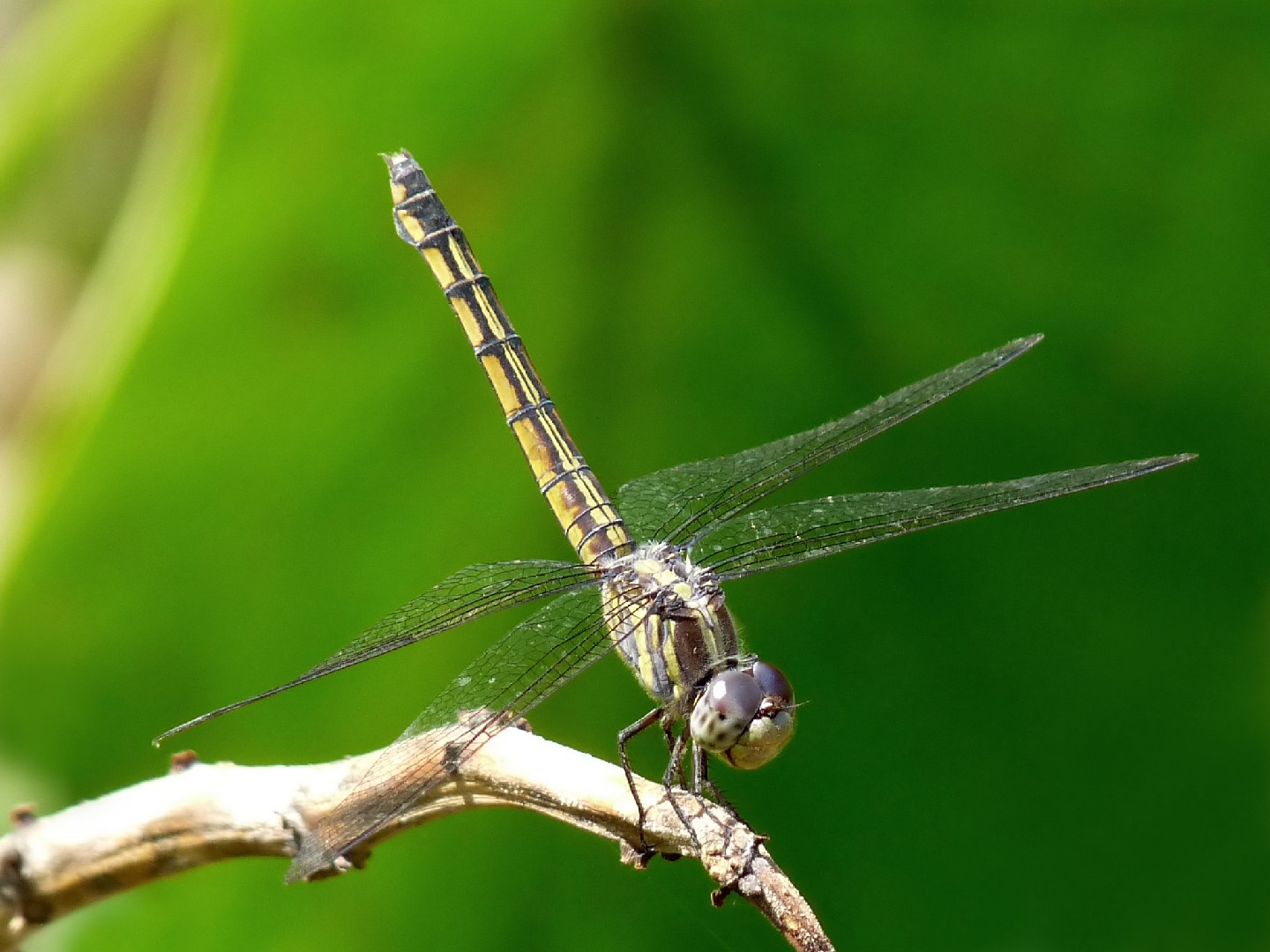
8. Yellow-tailed ashy skimmer
The species is on the IUCN Red List as not endangered, year of assessment 2010.

9. Blue moon butterfly
Hypolimnas bolina, the great eggfly, common eggfly or in New Zealand the blue moon butterfly is a species of nymphalid butterfly found from Madagascar to Asia and Australia.
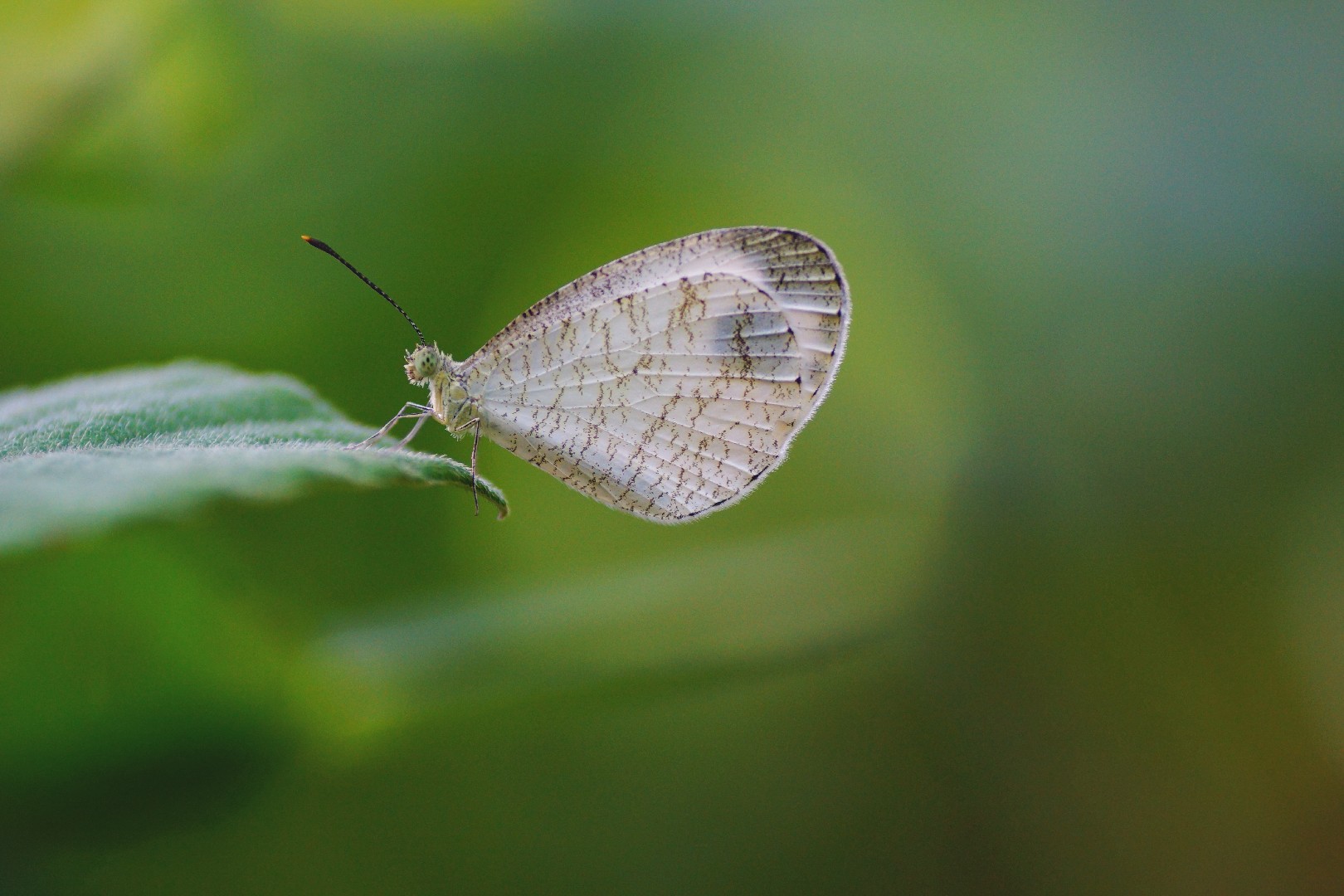
10. Psyche
Upperside is white,base of wings are very slightly powdered with minute black scales.The costa of forewing is speckled obscurely with black; apex black, the inner margin of this inwardly angulate; a very large somewhat pear-shaped post-discal spot also black. Hindwing is white,in most specimens an obscure, extremely slender, terminal black line. Underside is white; costal margin and apex of forewing broadly, and the whole surface of the hindwing irrorated (speckled) with transverse, very slender, greenish strigae and minute dots; these on the hindwing have a tendency to form sub-basal, medial and discal obliquely transverse obscure bands; the postdiscal of forewing is black,spot as on the upperside; terminal margins of both forewings and hindwings with minute black, short, transverse slender lines at the apices of the veins, that have a tendency to coalesce and form a terminal continuous line as on the upperside. Antennae dark brown spotted with white, head slightly brownish, thorax and abdomen white. Female is similar as male, the black markings on the upperside of the forewing on the whole slightly broader, but not invariably so. Wingspan is 2.5 - 5 cm. Larva is green with a pale glaucous tinge about the bases of the legs and slightly hairy. Pupa sometimes green, but more often of a delicate pink shade.


More