




Top 20 Most Common Insects in Gdansk
Insects, remarkable for their diverse forms and adaptive skills, are abundant inhabitants of Gdansk. Enriched by a variety of geographical locations, Gdansk offers unique environments fostering a diversified insect population. These tiny organisms play essential roles in our ecosystem, acting as pollinators or natural pest controllers, thus impacting agriculture, biodiversity, and even human health. Our list of top 20 most common insects will offer an insightful exploration of these crucial and fascinating inhabitants of Gdansk.

Most Common Insects
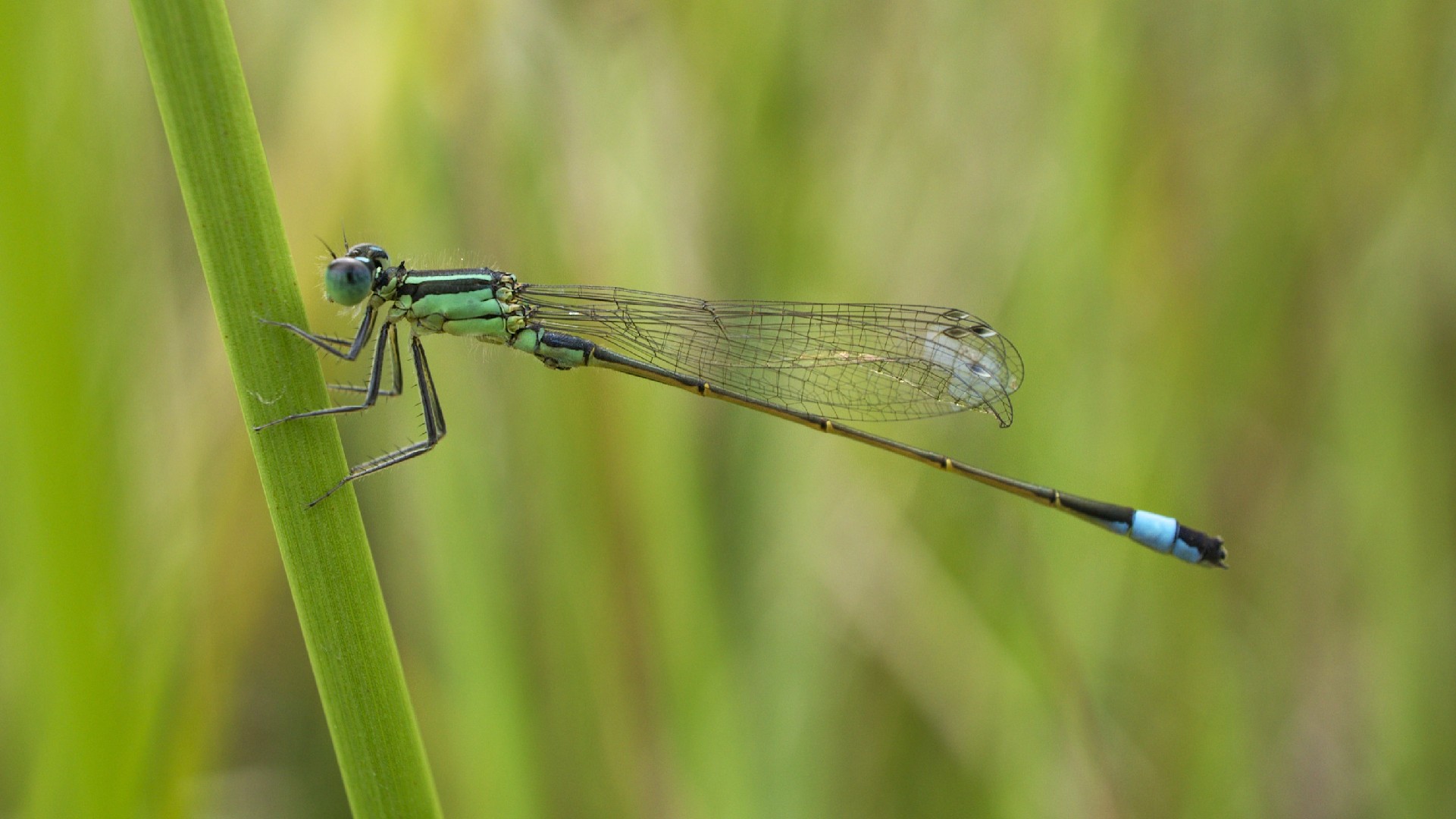
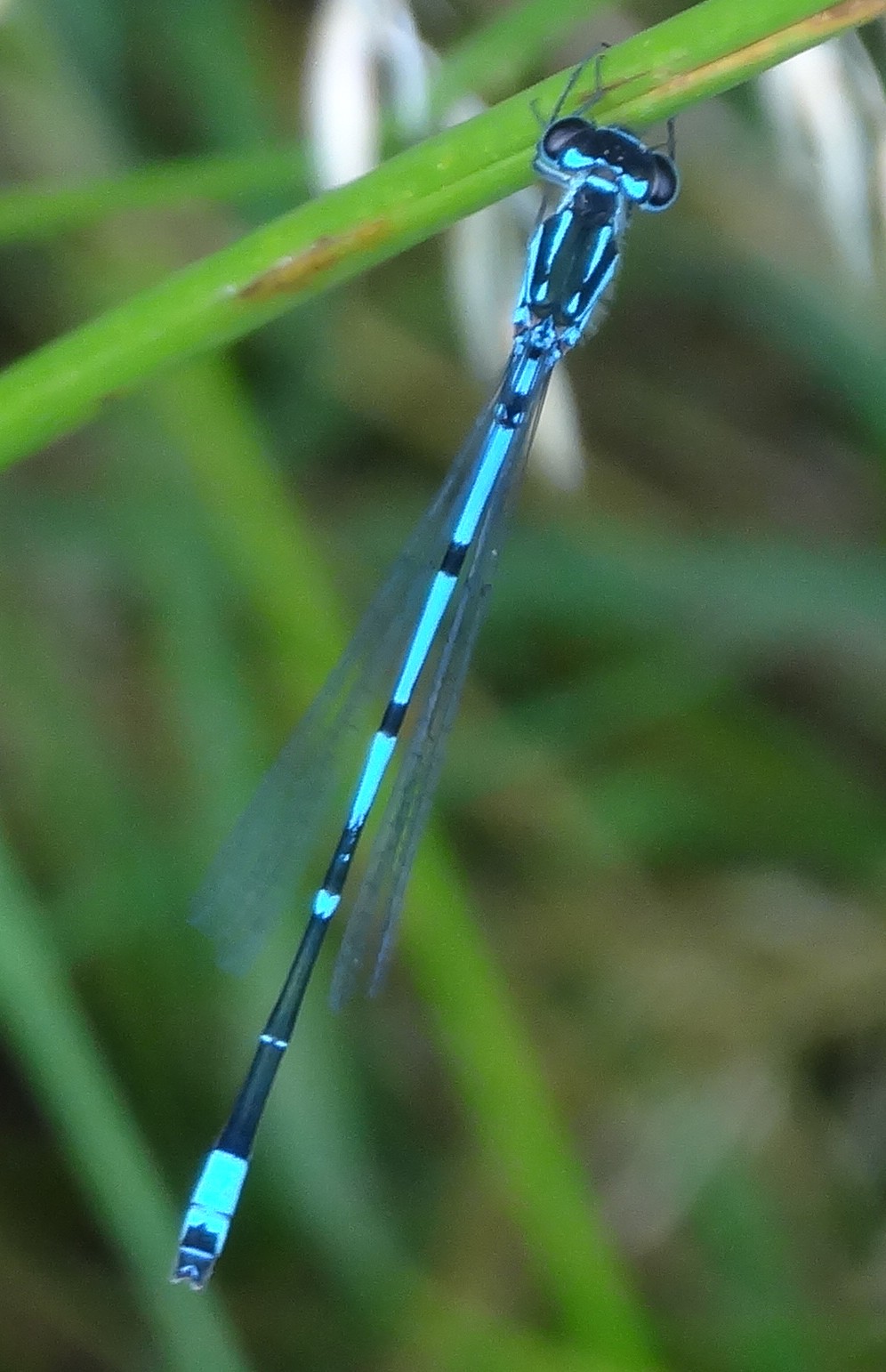
1. Blue-tailed damselfly
Ischnura elegans can reach a body length of 2.5 - 3.5 cm and a wingspan of about 3.5 cm. Hindwings reach alength of 1.4 - 2 cm. Adult male blue-tailed damselflies have a head and thorax patterned with blue and black. There is a bi-coloured pterostigma on the front wings. Eyes are blue. They have a largely black abdomen with very narrow pale markings where each segment joins the next. Segment eight, however, is entirely pale blue. At rest, the wings of most damselfly species are held back together, unlike dragonflies, which rest with their wings out flat. The thorax of juvenile males has a green tinge. Female blue-tailed Damselflies come in a variety of colour forms.Juveniles may be salmon pink, form rufescens; violet, form violacea and a pale green form. The colour darkens as the damselfly ages. Mature females may be blue like the male, form typica; olive green thorax and brown spot, form infuscans or pale brown thorax and brown spot, form infusca-obseleta. 
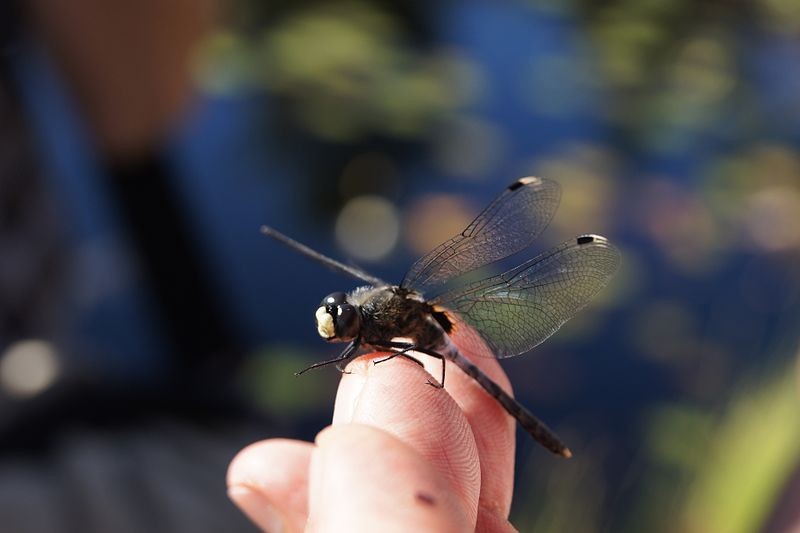
2. Eastern white-faced darter
Leucorrhinia albifrons, the dark whiteface, is a species of dragonfly in the family Libellulidae. It is found in Austria, Belarus, the Czech Republic, Denmark, Estonia, Finland, France, Germany, Kazakhstan, Latvia, Lithuania, the Netherlands, Norway, Poland, Russia, Slovakia, Sweden, Switzerland, and Ukraine. Its natural habitats are shrub-dominated wetlands, swamps, intermittent freshwater lakes, and freshwater marshes. It is threatened by habitat loss.

3. Common blue damselfly
The common blue damselfly is named for the delicate blue color of the males, while the female is a pale tan. These insects are a crucial part of the ecology of freshwater habitats since they are mid-level predators that eat small larvae and invertebrates. In turn, they're preyed on by fish and larger larvae. This insect is highly susceptible to pesticide contamination of these freshwater habitats.

4. Common spreadwing
In Lestes sponsa the anal appendage is black with the superior appendage (which are the ones on the outside) with two internal teeth. The inferior appendage is elongated and cylindrical. Lestes sponsa is a typical member of the genus with a green metallic body and wings held away from the body at rest. The abdomen is 2.5 - 3.5 cm long and the wings are 1.9 - 2.5 cm long. Mature males have a powder blue colour on the prothorax and on segments 1–2 and 9–10 of the abdomen. Mature males have blue eyes. Females lacks the blue colour. Immature males also lack the blue pruinescence and have greeny brown eyes. The pterostigmata of immature males are almost white.
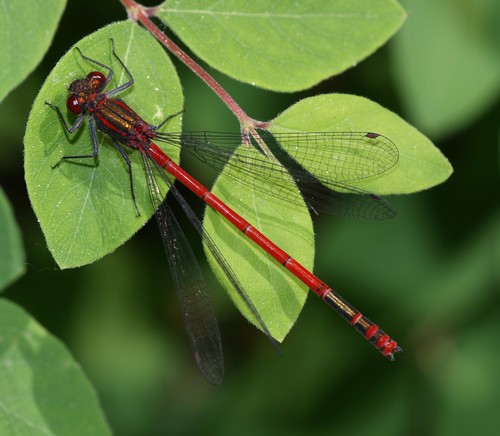
5. Large red damselfly
The large red damselfly is large and red as its name suggests, or at least the male of the species is; the female is almost completely black. The larvae develop in still water and feed on tiny crustaceans and other insect larvae, helping to keep population numbers balanced. This species is one of the first damselflies to emerge in spring.
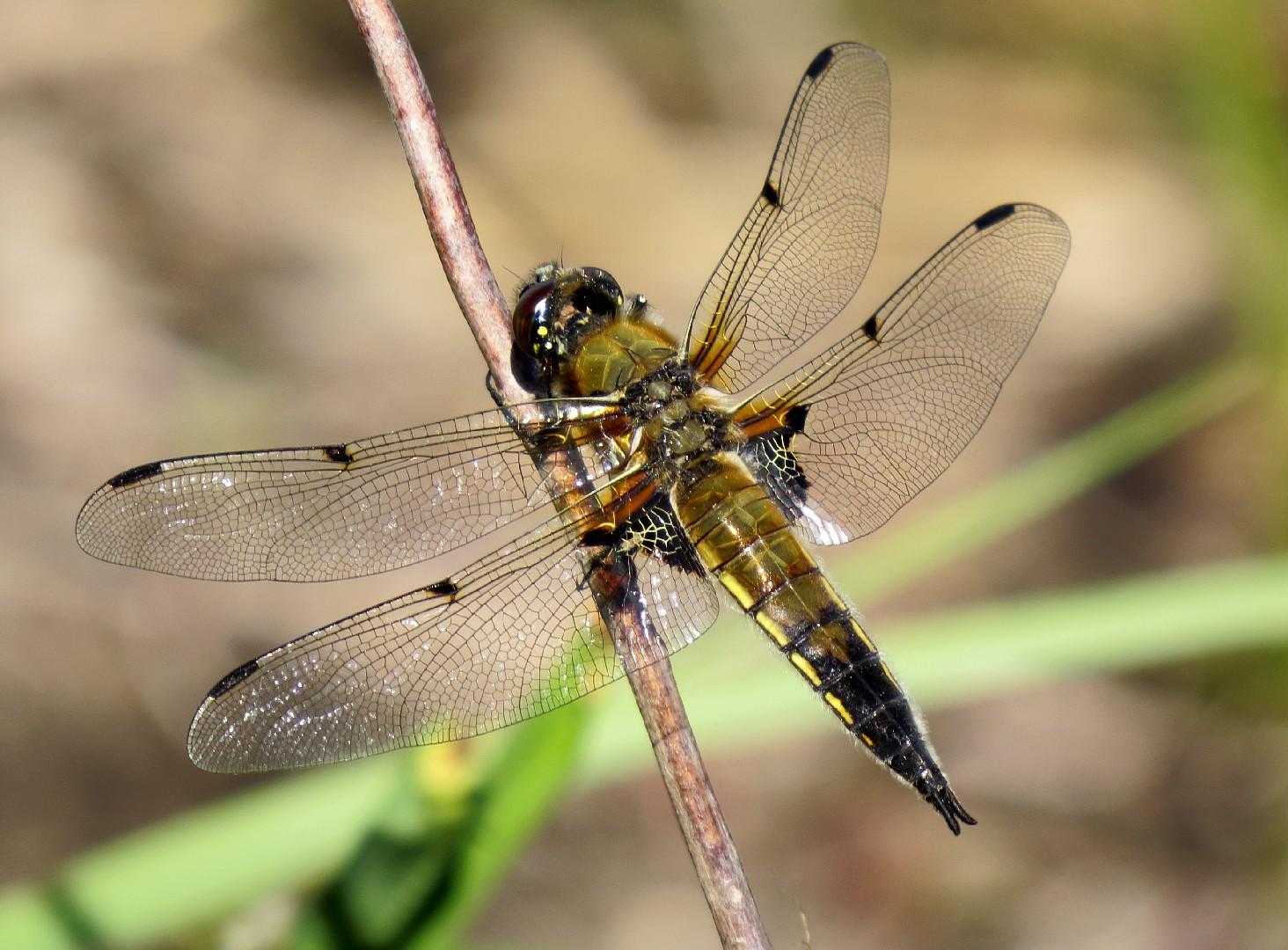
6. Four-spotted chaser
The four-spot (Libellula quadrimaculata) is one of the large dragonflies and reaches a body length of 4 to 4.5 centimeters with wingspan between 7 and 8.5 centimeters. Each of the four wings has a striking dark spot in the area of the distinctive transverse vein (nodus), after which the species received both its scientific and its trivial name. This dragonfly is also known for its mass migrations in swarms of impressive dimensions. The entire stock is not considered to be threatened.
7. Red-eyed damselfly
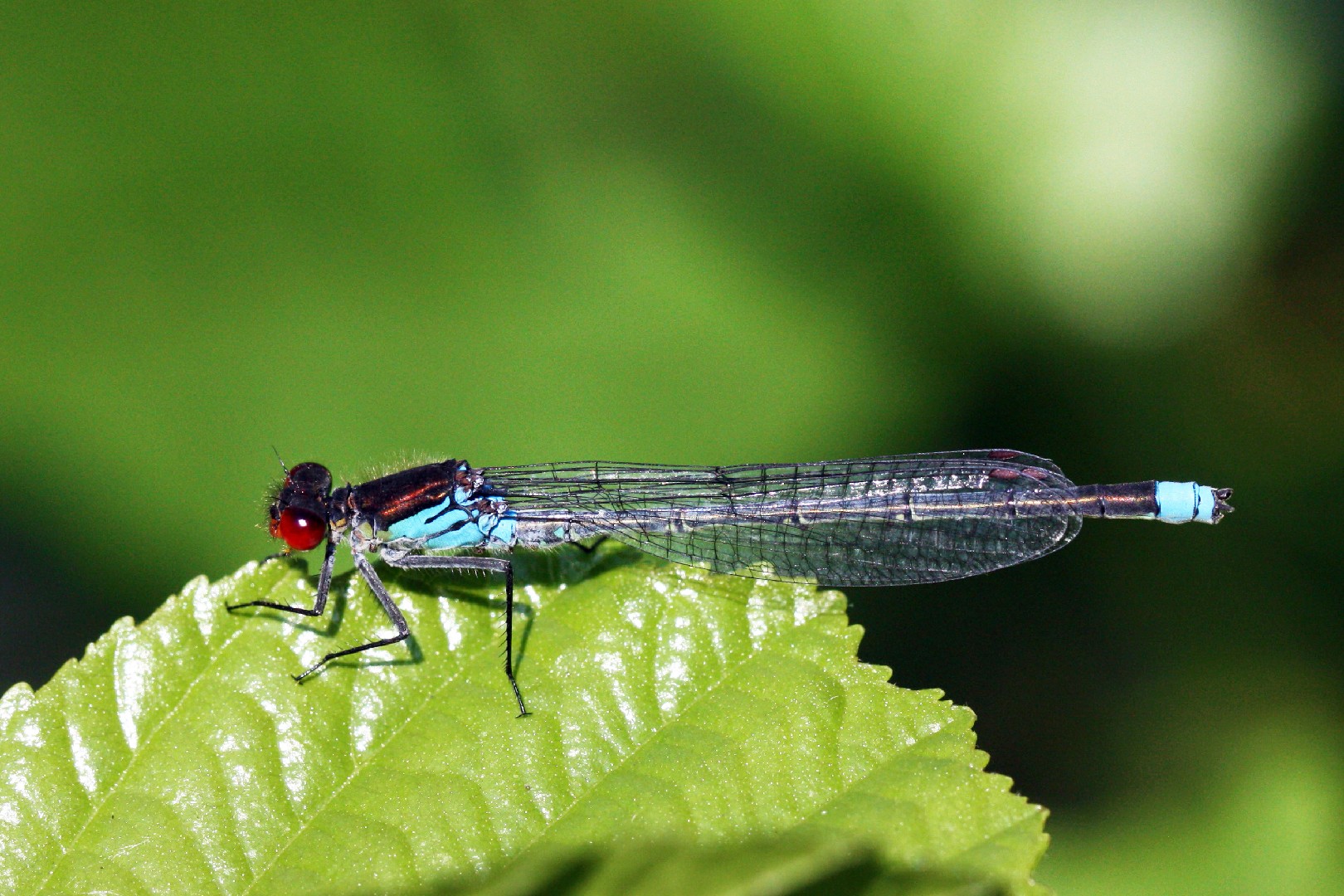
The Great Pomegranate (Erythromma najas) is a dragonfly of the family of the Slate (Coenagrionidae). From its distribution, it is considered as a Euro-Siberian Faunenelement.

8. Downy emerald
It is metallic green and bronze in color, and its thorax is coated with fine hairs, hence its name. Like most other emeralds, the downy emerald has bright shiny green eyes. Adults are around 5 cm in length, and are in flight from May through July each year.
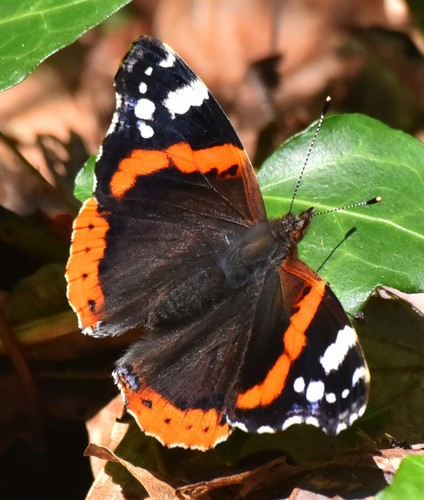
9. European peacock
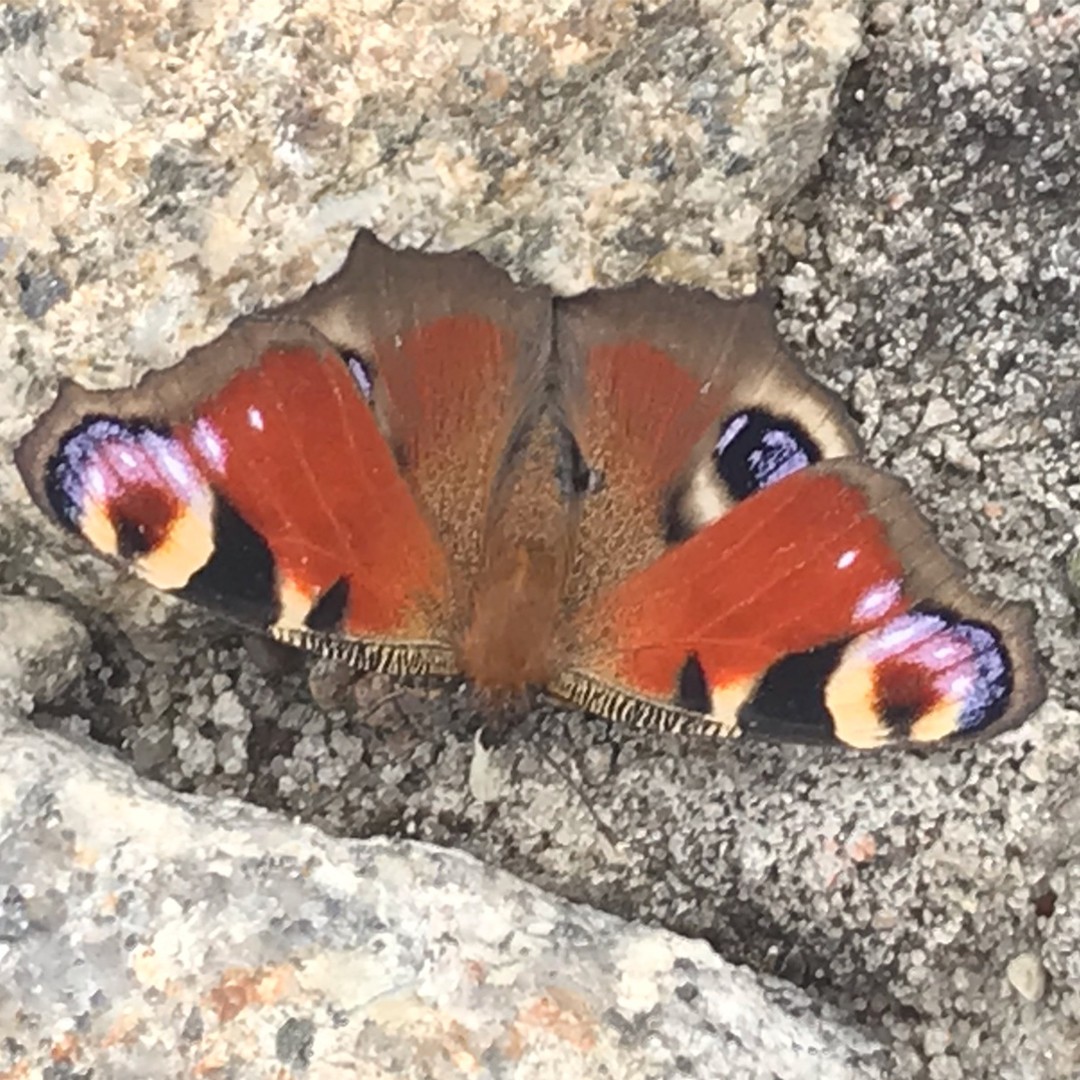
European peacock (Aglais io) is a colorful butterfly that resides in temperate Asia and Europe – hence its common name. Its prominent eyespots deter would-be predators, who mistake them for the eyes of a bigger, more dangerous species. In recent years, this species appears to be expanding its range into previously uncolonized territory.
10. Ruddy darter
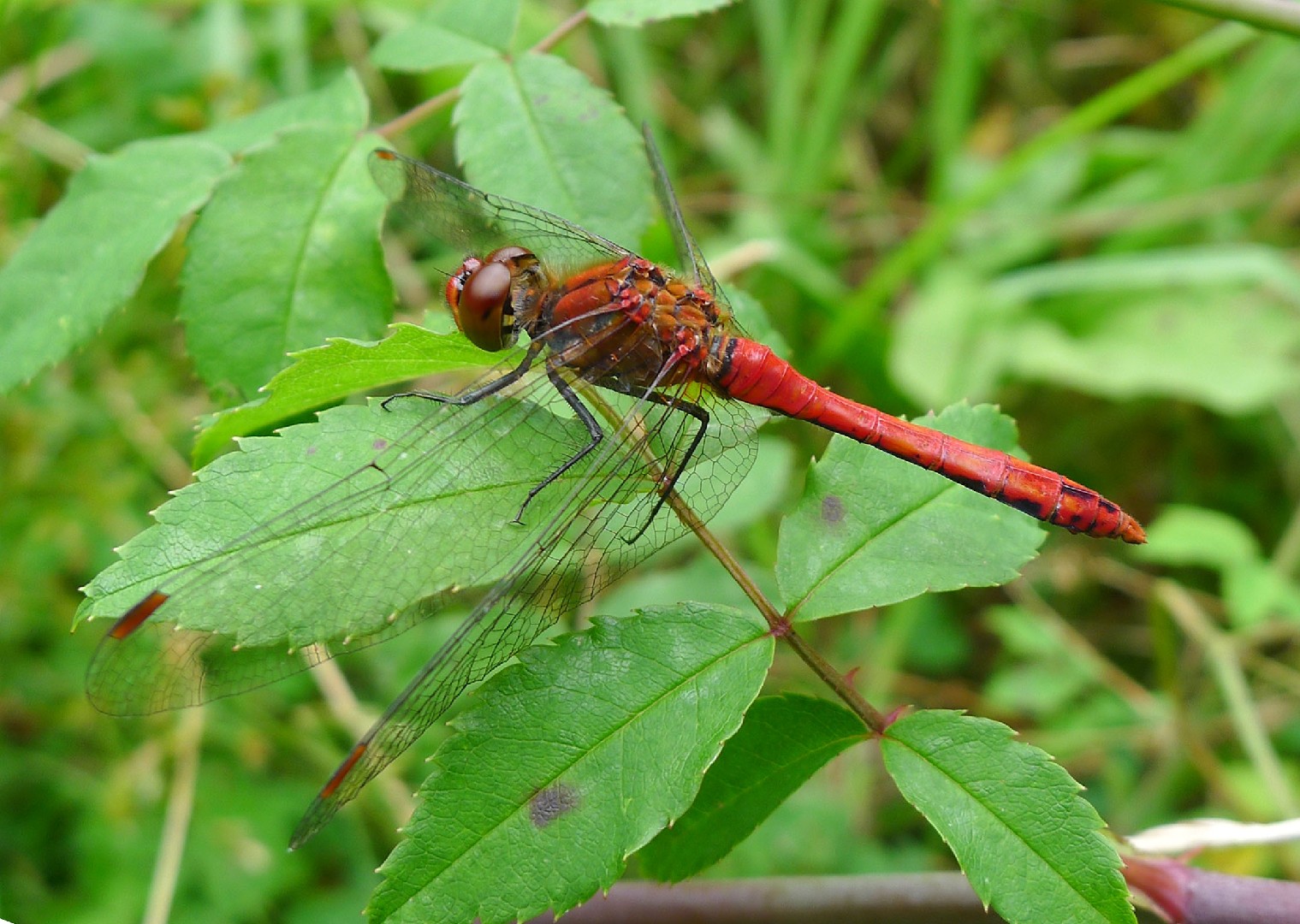
The ruddy darter can reach a body length of 3.5 - 3.5 cm and attains a wingspan of up to 6 cm. These dragonflies are smaller than the Common Darter. They have black legs and the wings show a brown pterostigma and an orange color at the base of the wings. Two evident black marks are located on segments S8 and S9 of the abdomen. The head, thorax and abdomen of the mature male are vivid red, while the female is slightly smaller, and is a golden-yellow colour with black markings. The blood-red color of the males develop with maturity, together with a red frons and a red-brown thorax. The abdomen widens for the final third of its length and shows a marked pinched section where it joins the thorax.
More







