




Top 20 Most Common Insects in Riyadh
Welcome to a buzzing world of insects in Riyadh! These diverse creatures, adapted to its shifting landscapes from desert sands to verdant parks, play crucial eco-roles. From helpful pollinators to pesky invaders, they impact our flora and fauna dramatically. Today, we explore the 20 most common insects here, showcasing how each reflects Riyadh's complex ecosystems. Get ready for an entomological adventure!

Most Common Insects
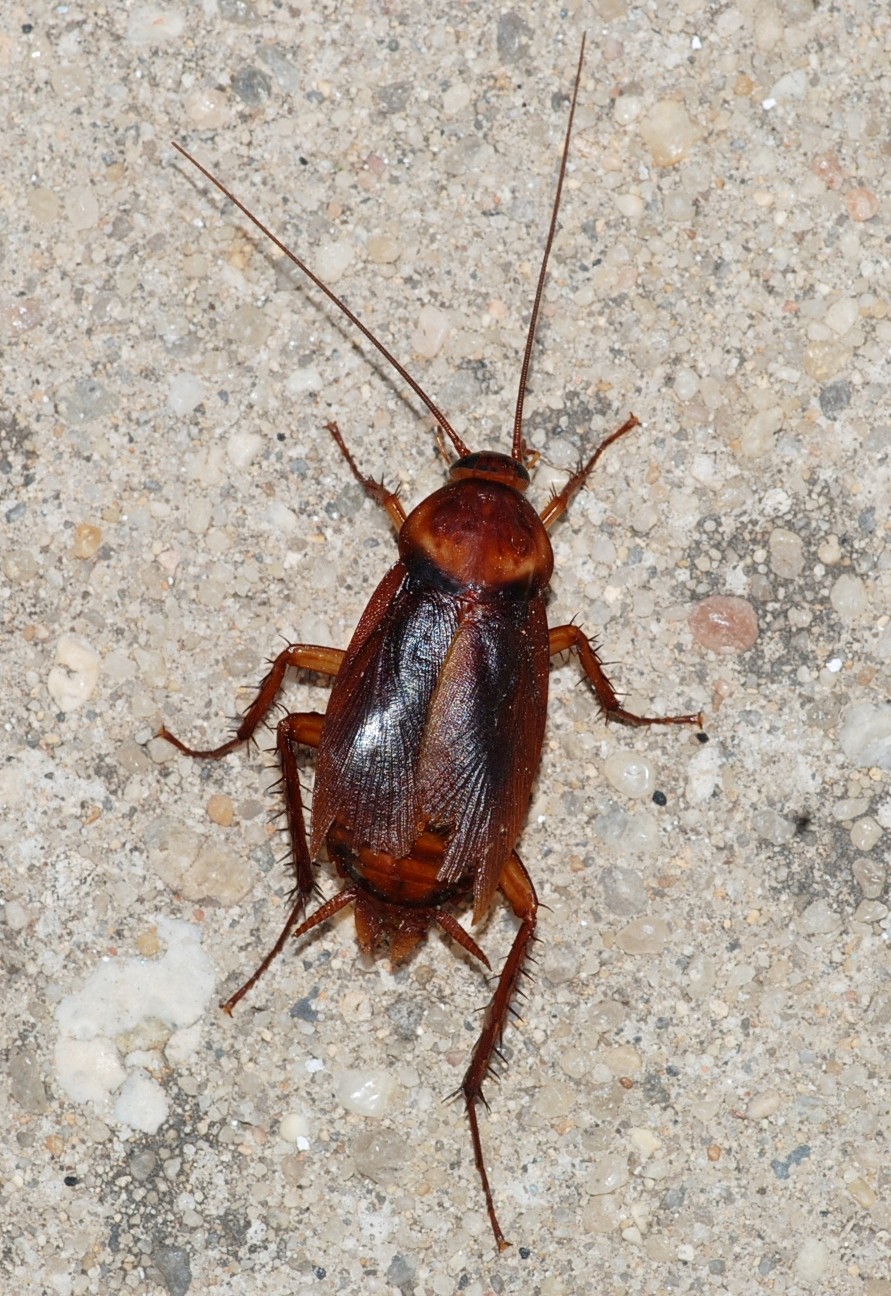
1. American cockroach
Despite its name, american cockroach (Periplaneta americana) is not native to the Americas but rather to Africa and the Middle East, from which it arrived as a result of human commercial patterns. Notably quick and rather resilient, this species is capable of limb regeneration. It requires a certain level of moisture to thrive, and it will avoid drier areas unless it has access to the required level of water.
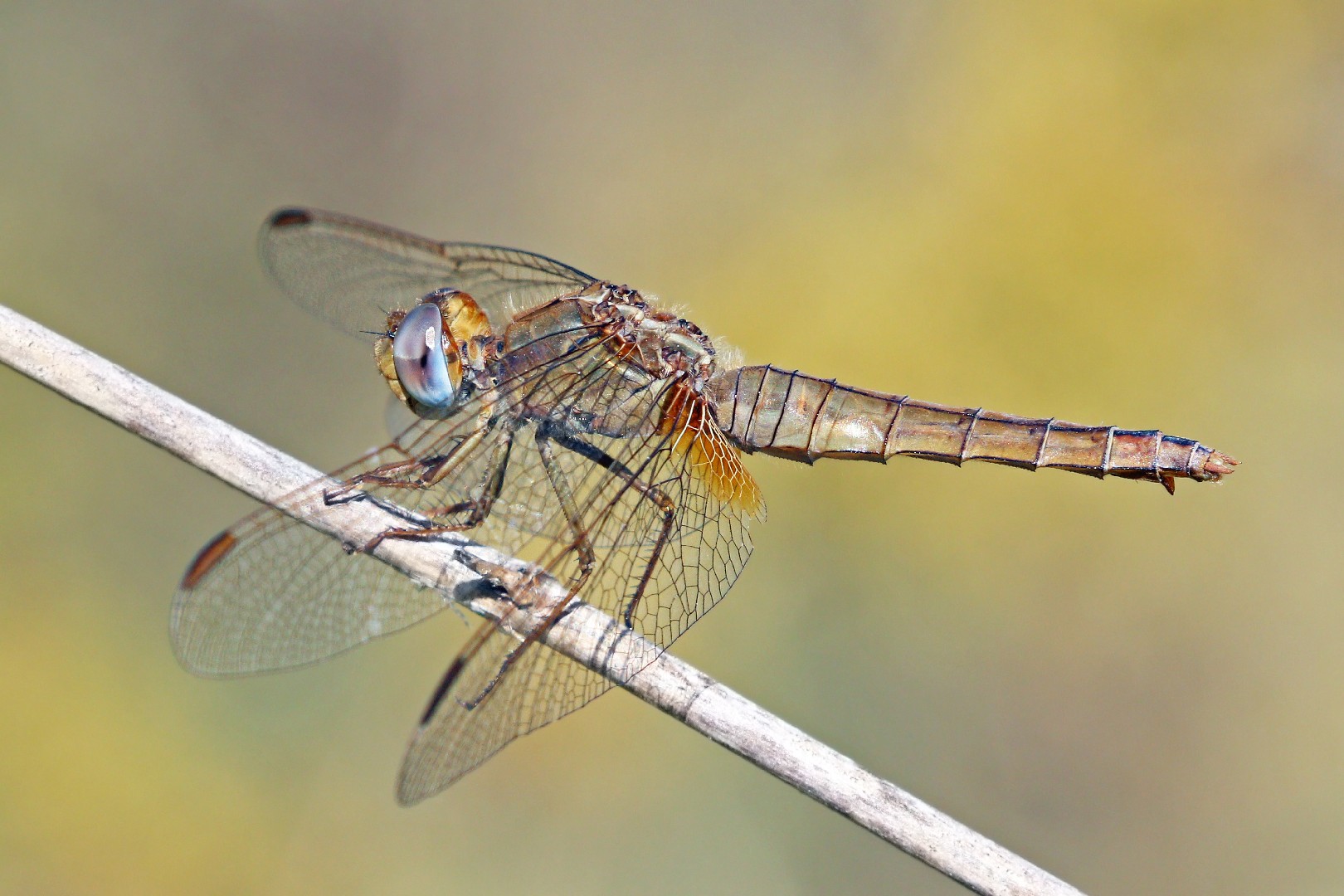
2. Scarlet dragonfly
Crocothemis erythraea can reach a length of 3.5 - 4.5 cm. These dragonflies haves a flattened and rather broad abdomen. The adult male scarlet dragonfly has a bright scarlet red, widened abdomen, with small amber patches at the bases of the hindwings. Also the veins on the leading edges of the wings are red. Females and immatures are yellow-brown and have a conspicuous pale stripe along the top of the thorax. 
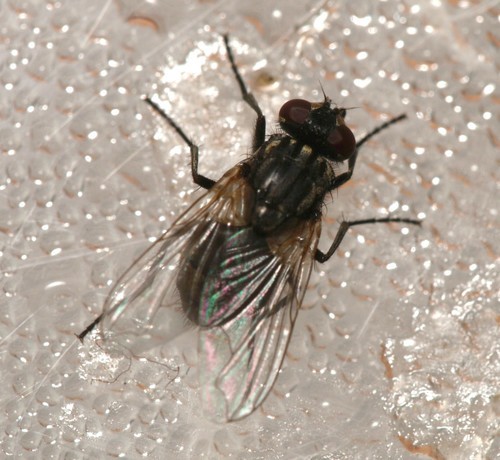
3. Common house fly
The female common house fly mates once and can store the sperm for multiple batches of eggs throughout her life. She will lay anywhere between 75 to 150 eggs at a time, usually in rotting organic matter, where the larvae will feed. The adults feed on feces and animal matter, making them important ecological composters. However, they can also transmit pathogens to human food and are considered pests and health hazards in human-occupied areas.
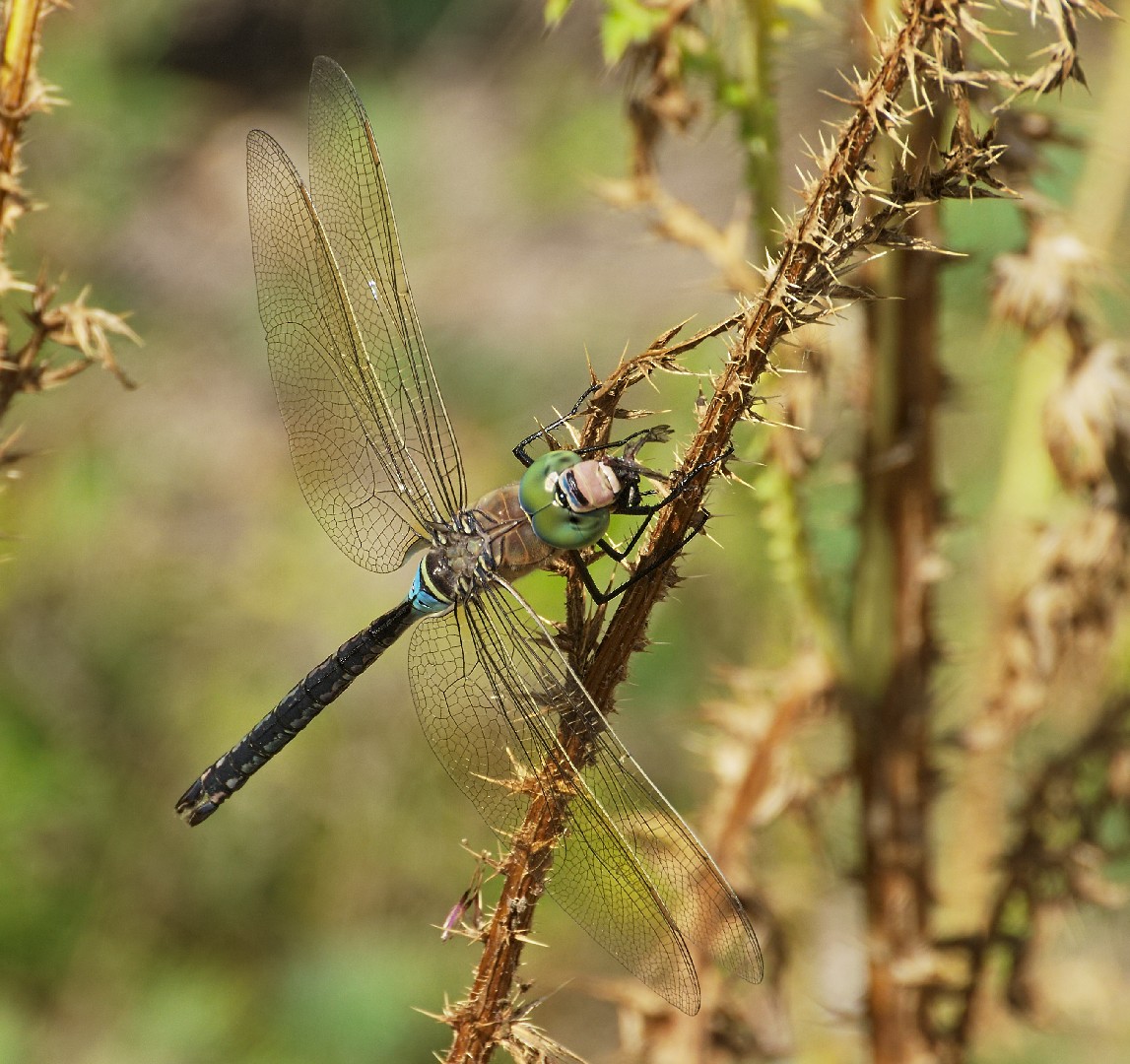
4. Lesser emperor
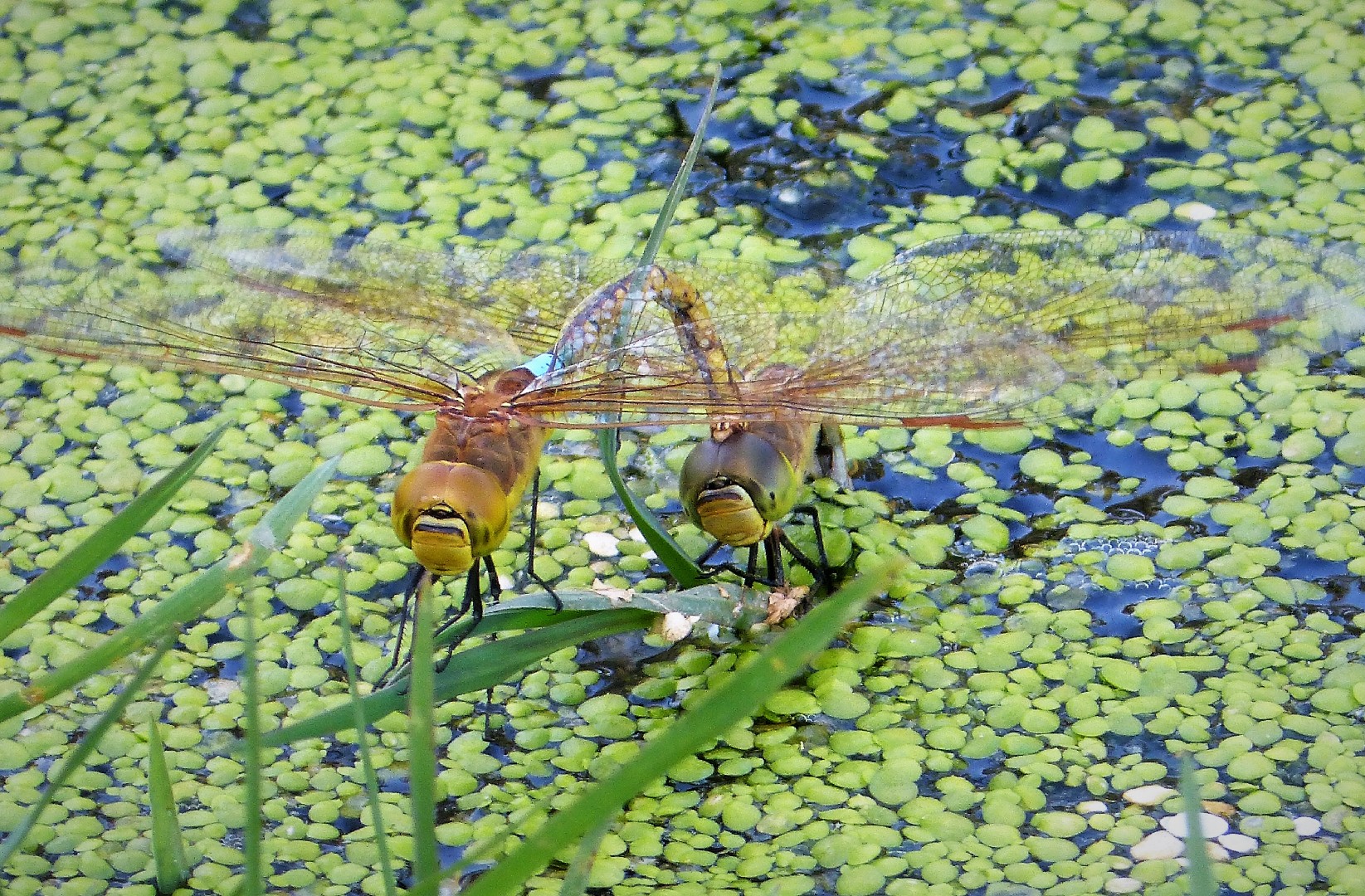
Its labium and labrum are golden-yellow and face and frons are greenish yellow and eyes are green, bluish when aged. Its thorax is pale olivaceous brown with dark brown sutures. Its segment two of the abdomen is turquoise blue. Segment three has a large blue patch at each side. Segments 4 to 9 have an irregular black middorsal stripe. Segment 10 is black.
5. Red palm weevil
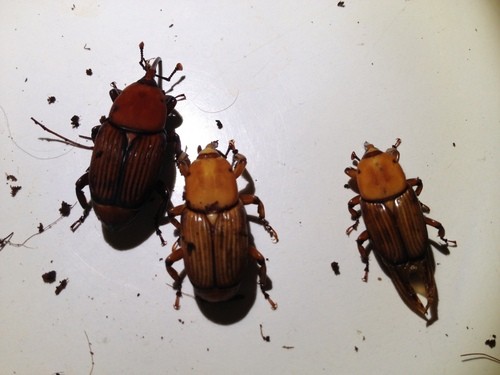
The largest weevil of Europe and North Africa, the red palm weevil takes various palm species, as well as sugar canes, as their hosts where the larva burrows into the heart of the plant to feed. This extremely harmful pest causes severe economic losses in date palm production. It is at risk of becoming an invasive species to parts of Europe and Australia if transported via vegetable goods.
6. European rhinoceros beetle
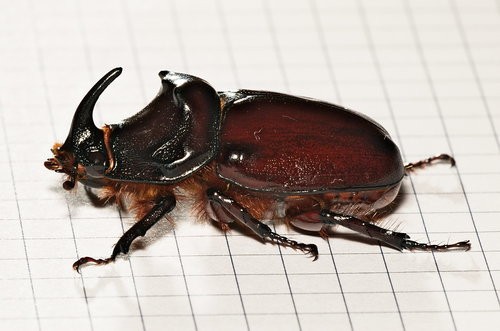
The european rhinoceros beetle (Oryctes nasicornis), also called an "elephant beetle" and a "Hercules beetle", has a massive horn-like structure in the front. This bug is well-known because Dim from A Bug's Life is a european rhinoceros beetle. The males use their horns for fighting over food and over females. However, this species is actually harmless and only feeds on plants.
7. Large salmon arab
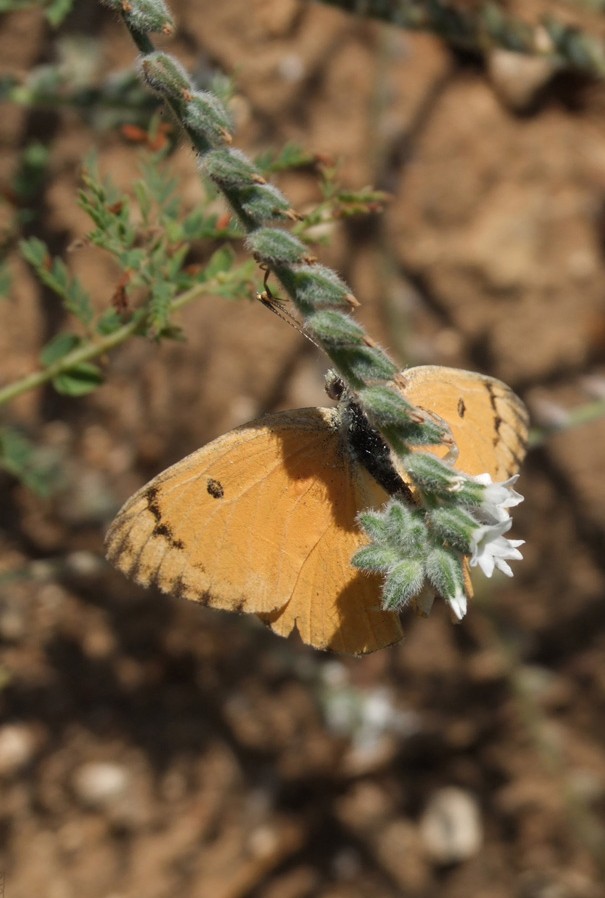
The ground colour on the upperside of males is pale salmon buff, paler in specimens from desert areas, darker in those procured in regions where there is a regular though not heavy rainfall. Forewing: base and costal margin irrorated (speckled) in varying degree with dusky scales; an oval annular discocellular spot that varies in size; a black, festooned, postdiscal band that extends from costa to vein 4, beyond which the veins are margined with black; this colour broadened sub-terminally into a second transverse fascia, that is followed by a very fine black line on the extreme terminal margin. In specimens from desert regions the transverse bands and the black edging to the veins are narrow, but in moister areas the two transverse bands unite posteriorly and with the slender black terminal line give an appearance as of a double series of spots of the ground colour enclosed between them. Hindwing: more uniform, the veins with terminal black spots; costa broadly pale, fading to white. Underside: pale yellowish white, in many specimens from moist localities suffused with a beautiful rosy flush; the markings in such specimens prominent, in those from dry localities more or less obsolescent. Forewing: discocellular spot as on the upperside, but complete, and not an oval ring; in some specimens a postdiscal, dark ochraceous brown, narrow, curved band from costa to middle of interspace 2. Hindwing: a small discocellular spot in the form of an oval light brown ring always much smaller than the similar spot on the forewing; a postdiscal, curved, more or less sinuate band similar to and in continuation of the band on the forewing from the costa to vein 1. Antennae, head, thorax and abdomen dusky black, the club of the antennae on the underside, the hairs that cover the head and thorax and the scaling of the abdomen salmon buff; beneath: much paler, fading to white in specimens from dry localities. Sex-mark: a small patch of brown specialized scales on the underside of the forewing above vein 1, closer to the base than to the termen. On the upperside this is more or less prominent as a small raised spot. Females are dimorphic. Form 1: ground colour and markings as in the male; the costa of the hindwing on the upperside concolorous with the rest of the wing; the sex-mark of course absent. Form 2. Upperside: ground colour white, often more or less irregularly suffused on parts of the wing with salmon buff; markings similar to those in the male, but very much broader. Forewing: base and costal area heavily irrorated with greyish-blue scales. Hindwing: the terminal spots at apices of the veins large and quadrate, often united into a continuous band which then encloses an anteciliary series of spots of the ground colour. In a few specimens there are traces of a postdiscal macular black band, in a very few this band is almost complete and very prominent. Underside: ground colour white; markings as in the male, but broader, darker and more prominent. It is found in Baluchistan, Sind, the Punjab, Rajasthan and Bombay. The species is also found in Asia Minor, Arabia, Persia and Afghanistan. Race tripuncta, Butler. Very closely resembles the typical from, but this the southern form or race can be distinguished as follows: Male upperside has the ground colour of a much deeper tint of salmon buff, almost orange yellow. Forewing: costa heavily irrorated with black scales; discocellular spot larger, not annular; postdiscal black fascia at all seasons united to the subterminal fascia and black anteciliary line so that the whole apex and termen of the wing are black, broadly at the costa and gradually narrowed towards the tornal angle. This black area encloses never more than three preapical moderately large spots and a complete series of minute anteciliary specks of the ground colour. Hindwing: as in C. fausta, but the terminal black spots very large. Underside: ground colour of a richer yellower tint than in the typical form; markings similar, those on the forewing dusky black, on the hindwing rose pink. Antennae, head, thorax, abdomen and sex-mark as in male of the typical form. Female upperside closely resembles the female of form 2 of C. fausta, but all the markings are darker and conspicuously broader, while the number of the preapical spots of the ground colour enclosed within the black area on the forewing is never more than three, the same as in the male. Underside, forewing: white sometimes faintly suffused with yellow; apical and terminal areas anteriorly light to dark ochraceous yellow; discocellular spot very large; transverse, postdiscal, macular dark reddish-brown band very broad. Hindwing: pale ochraceous yellow, sparsely powdered with black scales; transverse postdiscal macular band reddish brown and broad as in the forewing. Antennae, head, thorax and abdomen as in female form 2 of C. fausta. Western and southern India: Bombay, Poona, the Nilgiris up to 6,000 feet (1,800 m), the Anaimalai Hills; eastern India: Orissa in Bengal, Ganjam; Ceylon.
8. Epaulet skimmer
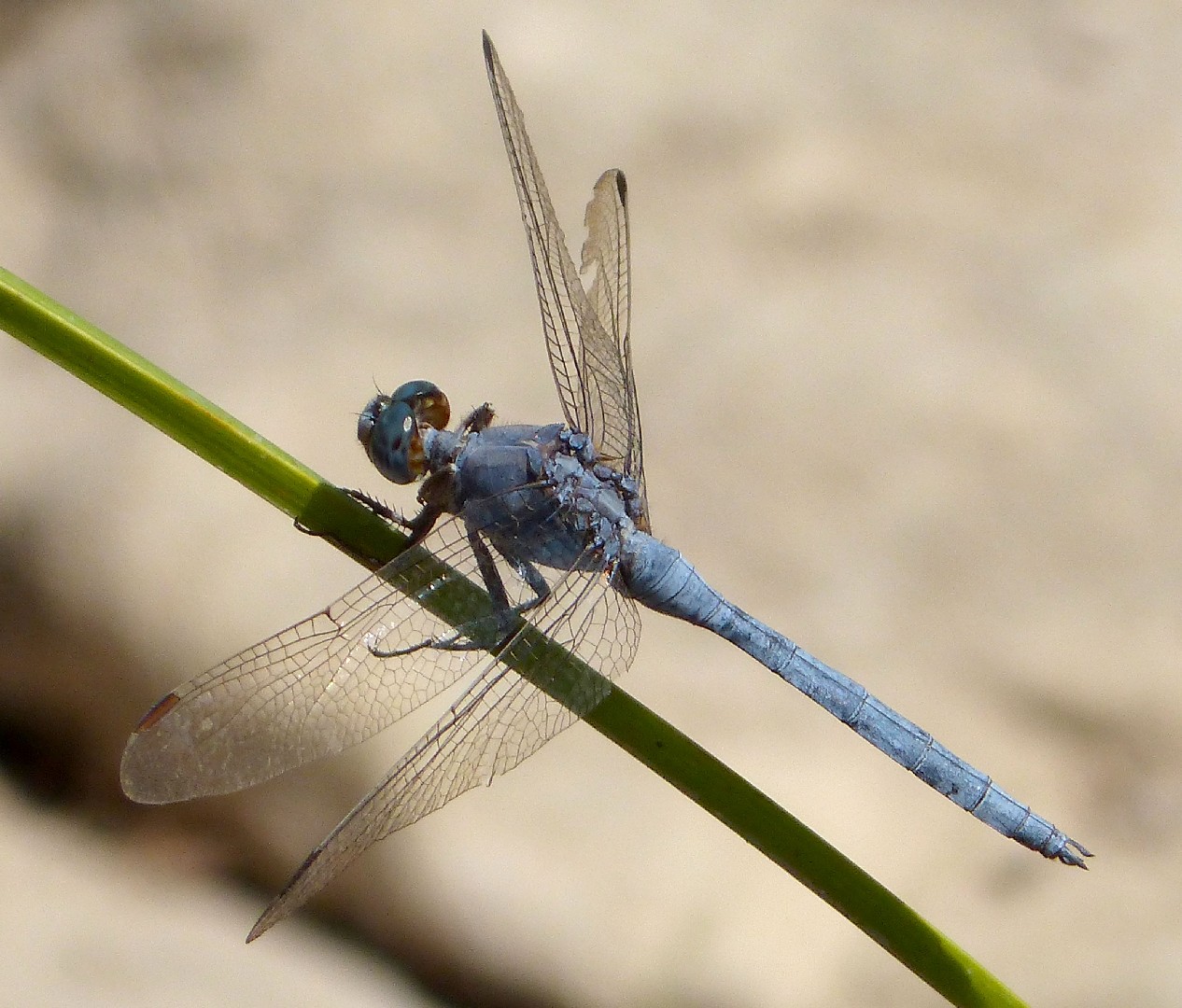
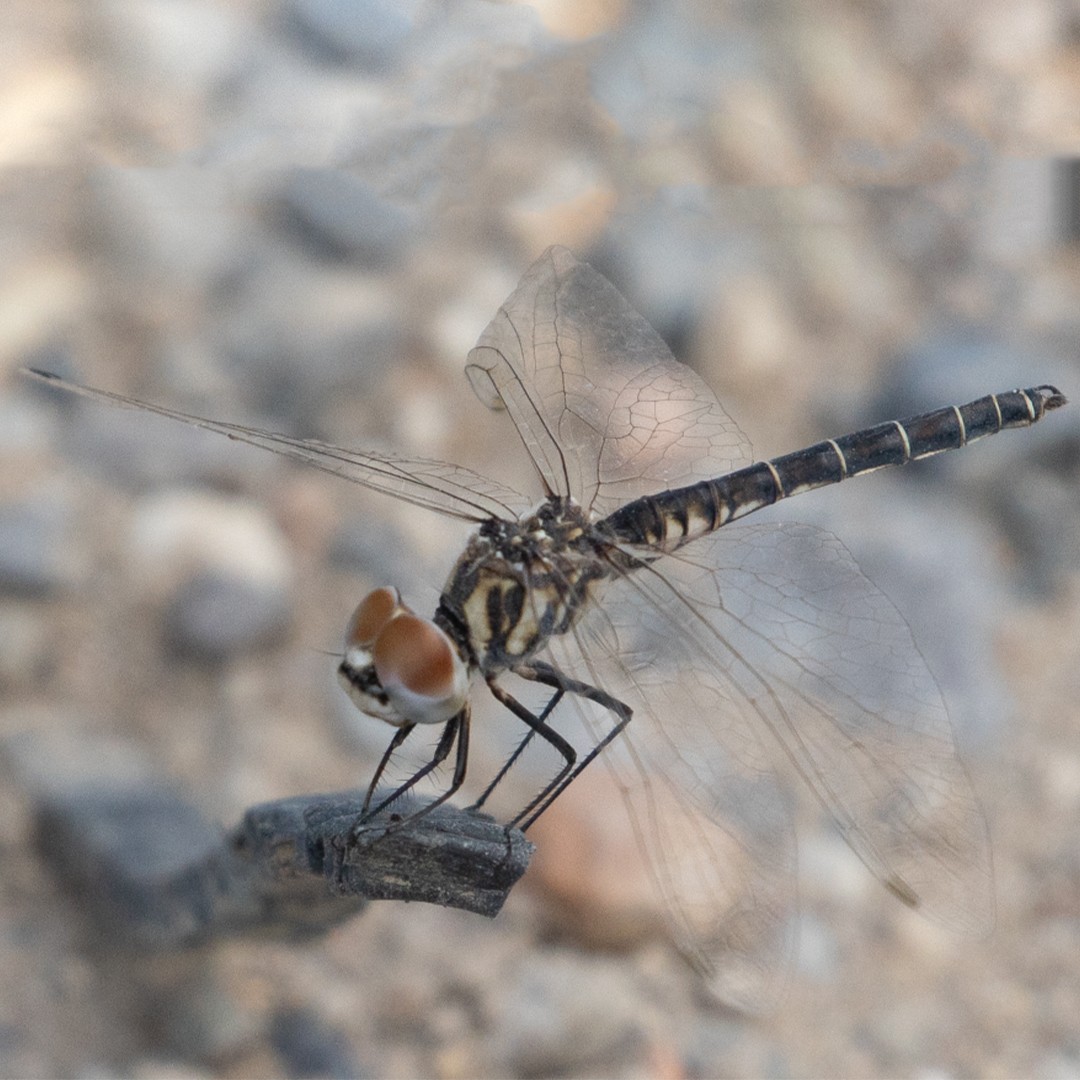
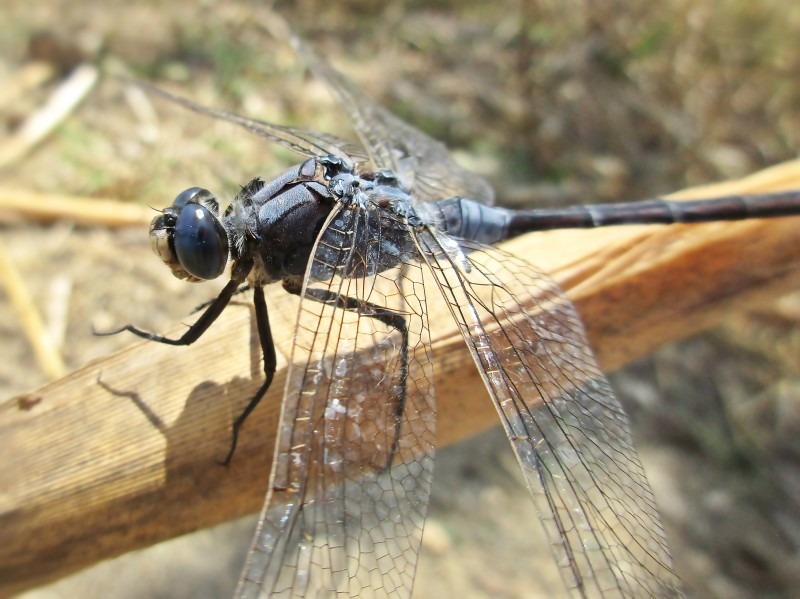
The bodies of adult males are blue, and those of young and females are yellow and brown.

9. Scarlet skimmer
The species is on the IUCN Red List as not endangered, year of assessment 2009.
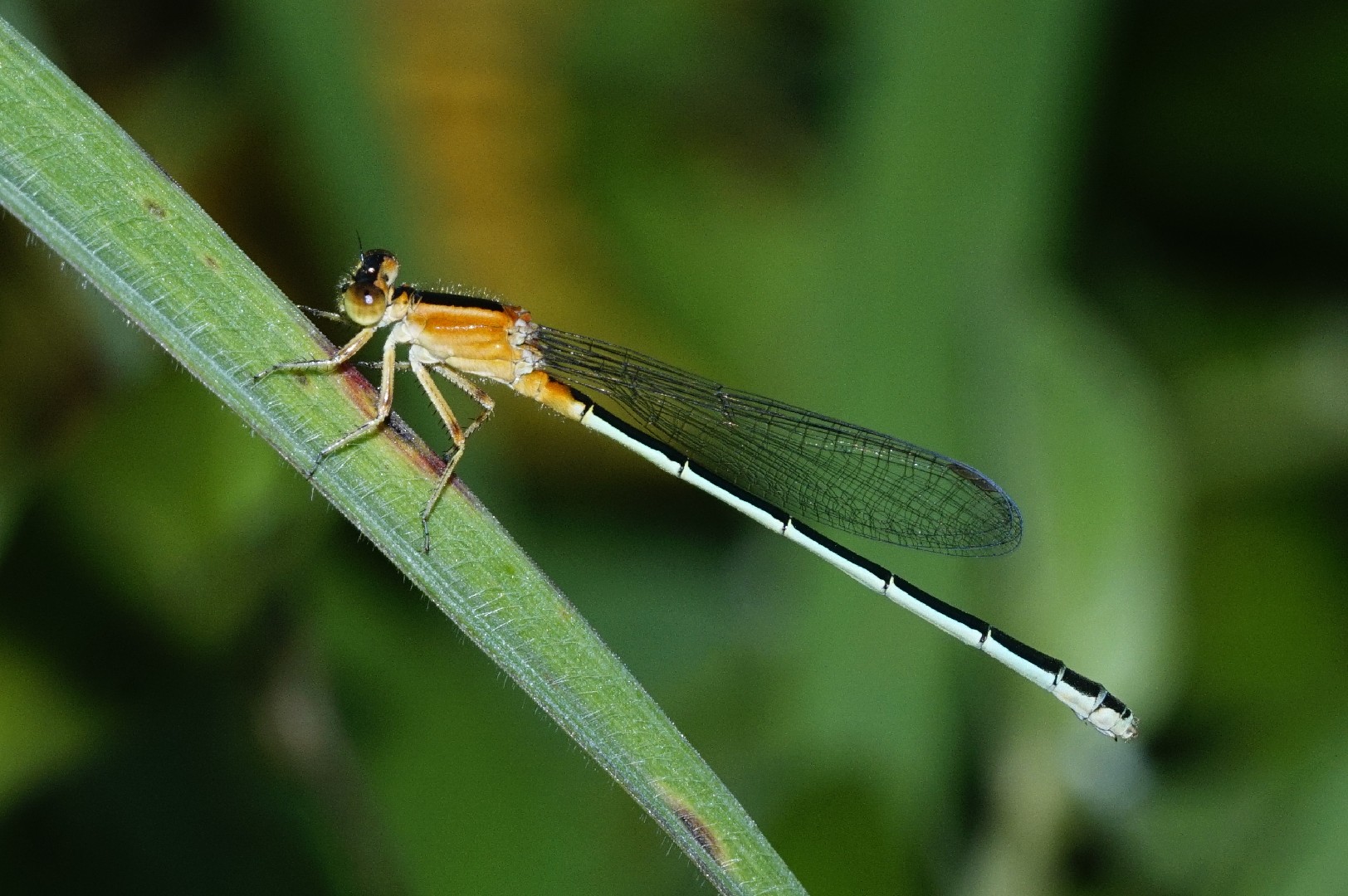
10. Common bluetail
The Senegal Pechlibelle (Ischnura senegalensis) is a dragonfly from the family of the slender dragonflies (Coenagrionidae).
More







