




Top 20 Most Common Insects in Lugano
Insects, nature's micro wonders, are a defining presence in Lugano landscapes. Thriving in diverse ecosystems, these tiny creatures exhibit a remarkable variety prompted by Lugano's unique geographical variations. Beyond being a fascinating study, insects play pivotal roles in our ecosystem—be it as bothersome pests or beneficial partners. In our list of the Top 20 most common insects, we'll delve into those that call Lugano home, shedding light on their fascinating existence and integral contributions!

Most Common Insects
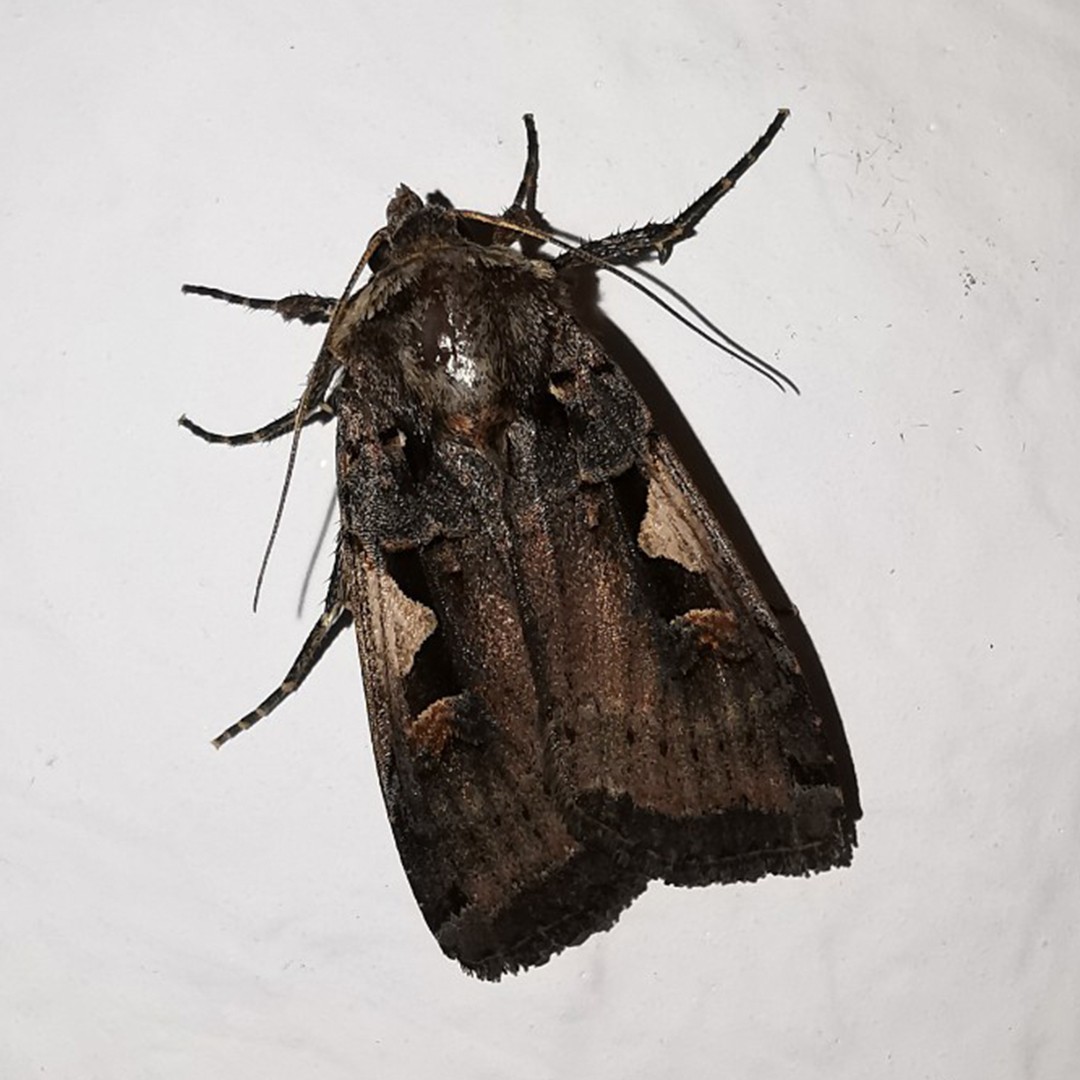
1. Setaceous Hebrew character
The wingspan is 35–45 mm. Forewing purplish grey or purplish fuscous with a leaden gloss; costal area at middle ochreous, merged with the bluntly triangular orbicular stigma: cell, a submedian basal blotch, and costal spot before apex purplish black; claviform stigma minute; reniform large, the lower lobe purplish; hindwing ochreous whitish, in female with the termen broadly fuscous. Lava pink with a broad dark brown subdorsal band. A lateral yellow band with a brown spot on it. Head reddish brown in color. 
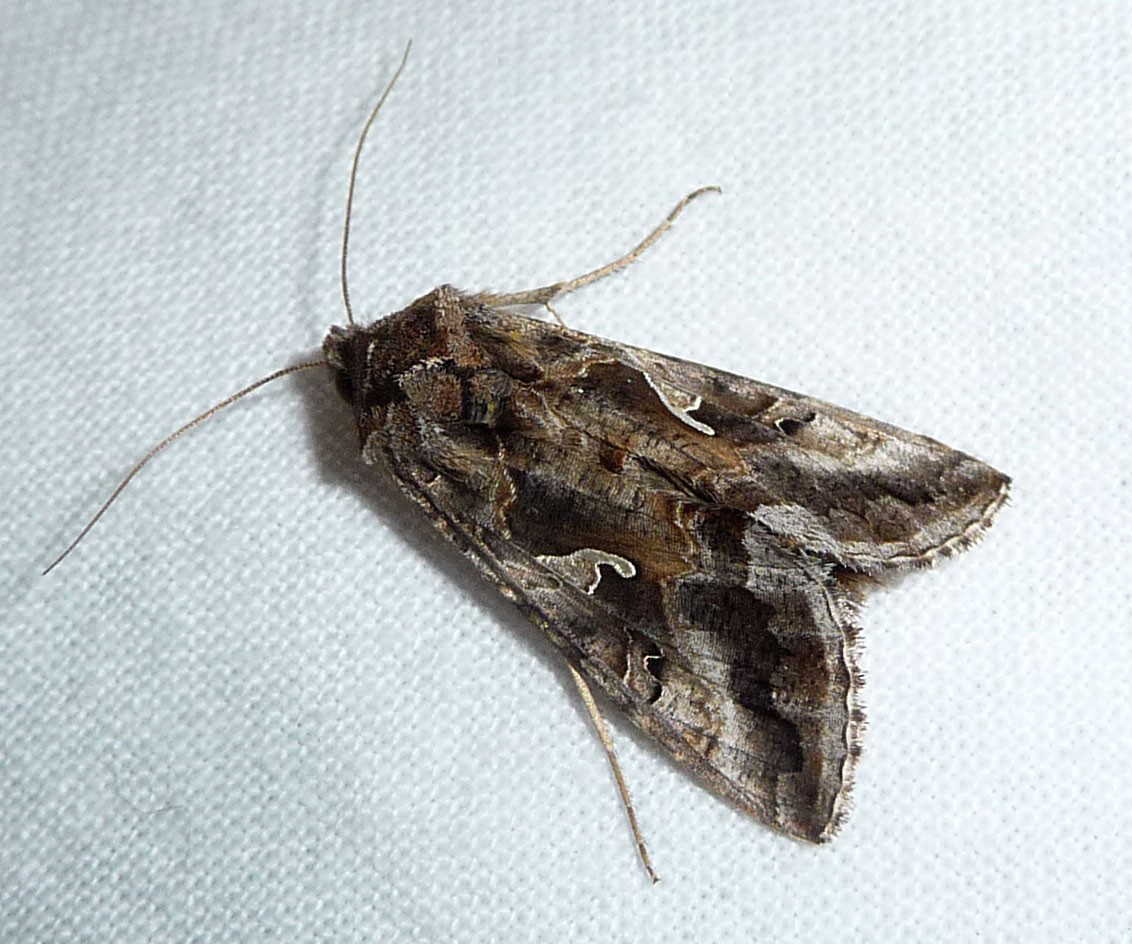
2. Silver y
The silver y (Autographa gamma) has an interesting name that comes from the silver, y-shaped patterns on each of its wings. Patterns on those wings also provide for decent camouflage. Its colors can be different depending on the local climate. You may catch them in your garden given their love of taking nectar from flowers.
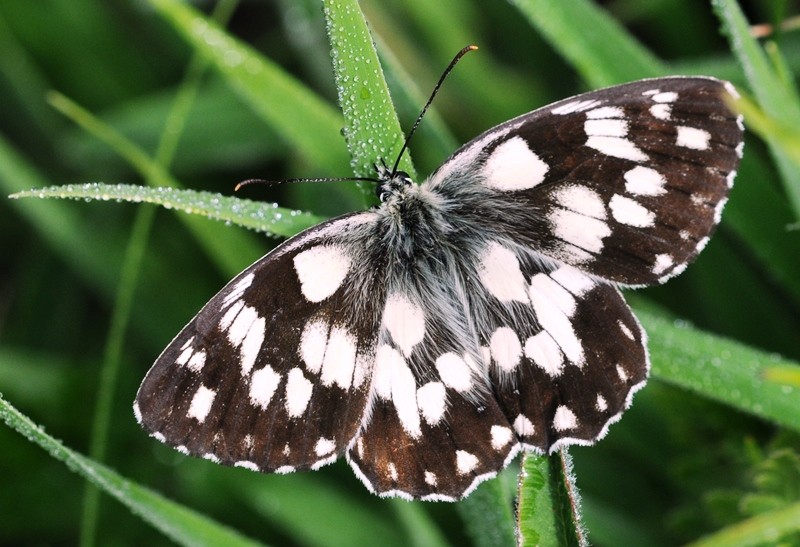
3. Marbled white
Melanargia galathea has a wingspan of 1.8–2.2 in. In these medium-sized butterflies the upper side of the wings is decorated with white and gray-black or dark brown markings, but it is always gray-black or dark brown checkered in the basal and distal areas. The underside is similar to the upper side but the drawings is light gray or light brown. On the underside of the hindwings is present a row of gray eye spots. The males and the females are quite similar, except that some females may have a yellowish nuance on the underside of the wings. The larvae are a lime-green colour, with a dark green line running down the middle of their back. The caterpillars are about 3 cm long. They are green or yellow with some lighter and darker narrow longitudinal lines. The head is always light brown.
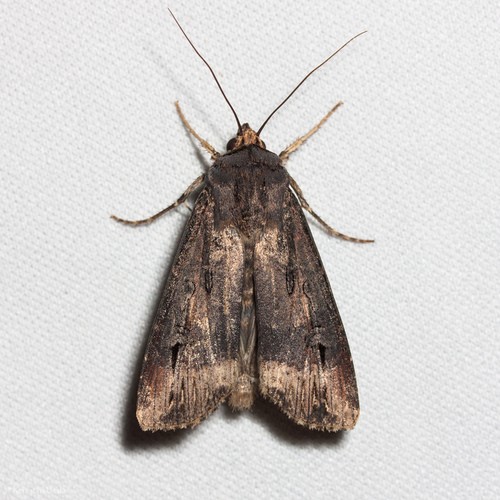
4. Dark sword-grass
The dark sword-grass (Agrotis ipsilon) earned that name from its darker color and its ability to cut down a variety of vegetation. As a result, they can be called the Black cutworm. Another unique feature is the female's calling abilities. As they get older, females need to start to call earlier in order to appear more attractive than their younger counterparts.
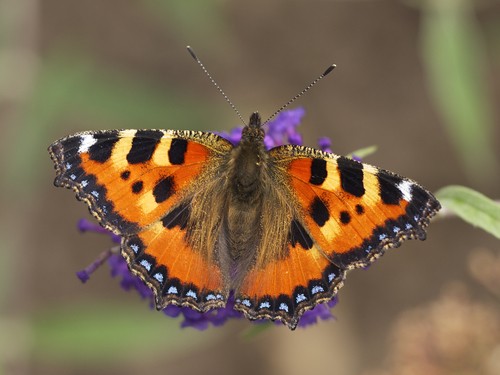
5. Small tortoiseshell
Small and colorful, small tortoiseshell (Aglais urticae) is the national butterfly of Denmark. However, it is capable of surviving anywhere the common nettle leaf may be found, which the larvae of this species depend on. Once among the most common butterflies in Europe and temperate Asia, this species is experiencing rapid declines for reasons still being investigated.
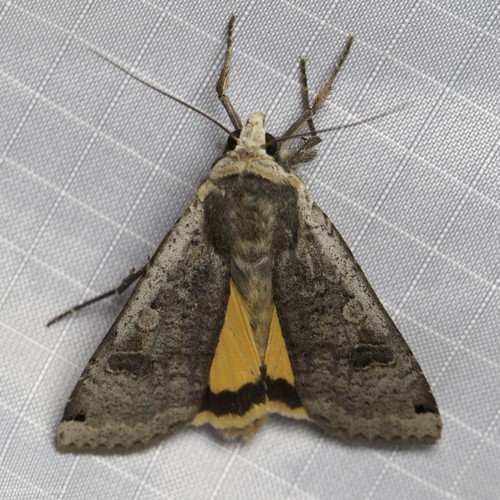
6. Large yellow underwing
An unusually large and heavy species of moth, large yellow underwing (Noctua pronuba) is dreaded by gardeners for the larvae's habit of causing fatal damage to the base of virtually any herbaceous plant. Large migrations occur some years, but how those years are determined is not yet known. Its contrasting colors (yellow-orange and brown) are thought to confuse would-be predators.
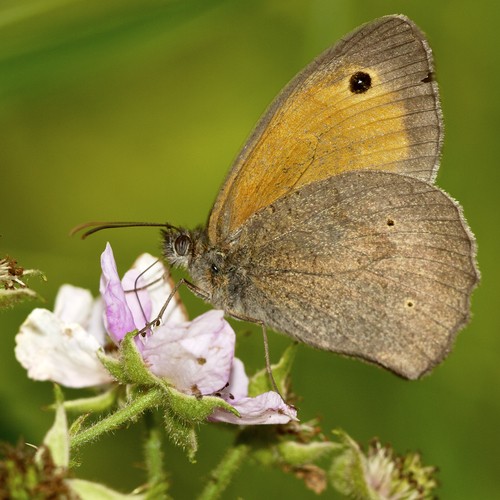
7. Meadow brown
The meadow brown (Maniola jurtina) is similar to the Gatekeeper in the way that it rests with its wings open due to the "eye spots" on either end of its wings that ward off predators. While the color is a deep brown, the caterpillar form is a beautiful bright green with little, white hairs and a dark line leading down its back.
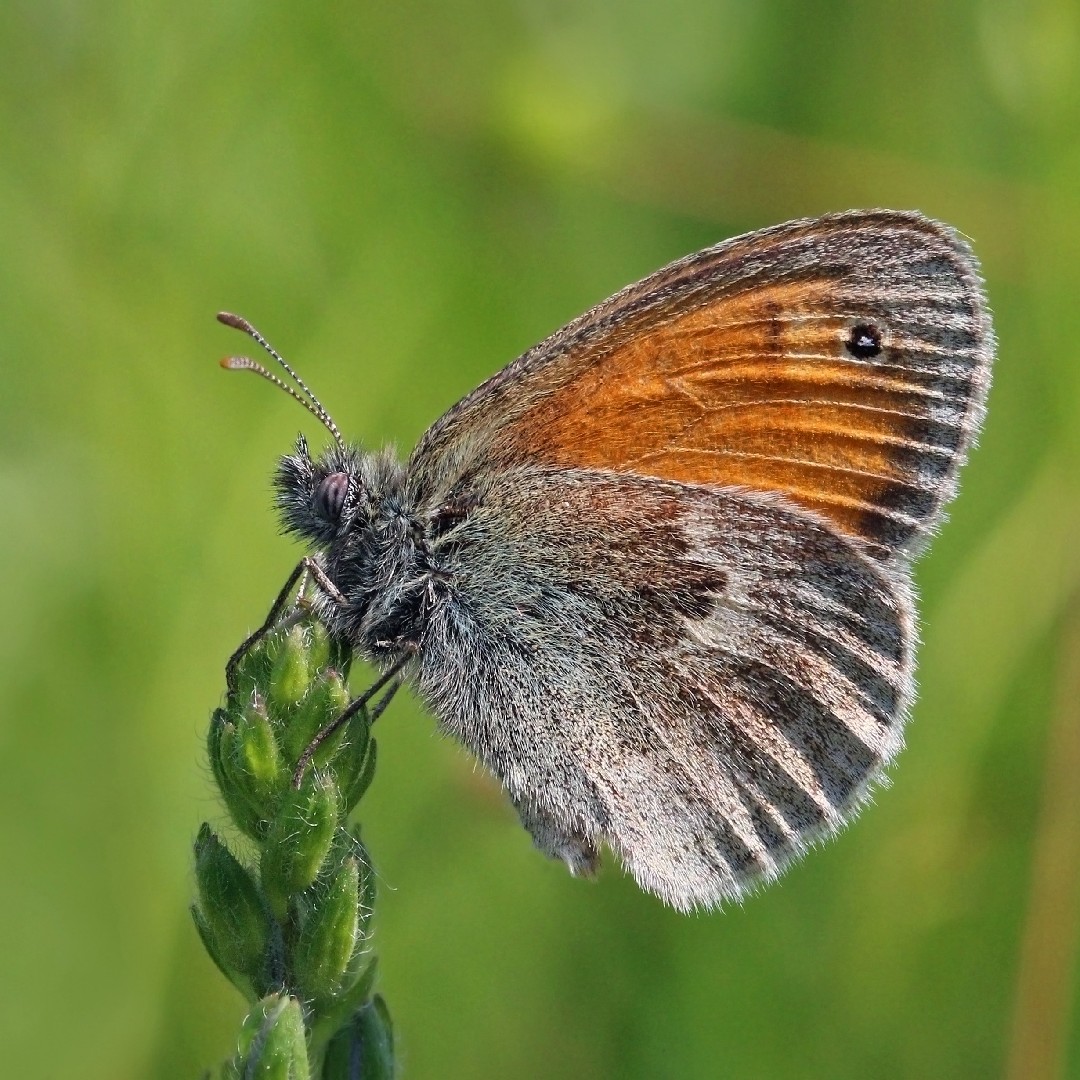
8. Small heath
It rests with closed wings when not in flight.
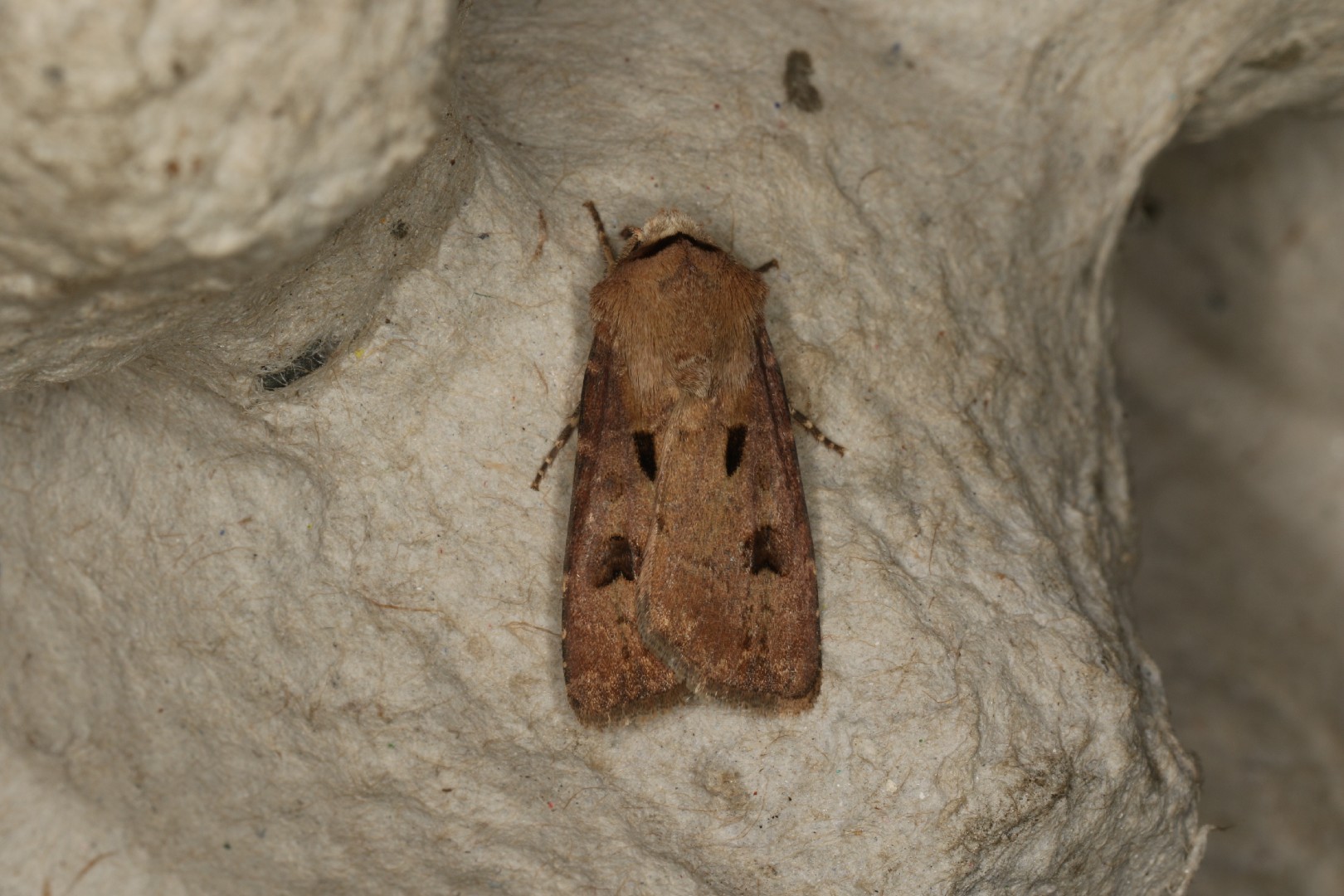
9. Heart and dart
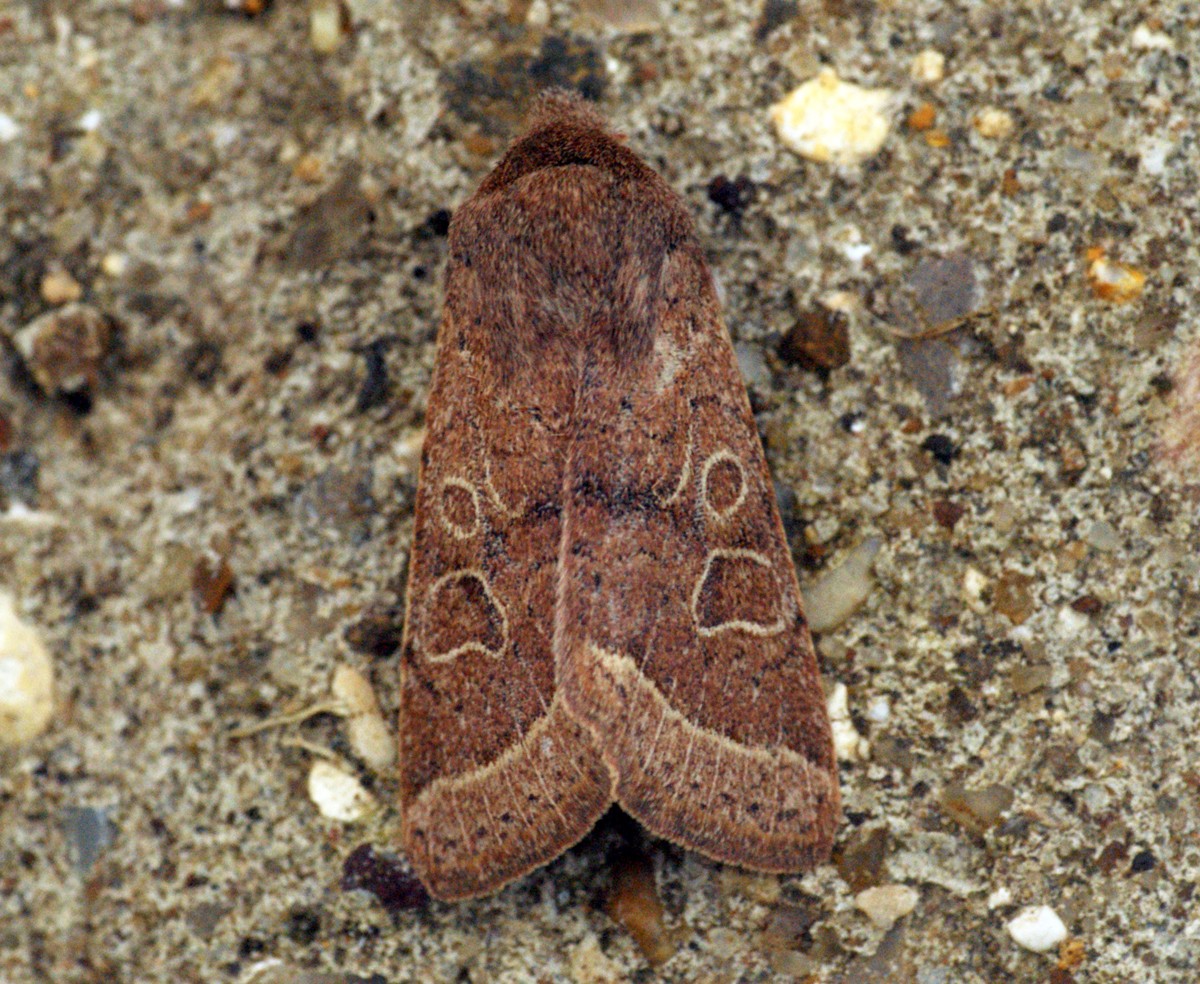
The heart and dart (Agrotis exclamationis) is a moth of the family Noctuidae. The species was first described by Carl Linnaeus in his 1758 10th edition of Systema Naturae. A familiar moth to many, it is considered one of the most common of the European region. It occurs throughout the Palearctic realm from Ireland to Japan. This is a quite variable species with forewings ranging from pale to dark brown but always recognizable by the distinctively shaped dark stigmata which give it its common name. The wingspan is 35–44 mm. The hindwings are whitish (compared with other common Agrotis species, the hindwings of this species are usually paler than in heart and club but darker than in turnip moth). This species usually has a dark area at the front of the thorax, visible as a horizontal bar when viewing the moth head on. The differences are not consistent however; they are highly variable in both colour and markings, and identification of atypical or worn examples may prove impossible without examination of genitalia. See Townsend et al. This moth flies at night from May to July and is attracted to light, sometimes in large numbers. It also frequently visits nectar-rich flowers such as Buddleia, ragwort and red valerian. The larva is brown above and grey below and feeds on a variety of plants, both wild and cultivated (see list below). This is one of the notorious cutworms and often severs or fatally damages plants at the base. The species overwinters as a full-grown larva in a chamber in the soil before pupating in the spring. ^ The flight season refers to the British Isles. This may vary in other parts of the range.
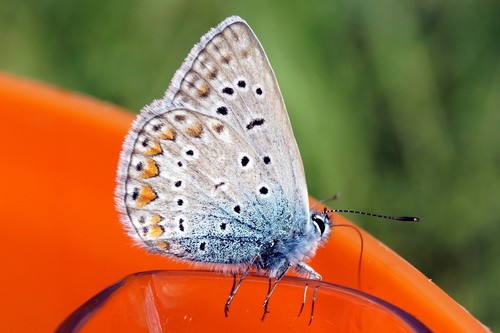
10. Common blue butterfly
Despite its common name, only male specimens of common blue butterfly (Polyommatus icarus) can accurately be described as blue; the females are predominately gray-brown, with only a dusting of blue and a scattering of orange spots. The adults live for only three weeks before dying.

More







