




Top 20 Most Common Insects in Ra's al `Ayn
In the fascinating world of insects, hundreds species thrive in syria-Al Hasakah-Ra's al Ayn's diverse locales, each shaped by its unique terrain. Geographic characteristics of syria-Al Hasakah-Ra's alAyn greatly contribute to such immense insect diversity. Insects play integral roles in our ecosystems, notably as pollinators, decomposers or even natural pest controls. Thus, the interaction between syria-Al Hasakah-Ra's al Ayn's environments and its thriving insects, either beneficial or detriments, is paramount. Stay tuned as we delve into the world of \_NAME\_NUMBER\_ most common insects found in syria-Al Hasakah-Ra's alAyn.

Most Common Insects
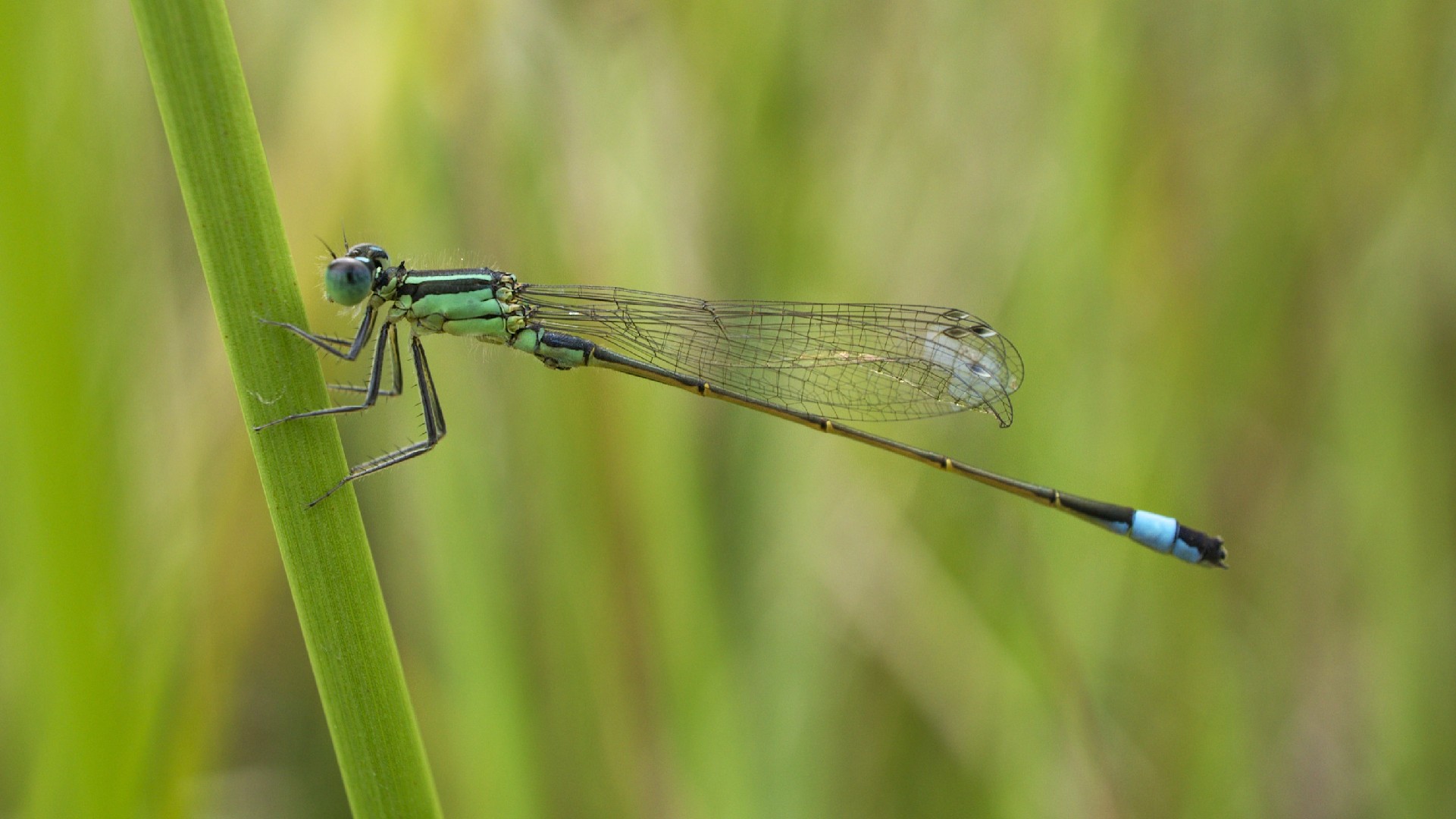
1. Blue-tailed damselfly
Ischnura elegans can reach a body length of 2.5 - 3.5 cm and a wingspan of about 3.5 cm. Hindwings reach alength of 1.4 - 2 cm. Adult male blue-tailed damselflies have a head and thorax patterned with blue and black. There is a bi-coloured pterostigma on the front wings. Eyes are blue. They have a largely black abdomen with very narrow pale markings where each segment joins the next. Segment eight, however, is entirely pale blue. At rest, the wings of most damselfly species are held back together, unlike dragonflies, which rest with their wings out flat. The thorax of juvenile males has a green tinge. Female blue-tailed Damselflies come in a variety of colour forms.Juveniles may be salmon pink, form rufescens; violet, form violacea and a pale green form. The colour darkens as the damselfly ages. Mature females may be blue like the male, form typica; olive green thorax and brown spot, form infuscans or pale brown thorax and brown spot, form infusca-obseleta. 
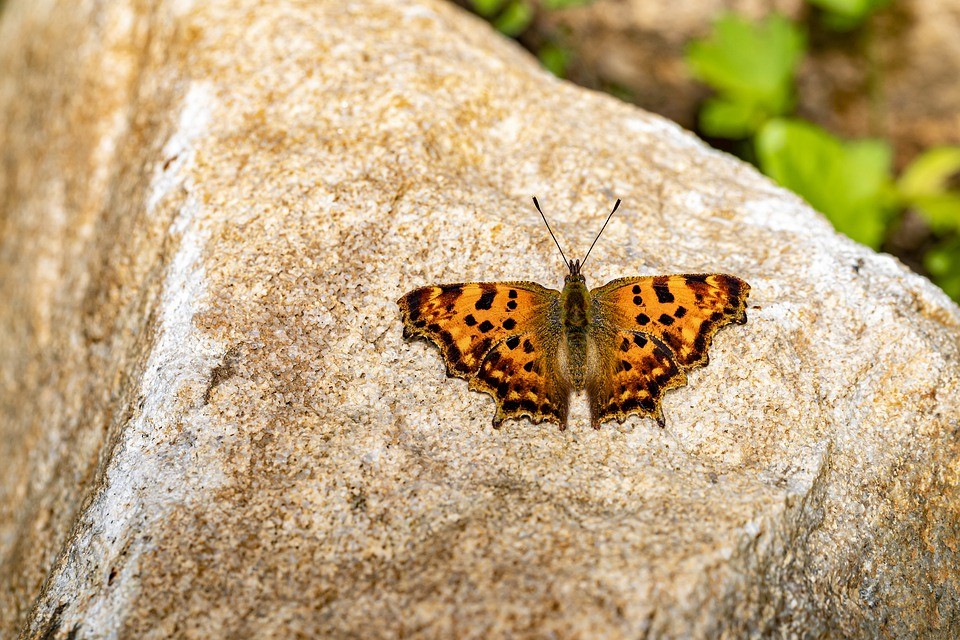
2. Southern comma
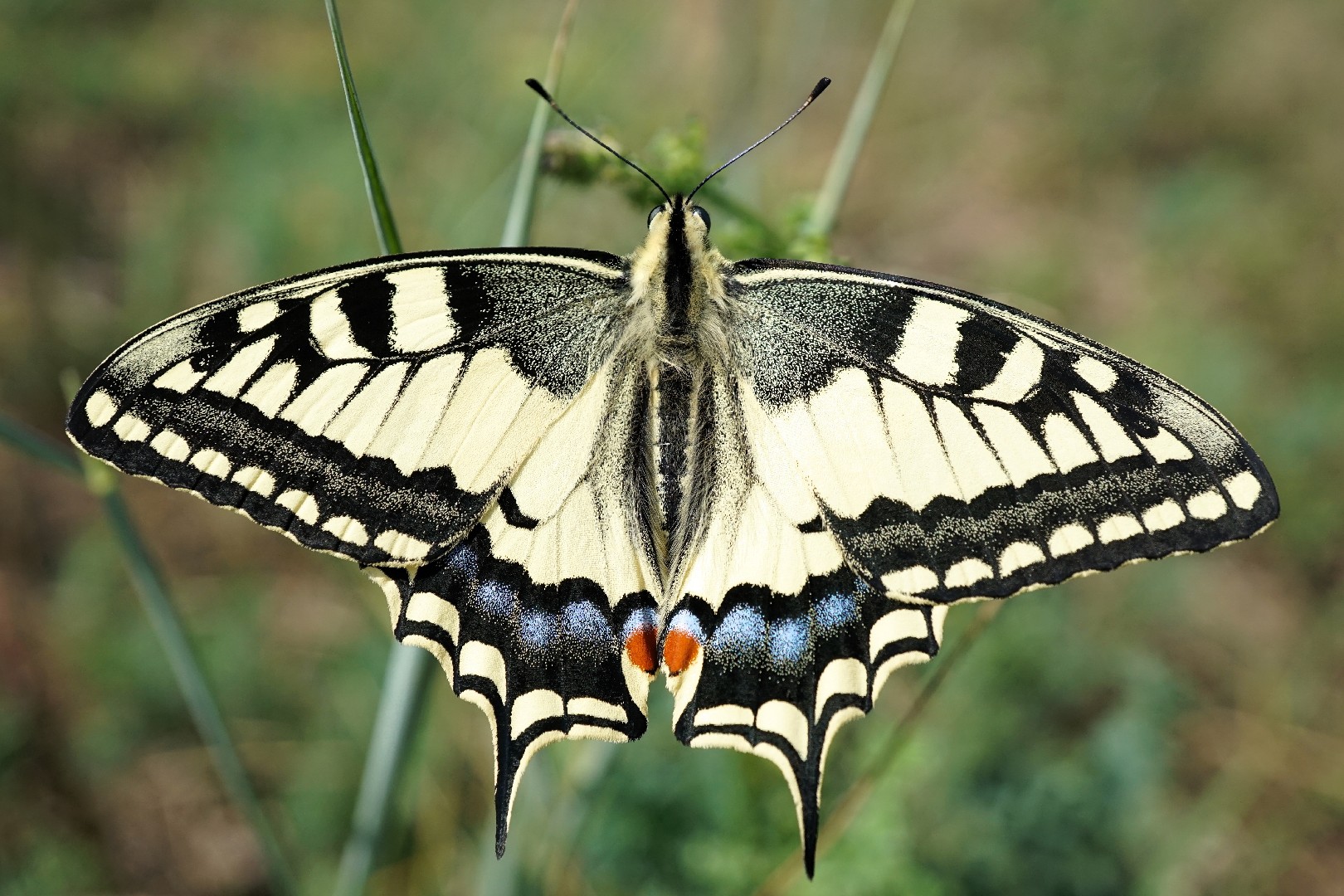
P. egea Cr. (= triangulum F., i album Esp., female = vau album Esp.) (64c). A species similar to c-album with the wings more strongly dentate and narrower, and the underside more thinly mormorated and pencilled,the hindwing beneath bearing in the centre a white angle-, hook- or J-mark. The female flying at the same season as the nymotypical has the wings less sharply dentate, is paler, less prominently and more sparsely marked. Ab. autumnalis Curo (? Stefan, i. 1.) (64c as j-album) is the autumn-form, which has the wings more strongly angulate and of a darker ground-colour. The spots are very prominent, the distal margin of both wings is darkened, the light submarginal spots of the hindwing are very distinct, thougli small and isolated, and the underside is darkened. — The larva of the species feeds on Picrataria diffusa Keh. (Urticaceae) in July and October; as food-plants are also mentioned Ulmus, Urtica, Ribes, Lonicera, Corylus (Spuler). It is blackish or slaty grey, with yellow and black belts, the body bearing minute white hairs and dark branched spines; on the back there are pairs of large bluisli black spots on a pale ground; the spirales are edged with yellowish, beneath them there being a reddish yellow line; the head heart-shape with 2 spine-like processes. Pupa grey-brown, luberculate above, without metallic spots, the head not produced.
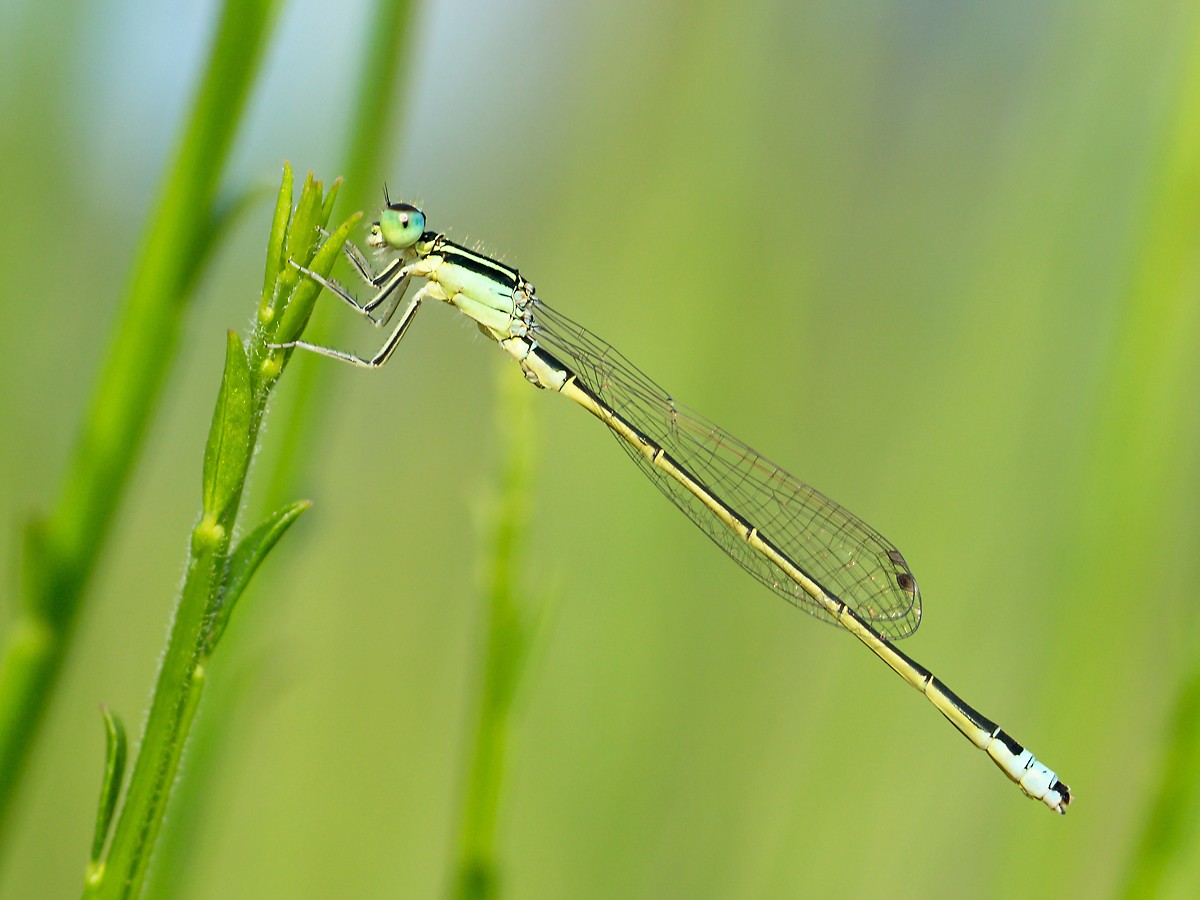
3. Scarce blue-tailed damselfly
It is very similar to the blue-tailed damselfly, Ischnura elegans but on that species the blue spot is mostly on segment 8.Females undergo a change of colour as they mature. The immature female is bright orange, the aurantiaca phase, but matures to a greenish-brown.
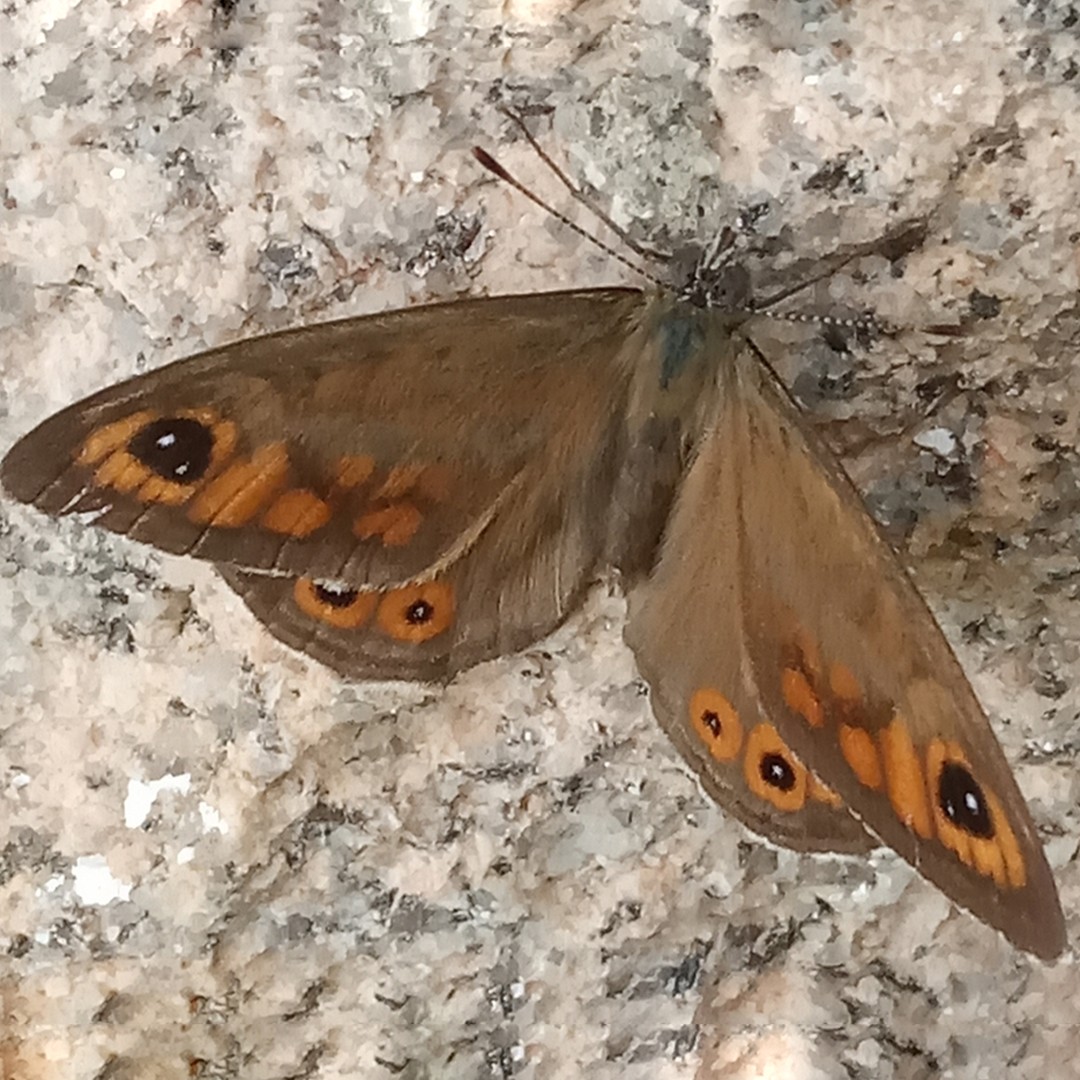
4. Large Wall Brown
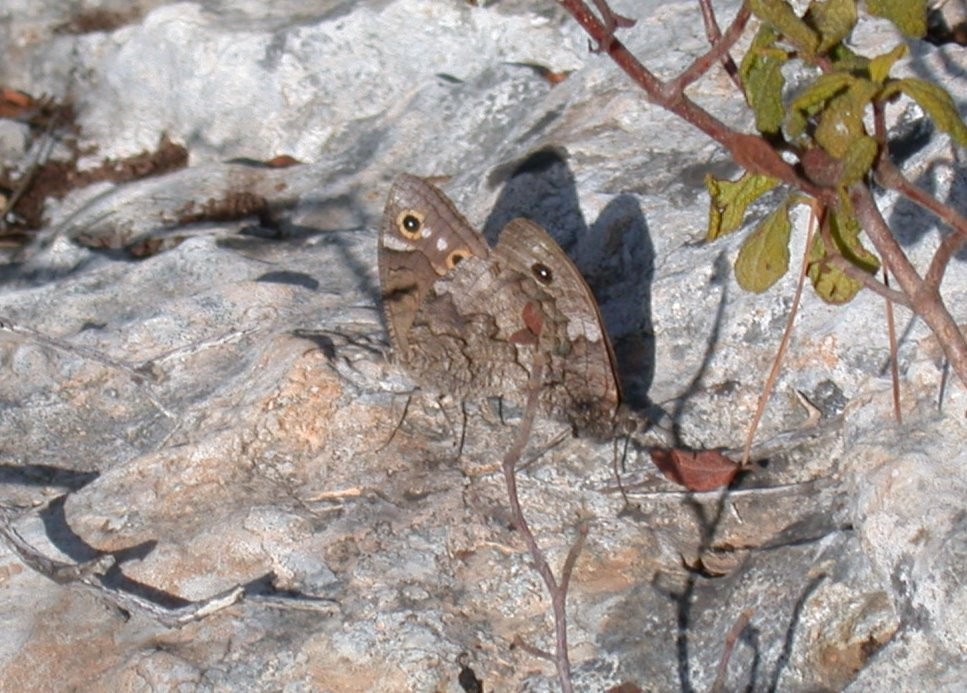
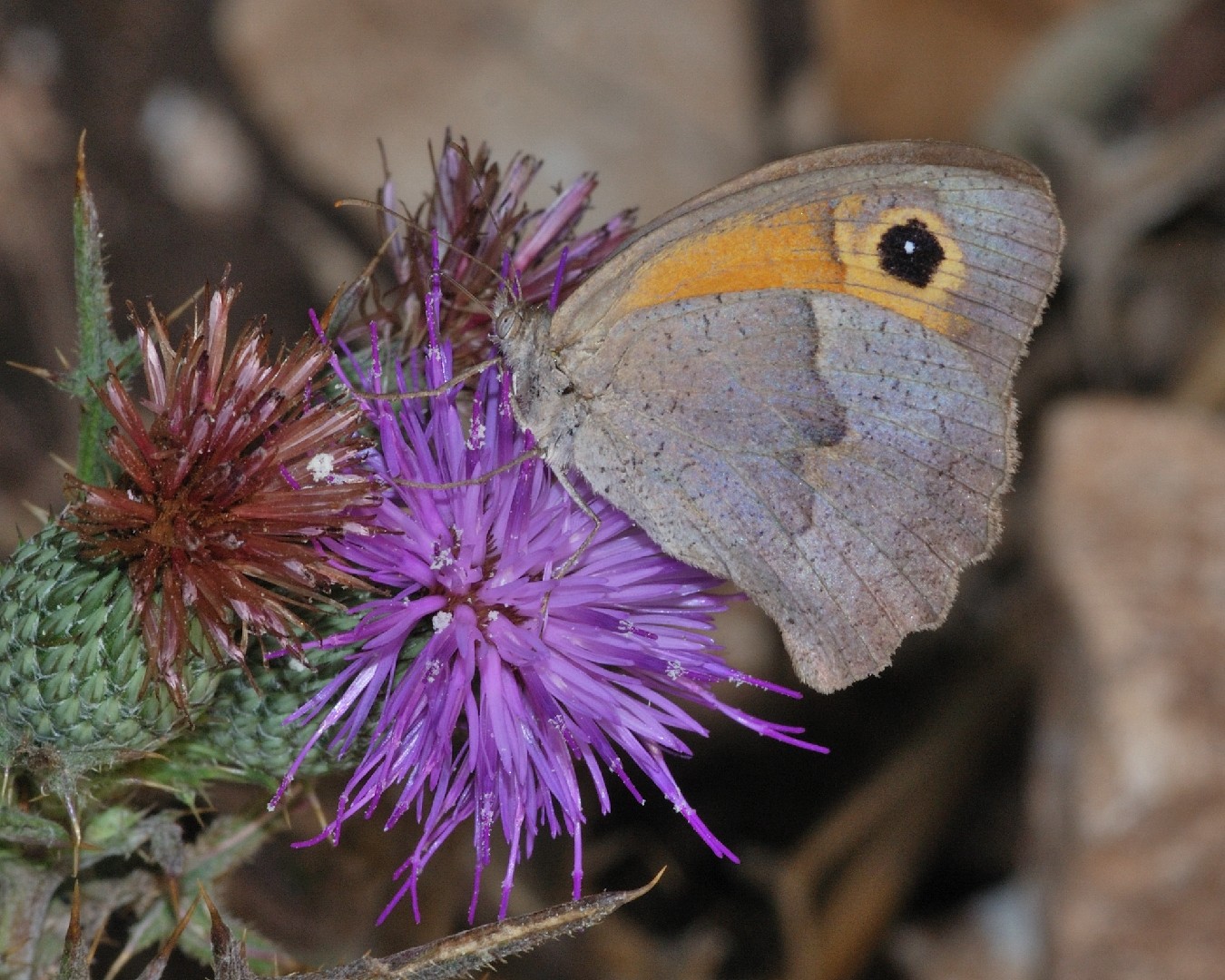
Lasiommata maera has a wingspan of 44–56 millimetres (1.7–2.2 in). These large butterflies are quite variable in color and pattern. Usually the upperside is orange in the forewings and mostly brown in the hindwings. The forewings always show a single ocellus, while the hindwings bear two or three ocelli. The underside of the forewings is orange and the underside of the hindwings is marbled with gray brown. This species is quite similar to Lasiommata megera, that is smaller and has paler yellow-orange forewings. Seitz P. maera L. (= adrasta Dup.) (45 d). On an average larger than hiera, more evenly coloured, the black markings of the ground less prominent in the nymotypical form with a sooty brown disc; the forewing of the male more pointed, with longer costal margin and more oblique distal margin; on the underside of the forewing the distal band extends without interruption across the median veins to the hindmargin. The underside of the hindwing has a much purer ground-colour, i. e. there are less clouds and shadows between the various dentate lines which cross the disc. The apical ocellus has a stronger tendency towardsduplication being usually somewhat distorted obliquely and — at least beneath — bearing two pupils. Between this ocellus and the apex there is nearly always a minute eye-dot, there occurring also often specimens with other accessory ocelli . Moreover, the ocelli of the hindwing are as a rule somewhat larger than in the same sex of hiera — A very large material proves that it is hardly possible to find definite trenchant distinctions , especially if one takes into account the large number of local forms of maera, all the various kinds of pattern and coloration exhibiting a great variability.

5. Scarlet skimmer
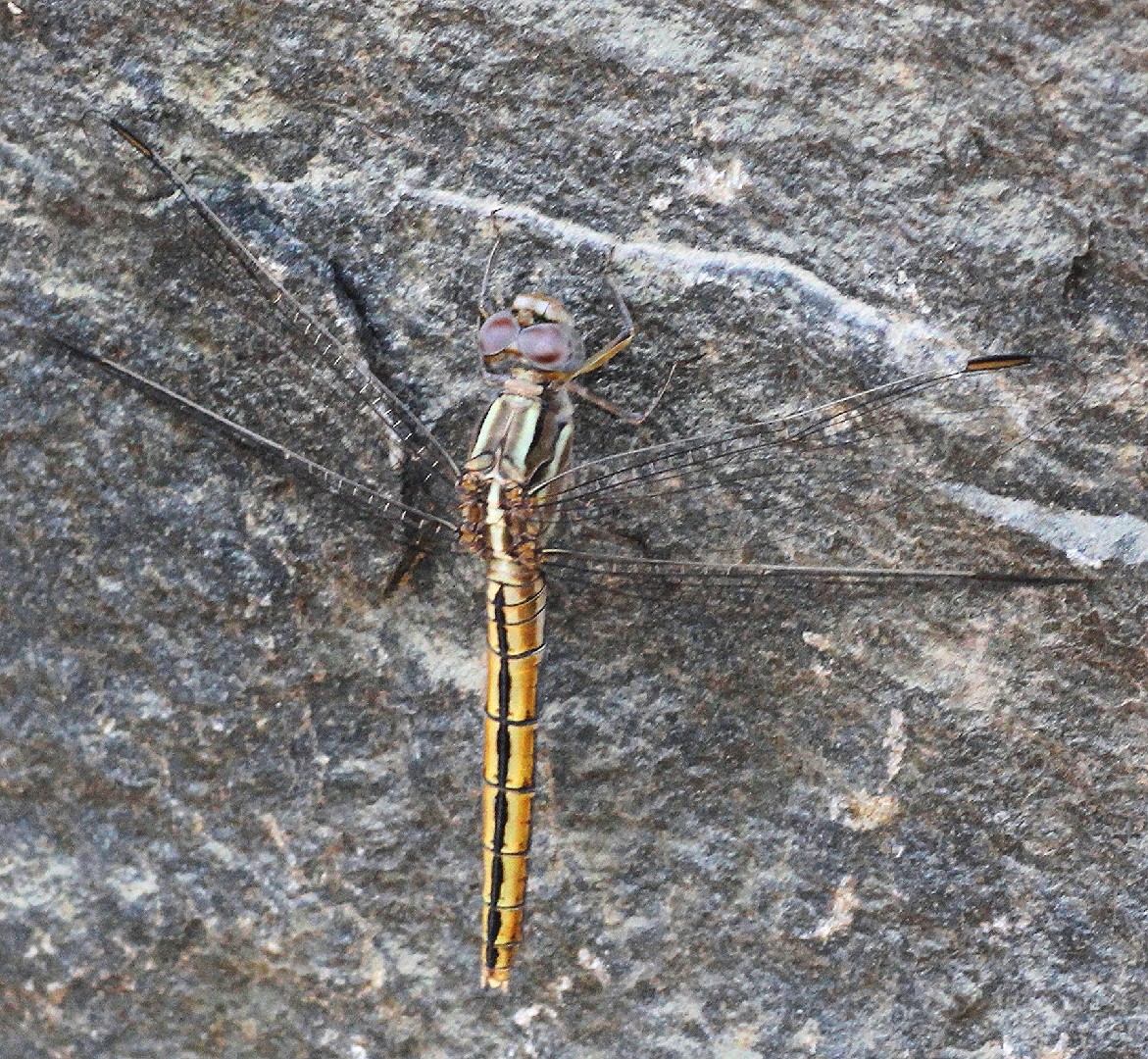
The species is on the IUCN Red List as not endangered, year of assessment 2009.
6. Small skimmer
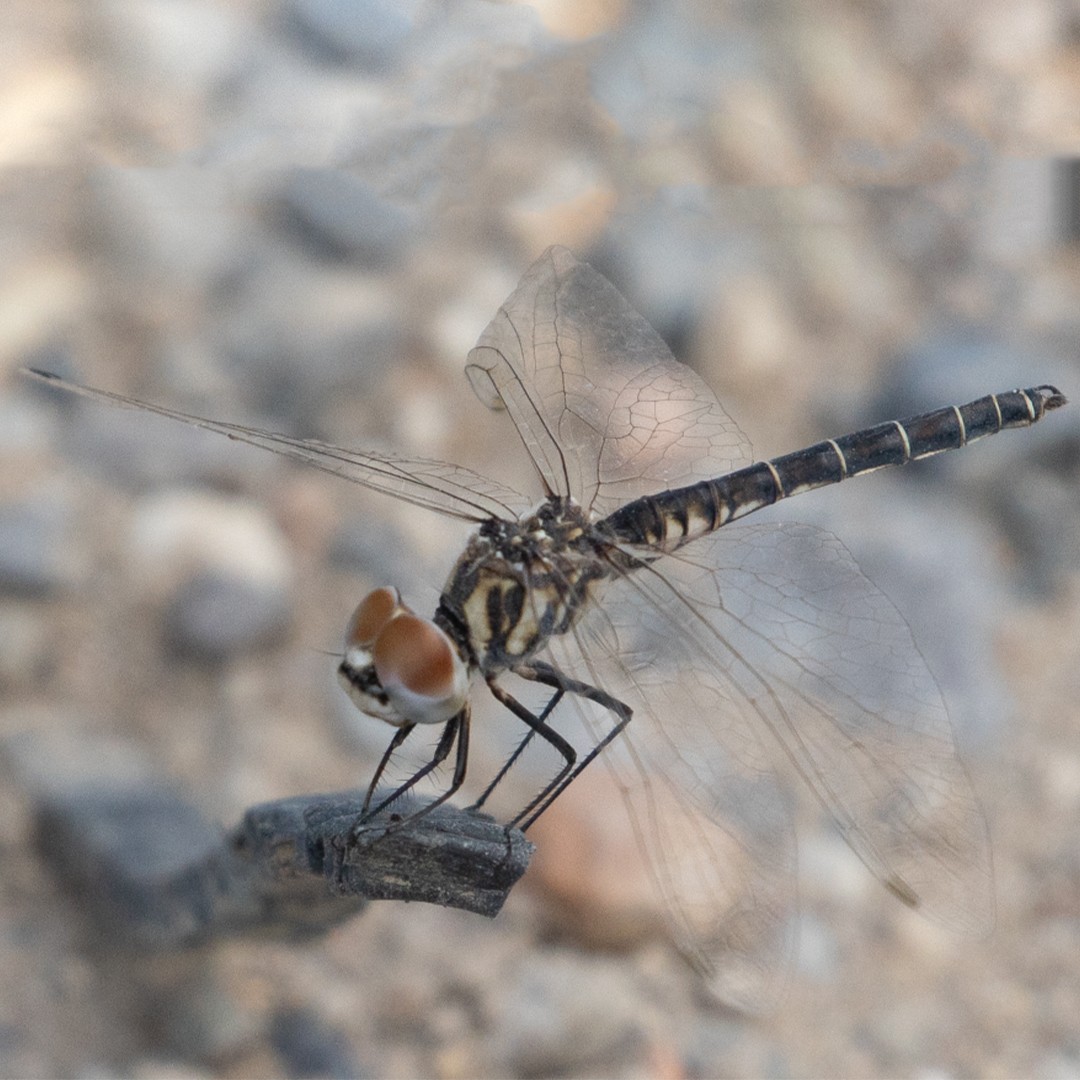
It is a medium-sized dragonfly with brown capped eyes, greenish brown thorax and bluish abdomen. Female lacks the powder blue pruinescence. It prefers medium to slow-flowing streams in the dry zones and hot plains. Adults are common around open rocky and sandy beds of the streams.
7. Slender skimmer
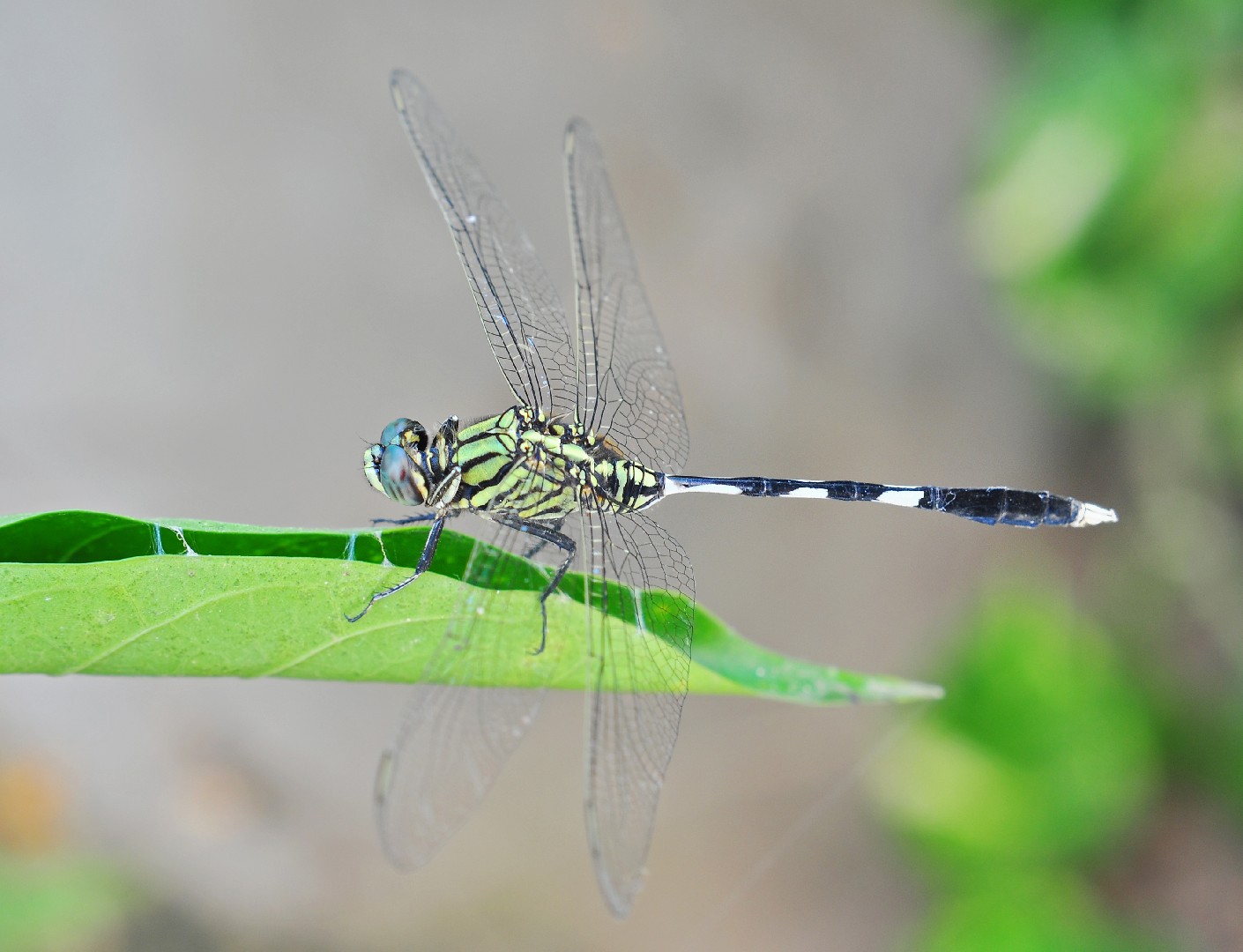
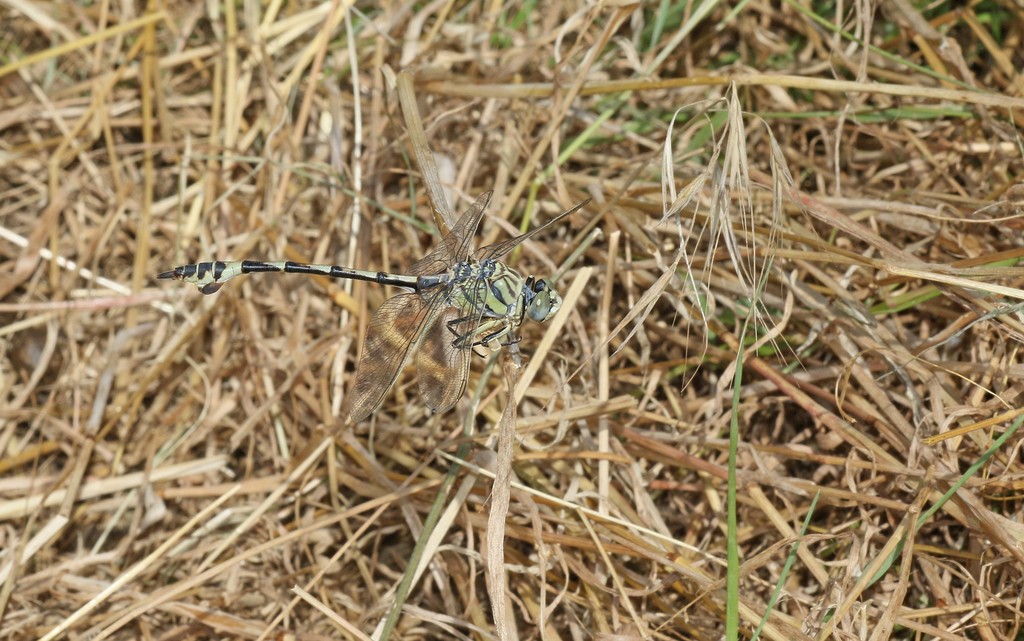
The species is on the IUCN Red List as not endangered, year of assessment 2009. The slender bank dragonfly occurs from Southeastern Europe and North Africa to Japan and Australia

8. Banded demoiselle
This is a large damselfly with a total length of up to 1.9 in and a hindwing length of up to 1.4 in. Male and female are variable in color and pattern. The male has translucent wings which each have a broad, dark iridescent blue-black spot (or band) across the outer part. On immature dragonflies the spot is dark brown. The body can be a metallic blue or bluish green or a combination of both colours, depending on the time of year and location. The dark wing patch of the male starts at the nodus (the slight dip midway down the upper edge of the wing) but can reach up to the wing-tip in southern races.
9. Mediterranean spiny stink bug
10. Keeled skimmer
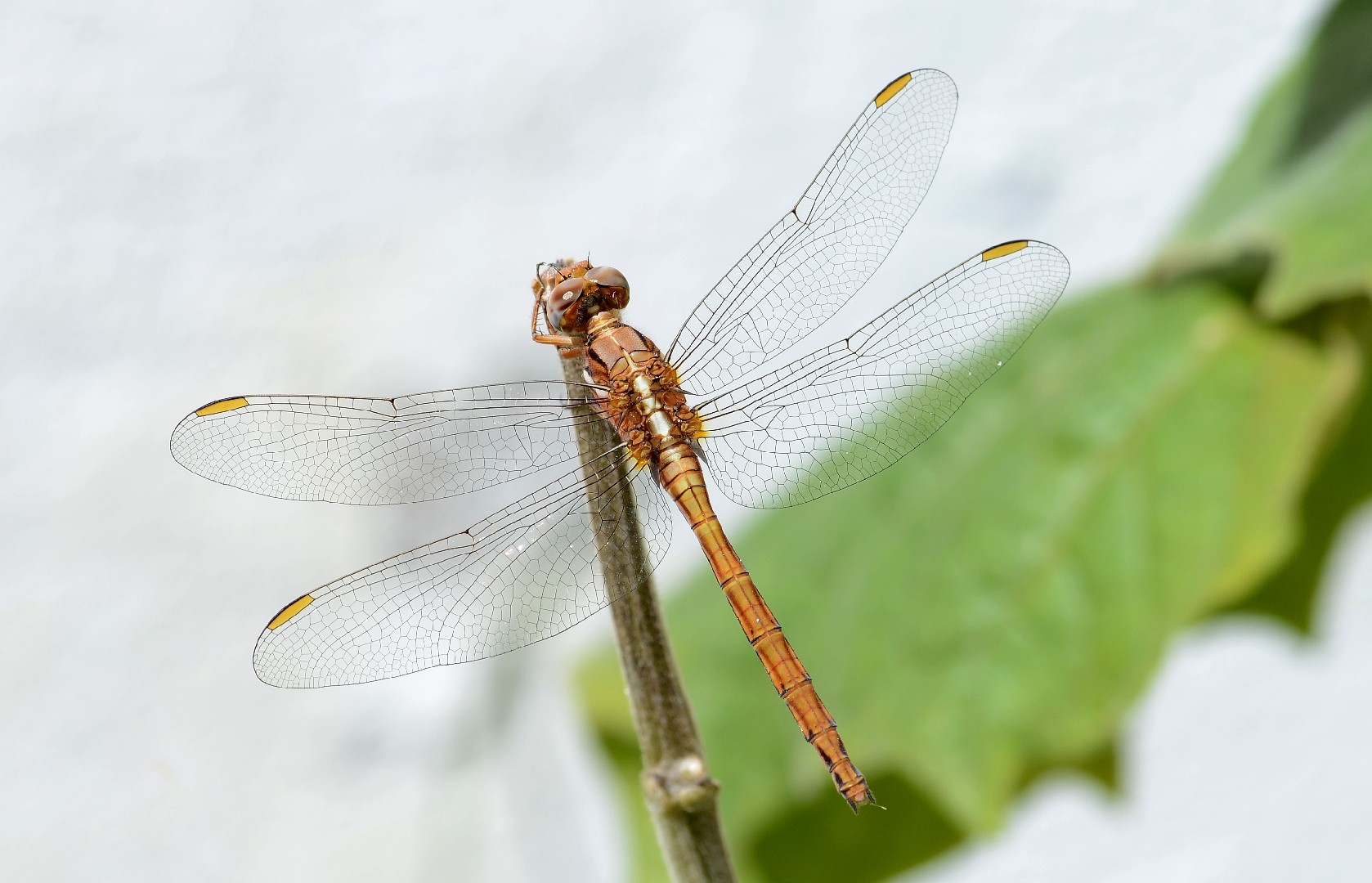
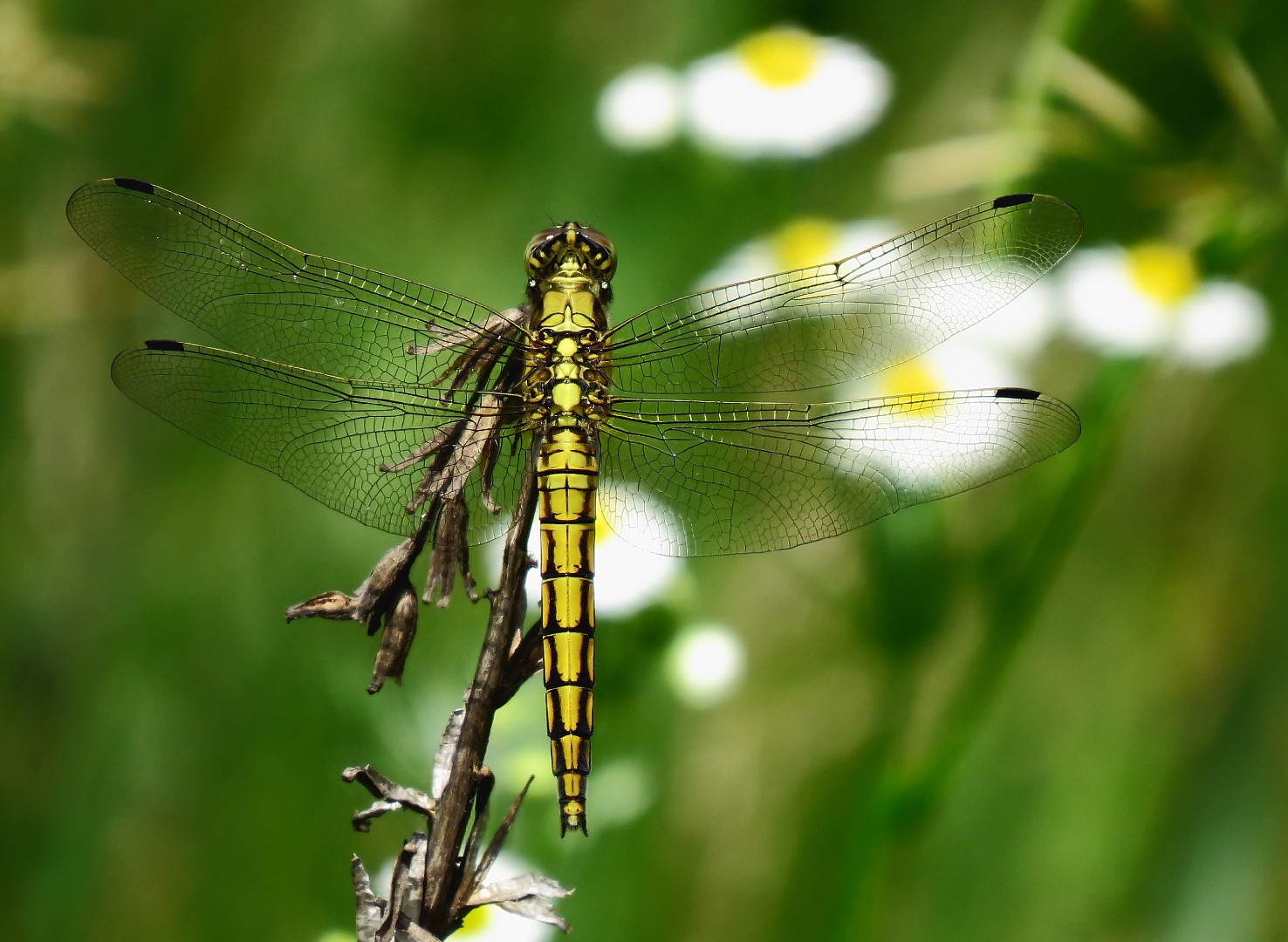
Orthetrum coerulescens can reach a body length of 4 - 4.5 cm. These dragonflies have a thorax with pale yellow ante-humeral stripes. In the males the color of these stripes fades with age. The abdomen is rather slim and shows an evident dorsal keel. Males have blue-grey eyes and a blue pruinescence on the abdomen, developed with age. Young males are yellow-brown. On the contrary some (androchrome) females at the end of the reproductive cycle assume the bluish color of the male. In the female the abdomen is yellowish-brown, with a thin median black line and small transverse lines to the connections of the various segments. The hyaline wings have yellow costa and a long yellow-brown pterostigma (about 4 mm). This species resembles the black-tailed skimmer but is smaller and slimmer and the male has no black tip. Females and immature males lack the black abdominal pattern.
More







