




Top 7 Most Common Insects in Ngorongoro
Insects, an integral part of Ngorongoro’s biodiversity, span a wide realm of forms and functions; their distinct features and adaptability allow them to inhabit diverse environments. The geography of Ngorongoro contributes significantly to its insect biodiversity, dictating the distribution of these fascinating creatures. Insects, both beneficial and pestilent, reflect and shape the health of Ngorongoro's ecosystems. In our 'Top 7 most common insects in Ngorongoro' feature, we delve into the intriguing dynamics these creatures bring to our local environment.

Most Common Insects
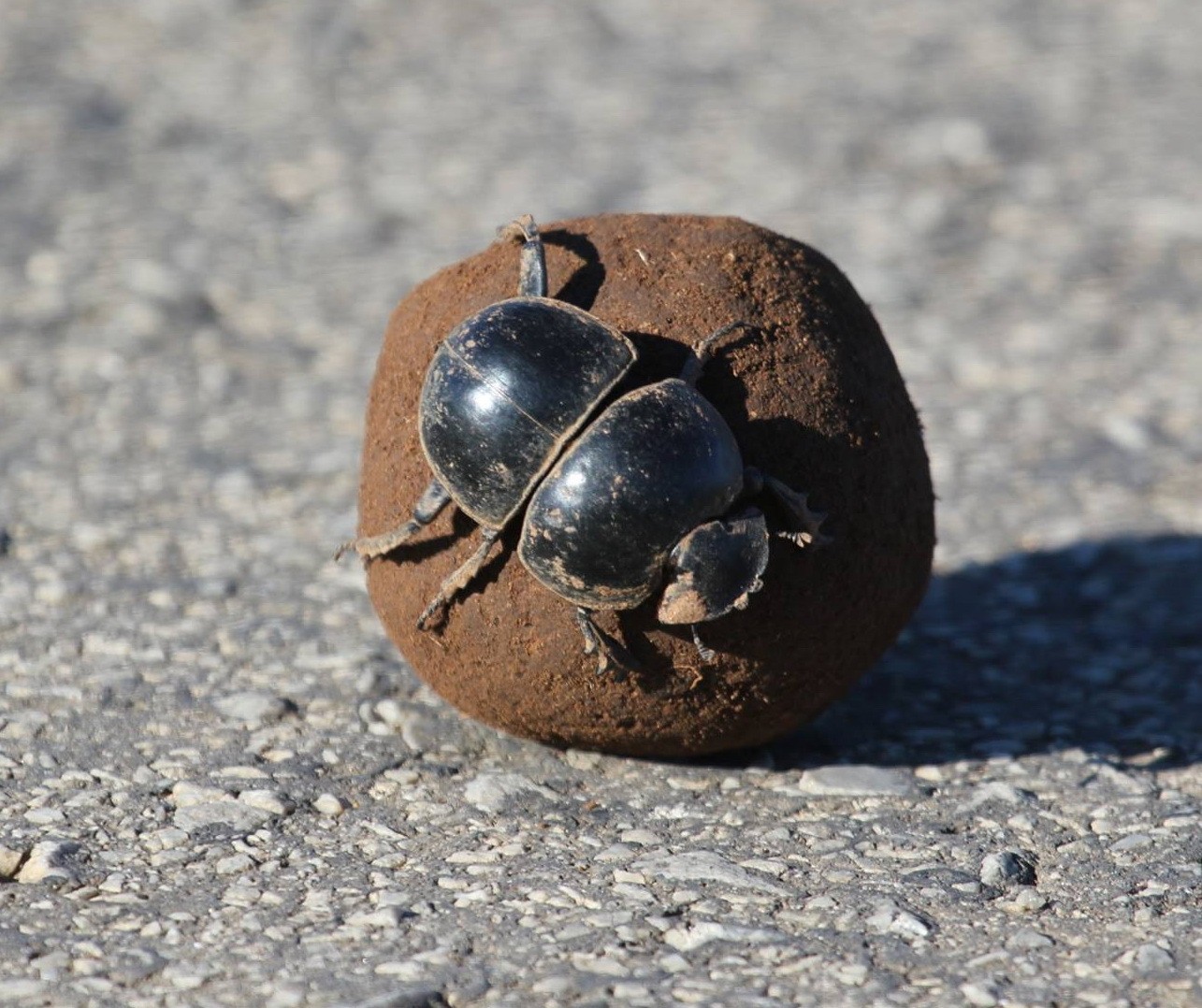
1. Flightless dung beetle
The flightless dung beetle (Circellium bacchus) is a dung beetle that lacks the ability to fly, which is something you might have gathered from its common name. It uses the extra space to store carbon dioxide, which provides it with an unusual breathing tank that allows it to survive well in its homeland, South Africa.

2. Broad-bordered grass yellow
Male in Wet-season form: Upper-side somewhat paler yellow. Fore-wing with the outer marginal black band; the apical edge of costa and the cilia rosy-red. Hind-wing with the black outer band somewhat narrower, macular, the decreasing portions each with a more prolonged inner-tooth, and the yellow ground-colour between each extending to the outer edge. Underside pale yellow, the fore-wing also having a very slightly defined sub-apical inwardly-oblique squamous streak. Fore-wing with the entire costal edge and outer marginal cilia, and also the outer marginal cilia of the hind-wing, rosy-red. Female. Upper-side. Apical edge between the subcostals of fore-wing, and cilia of both wings paler rosy-red. Underside with the markings on hind-wing slightly visible. Fore-wing above with the black outer band broken beneath the lower median veinlet. Hind-wing with the outer band similar to male, its portions slightly broader. Underside similar to male, the markings being slightly more defined.Male in Intermediate form: Upper-side. Fore-wing with the outer band slightly narrower than in wet form; cilia paler red. Hind-wing with the marginal macular band narrower, and composed of smaller portions. Underside similar to wet form. Female. Upperside. Fore-wing with the outer band less broken at its posterior end than in wet form. Hind-wing with the marginal macular band less distinct and narrower. Underside similar to the male.Dry-season form: Both sexes much smaller than in intermediate form. Cilia paler. Male. Fore-wing above with the inner-edge of the marginal band less sinuated than in intermediate form, its posterior end indistinctly broken. Hind-wing with the lower portions of the macular band somewhat larger and less dentate. Underside. Both wings with less defined markings than in intermediate form. Female. Upper-side. Fore-wing with the band slightly broken at posterior end. Hind-wing with the lower portions of band somewhat wider. Underside with the markings indistinct. 
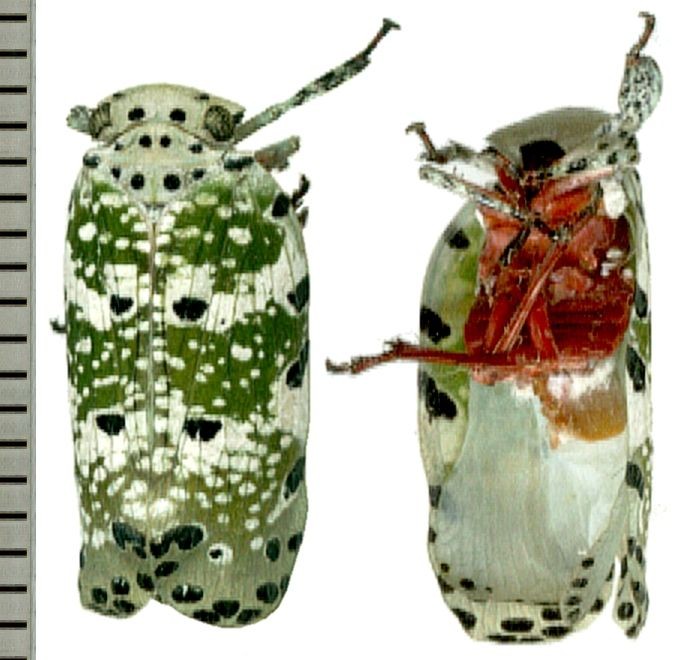
3. Paropioxys jucundus
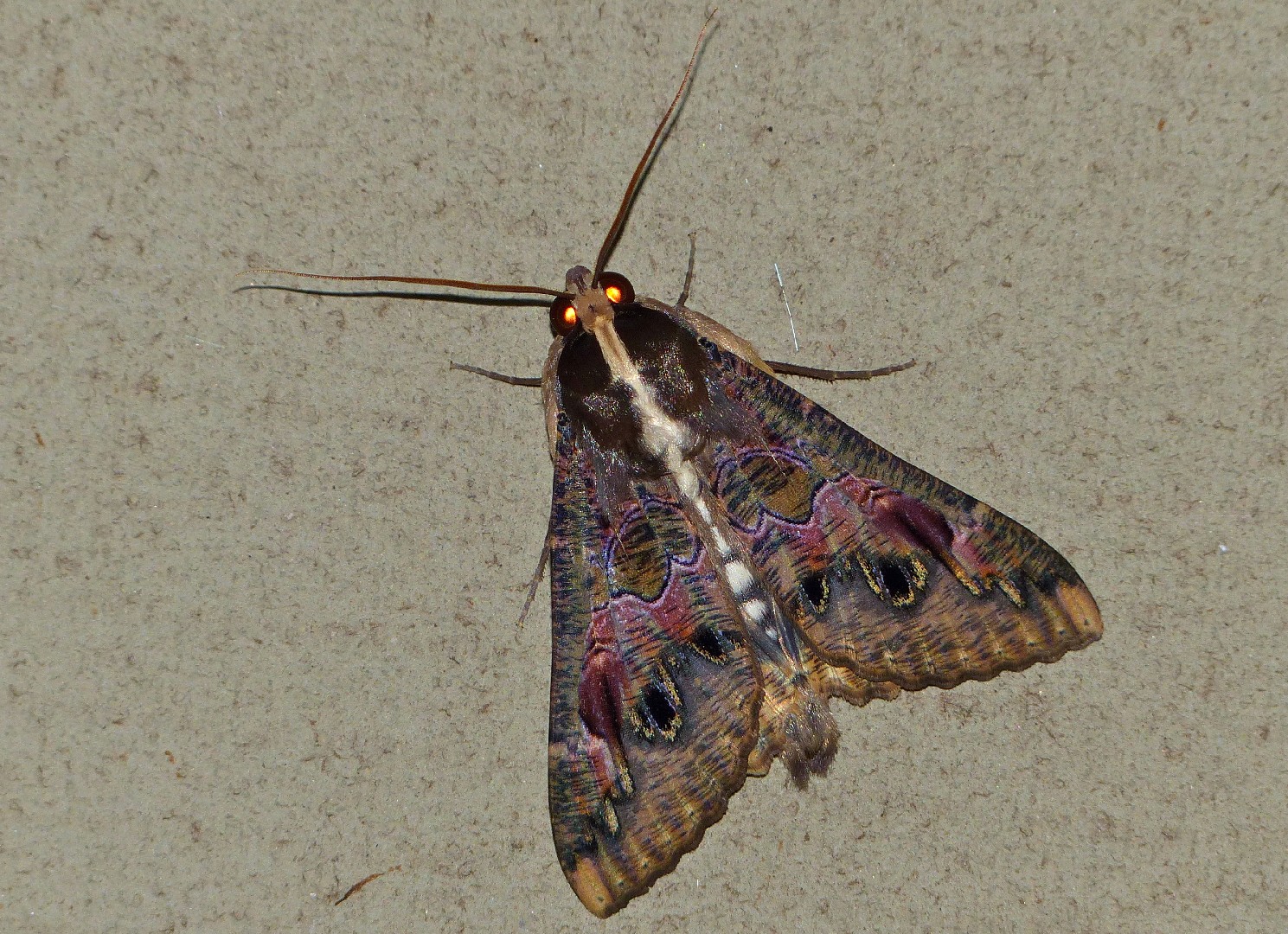
4. Sundowner moth
Its wingspan is about 60–84 mm. Head ochreous white, the basal joint of palpi dark brown. Thorax dark brown above with a broad ochreous-white stripe on vertex. Abdomen dark brown above, with a series of dorsal ochreous-white spots. Forewings reddish-brown with dark stria. There is a pale patch at base of inner margin and an indistinct antemedial angulate line. An irregularly waved medial line with pale outer edge and somewtimes tinged with purple and rufous. Some vinous patches beyond it. Reniform is a narrow lunule with a vinous dash beyond it. There is a crenulate postmedial line found with medial black lunules on it and one towards inner margin, and joined by a crenulate line from near apex. A marginal black specks series also present. Hindwings are fuscous brown where the base and a diffused medial irregular band are pale. An ochreous patch with black strai on it at center of outer margin. Cilia pale. Ventral side pale with fuscous submarginal band towards inner margin of each wing.
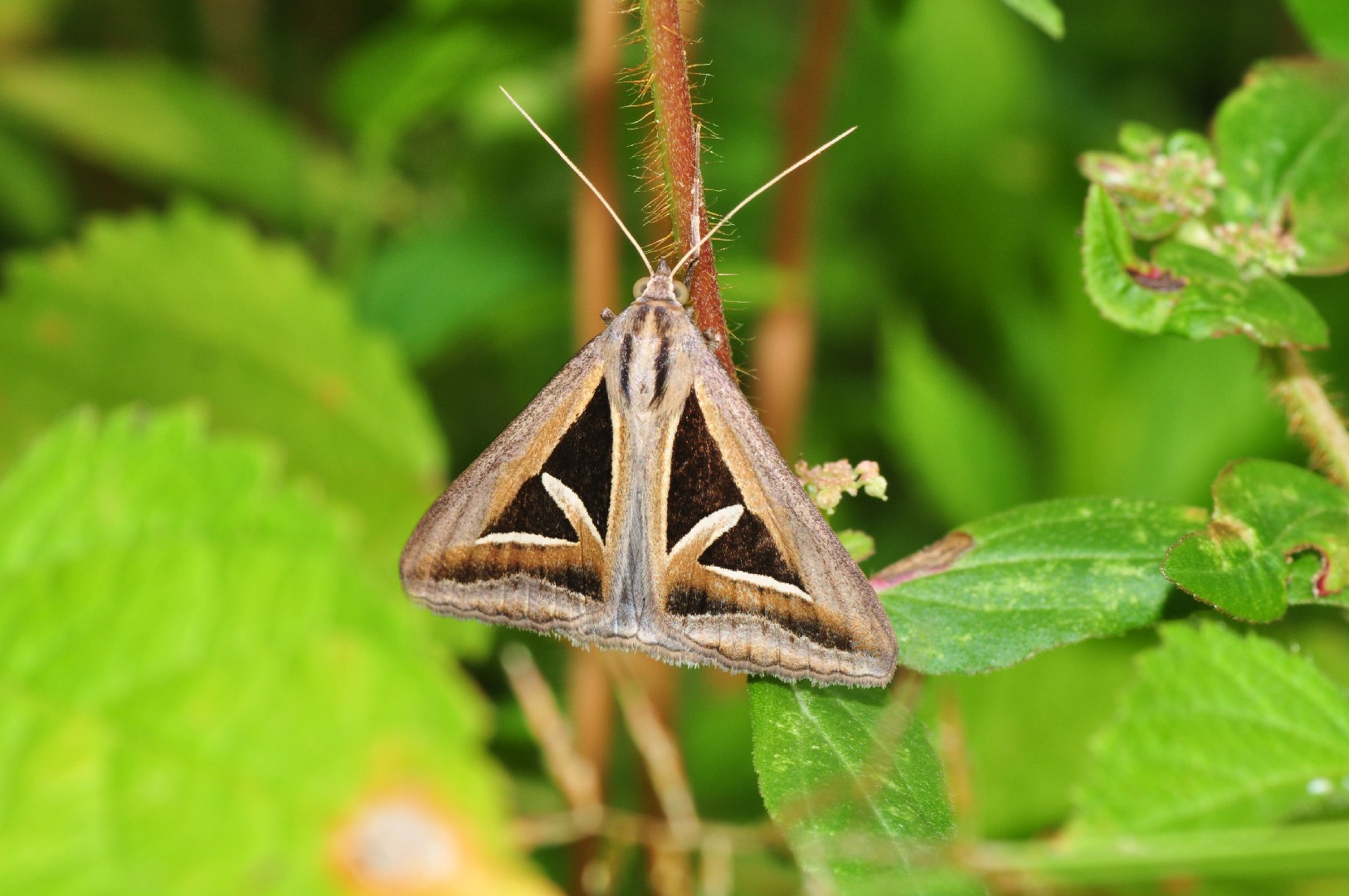
5. Triangles
The wingspan is about 3 - 4.5 cm. Antennae of male ciliated. Mid and hind tibia hairy. Body pale ochreous brown, slightly suffused with fuscous or dark grey brown. Forewings with a large black white-edged triangular patch easily distinguished below the cell from near base to towards outer angle. A similar smaller patch found beyond the cell on vein 5, with some pale fulvous behind it. A slightly sinuous submarginal pale line with patches of black suffusion found inside it and a series of black specks beyond it. A dark marginal line can be seen as well. Hindwings with indistinct medial line and fuscous suffused outer area. Larva has yellow upper half and brown ventral part. The yellow part is broken by longitudinal brown bands, which faints towards posterior and becomes intensive again in prolegs. Eggs olive green and speckled rusty red. First few instars are green with three lateral purple brown lines. Late instars are yellowish. Pupa within a slight cocoon of white silk, which spun amongst leaves.
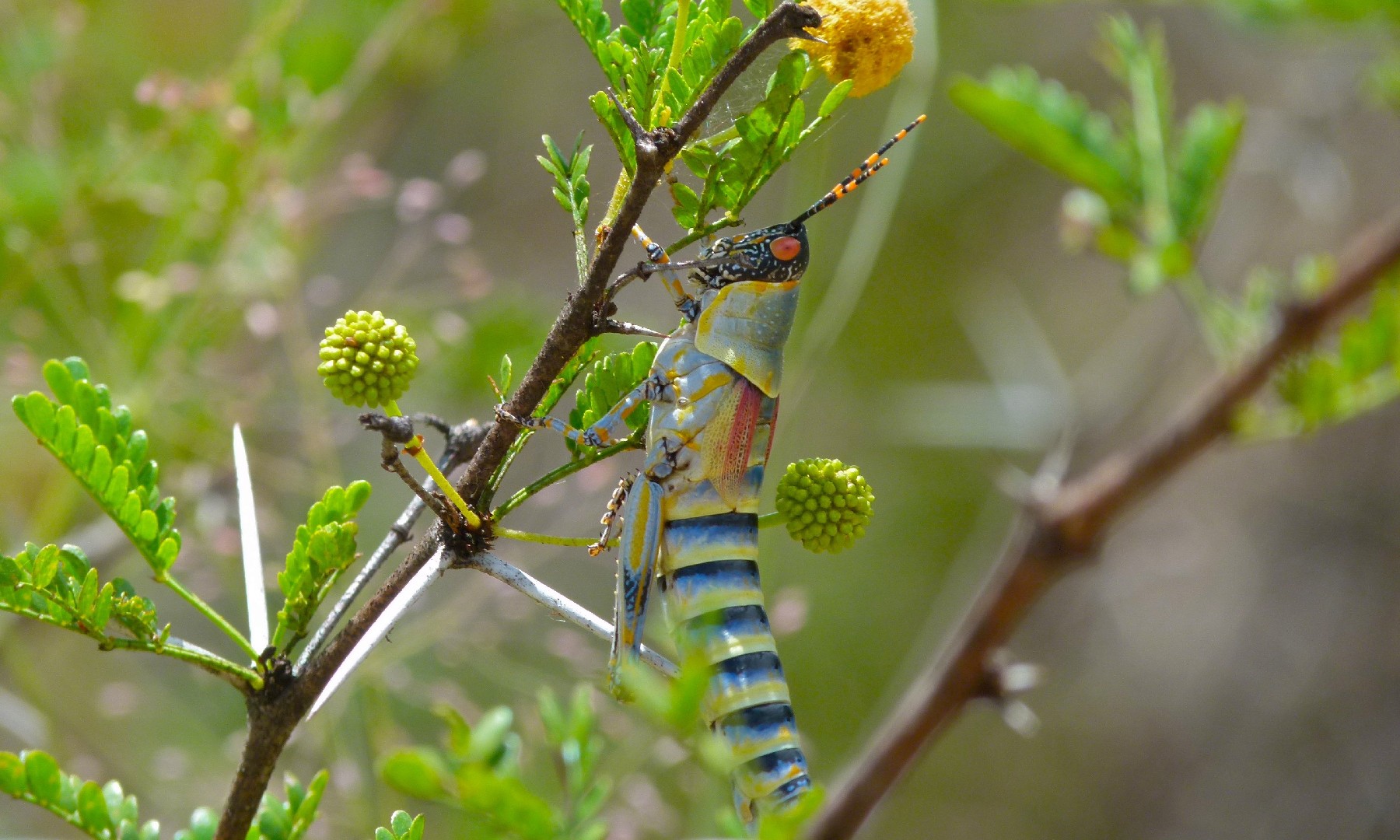
6. Elegant grasshopper
Zonocerus elegans is a right-wing insect from the Pyrgomorphidae family. The scientific name of this species was first validly published in 1815 by Thunberg.
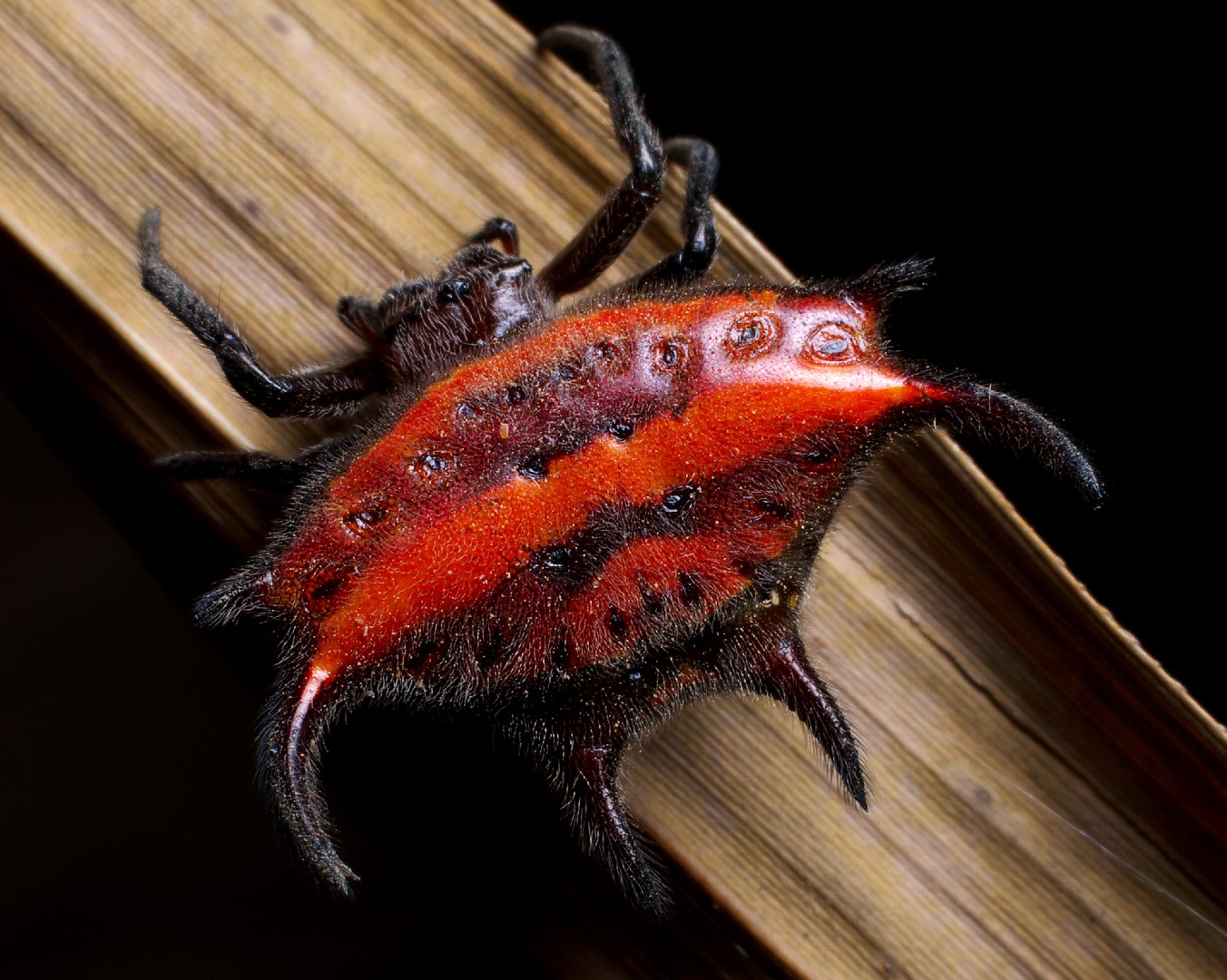
7. Scimitar-horn kitespider
The female, larger and more colourful than the male, has a bright red abdomen decorated with many deep black pits. There is a long, curved black horn at each side and two shorter, straight horns at the front and rear.







