




Top 5 Most Common Insects in Iringa
Insects, with their diverse range of forms and sizes, are vital components within Iringa's ecosystem. Whether we consider pest species or beneficial insects, these fascinating creatures are influenced by the geographical diversity of the region. Examine our 'Top 5 most common insects' list and join us in exploring how Iringa's environmental nuances pave the way for a captivating array of insect life.

Most Common Insects
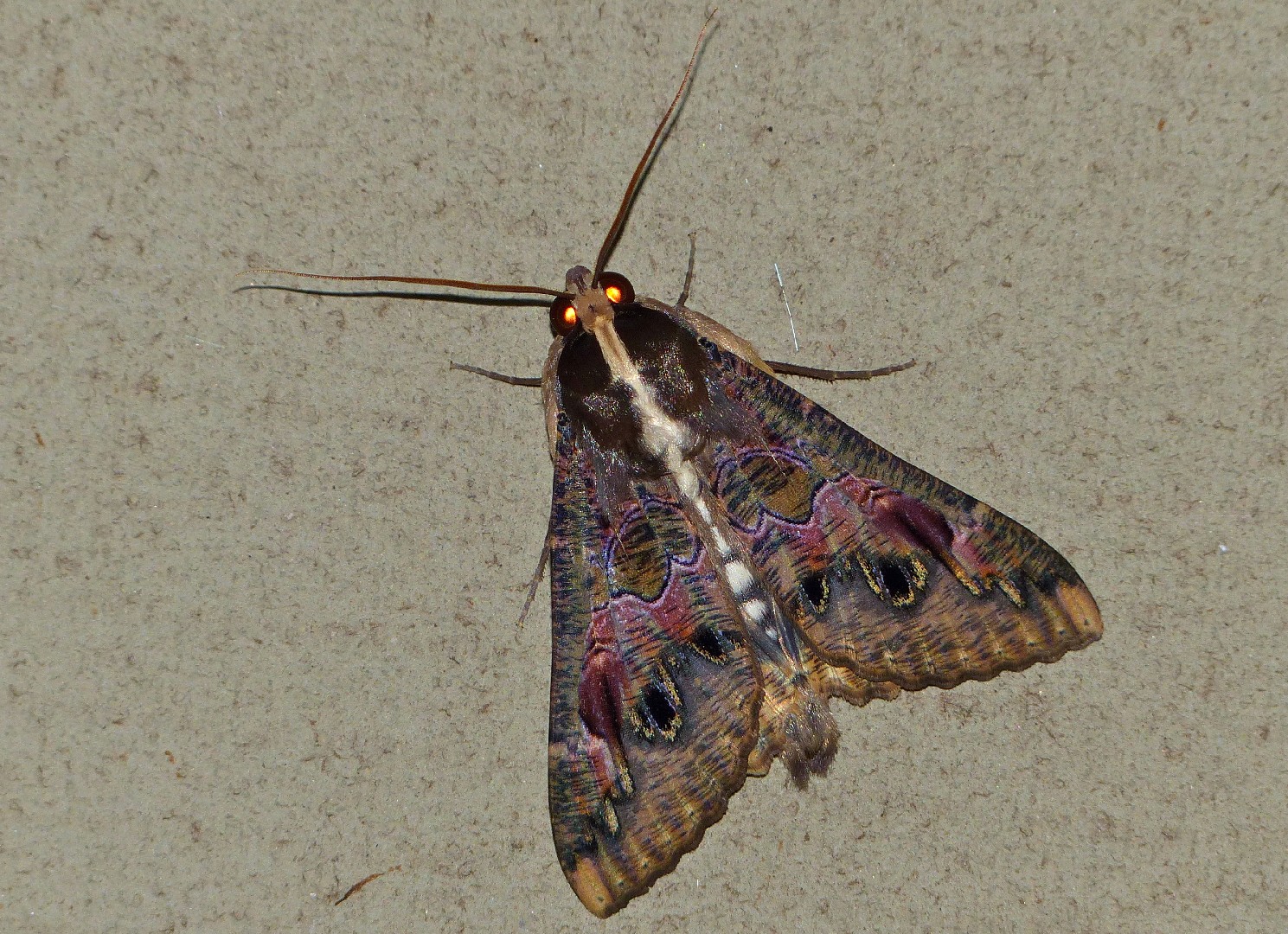
1. Sundowner moth
Its wingspan is about 60–84 mm. Head ochreous white, the basal joint of palpi dark brown. Thorax dark brown above with a broad ochreous-white stripe on vertex. Abdomen dark brown above, with a series of dorsal ochreous-white spots. Forewings reddish-brown with dark stria. There is a pale patch at base of inner margin and an indistinct antemedial angulate line. An irregularly waved medial line with pale outer edge and somewtimes tinged with purple and rufous. Some vinous patches beyond it. Reniform is a narrow lunule with a vinous dash beyond it. There is a crenulate postmedial line found with medial black lunules on it and one towards inner margin, and joined by a crenulate line from near apex. A marginal black specks series also present. Hindwings are fuscous brown where the base and a diffused medial irregular band are pale. An ochreous patch with black strai on it at center of outer margin. Cilia pale. Ventral side pale with fuscous submarginal band towards inner margin of each wing. 
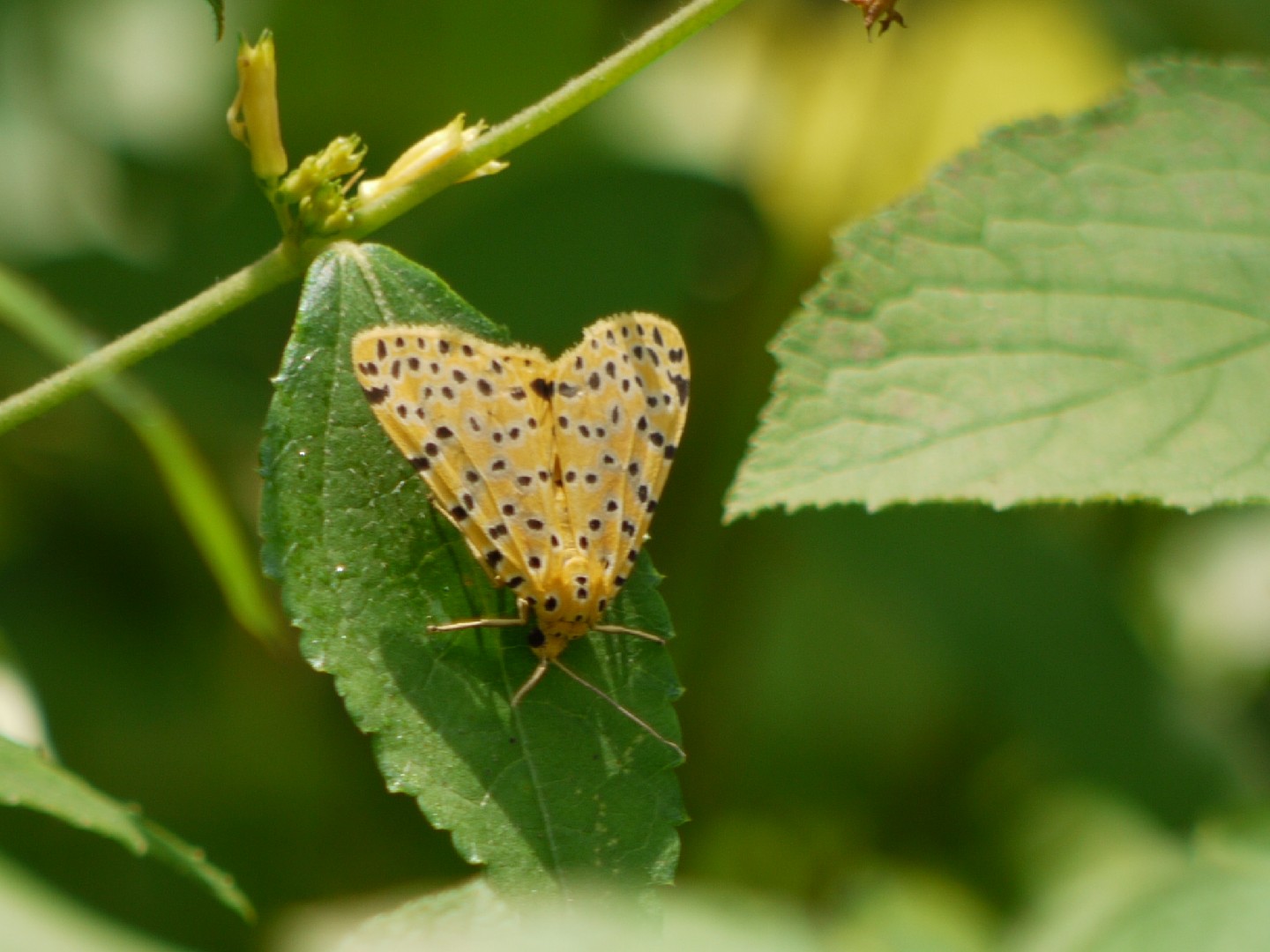
2. Crotalaria pod borer
The wingspan is about 40 mm. The species is extremely variable in wing pattern as well as ground colour. It differs from Mangina argus in the head, thorax and forewing being orange yellowish or whitish. The abdomen and hindwings are bright orange. Markings and spots are similar to its neighbor species. The head of the caterpillar is reddish brown when fully grown. Its body is black with white intersegmental rings that contain broken black transverse lines. Spiracles are in orange patches.
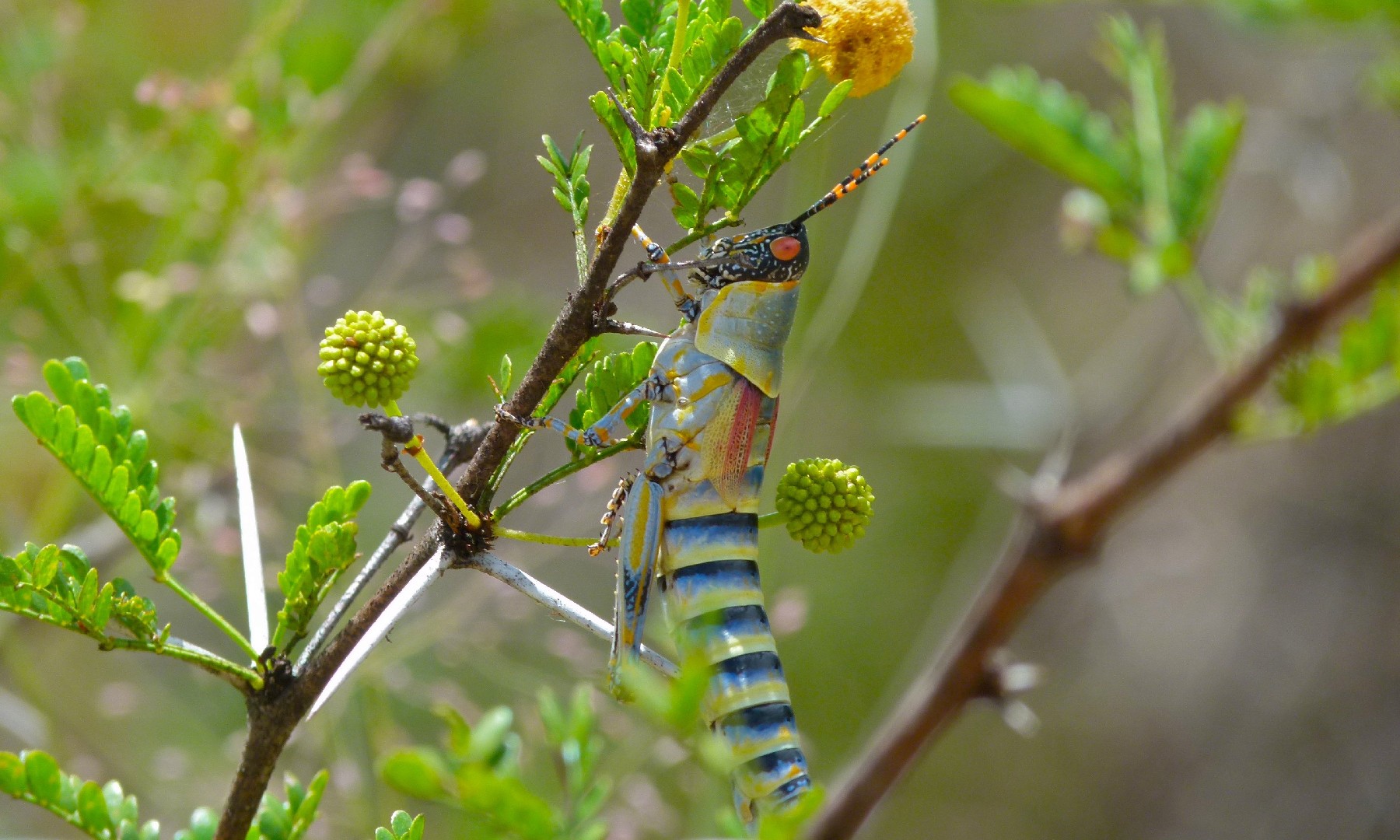
3. Elegant grasshopper
Zonocerus elegans is a right-wing insect from the Pyrgomorphidae family. The scientific name of this species was first validly published in 1815 by Thunberg.
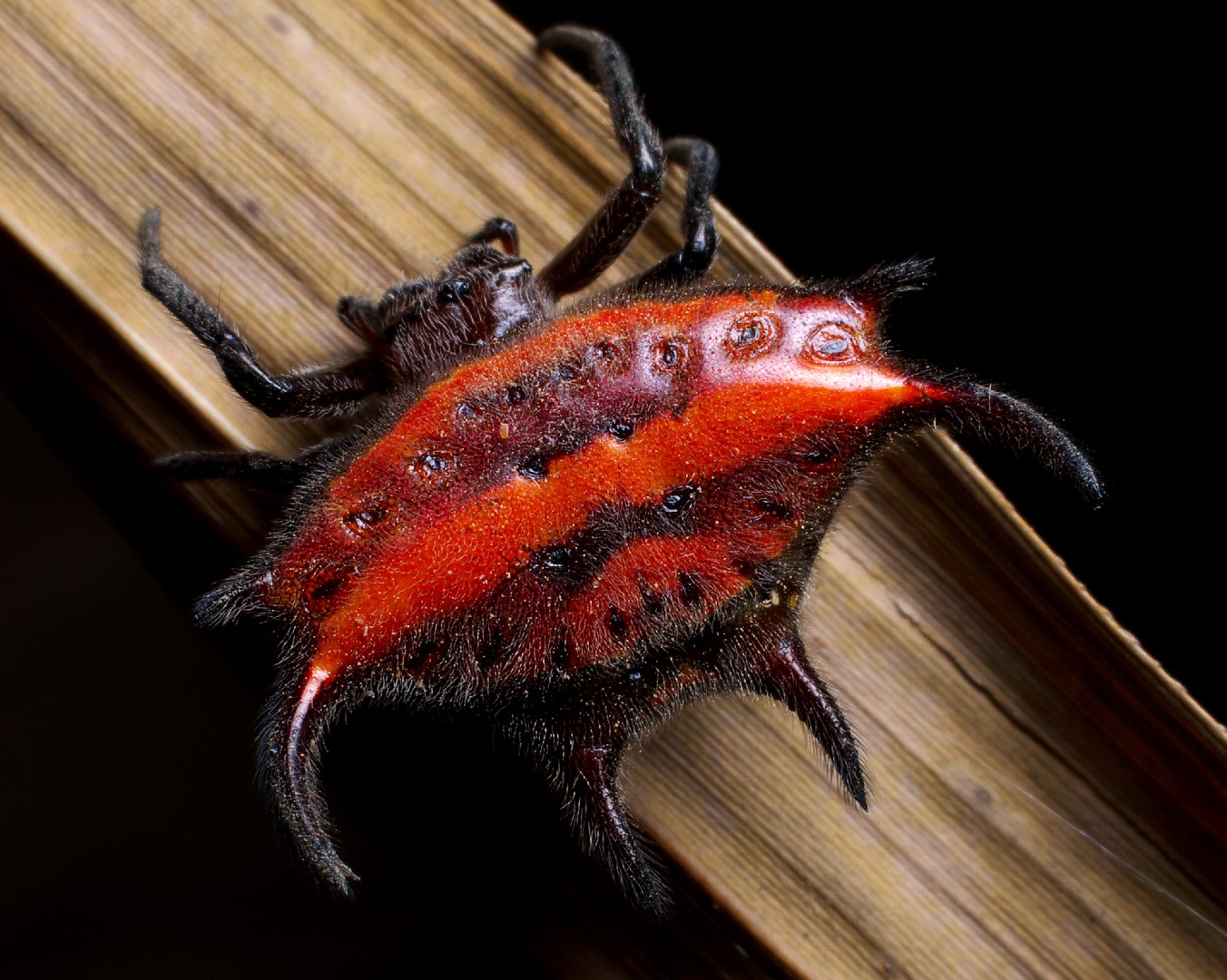
4. Scimitar-horn kitespider
The female, larger and more colourful than the male, has a bright red abdomen decorated with many deep black pits. There is a long, curved black horn at each side and two shorter, straight horns at the front and rear.
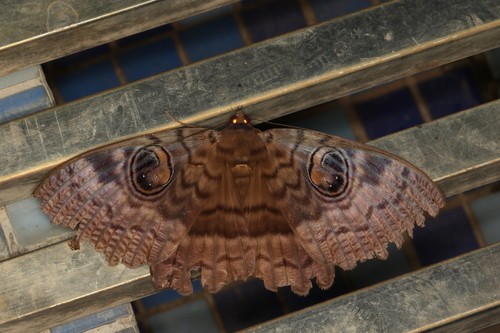
5. Walker's owl
Erebus walkeri is a moth of the family Erebidae. It is found in Angola, the Comoros, the Democratic Republic of Congo, Ghana, Kenya, La Réunion, Madagascar, Malawi, Mauritius, Mozambique, Nigeria, Rwanda, the Seychelles, South Africa (KwaZulu-Natal), São Tomé & Principe, Tanzania, Gambia, Uganda, Zambia and Zimbabwe.







