




Top 18 Most Common Insects in Chiang Rai
Insects, distinguished by their unique features and diverse habitats within Chiang Rai, are remarkable creatures to explore. Grounded by its geographical diversity, Chiang Rai hosts a wide array of these fascinating species, each contributing significantly to our ecosystem. It's intriguing how the environment and insects coexist, with some seen as pests while others play beneficial roles. Ready to delve into our list of the 'Top 18 most common insects in Chiang Rai'? Stay tuned!

Most Common Insects
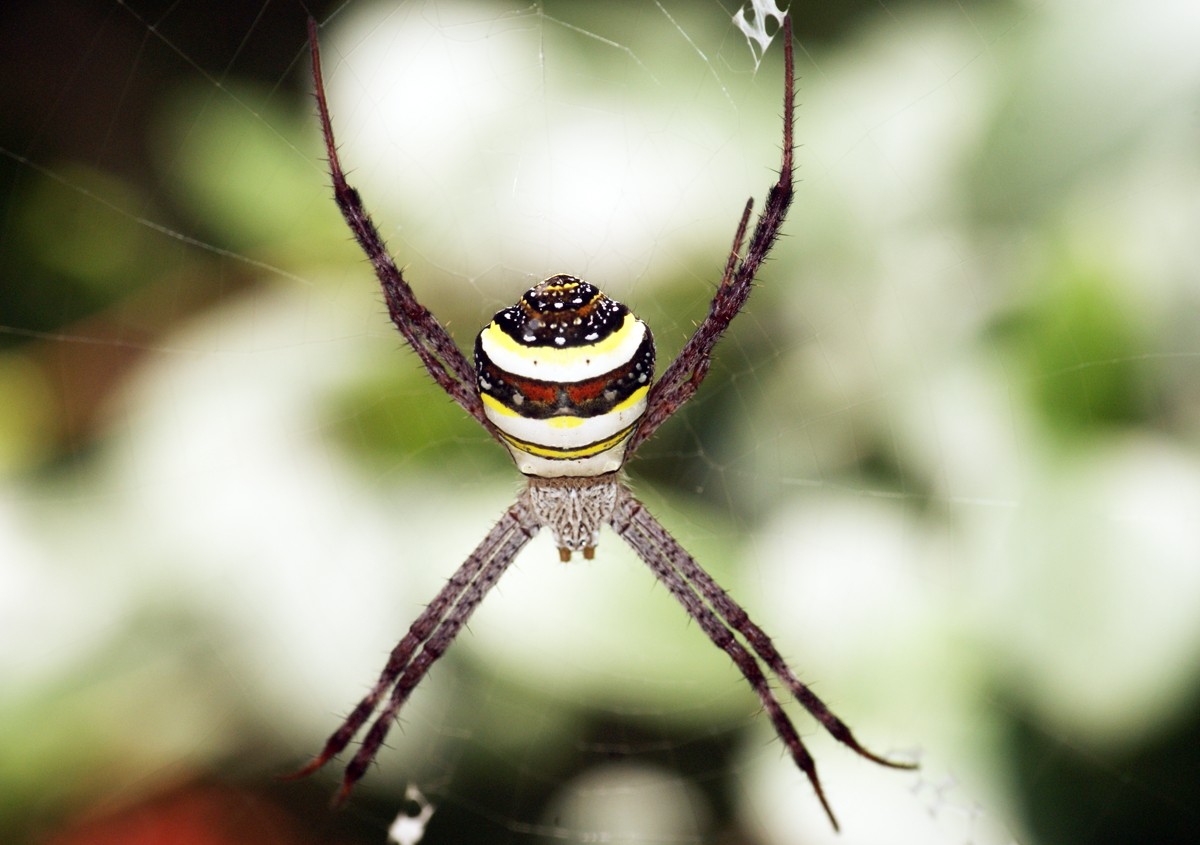
1. Multi-coloured saint andrew's cross spider
Argiope versicolor is a colorful spider. The female's cephalothorax is covered by silvery hair. Its abdomen is pentagonal in shape with white, yellow, red, dark bands dorsally, and two longitudinal yellow stripes ventrally. The dark bands are dotted with white. The legs are orange with dark bands. She usually sits head down in the centre of the web, with legs held spread-eagle in an 'X' shape reminiscent of St. Andrew's Cross. The male is smaller and duller than the female, and brown and cream coloured. 
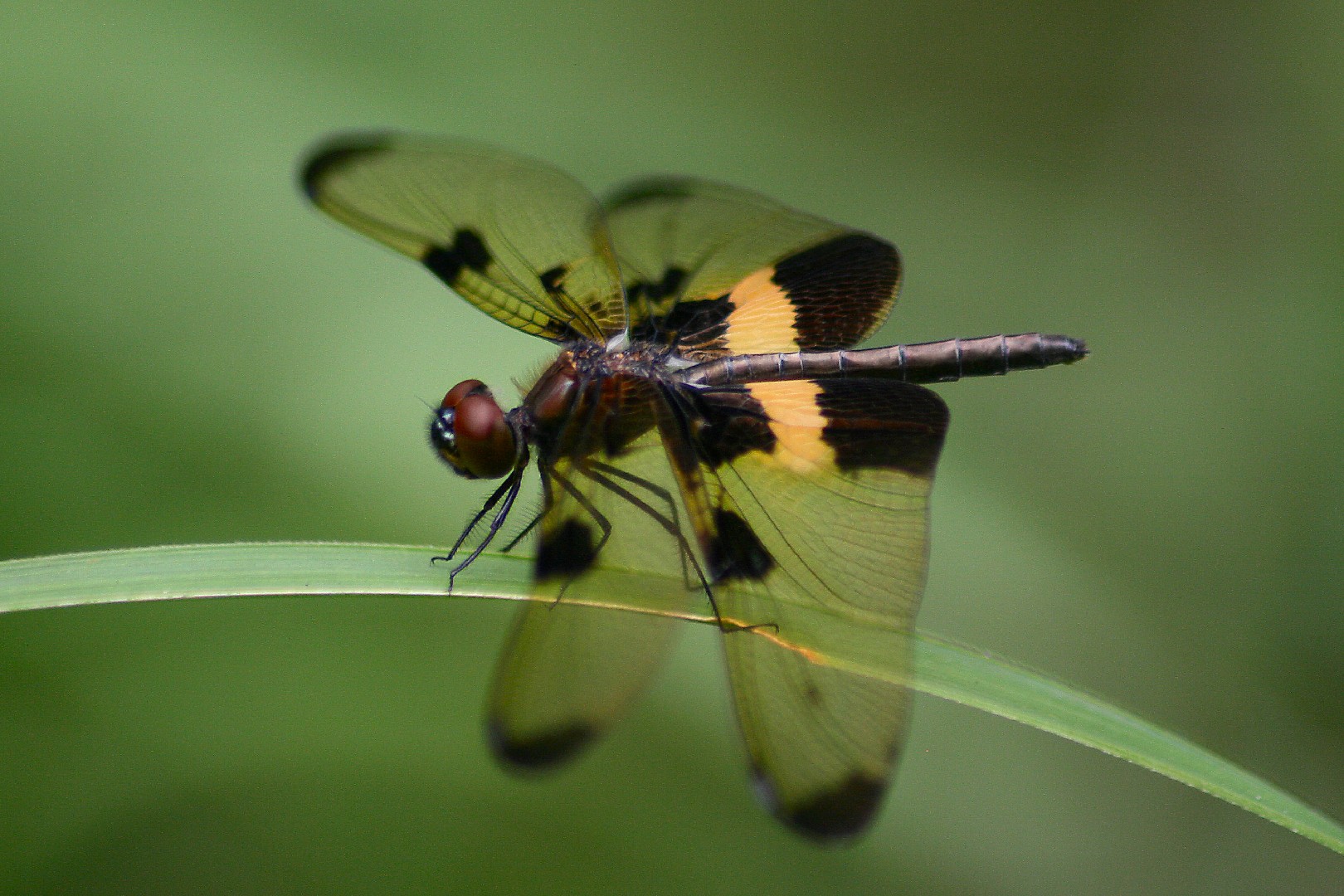
2. Yellow-barred flutterer
The scientific name Rhyothemis phyllis was first validly published in 1776 by Sulzer.
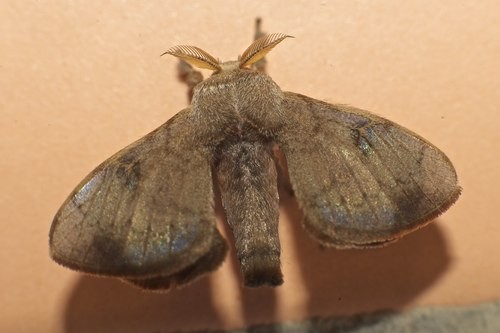
3. Greenish Silk-Moth
The Trilocha varians is an insect that spends a lot of time in the oriental region. Their color varieties can be anywhere from dark brown to dark red. You may see them feasting on a ficus, which is one of the larva's favorite meals.
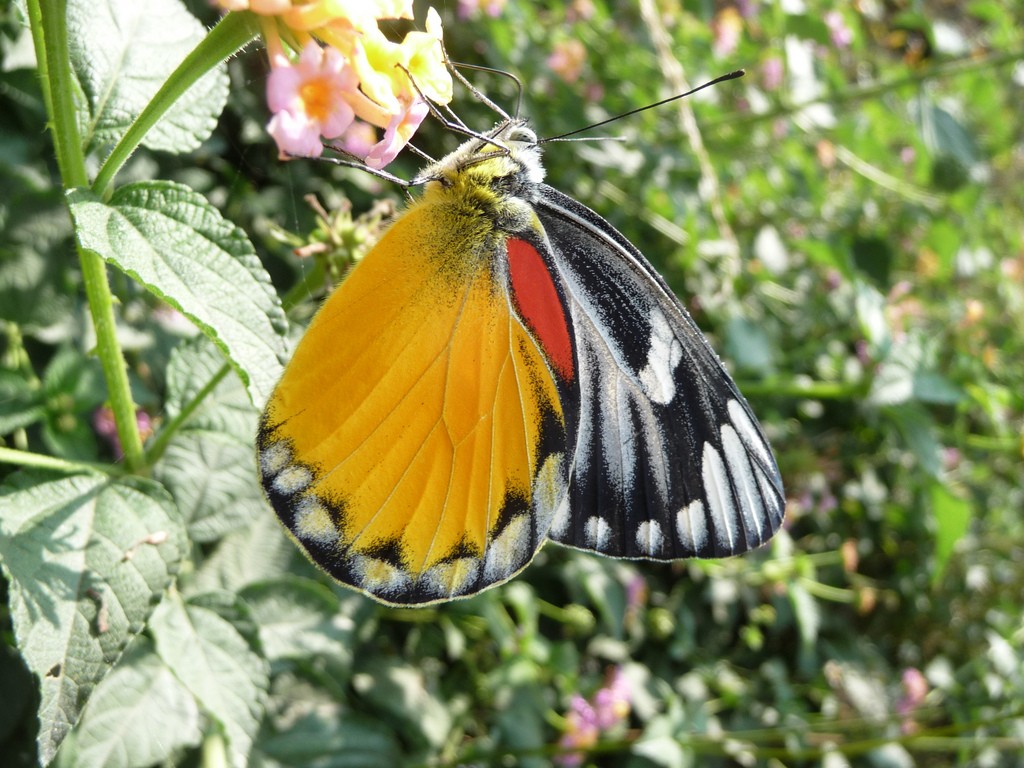
4. Red-spot jezebel
Delias descombesi, the redspot Jezebel is a medium-sized butterfly of the family Pieridae, that is, the yellows and whites.
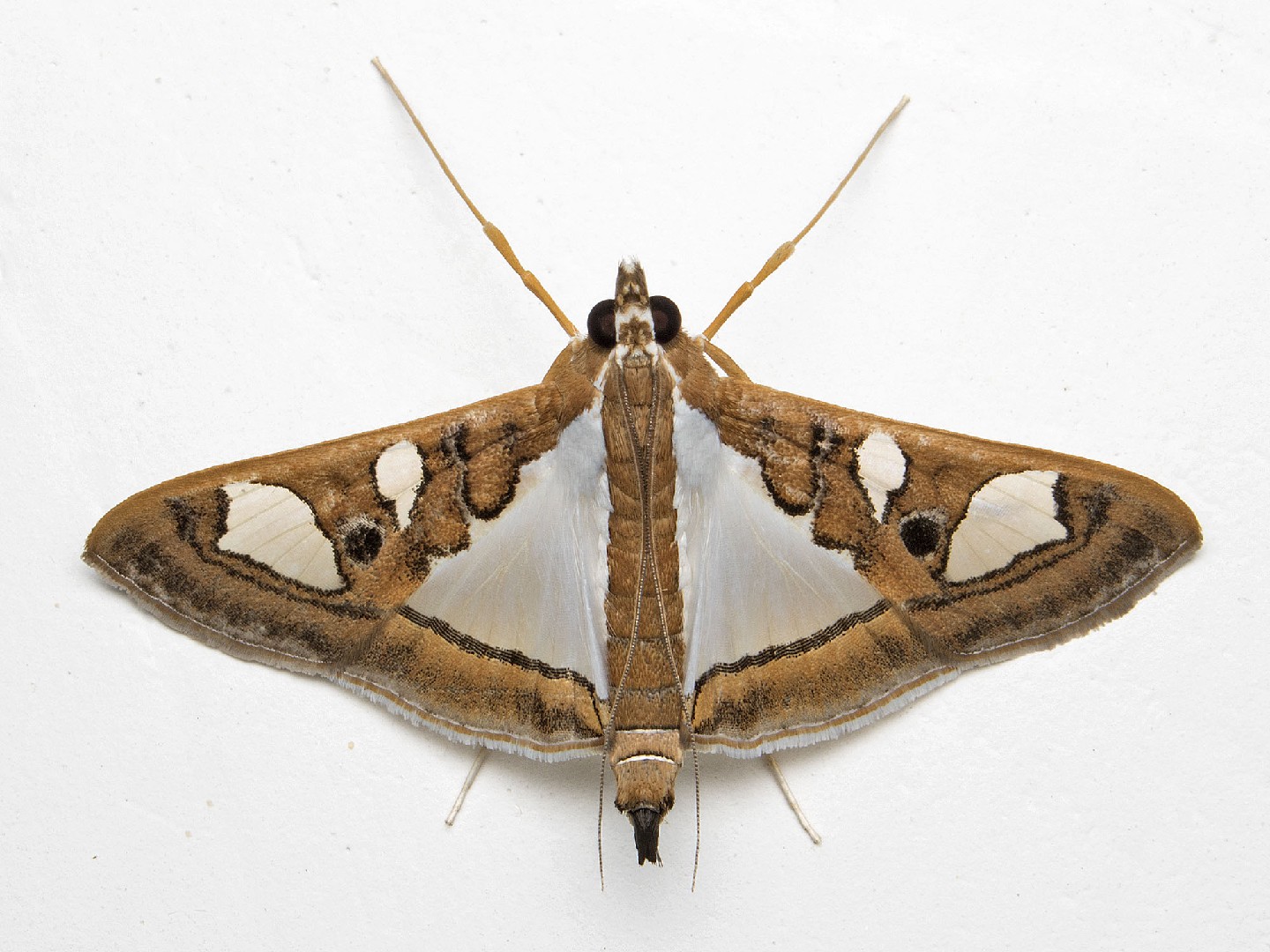
5. Glyphodes bivitralis
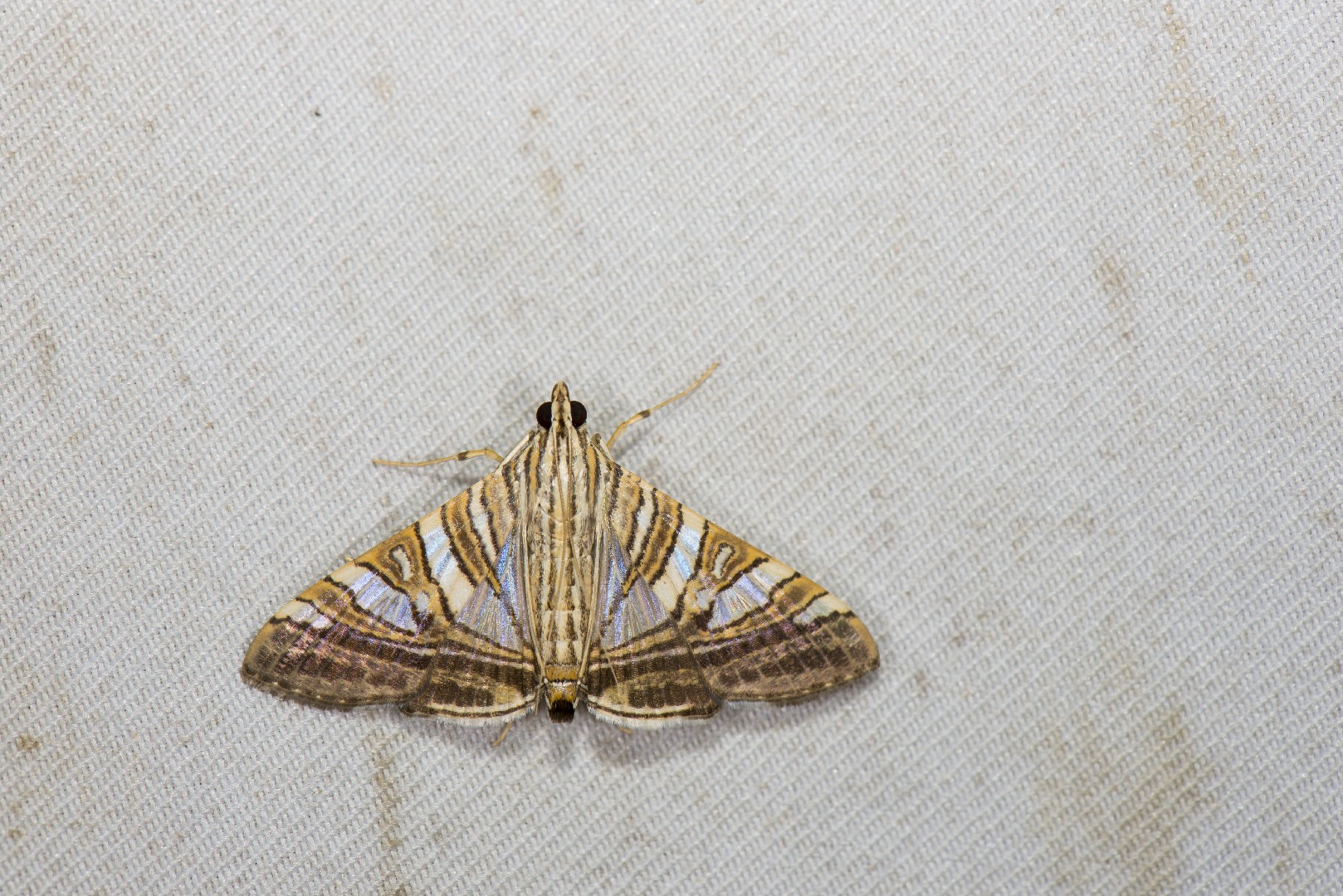
Glyphodes bivitralis is a moth of the family Crambidae described by Achille Guenée in 1854. It is native to south-east Asia, including Hong Kong, India, Japan, Taiwan and Thailand. It is also found in Queensland and Hawaii. The wingspan is about 30 mm. The forewings are brown with white patches and the hindwings are white with a broad brown margin. The larvae feed on Erythrina speciosa and Ficus variolosa. They live in a shelter made by curling a leaf of the host plant with silk. Young larvae are green with black markings and four black spots. Older larvae turn brown, but retain the black markings.
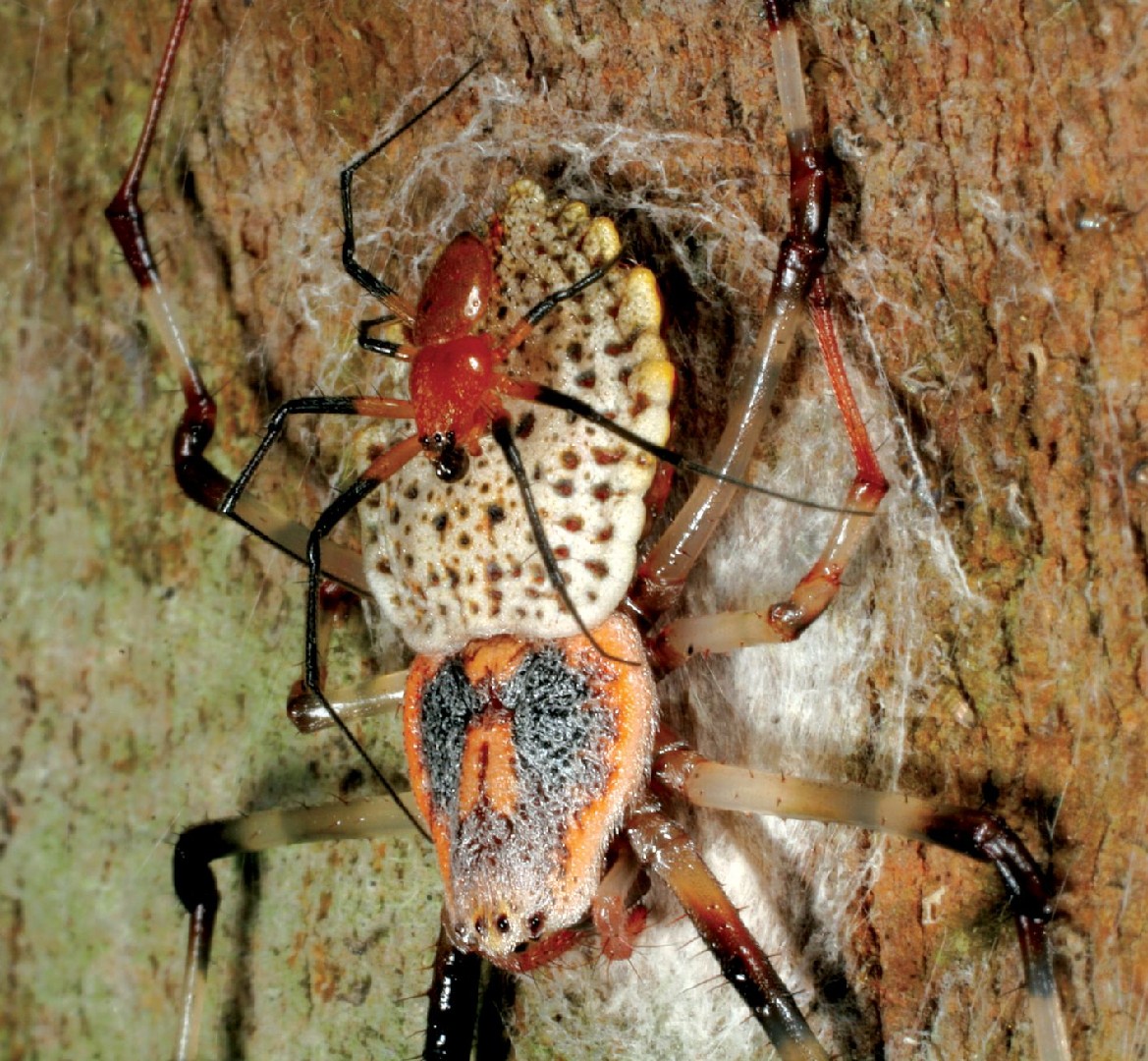
6. Ornamental Tree Trunk Spider
The female has a hairy cephalothorax that is narrow in front and longer than it is wide. It is reddish-brown with a yellowish, U-shaped patch near the front and darker markings further back. The mouthparts are yellowish-brown and the long, slender, hairy and spiny legs are mostly brown. The abdomen has a flattened, pale grey dorsal surface with five pairs of sigilla (puncture-like spots where muscles are attached internally), numerous grey specks and a few dark streaks near the back. The male is reddish-brown with dark legs. His body length at 5 to 7 mm (0.2 to 0.3 in) is about half that of the female at 10 to 14 mm (0.4 to 0.6 in). This spider rests head-downwards on the web with its legs flexed. Its colouring makes it well camouflaged.
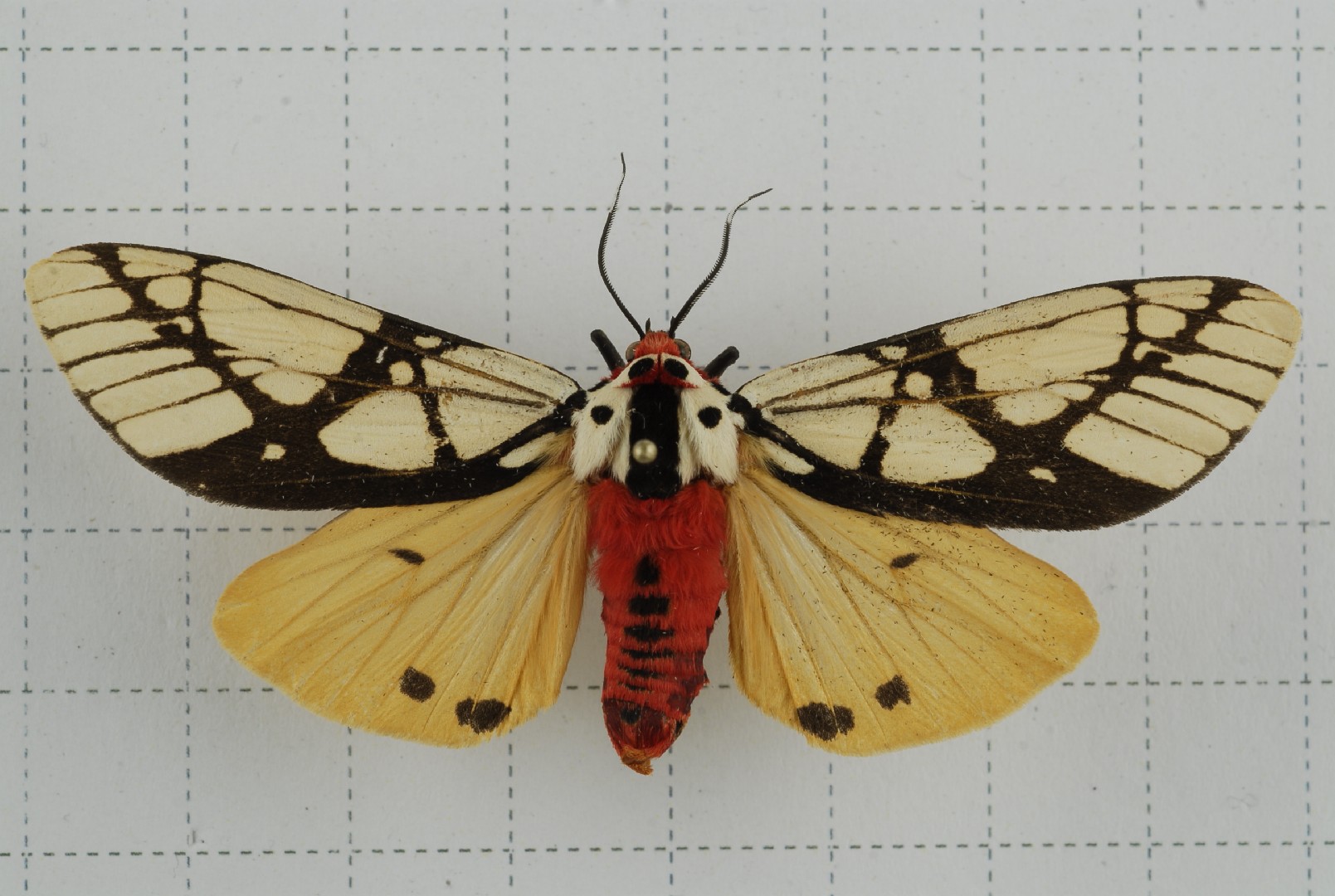
7. Milky tiger moth
The length of the forewings is 3 - 3.5 cm for males and 4 - 4 cm for females.
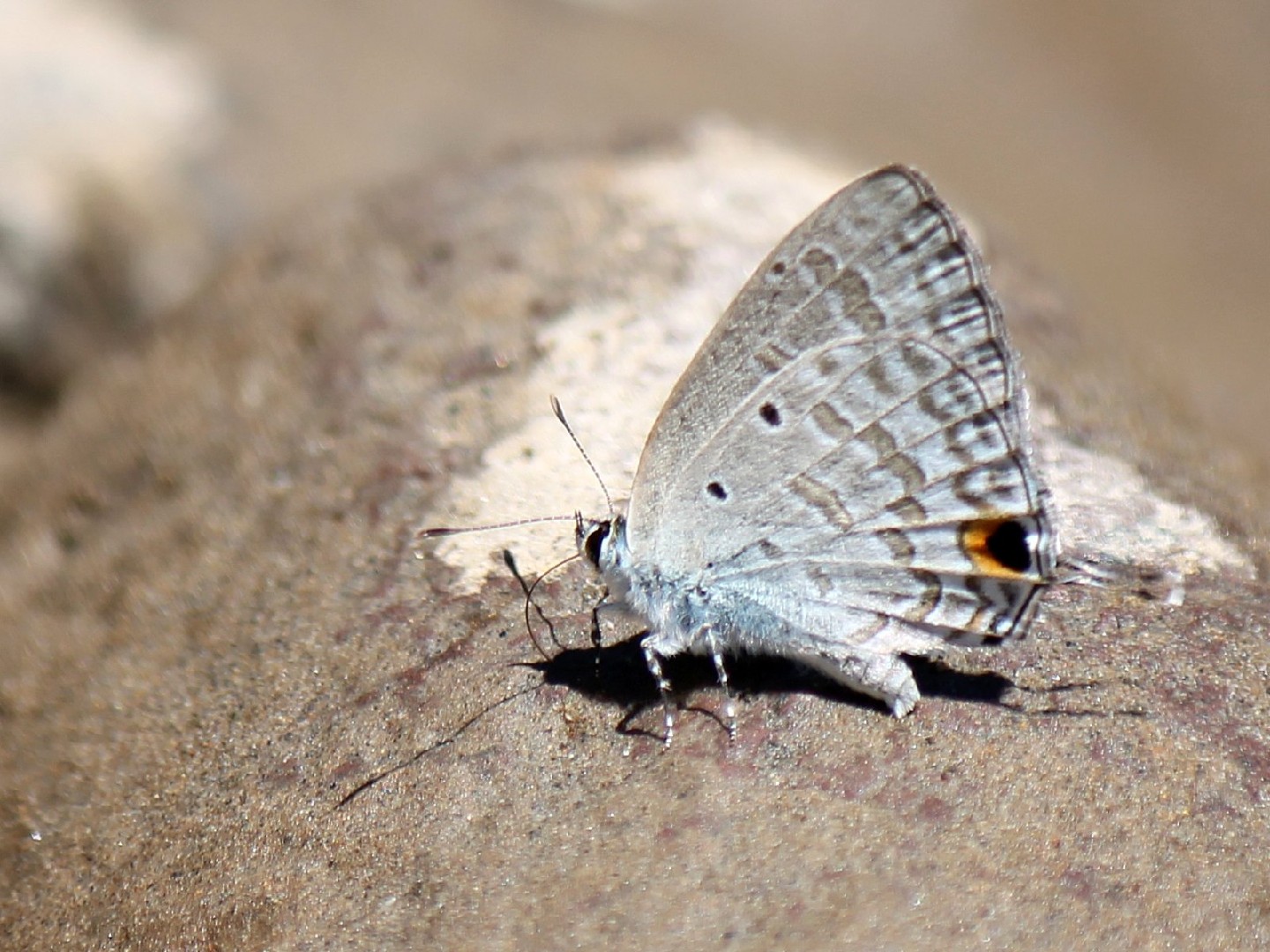
8. Silver forget-me-not
Catochrysops panormus, the silver forget-me-not, is a small butterfly found from India to the Philippines and south to Australia that belongs to the lycaenids or blues family. The species was first described by Cajetan Felder in 1860.
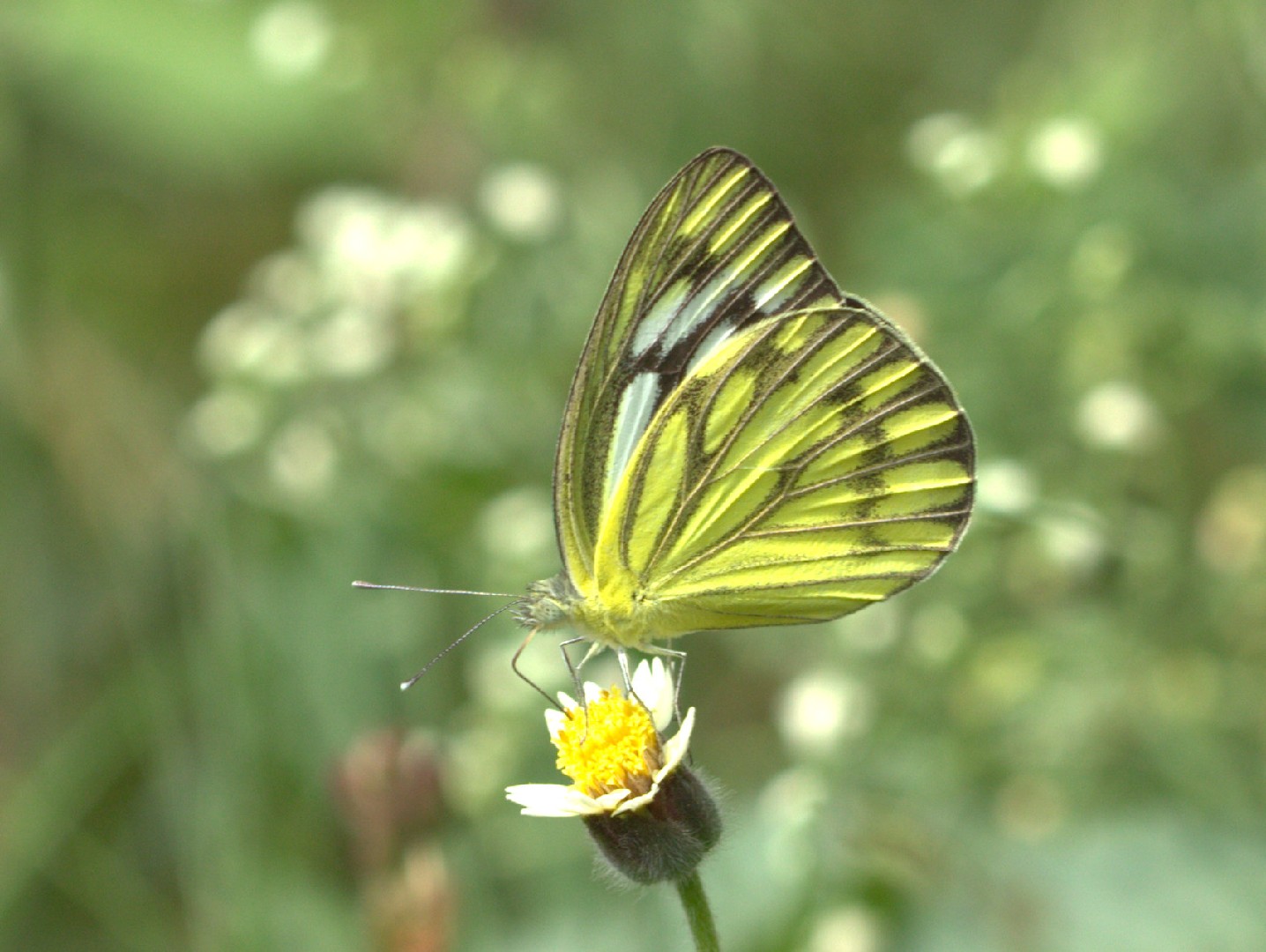
9. Common gull
Wet-season brood. Male upperside: white, a greyish-blue shade at base of the wings and along the veins, due to the dark markings on the underside that show through. Forewing: veins black; apex and termen black, the inner margin of that colour extended in an irregular curve from middle of costa to base of terminal third of vein 4, thence continued obliquely outwards to the tornal angle; interspaces 6 and 9 with short narrow greyish-white streaks of the ground colour that stretch into the black apical area but do not reach the margin; a short black subterminal bar between veins 3 and 4 and another, less clearly defined, between veins 1 and 2. Hindwing: veins 4 to 7 with outwardly dilated broad black edgings that coalesce sometimes and form an anterior, irregular, black, terminal margin to the wing. Underside, forewing: white, the veins broadly margined on both sides by dusky black; costal margin broadly and apex suffused with yellow; subterminal black bars between veins 1 and 2, and 3, and 4 as on the upperside but less clearly defined. Hindwing entirely suffused with yellow, the veins diffusely bordered with black; a more or less incomplete, subterminal series of dusky spots in interspaces 1 to 6; more often than not the spot in 5 entirely absent; a conspicuous chrome-yellow spot on the precostal area. Antennae black, obscurely speckled with white; head and thorax bluish grey; abdomen dusky black; beneath: the palpi and abdomen white, the thorax yellow. Female similar to the male but very much darker. Upperside: veins more broadly bordered with black; in many specimens only the following portions of the white ground colour are apparent. Forewing: a broad streak in cell and beyond it a discal series of streaks in interspaces 1 to 6, 9, and 10; the streaks in interspaces 1 and 3 very broadly interrupted by the transverse black bars; that in 6 more or less obsolescent. Hindwing: a broad streak in cell, a discal series of streaks in interspaces 2 to 7, and a posterior more or less obsolescent subterminal series of greyish-white double spots. Underside similar to that of the male only the veins much more broadly margined with diffuse black scaling. Antennae, head, thorax and abdomen as in the male. Dry-season brood. These differ from the wet-season brood as follows: male upperside, forewing: the apical and terminal black areas much restricted; veins concolorous; black subterminal bare less clearly defined; the lower one often obsolete. Hindwing: the black markings on the termen represented by short triangular irrorations (speckles) of black scales at the apices chiefly of the anterior veins. Underside: as in the wet-season, but the yellow much paler and somewhat ochraceous in tint. Female differs less from the wet-season female, but the black markings on both the upper and underside are narrower and less pronounced, and on the latter the yellow suffusion is paler and ochraceous in tint.
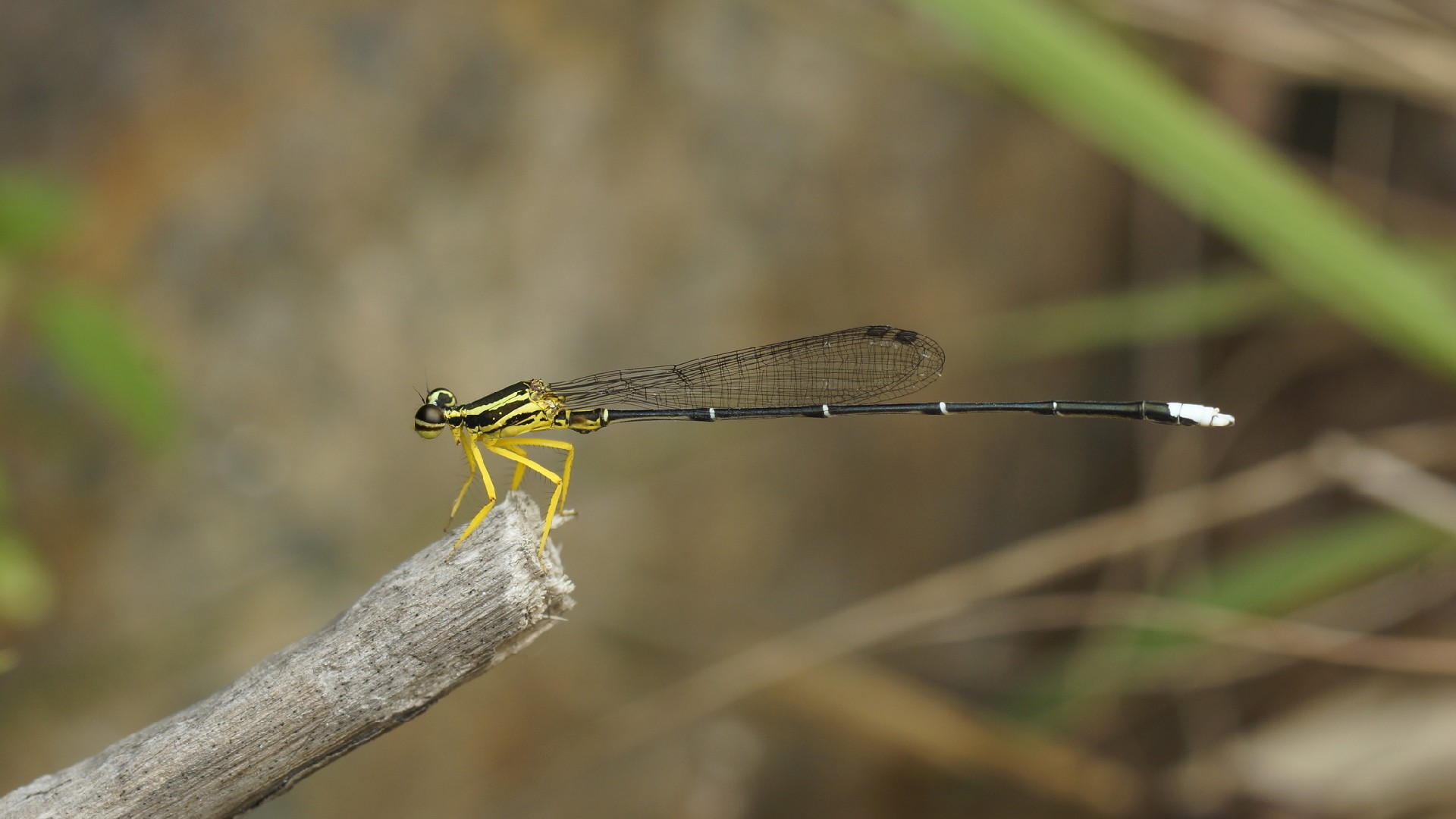
10. Yellow bush dart
It is a medium sized damselfly with brown-capped yellow eyes with a narrow equatorial black band encircling them. Its thorax is black on dorsum with a yellow mid-dorsal carina and a narrow greenish-yellow humeral stripe, split in two and overlap each other. This stripe is followed by a broad black fascia, on the middle of the lateral side of the thorax, peppered with small pale yellow spots. The lateral sides beyond this is yellow, marked with an irregular black stripe on the anterior border of postero-lateral suture, and another one on the middle portion of metepimeron. Abdomen is black on dorsal half up to segment 8; paler on ventral half and with bluish-white basal annules. Segment 9 is bluish-white on dorsal half and black below it. Segment 10 is bluish-white. Anal appendages are pale yellow to white, the inferiors tipped with black. The superiors are half the length of segment 10 and inferiors are at least four times the length of superiors. The female is more robust compared to the male, dull in colors and marks less conspicuously defined. Tenerals of both sex can be whole white with few black markings.
More







