




Top 20 Most Common Insects in Antalya
Welcome to the fascinating world of insects in Antalya! This location offers diverse habitats, resulting in a rich insect diversity with countless roles in the ecosystem. From pests to pollinators, each of our top 20 common insects portrays an intriguing tale about how Antalya's environmental features affect their existence. Get ready to unravel the vital relationship they share with their local environment, - a truly mesmerizing journey.

Most Common Insects
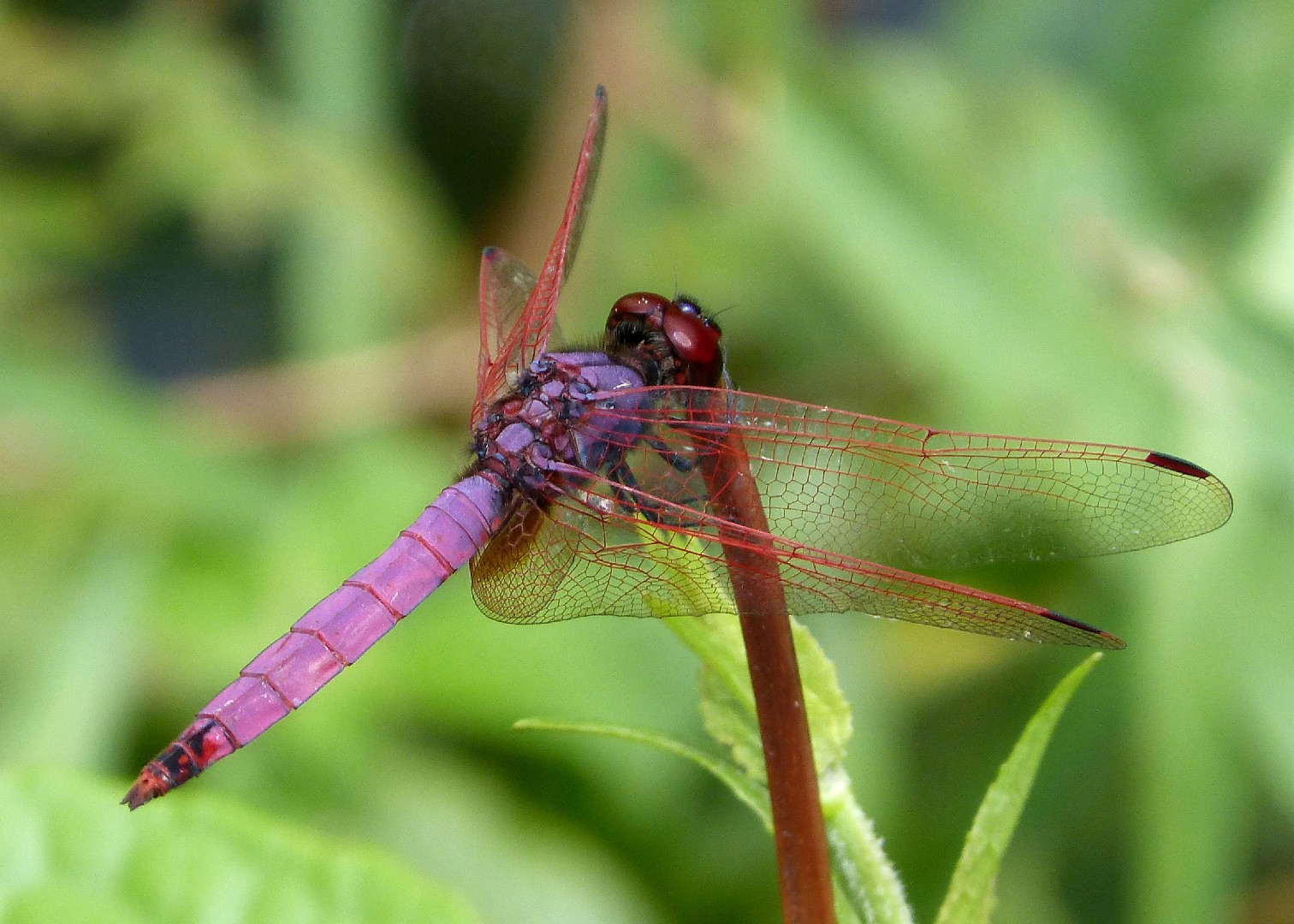
1. Violet dropwing
Trithemis annulata is a robust medium-sized species with a wingspan of 6 cm. The mature male has a dark red head and a yellow labium with brown central spot. The eyes are red with white spots on the rear edge, and the frons is dark metallic purplish-red. The prothorax is violet with slightly darker longitudinal stripes. The membranous wings have distinctive red veins, the pterostigma is orange-brown and there is a large orange-brown splash at the base of the hind wings. The abdomen is fairly broad and is pinkish-violet, with purple markings on the top of each segment and blackish markings on the terminal three segments. Females are a similar size to males but the thorax is brownish and the abdomen is yellow with dark brown markings. The wings of females lack the red veins of males but have similar orange-brown patches. 
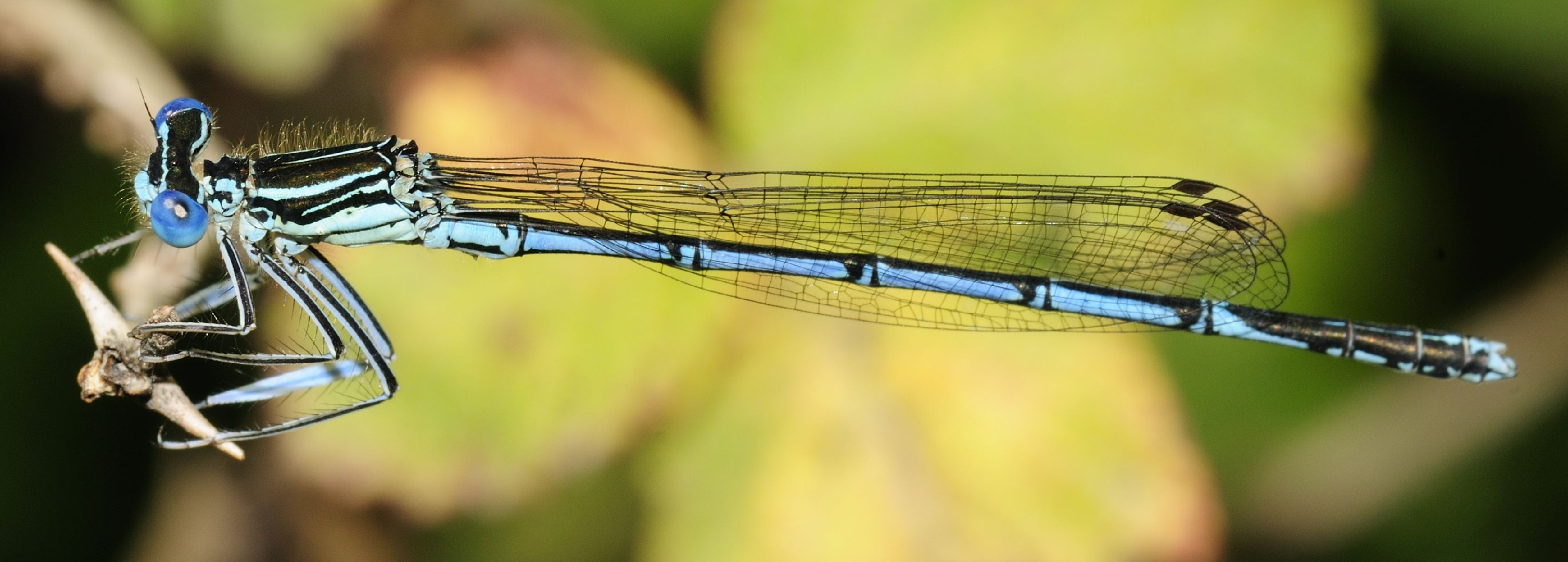
2. White-legged damselfly
The white-legged damselfly or blue featherleg (Platycnemis pennipes) is a damselfly of slow-flowing, muddy waters. It occurs from the Atlantic to Siberia and is often abundant throughout its range.
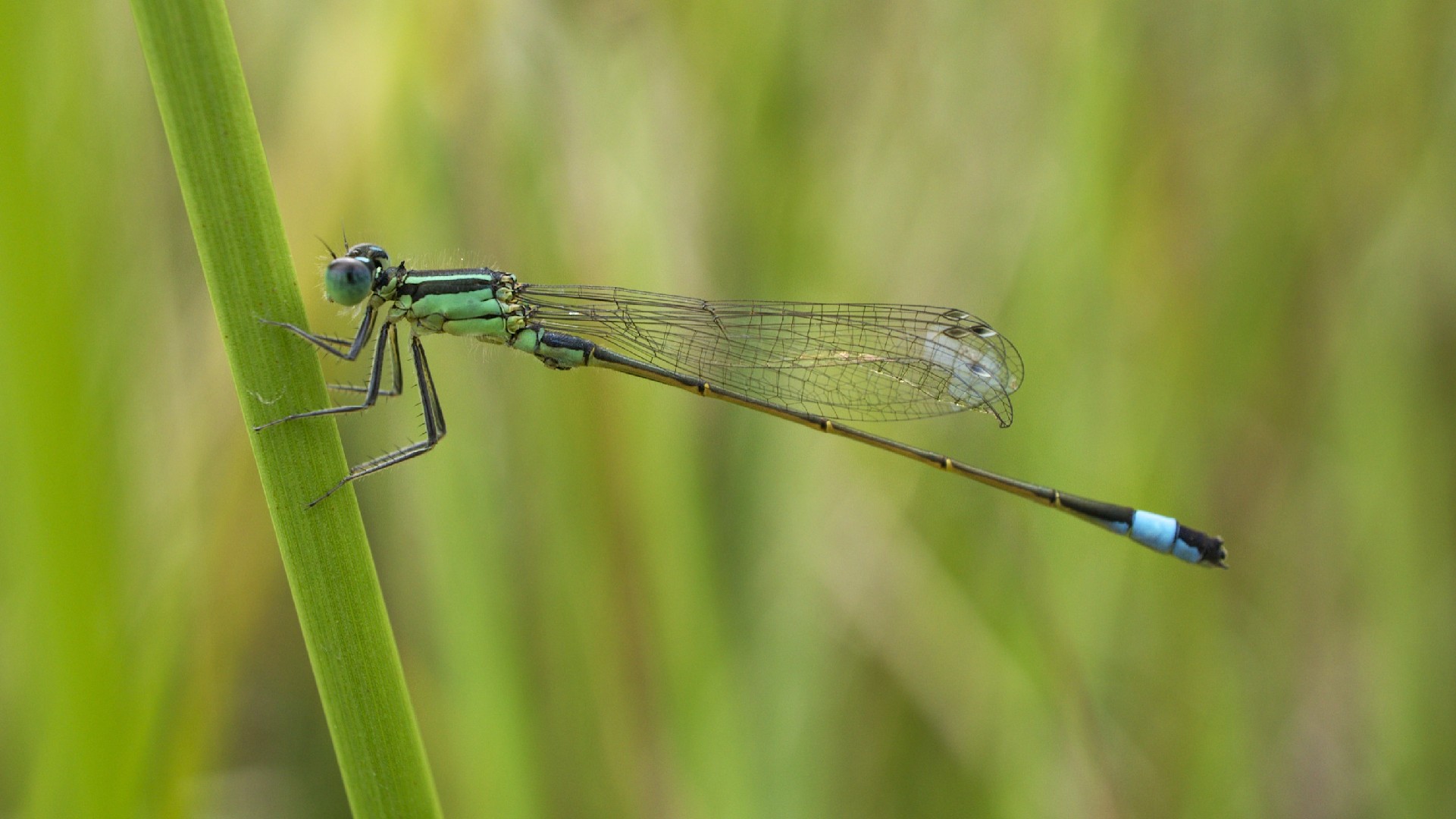
3. Blue-tailed damselfly
Ischnura elegans can reach a body length of 2.5 - 3.5 cm and a wingspan of about 3.5 cm. Hindwings reach alength of 1.4 - 2 cm. Adult male blue-tailed damselflies have a head and thorax patterned with blue and black. There is a bi-coloured pterostigma on the front wings. Eyes are blue. They have a largely black abdomen with very narrow pale markings where each segment joins the next. Segment eight, however, is entirely pale blue. At rest, the wings of most damselfly species are held back together, unlike dragonflies, which rest with their wings out flat. The thorax of juvenile males has a green tinge. Female blue-tailed Damselflies come in a variety of colour forms.Juveniles may be salmon pink, form rufescens; violet, form violacea and a pale green form. The colour darkens as the damselfly ages. Mature females may be blue like the male, form typica; olive green thorax and brown spot, form infuscans or pale brown thorax and brown spot, form infusca-obseleta.
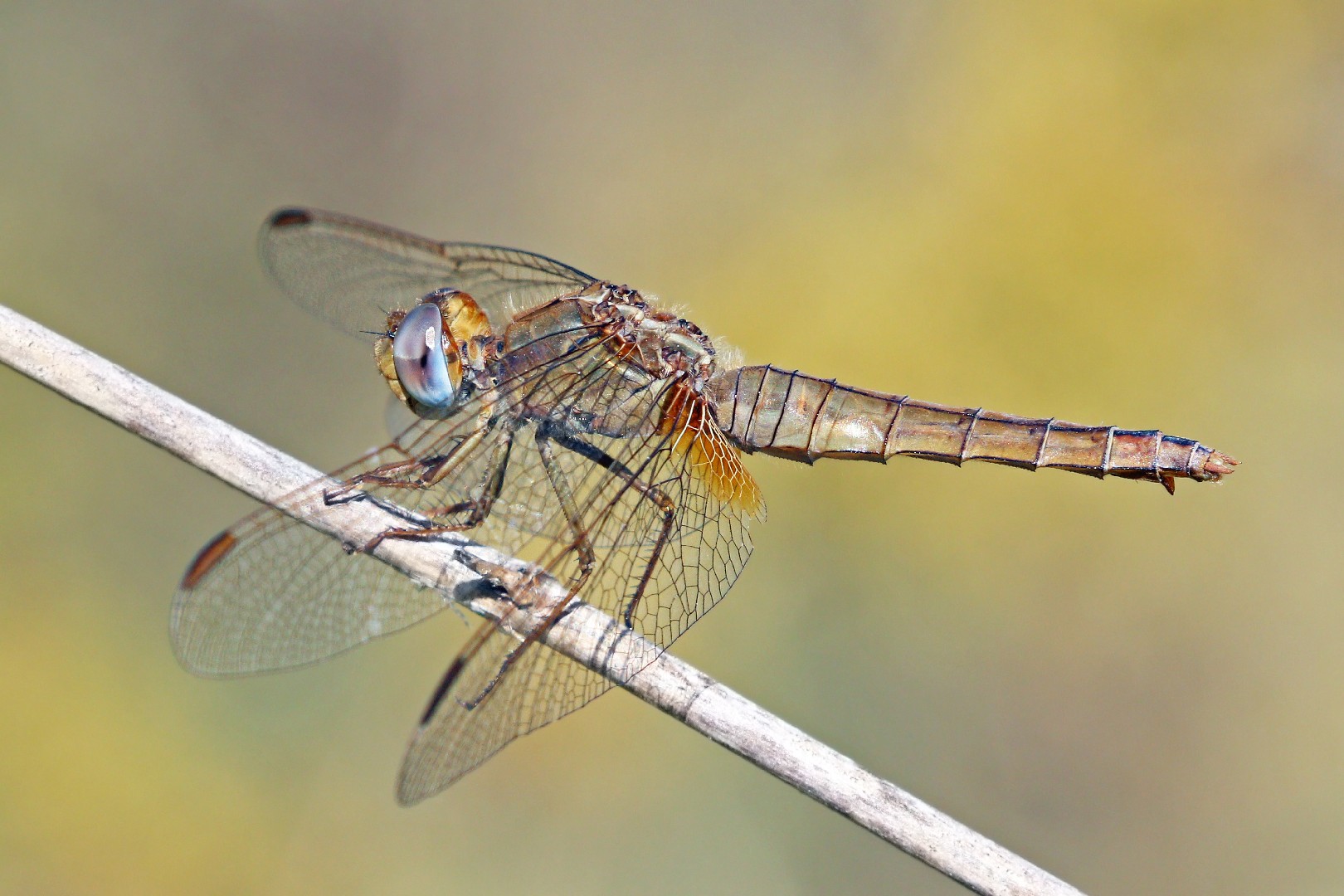
4. Scarlet dragonfly
Crocothemis erythraea can reach a length of 3.5 - 4.5 cm. These dragonflies haves a flattened and rather broad abdomen. The adult male scarlet dragonfly has a bright scarlet red, widened abdomen, with small amber patches at the bases of the hindwings. Also the veins on the leading edges of the wings are red. Females and immatures are yellow-brown and have a conspicuous pale stripe along the top of the thorax.

5. Banded demoiselle
This is a large damselfly with a total length of up to 1.9 in and a hindwing length of up to 1.4 in. Male and female are variable in color and pattern. The male has translucent wings which each have a broad, dark iridescent blue-black spot (or band) across the outer part. On immature dragonflies the spot is dark brown. The body can be a metallic blue or bluish green or a combination of both colours, depending on the time of year and location. The dark wing patch of the male starts at the nodus (the slight dip midway down the upper edge of the wing) but can reach up to the wing-tip in southern races.
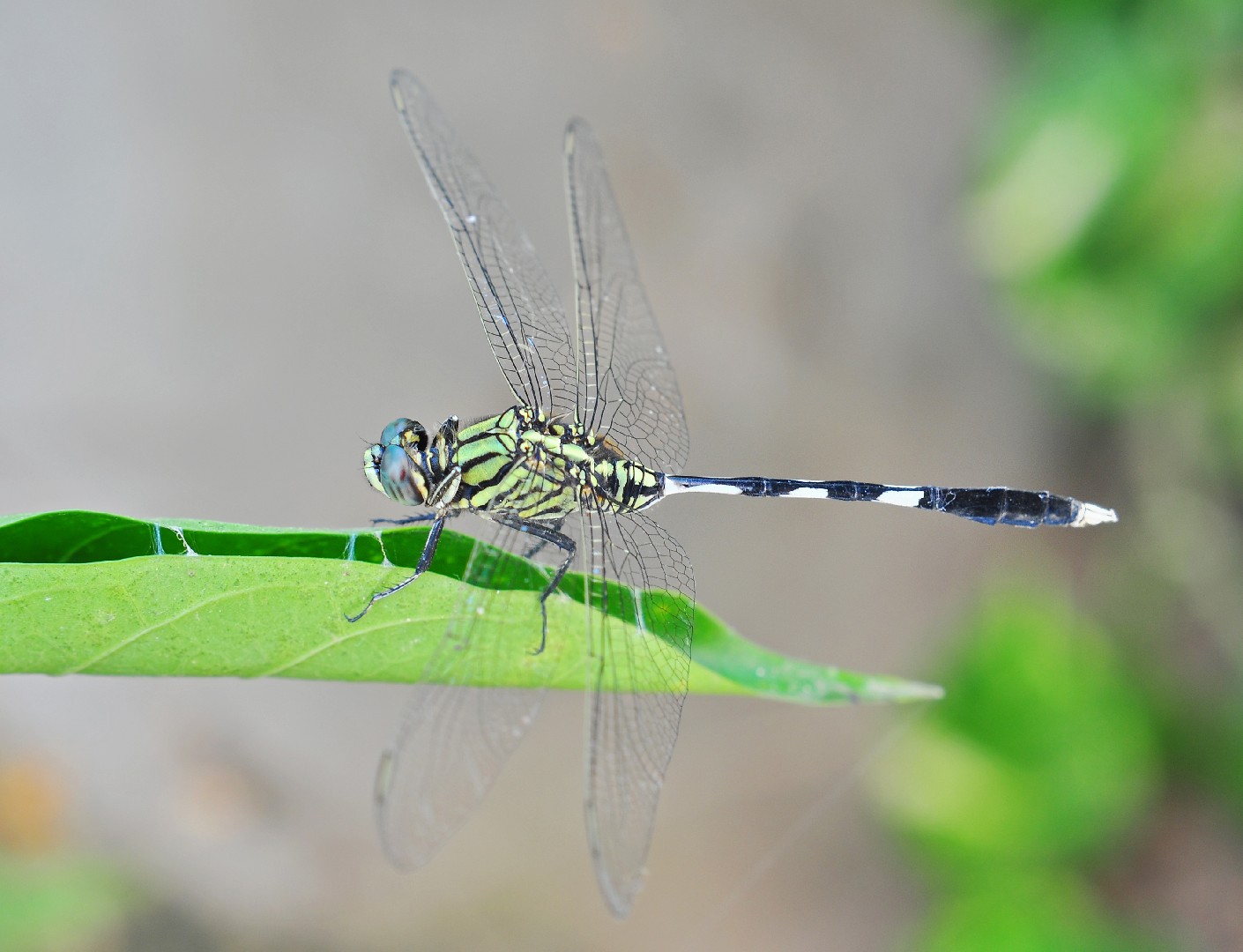
6. Slender skimmer
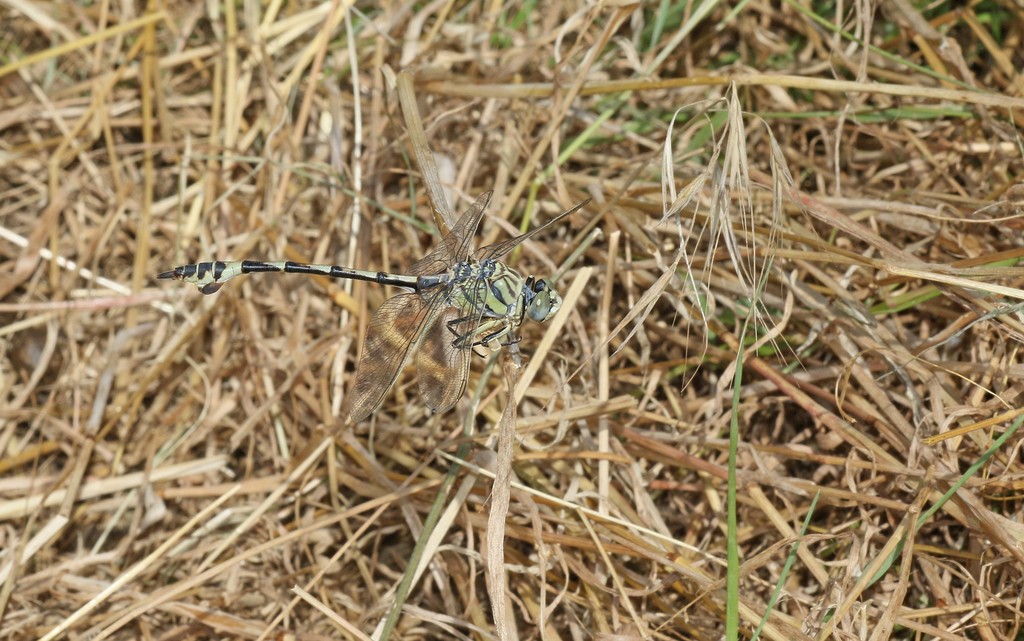
The species is on the IUCN Red List as not endangered, year of assessment 2009. The slender bank dragonfly occurs from Southeastern Europe and North Africa to Japan and Australia
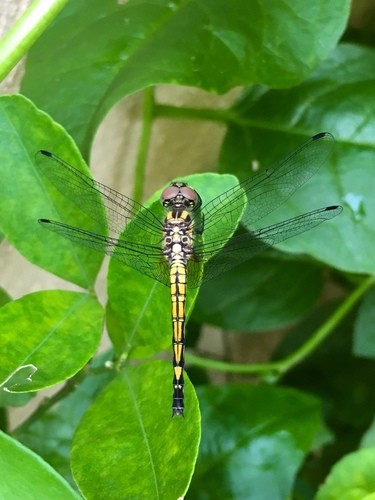
7. Black stream glider
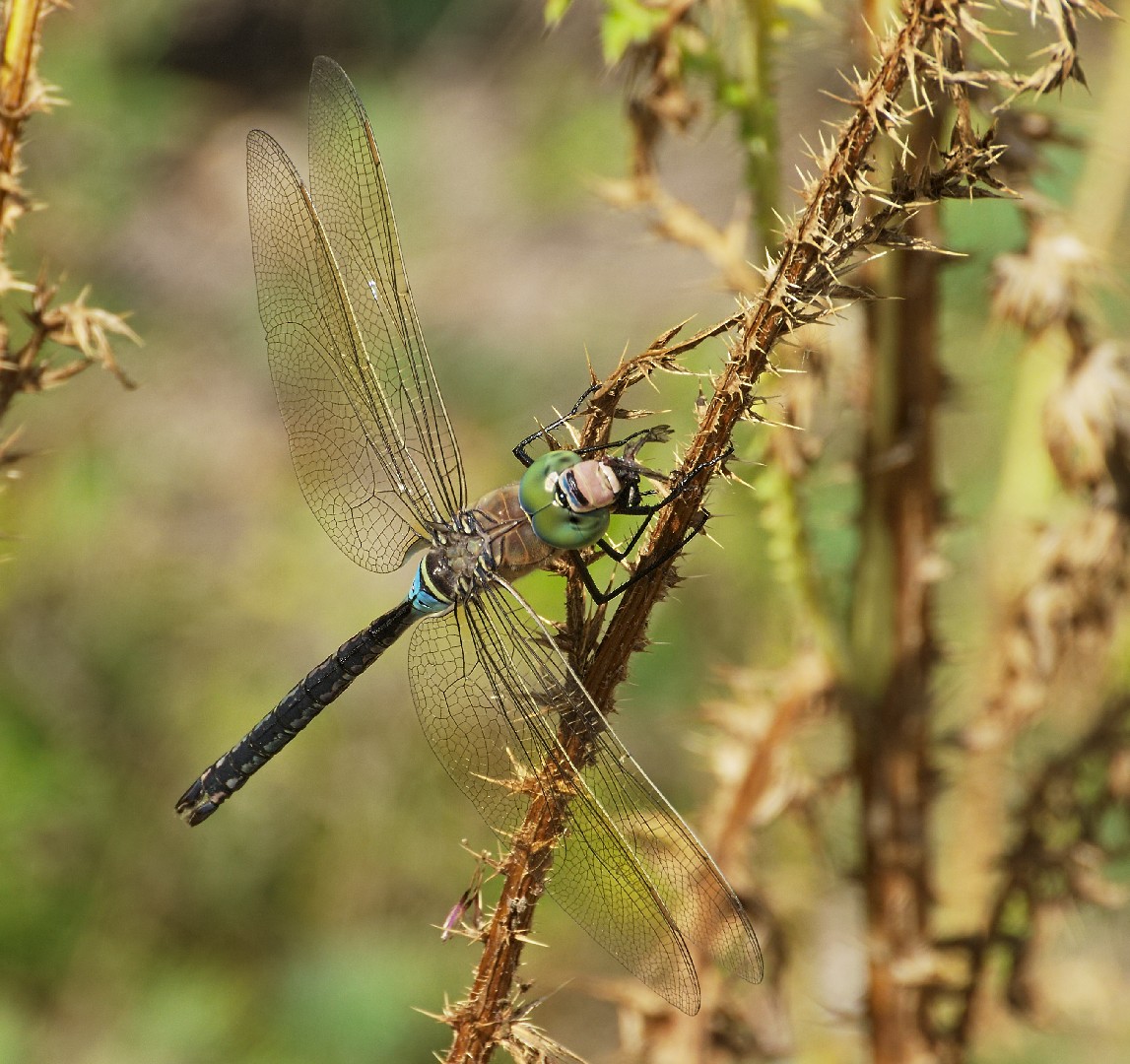
Black stream glider is a medium-sized dragonfly with purple color on its body structure. In the male, the frontal area appears darker purplish grey. The eyes are dark brown above, with a purple colored tinge, which is bluish grey, lateral and beneath. The thorax is black, covered with purple pruinescence, which helps it appear deep blue. The legs are black and wings are transparent with a dark opaque brown mark at the base of hind wing, with a black spot on tip of the wing. The abdomen is covered with fine blue pruinescence. The female looks brown in the front and extends above. The eyes are dark brown above and appear more grey-ish below. Thorax is greenish-yellow to olivaceous, with the presence of a medial dark brown lateral stripe. In addition, a Y-shaped inverted stripes can be observed on the sides. Legs are black with anterior femora being yellow on the inner side. Wings are transparent with dark reddish-brown tip with a black spot, similar to the male. The abdomen appears bright yellow with medial, lateral and ventral stripes, colored black, however, the medial and lateral black stripes form a confluence at abdominal segments to enclose a wedge-shaped yellow spot.
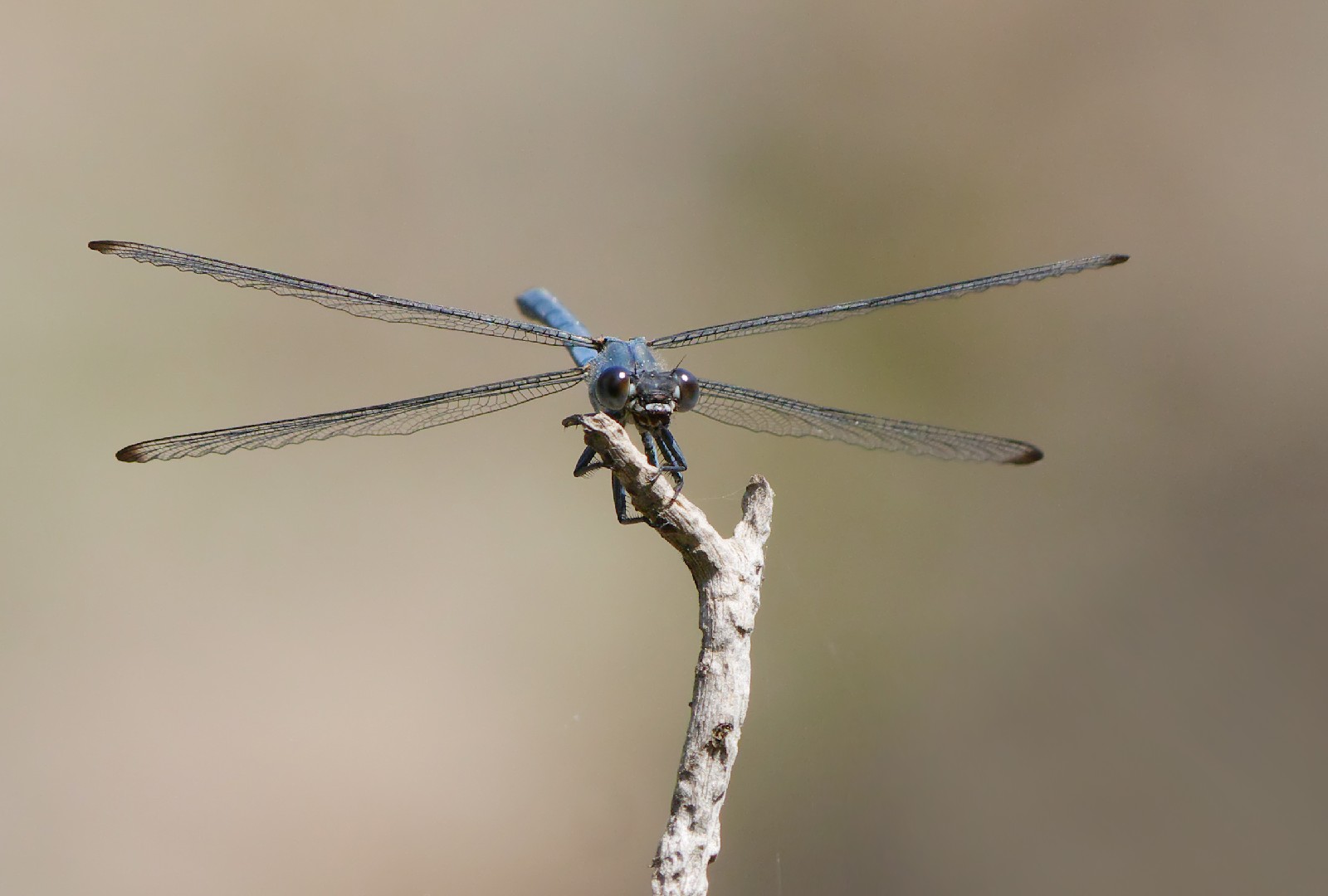
8. Odalisque
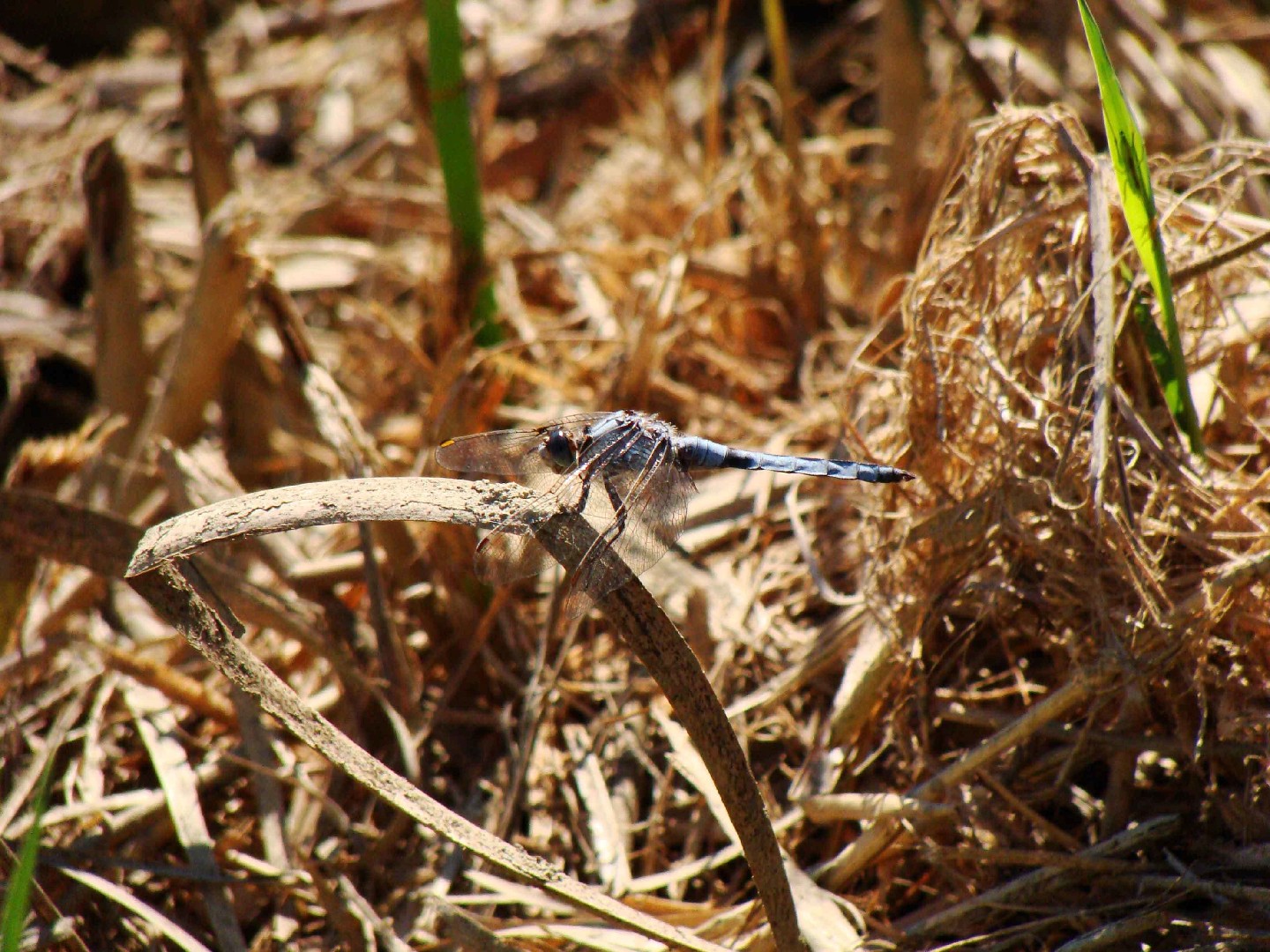
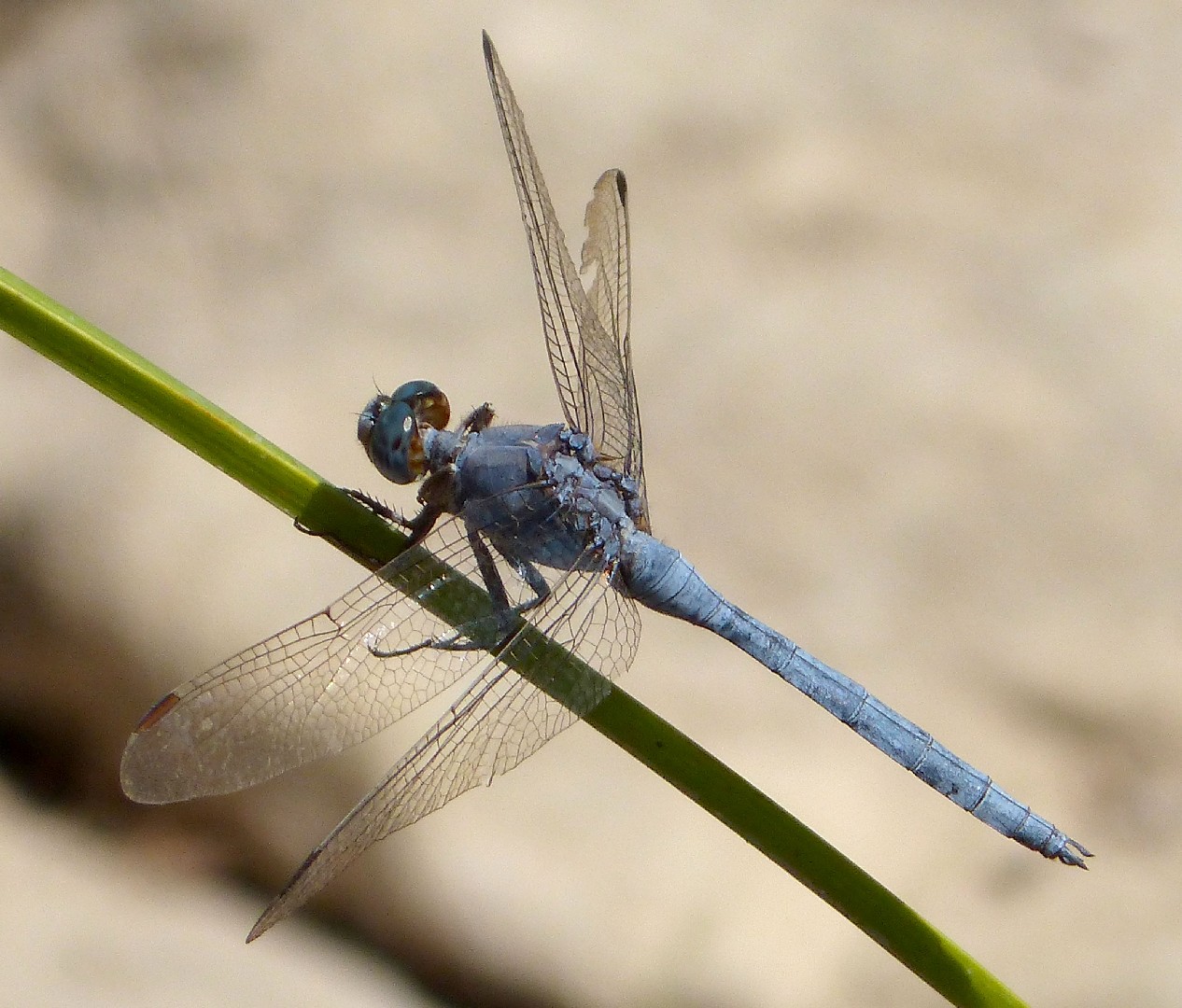
9. Southern skimmer
The adults grow up to 4 - 4.5 cm long. The thorax and the abdomen are pale blue in males, yellowish-brown or greyish-brown in females. Young males are brownish. The abdomen is relatively flattened and shows a thin middorsal black line and distinct points on each segment. The wings are hyaline, with yellow or pale brown pterostigma. The wingspan reaches 7 - 7 cm.
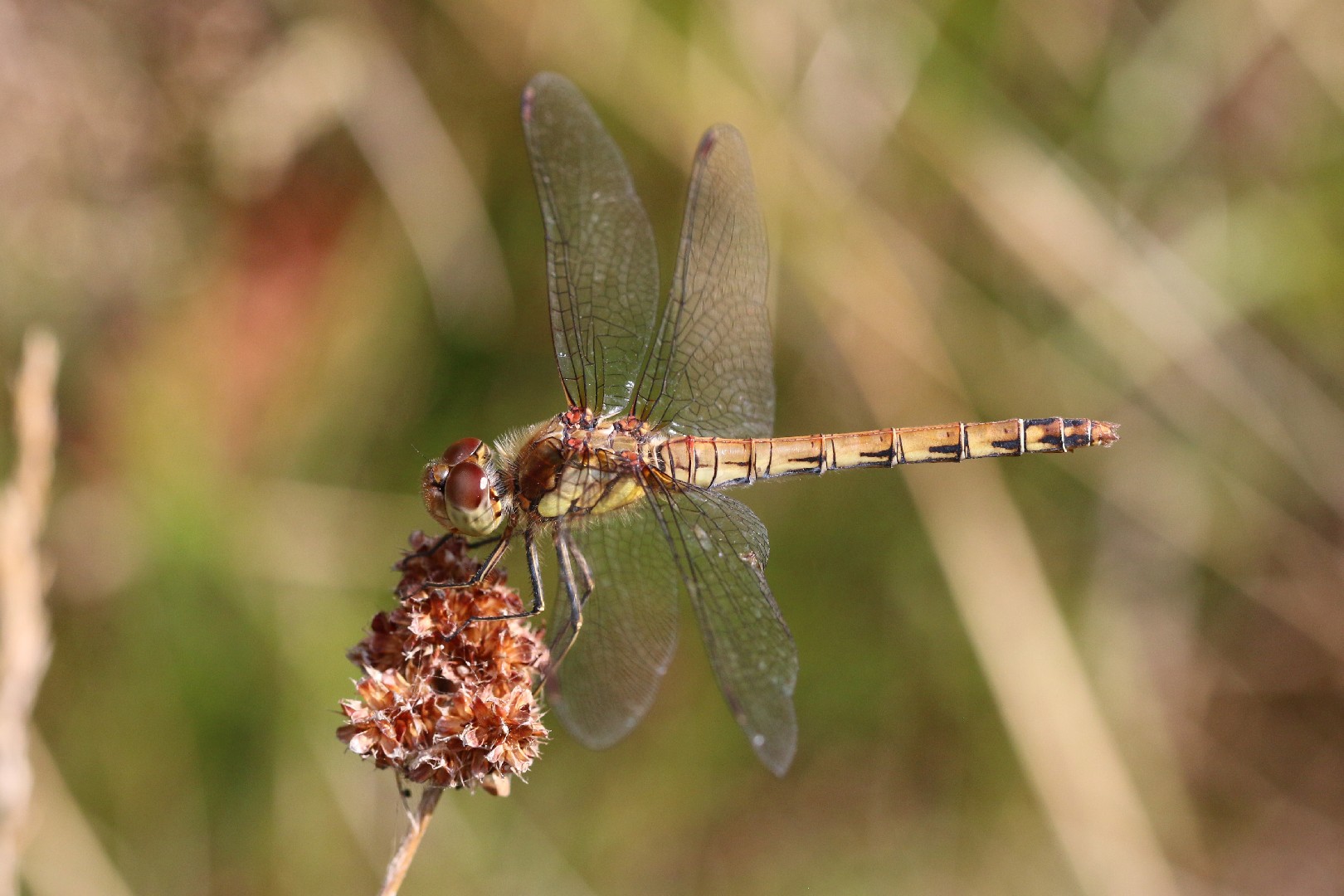
10. Red-veined darter
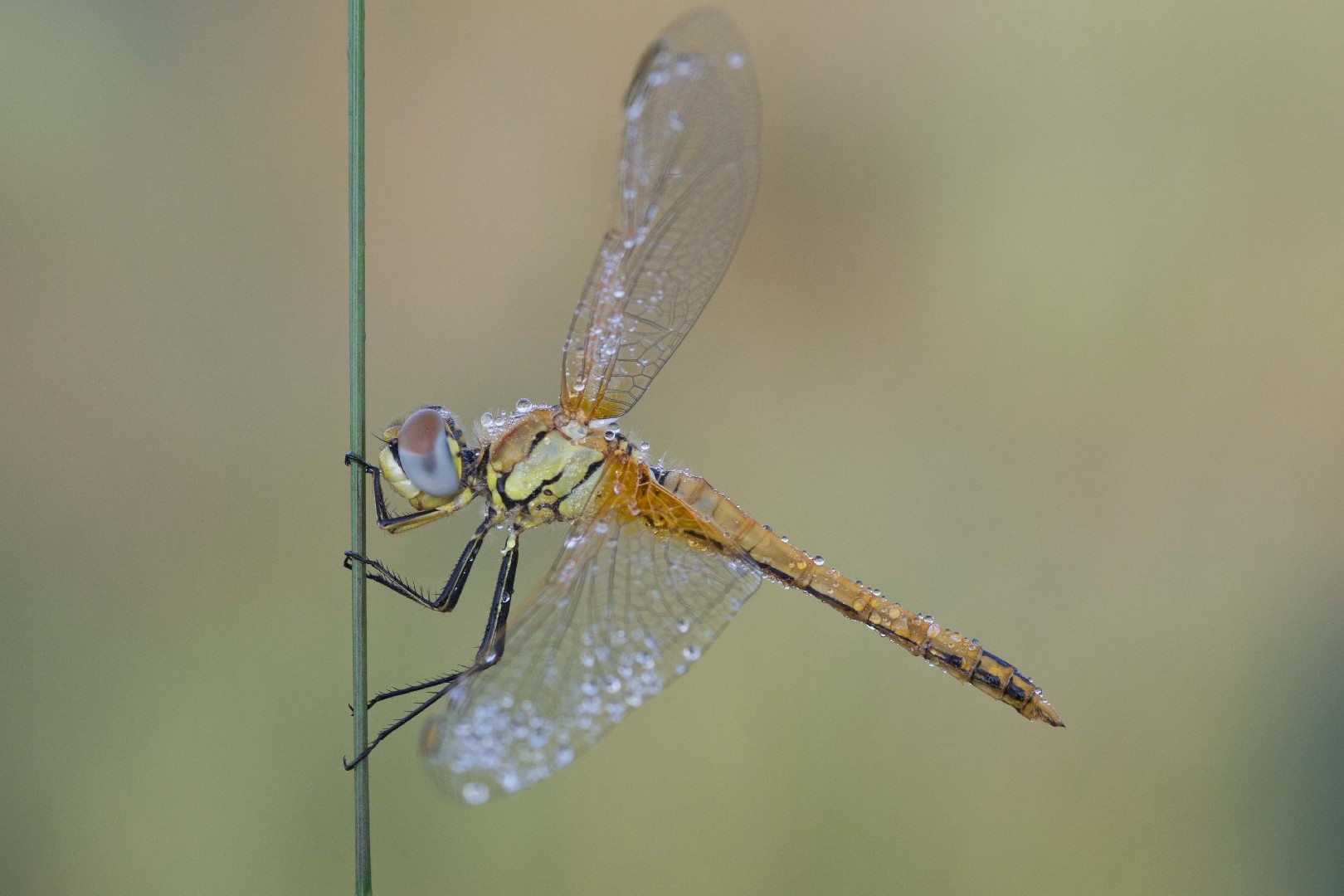
The Early Darter (Sympetrum fonscolombii) is a species of dragonfly in the family of the leaflets (Libellulidae), which belongs to the great dragonfly (Anisoptera).

More







