




Top 17 Most Common Insects in Izmir
Insects, with their diverse shapes, sizes, and survival strategies, are an integral part of Izmir's ecosystem. Izmir's varied geographical features foster an impressive insect diversity that plays a critical role in its habitats. This list unveils the top 17 most common insects in Izmir, highlighting not just pesky intruders, but the indispensable helpers as well. Their existence underscores the symbiotic relationship between Izmir's environment and its insect inhabitants. Dive into this fascinating insect world with us!

Most Common Insects

1. Dark spreadwing
This species is up to 48 millimeters long. It is similar to other common Lestes species but it is darker in color with more blue pruinescence. The pterostigmata are large and black. 
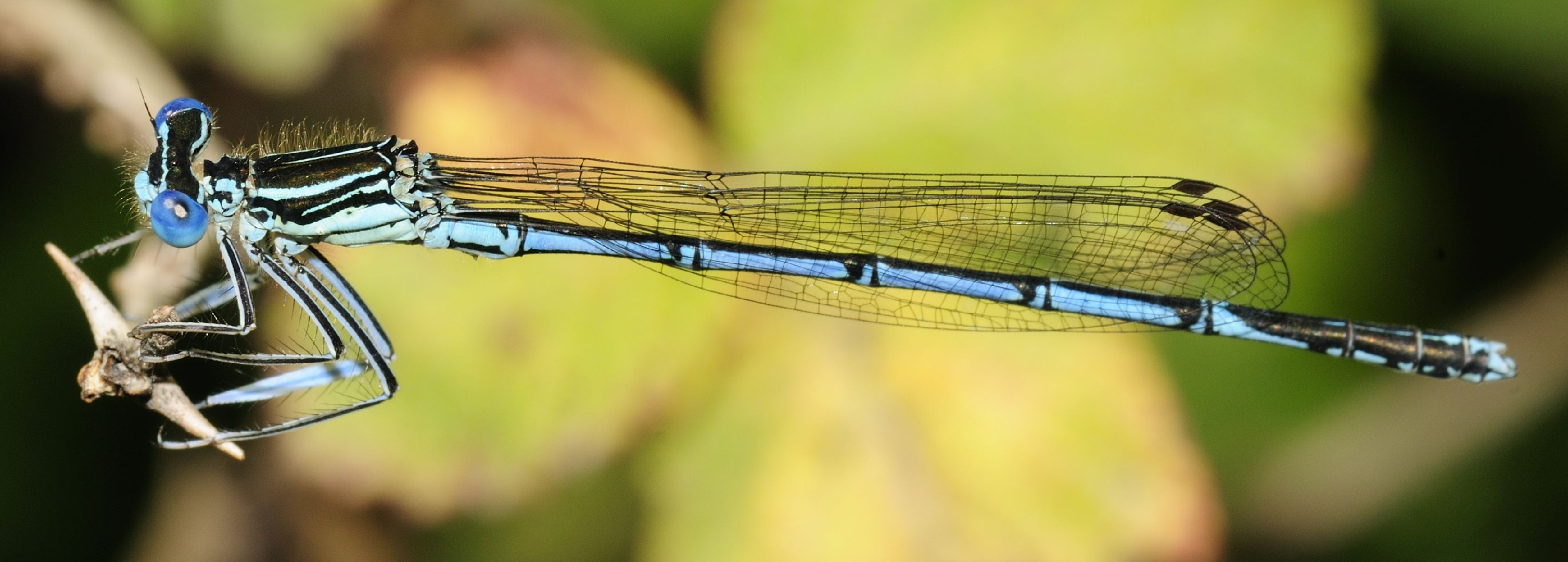
2. White-legged damselfly
The white-legged damselfly or blue featherleg (Platycnemis pennipes) is a damselfly of slow-flowing, muddy waters. It occurs from the Atlantic to Siberia and is often abundant throughout its range.
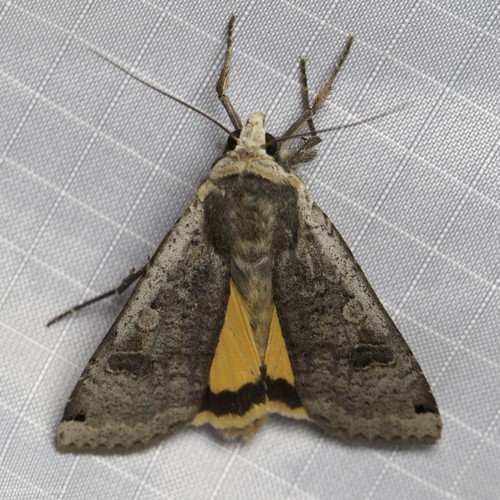
3. Large yellow underwing
An unusually large and heavy species of moth, large yellow underwing (Noctua pronuba) is dreaded by gardeners for the larvae's habit of causing fatal damage to the base of virtually any herbaceous plant. Large migrations occur some years, but how those years are determined is not yet known. Its contrasting colors (yellow-orange and brown) are thought to confuse would-be predators.
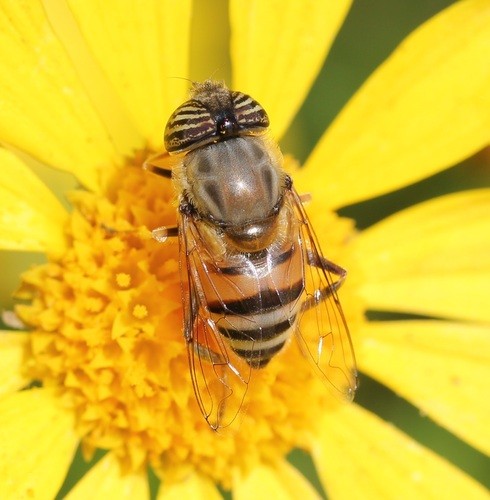
4. Band-eyed drone fly
Eristalinus taeniops can reach a length of 1.09 - 1.4 cm. These hoverflies exhibit a bee-like yellow-black drawing. The thorax has a metallic yellow-brown color and it is densely yellow hairy. Also the scutellum are yellow-brown colored. The abdomen is reddish-yellow, with transversal black bands. The compound eyes have five distinct, vertical, dark stripes. The wings are transparent, usually yellowish-brown at the base, while the halteres are brightly pale yellow colored.
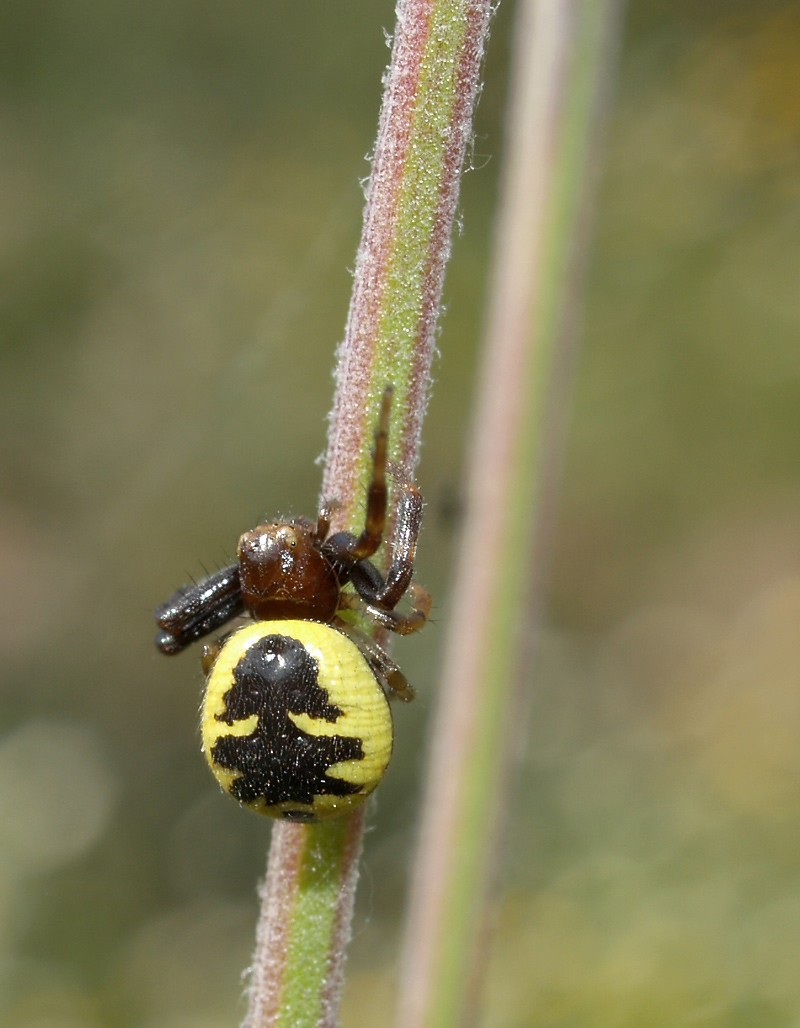
5. Napoleon spider
The adult males reach 2 - 4 mm in length, while females are 7 - 8 mm long. The two pairs of the front legs, used for hunting the flower-feeding insects, are more developed than the rear ones, which have a predominant motor function. Mature males have a black abdomen with two white marks. In mature females, the background colour of the abdomen can be red, yellow or white, with a black pattern which has been noted for a certain resemblance to the silhouette of Napoleon. Prosoma and legs are black or dark brown.
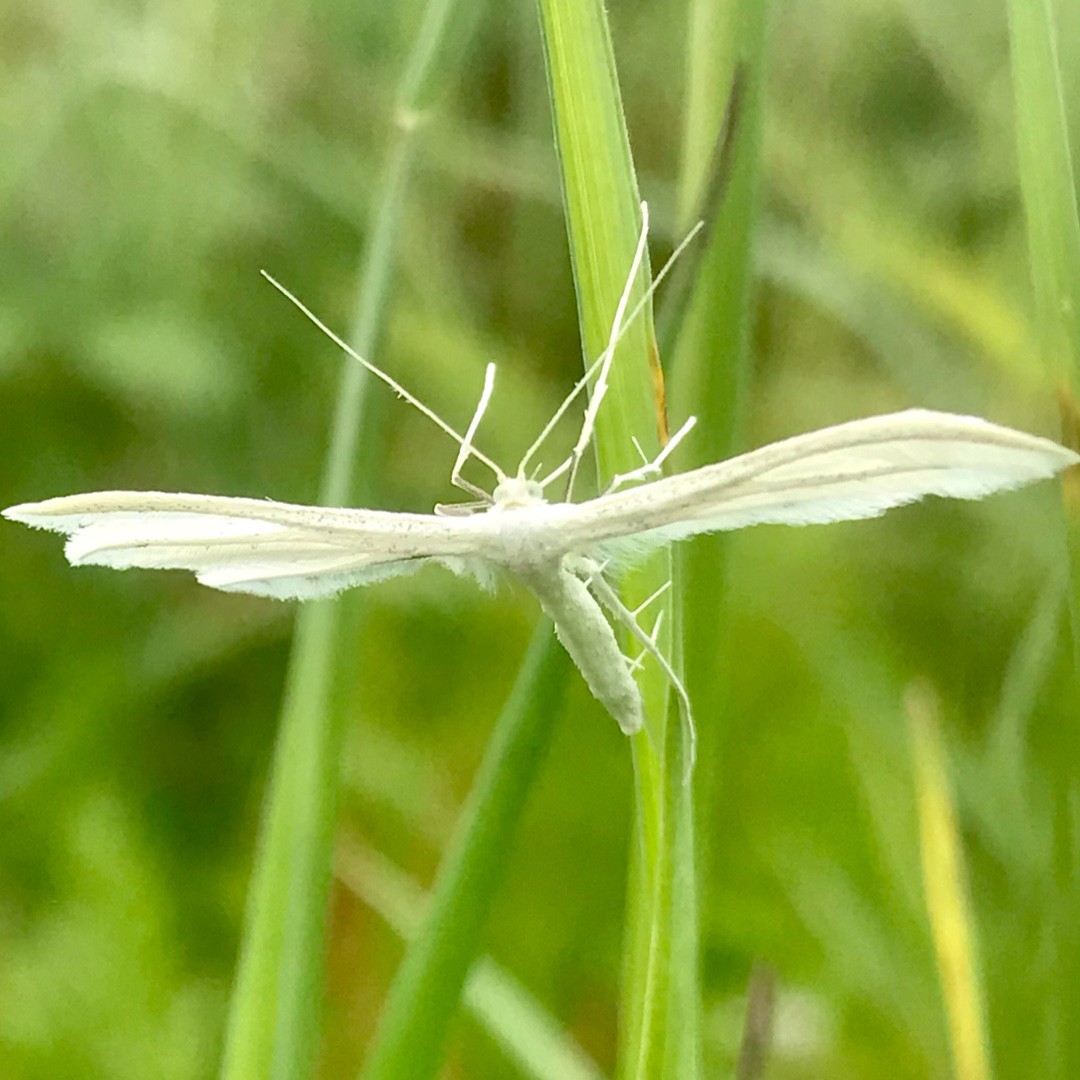
6. White Plume Moth
The white plume moth is a distinctive insect with a wingspan of 26 to 34 mm (1.0 to 1.3 in). The adult is pure white, the wings being divided into five slender feather-like plumes, two forming part of the forewing and three part of the hind wing. The insect is nocturnal, emerging at dusk, and is on the wing during June and July. The larvae are green, with a yellow dorsal stripe and tufts of pale hairs.
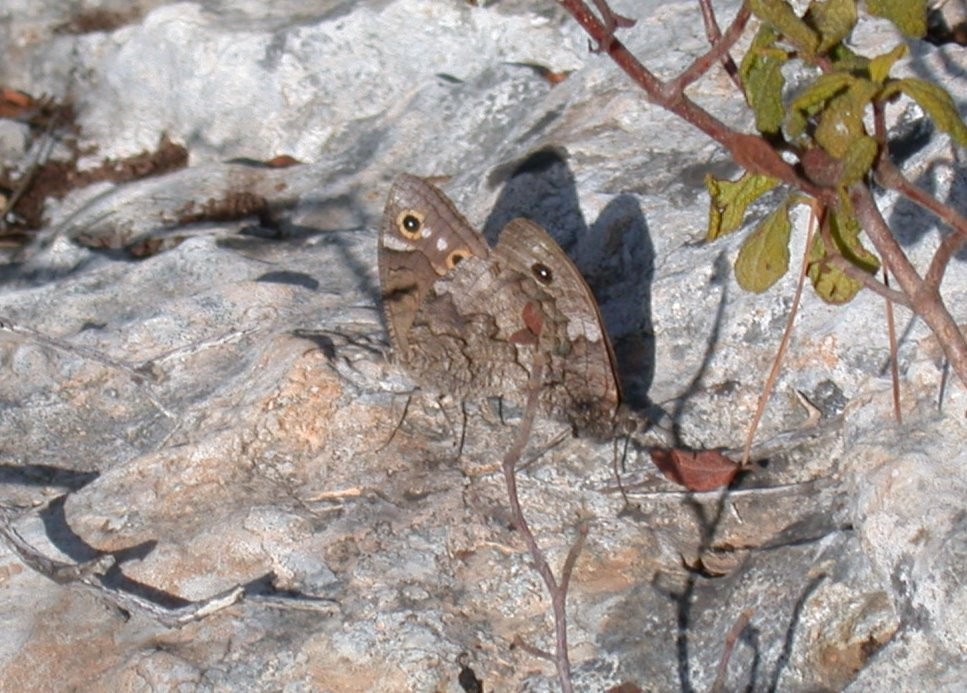
7. Freyer's grayling
S. fatua Frr. (= allionii Hbn). Very similar to the preceding [ statilinus ] , mostly larger ; differs on the upper- side in having a dark submarginal line, and on the underside in the hindwing being more unicolorous and bearing mostly 2 deeply dentate black curved lines across the central area. Hindwing above often very pale in the distal area. Greece; Asia Minor. — sichaea Led. (44c) is a very large form from Syria, with the underside of the hindwing prominently marmorated. — wyssi Christ. (44c), from the Canaries now a full species, is midway between the last two forms, some specimens approaching nymotypical fatua, others being nearer to sichaea. — sylvicola Aust. (44c) [now H. statilinus sylvicola (Austaut, 1880) resembles above the nymotypical form, the underside of the hindwing, however, being entirely uniformly brown-grey and completely without markings. It occurs in West Algeria and was obtained at the same place as hansii, but flies in September, while hansii was caught in July. The status of these North African forms has not yet completely been cleared up. — The species, like the statilinus forms, prefer sandy soil and pine forests. On the Canary Islands the butterflies have been observed flying about the rocks on the coast and settling with preference on that side of the trunks of Pinus canariensis which faces the sun. According to Staudinger specimens of fatua are sometimes on the wing at night, entering the lit up windows and coming to the lantern. The butterflies fly from June to October. The larvae feed on various types of grass.
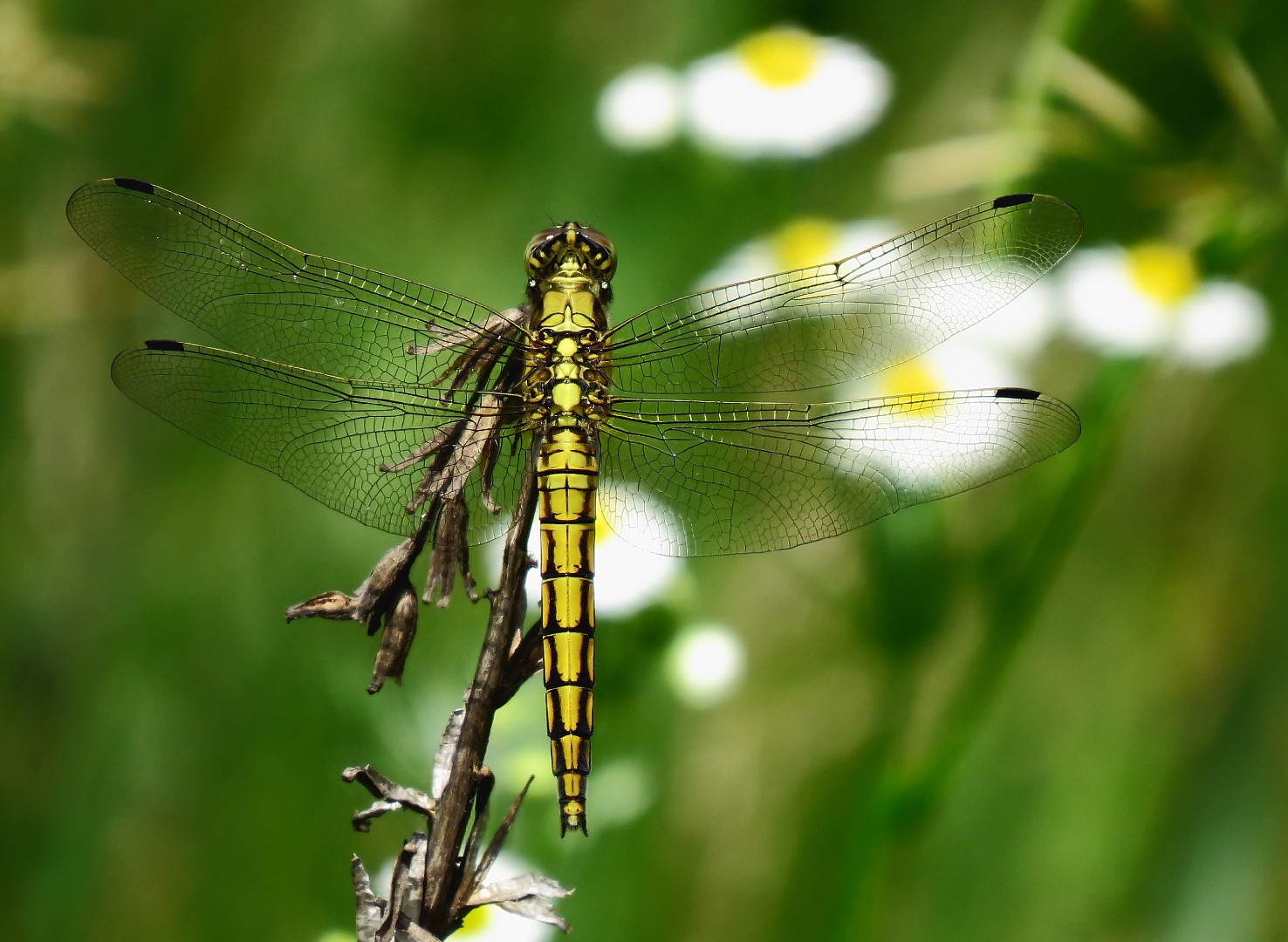
8. Black-tailed skimmer
It is a fairly large dragonfly (the length of 4.5 - 5 cm, 3 - 3.5 cm abdomen, rear wing 3.5 - 4 cm.) with relatively broad, flattened abdomen, but not as broad as to chaser species. With age, adult males develop extensive blue pruinescence on their abdomen, offset by yellow lateral patches. The middle lobe of the pronotum is large and notched in the middle. The chest is yellow or yellowish-brown. The base of the hind wings do not show a dark opaque spots. The pterostigma is dark brown or black. On the front wings pterostigma 2 - 3 mm long. Anal appendages are black. The females and immature males are a deep yellow color, with wavy black lines dorsally on their abdomen. Males and females have the costal vein (the leading edge of the wing) yellow or black.
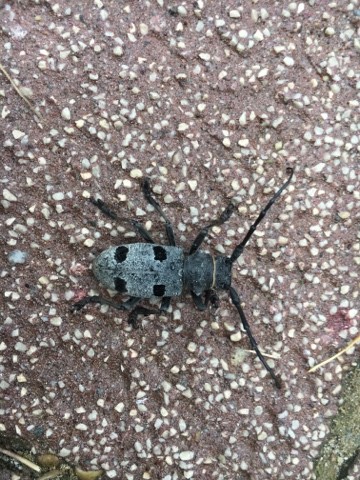
9. Morimus asper
The Morimus asper is a very dramatic beetle. This is because the first half of its Latin name comes from a Greek word that means "destined to die." Battles between males are also known to be just as dramatic, as one of the two parties typically leaves with severe damage.

10. Zilla orbweaver
Zilla diodia is a small spiderweb. The females are 3.5 to 4.5 mm in size, the males 2.5 to 3.0 mm. The hind body (Opisthosoma) has a light brown-white basic pattern. The back part has a dark leaf drawing. At the front edge is a characteristic T-shaped, rounded, white drawing on which the species is easy to recognize. In between there are usually dark, in the middle interrupted horizontal stripes. The fore body (prosoma) is light brown, dark brown in the eye area. The legs have a light brown base color and are darkly striped.
More







