




Top 16 Most Common Insects in Atamyrat
Insects, diverse creatures with unique features, thrive in varying conditions across Atamyrat. From the hot, dry flatlands to the cooler highlands, each area fosters a unique insect community. These creatures play critical roles in the local ecosystem, including being pollinators and natural pest controllers. Our list of '16 most common insects in Atamyrat' reveals fascinating connections between insects, habitats, and the health of our state's ecosystem.

Most Common Insects
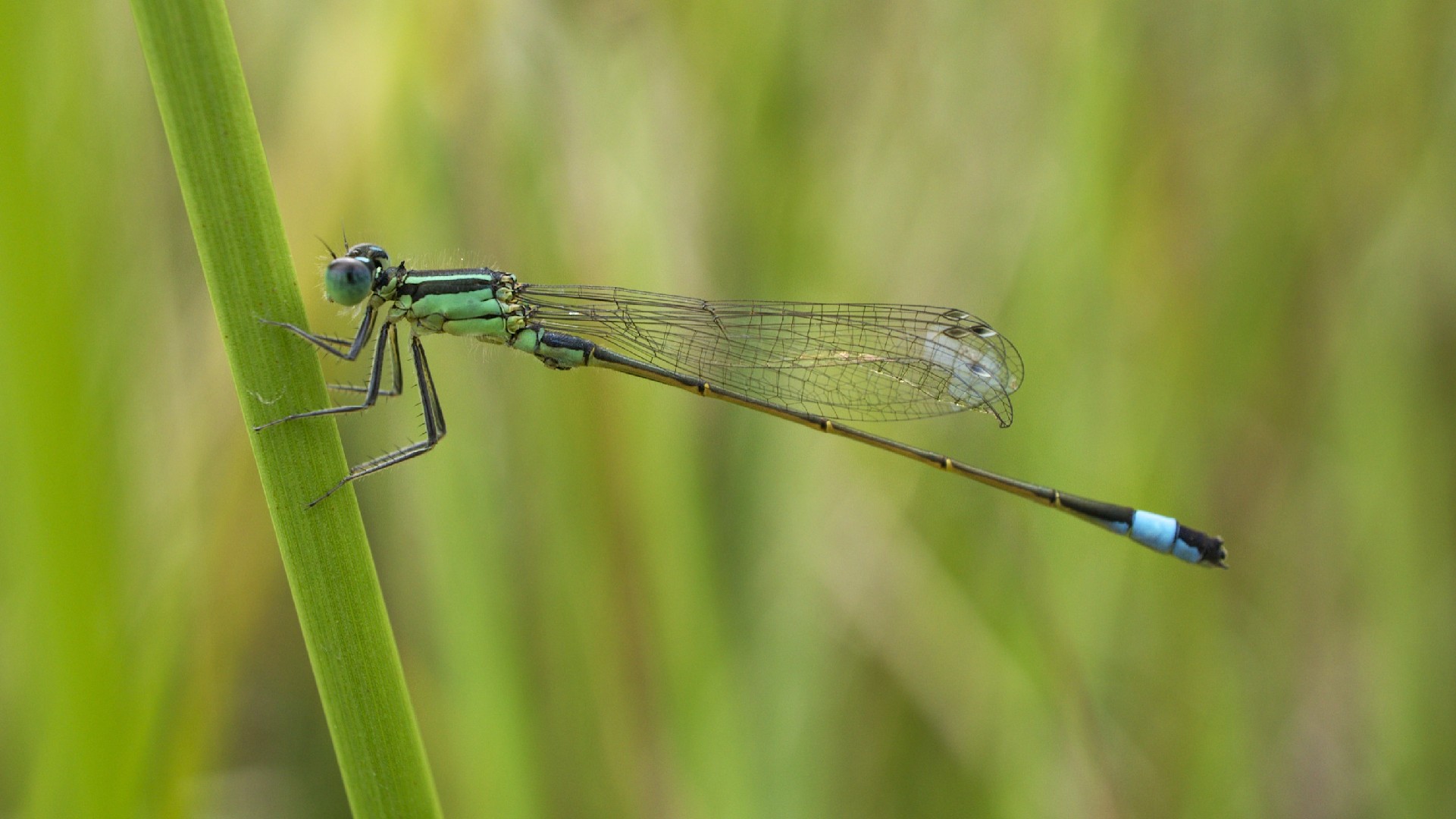
1. Blue-tailed damselfly
Ischnura elegans can reach a body length of 2.5 - 3.5 cm and a wingspan of about 3.5 cm. Hindwings reach alength of 1.4 - 2 cm. Adult male blue-tailed damselflies have a head and thorax patterned with blue and black. There is a bi-coloured pterostigma on the front wings. Eyes are blue. They have a largely black abdomen with very narrow pale markings where each segment joins the next. Segment eight, however, is entirely pale blue. At rest, the wings of most damselfly species are held back together, unlike dragonflies, which rest with their wings out flat. The thorax of juvenile males has a green tinge. Female blue-tailed Damselflies come in a variety of colour forms.Juveniles may be salmon pink, form rufescens; violet, form violacea and a pale green form. The colour darkens as the damselfly ages. Mature females may be blue like the male, form typica; olive green thorax and brown spot, form infuscans or pale brown thorax and brown spot, form infusca-obseleta. 
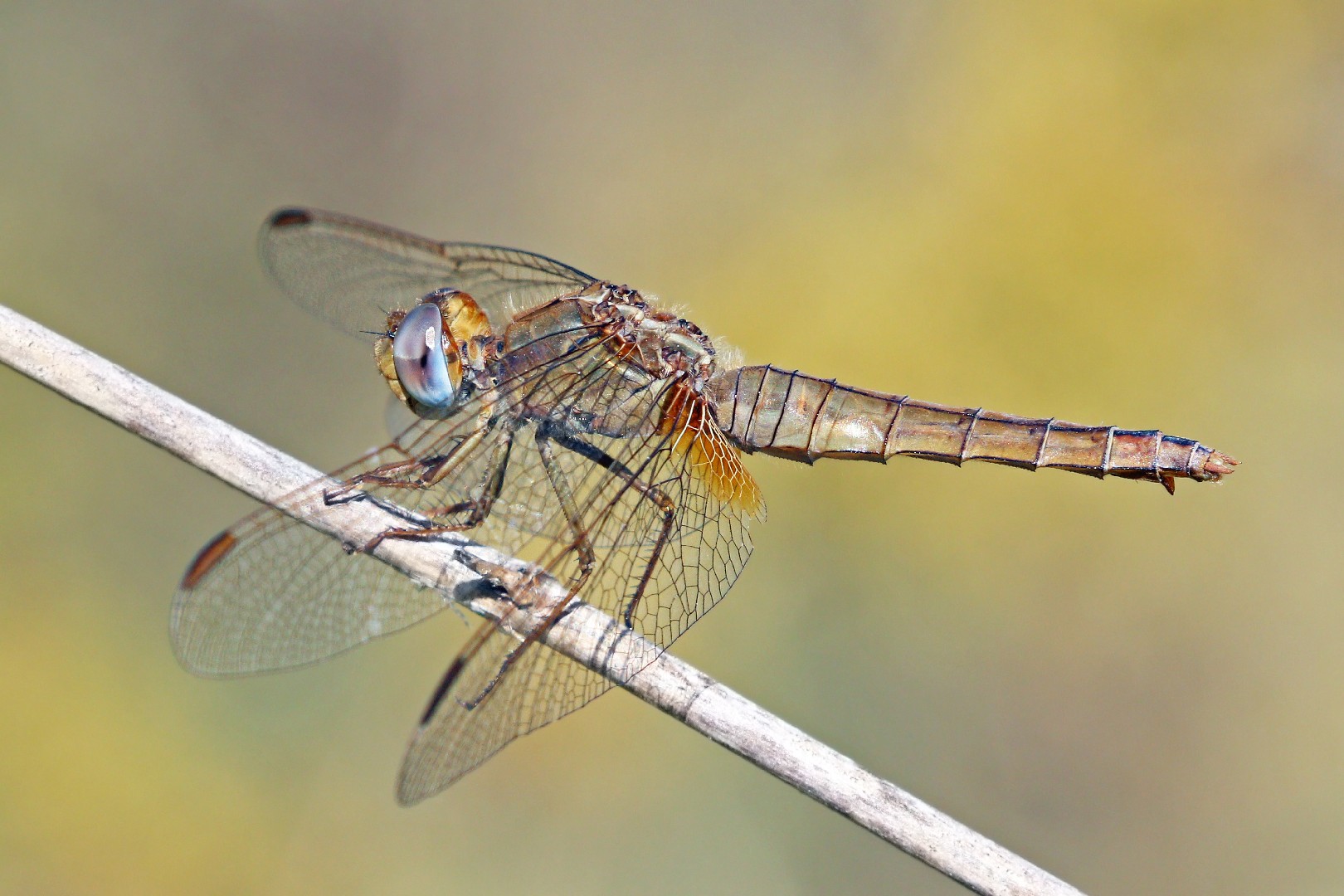
2. Scarlet dragonfly
Crocothemis erythraea can reach a length of 3.5 - 4.5 cm. These dragonflies haves a flattened and rather broad abdomen. The adult male scarlet dragonfly has a bright scarlet red, widened abdomen, with small amber patches at the bases of the hindwings. Also the veins on the leading edges of the wings are red. Females and immatures are yellow-brown and have a conspicuous pale stripe along the top of the thorax.
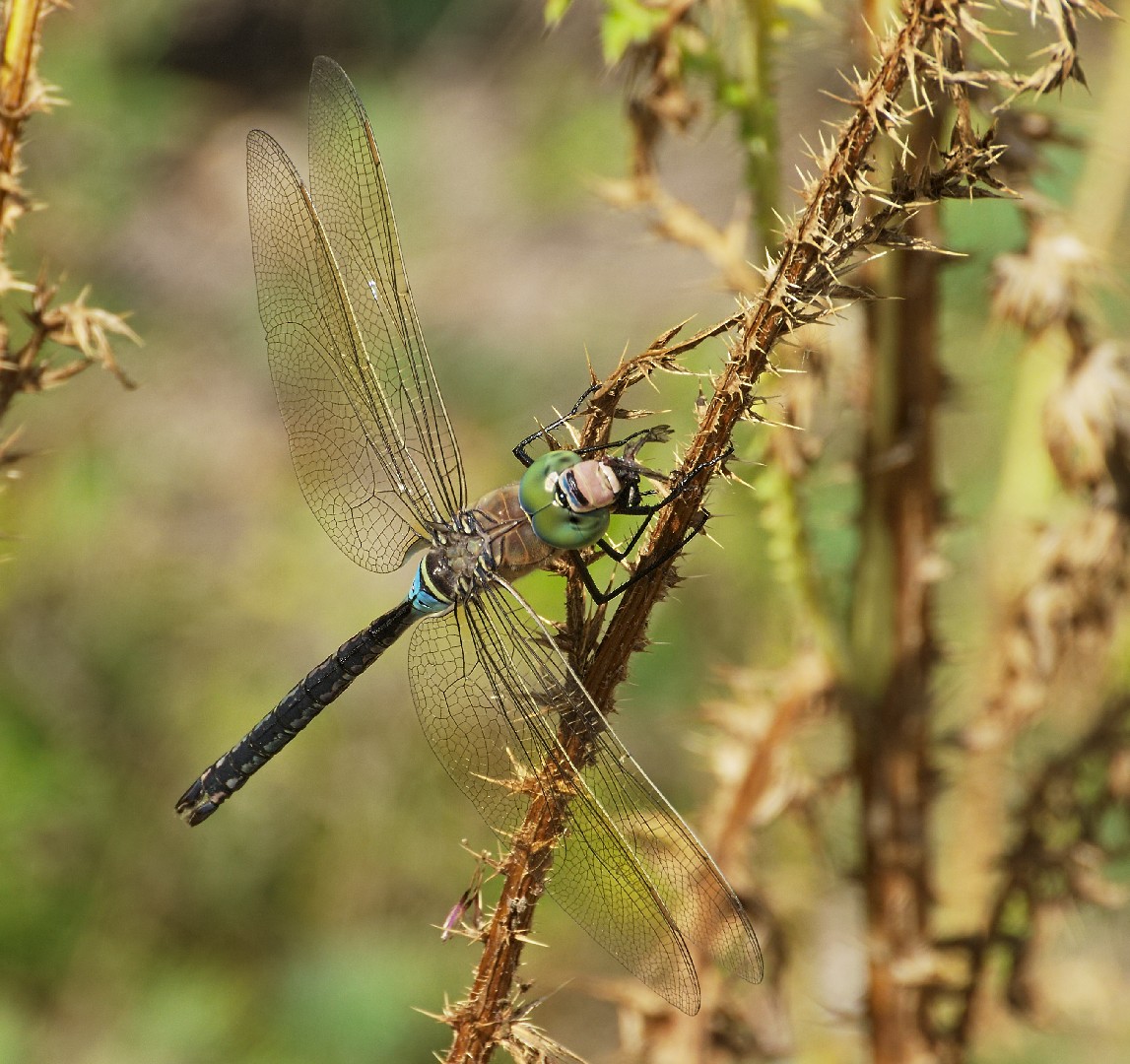
3. Lesser emperor
Its labium and labrum are golden-yellow and face and frons are greenish yellow and eyes are green, bluish when aged. Its thorax is pale olivaceous brown with dark brown sutures. Its segment two of the abdomen is turquoise blue. Segment three has a large blue patch at each side. Segments 4 to 9 have an irregular black middorsal stripe. Segment 10 is black.
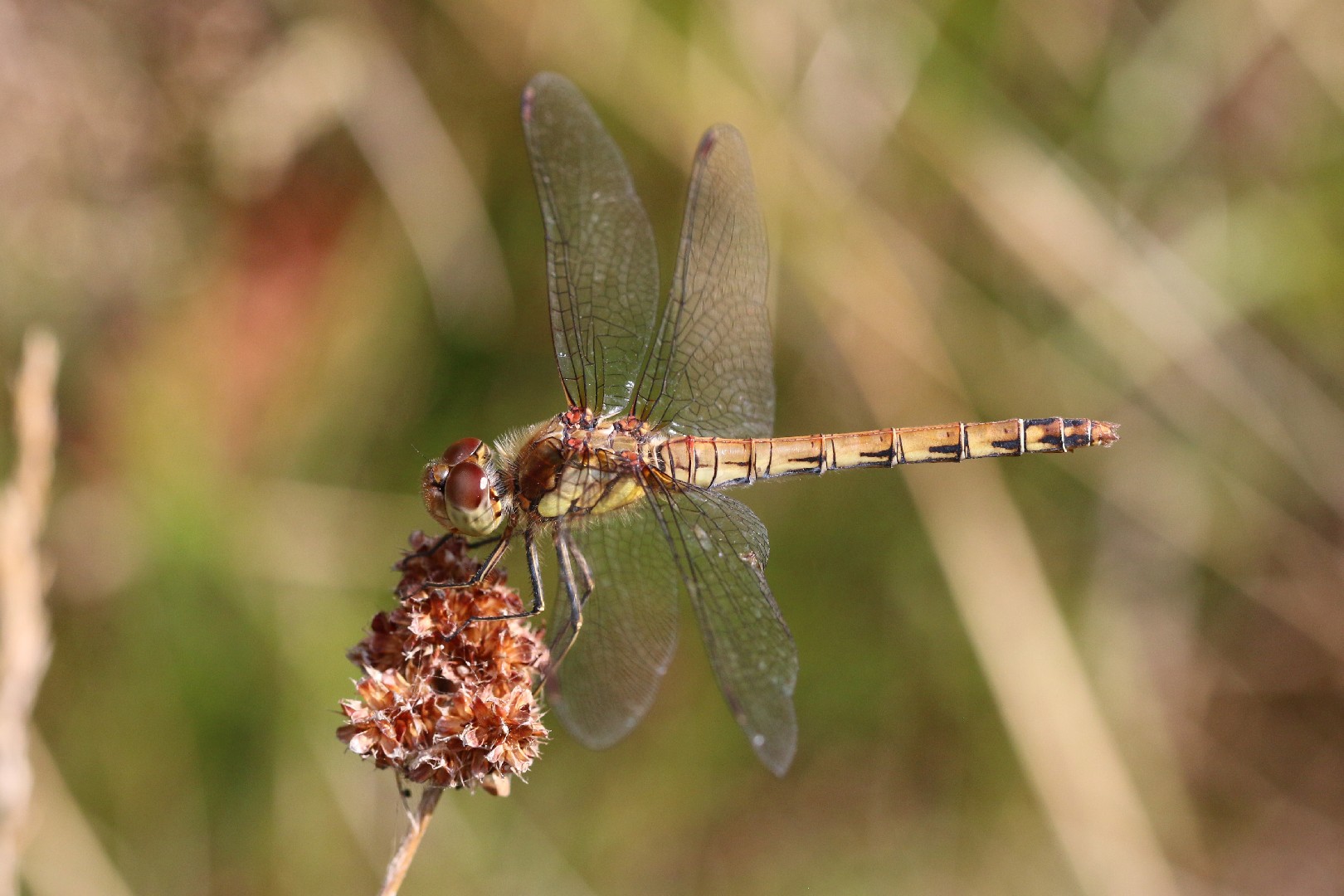
4. Common darter
The Great Heidelibelle owes its name to the fact that it is the largest representative of its genus in Germany. The second part of the species name (epithet) striolatum (m. Striolatus, "with small stripes") refers to the pattern of the breast section. The species occurs in some subspecies with a distribution focus in Asia.
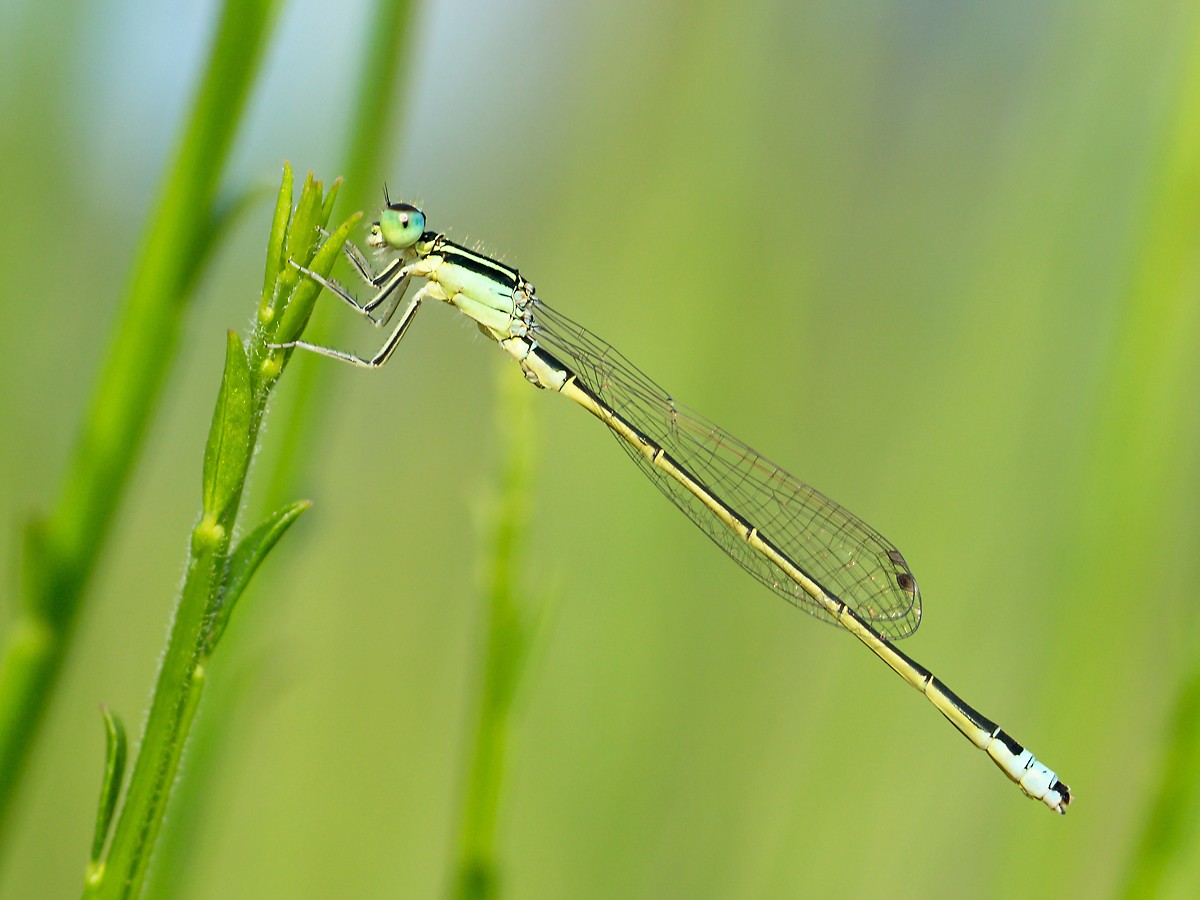
5. Scarce blue-tailed damselfly
It is very similar to the blue-tailed damselfly, Ischnura elegans but on that species the blue spot is mostly on segment 8.Females undergo a change of colour as they mature. The immature female is bright orange, the aurantiaca phase, but matures to a greenish-brown.

6. Banded demoiselle
This is a large damselfly with a total length of up to 1.9 in and a hindwing length of up to 1.4 in. Male and female are variable in color and pattern. The male has translucent wings which each have a broad, dark iridescent blue-black spot (or band) across the outer part. On immature dragonflies the spot is dark brown. The body can be a metallic blue or bluish green or a combination of both colours, depending on the time of year and location. The dark wing patch of the male starts at the nodus (the slight dip midway down the upper edge of the wing) but can reach up to the wing-tip in southern races.
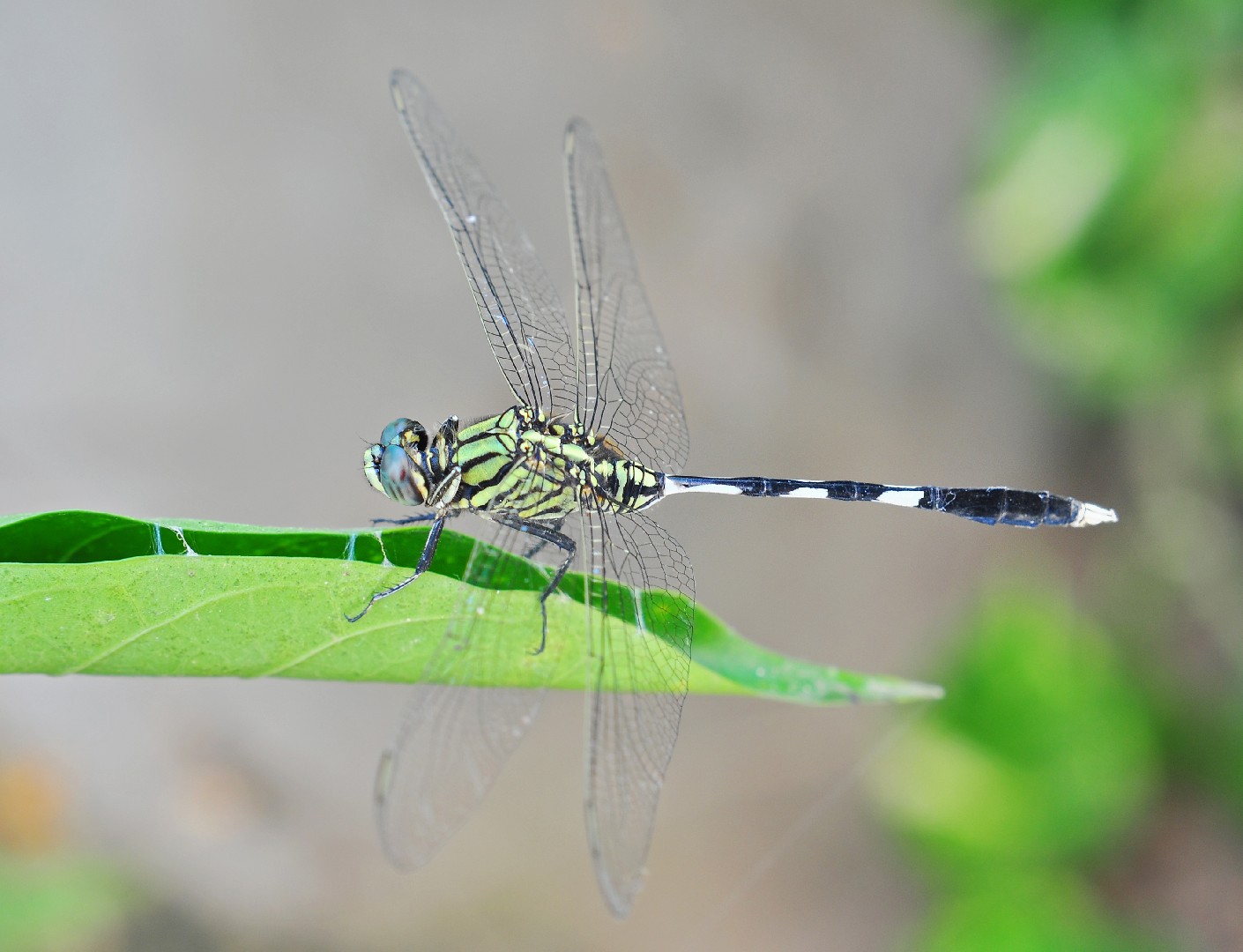
7. Slender skimmer
The species is on the IUCN Red List as not endangered, year of assessment 2009. The slender bank dragonfly occurs from Southeastern Europe and North Africa to Japan and Australia
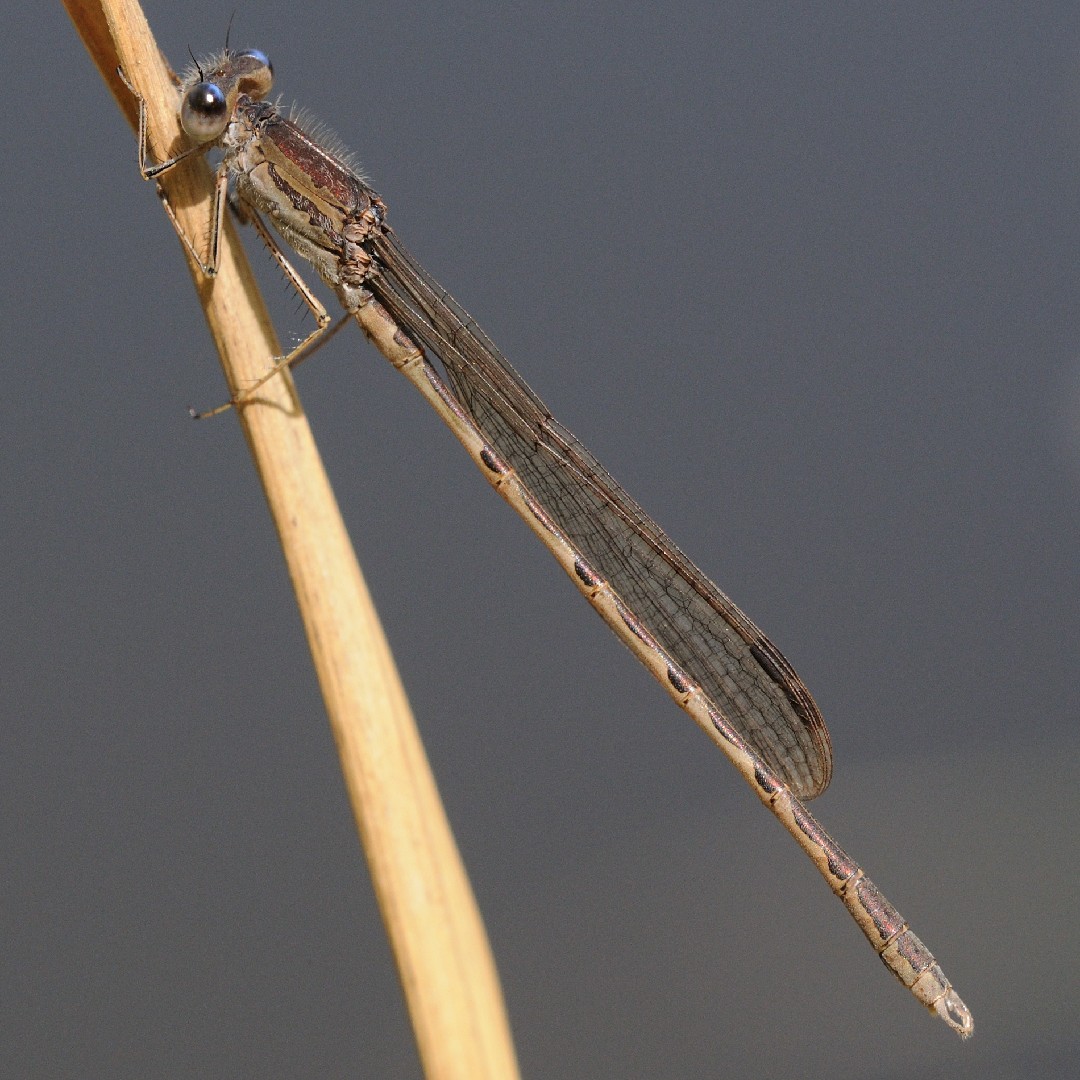
8. Siberian winter damsel
Sympecma paedisca, known generally as siberian winterdamsel, is a species of spreadwing in the damselfly family Lestidae. Other common names include the Leste enfant, Siberian Winter Damsel, feal winterhynderke, and noordse winterjuffer. It is found in Europe. The IUCN conservation status of Sympecma paedisca is "LC", least concern, with no immediate threat to the species' survival. The IUCN status was reviewed in 2014.
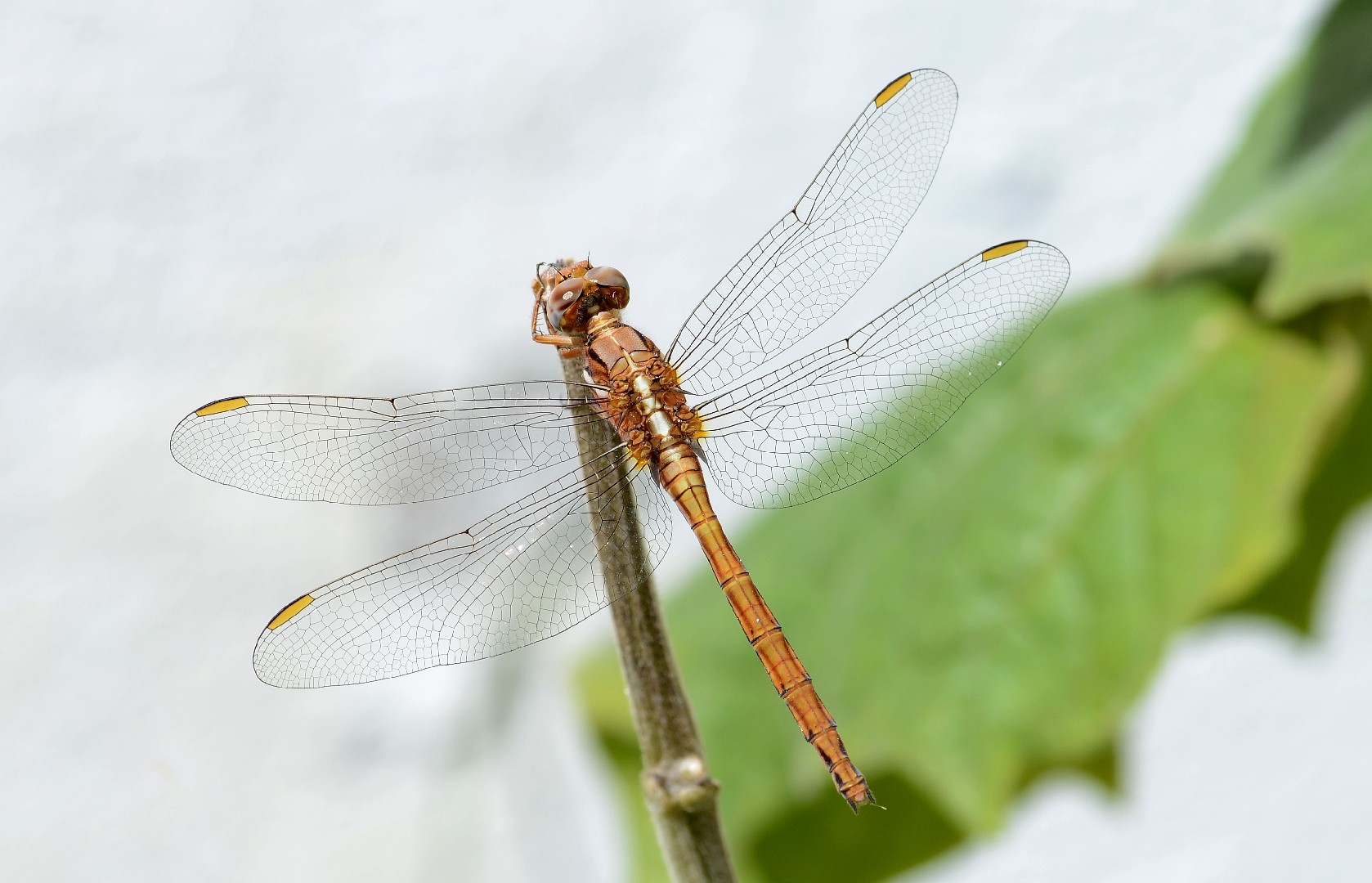
9. Keeled skimmer
Orthetrum coerulescens can reach a body length of 4 - 4.5 cm. These dragonflies have a thorax with pale yellow ante-humeral stripes. In the males the color of these stripes fades with age. The abdomen is rather slim and shows an evident dorsal keel. Males have blue-grey eyes and a blue pruinescence on the abdomen, developed with age. Young males are yellow-brown. On the contrary some (androchrome) females at the end of the reproductive cycle assume the bluish color of the male. In the female the abdomen is yellowish-brown, with a thin median black line and small transverse lines to the connections of the various segments. The hyaline wings have yellow costa and a long yellow-brown pterostigma (about 4 mm). This species resembles the black-tailed skimmer but is smaller and slimmer and the male has no black tip. Females and immature males lack the black abdominal pattern.
10. Vagrant Emperor
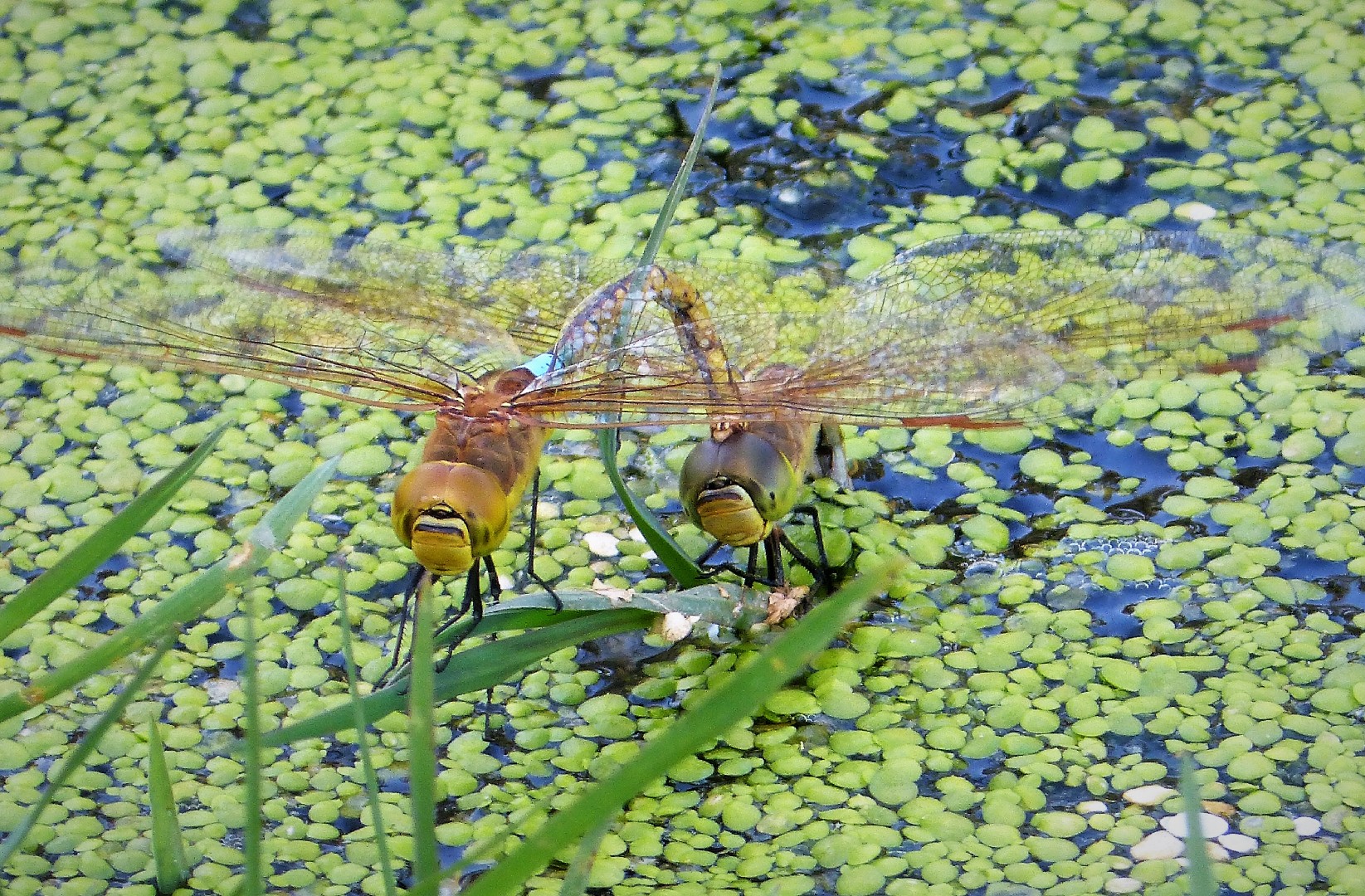
It is a large dragonfly with greenish-yellow eyes. Its thorax is olivaceous-brown, paler on sides. Wings are transparent with an amber-yellow patch. Abdomen is ochreous, marked with azure-blue and reddish-brown. Segment 2 is blue on dorsum and pale green on the sides. Segments 3 to 7 are olivaceous-yellow with irregular reddish-brown stripes on mid-dorsum and narrow black apical annules. There is a broad mid-dorsal blackish-brown stripe on segments 8 and 9, enclosing a pair of triangular yellow apical spots. Segment 10 is bright yellow, with its base and mid-dorsum broadly black. Female is similar to the male. Its natural habitats are shrub-dominated wetlands, swamps, freshwater lakes, intermittent freshwater lakes, freshwater marshes, intermittent freshwater marshes, and freshwater springs. It breeds in shallow tanks and marshes. A rare long-distance migrant to the British Isles, occasionally seen even in winter.
More







