




Top 20 Most Common Insects in United Arab Emirates
Insects, small yet abundant, are integral members of the rich tapestry of life in United Arab Emirates. Adaptable to arid deserts and lush parks, they take on diverse forms and roles. The most common insects in United Arab Emirates vary broadly due to geographical diversity, climate variations, ecosystem types, and human activities. This fascinating diversity, including both helpful and damaging species, highlights the delicate balance between our environments and insects, an intriguing angle we'll explore in our 'Top 20 most common insects in United Arab Emirates'.

Most Common Insects
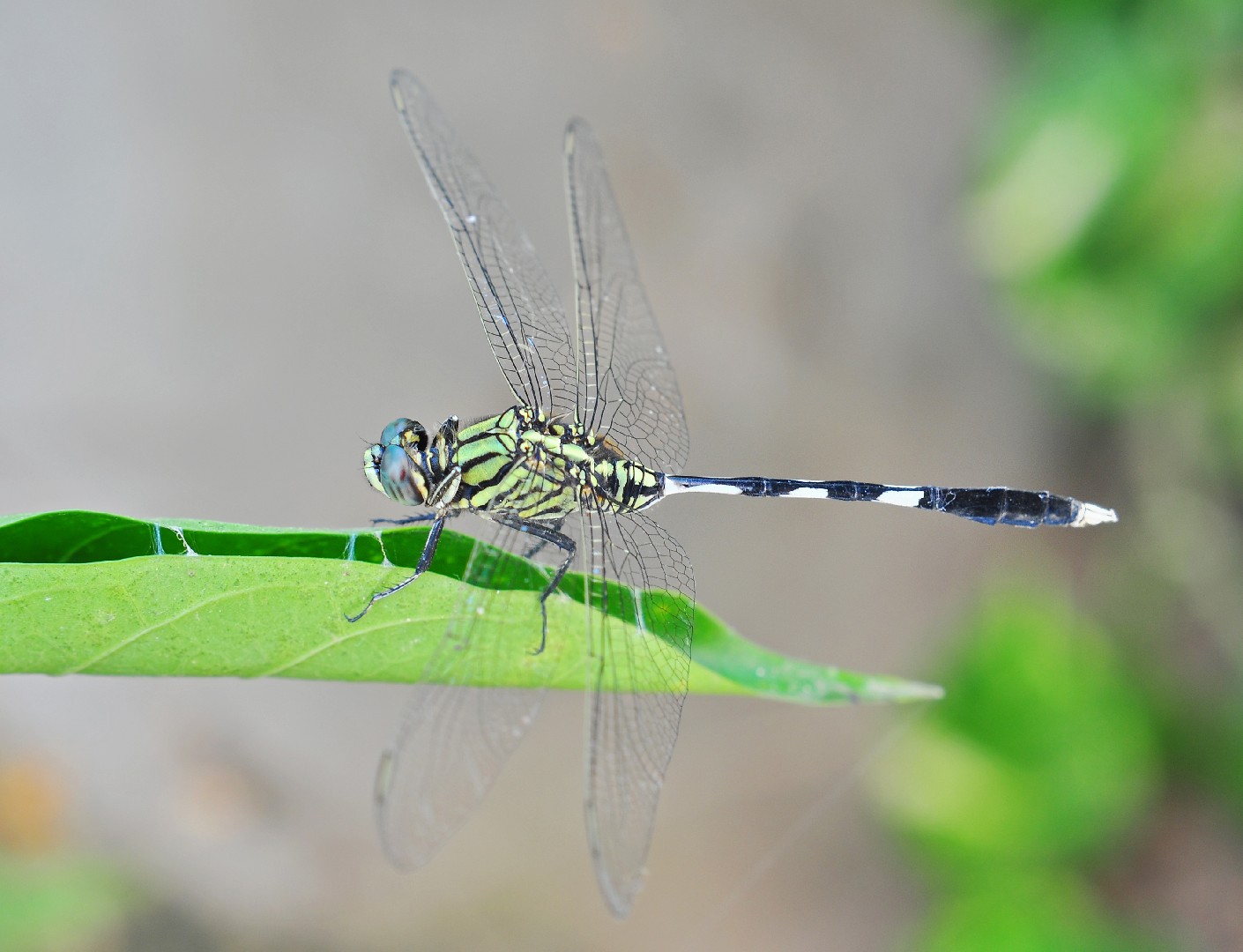
1. Slender skimmer
The species is on the IUCN Red List as not endangered, year of assessment 2009. The slender bank dragonfly occurs from Southeastern Europe and North Africa to Japan and Australia
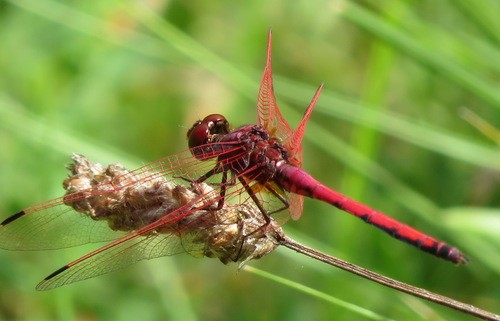
2. Red-veined dropwing
The face of the mature male is deep red, the vertex and top of the frons having a purple sheen. The eyes are deep red and the labium deep yellow with a dark brown stripe in the centre. The synthorax is red with black stripes; mature males often have a purple bloom on the upper thorax.The wings have bright red veins and orange makings at their bases. The pterostigmas are 2.5 - 2.5 mm long and dark brown. The slender abdomen is bright red; S6-S8 have black wedges on each side; S9 and S10 are black. Females have similar markings, but the abdomen and face are yellow to yellowish brown. The sides of the synthorax are pale yellow-brown, as are the lower sides of S1-S3. 
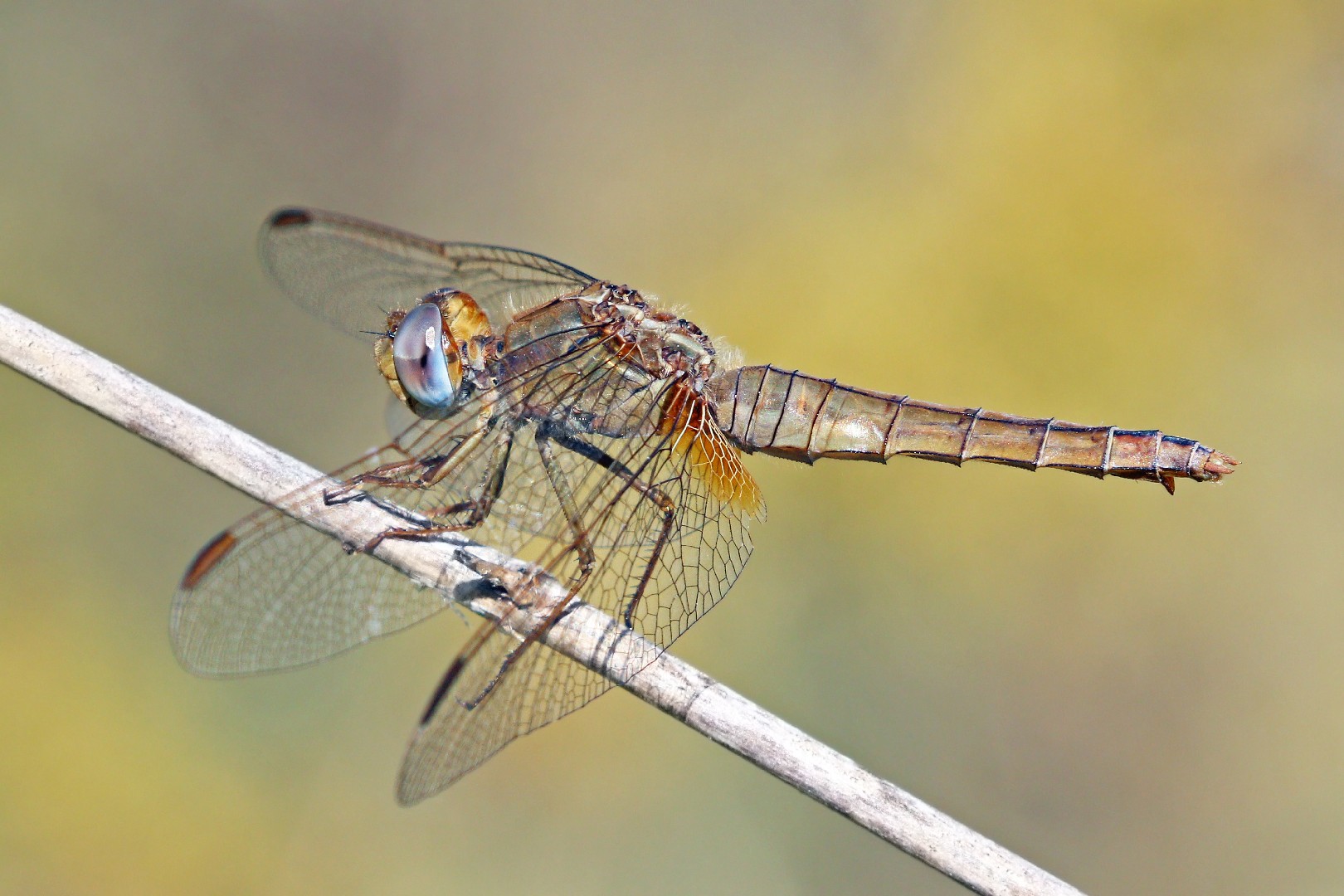
3. Scarlet dragonfly
Crocothemis erythraea can reach a length of 3.5 - 4.5 cm. These dragonflies haves a flattened and rather broad abdomen. The adult male scarlet dragonfly has a bright scarlet red, widened abdomen, with small amber patches at the bases of the hindwings. Also the veins on the leading edges of the wings are red. Females and immatures are yellow-brown and have a conspicuous pale stripe along the top of the thorax.
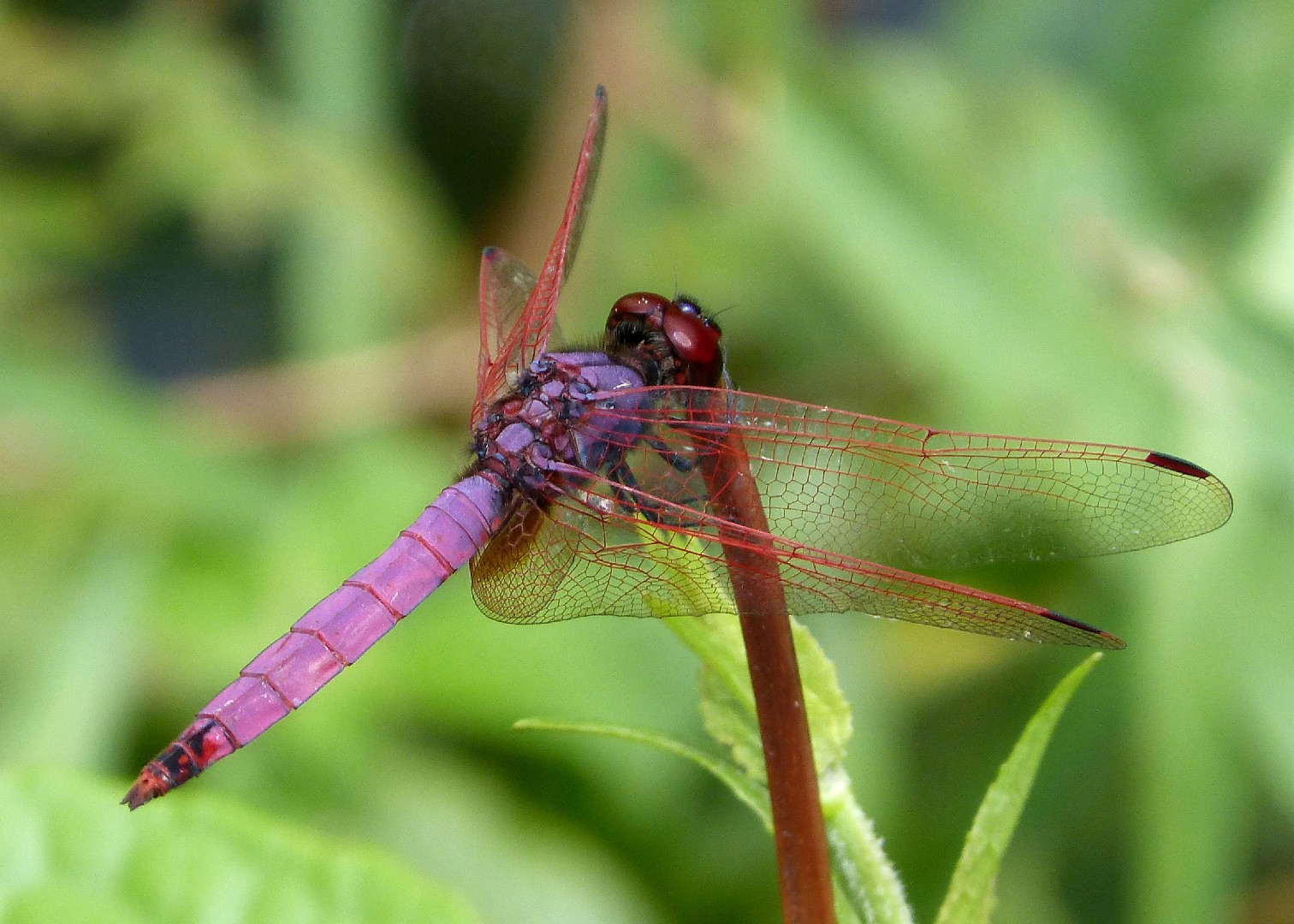
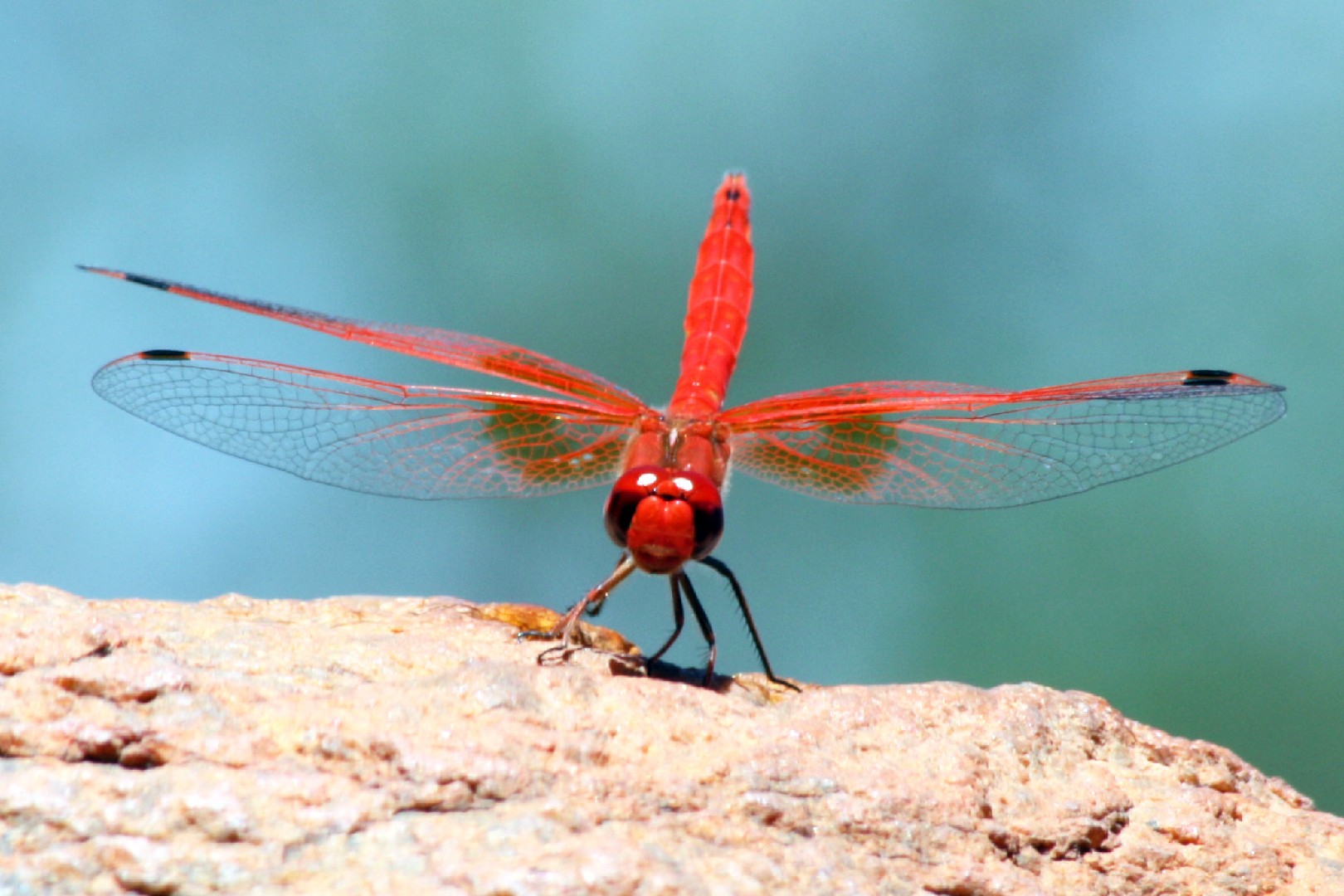
4. Violet dropwing
Trithemis annulata is a robust medium-sized species with a wingspan of 6 cm. The mature male has a dark red head and a yellow labium with brown central spot. The eyes are red with white spots on the rear edge, and the frons is dark metallic purplish-red. The prothorax is violet with slightly darker longitudinal stripes. The membranous wings have distinctive red veins, the pterostigma is orange-brown and there is a large orange-brown splash at the base of the hind wings. The abdomen is fairly broad and is pinkish-violet, with purple markings on the top of each segment and blackish markings on the terminal three segments. Females are a similar size to males but the thorax is brownish and the abdomen is yellow with dark brown markings. The wings of females lack the red veins of males but have similar orange-brown patches.
5. Kirby's dropwing
The spotted sun pointer (Trithemis kirbyi) is a dragonfly species from the family of the dragonflies (Libellulidae). Two subspecies are described. The nominate subspecies occurs in India and Sri Lanka, while the insufficiently defined taxon Trithemis kirbyi ardens occurs in the rest of the distribution area, which mainly includes Africa.
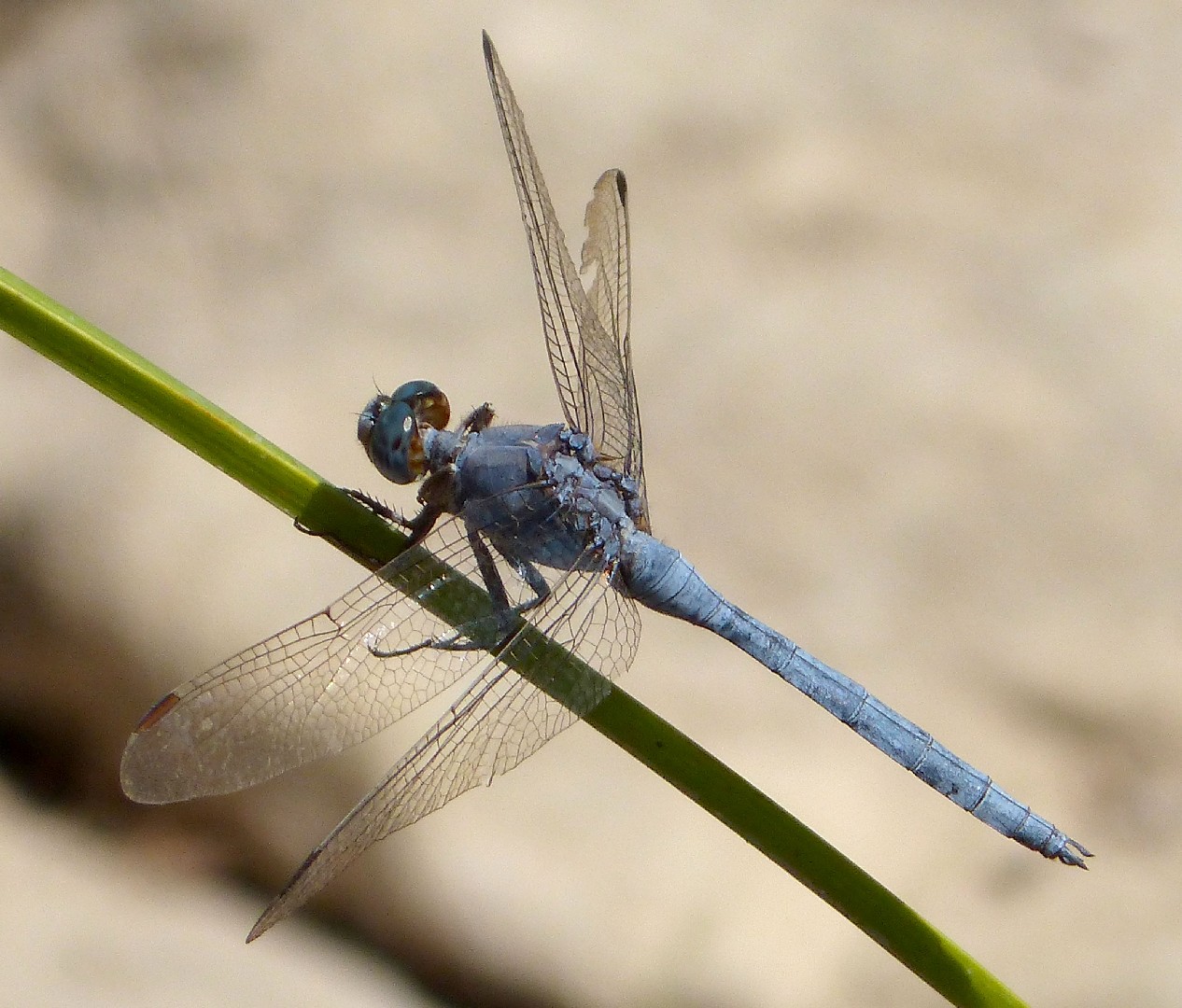
6. Epaulet skimmer
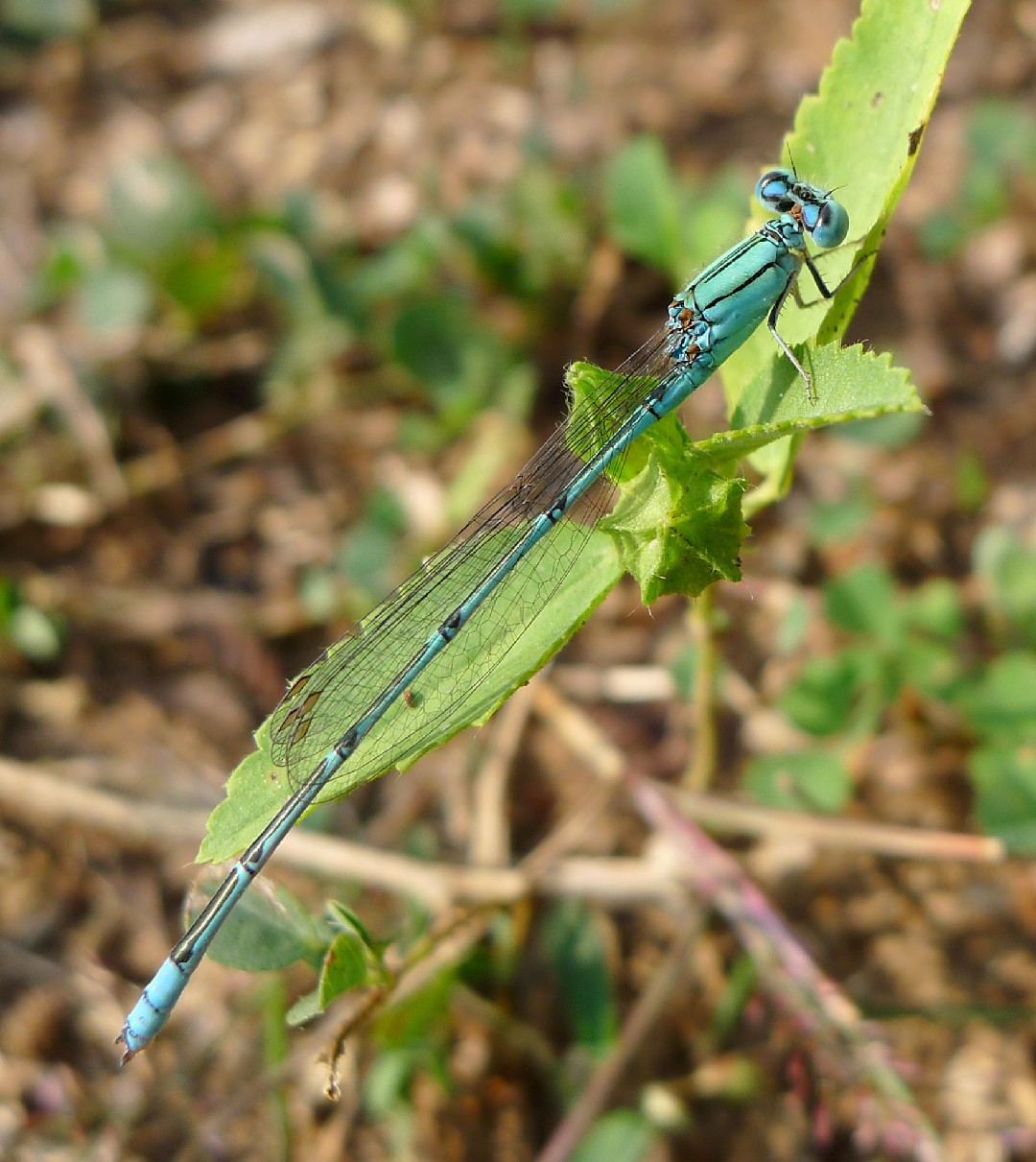
The bodies of adult males are blue, and those of young and females are yellow and brown.
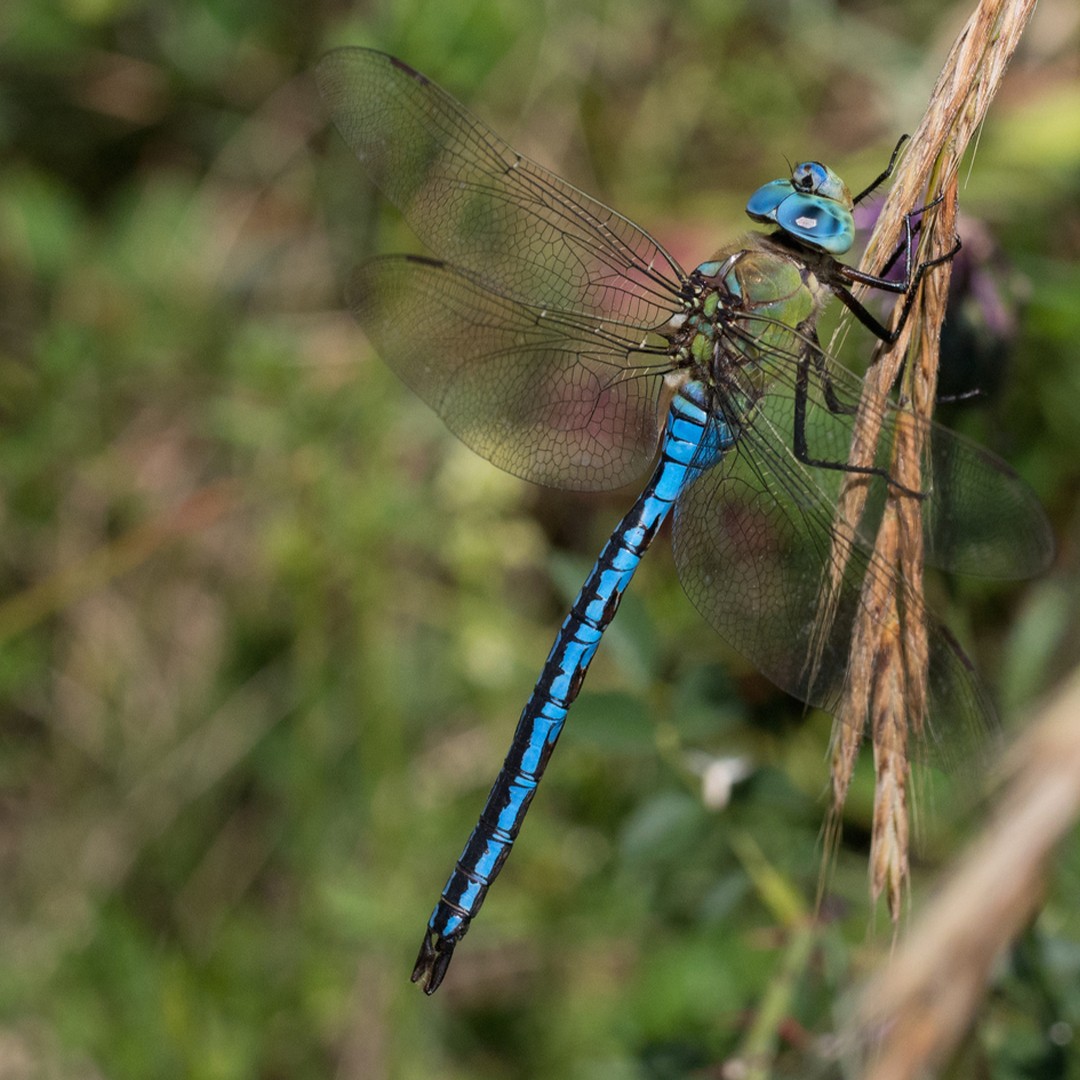
7. Emperor dragonfly
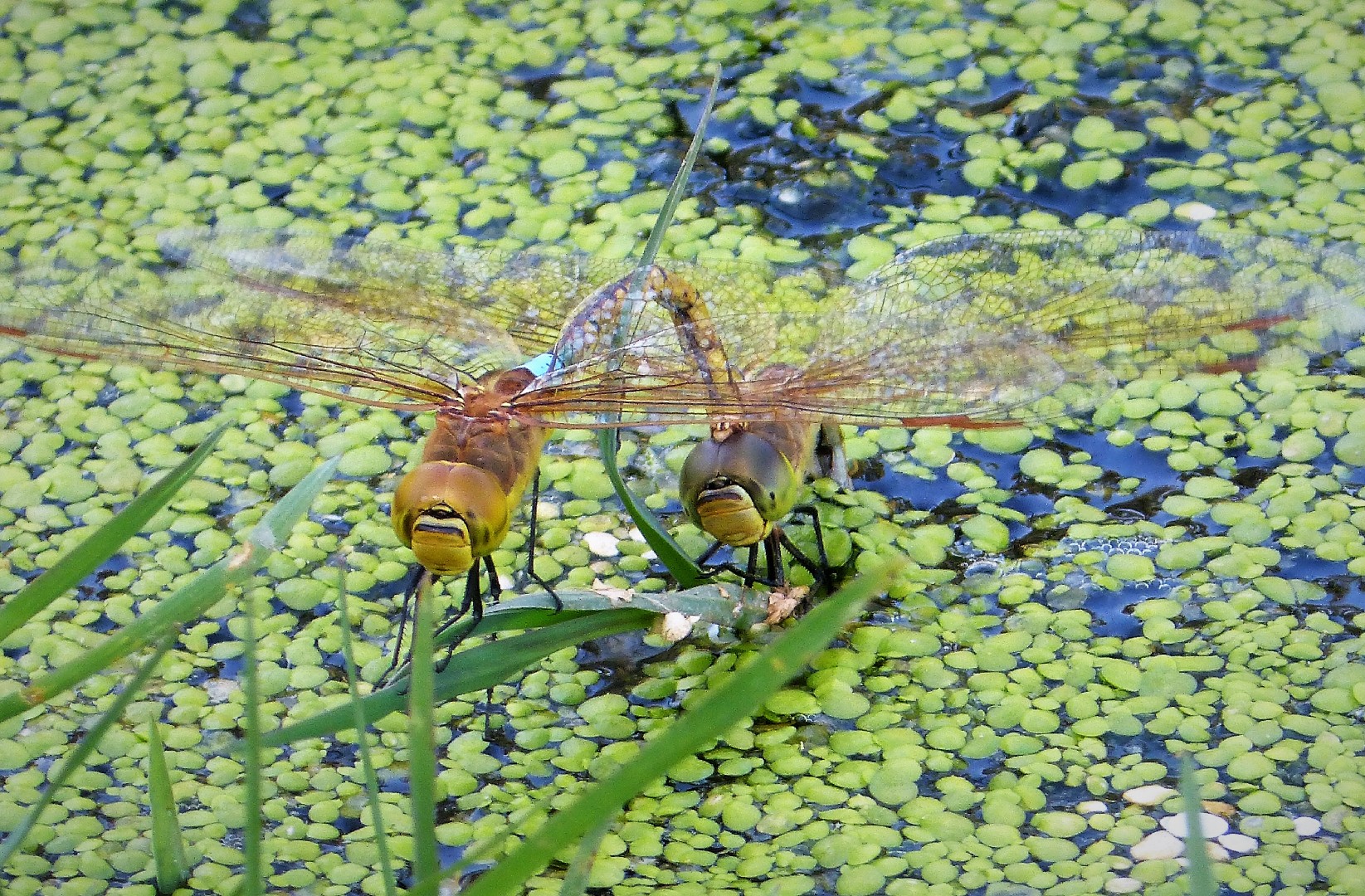
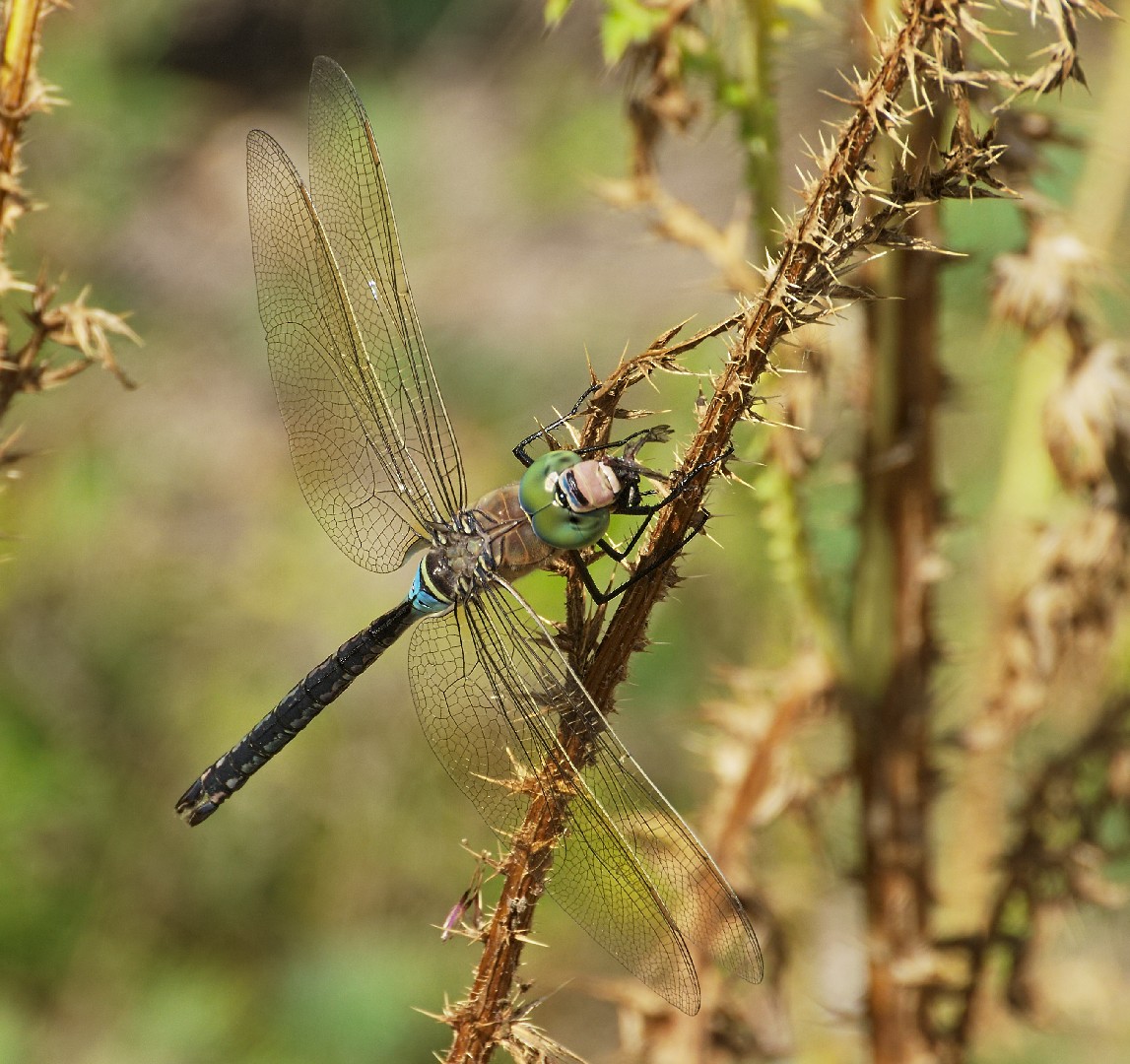
The emperor dragonfly or blue emperor (Anax imperator) is a large species of hawker dragonfly of the family Aeshnidae, averaging 78 millimetres (3.1 in) in length.
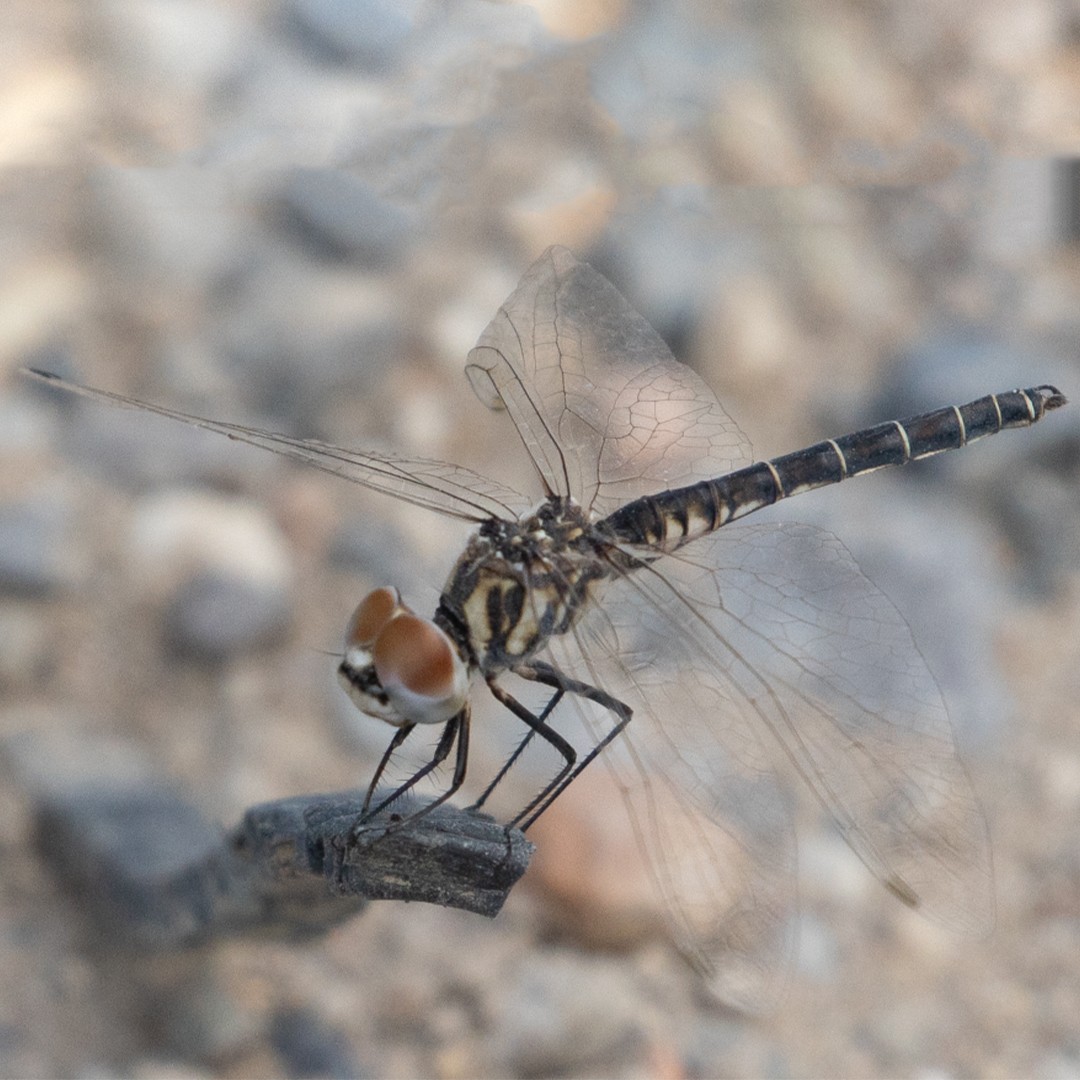
8. Black pennant
Selysiothemis nigra, the black pennant, is a monotypic species of dragonfly in the family Libellulidae. It occurs in Central Asia and the Middle East. In Europe it is mostly confined to the coastal areas of the Mediterranean and the Black Sea.
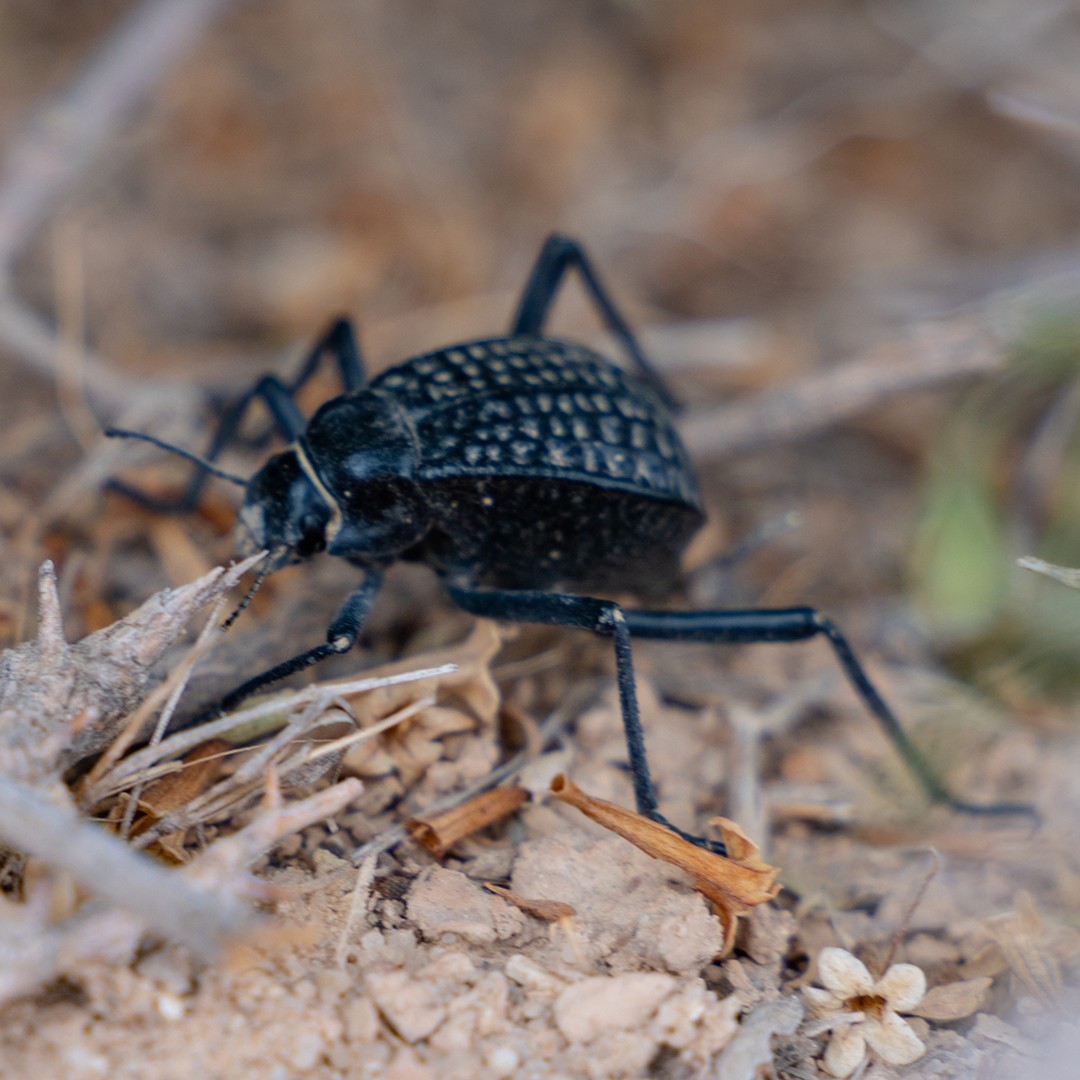
9. Pitted beetle
Pitted beetle is a species of desert beetle of the Tenebrionidae family that inhabits arid environments in the Middle East.
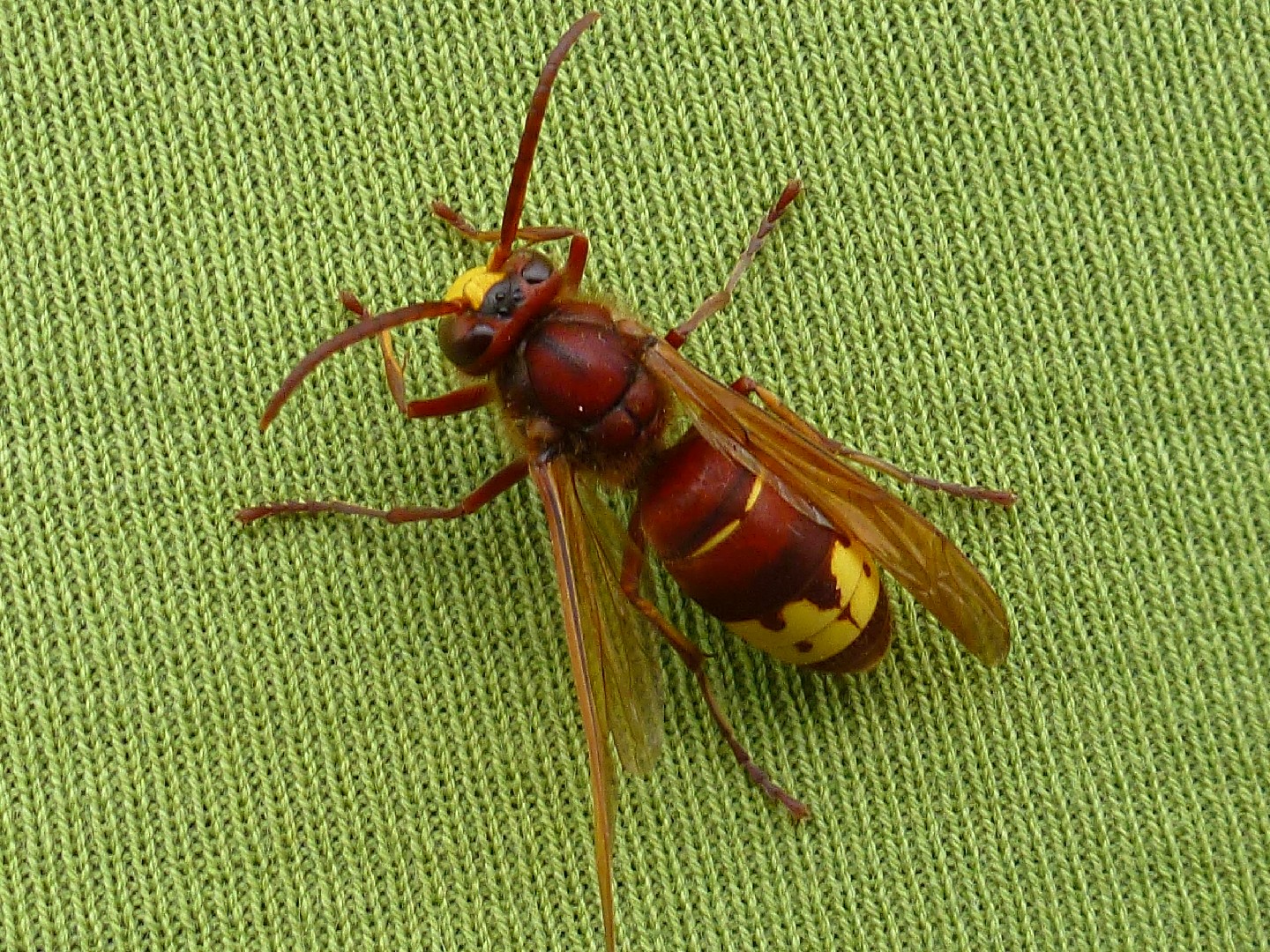
10. Oriental hornet
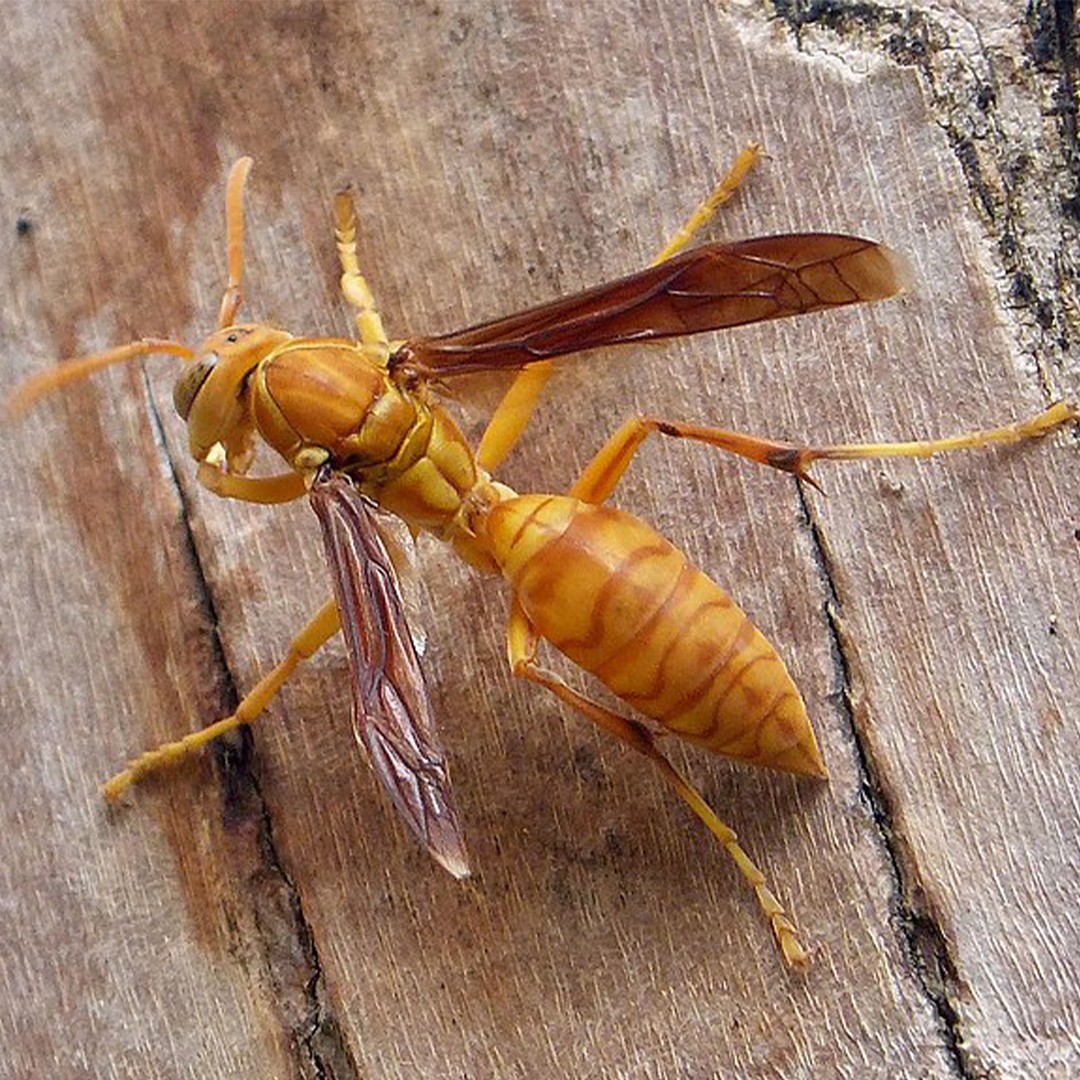
The oriental hornet (Vespa orientalis) is a polyphagous insect (the adults are vegetarian and the larvae eat animal protein) that communicates with sound vibrations underground. Otherwise, they are considered a pest to honey bees, as they attack them in order to steal honey and other proteins. While they are jerks to others, their internal community has everyone working for the good of the colony.
More







