




Top 20 Most Common Insects in Flagstaff
Insects, remarkable creatures characterized by their six legs and segmented bodies, are seemingly omnipresent in Flagstaff. They play pivotal roles in our ecosystem, from pest control to plant pollination. Unveiling 20 of the most common of these critters, we delineate the intricate ties between Flagstaff's diverse environments and its insect inhabitants, revealing the fascinating balance sustained by both beneficial bugs and notorious pests.

Most Common Insects

1. White-Lined Sphinx
The white-Lined Sphinx ( Hyles lineata) is a colorful furry moth with striped wings. It has a similar size of a hummingbird, and behaves like a hummingbird as well. It can fly extremely fast, and instantly swing from side to side while hovering just like a hummingbird. It feeds on nectar from a variety of flowers including petunia, honeysuckle, lilac, clovers, thistles, and jimson weed.

2. Variegated fritillary
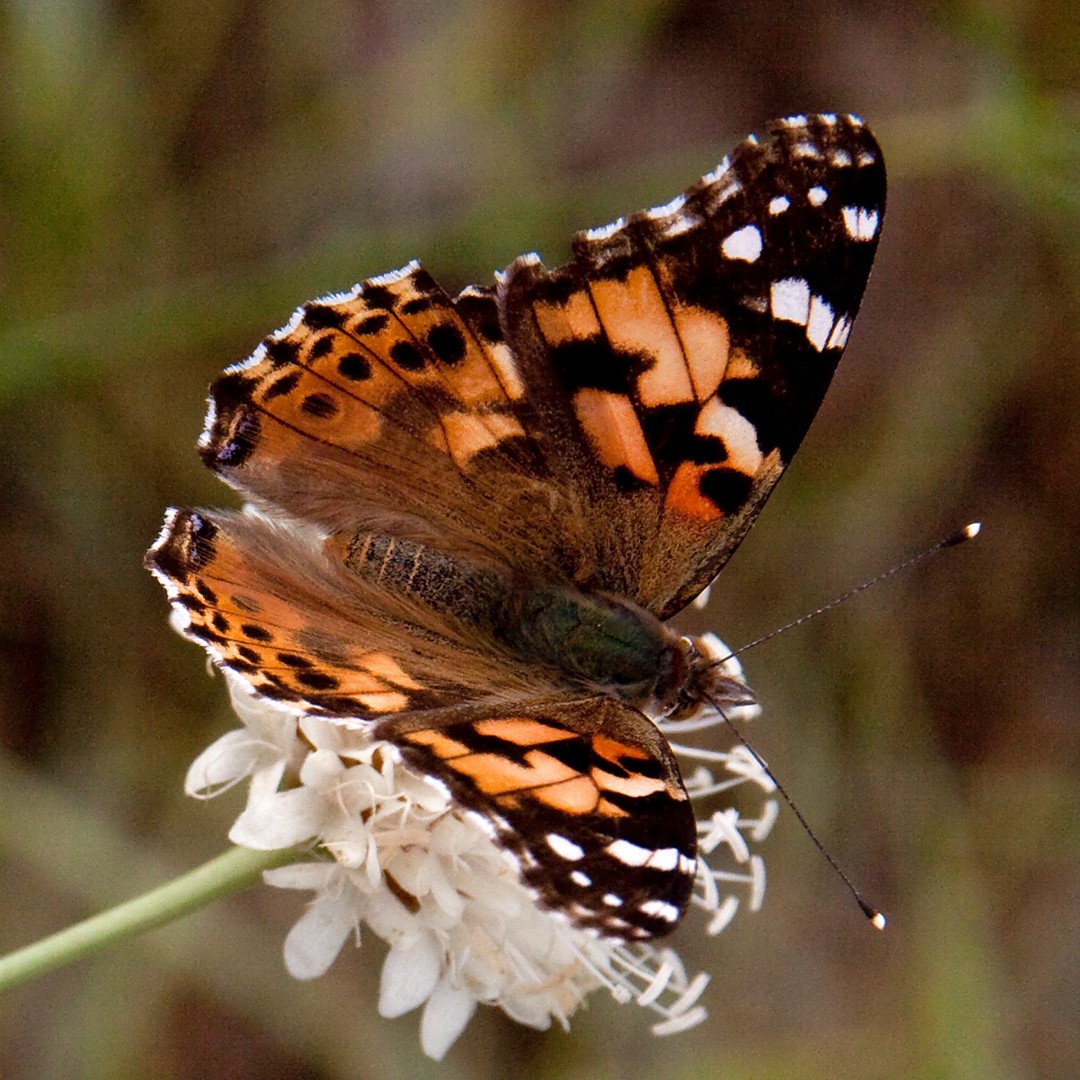
The variegated fritillary (Euptoieta claudia) earns its name from the greek work Eutptoietos, which means "easily scared." This is because they are incredibly difficult to approach, darting away if anyone comes close. They are identified with a checkered orange and black on its wings. The variegated fritillary is unique among butterflies for its ability to have two or three broods per year, resulting in many potential children.
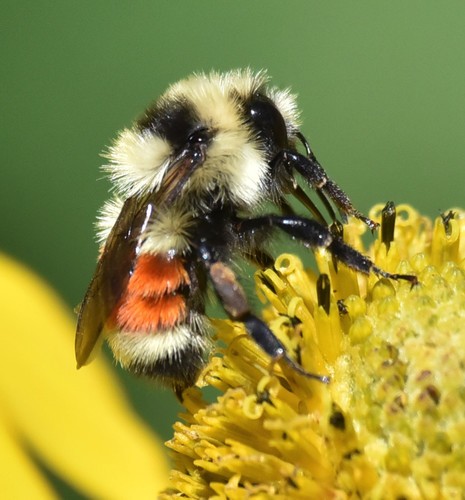
3. Hunt's bumble bee
Bombus huntii is a non-woven insect from the family of bees and bumblebees (Apidae). The scientific name of the species was first validly published in 1860 by Greene.
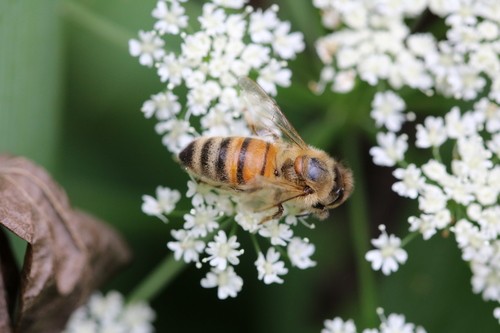
4. Western honey bee
Western honey bee(Apis mellifera) is the most common species of honeybee in the world. Among the first domesticated insects, its cultural and economic impact on humanity has been vast and far-reaching, providing honey, wax and its services as a pollinator. Western honey bee faces challenges worldwide, such as colony collapse disorder, and populations are thought to be decreasing.
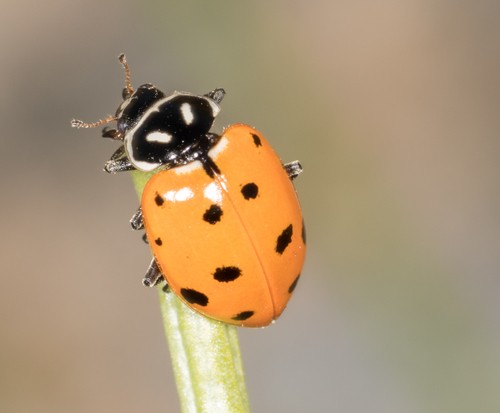
5. Convergent lady beetle
The convergent lady beetle (Hippodamia convergens) is one of the most common lady beetles in North America, which is a great thing given that it is a common biological control agent of aphids. They lay a good chunk of eggs over a couple of months. If you have ever seen a small, black alligator-like insect, you may have seen one of its larva.
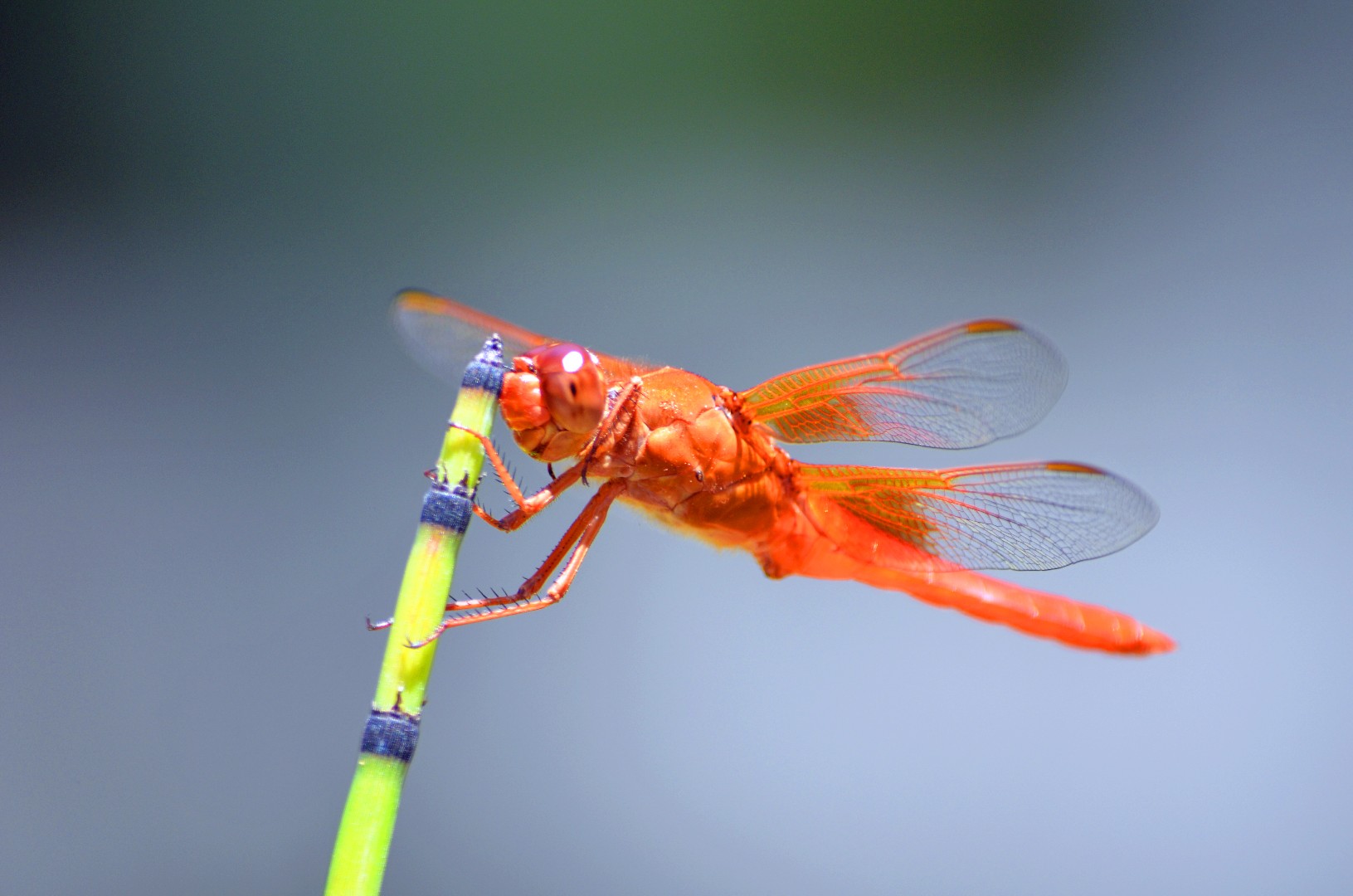
6. Flame skimmer
Male flame skimmers are known for their entirely red or dark orange body, this includes eyes, legs, and even wing veins. Females are usually a medium or darker brown with some thin, yellow markings. This particular type of skimmer varies in size but is generally measured somewhere between 5 cm and 8 cm long. These naiads are known for being rather large and chubby-looking due to their rounded abdomen. They are covered with hair but, unlike most young dragonflies, they lack hooks or spines. 
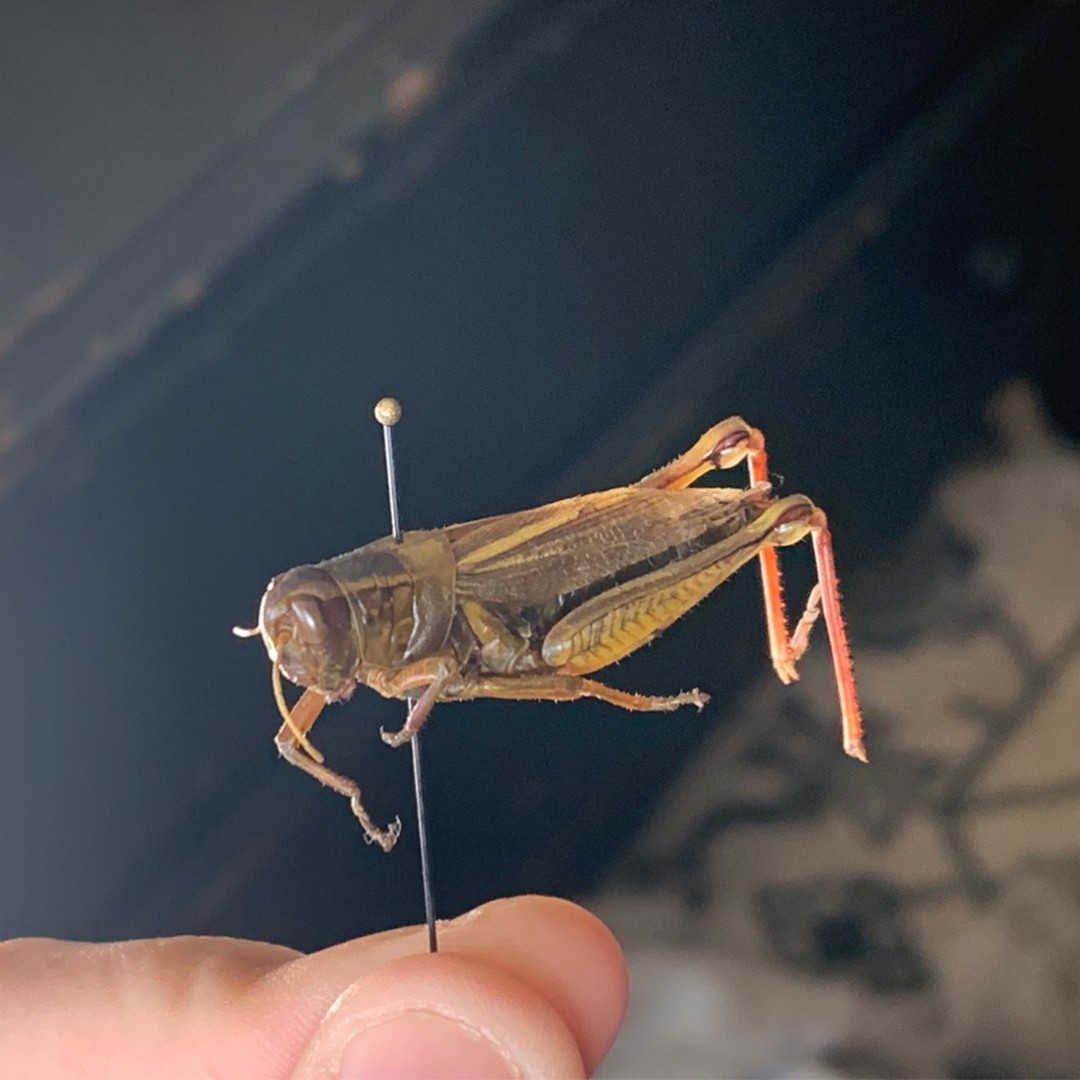
7. Two-striped grasshopper
Melanoplus bivittatus, the two-striped grasshopper, is a poikilothermic species of grasshopper belonging to the genus Melanoplus. It is commonly found in North America, with high quantities inhabiting Canadian prairies and farmland.
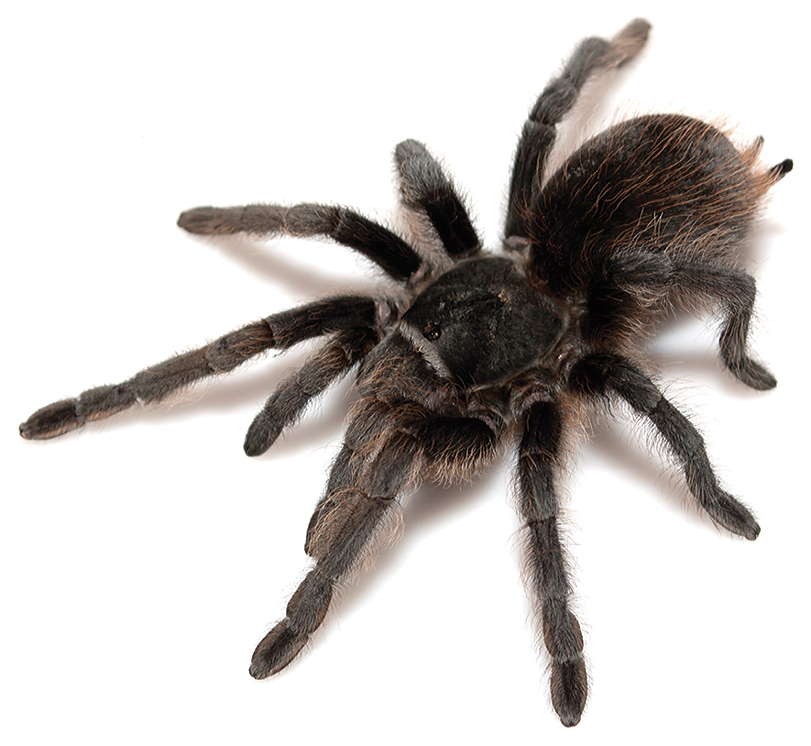
8. Grand canyon black tarantula
Aphonopelma marxi is generally dark brown to black in colour, very hairy, with some orange to red hairs on the abdomen. The mature male's carapace ranges from 8 - 10 mm long, the mature female being larger, with a carapace from 1.3 - 1.5 cm long. The total body length of a female, including the chelicerae, is around 3.5 cm. In males, the ratio of the length of the femur of the first leg to the length of the metatarsus of the same leg is greater than 1.69, whereas in similar species the ratio is smaller. In females, the ratio of the length of the femur of the first leg to the length of metatarsus of the third leg is greater than 1.76, being smaller in similar species.
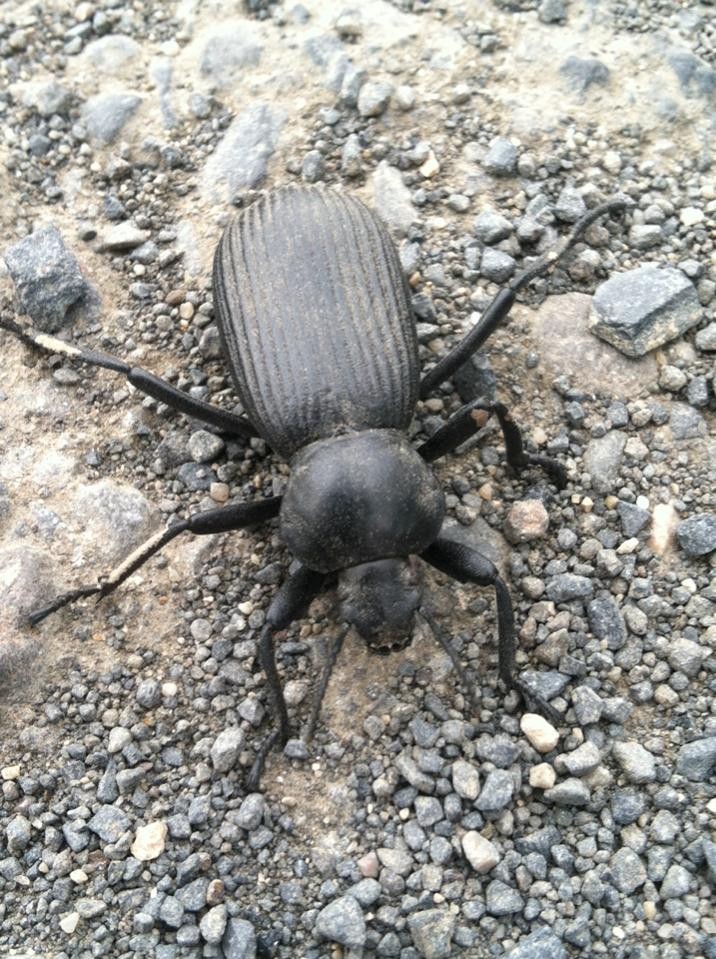
9. Obscure darkling beetle
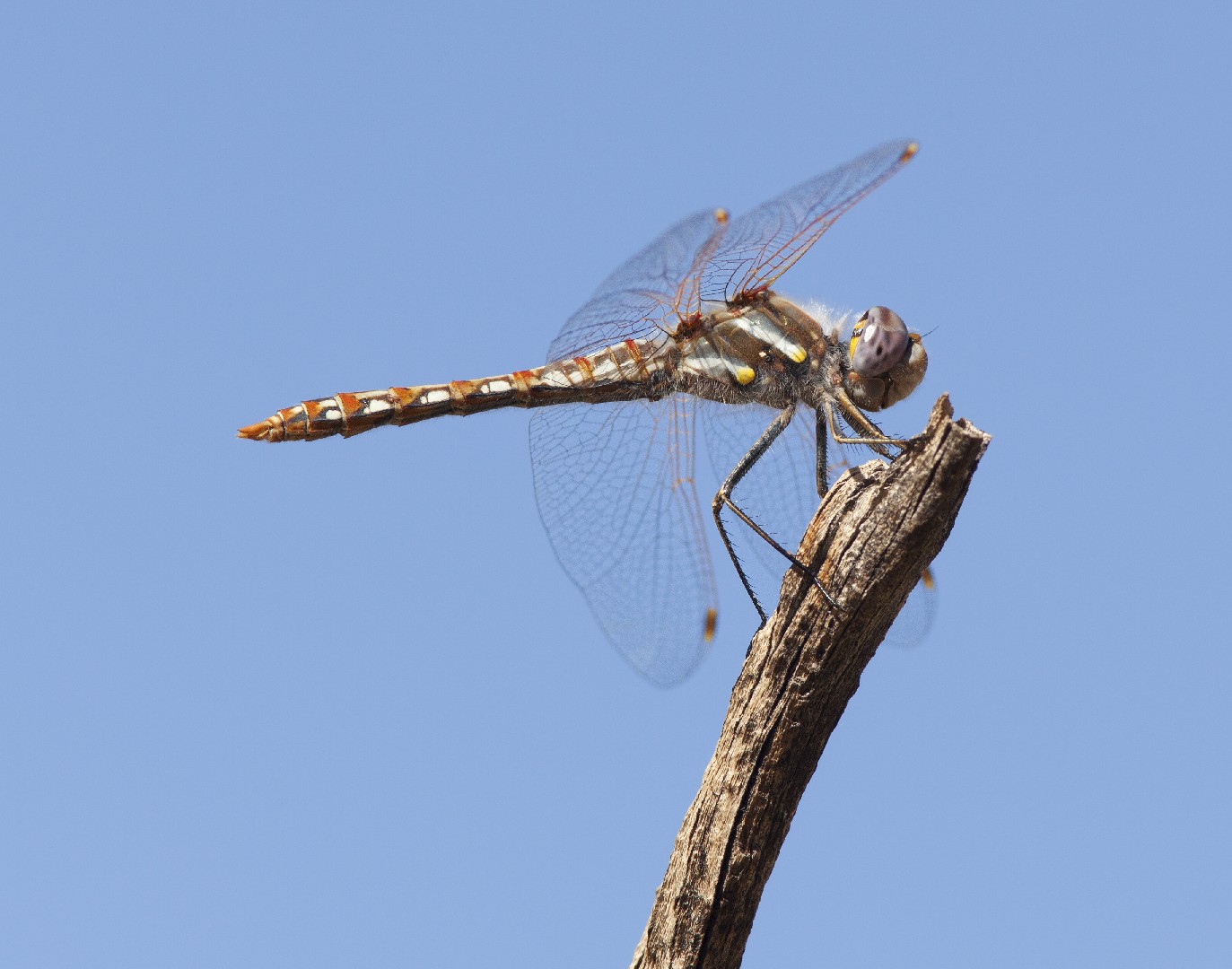
10. Variegated meadowhawk
The variegated meadowhawk is a small to medium-sized dragonfly with a slender abdomen, often reaching a length of 4.5 - 23 cm. The male is commonly dark brownish black with an abdomen of bright red, pink, and golden brown. The thorax may be marked with a pair of yellow dots on each side. The leading edges of the wings are marked with pinkish. The females are similar in color but not as brightly colored, with gray and yellow replacing the red of the male. Young variegated meadowhawks are much paler and mottled with pale green, pale yellow, golden brown, and orange.
More







