




Top 20 Most Common Insects in Show Low
Insects, a diverse group with unique characteristics, are integral parts of our urban ecosystem in Show Low. Teeming with life, Show Low harbors a fascinating variety of these small creatures, ranging from helpful pollinators to pesky invaders. This list presents the top 20 most common insects, each shaping the city's environment in their unique ways.

Most Common Insects
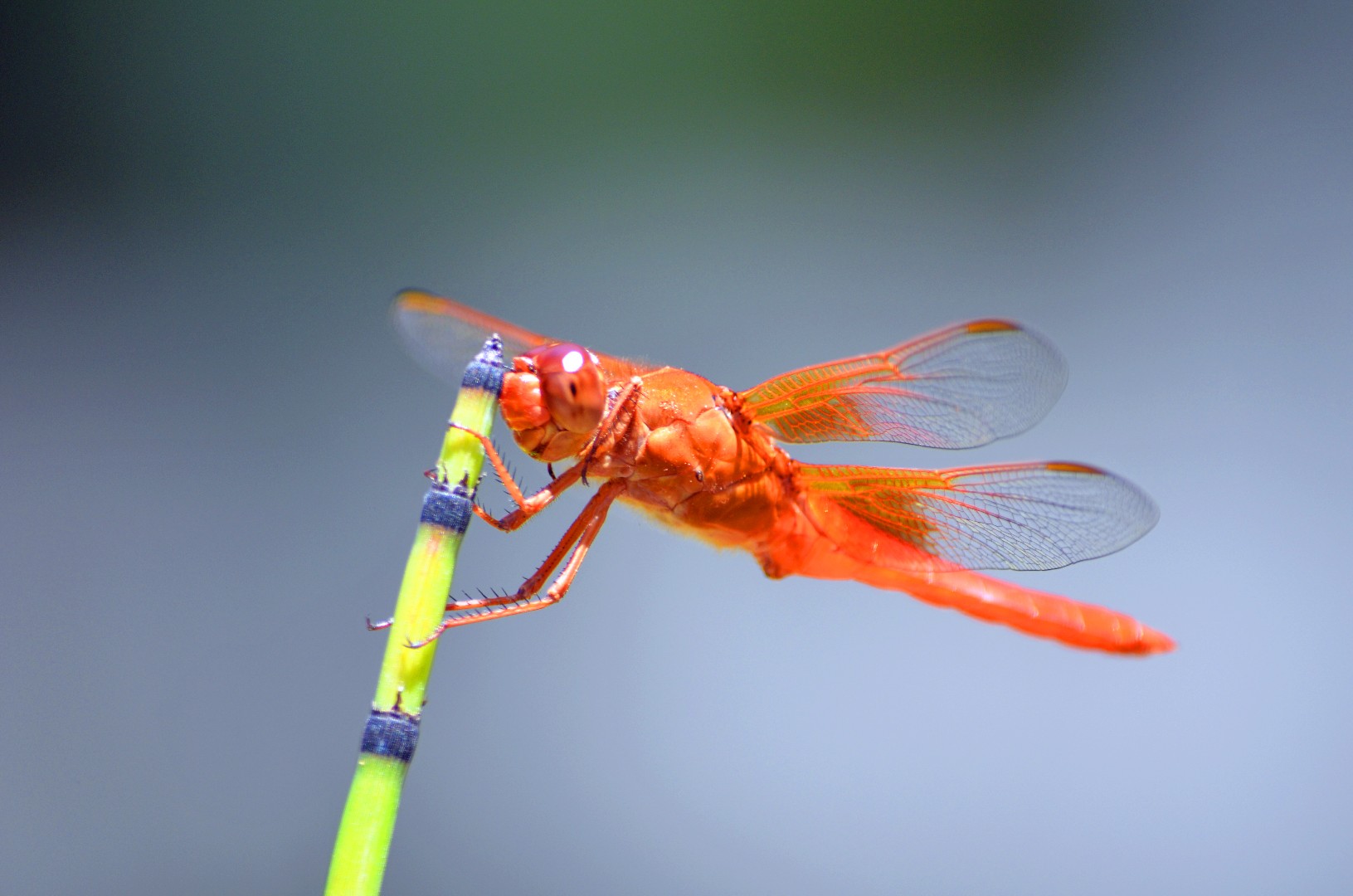
1. Flame skimmer
Male flame skimmers are known for their entirely red or dark orange body, this includes eyes, legs, and even wing veins. Females are usually a medium or darker brown with some thin, yellow markings. This particular type of skimmer varies in size but is generally measured somewhere between 5 cm and 8 cm long. These naiads are known for being rather large and chubby-looking due to their rounded abdomen. They are covered with hair but, unlike most young dragonflies, they lack hooks or spines. 
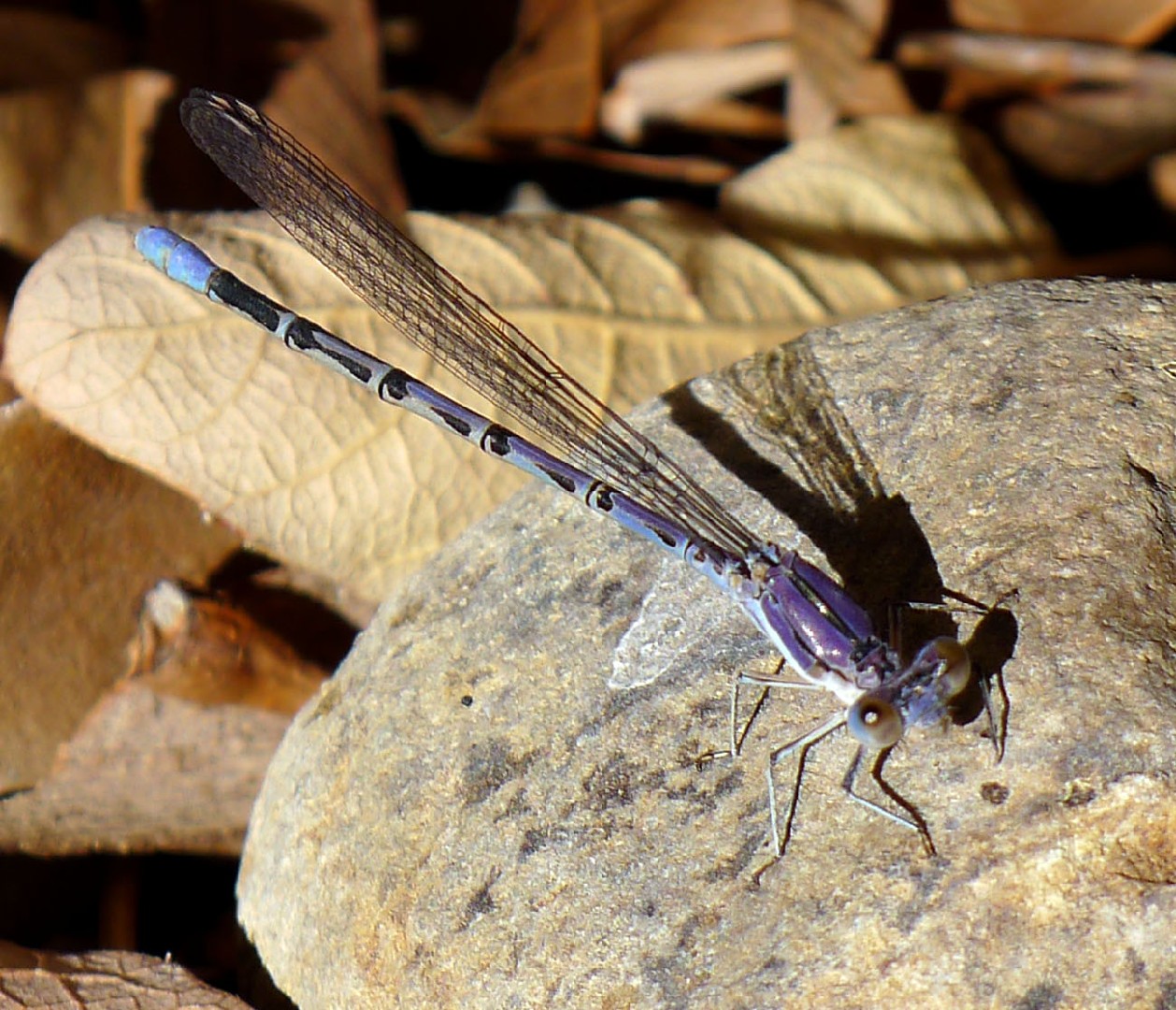
2. Springwater dancer
The springwater dancer has a black stripe along the side of its thorax. The male is typically blue, but some can be violet. The female is pale brown.
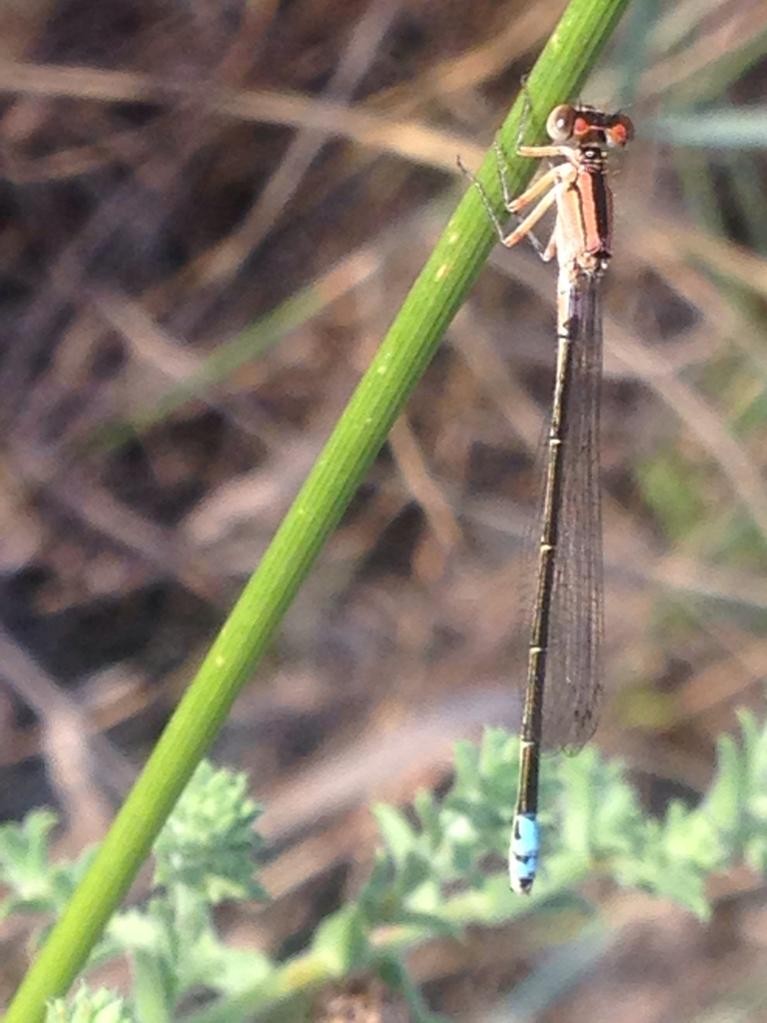
3. Plains forktail
Ischnura damula, the plains forktail, is a species of narrow-winged damselfly in the family Coenagrionidae. It is found in North America. The IUCN conservation status of Ischnura damula is "LC", least concern, with no immediate threat to the species' survival. The population is stable.
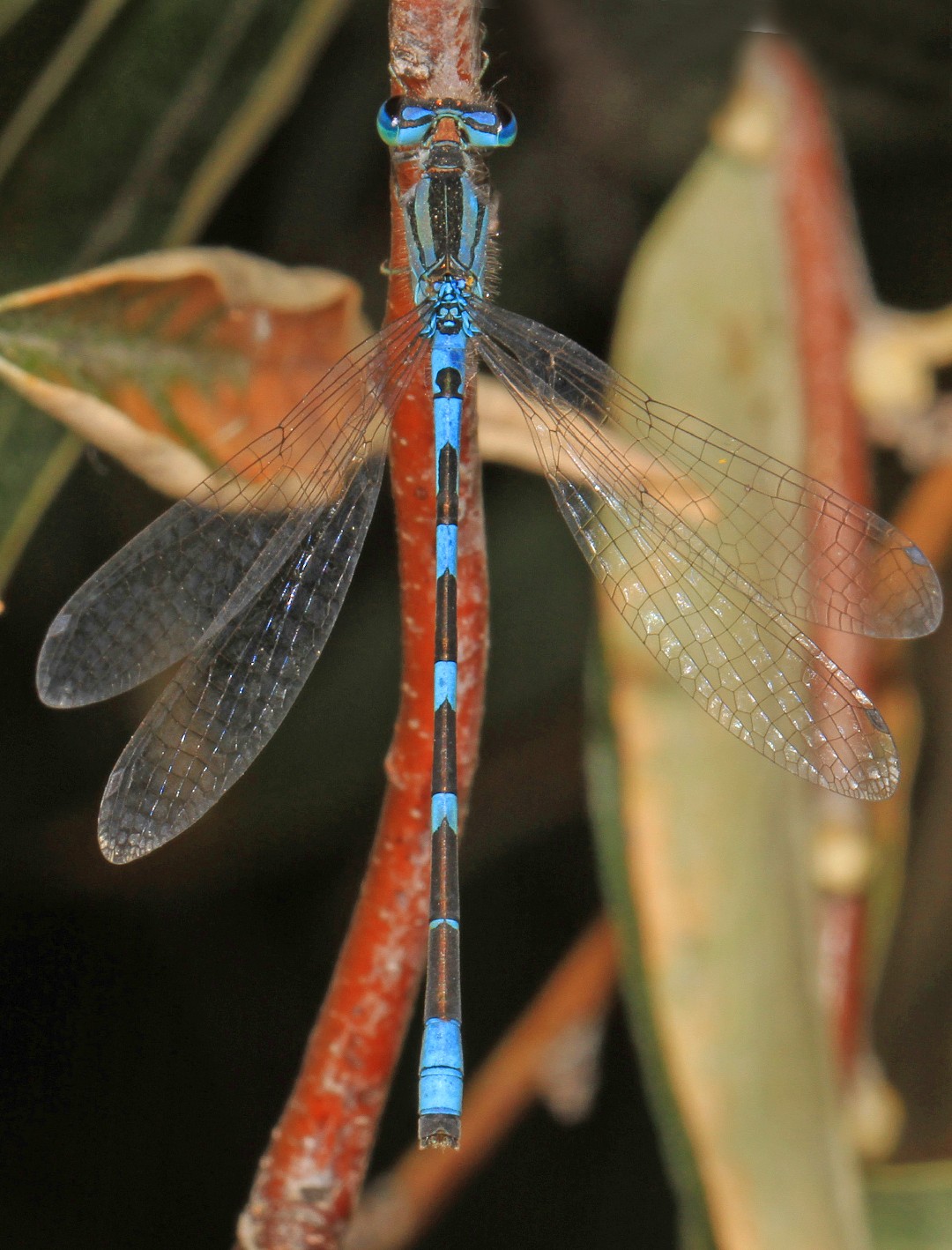
4. Tule bluet
Enallagma carunculatum is a dragonfly in the family of the brown dragonflies (Coenagrionidae). It is native to North America.
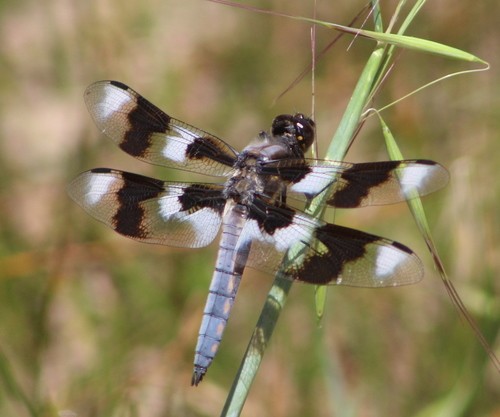
5. Eight-spotted skimmer
The eight-spotted skimmer (Libellula forensis) is identified by the eight black markings on its wings. It is occasionally confused with the Twelve-spotted skimmer that is sometimes called the Ten-spotted skimmer. You may attempt to desperately count the number of spots on these fast-moving skimmers, but the major differentiation in this one is the lack of black tips on their wings.

6. Variegated fritillary
The variegated fritillary (Euptoieta claudia) earns its name from the greek work Eutptoietos, which means "easily scared." This is because they are incredibly difficult to approach, darting away if anyone comes close. They are identified with a checkered orange and black on its wings. The variegated fritillary is unique among butterflies for its ability to have two or three broods per year, resulting in many potential children.
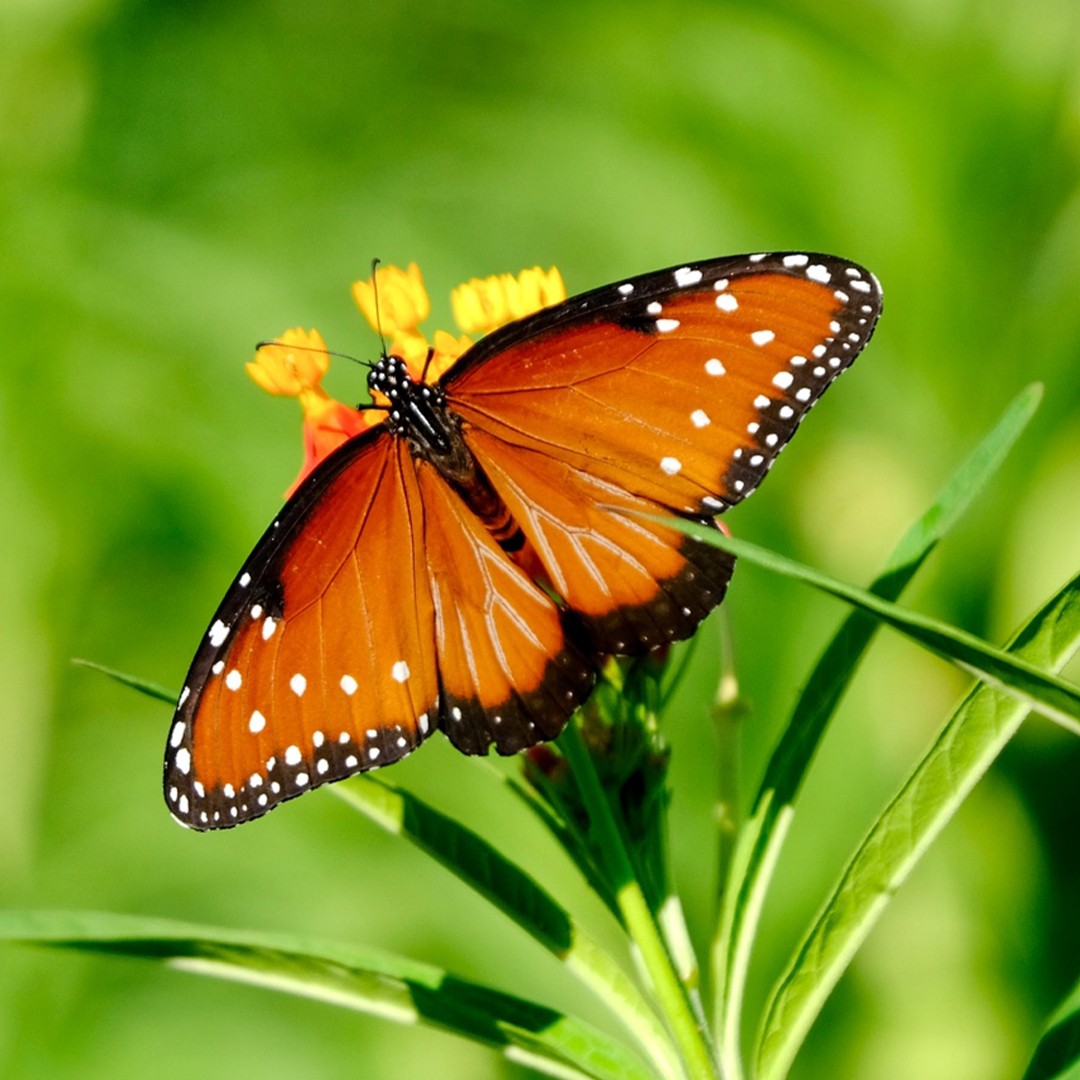
7. Queen
The queen butterfly (Danaus gilippus) is a North and South American butterfly in the family Nymphalidae with a wingspan of 70–88 mm (2.8–3.5 in). It is orange or brown with black wing borders and small white forewing spots on its dorsal wing surface, and reddish ventral wing surface fairly similar to the dorsal surface. The ventral hindwings have black veins and small white spots in a black border. The male has a black androconial scent patch on its dorsal hindwings. It is found throughout the tropics and into the temperate regions of the Americas, Asia and Africa. It can be found in meadows, fields, marshes, deserts, and at the edges of forests. This species is possibly a close relative to the similarly colored soldier butterfly (or tropic queen; Danaus eresimus); in any case, it is not close to the plain tiger (Danaus chrysippus) as was long believed. There are seven subspecies. Females lay one egg at a time on larval host plants. Larvae use these plants as a food source, whereas adult butterflies feed mainly on nectar from flowers. Unpalatability to avian predators is a feature of the butterfly; however, its level is highly variable. Unpalatability is correlated with the level of cardenolides obtained via the larval diet, but other compounds like alkaloids also play a part in promoting distastefulness. Males patrol to search for females, who may mate up to 15 times a day. Male organs called hair-pencils play an important role in courtship, with males with lower hair-pencil levels being selected against. These hair-pencils may be involved in releasing pheromones during courtship that could attract female mates.
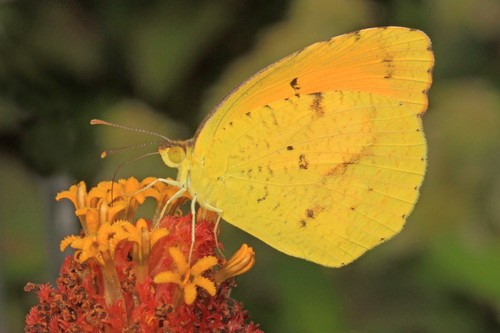
8. Sleepy orange
The sleepy orange is a bright orange butterfly with the upperside of the wings having wide black borders. The forewing coastal margin has a small, narrow black spot. The underside of the wings varies seasonally: summer forms are bright yellow with brick-red markings, while winter forms are browner and more heavily marked. It has a wingspan of 3.5 - 6 cm .
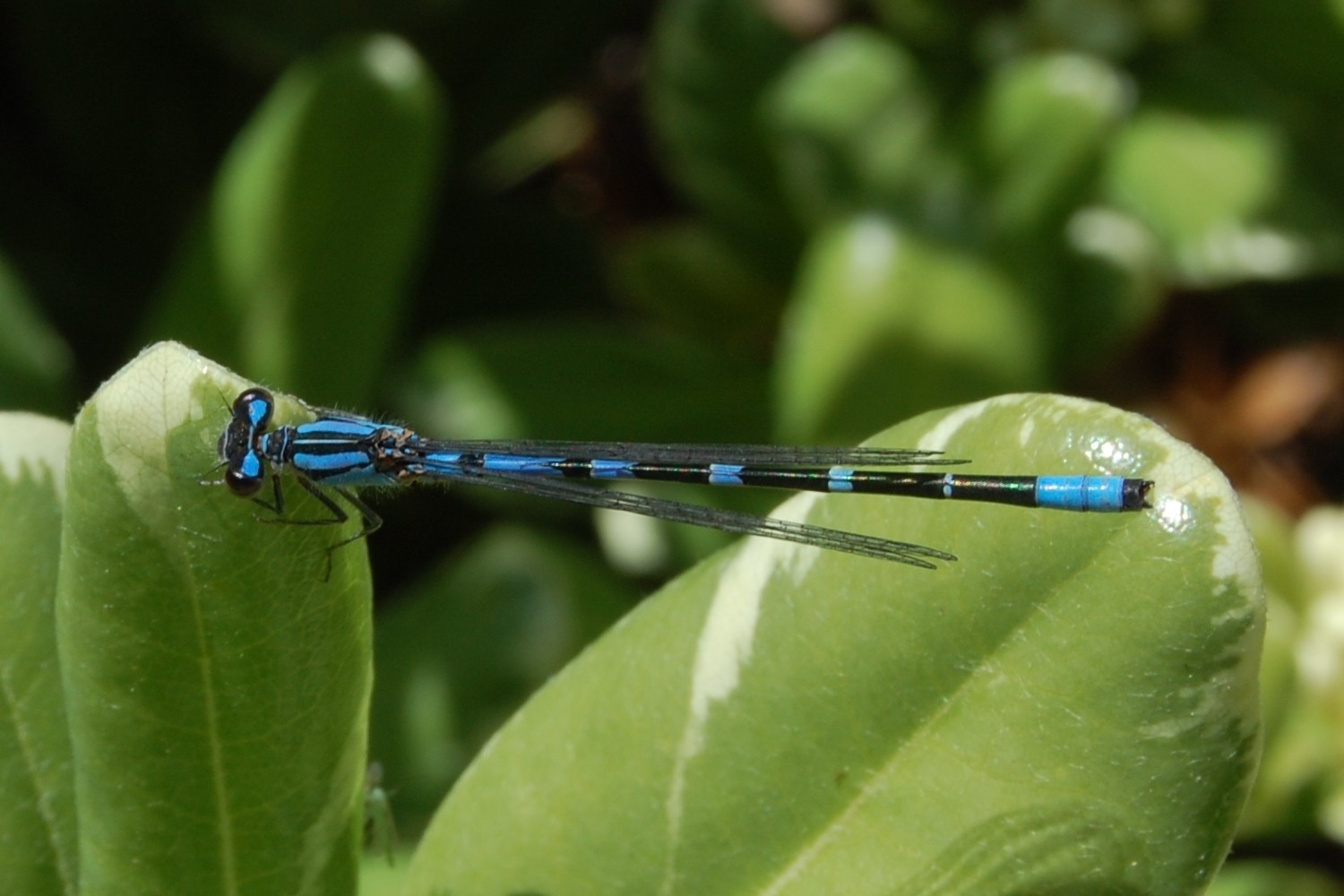
9. Arroyo bluet
The scientific name of the species was first validly published in 1861 by Hagen.
10. Variegated meadowhawk
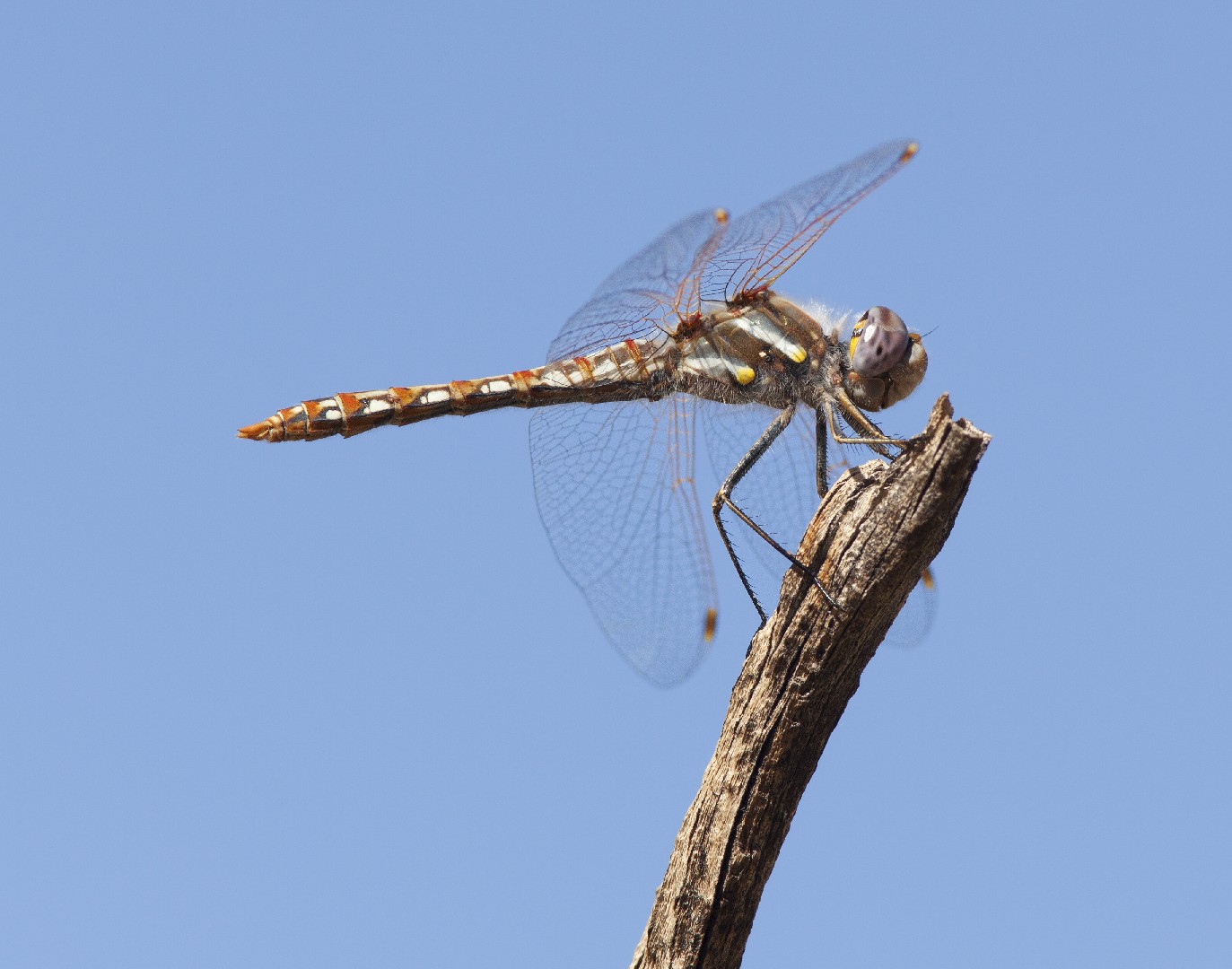
The variegated meadowhawk is a small to medium-sized dragonfly with a slender abdomen, often reaching a length of 4.5 - 23 cm. The male is commonly dark brownish black with an abdomen of bright red, pink, and golden brown. The thorax may be marked with a pair of yellow dots on each side. The leading edges of the wings are marked with pinkish. The females are similar in color but not as brightly colored, with gray and yellow replacing the red of the male. Young variegated meadowhawks are much paler and mottled with pale green, pale yellow, golden brown, and orange.


More







