




Top 16 Most Common Insects in Mesquite
Insects, varied in size and shape, are a vital part of the ecosystem in Mesquite, contributing to the overall biodiversity. Their roles range from being nature's recyclers to potential pests affecting urban life. This list of 16 most common insects will not only highlight those which could be nuisances but also those beneficial to our environment, explaining the intricate balance between man-made habitats and the insect world.

Most Common Insects
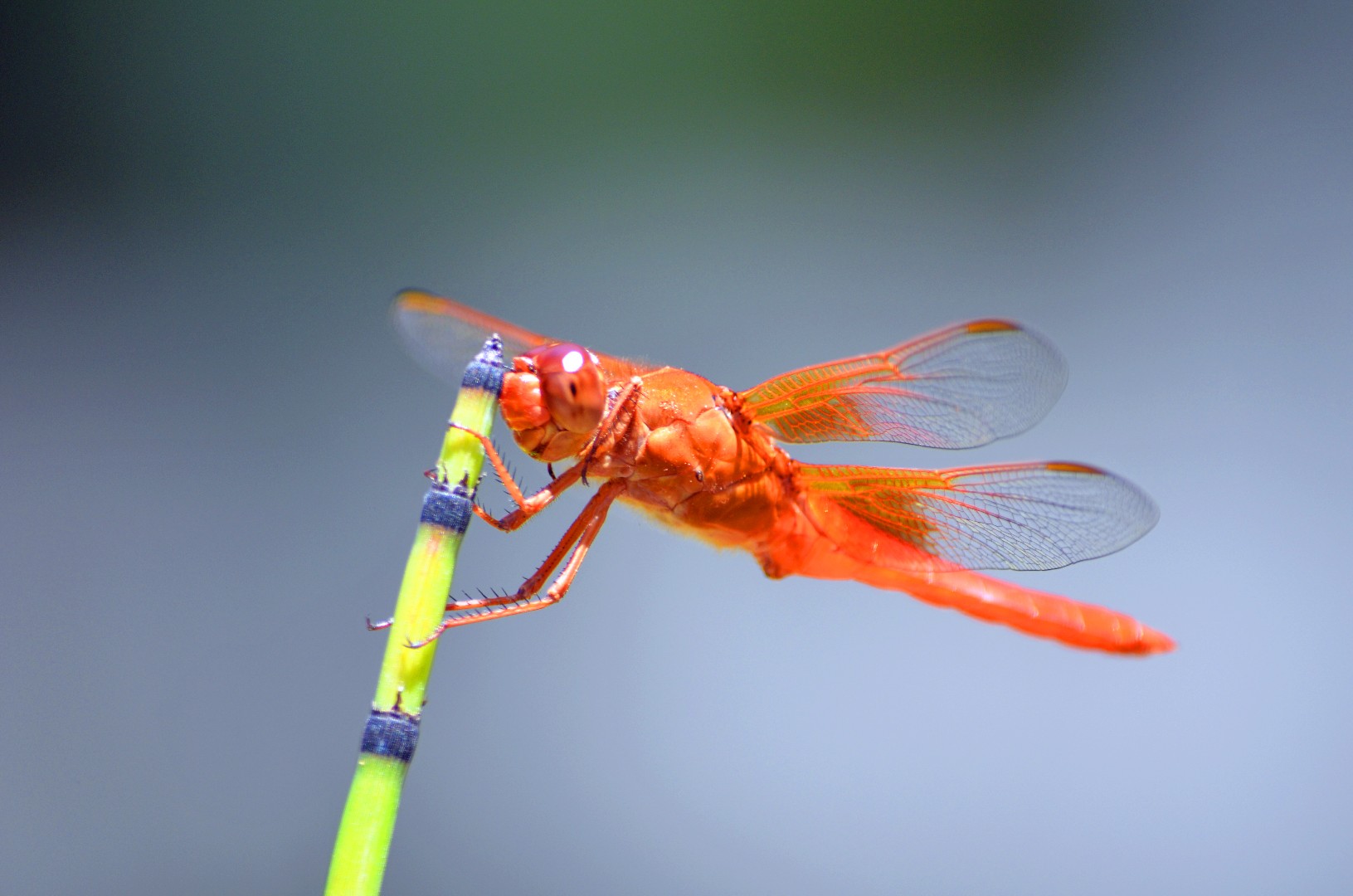
1. Flame skimmer
Male flame skimmers are known for their entirely red or dark orange body, this includes eyes, legs, and even wing veins. Females are usually a medium or darker brown with some thin, yellow markings. This particular type of skimmer varies in size but is generally measured somewhere between 5 cm and 8 cm long. These naiads are known for being rather large and chubby-looking due to their rounded abdomen. They are covered with hair but, unlike most young dragonflies, they lack hooks or spines. 

2. American rubyspot
Males have a lustrous red head and thorax. The abdomen of both genders is brilliant green. The female may have either green or copper colored marks on the thorax.
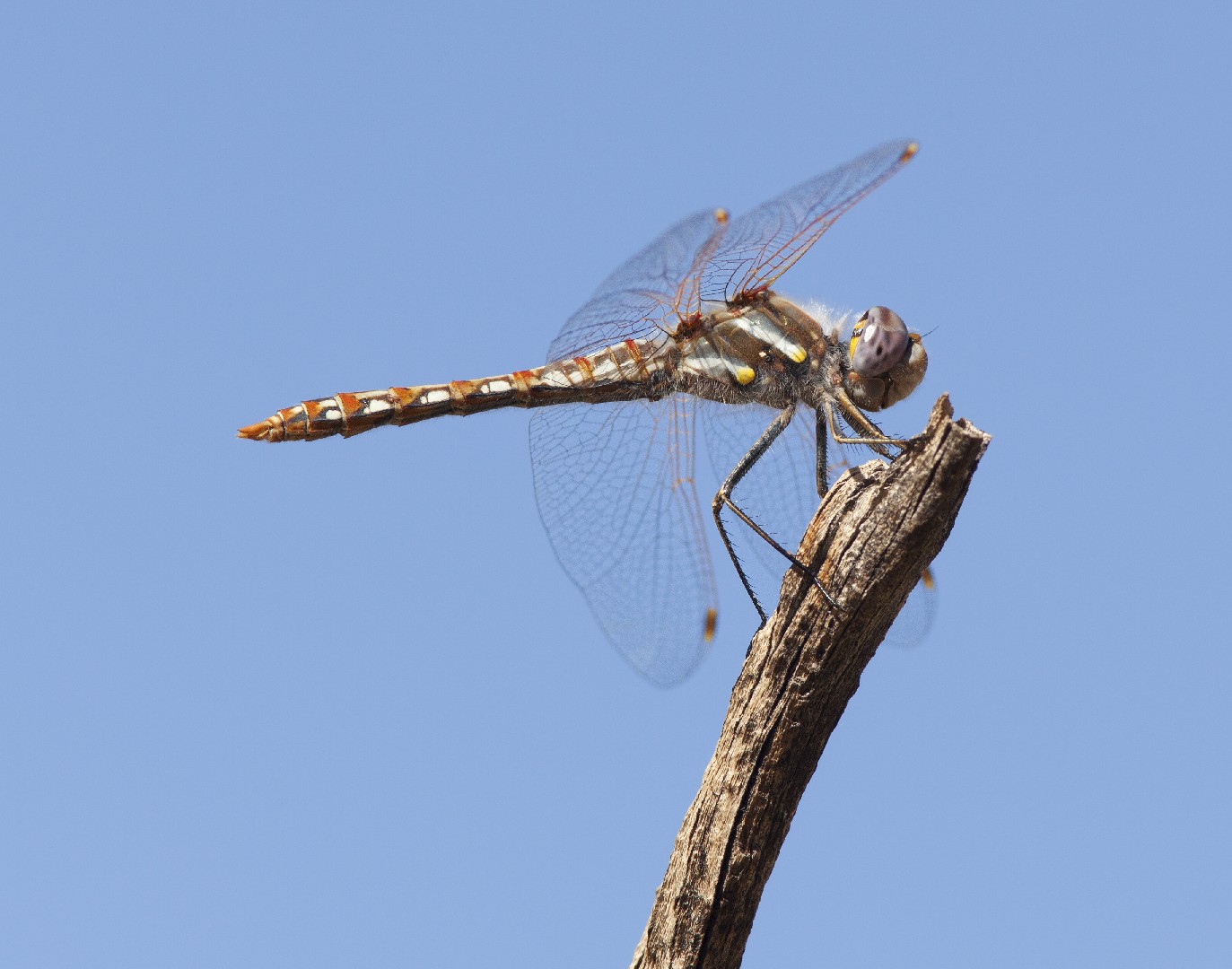
3. Variegated meadowhawk
The variegated meadowhawk is a small to medium-sized dragonfly with a slender abdomen, often reaching a length of 4.5 - 23 cm. The male is commonly dark brownish black with an abdomen of bright red, pink, and golden brown. The thorax may be marked with a pair of yellow dots on each side. The leading edges of the wings are marked with pinkish. The females are similar in color but not as brightly colored, with gray and yellow replacing the red of the male. Young variegated meadowhawks are much paler and mottled with pale green, pale yellow, golden brown, and orange.
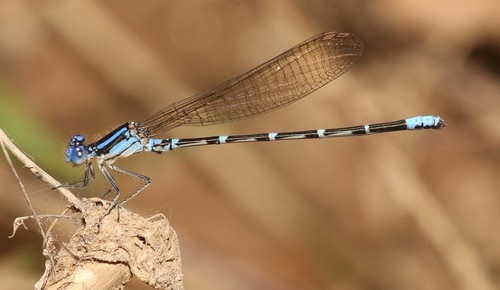
4. Blue-ringed dancer
The scientific name of the species was first validly published in 1861 by Hagen.
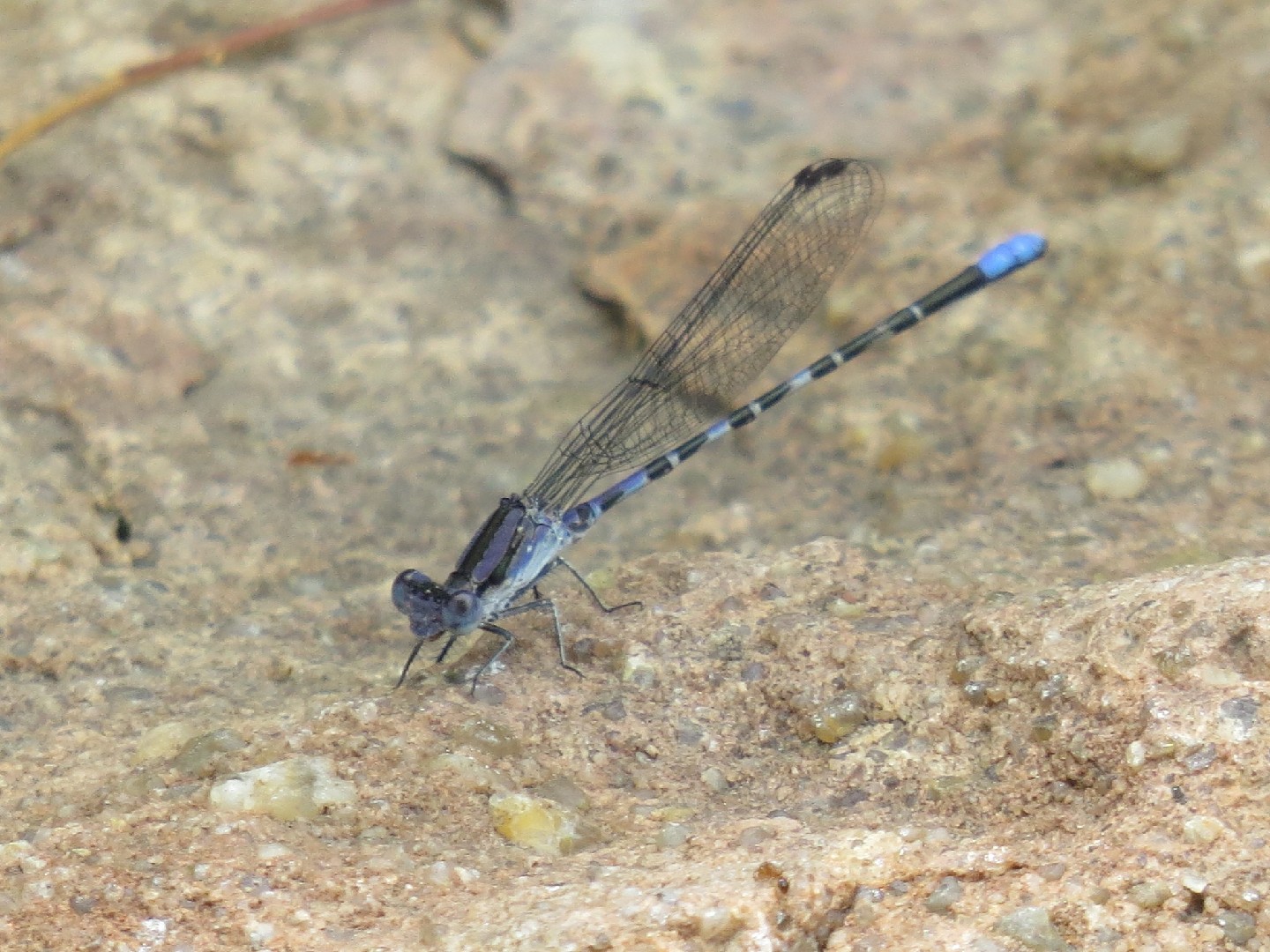
5. Kiowa dancer
The scientific name of the species was first validly published in 1861 by Hagen.

6. White-Lined Sphinx
The white-Lined Sphinx ( Hyles lineata) is a colorful furry moth with striped wings. It has a similar size of a hummingbird, and behaves like a hummingbird as well. It can fly extremely fast, and instantly swing from side to side while hovering just like a hummingbird. It feeds on nectar from a variety of flowers including petunia, honeysuckle, lilac, clovers, thistles, and jimson weed.
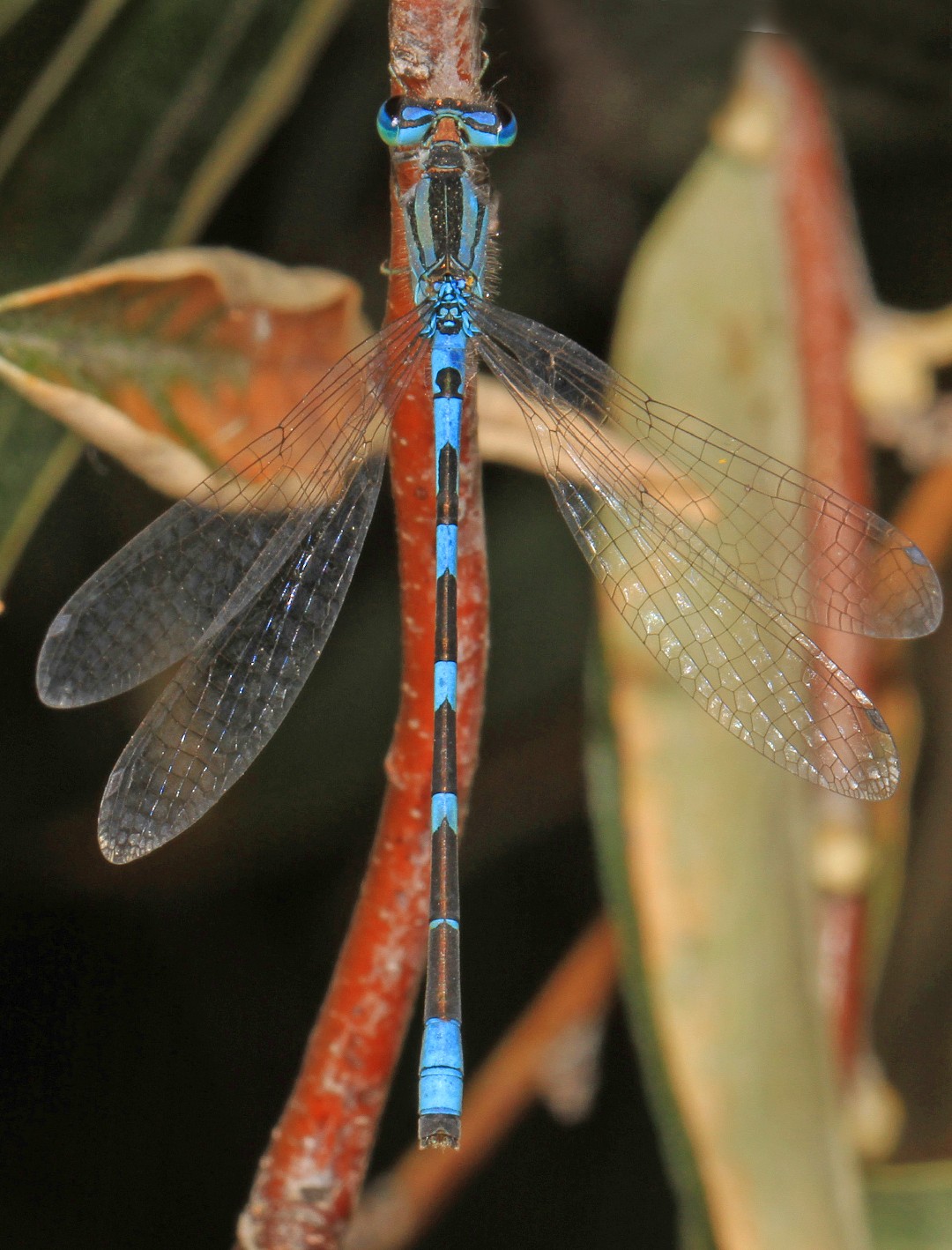
7. Tule bluet
Enallagma carunculatum is a dragonfly in the family of the brown dragonflies (Coenagrionidae). It is native to North America.
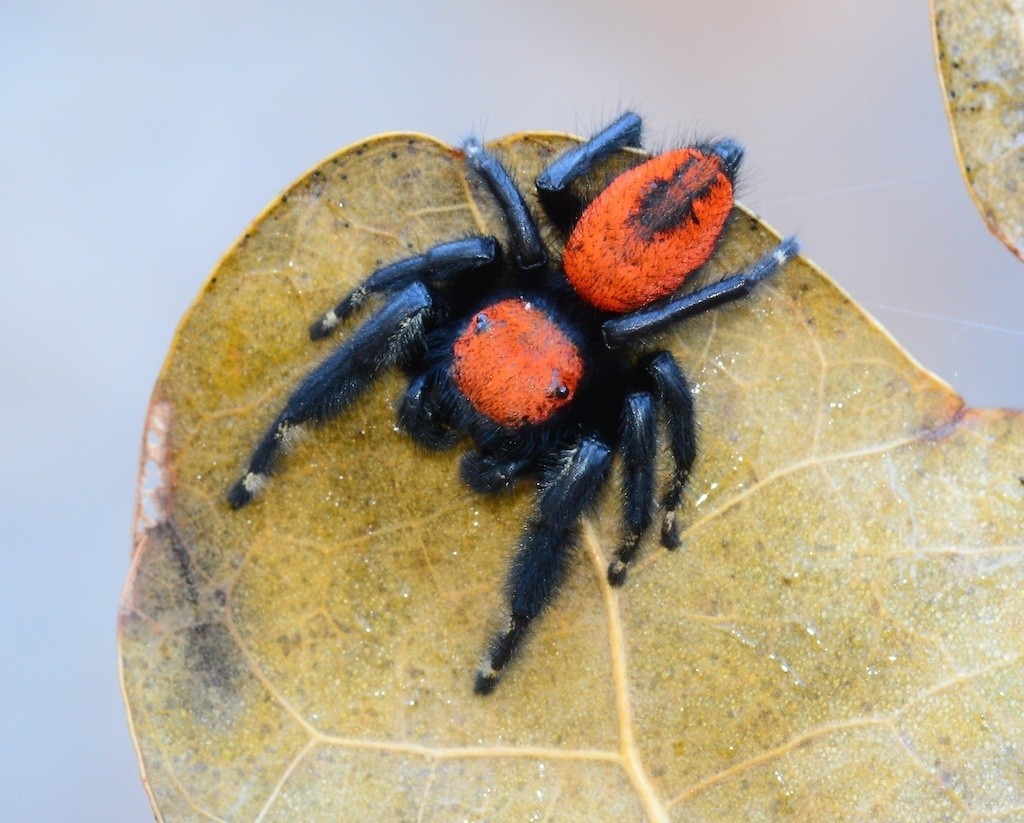
8. Red velvet jumping spider
Phidippus apacheanus is a species of jumping spider in the family Salticidae. It is found in the United States, Mexico, and Cuba.
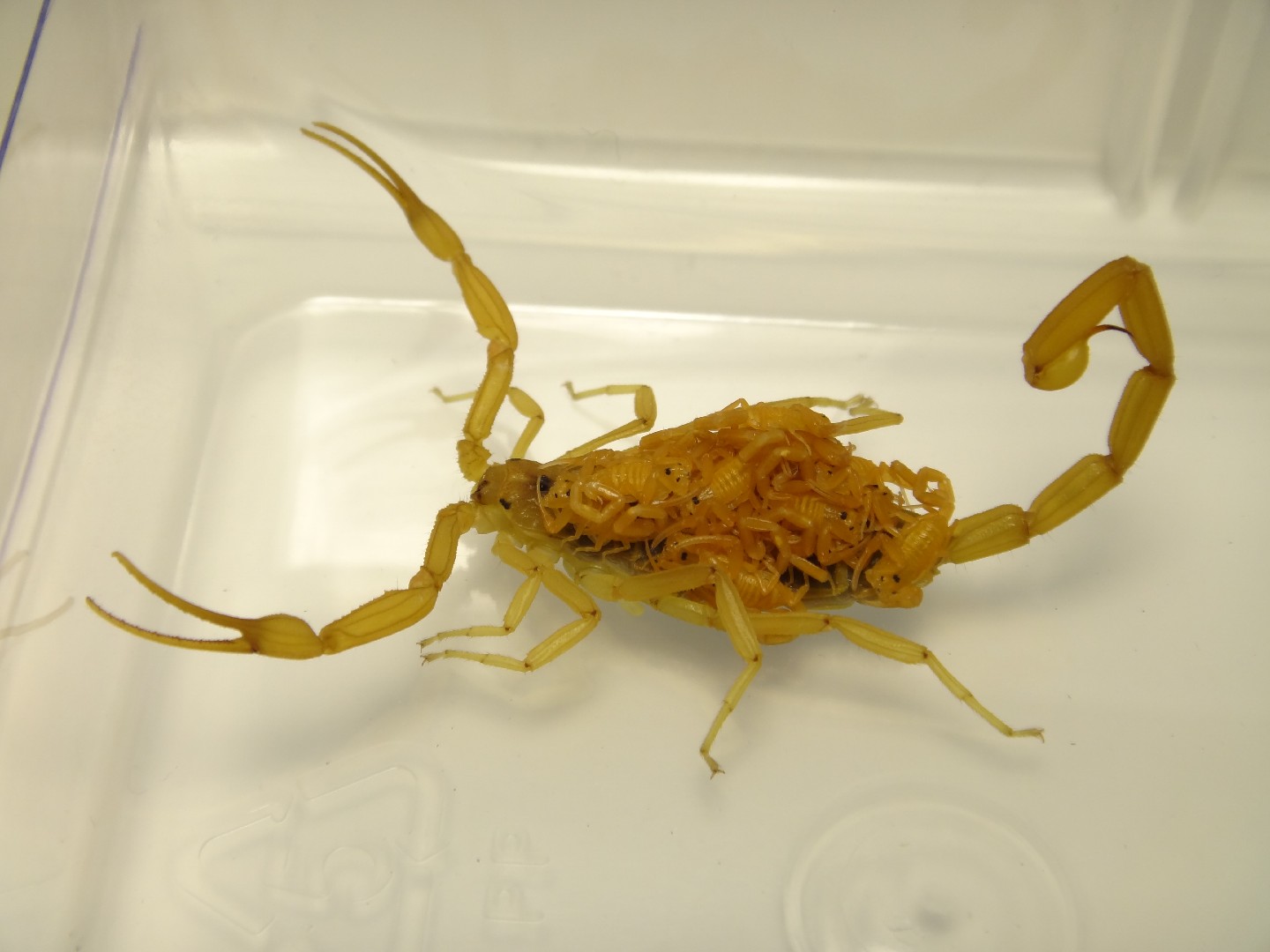
9. Arizona bark scorpion
The arizona bark scorpion (Centruroides sculpturatus) is a fast, nocturnal creature that ambushes its prey. It feeds on a wide range of bugs, including beetles, spiders, and cockroaches. It uses the tiny hairs on its body to recognize terrains and find prey. Its yellow coloring might seem less intimidating than other scorpions, but it has a real powerful venom.
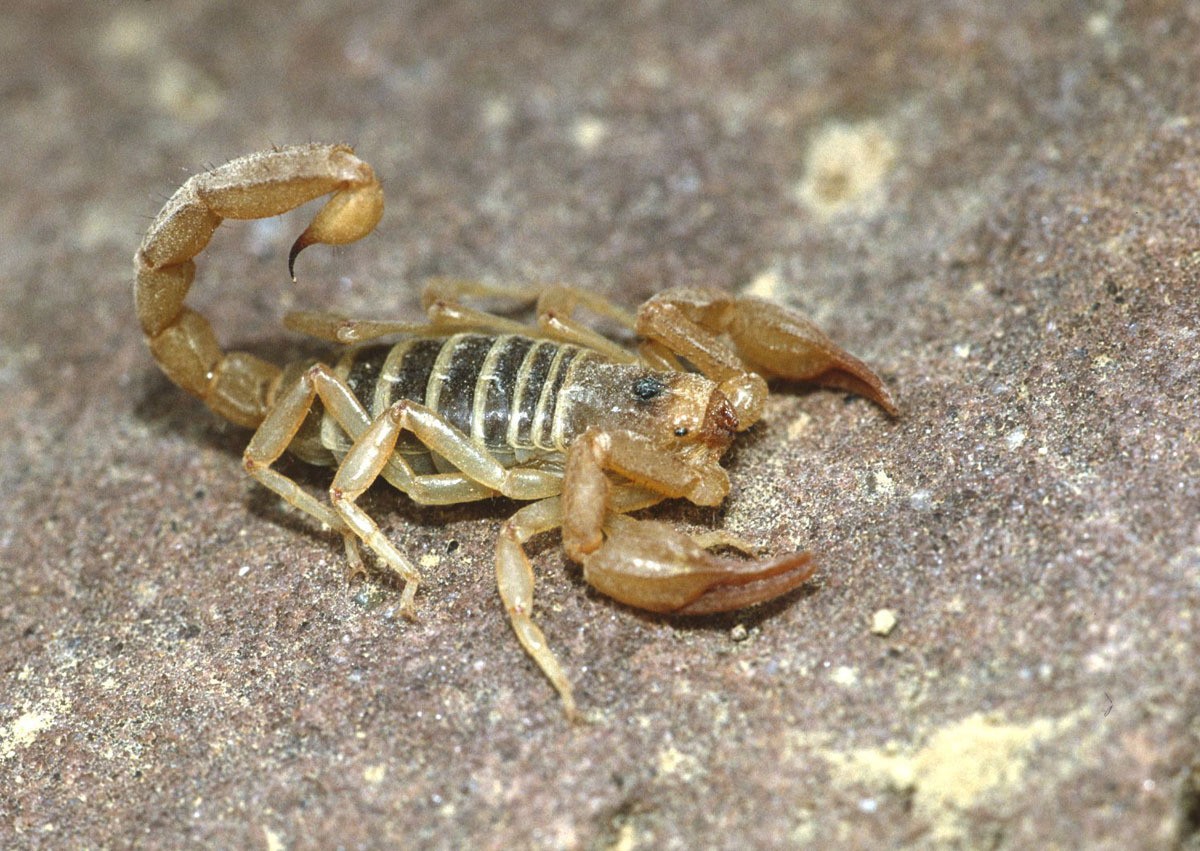
10. Northern scorpion
Paruroctonus boreus is a species of scorpions of the family Vaejovidae.
More







