




Top 20 Most Common Insects in El Paso
Insects, of varied sizes and unique features, abound in El Paso. This diverse group has evolved to thrive in the city's diverse urban and forested habitats. With roles ranging from pesky pests to vital pollinators, these insects have a foundational presence in El Paso's ecosystem. Our comprehensive list delves into the 20 most common insects that play a part in shaping El Paso's vibrant ecological web.

Most Common Insects
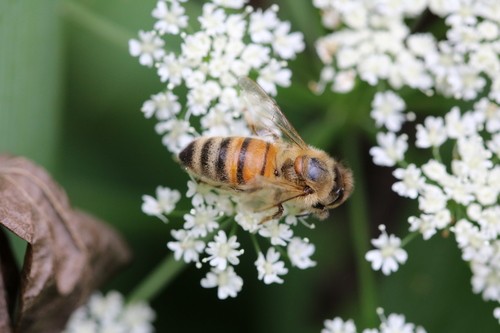
1. Western honey bee
Western honey bee(Apis mellifera) is the most common species of honeybee in the world. Among the first domesticated insects, its cultural and economic impact on humanity has been vast and far-reaching, providing honey, wax and its services as a pollinator. Western honey bee faces challenges worldwide, such as colony collapse disorder, and populations are thought to be decreasing.

2. White-Lined Sphinx
The white-Lined Sphinx ( Hyles lineata) is a colorful furry moth with striped wings. It has a similar size of a hummingbird, and behaves like a hummingbird as well. It can fly extremely fast, and instantly swing from side to side while hovering just like a hummingbird. It feeds on nectar from a variety of flowers including petunia, honeysuckle, lilac, clovers, thistles, and jimson weed.
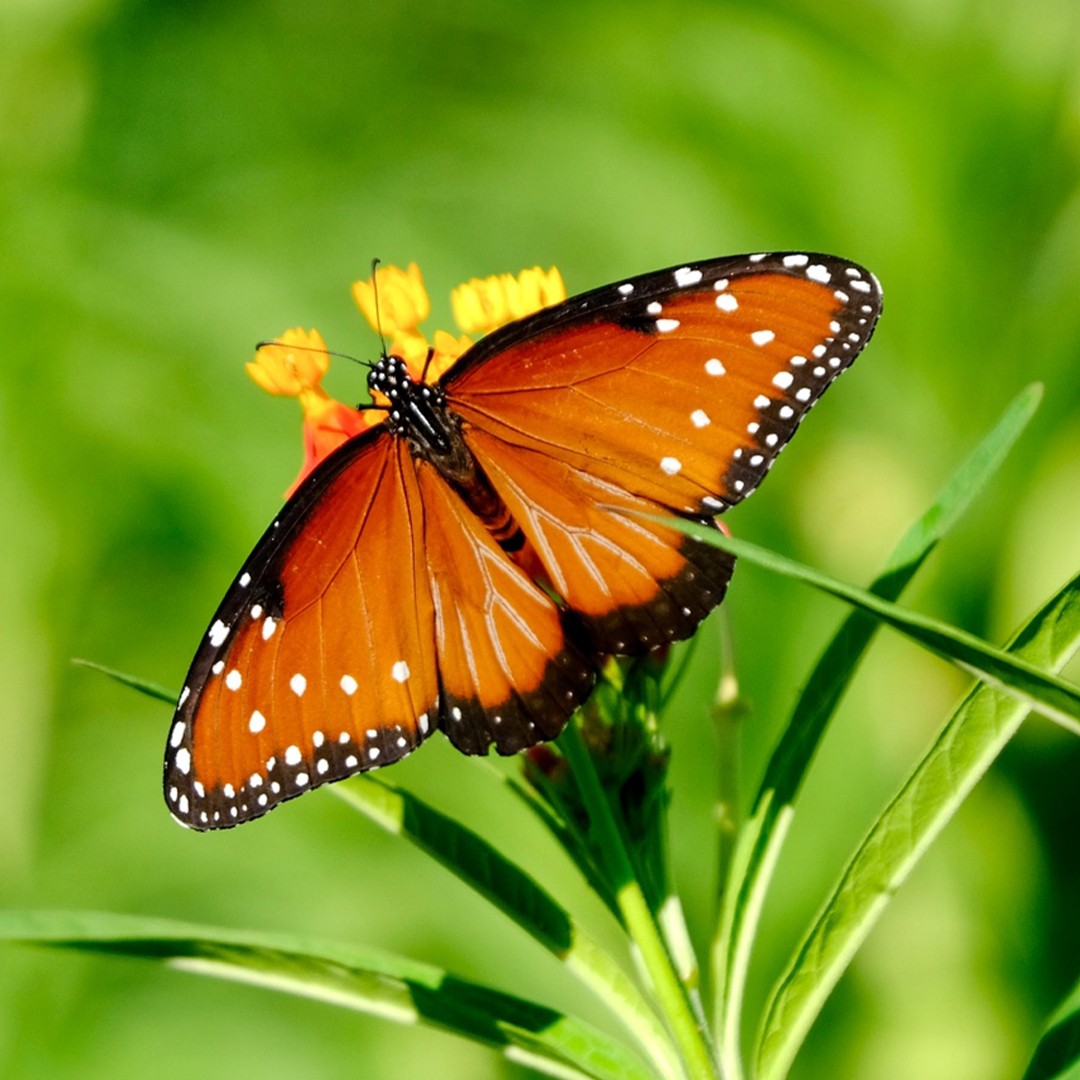
3. Queen
The queen butterfly (Danaus gilippus) is a North and South American butterfly in the family Nymphalidae with a wingspan of 70–88 mm (2.8–3.5 in). It is orange or brown with black wing borders and small white forewing spots on its dorsal wing surface, and reddish ventral wing surface fairly similar to the dorsal surface. The ventral hindwings have black veins and small white spots in a black border. The male has a black androconial scent patch on its dorsal hindwings. It is found throughout the tropics and into the temperate regions of the Americas, Asia and Africa. It can be found in meadows, fields, marshes, deserts, and at the edges of forests. This species is possibly a close relative to the similarly colored soldier butterfly (or tropic queen; Danaus eresimus); in any case, it is not close to the plain tiger (Danaus chrysippus) as was long believed. There are seven subspecies. Females lay one egg at a time on larval host plants. Larvae use these plants as a food source, whereas adult butterflies feed mainly on nectar from flowers. Unpalatability to avian predators is a feature of the butterfly; however, its level is highly variable. Unpalatability is correlated with the level of cardenolides obtained via the larval diet, but other compounds like alkaloids also play a part in promoting distastefulness. Males patrol to search for females, who may mate up to 15 times a day. Male organs called hair-pencils play an important role in courtship, with males with lower hair-pencil levels being selected against. These hair-pencils may be involved in releasing pheromones during courtship that could attract female mates. 
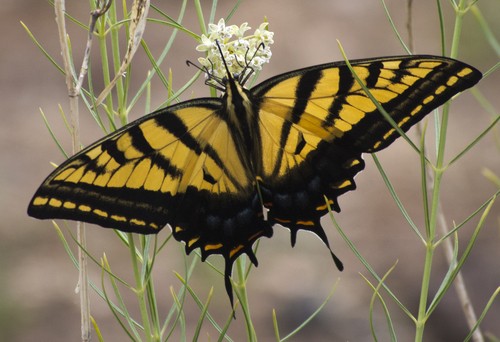
4. Two-tailed swallowtail
The two-tailed swallowtail (Papilio multicaudata) is easily identified with its yellow body and tiger-like stripes. It also has two tails, or spikes, coming off the back of its wings. Also, females are commonly larger and more brightly colored than males. They also have eyespots near the rear of their wings, which fool predators and give them a chance to escape.
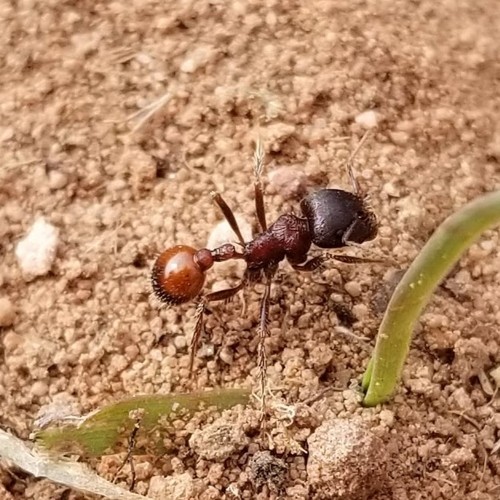
5. Rough harvester ant
The rough harvester ant (Pogonomyrmex rugosus) earns its name as a rugged survivalist with good instincts. They communicate by pheromones. During foraging, it is also able to establish permanent trails that other ants are able to follow. Their workers are also the target of enslavement by other ants when they need to raise the next generation.
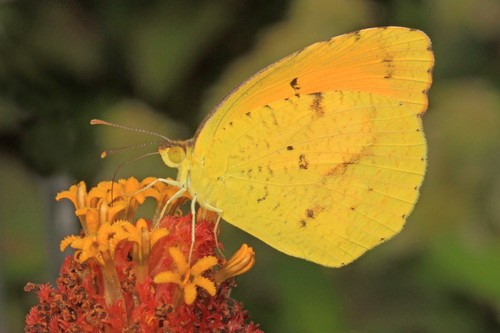
6. Sleepy orange
The sleepy orange is a bright orange butterfly with the upperside of the wings having wide black borders. The forewing coastal margin has a small, narrow black spot. The underside of the wings varies seasonally: summer forms are bright yellow with brick-red markings, while winter forms are browner and more heavily marked. It has a wingspan of 3.5 - 6 cm .
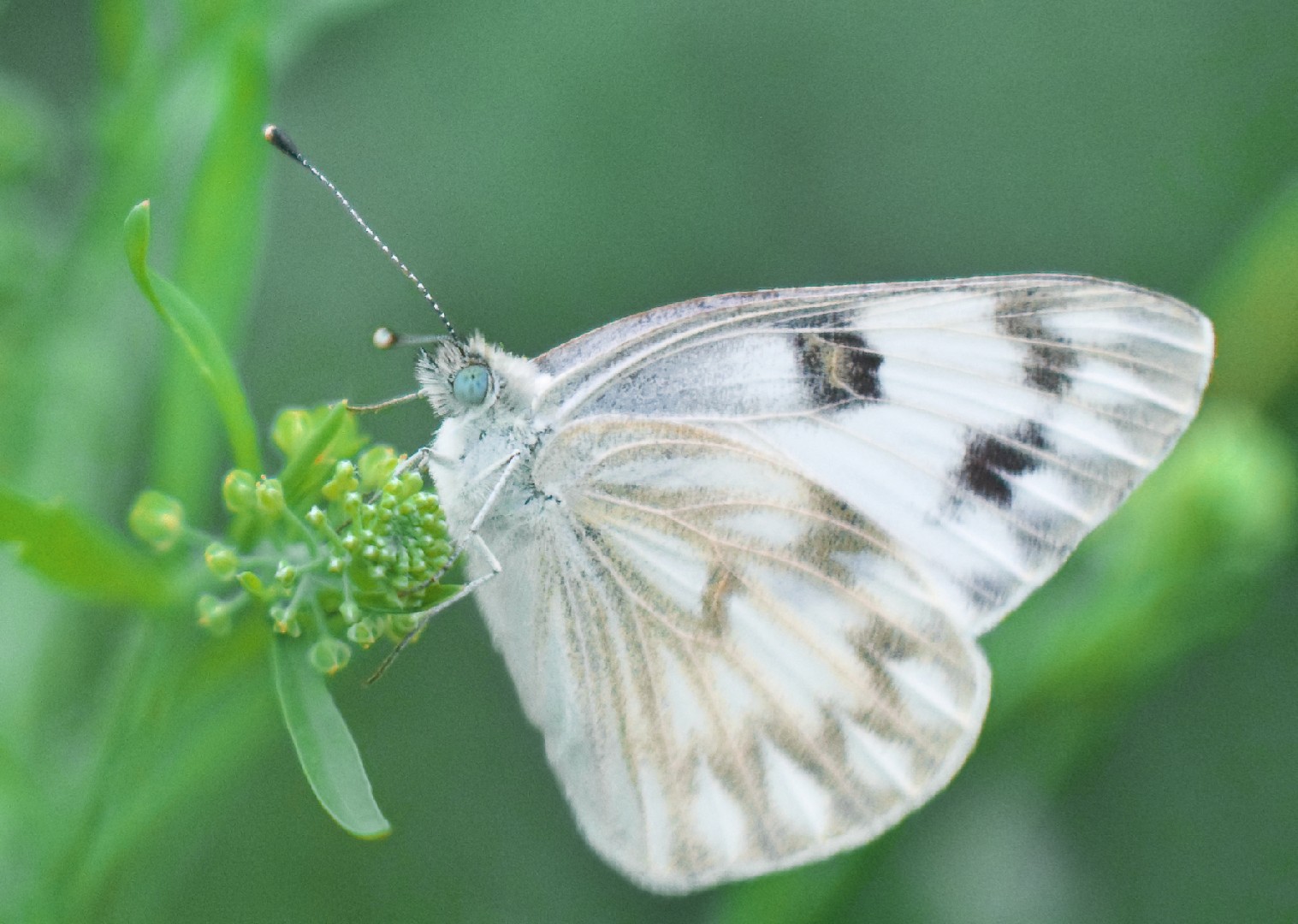
7. Checkered white
The upperside of the wings are white and marked with black and gray, more so on the female than on the male. The underside of the hindwings is marked with extensive yellow-brown veins. The wingspan is 3 - 4.5 cm . In its pre-adult form, the egg is orange, and mature larvae are black dotted and bluish green to gray with a yellow dorsal, lateral and sublateral stripe. The pupa overwinters, and varies in color from blue-gray to cream.
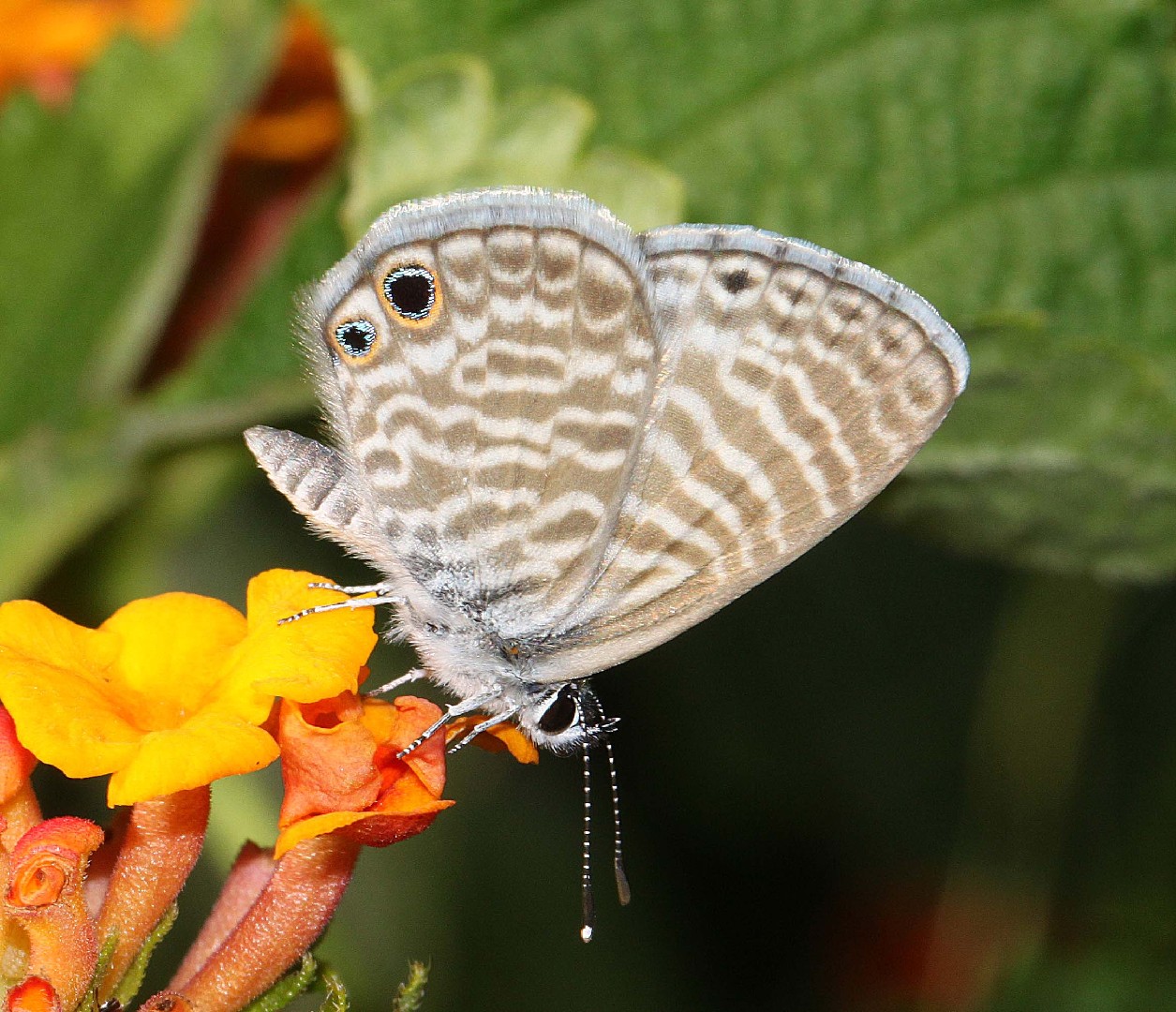
8. Marine blue
The wingspan is 2 - 3 cm.
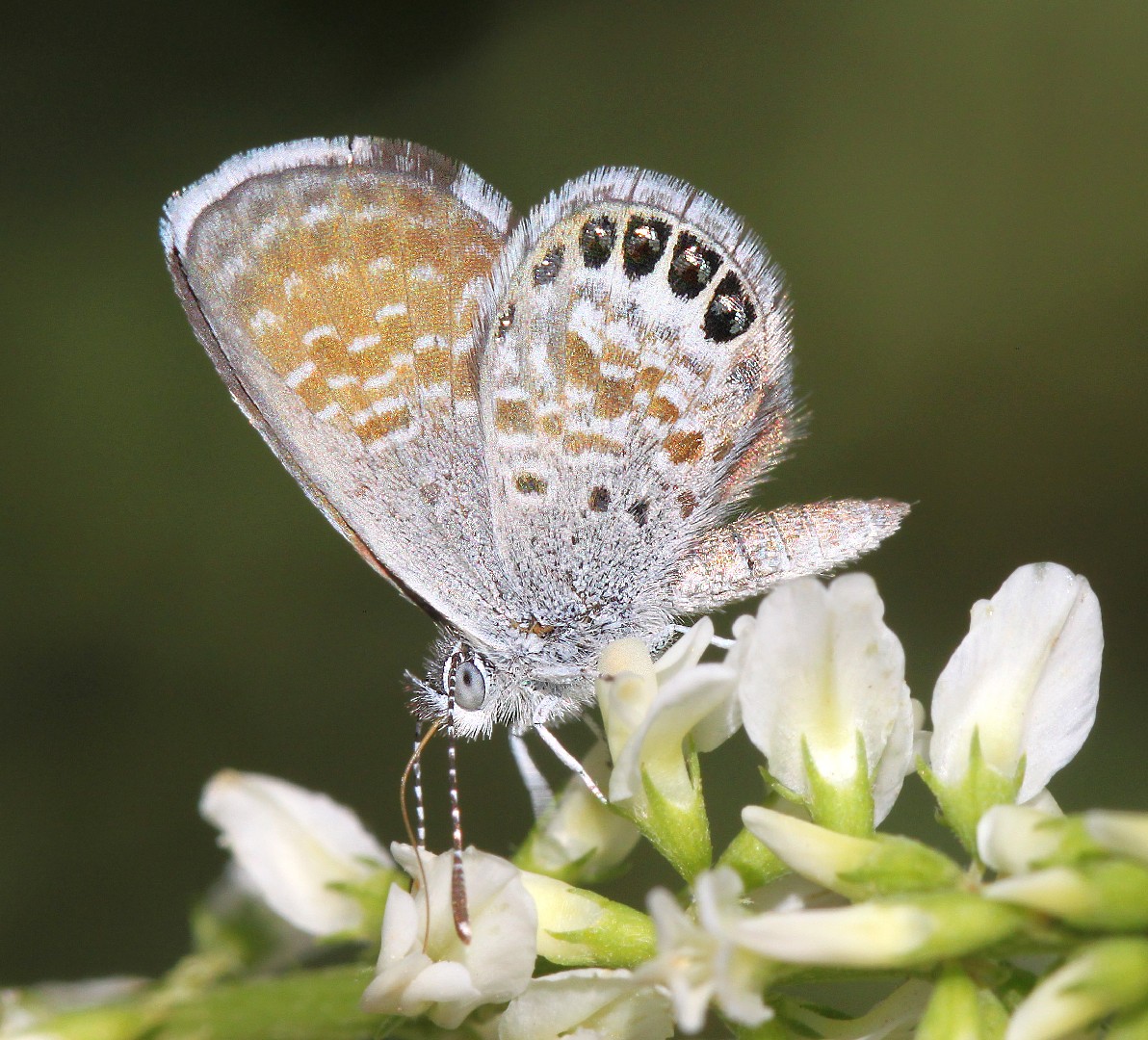
9. Western pygmy blue
The upperside is copper brown with dull blue at the bases of both wings. The underside of the hindwing is copper brown with white at the base; the fringe mostly white, with 3 small black spots near base, and a row of black spots at outer margin. The wingspan is 1.2 - 2 cm.
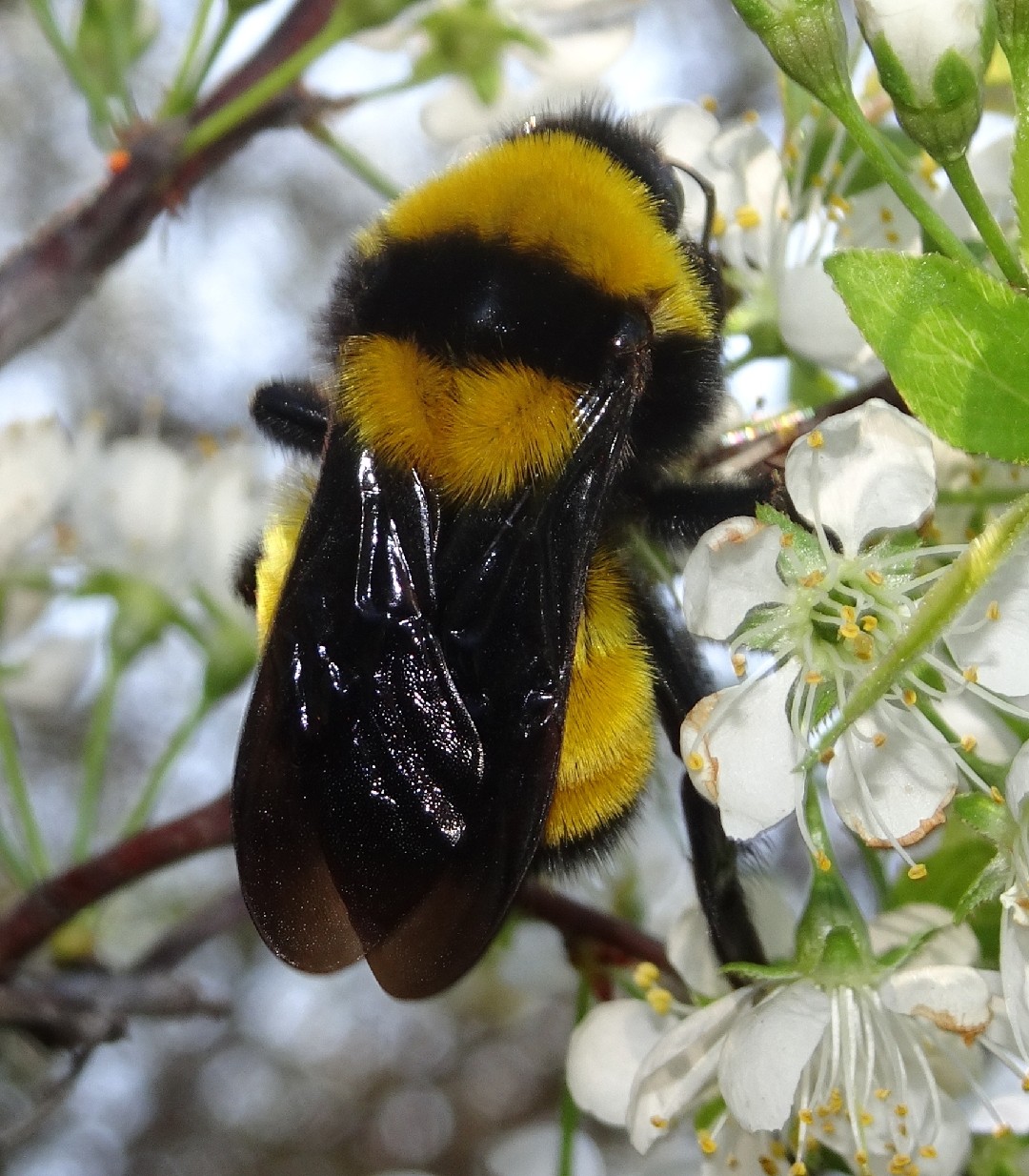
10. Sonoran bumble bee
Bombus sonorus is a non-woven insect from the family of bees and bumblebees (Apidae). The scientific name of the species was first validly published in 1837 by Say.

More







