




Top 18 Most Common Insects in Ninh Binh
Insects, the fascinating mini-beasts of Ninh Binh, with their unique attributes and diverse habitats, shape the ecosystem drastically. Geographical variations of Ninh Binh tremendously impact insect diversity, tailoring a range of species from beneficial insects to pests. Reflecting Ninh Binh's environmental tapestry, this list of Top 18 most common insects shines a spotlight on these tiny understated heroes.

Most Common Insects
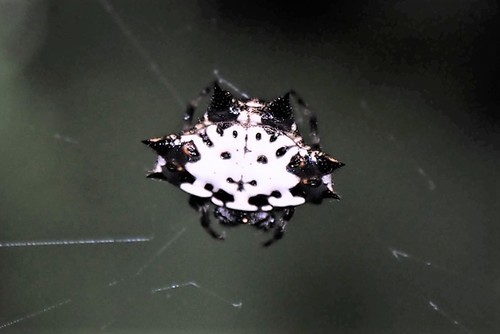
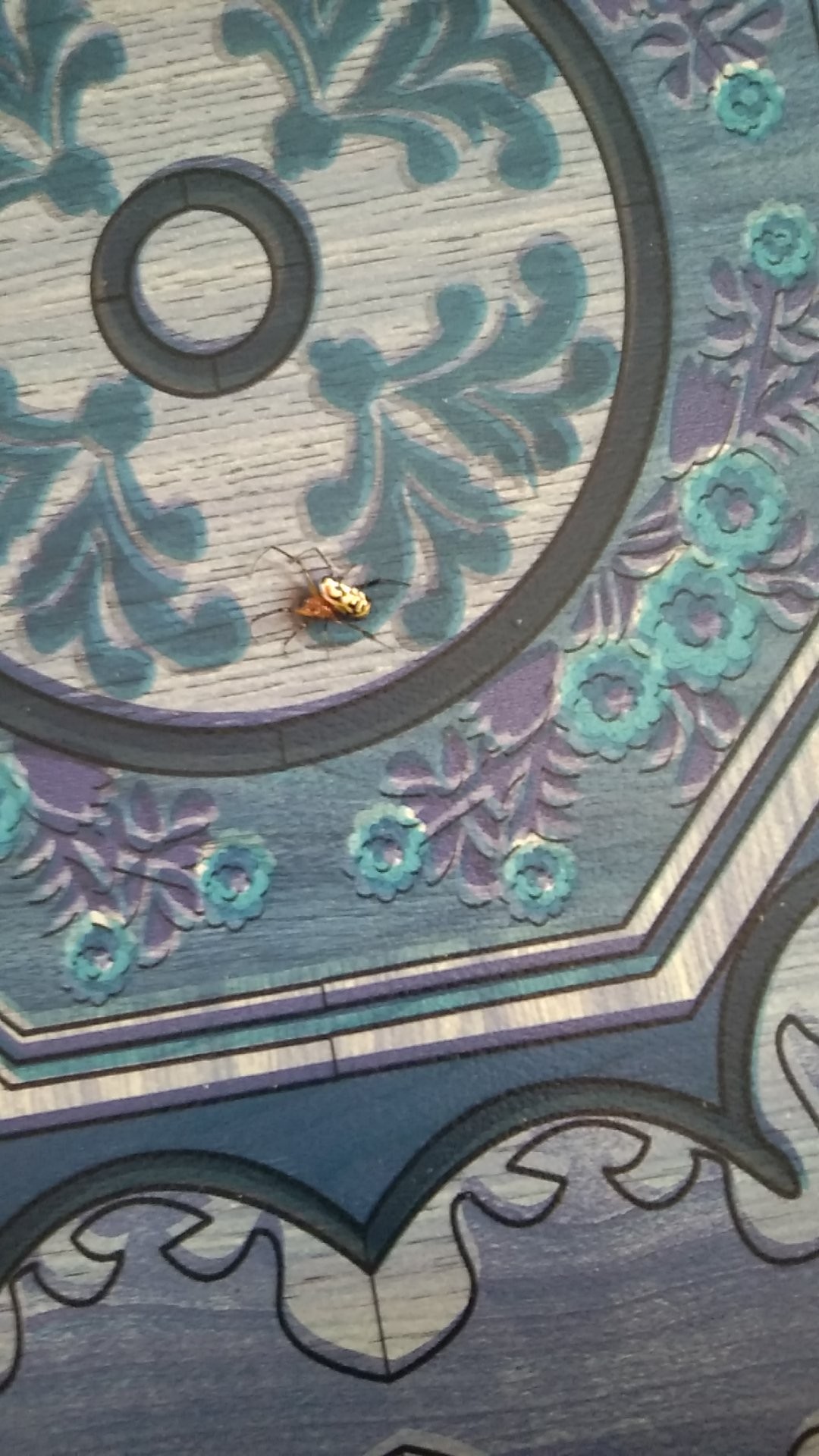
1. Black-and-white spiny spider
Female black-and-white spiny spider are 6 - 9 mm wide and possess a hard, shiny abdomen armed with six black conical spines. The upper surface of the abdomen is white to yellowish with variable black or dark brown markings and sigilla. Males are much smaller at 3 - 4 mm and in place of spines have small bumps on their abdomens. 
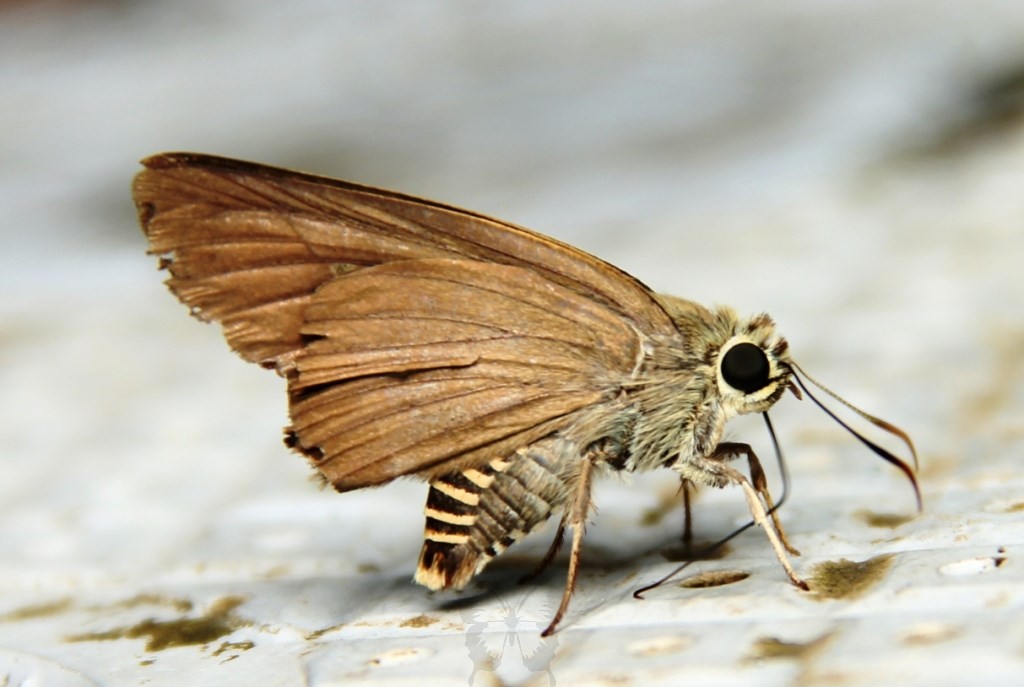
2. Brown awl
Badamia exclamationis is a butterfly from the family of Badamia exclamationis (Hesperiidae). The scientific name of the species was first validly published in 1775 by Johann Christian Fabricius.
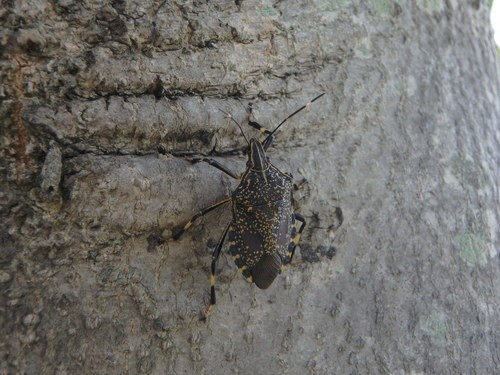
3. Yellow-spotted stink bug
The yellow-spotted stink bug has a wide distribution across Asia. In China, the insect is a pest to more than 57 plants, including fruit trees. It can damage plants and reduce crop yields. Adults overwinter in natural and manmade shelters like building crevices and underneath tree bark, emerging in the spring to feed on the tree’s new growth.
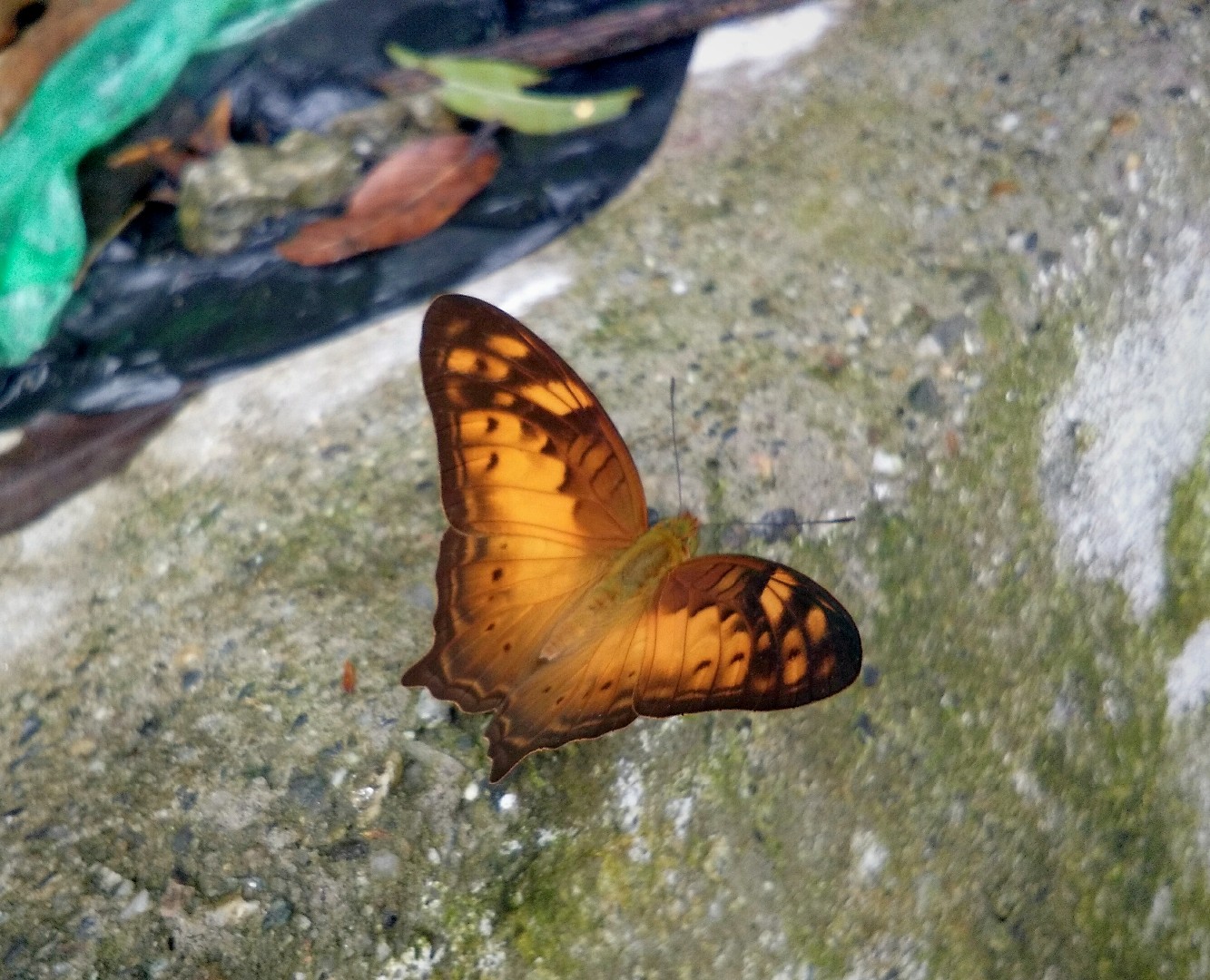
4. Tailed rustic
Vagrans is monotypic genus with the species vagrant (Vagrans egista) a species of nymphalid butterfly found in forested areas of tropical South Asia and Southeast Asia.
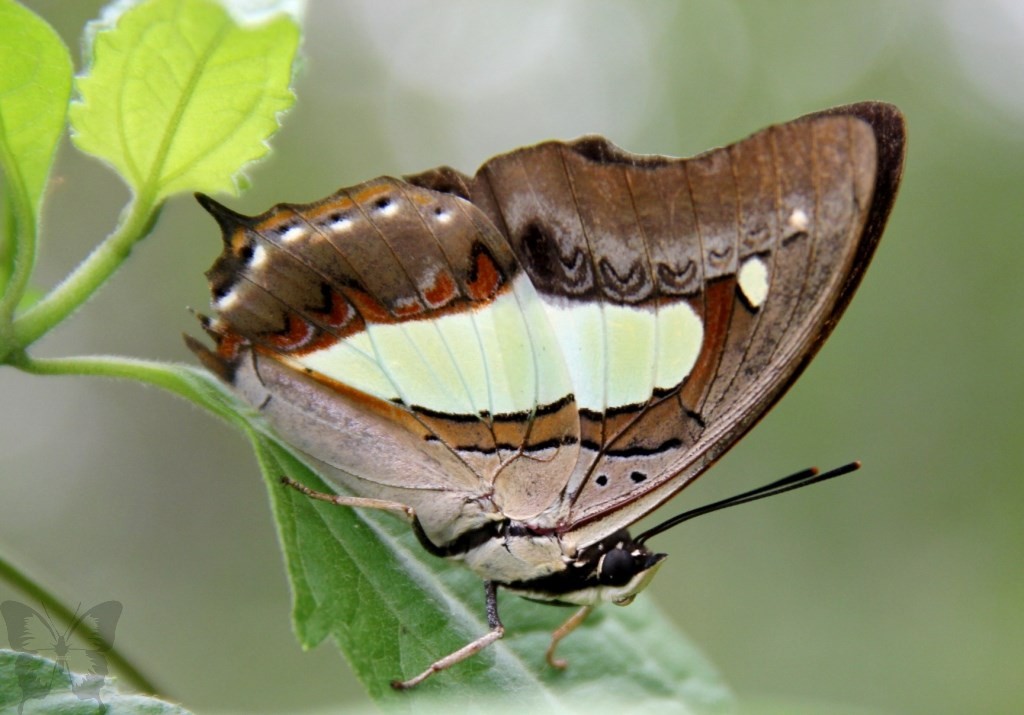
5. Common nawab
Upperside of male and female is black. Forewings and hindwings with a discal broad transverse area from below vein 4 in forewing to vein 2 on hindwing, a moderately large spot in interspace 5, a minute preapical dot beyond in interspace 6 on forewing, and a subterminal row of spots with two or three spots beyond them on the tornal angle of the hindwing, pale yellow, sometimes with an ochraceous, sometimes with a greenish tinge. The discal area on the forewing nearly as broad in interspace 3 as on the dorsum, on the hindwing narrowing to an acute point on vein 2 at two-thirds of its length from base of wing. Tails touched with bluish grey. Underside with the discal transverse area and spot in interspace 5 as on the upperside; base and costal margin of the forewing to apex, and base and dorsal margin of the hindwing broadly lilacine brown, on forewing with two small black spots near base. Bordering the transverse discal area on the inner side, where it is margined with black lines, and above, is a broad chocolate carved band, continued more narrowly along the outer side of the discal area; beyond this on the forewing is a concave series of dusky black lunules, on the hindwing the band itself is traversed by a line of obscure pale lunules; finally on the hindwing there is a subterminal series of internally white-bordered black spots followed by an obscure ochraceous terminal line, and above the tornal angle a slender transverse black line from vein 1 to the dorsal margin. Wingspan 6 - 9 cm. Caterpillar is elongated, slug-shaped, dark green; head large, wide and surmounted by four divergent curved fleshy spinous processes; anal segment with two short naked terminal points; the segments with an oblique yellowish-white lateral stripe, most prominent on the 7th, 9th and 11th segments, and beneath these a lower series of small white spots. Pupa is thick, cylindrically oval; green streaked with white; dorsum and thorax convex; head broad, truncated, obtusely pointed in front.
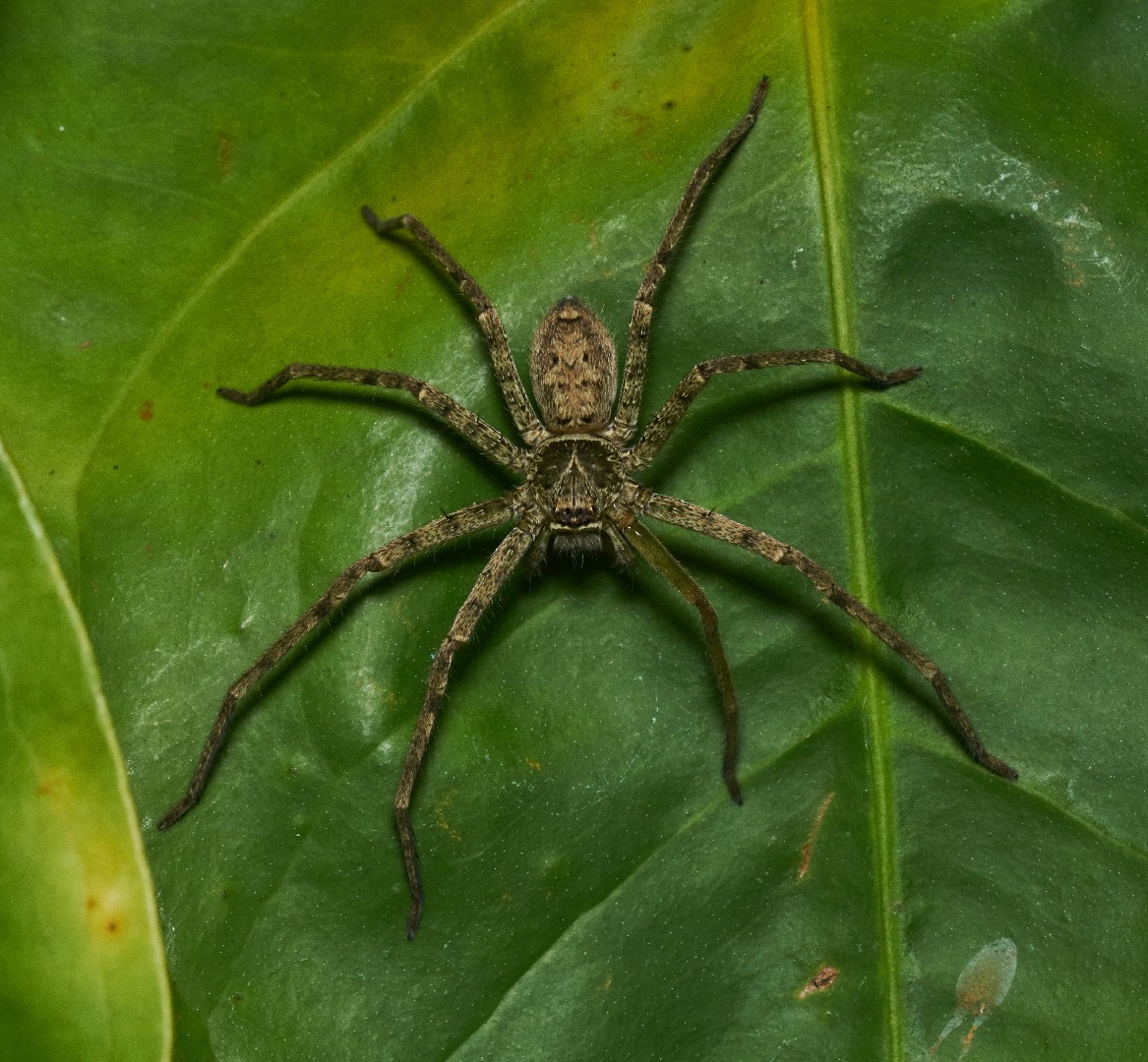
6. Giant Crab Spider
The giant Crab Spider is a large spider native to the tropics; the largest reported individual had a leg span of 30 cm. This cosmopolitan spider is highly valued in some areas, as it's able to catch cockroaches and other indoor pests. Reportedly, it hunts even scorpions and bats. This spider is venomous and sometimes bites humans, but it's considered harmless.

7. Great jay
Graphium eurypylus has a wingspan reaching about 7–8 centimetres (2.8–3.1 in). The basic colour of the uppersides of the wings is black, with a chain of yellowish or greenish spots at the edges. In the middle of the forewings there is a large yellowish or greenish area. The undersides of the wings are similar to the uppersides, but the basic colour is brownish and the spots are paler or whitish. The hindwings have a few red spots. Subspecies G. e. jason (South India and Sri Lanka) — Males and females. Upperside black. Forewing: three slender, oblique, short pale green streaks in basal half of cell and two irregular small similarly-coloured spots near its apex; a discal band composed of pale green spots that gradually diminish in size anteriorly, the spot in interspace 5 the smallest, the two in the interspaces above it slightly larger; a spot at base of interspace 7 and a sinuous complete subterminal series of spots similarly coloured. Hindwing: a transverse band that extends as far as interspace 2 posteriorly and is a continuation of the discal band on the forewing; the upper portion of this band white, the lower pale green; this is followed by a sinuous subterminal series of small pale green spots as on the forewing. Underside: brownish-fulvous black; markings similar, larger, their edges diffuse and all of a silvery white, slightly tinted with pale green. Hindwing in addition has a white basal streak that extends halfway down the dorsal margin; another shorter white subbasal streak from costa to the subcostal vein coalescent with the white of the discal band in the cell, the streak of ground colour that lies between this subbasal and the discal band jet black, interrupted where it crosses vein 8 by a crimson spot; finally, quadrate black spots near apex of cell and at bases of interspaces 1, 2 and 3, all outwardly margined with crimson. Antenna, head, thorax and abdomen black; beneath: the palpi, thorax and abdomen touched with white, the abdomen with dingy white lateral lines. Male has an abdominal fold within grey, with a fringe of white hairs. Subspecies G. e. axion, Felder (Malayan region and Himalayas) can be distinguished from subspecies G. e. jason as follows: The markings that compose the discal band very much broader; all the spots and markings of pale green and white conspicuously larger, especially in the spring broods. Underside of hindwing: crimson spots more conspicuous, a line of crimson along the posterior portion of the dorsal margin; in most specimens the short subbasal narrow band of white that runs from the costa to the subcostal vein does not coalesce with the white of the discal band where it crosses the cell.
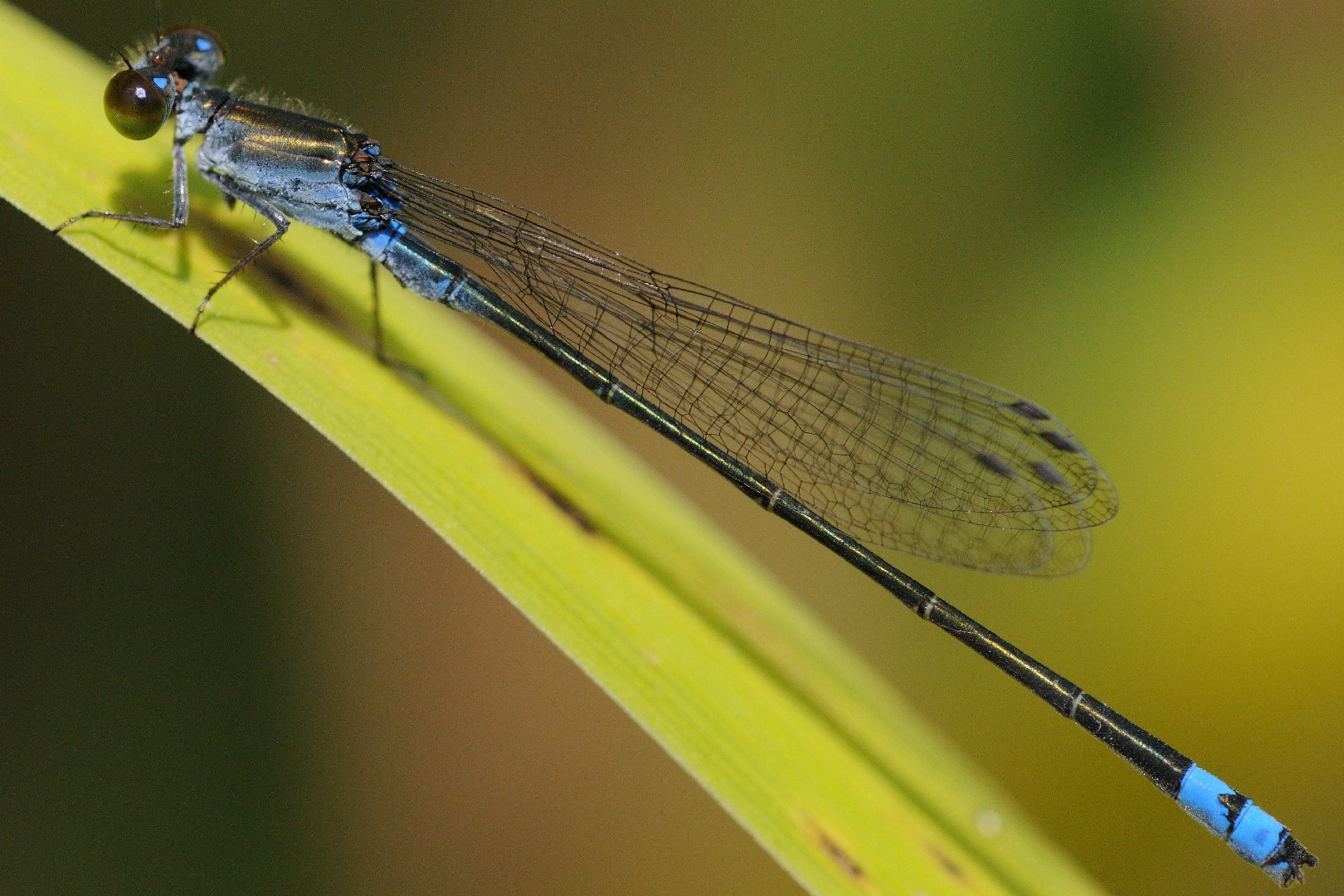
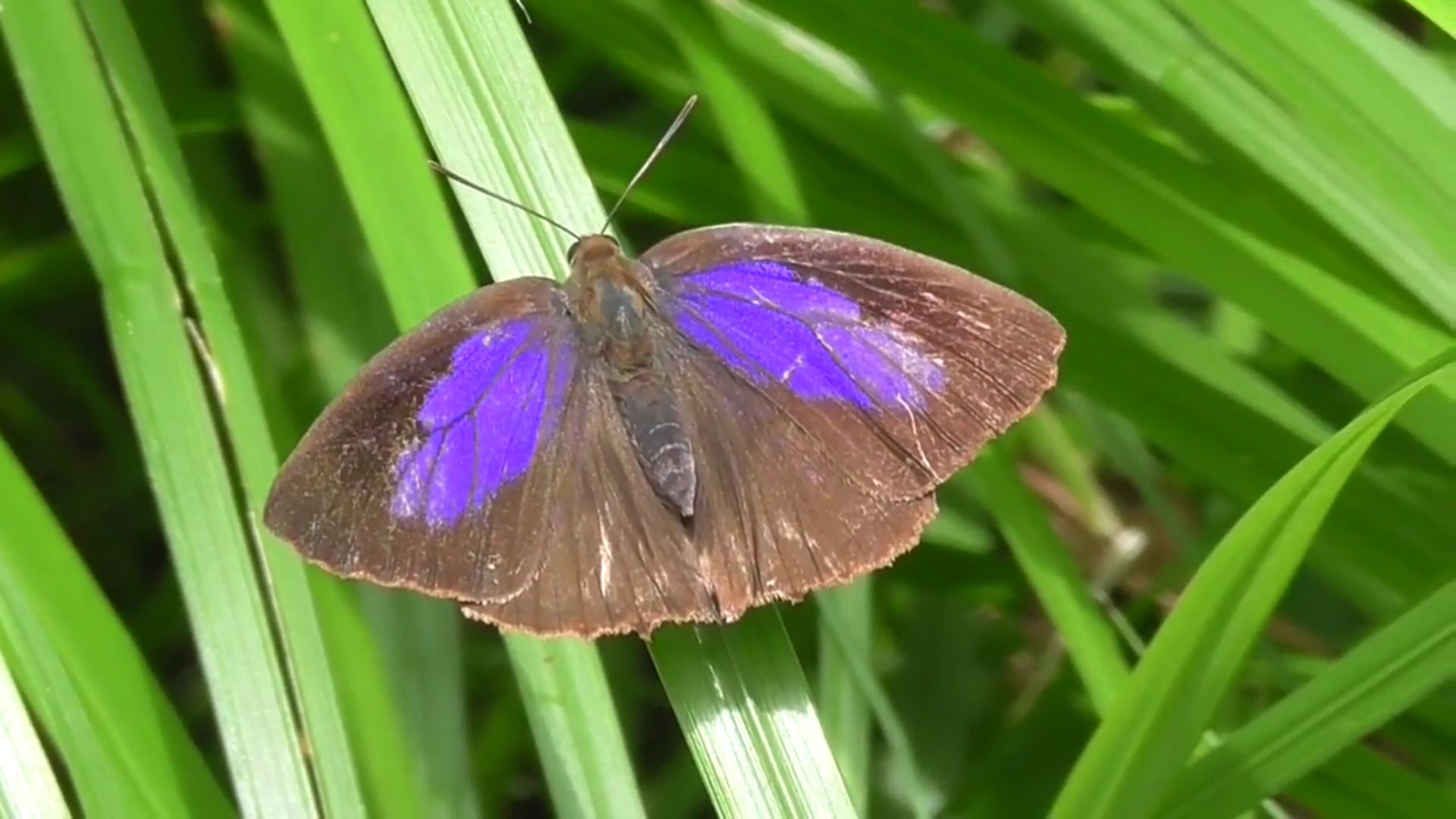
8. Dusky lilysquatter
The species is on the Red List of the IUCN as not endangered, assessment year 2009, the trend of the population is stable according to the IUCN.
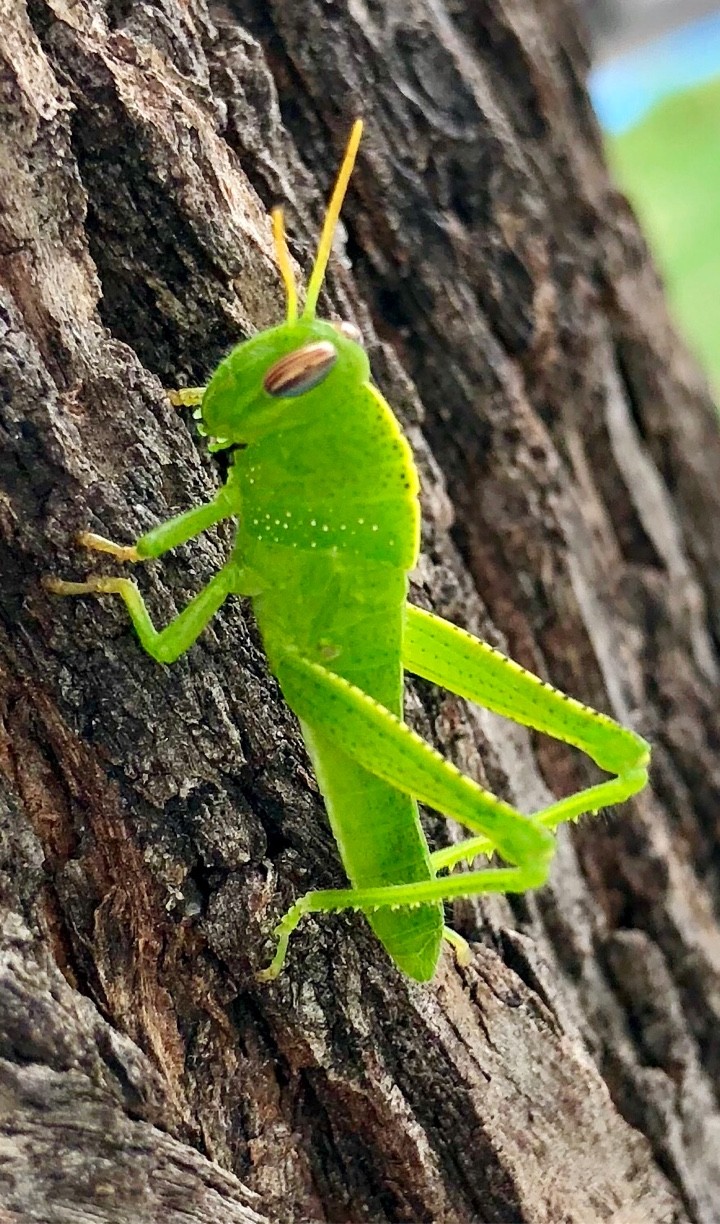
9. Citrus locust
Chondracris rosea is a right-winged insect from the family locusts (Acrididae). The scientific name of this species was first validly published in 1773 by De Geer.
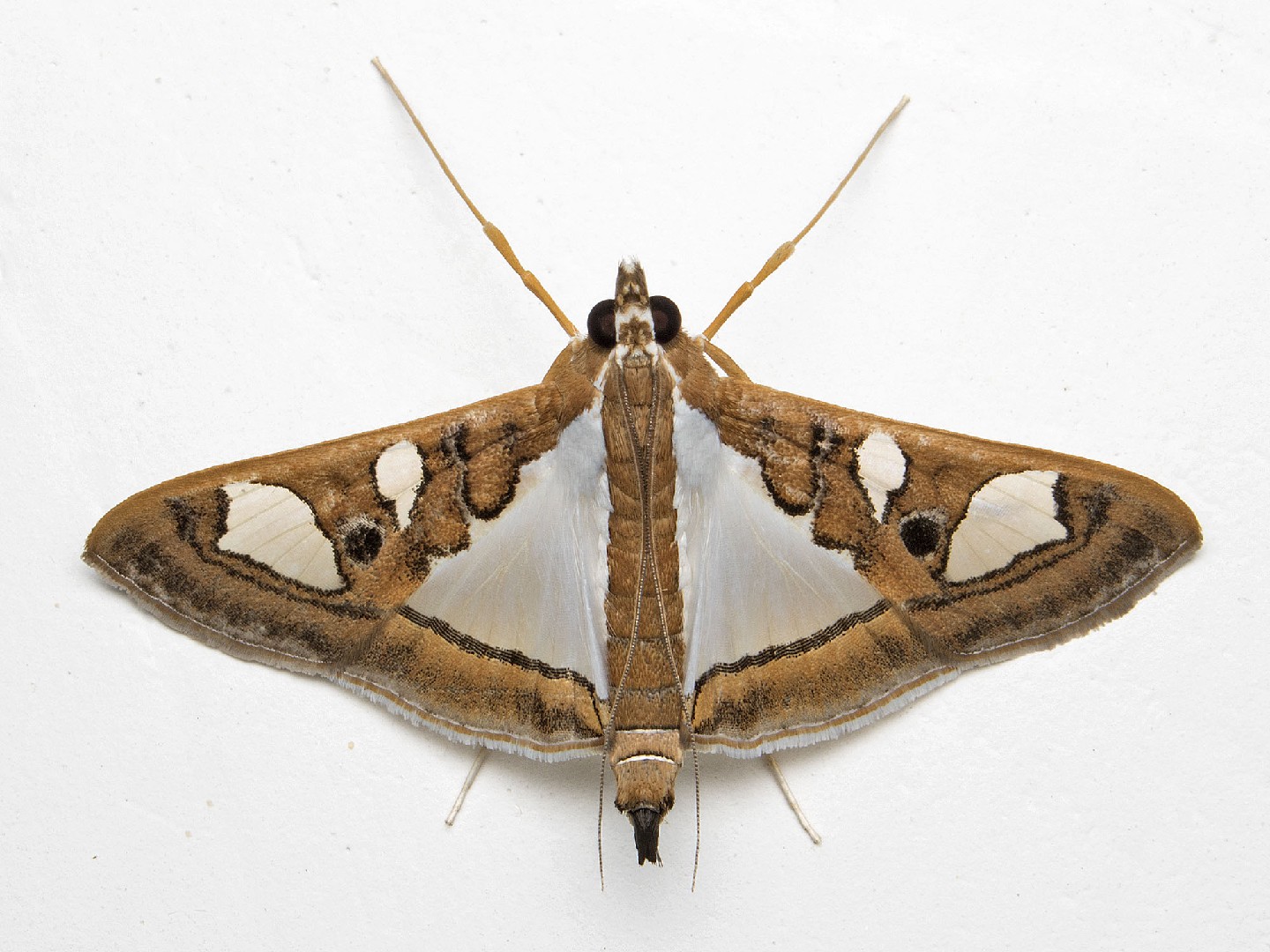
10. Glyphodes bivitralis
Glyphodes bivitralis is a moth of the family Crambidae described by Achille Guenée in 1854. It is native to south-east Asia, including Hong Kong, India, Japan, Taiwan and Thailand. It is also found in Queensland and Hawaii. The wingspan is about 30 mm. The forewings are brown with white patches and the hindwings are white with a broad brown margin. The larvae feed on Erythrina speciosa and Ficus variolosa. They live in a shelter made by curling a leaf of the host plant with silk. Young larvae are green with black markings and four black spots. Older larvae turn brown, but retain the black markings.


More







